Fire
flame, the furnace
A count, a catastrophe, or the visible part of something that has no body. Note whether the flames are arranged in a number, breaking something, or standing where a figure would be.
Forty-five works here carry fire, and the ones the archive has read give it four jobs: counting, destroying, standing for what cannot be drawn, and, in the alchemists' plates, being the means of the work and not its cause.
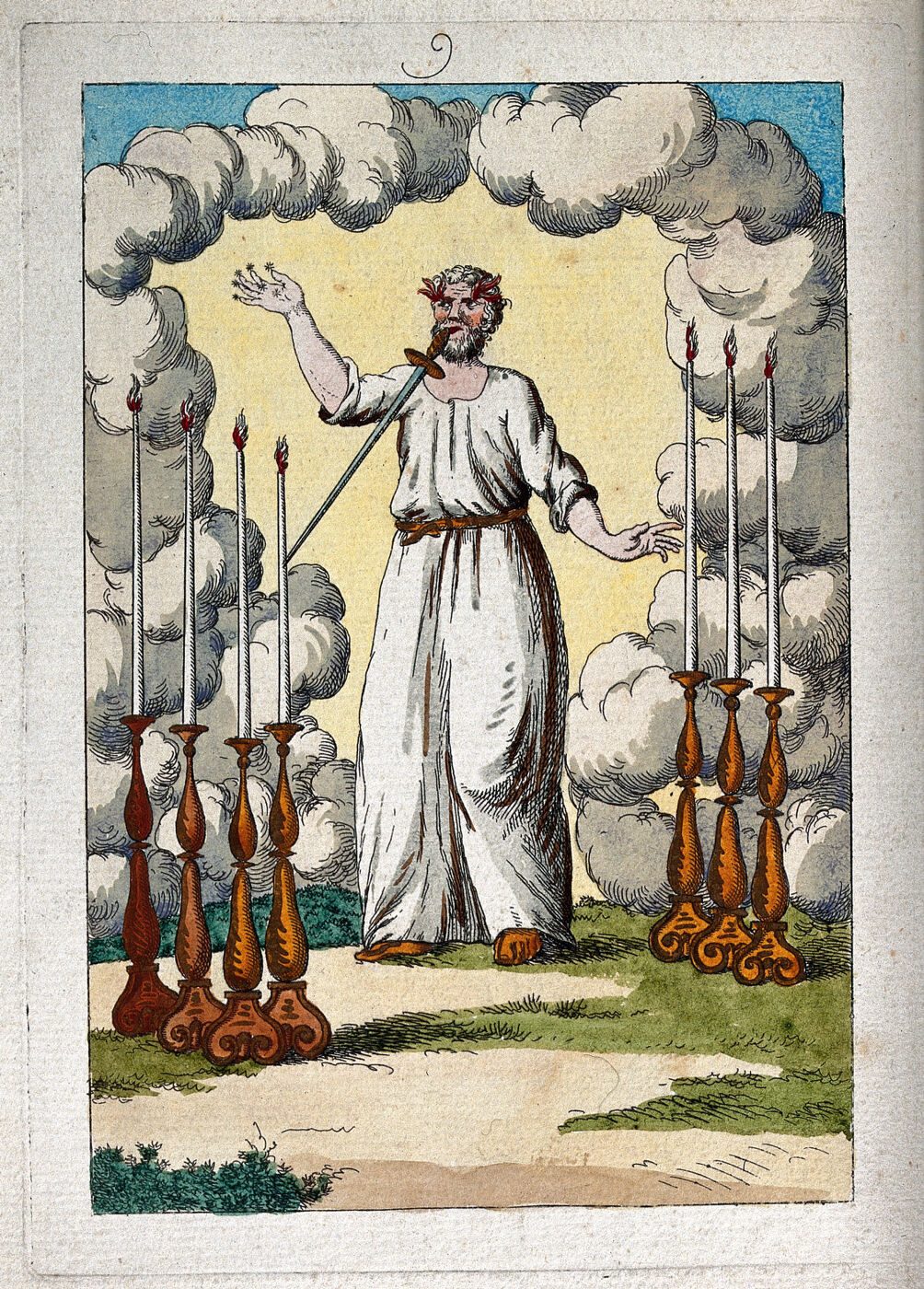
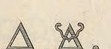
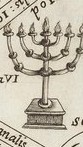
The first is counting. In the first chapter of the Apocalypse the flames are furniture, set out in a row and then explained: “And being turned, I saw seven golden candlesticks”, and a few verses later, “And the seven candlesticks are the seven churches.” That is fire as enumeration. Molinier's coloured etching of 1772 sets four at the left and three at the right, and the arithmetic survives the translation into paint. The natural philosophers count it too. Fludd's monochord of 1617 puts Ignis at the top of the four elements, the last step of the material fourth before the orb of the sun, on which, he says, “Diapente, Diatessaron & Diapason spiritualia elevantur”, the spiritual fifth, fourth and octave are raised; the Encyclopédie's table of 1763 reduces fire to a sign, a triangle lettered Feu, with a second sign for the fire of the wheel; and Kircher's tree of 1653 burns a seven-branched lamp beside Beauty and two altars beside Foundation, the furniture of the Tabernacle, which Hall noticed on the plate: “In Kircher's Sephirothic Tree it should be especially noted that the ornaments of the Tabernacle appear in the various parts of the diagram.”
The second job is destruction, and the tarot does it without ceremony. Waite on the Tower of 1909 declines to interpret at all: “It is idle to indicate that it depicts ruin in all its aspects, because it bears this evidence on the surface.” It is a rare moment in his key. The picture is doing the work and the commentator steps back. Hall's Typhon breathes the same fire: “From its mouth and nostrils poured sheets of flame”.
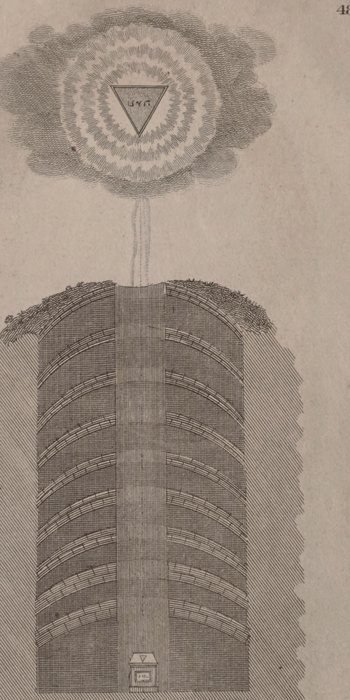
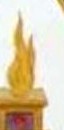
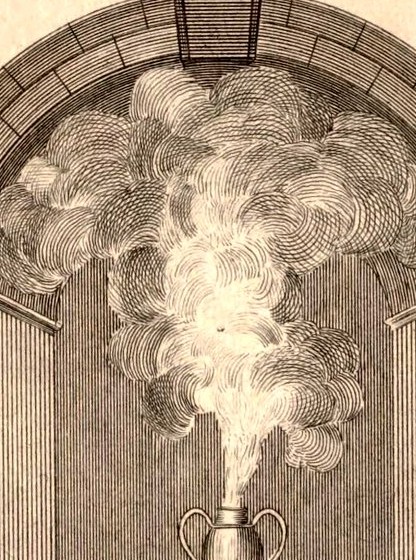
The third job is the oldest. Hall's caption to the Zodiacal Egg begins “In the midst of Cosmos stands the fiery altar of Divinity”, and the three elders round it wear flames on their heads. Lévi's Baphomet carries “The torch of intelligence burning between the horns”, which “is the magical light of universal equilibrium; it is also the type of the soul exalted above matter, even while connecting with matter, as the flame connects with the torch”; Waite's Devil of 1909 holds the same torch “inverted towards the earth”. The Gemma manuscript of about 1735 draws creation as a dark circle breaking into fire behind the circle lettered Chaos, gives Sophia a flame at her womb with a gold disc in it lettered Figura Divina, the divine figure, and on its Tree of Life sets a fire burning on a hill under the words “Lumen Naturae”, the light of nature. Cross's chart of 1819 does the same job twice, by scripture and by lecture: the burning bush plate cites Exodus, where “the Lord appeared to him in a flame of fire out of the midst of a bush”, and Doolittle drew the figure standing in the flame; and the pot of incense burns for a reason the monitor states outright, “as this glows with fervent heat, so should our hearts continually glow with gratitude”. A flame, in this material, is the visible part of something that has no body.
The fourth job is Maier's, and his Atalanta Fugiens of 1618 is the archive's book of furnaces, twelve emblems with fire in them. He tells the reader what fire cannot do: “Ignire ignis amat, non aurificare, sed aurum”, fire loves to make fire, not to make gold; gold does that. His fires harden, as Thetis held Achilles in the flames so that the medicine, like a child, “queat igne frui”, can enjoy the fire; they revive, for the dried hermaphrodite “indiget igne”, needs fire, and life comes straight back; and they rank themselves, four spheres of flame stacked in the sky with Vulcan's at the bottom and the sun's at the top, “Orbita quadruplex hoc regit ignis opus”, a fourfold orbit governs this work of fire. The workman's fire is the lowest of the four, and a means.
Khunrath's fires of 1609 belong to the third job and the fourth at once. On the gate of his amphitheatre seven rays of fire come out of the dark doorway, and the caption says what they are: leave to enter is given “secundum leges oraculares septem ante portam coruscantes”, according to the seven oracular laws blazing before the gate, and the rays are lettered with the laws, the second of them “Jehovah, unum omnium effectorem; ceteras potestates ministras habeto.”, hold Jehovah the one maker of all things. Fire as law, written in light. On his title a flame lettered with the Hebrew for fire burns on a globe lettered “Chaos Magnesiae.”, the chaos of Magnesia, his name for the first matter: fire over chaos, at the head of the pillar of prayer. On his rock of the Emerald Tablet the flame breaks from the apex and the text below tells the reader “Separabis terram ab igne, subtile a spisso, suaviter cum magno ingenio.”, separate earth from fire, the subtle from the thick, gently and with great skill. In his Oratory the fire is under the hood of the furnace, whose lintel promises “Sapienter retentatum, succedet aliquando.”, what is wisely tried again will one day succeed, and in the censer before the kneeling man, whose smoke is lettered “Ascendat ut fumus oratio, sacrificium Deo acceptabile.”, let prayer rise like smoke. And his owl stands between two candles and two torches and will not see, “Was helffen Fackeln, Licht oder Brilln, so die Leut nicht sehen wollen.” Dee, in 1564, puts the fire at the foot of his glyph as the sign of Aries, “Arietis nota mystica, ex duobus semicirculis, in communi puncto connexis, constituta.”, and letters it “Ignis.”; the moon and the sun of the monad, he says, wish their elements to be separated, “idque ignis fieri ministerio”, and that this be done by the ministry of fire. The fire is the servant under the cross of the elements, which is where Maier also puts it.
Hall's furnace stays outside all of them. In the plate of the Occultum Lapidem the flames are at the centre of the crystal, held rather than spreading, and Hall's caption reads the Stone as a whole and never names them. The archive records that silence rather than filling it. Fire in Hall's plate is a tool with a setting, and what the setting means there is not yet something anyone in the archive has written down.
Contested
The flames at the heart of the Occultum Lapidem are marked as observed and left unread: Hall's caption does not name them or the eagle standing in them. Waite's refusal to interpret the Tower is quoted as a refusal and should not be read as a meaning. Lévi is quoted in Waite's translation of 1896, checked against the French of 1861; Fludd's Latin and the Gemma's German and Latin are put into English by the archive, with the originals on the records. Cross's cloud of fire over the ark is tagged by eye and unread; Khunrath's fires and Dee's Aries are read from the words lettered on and beside them, put into English by the archive; Maier's are read on their records from his epigrams, and his discourses are not yet transcribed.
Sources
- The Apocalypse of Saint John, Douay Rheims, Challoner revision: Quoted from the Challoner revision, the English text the archive uses for the Apocalypse throughout.
- Arthur Edward Waite, The Pictorial Key to the Tarot: Waite commissioned the 1909 designs and wrote the key to them, so his account is the closest thing the deck has to an author's statement.
- Manly P. Hall, The Secret Teachings of All Ages: Hall's text and plate captions, 1928. Transcribed here, not yet read against a printed folio.
- Éliphas Lévi, Dogme et Rituel de la Haute Magie: The description of the frontispiece in the fifteenth chapter of the Rituel, quoted in Waite's translation of 1896 and checked against the 1861 French printing.
- Robert Fludd, Utriusque cosmi historia, 1617: The chapter on the music of the world in the first tractate, Oppenheim 1617, read in the Latin of the Getty Research Institute copy with the archive's English beside it.
- Gemma Sapientiae et Prudentiae, Wellcome Collection MS.2492, c. 1735: Three pages of a German Rosicrucian manuscript of about 1735, quoted in the writer's Latin and German with the archive's English.
- Jeremy L. Cross, The True Masonic Chart, or Hieroglyphic Monitor, 1826: The printed lectures of Cross's monitor, New Haven 1826, read against the page images of the Library of Congress copy; each emblem's sentence is quoted where the monitor carries it, and the plates whose lectures went unprinted say so.
- Exodus, Douay Rheims, Challoner revision: The third chapter, for the plate that cites it.
- Michael Maier, Atalanta Fugiens, 1618: The mottoes and epigrams of the fifty emblems, Oppenheim 1618, read against the page images of the Getty Research Institute copy; the English is the archive's own and is marked as such on every record. Maier's discourses, in which he explains each emblem at length, are not yet transcribed.
- Heinrich Khunrath, Amphitheatrum Sapientiae Aeternae, 1609: The lettering of the plates of the Amphitheatrum, Hanau 1609, read off the page images of the Wellcome and Paris copies at the size of the archive's own images; the Hebrew and Greek are given in transliteration and the English is the archive's.
- John Dee, Monas Hieroglyphica, 1564: The lettering of the figures and the theorems beside them in the Frankfurt printing of 1591, read off the page images of the Getty Research Institute copy; the English is the archive's.
On the same plate
Where it appears · 45
45 works in the archive carry Fire. First the 41 where it has been read, with Fire itself picked out.
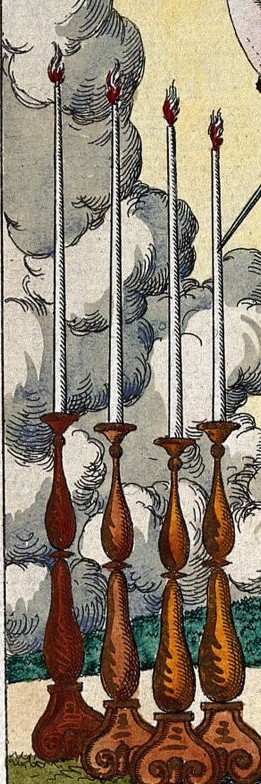
Christ Between Seven Candlesticks
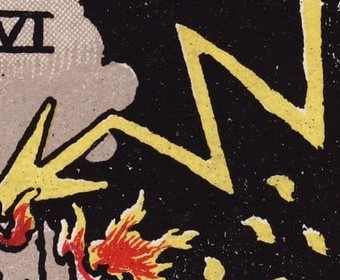
The Tower (XVI)
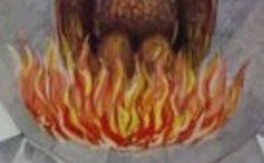
Occultum Lapidem, the Philosopher's Stone
Baphomet
The Contents of the Zodiacal Egg
Caracteres de Chymie, plate II

Monochordum Mundanum, the Divine Monochord
Systema Sephiroticum, the Tree of the Sephiroth
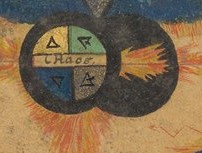
Figura Divina: Theosophia, Cabalia, Chimia
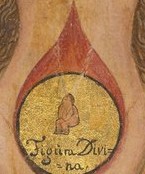
Jungfrau Sophia, the Virgin Wisdom
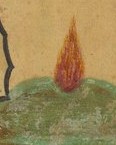
Der Baum des Lebens, the Tree of Life
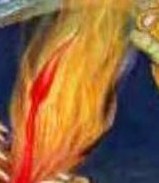
Hermes Standing upon the Back of Typhon
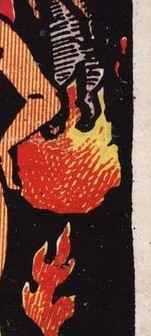
The Devil (XV)
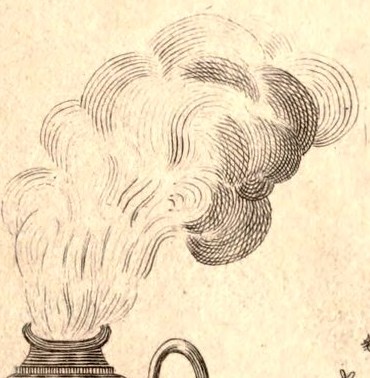
The Pot of Incense and the Beehive
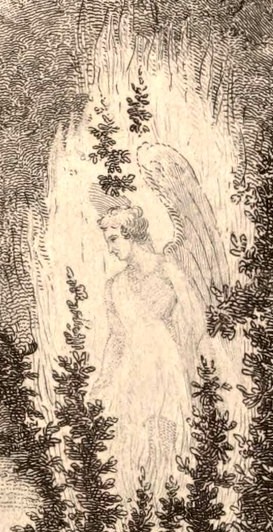
The Burning Bush
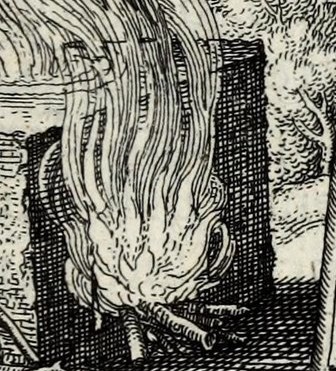
Vade ad mulierem lavantem pannos, tu fac similiter
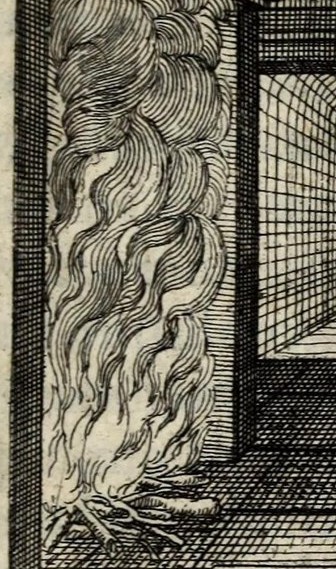
Accipe ovum & igneo percute gladio
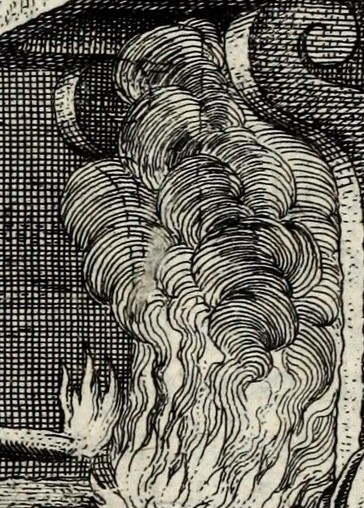
Da ignem igni, Mercurium Mercurio, & sufficit tibi
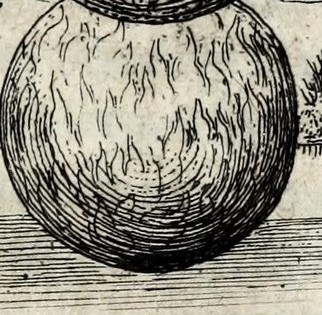
Orbita quadruplex hoc regit ignis opus
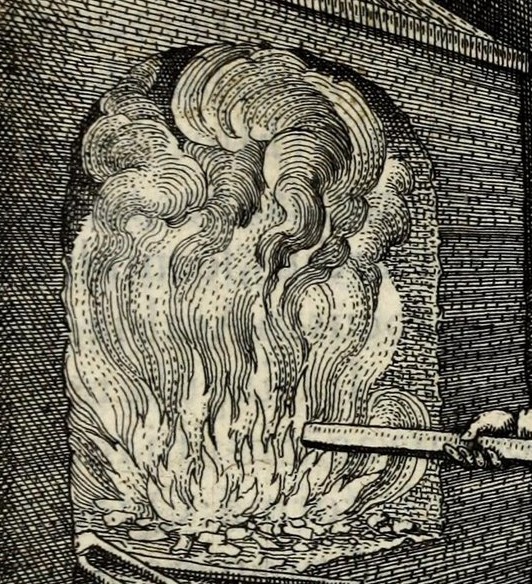
Ignire ignis amat, non aurificare, sed aurum
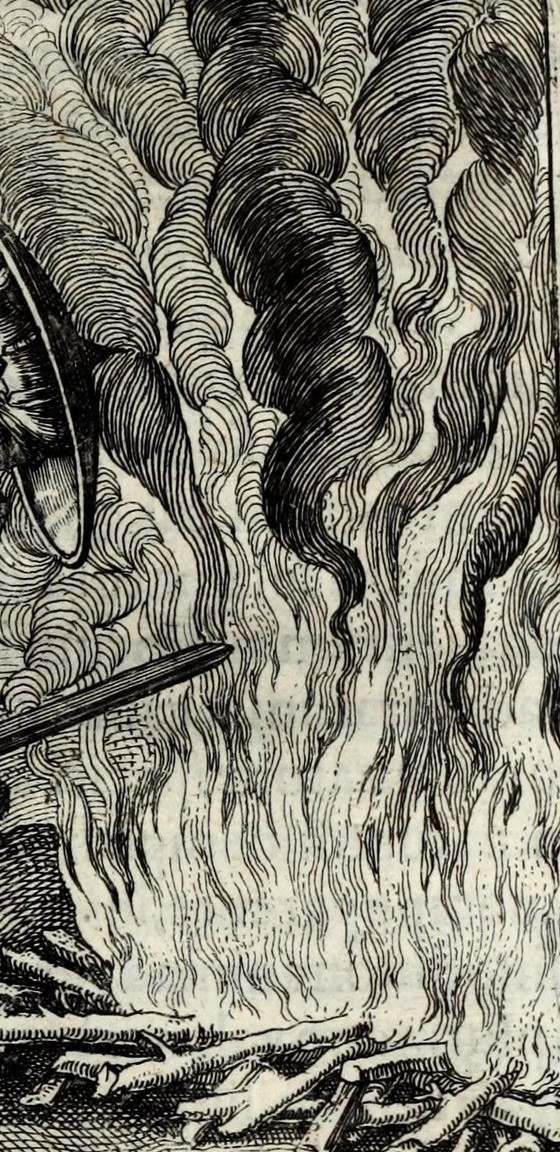
Naturam natura docet, debellet ut ignem
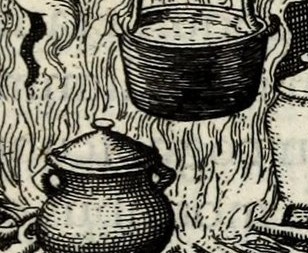
Plumbo habito candido fac opus mulierum, hoc est, COQUE
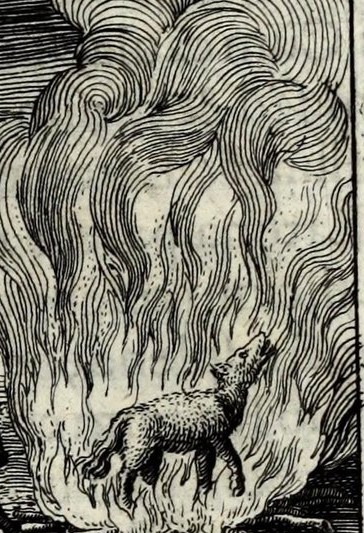
Regem lupus voravit & vitæ crematus reddidit
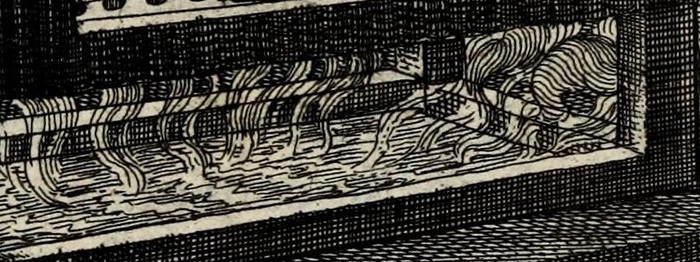
Rex balneatur in Laconico sedens, Atrâque bile liberatur à Pharut
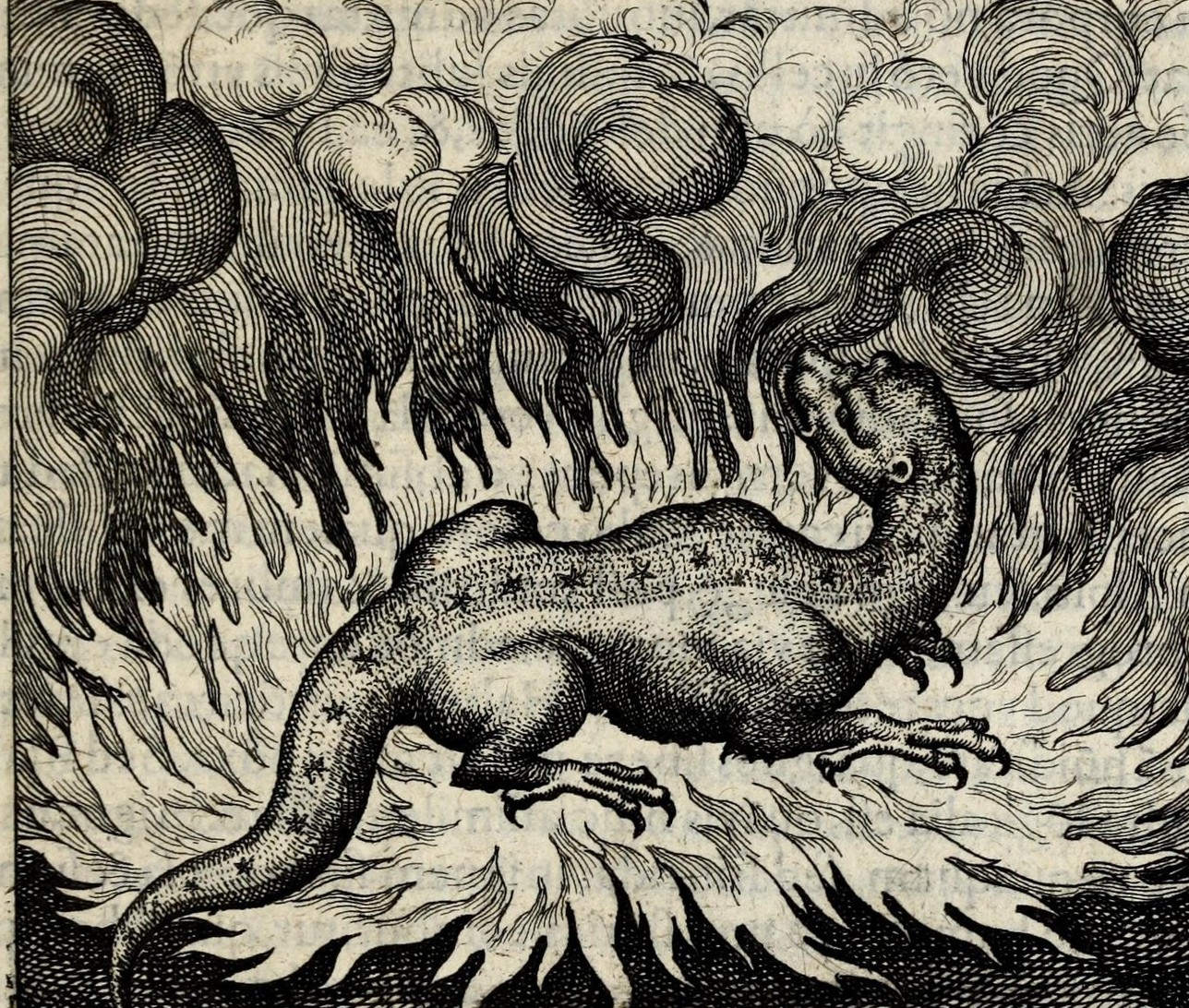
Ut Salamandra vivit igne sic lapis
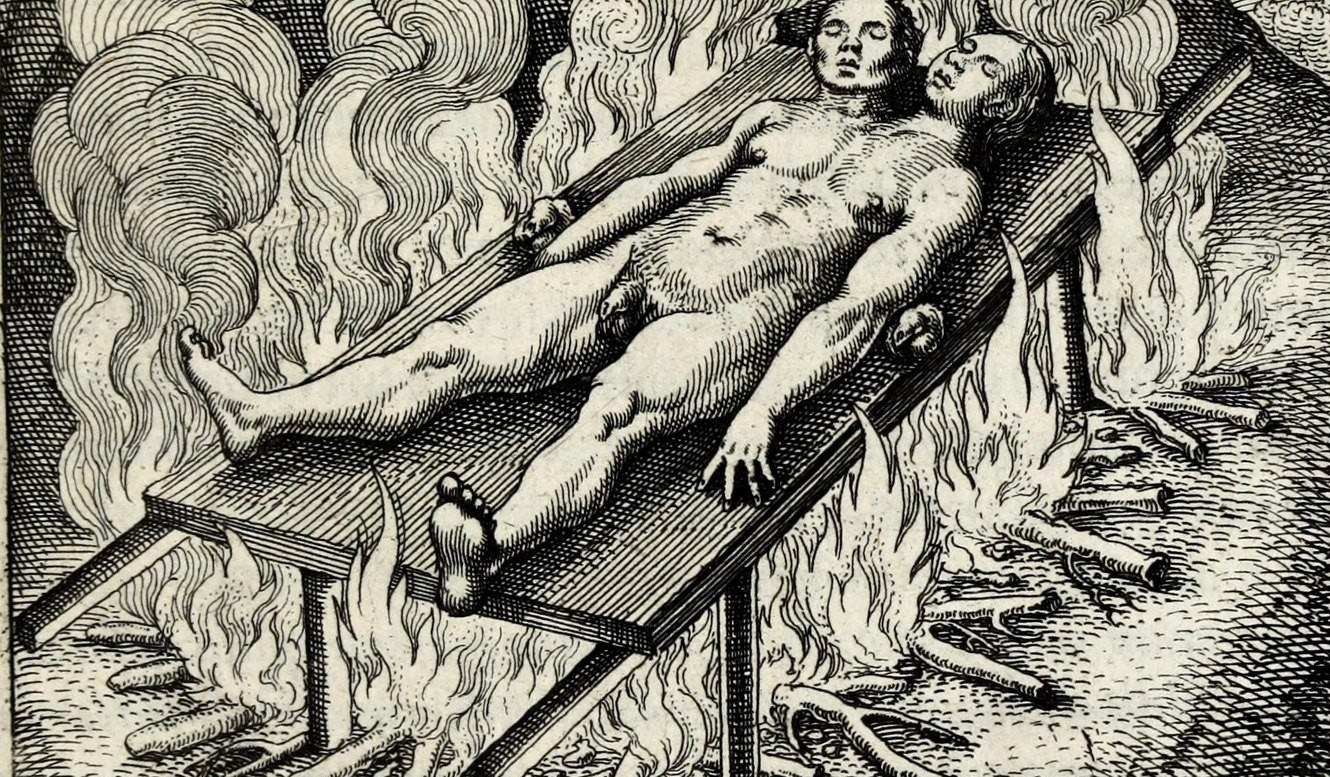
Hermaphroditus mortuo similis, in tenebris jacens, igne indiget
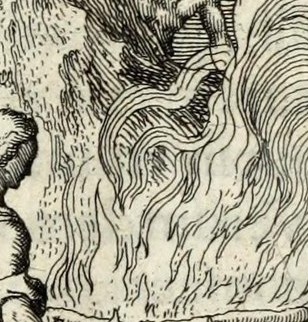
Ceres Triptolemum, Thetis Achillem, ut sub igne morari assuefecit, sic artifex lapidem

The engraved title of the Amphitheatrum Sapientiae Aeternae
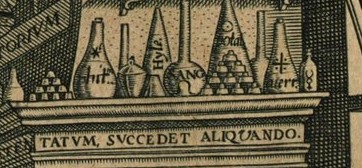
The Oratory and the Laboratory
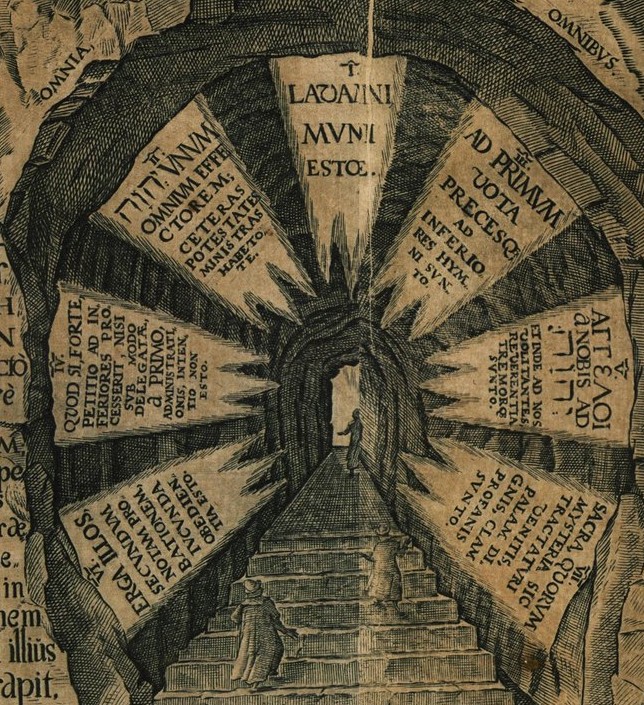
Porta Amphitheatri Sapientiae Aeternae
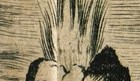
Designatio Pyramidum Petrosarum Triumphalium
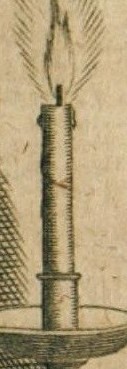
Was helffen Fackeln, Licht oder Brilln, so die Leut nicht sehen wollen
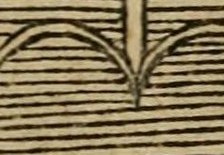
Monas Hieroglyphica, the hieroglyphic monad on the title
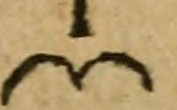
Theorem XI: the monad with its parts named
The cloud filling the Temple
With Dreams upon my bed thou scarest me
Rivers in the Wilderness, with Serpents and Fire
The Sun and the Moon over the King and the Queen
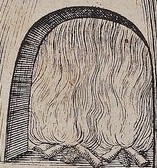
The idol Moloch with seven chambers
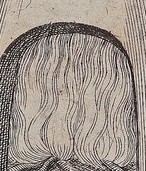
The idol Moloch with the children in his arms
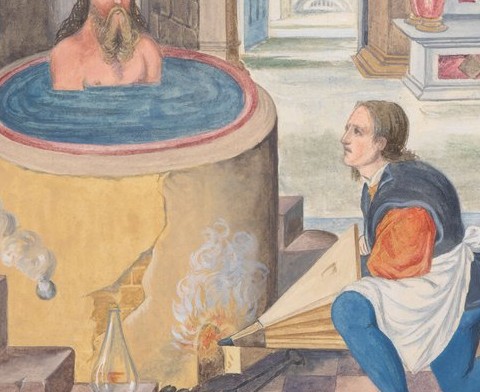
The man in the boiling bath with the dove on his head
As the subject · 1
Works filed under Fire as their central motif, not yet read symbol by symbol.
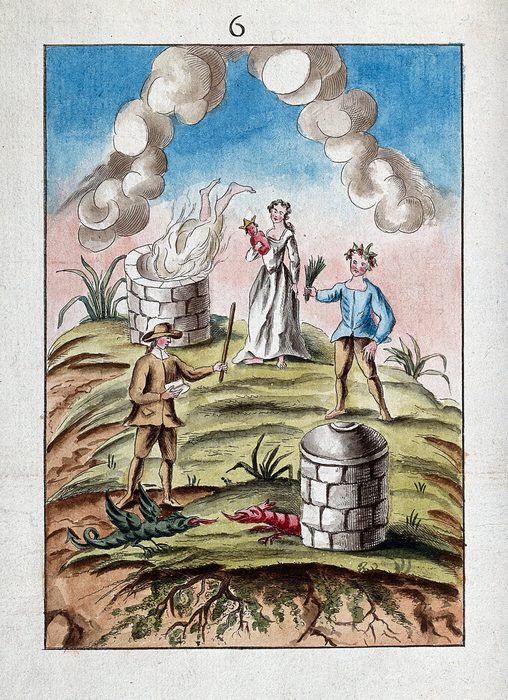
As a detail in 3 more
In these Fire is somewhere in the picture, tagged by eye, and nobody has read it yet. When one of them is read, it goes out on a Sunday.