The Divine
the Godhead, the Creator, the Trinity, the Name, Ain Soph
God shown, or pointed at. Look for what stands where a face would be: a name in a cloud, a circle above the top of a diagram, a ring of verses, a sign over a head.
Forty works here carry a sign of the divine, and the ones the archive has read divide by one test: whether the maker drew a body or wrote a name.
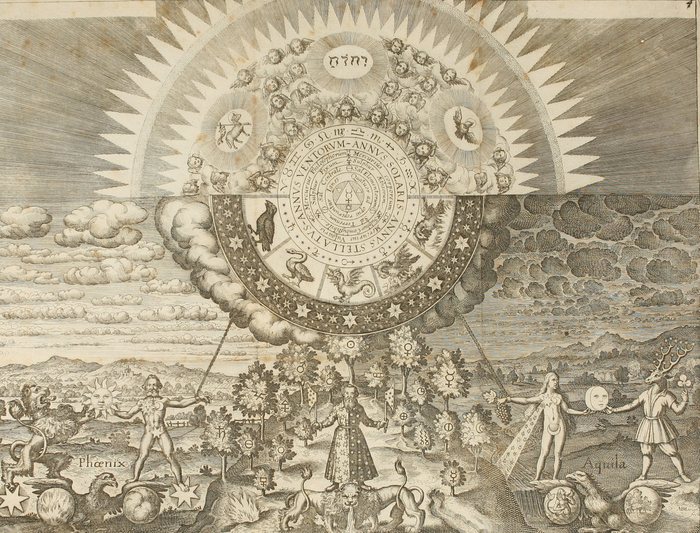
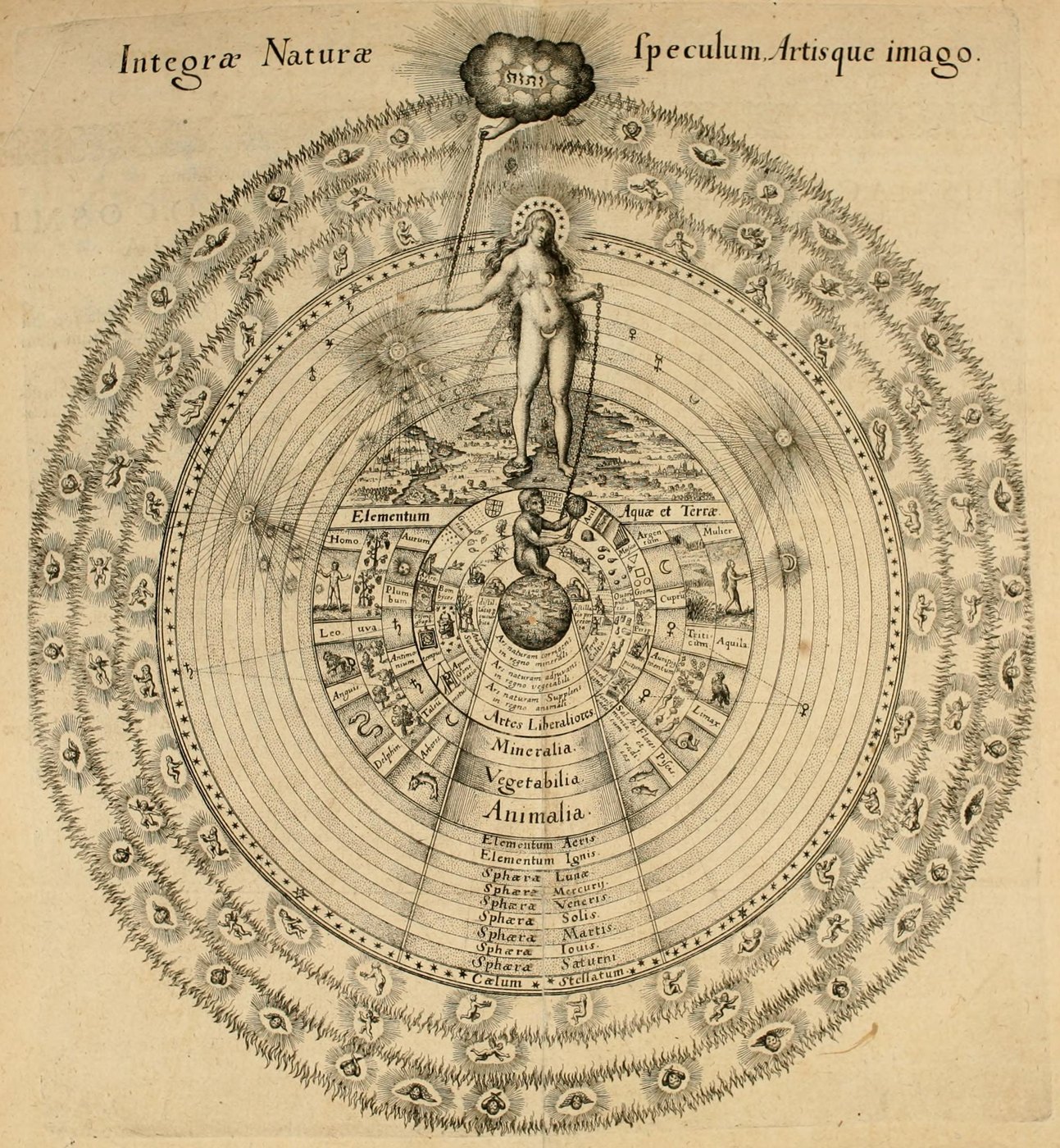
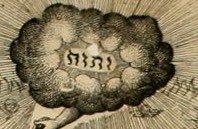
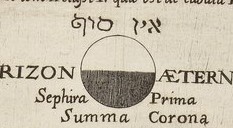
The names come first. Fludd's mirror of nature of 1617 puts a cloud at the top of the picture with the four Hebrew letters of the Name in it, and a hand reaches down out of the cloud; the table facing the plate says the mirror shows how God “In principio omnia metaphysicè creavit”, created all things metaphysically in the beginning. Kircher, in 1653, hangs his Tree of the Sephiroth from a small circle, half light and half dark, lettered the horizon of eternity, with Ain Soph above it. The circle is outside the tree, and his chapter says why: the name means the infinite, and “Dicitur etiam non ens, propter Dei altissimi incomprehensibilitatem”, it is also called non-being, because of the incomprehensibility of God most high; the ten names below are “vestimenta Dei”, the garments of God, put on for the creation of the world. The Gemma manuscript of about 1735 draws a ring of red and blue with an eye in a triangle at its centre and copies six verses round it, the Spirit of God over the waters, heaven made by the word of the Lord, the Son through whom everything visible and invisible was made. In all three, words stand where a face could have gone.
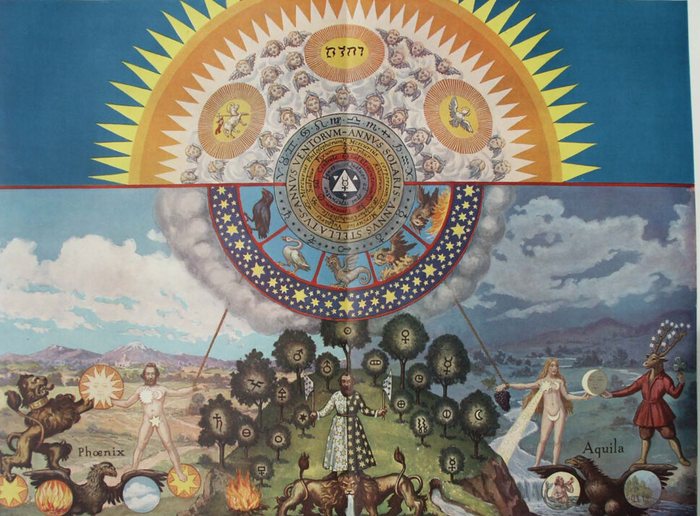
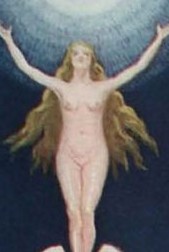
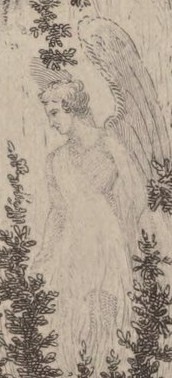
Where a body is drawn, a text stands behind it. Hall's Zodiacal Egg of 1928 has three old men with flames on their heads, and his caption makes them “the triune aspect of the central One”, who “continually adore their own Source”: a trinity drawn as its own worshippers. His Ancient of the Ancients sits on “a throne of flaming light”, robed in red “to signify that the garments of Divinity partake of the nature of cosmic activity”. The Grand Man of the Zohar is Adam Kadmon, “depicted as a giant” in Lévi's retelling as Waite translated it, the same sense in which Swedenborg, Lévi says, held that “entire creation is only a titanic man”. Hermes on the back of Typhon is a god appearing to a candidate, a Form “considerably larger than that of a mortal man”, and, to the Egyptians as Hall reports them, “the embodiment of the Universal Mind”. Cross's burning bush of 1819 draws the appearance in Exodus as a winged figure standing in the flame, and the Challoner note on the verse says what such a figure is: “The Lord appeared.... That is, an angel representing God, and speaking in his name.”
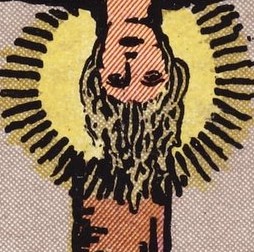
The one face drawn straight from scripture is Christ among the seven candlesticks. Molinier's etching after Flamel follows the first chapter of the Apocalypse line by line, “one like to the Son of man, clothed with a garment down to the feet”, and “from his mouth came out a sharp two-edged sword”. Waite's two cards of 1909 carry the divine as a sign rather than a person: over Strength floats “the same symbol of life which we have seen in the card of the Magician”, where he had called it “the mysterious sign of the Holy Spirit”, and the Hanged Man has a nimbus about his head on a card which, Waite says, “expresses the relation, in one of its aspects, between the Divine and the Universe”.
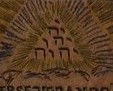
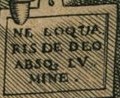
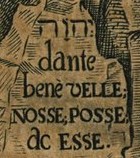
Khunrath, in the Amphitheatrum of 1609, writes the Name more often than anyone here and never draws a face for it. On his title it fills a triangle of light with “Perseverando.” on the cloud beneath, and a second glory at the foot reads “Jehovah Elohim, mediantibus Schamajim.”, Jehovah Elohim through the mediation of the heavens. On the plate of the Name the letters are stacked as a pyramid, and under them in a cloud hangs a dark globe lettered “Ain Soph.”, the Infinite, Kircher's non-being drawn as a black disc forty years before Kircher; the Son is at the centre of the same plate, inside the sun, with “In hoc signo vinces. Dei Filius vere erat ipse.” round him. On the Oratory the Name is on the band of the tent, “Oratorium. Felix cui Jehovah a consiliis.”, happy is he whose counsellor is Jehovah, and the tablet inside says “Ne loquaris de Deo absque lumine.”, do not speak of God without light. On the landscape of the school of Nature the Name sends a ruled beam down into the mountains lettered “Cum Numine Lumen, et in Lumine Numen.”, with the Deity light, and in the light the Deity; and on the gate of the amphitheatre it is cut into the rock over “Jehovah dante, bene velle, nosse, posse ac esse.”, Jehovah giving it, to will well, to know, to be able and to be. Six plates, and God on all of them as four Hebrew letters and a Latin sentence.
The same book does one thing with the Name that nothing else in the archive does. On the plate Khunrath made against the slanderers, the Name stands in its radiance at the head of the sheet and cut directly beneath it, in the vocative, is a man: “HENRICE KHVNRATH”. Everywhere else here the Name stands over a cosmos, a tree or a hierarchy. On this sheet it stands over one living person, addressed by his own name, while the air below him fills with his accusers and a banner between them carries a line of Virgil, “TV NE CEDE MALIS, SED CONTRA AVDENTIOR ITO:”, do not yield to evils but go against them more boldly. The Name is not being described on this plate. It is being called on, by a man in trouble, in the second person.
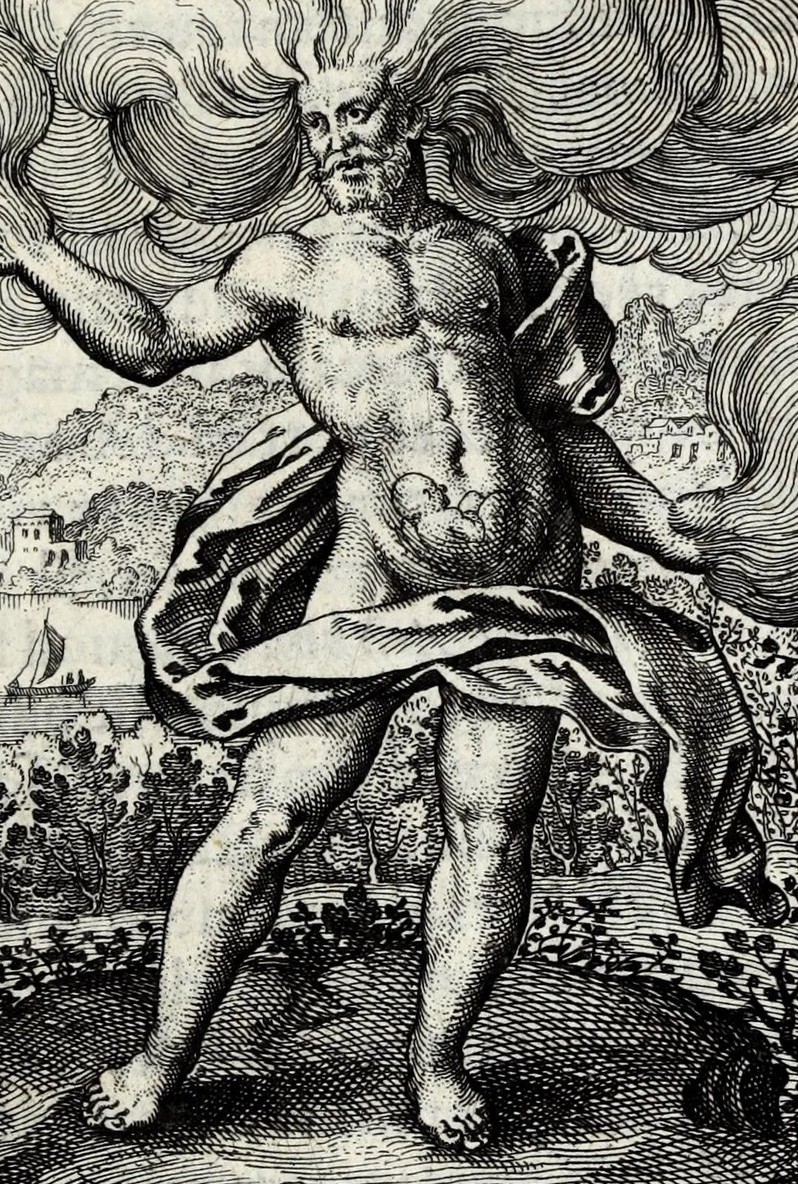
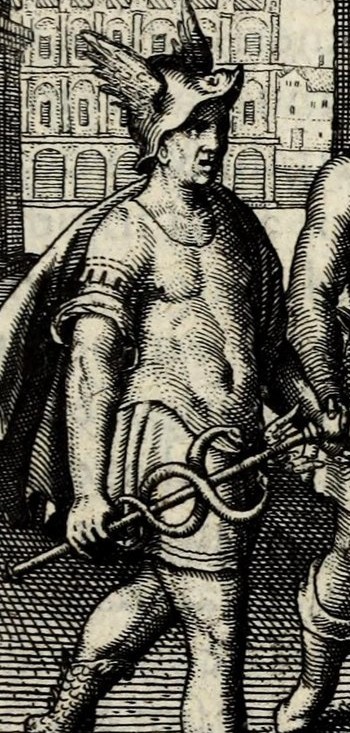
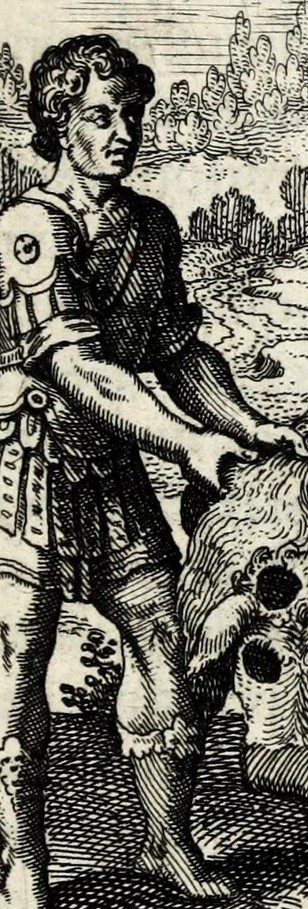
The gods of the old poets are here as well, in Maier's Atalanta Fugiens of 1618: Boreas with a child in his belly, Mercury led to the furnace, Saturn's stone flung down on Helicon, Vulcan splitting Jove's head for Pallas, Jupiter receiving his eagles, Mercury and Venus as the parents of the hermaphrodite. Maier says in his own epigram what they are for. “Sic ceu verba sonant rem captas, mens tibi laeva est”, if you take the thing as the words sound, your mind is turned the wrong way, “Namque est Saturni CHEMICUS ille LAPIS”, for that stone of Saturn is a chemical one. The gods are drawn because the recipes were written in gods, and the man who drew them tells the reader not to take them for gods.
So in this archive the divine is written before it is drawn. A name, a verse, a chapter or a sign stands where the face would be, and where a body appears it is one a text had already described. The hand that reaches out of Fludd's cloud and the eye at the centre of the Gemma's ring belong to this figure and have entries of their own.
Contested
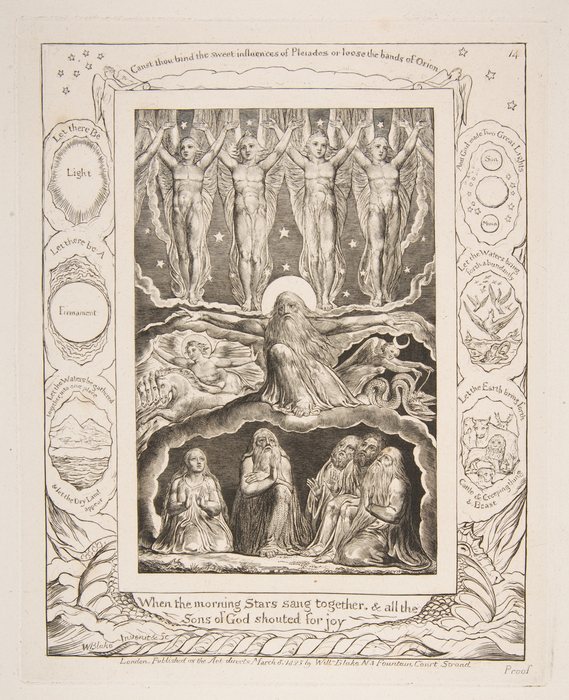
The grouping is the archive's. The entry describes what stands at the top of these pictures and what their makers wrote about it, and goes no further; Fludd's and Kircher's Latin and the Gemma's German are put into English by the archive, with the originals on the records. Hall's captions are transcriptions not yet read against a printed folio, and his account of Hermes reports what he says the Egyptians held. Lévi reaches the archive in Waite's translation of 1913, the text Hall was also quoting. The Name in the light above Hall's throne, and the figure standing beneath it with arms raised, are observed on the plate and left unread: Hall names neither. Whether the sign over Strength and the nimbus of the Hanged Man belong here at all rests on two sentences of Waite's, and the entry files them where he put them.
The group is wider than the entry. The wall files Blake's God judging Adam and Cross's letter G under the group too, tagged by eye and unread; Khunrath's six plates are read from their own lettering, put into English by the archive, with the Hebrew given in transliteration. Maier's gods are read on their records from his epigrams, and the entry takes his word that they are figures of speech.
Sources
- Robert Fludd, Utriusque cosmi historia, 1617: The table facing the mirror of nature in the first tractate, Oppenheim 1617, read in the Latin of the Getty Research Institute copy with the archive's English beside it.
- Athanasius Kircher, Oedipus Aegyptiacus, 1653: The chapter on the Cabala of the Hebrews in the second volume, Rome 1653, on Ain Soph and the garments of God, read in the Latin of the Universidad de Sevilla copy with the archive's English beside it.
- Gemma Sapientiae et Prudentiae, Wellcome Collection MS.2492, c. 1735: The Figura divina page of a German Rosicrucian manuscript of about 1735, whose six Bible verses are copied round the ring in the writer's German; quoted as written, with the archive's English.
- Manly P. Hall, The Secret Teachings of All Ages: Hall's text and plate captions, 1928. Transcribed here, not yet read against a printed folio.
- Éliphas Lévi, The History of Magic, 1913: Lévi's retelling of the Zohar's Adam Kadmon, quoted in A. E. Waite's translation, which is also the text Hall quotes under his plate.
- The Apocalypse of Saint John, Douay Rheims, Challoner revision: Quoted from the Challoner revision, the English text the archive uses for the Apocalypse throughout.
- Arthur Edward Waite, The Pictorial Key to the Tarot: Waite commissioned the 1909 designs and wrote the key to them, so his account is the closest thing the deck has to an author's statement.
- Exodus, Douay Rheims, Challoner revision: The third chapter, with Challoner's note on the second verse, for Cross's plate of the burning bush, which cites it.
- Michael Maier, Atalanta Fugiens, 1618: The mottoes and epigrams of the fifty emblems, Oppenheim 1618, read against the page images of the Getty Research Institute copy; the English is the archive's own and is marked as such on every record. Maier's discourses, in which he explains each emblem at length, are not yet transcribed.
- Heinrich Khunrath, Amphitheatrum Sapientiae Aeternae, 1609: The lettering of the plates of the Amphitheatrum, Hanau 1609, read off the page images of the Wellcome and Paris copies at the size of the archive's own images; the Hebrew and Greek are given in transliteration and the English is the archive's.
On the same plate
Where it appears · 40
40 works in the archive carry the Divine. First the 30 where it has been read, with the Divine itself picked out.
Integrae Naturae Speculum Artisque Imago
Systema Sephiroticum, the Tree of the Sephiroth
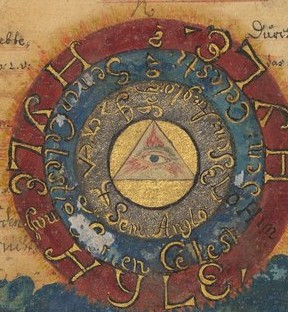
Figura Divina: Theosophia, Cabalia, Chimia
The Contents of the Zodiacal Egg
The Ancient of the Ancients
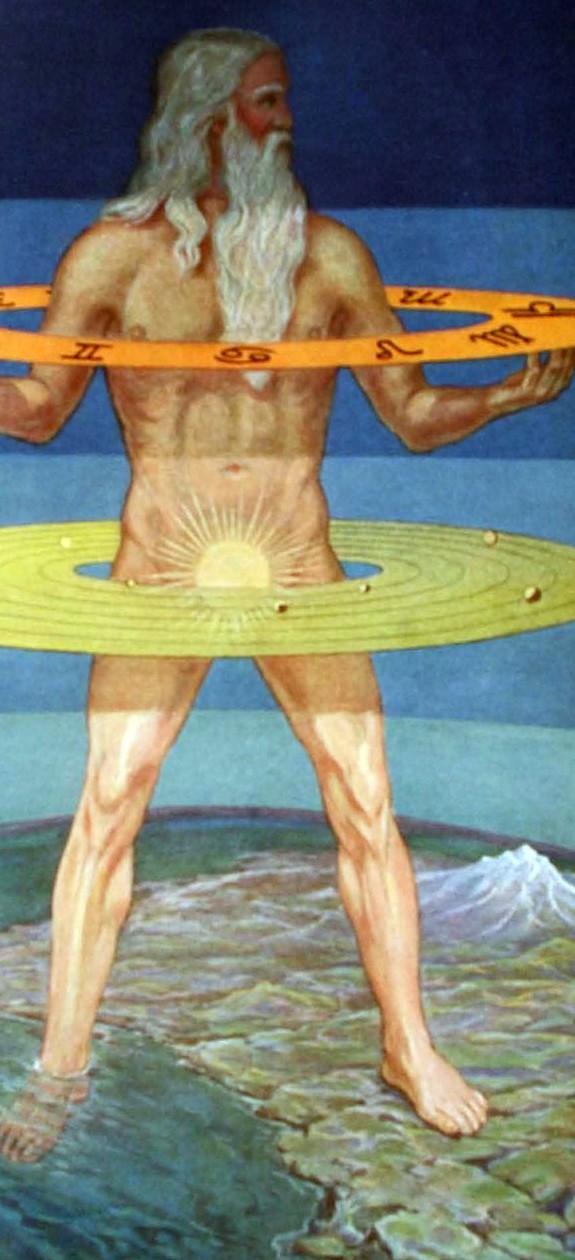
The Grand Man of the Zohar
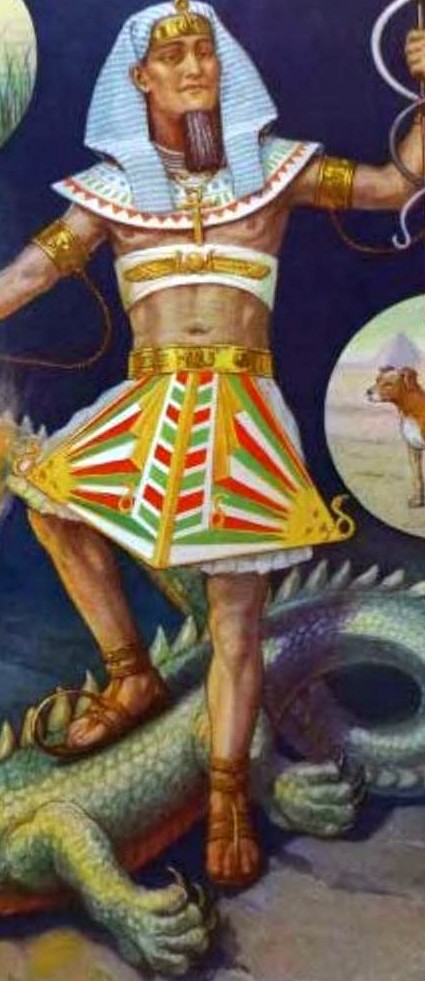
Hermes Standing upon the Back of Typhon
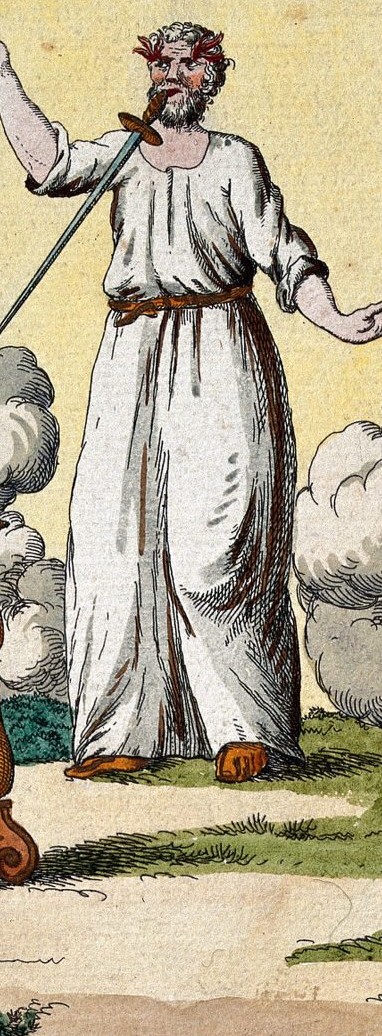
Christ Between Seven Candlesticks
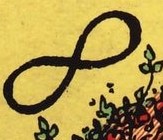
Strength (VIII)
The Hanged Man (XII)
The Burning Bush
Portavit eum ventus in ventre suo
Da ignem igni, Mercurium Mercurio, & sufficit tibi
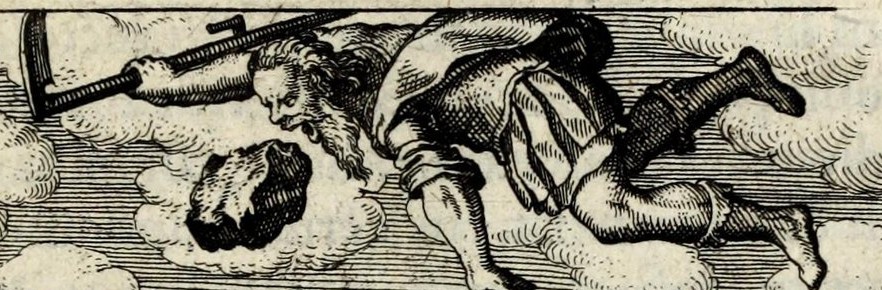
Lapis, quem Saturnus, pro Jove filio devoratum, evomuit, Pro monumento in Helicone mortalibus est positus
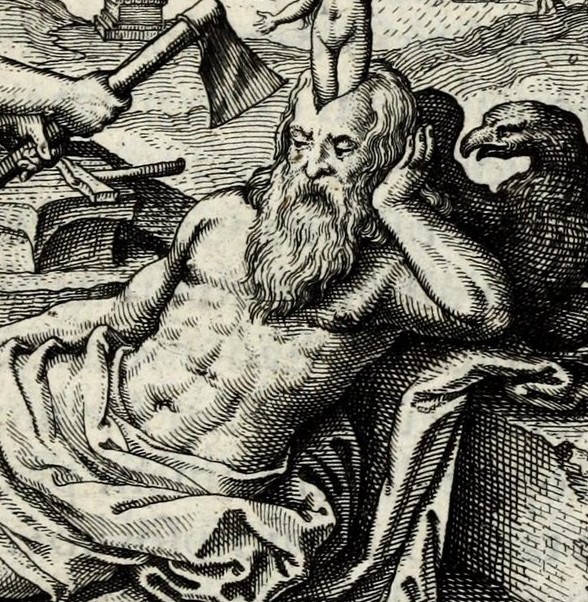
Aurum pluit, dum nascitur Pallas Rhodi, & Sol concumbit Veneri
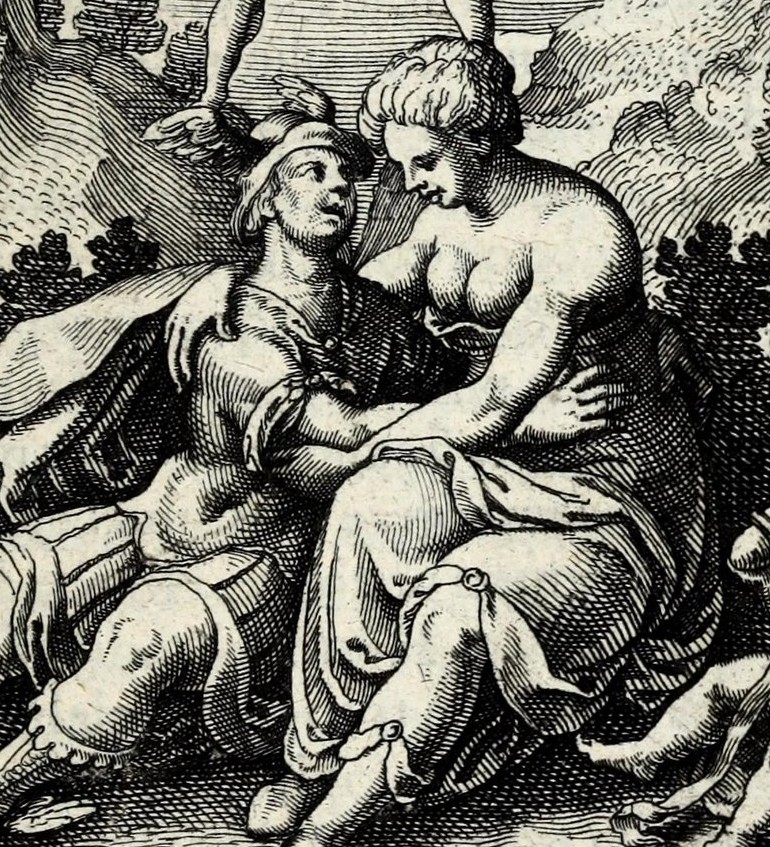
Rebis, ut Hermaphroditus, nascitur ex duobus montibus, Mercurii & Veneris
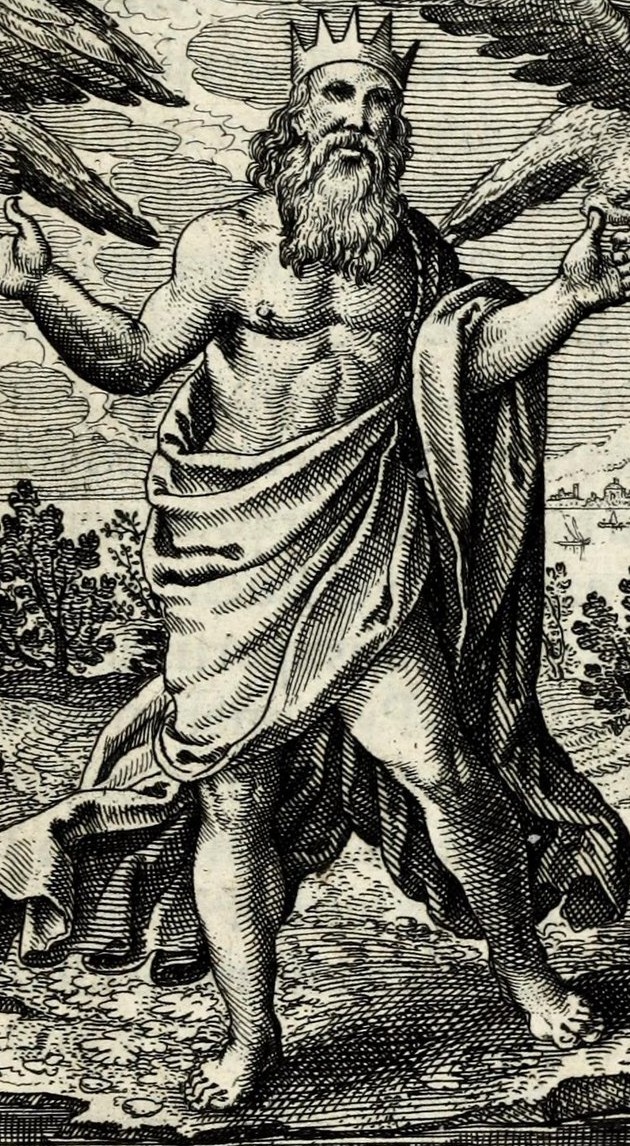
Aquilæ duæ, una ab ortu, altera ab occasu conveniunt
Infans Philosophicus tres agnoscit patres, ut Orion
The engraved title of the Amphitheatrum Sapientiae Aeternae
The Oratory and the Laboratory
Porta Amphitheatri Sapientiae Aeternae
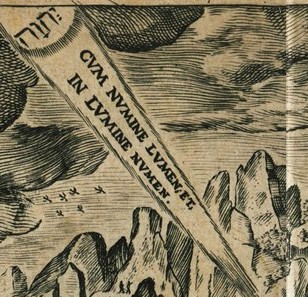
Adumbratio Gymnasii Theo-magici, macro-cosmici, catholici
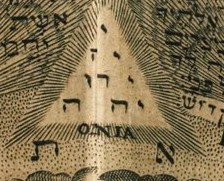
The Name in the pyramid, Christ in the sun, and the two commandments round the rim
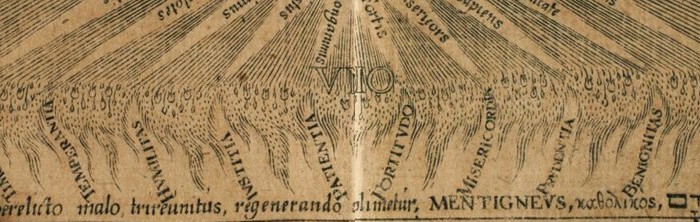
The regenerate man, Ora and Labora lettered on his arms, with the Book and its seals
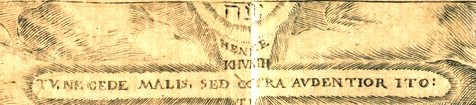
Against the slanderers, by right of retort
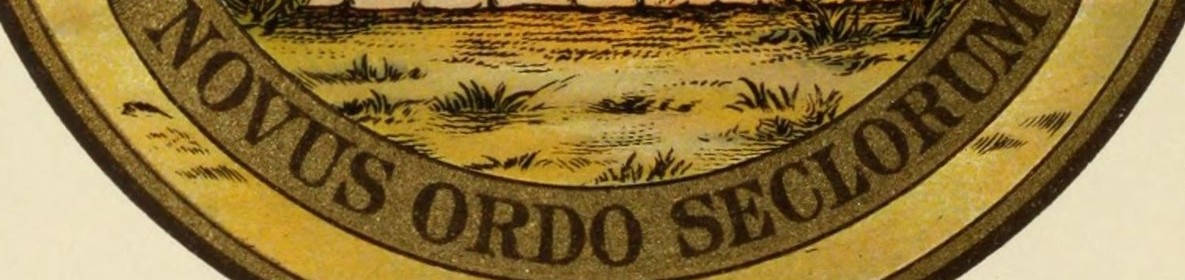
The Great Seal of the United States, the reverse
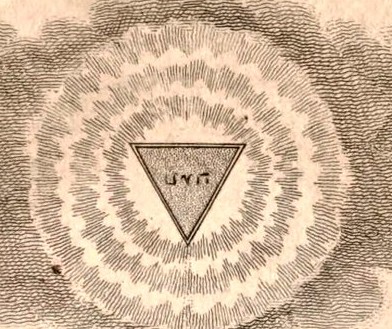
The Vault and the Delta in Glory
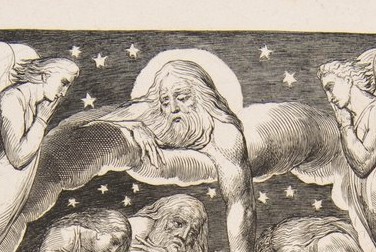
Behold now Behemoth which I made with thee
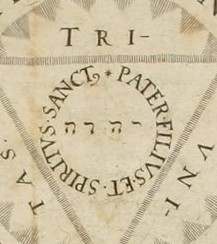
The archetypal world and the nine orders of angels
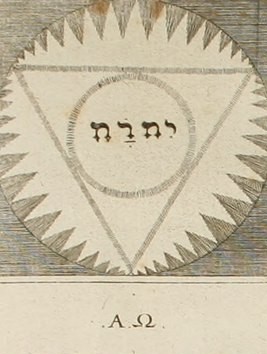
Creation in ten roundels, with Ripley’s prologue beneath
As the subject · 4
Works filed under the Divine as their central motif, not yet read symbol by symbol.
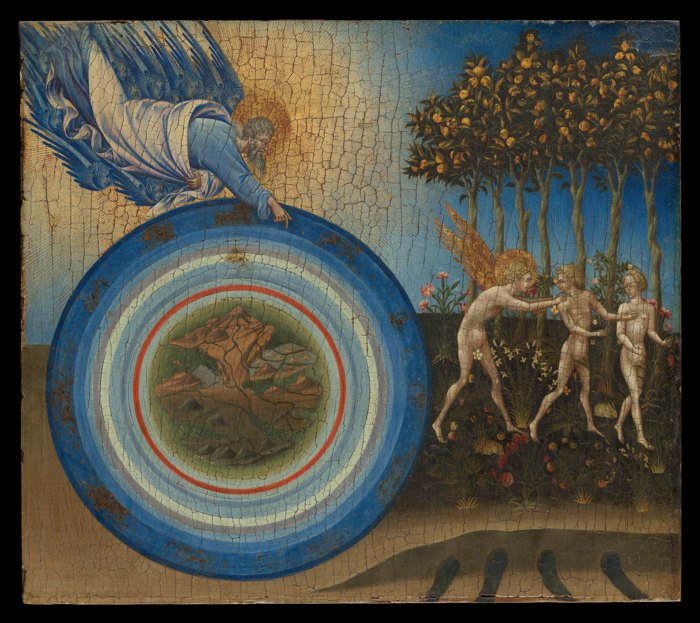 The Creation of the World and the Expulsion from Paradise
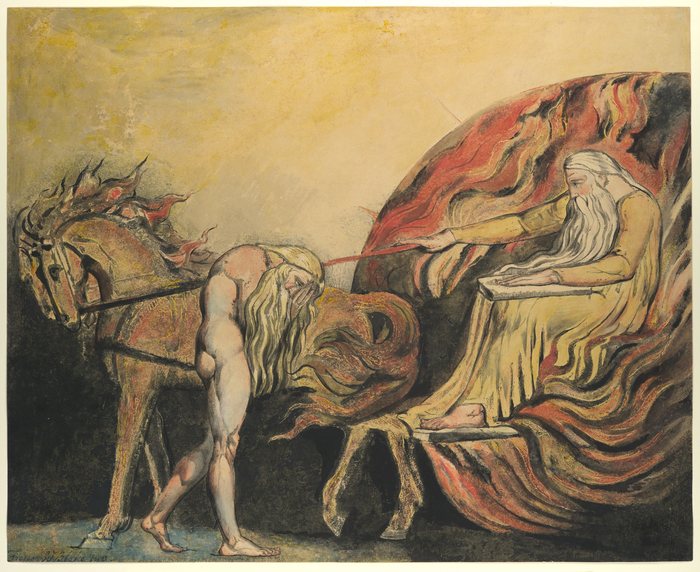 God Judging Adam
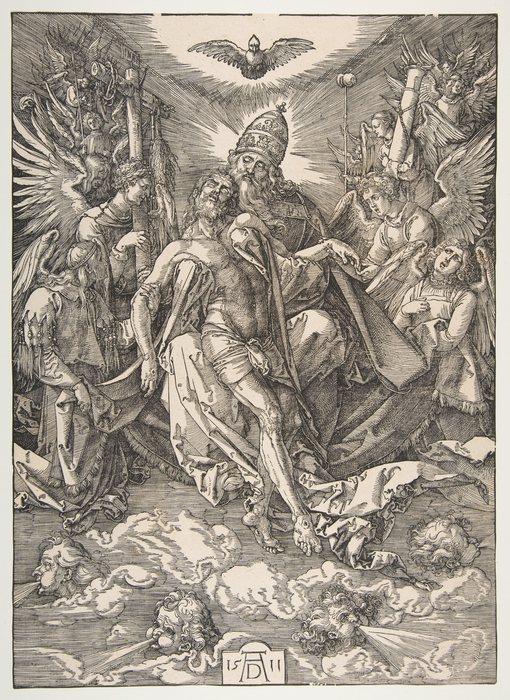 The Holy Trinity
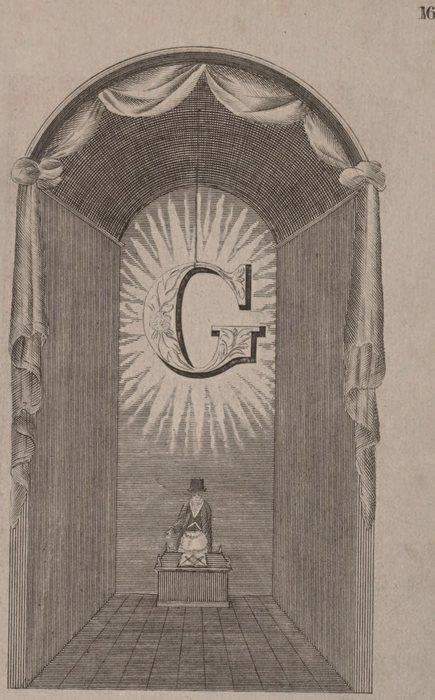 The Letter G
As a detail in 6 more
In these the Divine is somewhere in the picture, tagged by eye, and nobody has read it yet. When one of them is read, it goes out on a Sunday.