The tarot on the Tree of Life, and the fork in the chart
Every chart that hangs the twenty two trumps on the twenty two paths presents one system as the fact, and there is more than one. Lévi put the Magus at the first letter and argued it from the shape of the man’s body. Waite translated that book into English, then built a deck that does not follow it, renumbered two cards to make it work, and wrote that there was no cause for explanation.
Search for the tarot and the Tree of Life and you are handed a diagram. Ten circles, twenty two lines between them, and a trump sitting on every line. The charts are confident and they are beautiful and almost none of them says who decided the order.
Somebody did decide it, and more than one somebody, and they disagree. The disagreement has a date, it turns on a single card, and it is the reason two cards in the most reproduced deck in the world carry each other's numbers. The man who made that deck wrote one sentence about it and refused to write a second.
Ten circles, twenty two lines
The Tree comes into the archive through a Jesuit. Athanasius Kircher had a folding plate engraved for the second volume of his Oedipus Aegyptiacus in 1653, and the line across its top tells the binder where it belongs: the fourth class, on the Cabala of the Hebrews, explained from page 289. The plate is a summary of the doctrine of the ten Sephiroth, the ten names of God through which the infinite was said to flow into the world.
Count the lines on it. Ten circles, twenty two channels between them. That number is not an accident of the drawing. The Sefer Yetzirah counts thirty two ways of wisdom, ten and twenty two, and the twenty two are the letters of the Hebrew alphabet. So the Tree arrives already carrying an alphabet, and it has twenty two places to put something.
Read the plate closely and it goes further than the count. Kircher numbers every one of those channels on the engraving itself, Canalis I to Canalis 22, and sets a Hebrew letter on each one, and the letters run in plain alphabetical order: Aleph on the first, Beth on the second, Tau on the twenty second. The alphabet is not something a later reader laid over the diagram. It was cut into the copper in 1653, along with the ten divine names in the middle of the circles and the ten Sephiroth repeated around every ring.
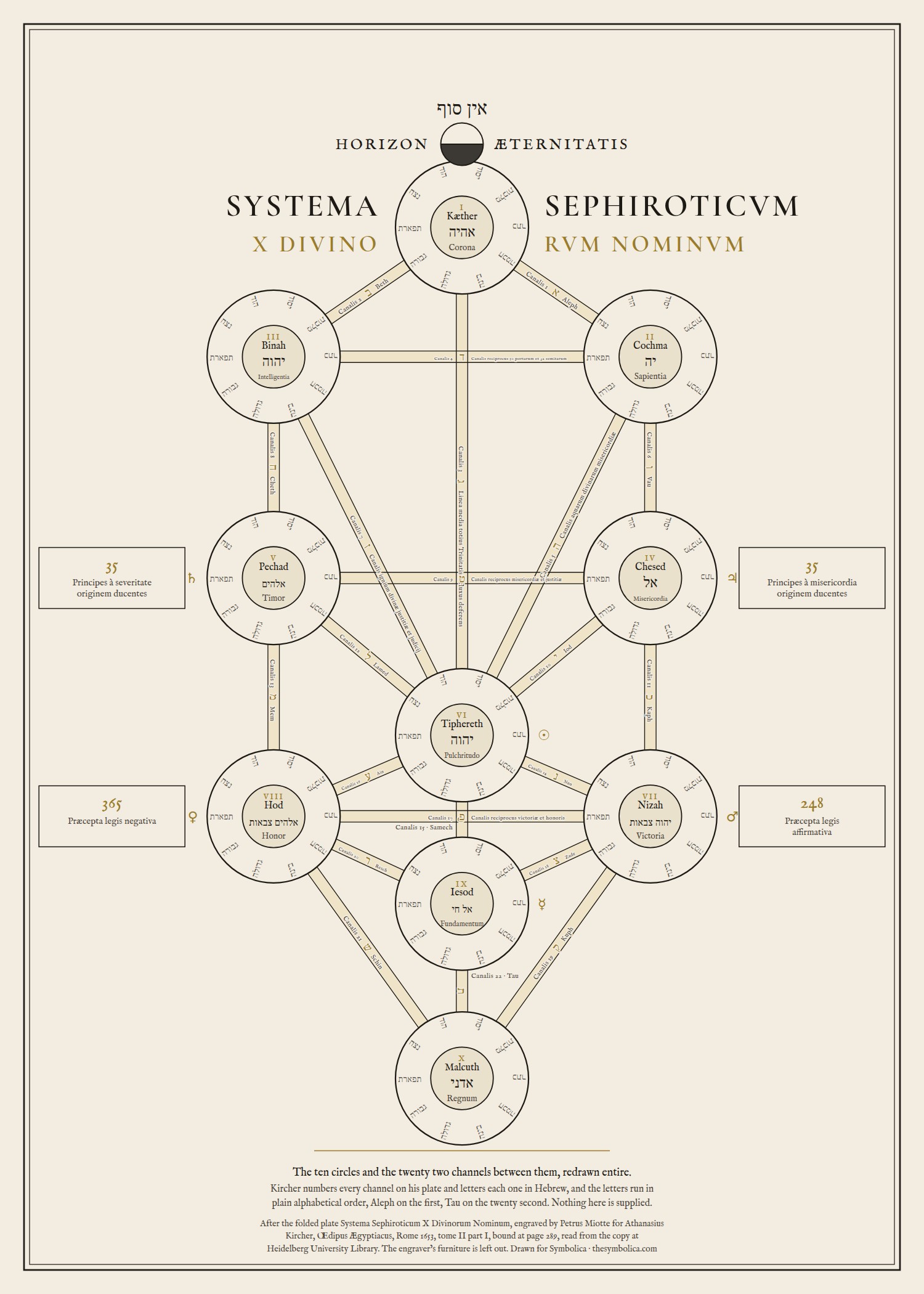
That is what makes the twenty two channels tempting and it is also what makes the temptation misleading. The plate already has something in all twenty two places. Anyone hanging cards on it is putting a second thing on a line that is spoken for.
The Major Arcana has twenty two cards. Anyone who noticed both numbers in the same century was going to try the obvious thing.
Lévi puts the first man at the first letter
Éliphas Lévi did it first in public, in Dogme et Rituel de la Haute Magie in 1856. What is striking, reading him rather than reading about him, is that he does not do it with a table. He does it with a picture, and he argues from the shape of the figure on the card.
His body and arms form the letter Aleph, the first of the alphabet which the Jews borrowed from the Egyptians; to this symbol we shall have occasion to recur later on.
Éliphas Lévi on the Magus, Transcendental Magic: its Doctrine and Ritual, the 1896 English edition, page 31, with his own footnote reading: See the Tarot cards.
A few pages later he says the same thing from the other end, describing the letter rather than the card: the first letter of the sacred alphabet represents a man extending one hand towards heaven and the other to earth. The Magus stands like that on the card. Lévi is reading a picture and finding a letter in it, which is the method this archive uses on every plate it holds.
So Lévi's first card is the Magus and his first letter is Aleph. The trumps run one to twenty one against the letters in order, and the unnumbered card, the Fool, is not first. It falls near the end.
The book Waite translated
Arthur Edward Waite translated Dogme et Rituel into English. The edition quoted above is his, and the footnote pointing the reader to the Tarot cards is in his own text. He knew this argument as intimately as a translator knows anything.
Thirteen years later he commissioned a deck from Pamela Colman Smith, and it does not follow Lévi. It follows the arrangement of the order Waite belonged to, in which the Fool is moved to the front and given the first letter, and every card behind it shifts by one. The Magus is no longer at the first letter. He is at the second.
That is the fork. Every chart of the trumps on the paths is downstream of it, and a chart that does not say which side it is on is not telling you the most important thing about itself.
Two cards trade numbers
Moving the Fool has a consequence, and the consequence is printed on two of the cards in this archive. In every deck before this one, Justice is the eighth trump and Strength is the eleventh. On these, they are the other way round.
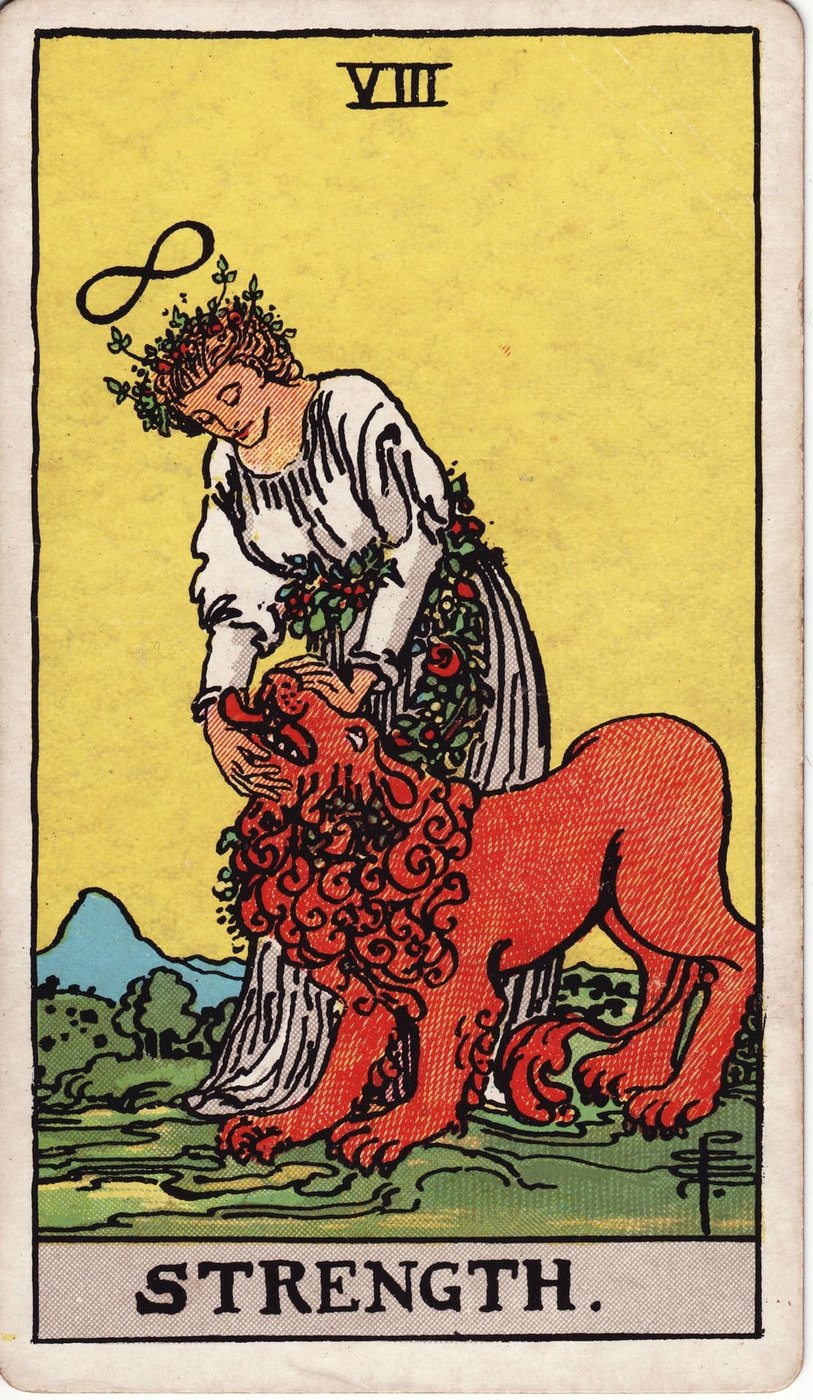
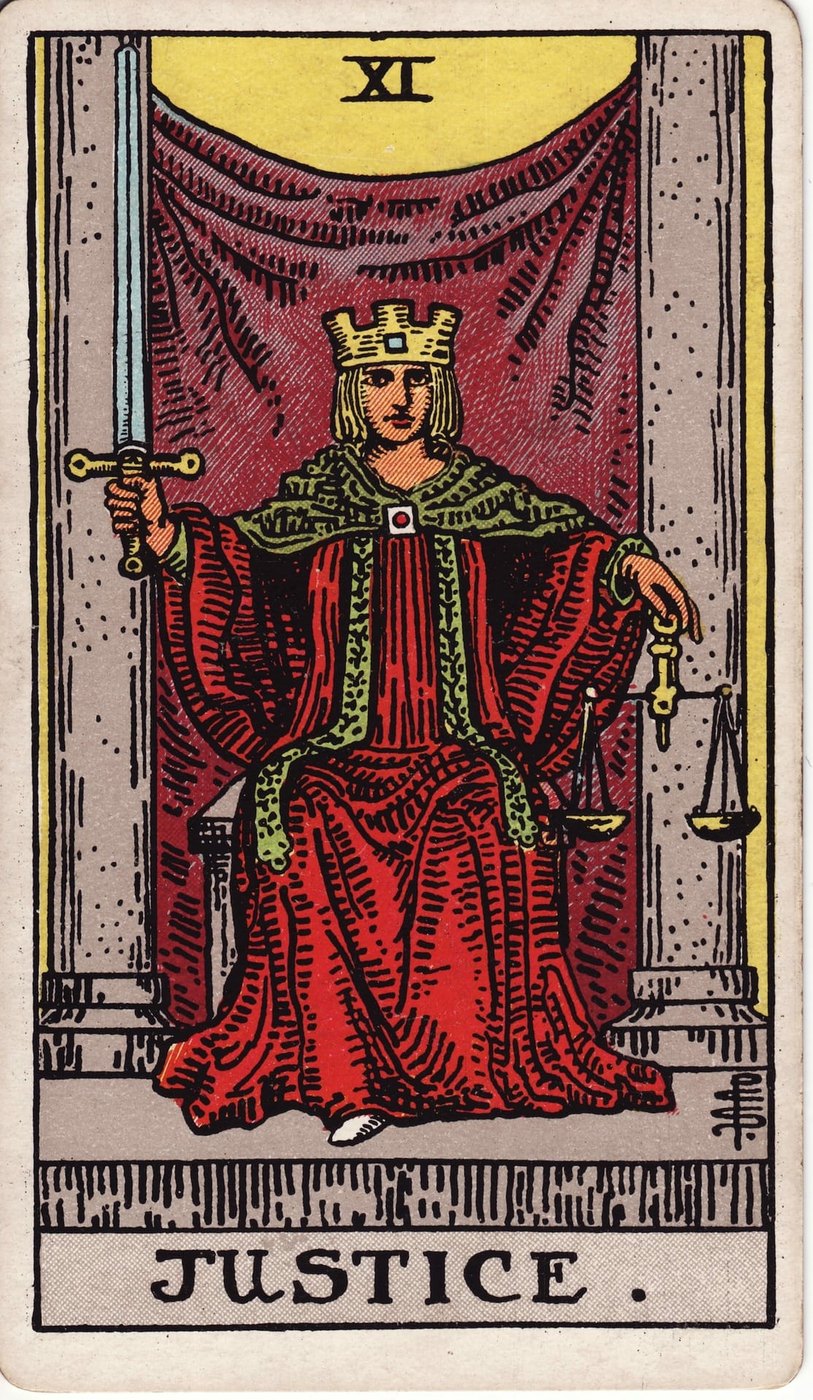
Waite mentions it once, in the middle of his description of Strength, and then closes the subject:
For reasons which satisfy myself, this card has been interchanged with that of justice, which is usually numbered eight. As the variation carries nothing with it which will signify to the reader, there is no cause for explanation.
Arthur Edward Waite, The Pictorial Key to the Tarot, 1911, Part II, on the eighth card.
Read that sentence twice. He has changed the number on two cards of a sequence that people were already hanging on a lettered diagram, and his account of why is that he has reasons, that they satisfy him, and that it will not signify to you. He was a member of an order that held its attributions under oath, and whatever else that sentence is, it is the sentence of a man declining to say something rather than a man with nothing to say.
On the other card he is barely more forthcoming. Of Justice he writes that it follows the traditional symbolism and carries above all its obvious meanings, which is a great deal of nothing about the card whose number he has just moved.
The card with no number
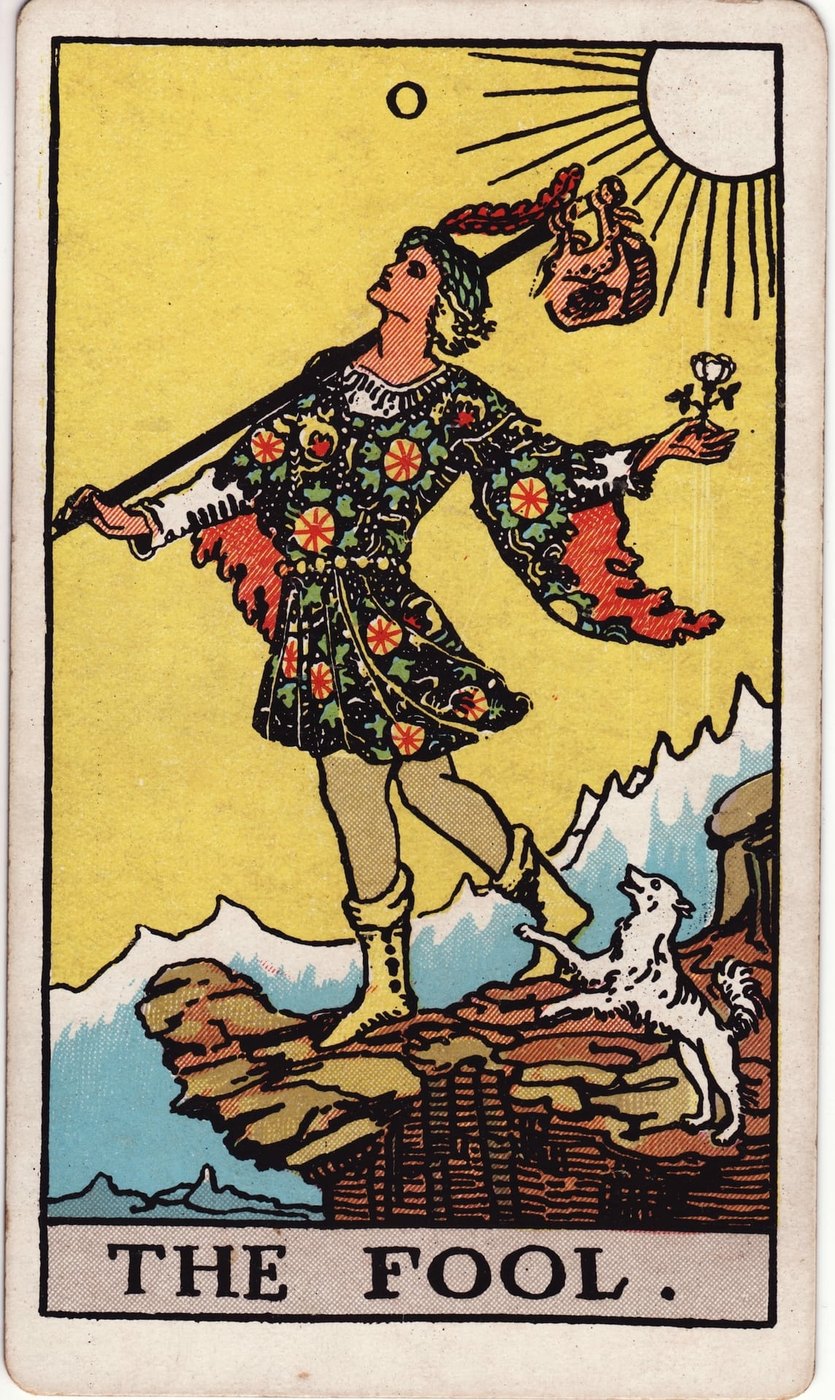
The Fool is the hinge, and it is the one card whose number is not really a number. It carries a nought, which puts it outside the run rather than inside it, and that is precisely what makes it moveable. Lévi leaves it late. Waite's order puts it first. A twenty two place diagram has no room for a card that stands outside, so whichever system you take, the Fool has to be pushed into the line somewhere, and where you push it decides everything else.
It is worth saying that Waite himself, in the book, keeps the Fool between Judgement and the World, in the older position. The deck and the book do not entirely agree with each other, which is another thing the confident charts tend not to mention.
The trees this archive holds
The Tree is not one picture. The archive holds five of them and no two are drawn alike.
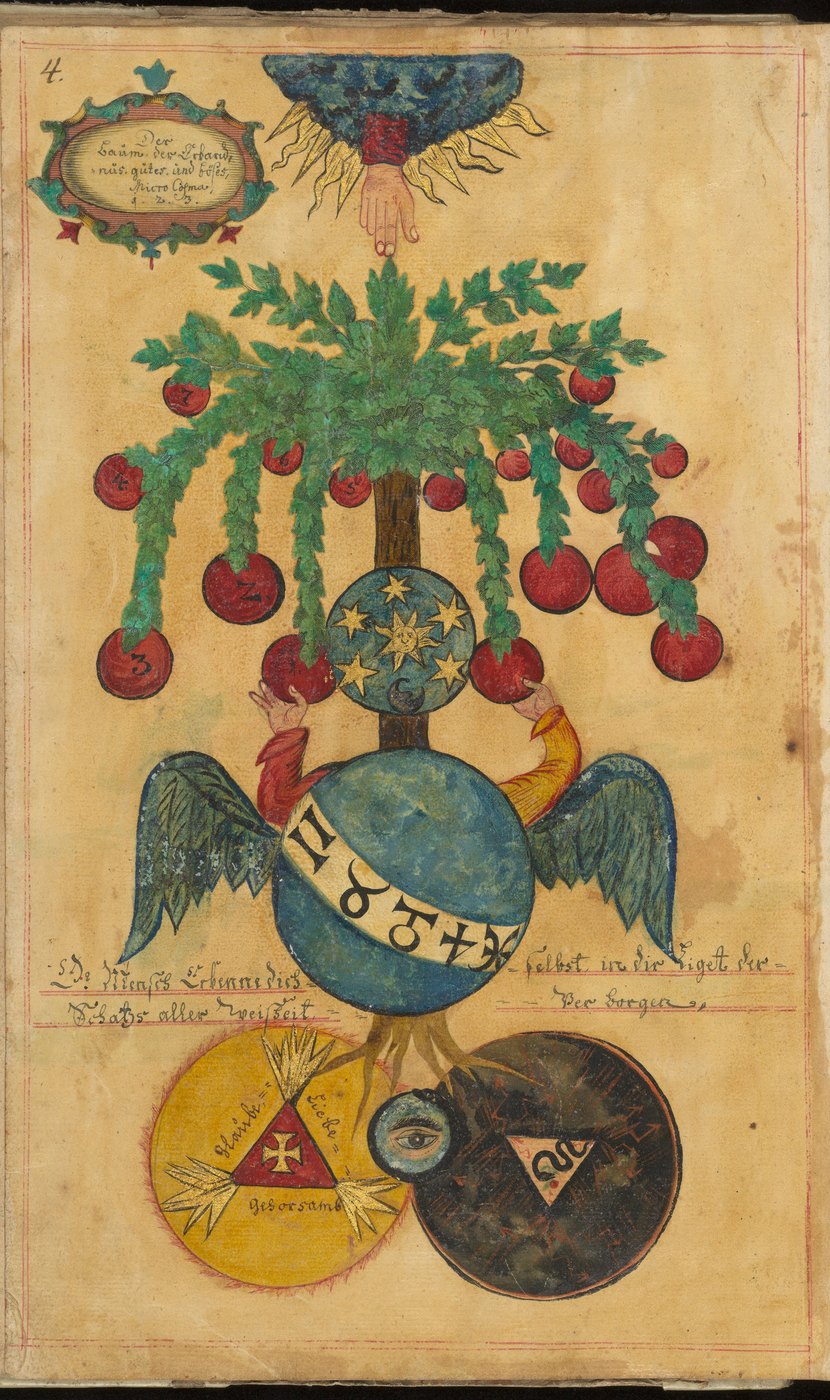
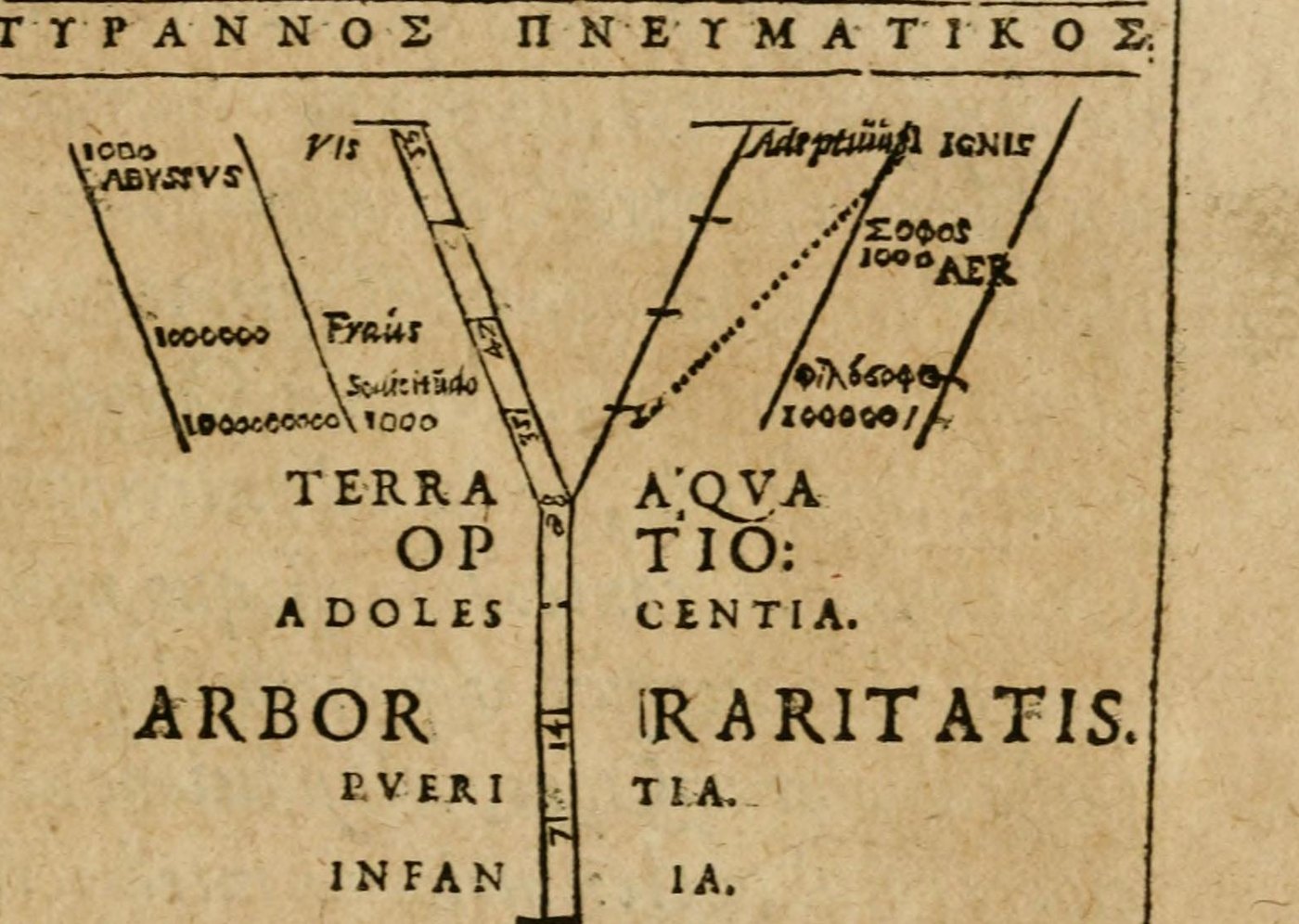
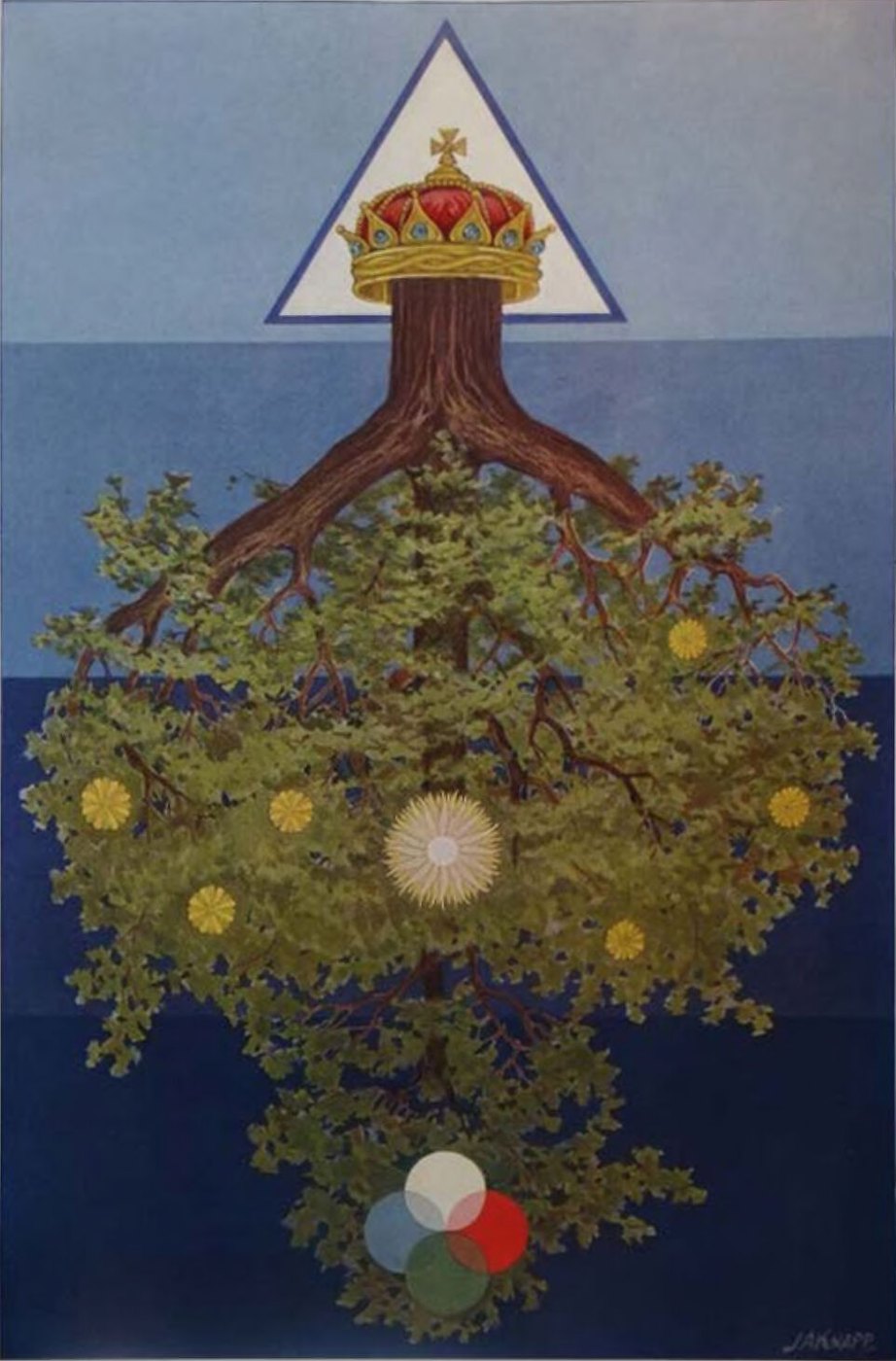
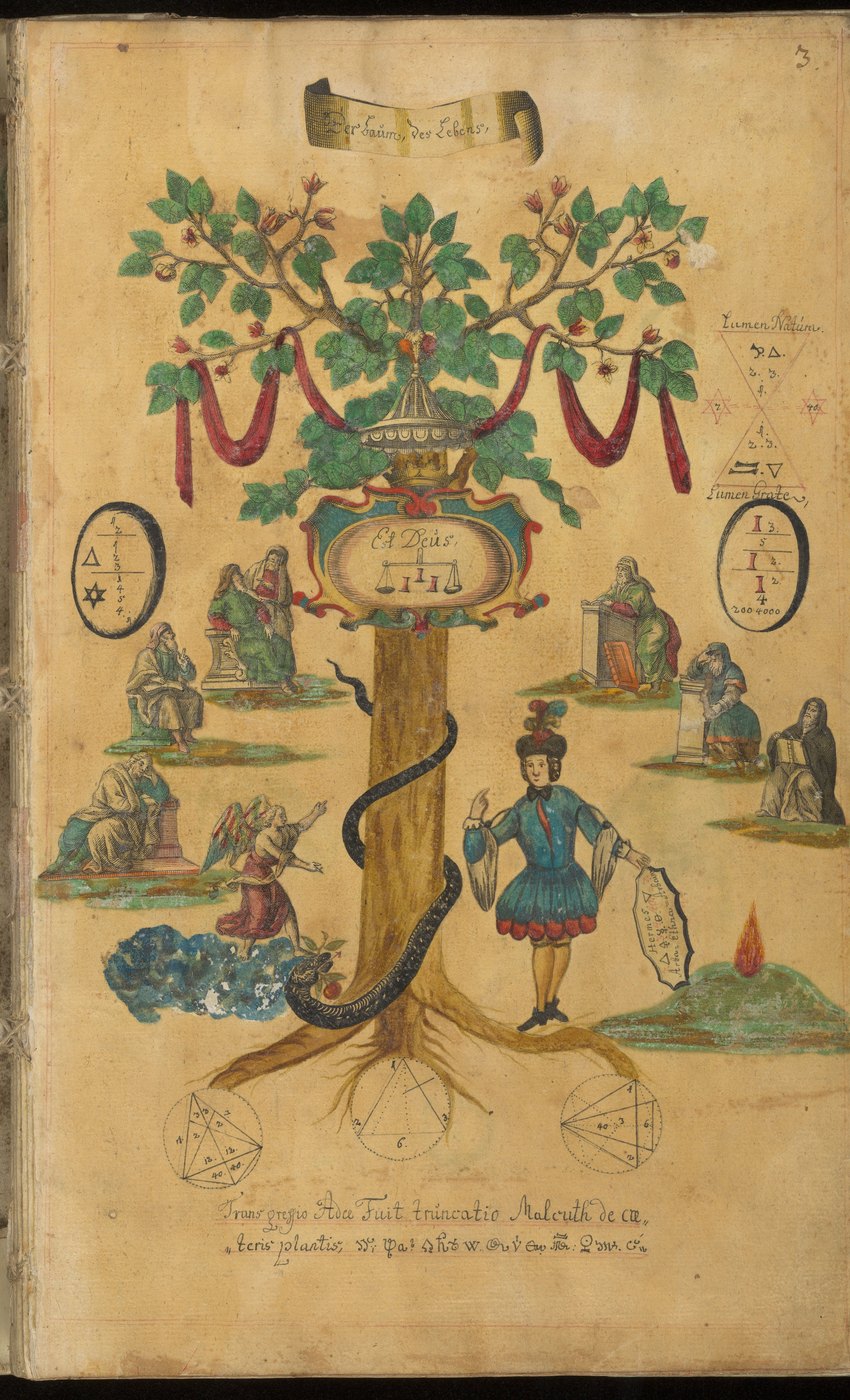
Kircher's is a diagram of circles and channels. Knapp's is a tree growing downward out of a crown. The Gemma manuscript's is a tree you could climb, with an angel on a cloud at one side and a fire burning on a hill at the other. Dee's Arbor Raritatis, printed in 1591, is a lettered trunk in a letter to an Emperor. They are all called the tree and they are not the same object, and a chart that lays cards on one of them has quietly chosen which.
Whose chart is it, and what year
No chart of the twenty two cards on the twenty two paths appears here, and the reason is evidential rather than squeamish. Levi is held, in his own sentences, in the English Waite made. The order Waite's own deck follows belongs to his order, and no public domain source sets it out in that order's own words, so one side of the fork can be described and not quoted. Drawing it anyway would mean drawing somebody's system and calling it the system.
What can be said is on the plates and in the printed books. Kircher's plate has ten circles and twenty two channels, a letter and a number on every channel, and a line across its head saying where its explanation is. Lévi found the first letter in the shape of a man's body and wrote it down. Waite renumbered two cards and wrote that there was no cause for explanation. Everything after that is somebody's system. Ask of any Tree of Life tarot chart not whether it is correct, but whose it is and what year it comes from.