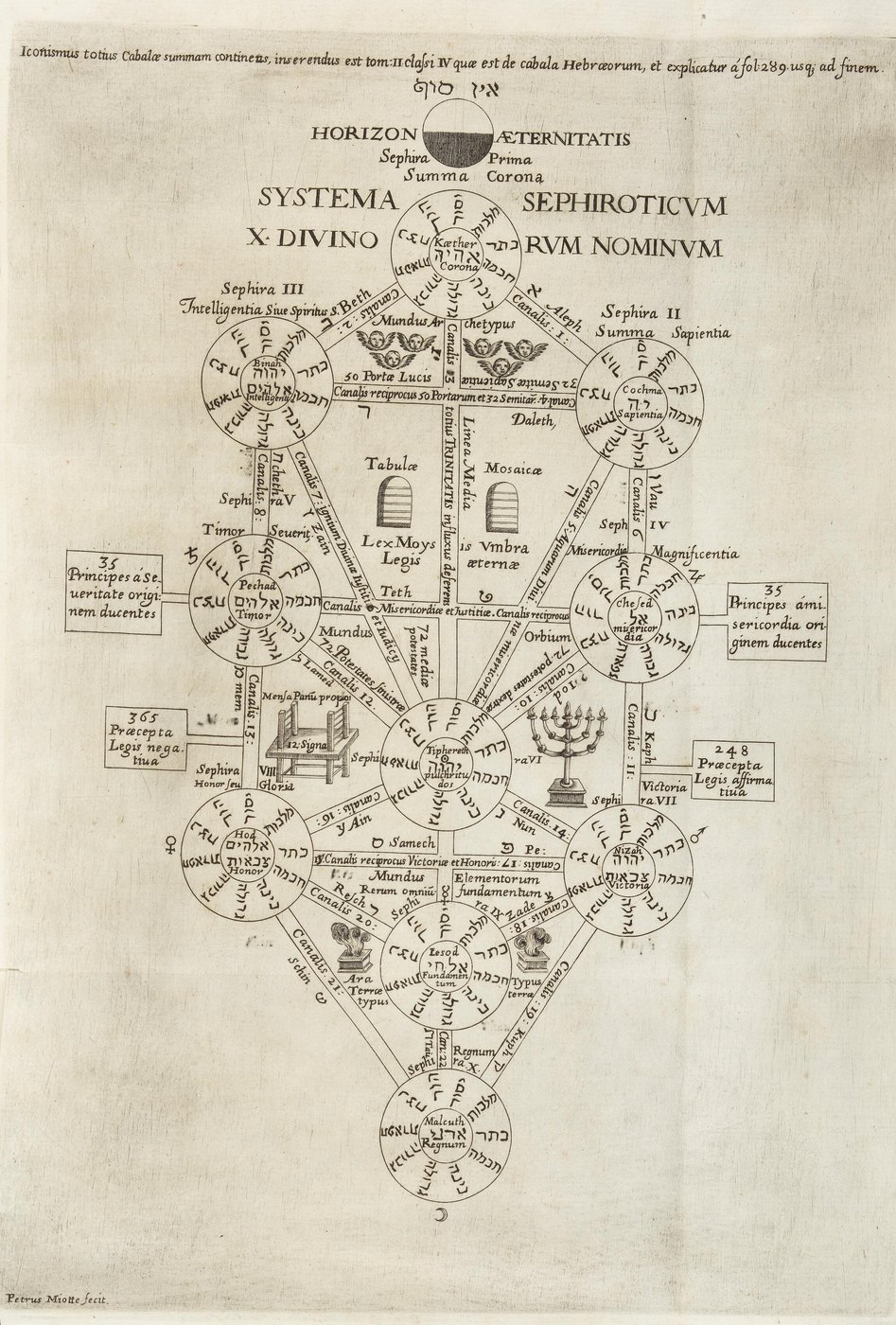
Systema Sephiroticum, the Tree of the Sephiroth
The tree of the Sephiroth as the central motif, filed under the Tree, with the Crown, the Divine, the Pillar, the Sun and the Moon, the Angel and the Wing, the Heavens, and Fire in a secondary part. From Oedipus Aegyptiacus, 1652 to 1654.
What is happening
The plate, 1653 “Iconismus totius Cabalae summam continens, inserendus est tom: II classi IV quae est de cabala Hebraeorum, et explicatur à fol: 289 usq; ad finem.”
Symbolica, 2026 The plate's Latin, put into English here: A figure containing the sum of the whole Cabala; it is to be inserted in volume II, class IV, which is on the Cabala of the Hebrews, and it is explained from folio 289 to the end.
Athanasius Kircher, 1653 “Circa decem numerationes, quas ספירות appellant, tota meritò Cabalistarum versatur machina; vnde diuersimodam de ijs tractationem instituunt.”
Symbolica, 2026 Kircher's Latin, put into English here: The whole machine of the Cabalists turns, with good reason, on the ten numerations they call Sephiroth; and so they treat of them in many different ways.
Athanasius Kircher, 1653 “Aduerte me hìc Angelorum nomina, aliaque omnia, ex Rabbinorum mente enumerare.”
Symbolica, 2026 Kircher's Latin, put into English here: Note that here I set out the names of the angels, and everything else, from the mind of the Rabbis.
Athanasius Kircher, 1653 “Hinc arborem hanc in varios canales, quos צנרות Tsinoroth vocant, diffundunt, quorum alij rectâ, & normali lineâ, alij obliquâ disponuntur, per quos superiorum influxus communicatur inferioribus.”
Symbolica, 2026 Kircher's Latin, put into English here: Hence they spread this tree into various channels, which they call Tsinoroth, some of them set in a straight and upright line, others obliquely, through which the influx of the higher is communicated to the lower.
Athanasius Kircher, 1653 “Quandocunque itaque ramus ex hac mystica arbore rescinditur, influxus in proximè inferiorem negari dicitur, plantaque truncari; si septem inferiores truncentur, quod in peccato Adae factum est, tum tota arbor maledicto subiecta, omni influxu vegetatiuo priuata contabescere dicitur.”
Symbolica, 2026 Kircher's Latin, put into English here: Whenever, then, a branch is cut from this mystical tree, the influx is said to be denied to the one next below it, and the plant to be lopped; if the seven lower ones are lopped, which is what happened in the sin of Adam, then the whole tree, put under a curse and deprived of every quickening influx, is said to wither.
Hall, 1928 “Letters and numbers, according to the Qabbalists, are the keys to all knowledge, for by a secret system of arranging them the mysteries of creation are revealed.”
Key · 8 motifs
Tap a motif on the picture, or a line below. Its note opens under the line, with the reading its author gave it.
- Primary motif
- Secondary motifs · 7
The picture
Ten circles arranged in three columns and joined by twenty-two lettered channels, each circle carrying the Hebrew name of a sephira with its Latin translation and the other nine names round its rim; a small half-dark circle above them lettered Horizon Aeternitatis with Ain Soph in Hebrew; winged heads under the first circle, the planets' signs beside the others, the lamp, table, tablets and altars of the tabernacle between them; the tree of the Sephiroth as the central motif. By eye
The reading
The picture read whole, in the archive's words, from the sources quoted on the marks. Read on, and the picture follows: the motif under discussion keeps its colour.
Kircher had this plate engraved to be folded into the second volume of his Oedipus Aegyptiacus, and the line across its top tells the binder where it goes: into the fourth class, on the Cabala of the Hebrews, where it is explained from page 289 to the end. The chapter is a Jesuit's summary of the Jewish doctrine of the ten Sephiroth, the ten names of God through which, the Cabalists taught, the infinite flows into the world. This is the arrangement most later occult books copied, and the one Hall translated into English for The Secret Teachings of All Ages in 1928. It says on its face where its explanation is, which is rarer in this archive than it should be.
Kircher ends the chapter by saying how the Cabalists draw their tree: the three upper Crowns at the top, Beauty in the middle like a trunk with four branches, Clemency, Severity, Victory and Honour, standing round it, and the roots, Foundation and Kingdom, at the bottom. Then: but now let us set down the figure of the tree. Note which way it grows. The roots are at the foot and the seed is at the top, in the three highest circles where, he says, all the seminal reasons of things are folded up; the sap runs downward through the channels, and our world, the Kingdom, is the last thing it reaches. Cut a branch, he adds, and everything below it withers, which is what happened in the sin of Adam.
Above the tree, and not part of it, is a small circle half light and half dark, lettered the horizon of eternity, with the Hebrew words Ain Soph, without end, over it. Kircher's first paragraph is about this. It is called infinite; it is also called non-being, not because it is nothing but because no mind can comprehend it; it withdraws into the remotest recess of the Deity. Everything on the plate below this circle is a garment, in the Hebrew phrase Kircher borrows, that God put on in order to be seen at all.
The first garment is Kether, the Crown, and its name on the plate is Ehieh, which Kircher renders three ways at once, I was, I am, I shall be. Everything proceeds from it and it proceeds from nothing. Round the rim of every circle run the Hebrew names of all ten, so that the tree is drawn ten times over inside itself.
The circles stand in three columns. Kircher's text gives Victory the right-hand column and Honour the left; the plate letters the middle Linea Media and marks the fourth circle Mercy and the fifth Fear and Severity. Hall named the outer columns Jachin and Boaz, the two pillars of Solomon's porch, and read the right as masculine and outpouring, the left as feminine and receptive, with the middle as the reconciling power. Whatever is between two pillars is the thing to look at, and here it is the whole descent from the Crown to the Kingdom.
The sun's sign sits on Tiphereth, Beauty, the sixth circle at the centre, which Kircher calls the rising of the sun, the tree of life, the heavenly Adam, the heart of the world, the cause of all the harmony and beauty we behold. The moon's sign hangs under Malcuth at the foot. Between them the engraver strung the other planets down the sides in their old order, Saturn at the top left, Mercury at the bottom, while Kircher's own chapter deals them out differently, Saturn to Understanding, Mars to Fear, Venus to Victory. The plate and the text it illustrates do not agree, and the archive keeps both, because both were printed.
The tree also passes through worlds, named down its middle: the archetypal world under the Crown, the world of the spheres around Beauty, the world of the elements at Foundation. Kircher gives the plainest example of what the whole diagram is for. A herb or a stone has its power from the sky, the sky from an Intelligence, the Intelligence from the Maker, from whom everything flows as from a centre and to whom it returns. Read the tree and you can trace any created thing back up its channel to the name of God it came from.
Four winged heads sit under the Crown at the words Mundus Archetypus. In Kircher's account each circle governs an order of angels and, through a named Intelligence, a sphere of the heavens: the Crown pours itself out on the Seraphim and through Metatron on the first mover; Wisdom on the Cherubim and the fixed stars; and so on down to Foundation, whose angels are simply the Angels and whose Intelligence, Gabriel, has the moon. The cherubs mark the top of that hierarchy.
Scattered through the channels is the furniture of Moses' tabernacle: the seven-branched lamp burning beside Beauty, the table of the twelve loaves opposite it, the two tablets of the Law under the Crown, and two smoking altars either side of Foundation, each lettered a type of the earth. Hall singled this out. The house God told Moses to build and the universe God built are drawn to one plan, and the tree is the plan.
Kircher was a Christian reading a Jewish system, and he says so: the three upper Sephiroth are, he argues, the Trinity that the Rabbis pointed at willing or unwilling, and the middle channel on the plate is lettered the influx of the whole Trinity. That is the Cabala of a Roman College, 1653, not of Safed. It matters for the picture because it explains why this tree, and not another, became the standard one. It came with a chapter, in Latin, that a European reader could follow from the first circle to the last.
Decoded: every motif is marked, and each mark carries the reading its author gave it, quoted from the text, or says that it is observed on the picture and not read. The reading above is the archive's own, made from those sources and no others.
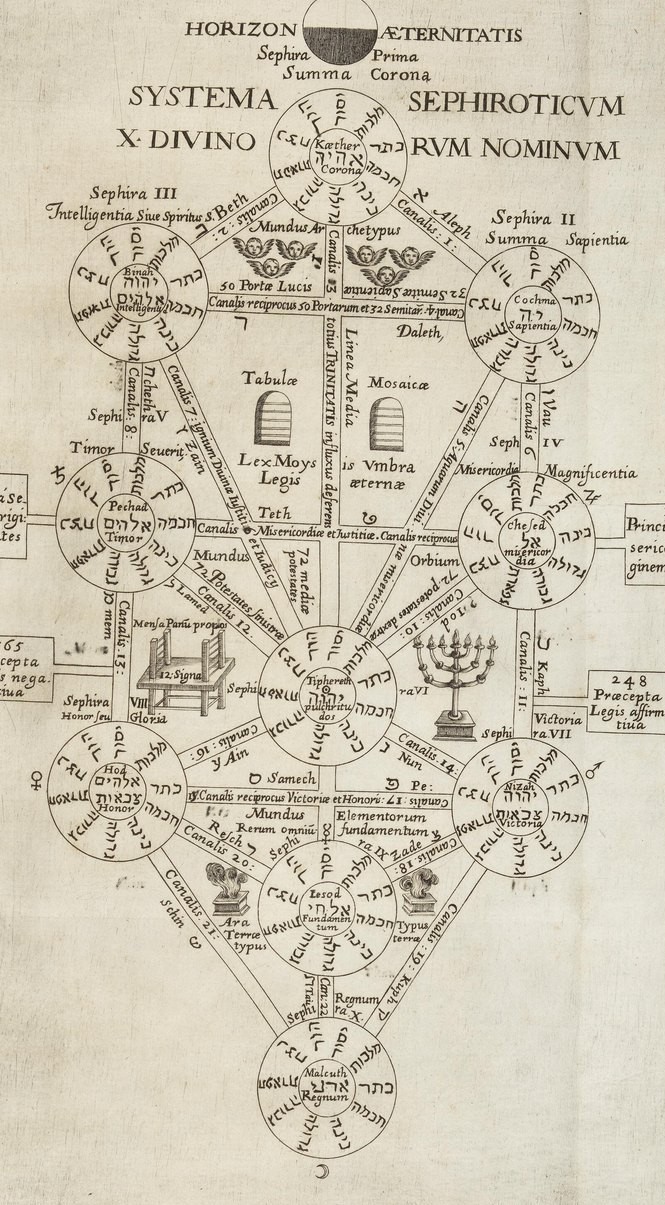
A body drawn as growth. Note which way it grows and what is at the root rather than at the top.
In plain words Ten circles, twenty-two lines. Kircher's chapter says the Cabalists drew the ten names of God as a tree: the three crowns at the top, Beauty in the middle as the trunk with four branches round it, and the roots at the bottom in Foundation and Kingdom. The tree grows downward, from God into the world.
The plate, 1653 “SYSTEMA SEPHIROTICVM X. DIVINORVM NOMINVM.”
Athanasius Kircher, 1653 “Nonnulli per similitudinem arboris eas exponunt, radice, trunco, ramis, corticibus, fructibus, spectabilis. Alij sub similitudine hominis microcosmi, capite, humeris, cruribus, pedibus illustris.”
Symbolica, 2026 Kircher's Latin, put into English here: Some set them out under the likeness of a tree, remarkable for root, trunk, branches, bark and fruit. Others under the likeness of man the microcosm, notable for head, shoulders, legs and feet.
Athanasius Kircher, 1653 “Hinc Cabalistae arborem suam Sephirothicam eo pacto exprimunt, vt tres superiores Coronae supremum arboris locum occupent, medium Tiphereth veluti truncus, cum quatuor ramis Clementiae, Seueritatis, Victoriae, & Honoris, eum veluti stipantibus; radices verò fundamentum & regnum.”
Symbolica, 2026 Kircher's Latin, put into English here: Hence the Cabalists draw their Sephirotic tree in such a way that the three upper Crowns occupy the top of the tree, Tiphereth in the middle is like the trunk, with the four branches of Clemency, Severity, Victory and Honour standing round it, and the roots are Foundation and Kingdom.
Hall, 1928 “The Sephirothic Tree consists of ten globes of luminous splendor arranged in three vertical columns and connected by 22 channels or paths.”
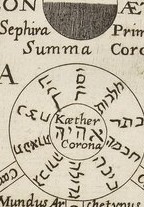
Completion, and in the Kabbalistic reading the first sephirah, the point at which the work is no longer yours.
In plain words The top circle is Kether, the Crown, the first of the ten. Kircher calls it God's first garment, the one he put on as he came out of the darkness of his own infinite being. Everything below comes from it; it comes from nothing.
The plate, 1653 “Sephira Prima Summa Corona. Kaether Corona.”
Athanasius Kircher, 1653 “Primum itaque vestimentum Dei ex אין סוף Ensuph, id est, infinita essentiae suae caligine emergentis, est כתר Kether, id est, Corona summa, cuius nomen אהיה, fui, sum, ero, delubrum admirabile & absconditum dicitur; quia in huius contemplatione omnium mentium oculi caligant, linguae obmutescunt, vox silet, omnis animus deficit, ob inscrutabilem eius altitudinem; ab hac omnes Numerationes, illa à nulla procedit.”
Symbolica, 2026 Kircher's Latin, put into English here: The first garment of God, then, emerging out of Ain Soph, that is, out of the darkness of his infinite essence, is Kether, that is, the highest Crown, whose name is Ehieh, I was, I am, I shall be; it is called the wonderful and hidden shrine, because in contemplating it the eyes of all minds grow dim, tongues fall silent, the voice fails, every spirit gives way, before its unsearchable height. From it proceed all the Numerations; it proceeds from none.
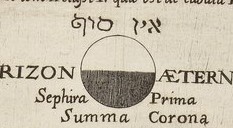
God shown, or pointed at. Look for what stands where a face would be: a name in a cloud, a circle above the top of a diagram, a ring of verses, a sign over a head.
In plain words Above the tree, outside it, is a small circle half light and half dark, labelled the horizon of eternity, with the Hebrew words Ain Soph, without end, over it. This is God before the names: not a thing on the tree but the edge the tree hangs from. Kircher says the Hebrews also called it non-being, because no mind can take it in.
The plate, 1653 “אין סוף. HORIZON AETERNITATIS.”
Athanasius Kircher, 1653 “Supremae arboris Sephiroticae nomen ponitur אין סוף, id est, infinitum. Dicitur etiam non ens, propter Dei altissimi incomprehensibilitatem. Est enim res quaedam secundùm se incomprehensibilis, & ineffabilis, in remotissimo Deitatis recessu, & in fontem luminis inaccessibili abysso sese retrahens & contegens, cuius splendidissimus splendor nudus manens nullo attributorum amictu, aut proprietatum vestitu perfunditur, aut dilatatur.”
Symbolica, 2026 Kircher's Latin, put into English here: At the top of the Sephirotic tree is set the name Ain Soph, that is, infinite. It is also called non-being, because of the incomprehensibility of God most high. For it is a thing in itself incomprehensible and ineffable, withdrawing and hiding itself in the remotest recess of the Deity and in the inaccessible abyss of the fountain of light, whose most splendid splendour, remaining naked, is neither suffused nor spread abroad by any cloak of attributes or dress of properties.
Athanasius Kircher, 1653 “Est itaque אין סוף infinitum, illud, à quo omnis influxus deriuatur in caetera attributa Dei, & per hoc in creaturas; vnde ab Hebraeis dicta sunt vestimenta Dei, quibus indutus ad Mundi creationem processit.”
Symbolica, 2026 Kircher's Latin, put into English here: Ain Soph, then, is the infinite, that from which all influx is derived into the other attributes of God, and through them into creatures; and so the Hebrews called those attributes the garments of God, in which he came forth clothed to the creation of the world.
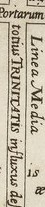
Two columns, and the thing that matters is between them. Note what stands there, and whether the pillars are told apart.
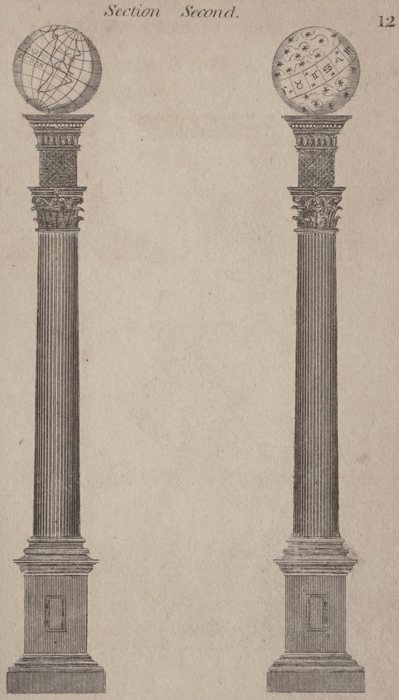
In plain words The ten circles stand in three columns. The right-hand column is Mercy, the left is Severity, and the middle line runs straight down from the Crown to the Kingdom. Kircher gives Victory the right column and Honour the left; Hall, in 1928, named them Jachin and Boaz, the same two pillars that stand in the lodge and on the High Priestess card.
The plate, 1653 “Linea Media. Sephira V Timor Seuerit. Sephira IV Misericordia Magnificentia.”
Athanasius Kircher, 1653 “per hanc Deus influit in Chorum Dominationum, & per Intelligentiam Tsadkiel in coelum Iouis; vnde nascitur amor, qui omnia viuificat, accendit, amicitiam singulis in perpetuum pacis foedus conciliat.”
Symbolica, 2026 Kircher's Latin, put into English here: through this God flows into the Choir of Dominations, and by the Intelligence Tsadkiel into the heaven of Jupiter; from which love is born, which quickens all things, kindles them, and joins each to each in a perpetual covenant of peace.
Athanasius Kircher, 1653 “Eius attributa sunt, Crus, pes, columna dextera, rota magna, visio Prophetae. Canalis est, per quem Deus influit in Principatus, & per Intelligentiam Haniel in Coelum Veneris.”
Symbolica, 2026 Kircher's Latin, put into English here: Its attributes are the leg, the foot, the right column, the great wheel, the vision of the Prophet. It is the channel through which God flows into the Principalities, and by the Intelligence Haniel into the heaven of Venus.
Athanasius Kircher, 1653 “attributa eius, mysterium columnae, ac pedis sinistri, hinc trahitur serpens antiquus, disciplina Domini, Ramus Cherub Aharon, filij regis, molae molentes. Estque Canalis, per quem Deus influit in Archangelos, & per Intelligentiam Michaëlem in Coelum Mercurij.”
Symbolica, 2026 Kircher's Latin, put into English here: its attributes are the mystery of the column and of the left foot; from here the old serpent is drawn; the discipline of the Lord, the branch, the Cherub, Aaron, the sons of the king, the grinding millstones. And it is the channel through which God flows into the Archangels, and by the Intelligence Michael into the heaven of Mercury.
Hall, 1928 “The three columns are called Mercy (on the right), Severity (on the left), and, between them, Mildness, as the reconciling power.”
Hall, 1928 “The column on the right, which is called Jachin, has its foundation on Chochmah, the outpouring Wisdom of God; the three globes suspended from it are all masculine potencies. The column at the left is called Boaz. The three globes upon it are feminine and receptive potencies, for it is founded in Understanding, a receptive and maternal potency.”
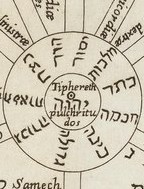
Gold, the perfected metal, and the illuminated intellect. The most overloaded symbol in the tradition.
In plain words The sun's sign sits on the sixth circle, Beauty, at the centre of the tree, and the moon's under the last. Kircher makes Beauty the rising sun, the tree of life, the heavenly Adam, the cause of all the harmony and beauty we see. The other planets are strung down the sides, though the engraver and the chapter do not agree about which goes where.
The plate, 1653 “Sephira VI. Tiphereth pulchritudo.”
Athanasius Kircher, 1653 “Attributa eius sunt speculatio illuminans, lignum vitae, voluptas, linea media, linea viridis ambiens vniuersum, lex scripta, Sacerdos magnus, ortus solis, species purpurea, septuaginta duae nationes in terra.”
Symbolica, 2026 Kircher's Latin, put into English here: Its attributes are the illuminating vision, the tree of life, delight, the middle line, the green line that goes round the universe, the written law, the high priest, the rising of the sun, the purple appearance, the seventy-two nations of the earth.
Athanasius Kircher, 1653 “Per hanc Deus influit in ordinem virtutum, & hinc per Intelligentiam Raphaël in Sphaeram solis. Causa est omnis harmoniae & pulchritudinis, quam in vniuerso intuemur.”
Symbolica, 2026 Kircher's Latin, put into English here: Through it God flows into the order of the Virtues, and thence, through the Intelligence Raphael, into the sphere of the sun. It is the cause of all the harmony and beauty we behold in the universe.
Athanasius Kircher, 1653 “Canalis per quem Deus influit in ordinem אישים, id est, Animarum, & per Intelligentiam Mitatron in omnem Lunae subiectum elementarem Mundum.”
Symbolica, 2026 Kircher's Latin, put into English here: The channel through which God flows into the order of the Ishim, that is, of Souls, and by the Intelligence Mitatron into the whole elemental world beneath the moon.
Symbolica, 2026 The engraver set the seven planets down the tree in their old order: Saturn beside Fear, Jupiter beside Mercy, Mars beside Victory, the sun on Beauty, Venus beside Honour, Mercury on Foundation and the moon under the Kingdom. Kircher's chapter deals them differently, Saturn to Understanding, Mars to Fear, Venus to Victory, Mercury to Honour, the moon to Foundation. Plate and text disagree, and the archive shows both.
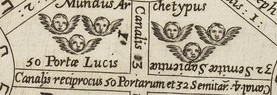
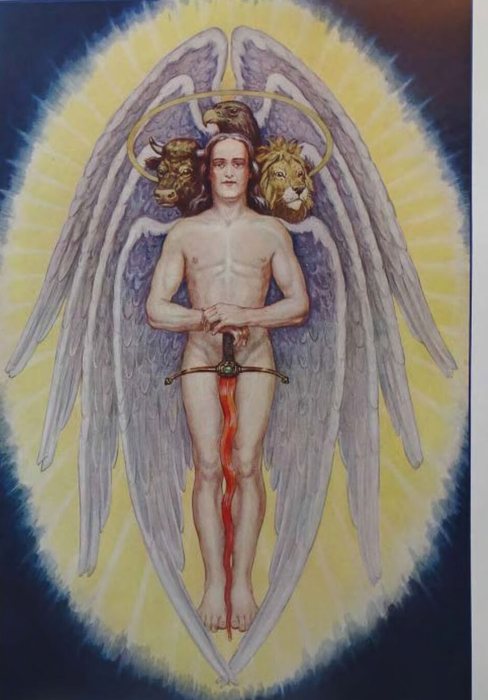
Nine ranks of angels, drawn as rings or as rungs. Note which order the picture puts at the top, and whether the book beside it agrees.
In plain words Four winged heads sit just under the Crown, where the plate writes Mundus Archetypus, the world of ideas. This is where the angelic world begins, and Kircher’s chapter runs an order of angels down every circle of the tree from here: the Seraphim on the Crown, the Cherubim on Wisdom, the Thrones on Understanding, and so on to the Angels on Foundation. He names the joints one at a time between pages 292 and 295, and warns at the head of the section that he sets the names out from the mind of the Rabbis.
The plate, 1653 “Mundus Archetypus. 50 Portae Lucis. 32 Semitae Sapientiae.”
Athanasius Kircher, 1653 “Deus itaque per decem nomina primò influit in Mundum Angelicum, per eadem deinde in Mundum sidereum & elementarem, & per eadem denique in microcosmum.”
Symbolica, 2026 Kircher's Latin, put into English here: God, then, through the ten names flows first into the angelic world, through the same names next into the sidereal and elemental world, and through the same names at last into the microcosm.
Athanasius Kircher, 1653 “canalis supramundanus, per quem primò influit, diffunditque bonitatem suam supra Seraphinos, & hinc supra primum mobile, ope Intelligentiae quae dicitur Metatron Sarpanim, Princeps aspectuum.”
Symbolica, 2026 Kircher's Latin, put into English here: the channel above the world, through which he first flows, and pours out his goodness upon the Seraphim, and from there upon the first mover, by the help of the Intelligence called Metatron Sarpanim, the Prince of Faces.
Athanasius Kircher, 1653 “Canalis dicitur, cuius ope Deus influit supra Cherubinos, & supra firmamentum, hoc est, stellarum fixarum globum, ope Intelligentiae quam רזיאל Ratsiel vocant, mundique idealis inenarrabiles splendores exhibet.”
Symbolica, 2026 Kircher's Latin, put into English here: It is called the channel by whose help God flows upon the Cherubim, and upon the firmament, that is, the globe of the fixed stars, by the help of the Intelligence they call Ratsiel, and it shows the unspeakable splendours of the world of ideas.
Athanasius Kircher, 1653 “per quam Sephiram Deus influit primò in Chorum Thronorum, & hinc in Sphaeram Saturni, ope Intelligentiae quae vocatur Sabtaiel.”
Symbolica, 2026 Kircher's Latin, put into English here: through which Sephirah God flows first into the Choir of Thrones, and from there into the sphere of Saturn, by the help of the Intelligence called Sabtaiel.

A diagram of everything, drawn so that a person can be found inside it. Note where the human figure stands in the scheme.
In plain words Read down the middle and the tree passes through worlds: the world of archetypes under the Crown, the world of the spheres around Beauty, the world of the elements at Foundation, and the Kingdom, our world, at the bottom. Kircher's example: a herb or a stone has its power from the sky, the sky from an angel, the angel from the Maker.
The plate, 1653 “Mundus Archetypus. Mundus Orbium. Mundus Rerum omnium Elementorum fundamentum.”
Athanasius Kircher, 1653 “Herba quaepiam, aut petra virtutem suam habet subministratam à coelo, coelum ab Intelligentia, Intelligentia ab Opifice, ex quo omnia veluti ex centro vti profluunt, ita in illud reuertuntur.”
Symbolica, 2026 Kircher's Latin, put into English here: Some herb or stone has its power supplied to it from the sky, the sky from an Intelligence, the Intelligence from the Maker, from whom all things flow as from a centre and to whom they return.
Athanasius Kircher, 1653 “in tribus superioribus Sephiroth omnes seminalium rerum rationes complicatae, deinde in Mundum Angelicum, cui Mundus Sidereus parallelè respondet, & potissimùm in Tiphereth solam, cor Mundi, siue mundanae arboris medullam transmittuntur; quae hinc mediante Iesod seu fundamento tandem à Malcuth sublunari Mundo collectae, illam, quam miramur, rerum varietatem producunt.”
Symbolica, 2026 Kircher's Latin, put into English here: in the three upper Sephiroth all the seminal reasons of things are folded up, and are then passed on into the angelic world, to which the sidereal world answers in parallel, and above all into Tiphereth alone, the heart of the world, or the marrow of the world tree; from there, by way of Iesod or Foundation, they are gathered at last by Malcuth, the world beneath the moon, and produce that variety of things which we wonder at.
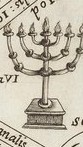
A count, a catastrophe, or the visible part of something that has no body. Note whether the flames are arranged in a number, breaking something, or standing where a figure would be.
In plain words The furniture of Moses' tabernacle is scattered through the tree: the seven-branched lamp burning beside Beauty, the table of the twelve loaves opposite it, the two tablets of the Law under the Crown, and two smoking altars either side of Foundation, each lettered as a type of the earth. The house of God and the universe are drawn to the same plan.
The plate, 1653 “Ara Terrae typus. Typus terrae. Mensa Panū propos. 12 Signa. Tabulae Mosaicae.”
Athanasius Kircher, 1653 “Ei applicatur proprietas rigoris & grauitatis, praecepta legis negatiua, brachium sinistrum, ignis egrediens ab aquis, occidens, nox, fortitudo, altare aureum, Aquilo, triginta quinque sinistris potentijs stipata. Per hanc Deus influit in ordinem Potestatum, & per Intelligentiam eius Camaël in Coelum Martis.”
Symbolica, 2026 Kircher's Latin, put into English here: To it is applied the property of rigour and gravity, the negative precepts of the law, the left arm, fire going out from the waters, the west, night, strength, the golden altar, the north wind; it is attended by thirty-five powers of the left. Through it God flows into the order of the Powers, and by its Intelligence Camael into the heaven of Mars.
Hall, 1928 “In Kircher's Sephirothic Tree it should be especially noted that the ornaments of the Tabernacle appear in the various parts of the diagram.”
Athanasius Kircher, 1653 “Canalis est, per quem Deus influit in Angelos, & per Intelligentiam Gabrielem in coelum Lunae; causa & origo Geniorum particularium vnicuique assignandorum.”
Symbolica, 2026 Kircher's Latin, put into English here: It is the channel through which God flows into the Angels, and by the Intelligence Gabriel into the heaven of the Moon; the cause and origin of the particular spirits assigned to each person.
Also carrying the Tree
23 works carry it. The 6 where it is the central motif are here. The symbol.
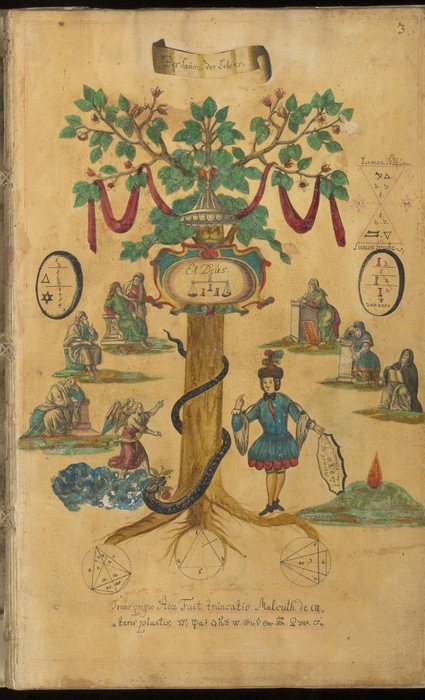
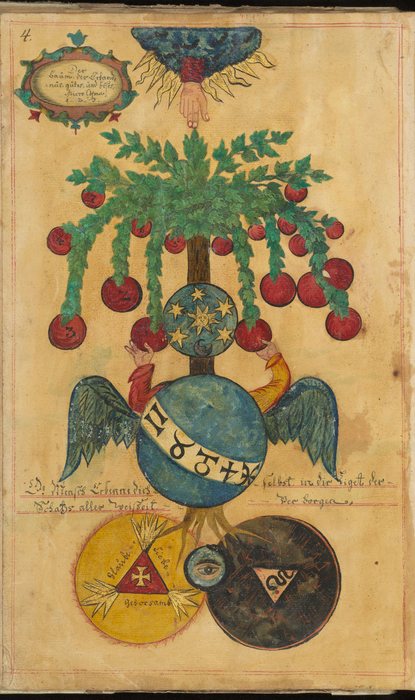
Where the detail is the subject
the Crown · the Divine · the Pillar · the Sun and the Moon · the Angel and the Wing · the Heavens · Fire
Each of these is in the picture without being what it is about. Below, one work that is about each.
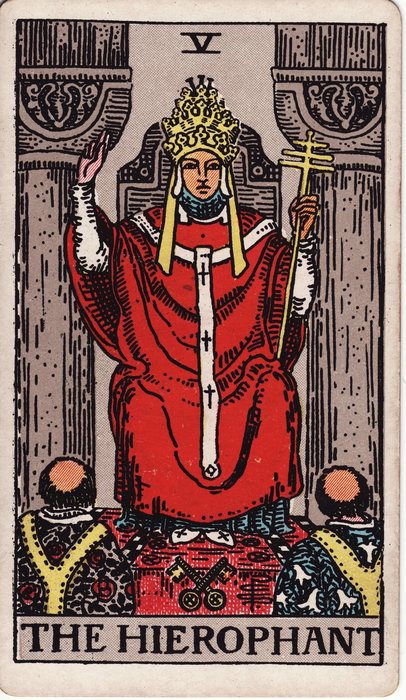
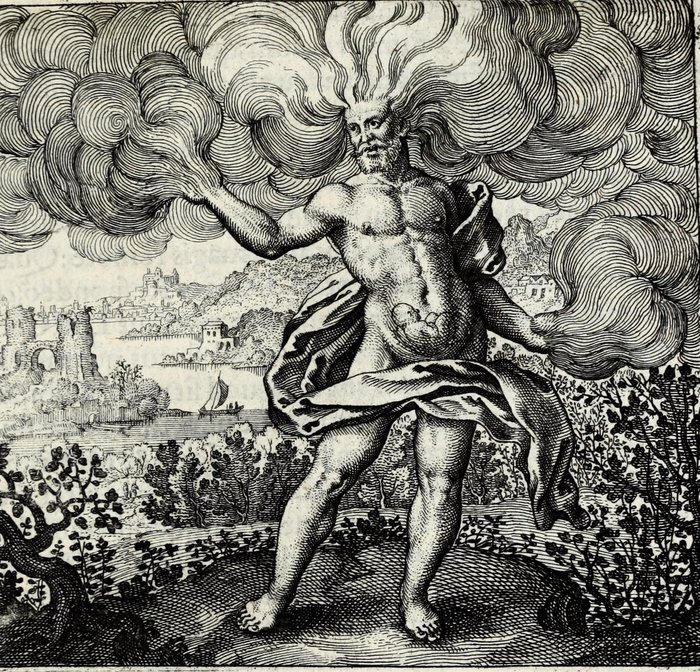
Record
One symbol a week, decoded.
This picture is free at full size from its source, linked above. What an address gets is the Sunday letter: one picture, one symbol marked on it, what it meant and who said so, and the master files of the decoded plates as they are verified. Leave any time.
Free, one letter a week, unsubscribe in one click. How the address is used.
Scroll or pinch to zoom · drag to move · double-tap for 1:1 · 947 by 1400 pixel web copy; the source file is linked under Record