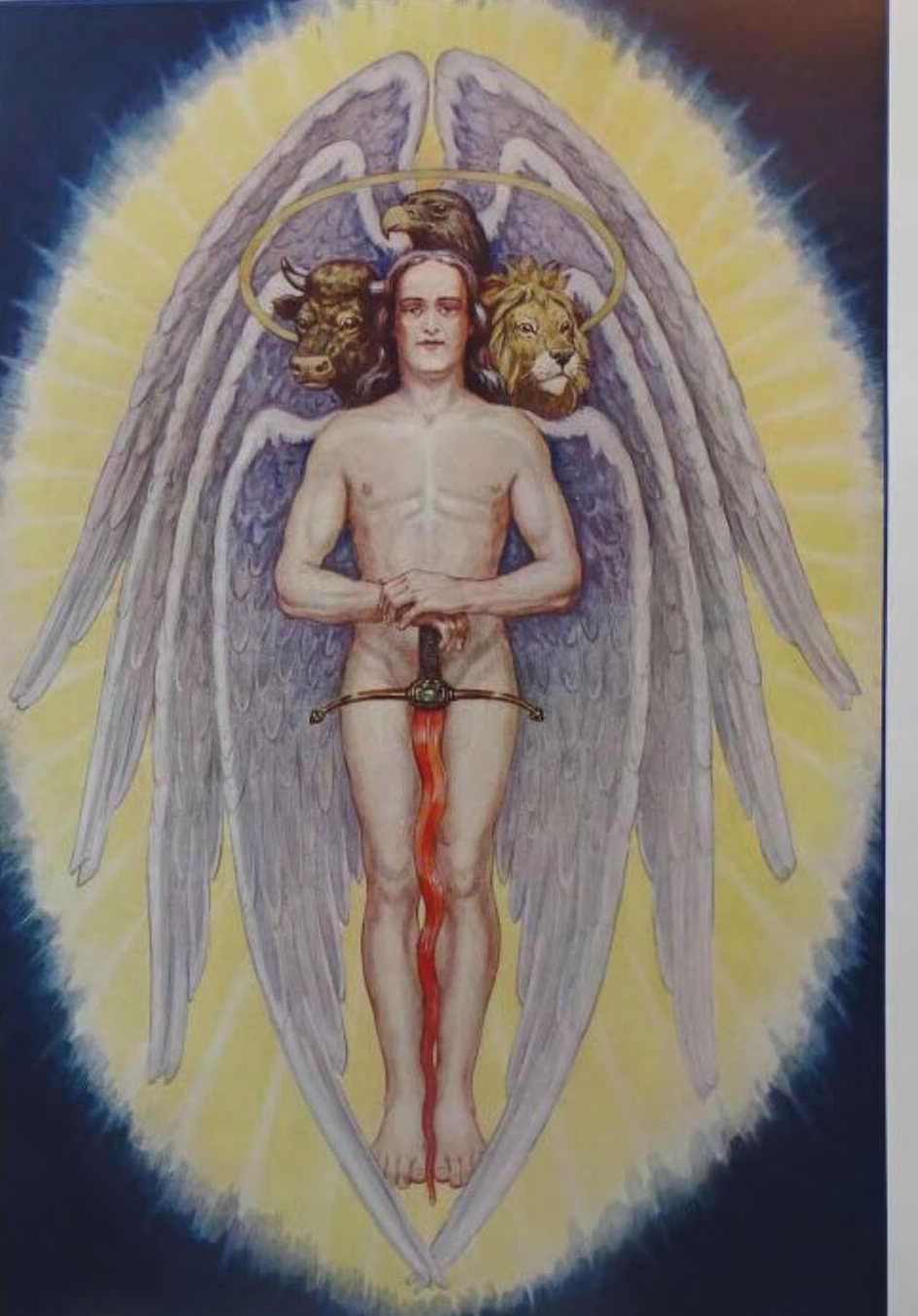
The Cherub of Ezekiel
The Angel and the Wing as the central motif, with the Lion and the Bird in a secondary part. From The Secret Teachings.
Key · 3 motifs
Tap a motif on the picture, or a line below. Its note opens under the line, with the reading its author gave it.
- Primary motif
- Secondary motifs · 1
The picture
A nude winged figure stands inside a flame-shaped aureole, a sword hilt-up at the waist, the heads of a bull and a lion behind his own, the wings rising above; the Angel and the Wing as the central motif, the Lion by eye. By eye
The reading
The picture read whole, in the archive's words, from the sources quoted on the marks. Read on, and the picture follows: the motif under discussion keeps its colour.
The plate is a body made of the vision of Ezekiel. A naked winged figure stands inside a flame-shaped light, a sword hilt-up at his waist, and behind his own head are the heads of a bull and a lion, with the head of an eagle above them all. Hall describes the vision under a different plate in the book and not under this one: the prophet beheld four strange creatures, each having four heads, four wings, and brazen hoofs like those of a calf. The uncredited painter has given all of that to one figure and made it stand.
The wings are the first thing and the last. They rise over his head, spread at his shoulders, and sweep down to his feet, so that the whole aureole he stands in is feathered. Ezekiel's creatures each had four wings; the four creatures together had sixteen. The painter does not count them. He makes the wings the substance of the light, which is what the prophet saw: living creatures in the midst of a fire, and the fire was bright.
The heads are the reason the picture is legible. Man, lion, bull, eagle: the four faces of the living creatures in the first chapter of Ezekiel, which the Christian church attached to its four Evangelists and the astrologers to the four fixed signs of the zodiac, Aquarius, Leo, Taurus and Scorpio, whose ancient emblem was the eagle. Hall gives the correspondence in his chapters on the zodiac and the archive holds his sentence that the elements themselves are under the control of the composite cherubim of Ezekiel. On this plate the lion's head is at the right of the man's, the bull's at the left, and the eagle looks down from above; the man's face, at the centre, is the only one that looks at you.
The sword at his waist, hilt up, is the painter's addition, and Hall does not explain it. The plate as a whole is a cherub in the old sense, not the winged infant of the Baroque but the terrible composite guardian of the throne of God, and the archive files it under the Angel and the Wing because that is what the picture is made of. What it is for, in Hall's book, is to show that the beasts of the Evangelists, the fixed signs and the four elements were one figure before they were four. The reading of the heads is the archive's, from the text of Ezekiel and Hall's chapters; the caption under the plate is not held.
Decoded: every motif is marked, and each mark carries the reading its author gave it, quoted from the text, or says that it is observed on the picture and not read. The reading above is the archive's own, made from those sources and no others.
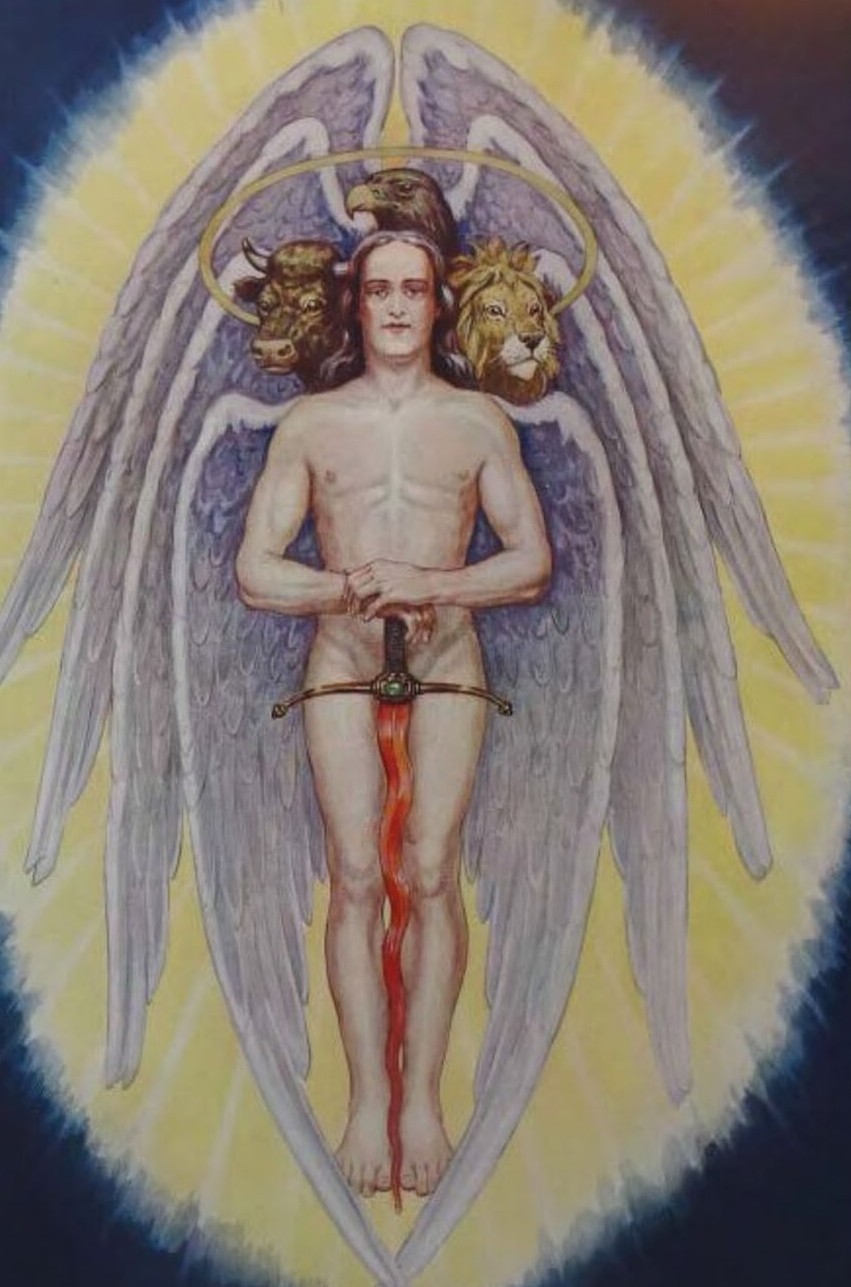
The mark of an errand rather than a nature. Note whether the wings are open, folded, or given to the figure by someone else.
In plain words Wings everywhere: they rise above the figure's head and fall to his feet and fill the flame-shaped light he stands in. Ezekiel's creatures, in the vision Hall describes under another plate, had four wings each. This painting gives one man's body the whole vision's wings.
Hall, 1928 “The prophet beheld four strange creatures, each having four heads, four wings, and brazen hoofs like those of a calf.”
Usually not an animal but one face of a set of four. Count the other three before reading it alone.
In plain words Behind the man's own head are the heads of a lion and a bull, and above them an eagle's. With the man they make four, the four faces of Ezekiel's living creatures, which became the four Evangelists and the four fixed signs of the zodiac. Hall counts the four heads and does not name them here; the archive names them as seen.
Symbolica The four heads are an eagle, a bull, a man and a lion, the tetramorph; Hall counts four heads in his description of Ezekiel's creatures and does not name them. Observed on the plate, and left unread rather than guessed.
Also carrying the Angel and the Wing
42 works carry it. The 6 where it is the central motif are here. The symbol.
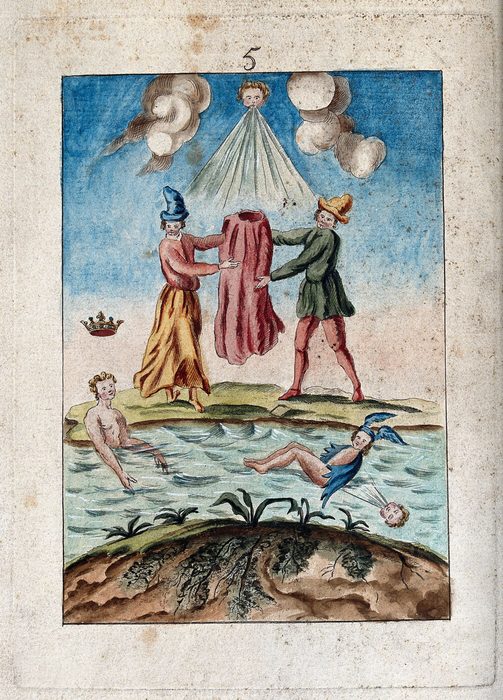
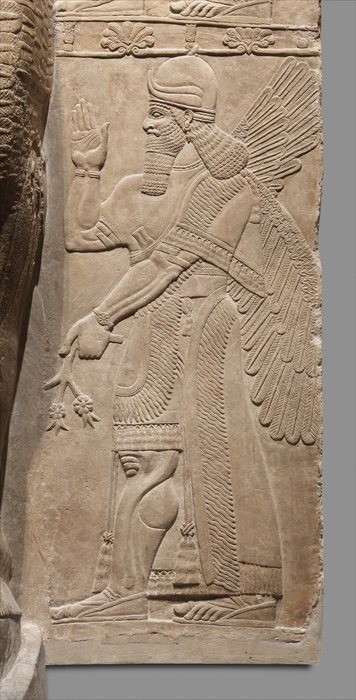
Where the detail is the subject
Each of these is in the picture without being what it is about. Below, one work that is about each.
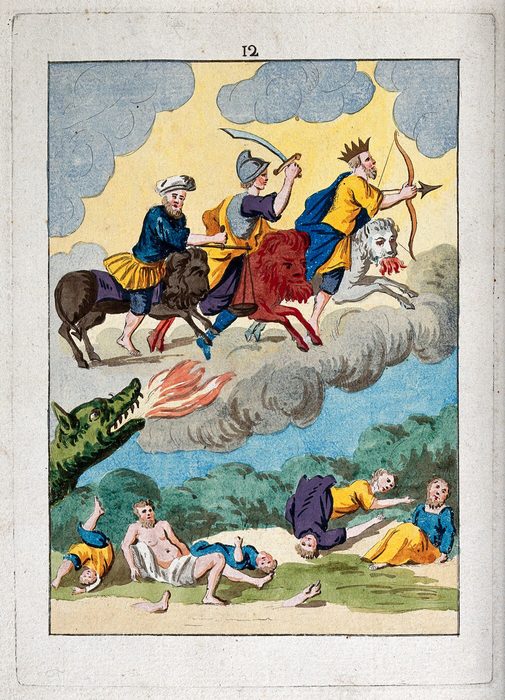
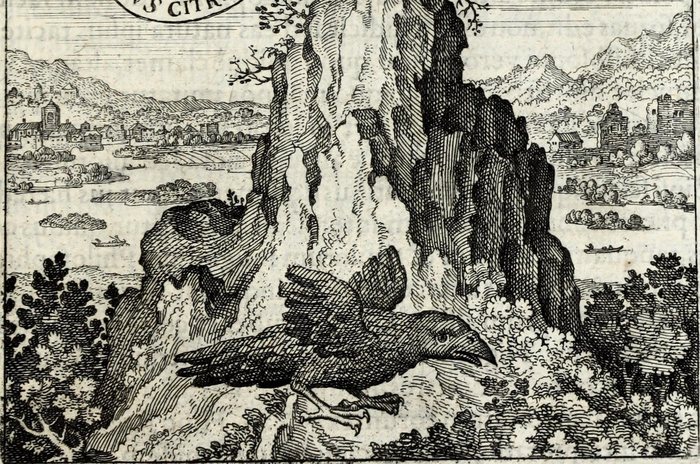
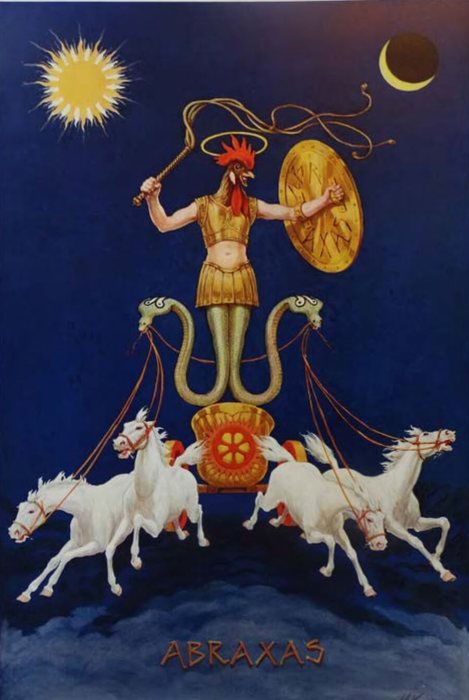
In the same series
Record
One symbol a week, decoded.
This picture is free at full size from its source, linked above. What an address gets is the Sunday letter: one picture, one symbol marked on it, what it meant and who said so, and the master files of the decoded plates as they are verified. Leave any time.
Free, one letter a week, unsubscribe in one click. How the address is used.
Scroll or pinch to zoom · drag to move · double-tap for 1:1 · 945 by 1355 pixel web copy; the source file is linked under Record