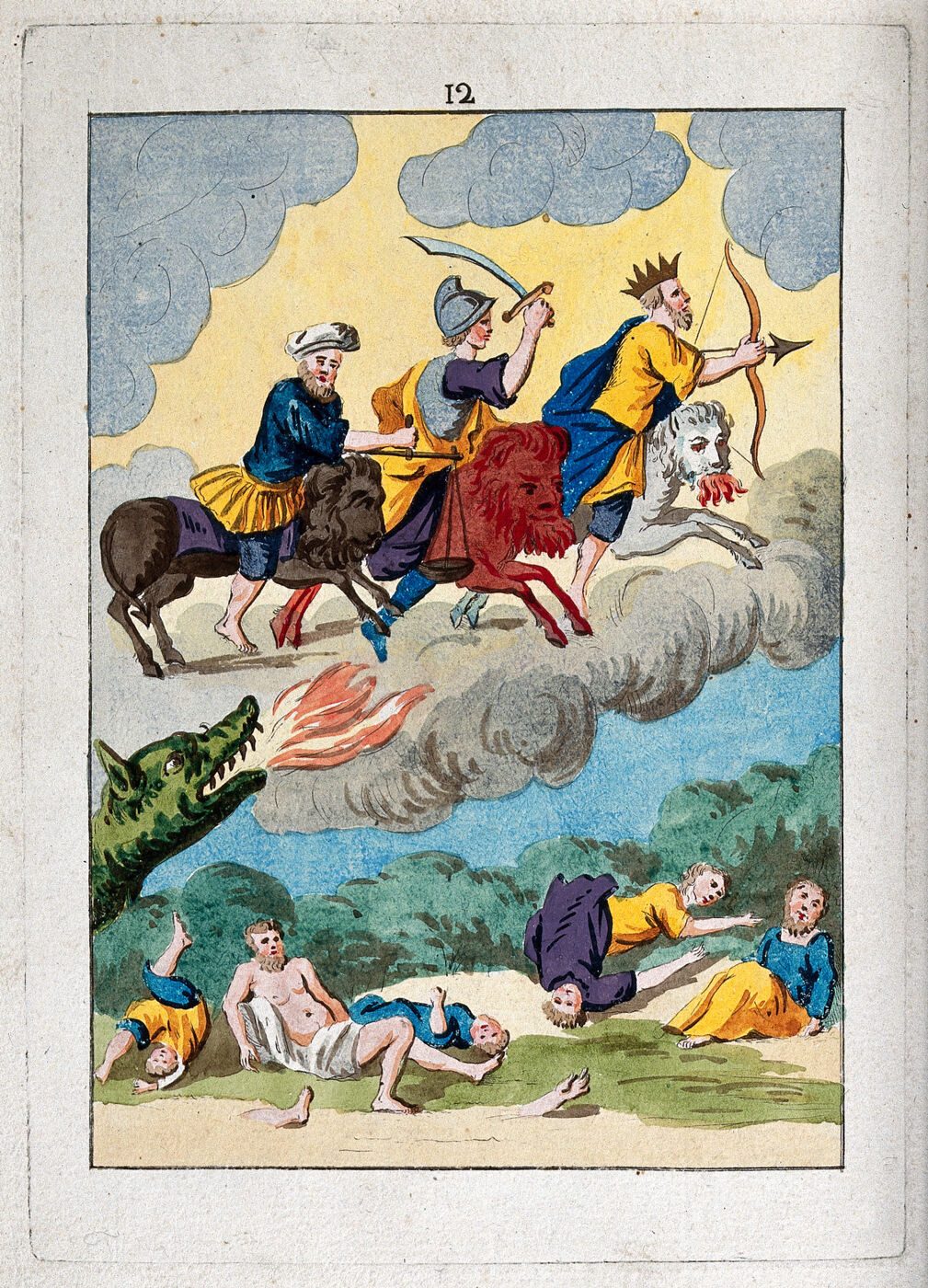
Three Riders on Black, Red and White Lions
The Lion as the central motif, with the Crown, and the Serpent and the Dragon in a secondary part. From The Flamel figures.
What is happening
Apocalypse 6:1 “And I saw that the Lamb had opened one of the seven seals: and I heard one of the four living creatures, as it were the voice of thunder, saying: Come and see.”
Apocalypse 6:8 “And power was given to him over the four parts of the earth, to kill with sword, with famine and with death and with the beasts of the earth.”
Key · 3 motifs
Tap a motif on the picture, or a line below. Its note opens under the line, with the reading its author gave it.
- Primary motif
- Secondary motifs · 2
The picture
Three armed riders on a black, a red and a white lion charge across the clouds under the sun and the moon; below them figures fall or lie on the ground and a beast crouches at the left; the Lion as the central motif, by eye. By eye
The reading
The picture read whole, in the archive's words, from the sources quoted on the marks. Read on, and the picture follows: the motif under discussion keeps its colour.
The number twelve at the top of the sheet says this is a page from a series, and the series was the set of figures circulated in the eighteenth century under the names of Abraham the Jew and Nicolas Flamel, of which the Wellcome holds several coloured impressions. The Wellcome's cataloguer read the colours of the beasts, black, red and white, as the colours of the alchemical process, and that is very likely what the designer meant. But the scene itself is the opening of the seals in the sixth chapter of the Apocalypse, and the archive reads it from there.
Three riders charge across the clouds under a sun and a crescent moon. The chapter's riders are on horses: a white horse whose rider has a bow and is given a crown, a red horse whose rider is given a great sword and takes peace from the earth, a black horse whose rider holds a pair of scales, and a pale horse whose rider is Death. The painter has put three of them on lions of the same three colours, black, red and white, and dropped the fourth. Whether the change from horses to lions is the painter's invention or was in the figures he copied, the archive cannot say; what it can say is that the lion carries in alchemy the meanings the horse does not, the green lion, the red lion, the lion devouring the sun, and that black, red and white are the three colours the work passes through.
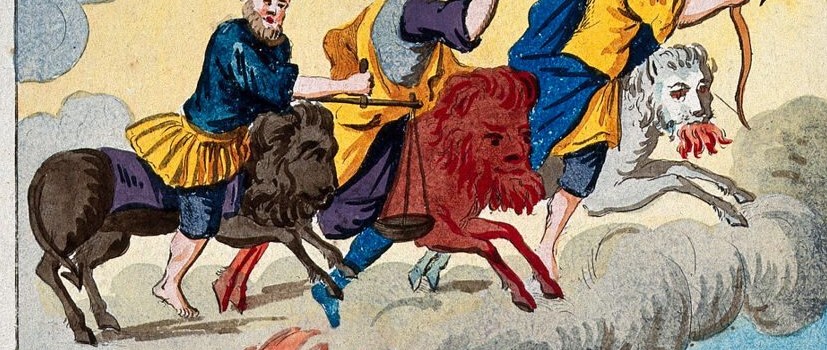
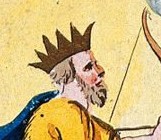
The rider on the white lion wears a crown and draws a bow, and both details are the chapter's: he that sat on him had a bow, and there was a crown given him. The rider on the red lion swings a sword. The third rider, in blue on the black lion, holds something the archive has not identified; it is not the pair of scales the black horse carries in the text, so the identification stops there.
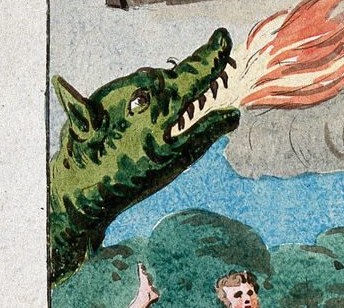
Below them the ground is covered with the fallen. Men lie sprawled, one sits up among the bodies, and at the left a green beast with a long neck breathes a plume of fire across the middle of the sheet. The chapter's fourth rider is given power to kill with sword, with famine and with death and with the beasts of the earth, which accounts for the dead but not for the fire. No beast breathes fire in the sixth chapter. The archive records it and leaves it unread.
What the sheet shows, in the end, is a Bible scene borrowed for a purpose its designer did not write down, or did not write down anywhere the archive has found. The riders come out when the seals are broken, and the alchemists, who read every book as a book about their work, saw in the opened seals and the coloured beasts the stages of a process. The archive gives the chapter, gives the cataloguer's reading, and does not pretend to the designer's.
Decoded: every motif is marked, and each mark carries the reading its author gave it, quoted from the text, or says that it is observed on the picture and not read. The reading above is the archive's own, made from those sources and no others.
Usually not an animal but one face of a set of four. Count the other three before reading it alone.
In plain words Three riders on three lions, black, red and white. The sixth chapter of the Apocalypse sends out riders on horses of those colours when the seals are opened, and the crowned one with the bow and the one with the great sword are the chapter's first two. The lions are the painter's change, and black, red and white are the three colours of the alchemical work, which is probably why.
Apocalypse 6:2 “And I saw: and behold a white horse, and he that sat on him had a bow”
Apocalypse 6:4 “And there went out another horse that was red. And to him that sat thereon, it was given that he should take peace from the earth: and that they should kill one another. And a great sword was given to him.”
Symbolica The sixth chapter puts these riders on horses, black, red and white. The painter has put them on lions of the same three colours, and the crowned rider with the bow and the rider with the great sword are the ones the text describes. What the third rider holds is not the pair of scales the black horse carries in the chapter, so that reading is not given.
Completion, and in the Kabbalistic reading the first sephirah, the point at which the work is no longer yours.
In plain words The rider with the bow wears a crown because the chapter gives him one: there was a crown given him. He is the first horseman, on the white beast.
Apocalypse 6:2 “there was a crown given him”
A single creature doing two opposite jobs. Note whether it is bound, killed, or eating itself.
In plain words The green beast breathing fire across the sheet is not in the chapter. It is recorded as seen and left unread.
Symbolica No beast breathes fire in the sixth chapter. Observed on the sheet, and left unread rather than guessed.
Also carrying the Lion
15 works carry it. The 6 where it is the central motif are here. The symbol.
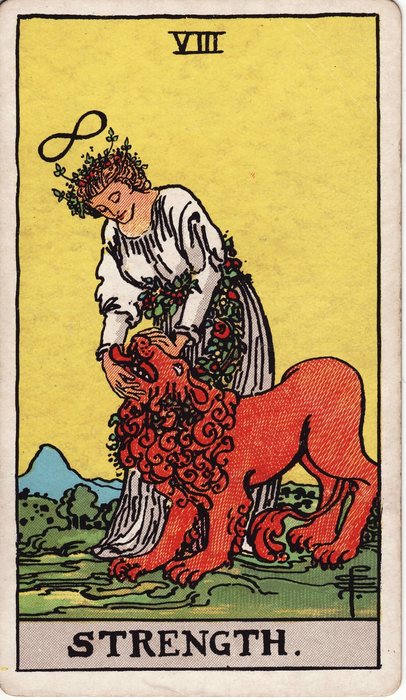
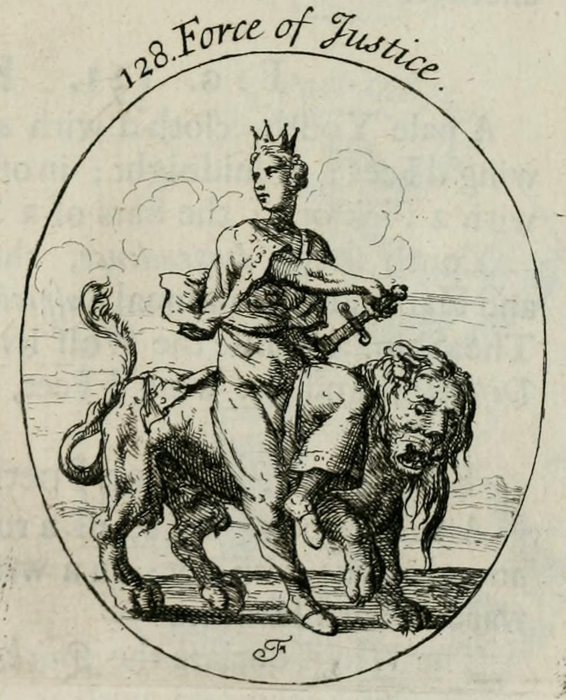
Where the detail is the subject
the Crown · the Serpent and the Dragon
Each of these is in the picture without being what it is about. Below, one work that is about each.
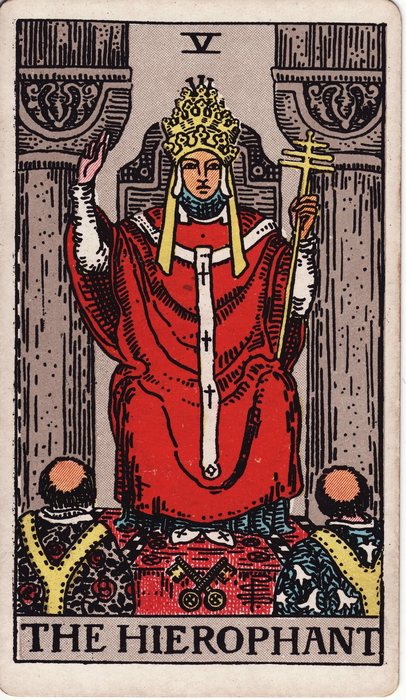
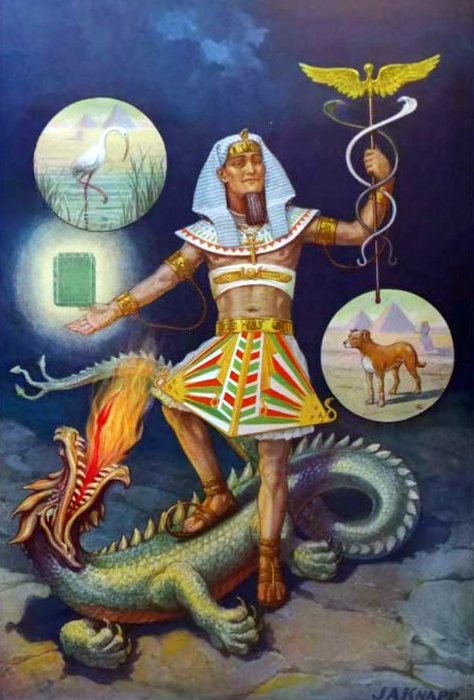
In the same series
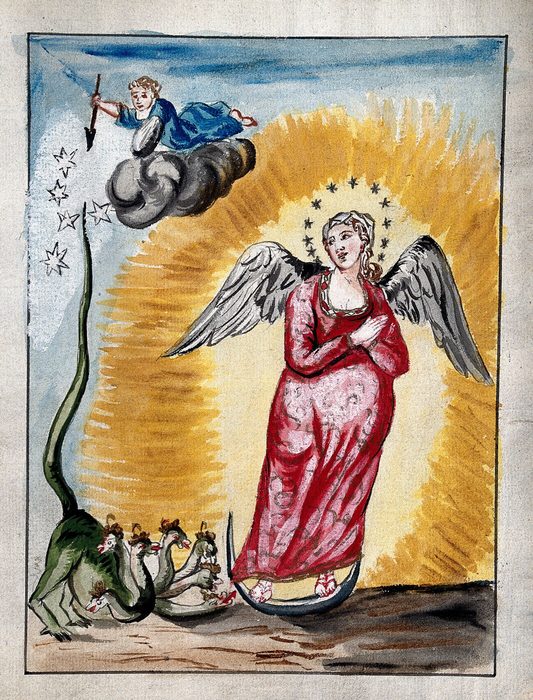
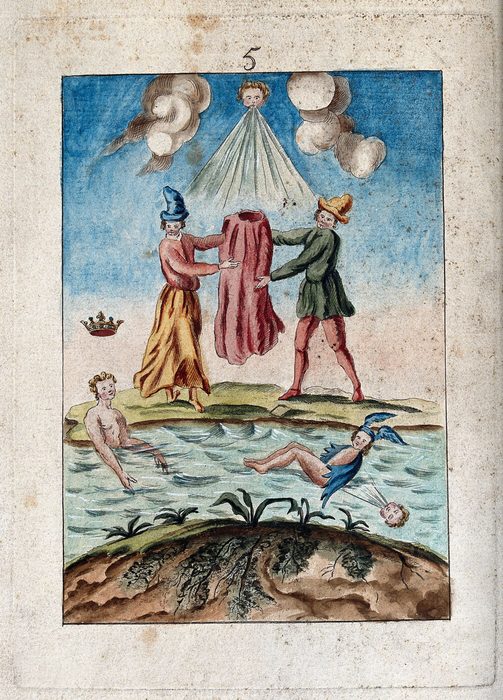
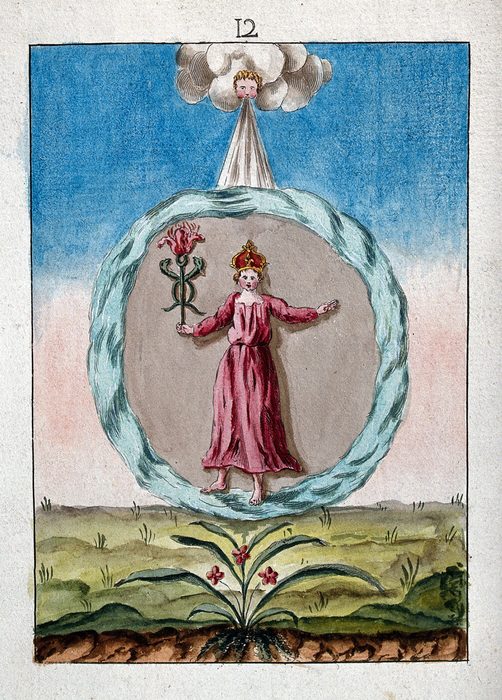
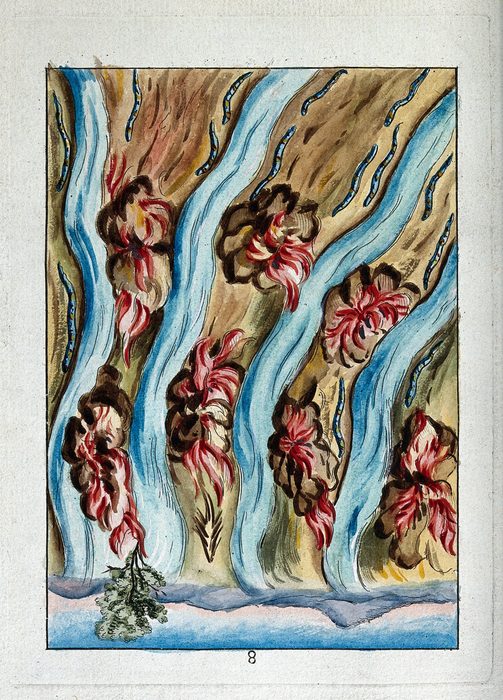
Record
One symbol a week, decoded.
This picture is free at full size from its source, linked above. What an address gets is the Sunday letter: one picture, one symbol marked on it, what it meant and who said so, and the master files of the decoded plates as they are verified. Leave any time.
Free, one letter a week, unsubscribe in one click. How the address is used.
Scroll or pinch to zoom · drag to move · double-tap for 1:1 · 1009 by 1400 pixel web copy; the source file is linked under Record