The Hierophant (V)
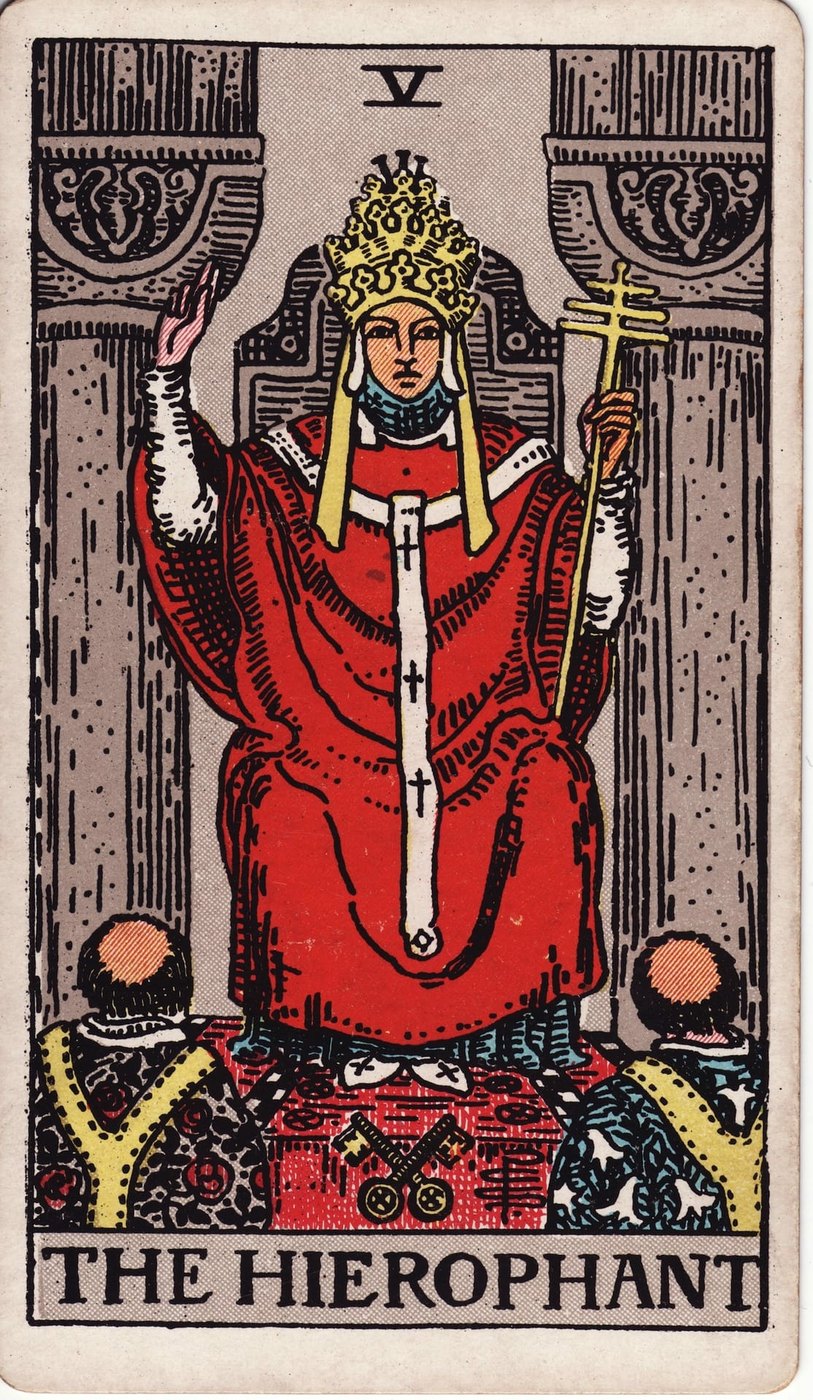
The Hierophant as the central motif, filed under the Crown, with the Pillar and the Hand in a secondary part. From The 1909 tarot.
What is happening
Waite, 1911 “At his feet are the crossed keys, and two priestly ministers in albs kneel before him.”
Key · 3 motifs
Tap a motif on the picture, or a line below. Its note opens under the line, with the reading its author gave it.
- Primary motif
- Secondary motifs · 2
The picture
A pope in red on a throne between two grey pillars, a triple crown on his head, his right hand raised in blessing and a triple-cross staff in his left, two crossed keys at his feet and two tonsured priests kneeling before him; the Hierophant as the central motif. By eye
The reading
The picture read whole, in the archive's words, from the sources quoted on the marks. Read on, and the picture follows: the motif under discussion keeps its colour.
For most of its history this card was the Pope, and Pamela Colman Smith drew a pope: triple crown, red robe, a staff with three crossbars, two kneeling clerics, a pair of keys on the floor. Waite kept every one of them and changed the name. A hierophant is somebody who shows the holy things, and his Hierophant is ‘the ruling power of external religion’, of which a pope is only one particular application.
He sits between two pillars, and Waite stops to say what they are not: ‘they are not those of the Temple which is guarded by the High Priestess’. The two cards mirror each other on purpose. Hers are black and white and lettered, and she keeps the withdrawn, inward power; his are a plain matched pair, and he keeps the institution. Then Waite drops a line that does more work than the paragraph round it: ‘it is noticeable in this connexion that the High Priestess makes no sign’.
He does. The right hand is up with two fingers raised and two folded, which Waite identifies as the ecclesiastical sign of esotericism, ‘distinguishing between the manifest and concealed part of doctrine’. In plain terms, the blessing hand says that some of what the church teaches is spoken aloud and some is not. The crossed keys lie at his feet, and on those Waite quotes Grand Orient with approval: the power of the keys, exoteric orthodox doctrine, and the outer side of the life that leads to the doctrine.
His last paragraph is a warning dressed as a definition. The Hierophant is the whole of theology after ‘it has passed into the utmost rigidity of expression’, and he heads a recognised hierarchy which is itself only the reflection of a greater one. Then the sting: ‘it may so happen that the pontiff forgets the significance of this his symbolic state’. The triple crown is a reminder of what its wearer stands for and a standing invitation to think that he is it.
Readings quoted
Waite, 1911 “Grand Orient says truly that the Hierophant is the power of the keys, exoteric orthodox doctrine, and the outer side of the life which leads to the doctrine; but he is certainly not the prince of occult doctrine, as another commentator has suggested.”
Waite, 1911 “He is rather the summa totius theologia, when it has passed into the utmost rigidity of expression; but he symbolizes also all things that are righteous and sacred on the manifest side.”
Waite, 1911 “He is the order and the head of the recognized hierarchy, which is the reflection of another and greater hierarchic order; but it may so happen that the pontiff forgets the significance of this his symbolic state and acts as if he contained within his proper measures all that his sign signifies or his symbol seeks to shew forth.”
Decoded: every motif is marked, and each mark carries the reading its author gave it, quoted from the text, or says that it is observed on the picture and not read. The reading above is the archive's own, made from those sources and no others.
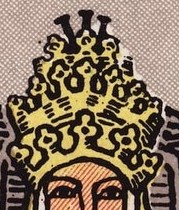
Completion, and in the Kabbalistic reading the first sephirah, the point at which the work is no longer yours.
In plain words The three-tiered crown is the papal tiara, and the card used to be called the Pope. Waite keeps the picture and widens the name: a hierophant is one who shows holy things, and this one stands for organised religion in general, the visible church with its rules and its ranks. The High Priestess, seated between her own pillars, is the same power turned inward.
Waite, 1911 “He wears the triple crown and is seated between two pillars, but they are not those of the Temple which is guarded by the High Priestess.”
Waite, 1911 “He has been usually called the Pope, which is a particular application of the more general office that he symbolizes. He is the ruling power of external religion, as the High Priestess is the prevailing genius of the esoteric, withdrawn power.”

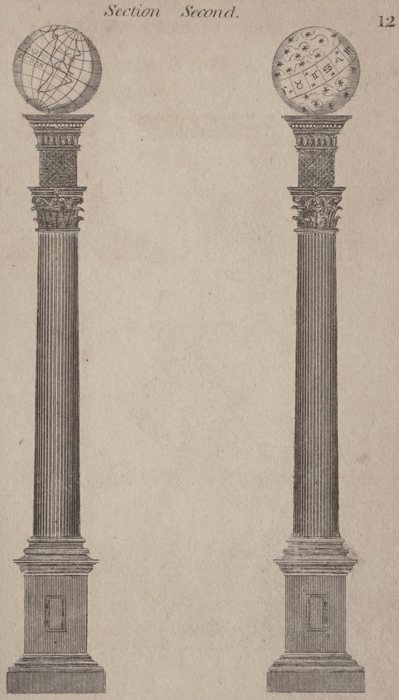
Two columns, and the thing that matters is between them. Note what stands there, and whether the pillars are told apart.
In plain words Two plain grey columns, alike, with no letters on them. Waite is careful to say they are not the pillars of Solomon’s temple that the High Priestess sits between, though the composition copies hers: her pillars are black and white and lettered B and J, his are a matching pair. Same doorway, different building.
Waite, 1911 “He wears the triple crown and is seated between two pillars, but they are not those of the Temple which is guarded by the High Priestess.”
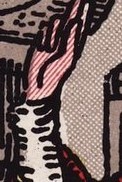
The hand as a sign in itself: what it holds, where it points, which fingers are raised. On the Hand of the Mysteries every finger carries a sign of its own.
In plain words Two fingers raised and two folded is the gesture of a priest’s blessing, and Waite gives it a second sense: the raised fingers are the part of the teaching that is spoken, the folded ones the part that is not. The staff in the other hand ends in a cross with three bars, the pope’s cross. Waite adds that the High Priestess, his counterpart, makes no sign at all.
Waite, 1911 “In his left hand he holds a sceptre terminating in the triple cross, and with his right hand he gives the well-known ecclesiastical sign which is called that of esotericism, distinguishing between the manifest and concealed part of doctrine. It is noticeable in this connexion that the High Priestess makes no sign.”
Also carrying the Crown
34 works carry it. The closest 6 are here. The symbol.
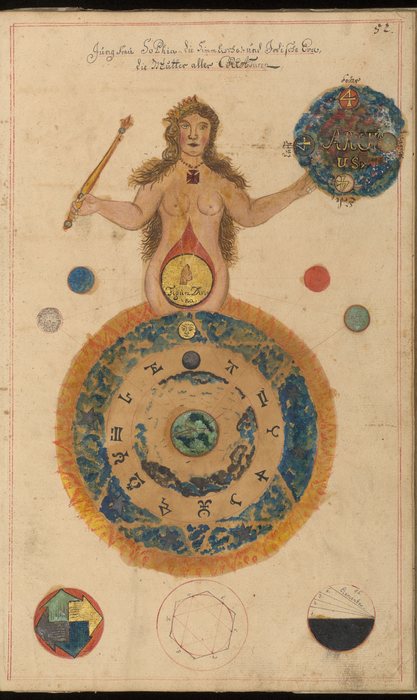
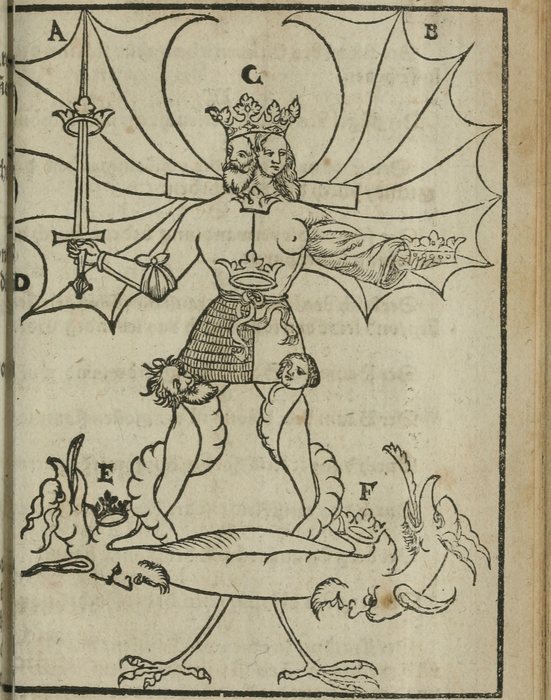
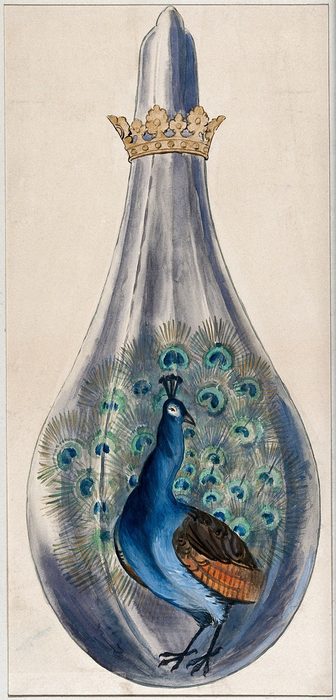
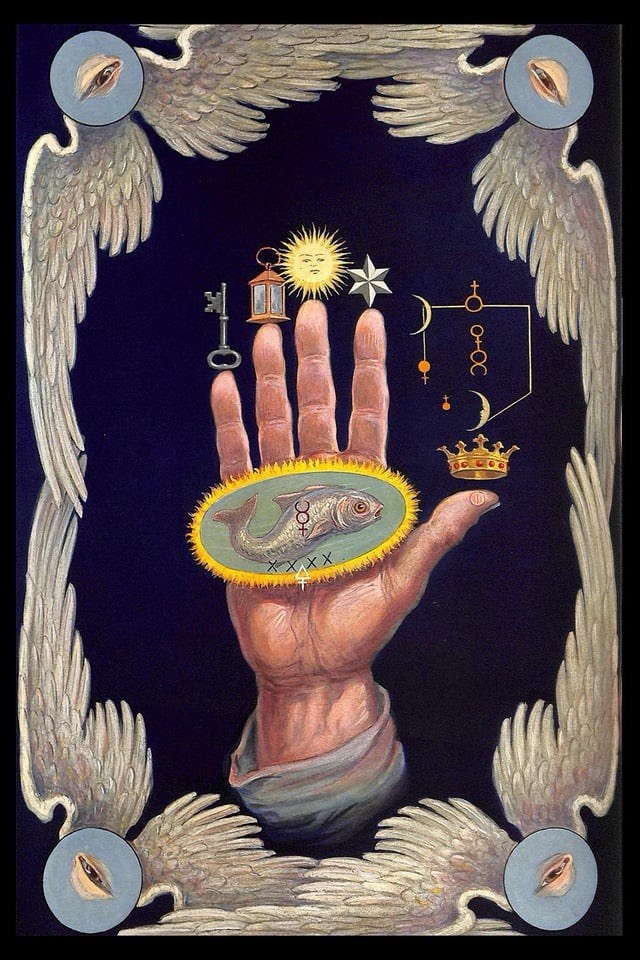
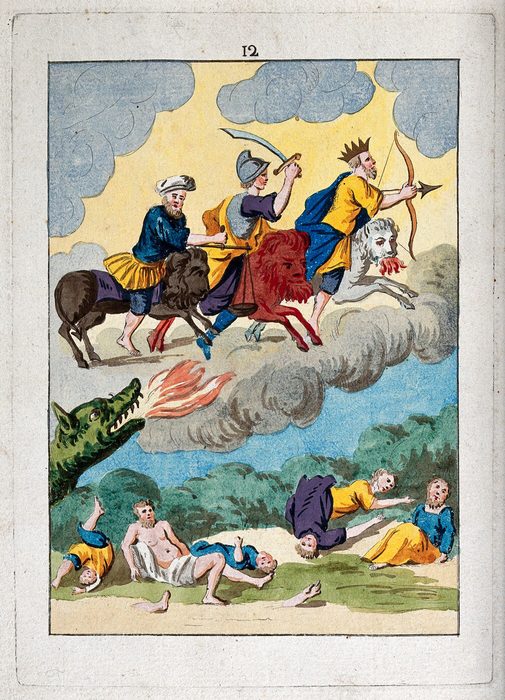
Where the detail is the subject
Each of these is in the picture without being what it is about. Below, one work that is about each.
In the same series
Record
One symbol a week, decoded.
This picture is free at full size from its source, linked above. What an address gets is the Sunday letter: one picture, one symbol marked on it, what it meant and who said so, and the master files of the decoded plates as they are verified. Leave any time.
Free, one letter a week, unsubscribe in one click. How the address is used.
Scroll or pinch to zoom · drag to move · double-tap for 1:1 · 813 by 1400 pixel web copy; the source file is linked under Record