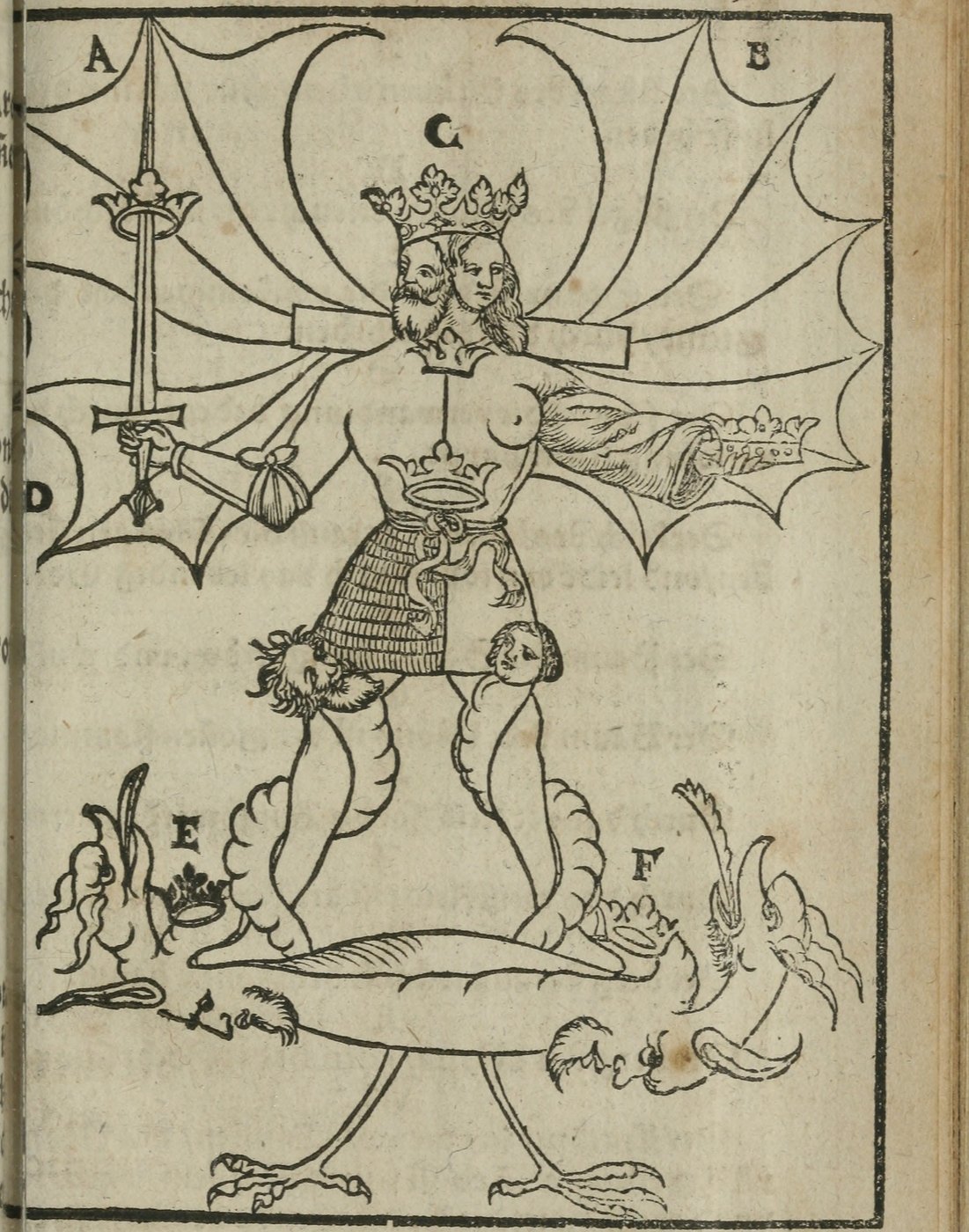
The sword, the two crowns and the dragon
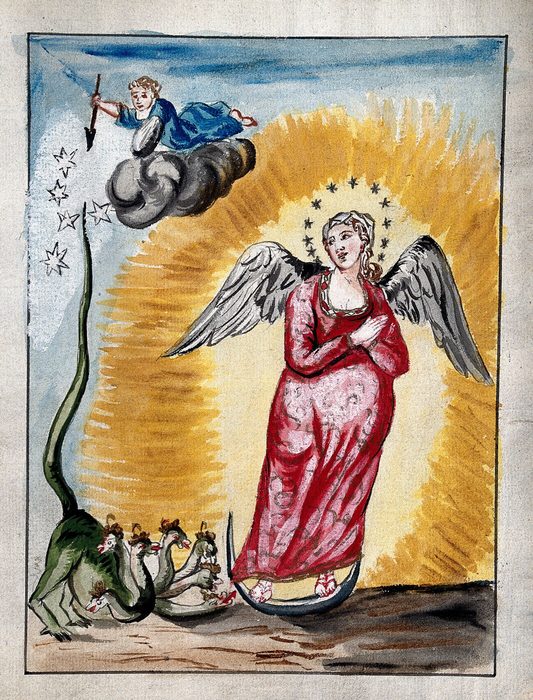
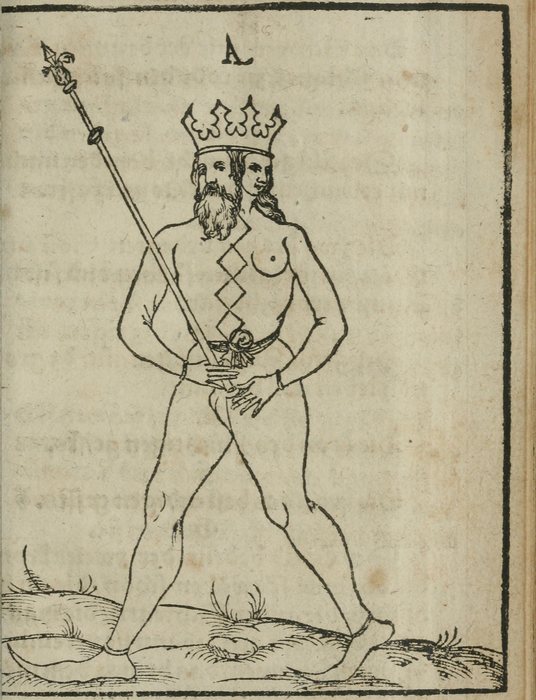
The Crown as the central motif, with the King and the Queen, the Angel and the Wing, and the Serpent and the Dragon in a secondary part. From Pandora, 1582.
What is happening
Symbolica The key facing this plate runs A to G. In the Getty copy the next leaf lies across its outer margin, and the camera caught the fold, so five of the seven lines lose their last letters. The two that survive whole are the crowns at E and F, quoted on the mark below. The archive reports the other five as read on the page and prints none of them.
Key · 4 motifs
Tap a motif on the picture, or a line below. Its note opens under the line.
- Primary motif
- Secondary motifs · 3
The picture
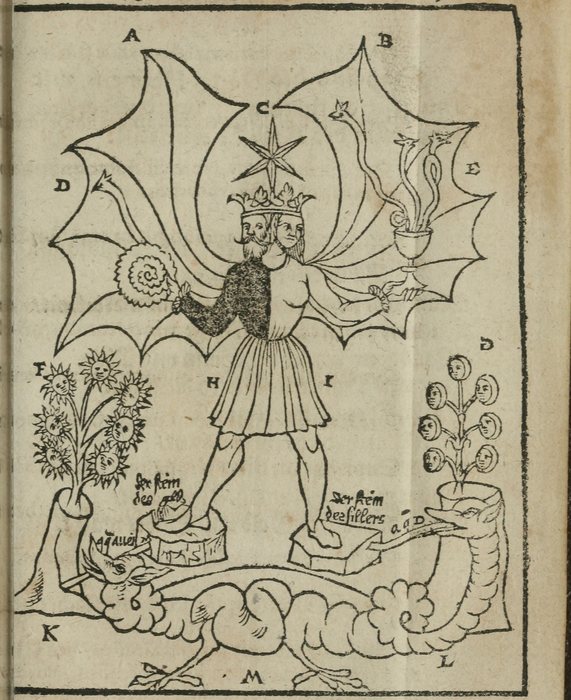
Two heads under one crown, four wings, a sword in one hand and a crown in the other, a third crown at the waist, two small figures growing from the legs, and a dragon below with a head at either end and a small crown standing on its back above each. By eye
The reading
The picture read whole, in the archive's words, from the sources quoted on the marks. Read on, and the picture follows: the motif under discussion keeps its colour.
Two pages on, the same body comes back armed. The cutter gave it four wings, a sword in the right hand, a crown in the left, a third crown at the waist and a dragon underfoot with a head at each end. The key faces it as before, seven letters this time. In the Getty copy the next leaf lies across the outer margin of that key page, and the camera caught the fold, so five of the seven lines lose their last letters. Two survive whole.
They belong to the two crowns standing on the dragon’s back, one at either end. “Die Kron des flüchtigen geists.” The crown of the fleeting spirit. “Die Kron des bestendigen geists.” The crown of the constant spirit. A Basel compositor set those eight words in 1582 and left a gloss on a crown that needs no commentary: not rank, not office, but which of two spirits stays.
The body wearing the third crown gets no letter at all. The key numbers the wings, the sword, the crowns and the dragon, and walks past the bearded head and the woman’s head growing from one neck as though a reader needed no help with them. Two small figures climb out of the legs, one bearded, one a woman, and the key passes those too.
Underneath, one dragon carries the whole weight on two clawed feet, a head at either end and a crown standing on its back above each head, which puts the fleeting spirit and the constant spirit on the same animal. The key reads it as the two crowns above it, one blue and one black, and says what follows when they come together; four of those lines run into the fold, so the archive reports the reading and quotes none of it.
Not yet decoded: the motifs are marked, but most of the marks carry no reading yet and say so. The sourced notes come with the entry.

Completion, and in the Kabbalistic reading the first sephirah, the point at which the work is no longer yours.
In plain words A crown stands on the dragon’s back at either end of the block, beside the crest of the head below it. The key gives each of them one line, and those two lines are the only ones on that page the next leaf leaves whole.
The book, which names no author, 1582 “Die Kron des flüchtigen geists.”
The book, which names no author, 1582 “Die Kron des bestendigen geists.”
Symbolica The crown of the fleeting spirit and the crown of the constant spirit. Two crowns, one for what escapes and one for what stays.
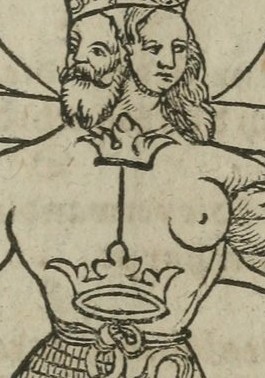
A rank rather than a person. Read the robe, the throne and what comes out of the mouth before you read the face.
In plain words The same two-headed body as the plate two pages back, now with a sword in one hand and a crown in the other. Two small figures, one bearded and one a woman, grow out of the legs.
Symbolica The key letters this plate’s wings, its crowns and its dragon, and letters nothing on the body itself. Recorded as observed and left unread.
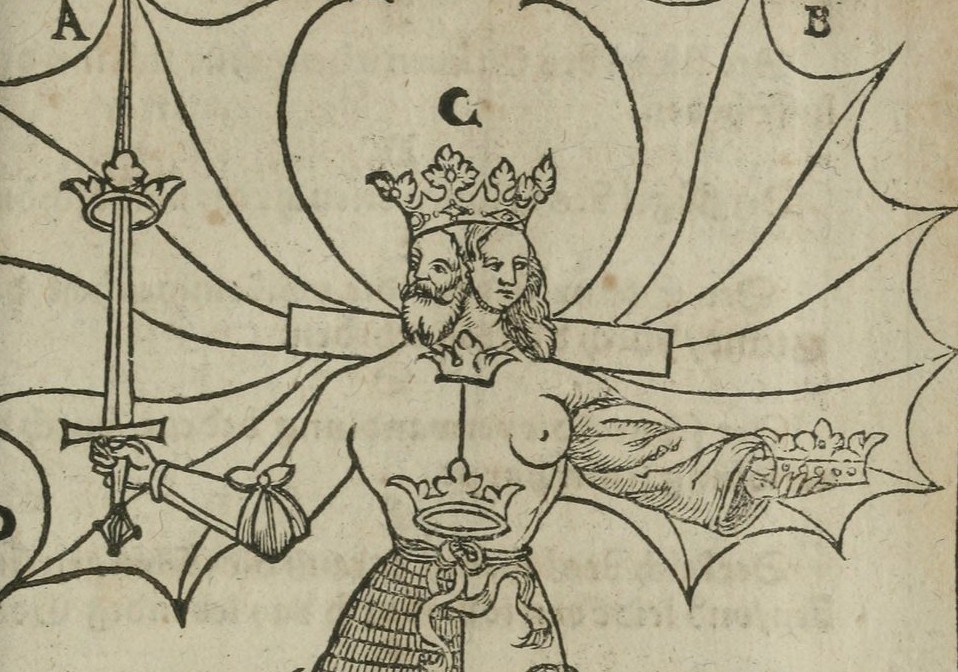
The mark of an errand rather than a nature. Note whether the wings are open, folded, or given to the figure by someone else.
In plain words Four wings open from the shoulders, the upper pair reaching the top corners of the block, the lower pair spread flat under the arms.
Symbolica The key gives the upper two wings a line each and the fold takes the end of both lines. Recorded as observed; the same block’s wings are read on page 225, where the key survives.
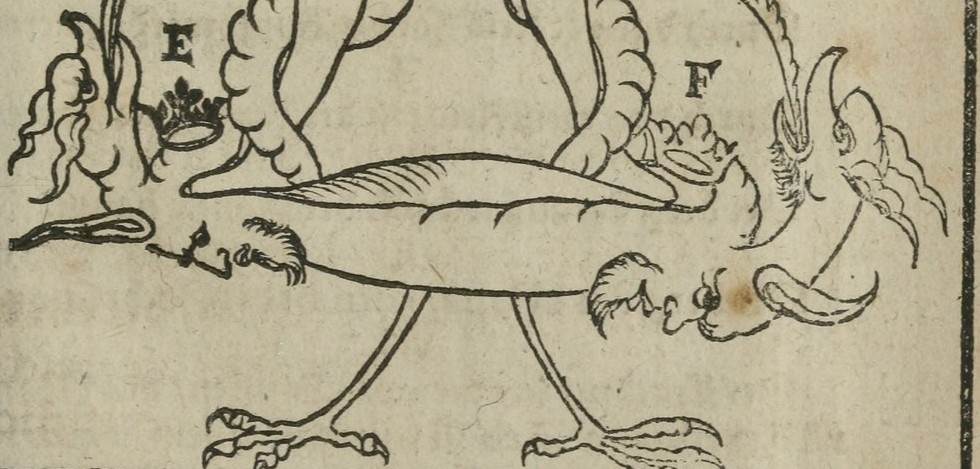
A single creature doing two opposite jobs. Note whether it is bound, killed, or eating itself.
In plain words One dragon runs the width of the block on two clawed feet, a head at each end, a crown standing on its back above each head. The armed figure rides it.
Symbolica The key’s last letter reads the dragon as the two crowns floating above it, one blue and one black, and names what their union brings. The line runs four deep into the fold and the archive prints none of it.
Also carrying the Crown
34 works carry it. The closest 6 are here. The symbol.
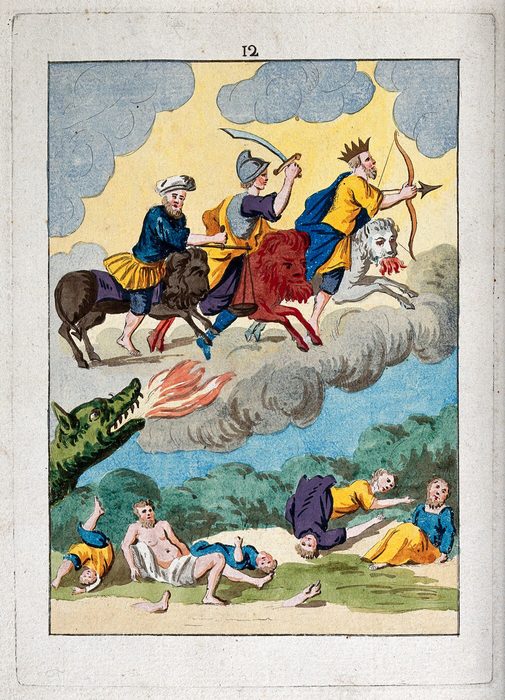
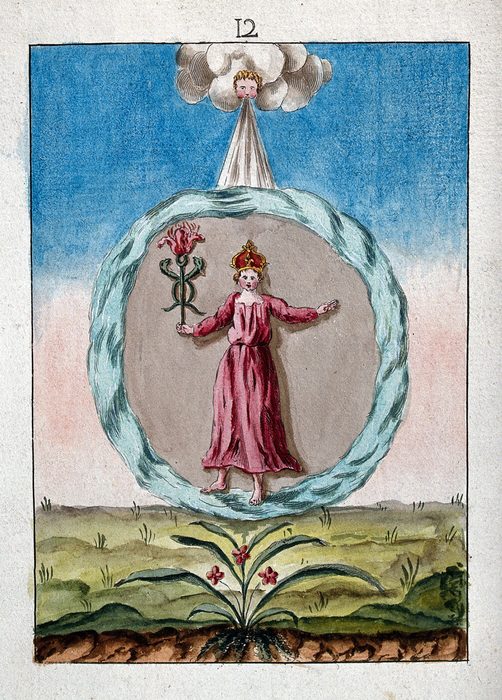
Where the detail is the subject
the King and the Queen · the Angel and the Wing · the Serpent and the Dragon
Each of these is in the picture without being what it is about. Below, one work that is about each.
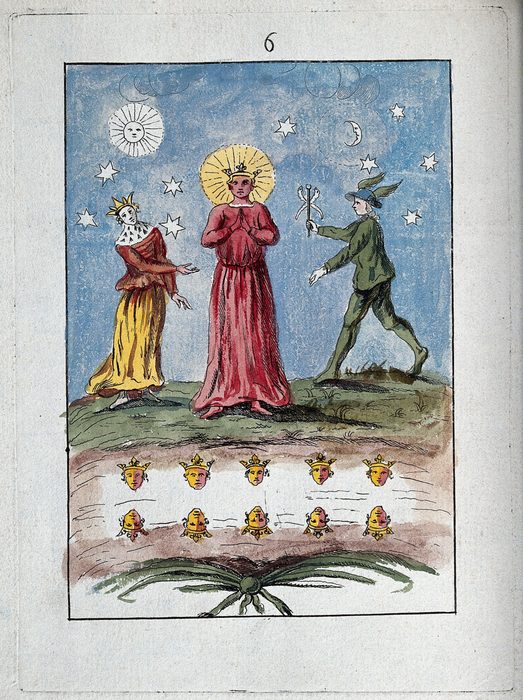
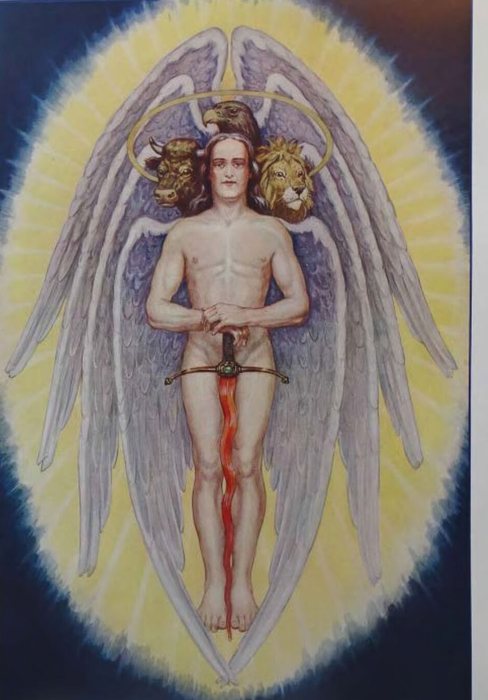
In the same series
Record
One symbol a week, decoded.
This picture is free at full size from its source, linked above. What an address gets is the Sunday letter: one picture, one symbol marked on it, what it meant and who said so, and the master files of the decoded plates as they are verified. Leave any time.
Free, one letter a week, unsubscribe in one click. How the address is used.
Scroll or pinch to zoom · drag to move · double-tap for 1:1 · 1101 by 1400 pixel web copy; the source file is linked under Record