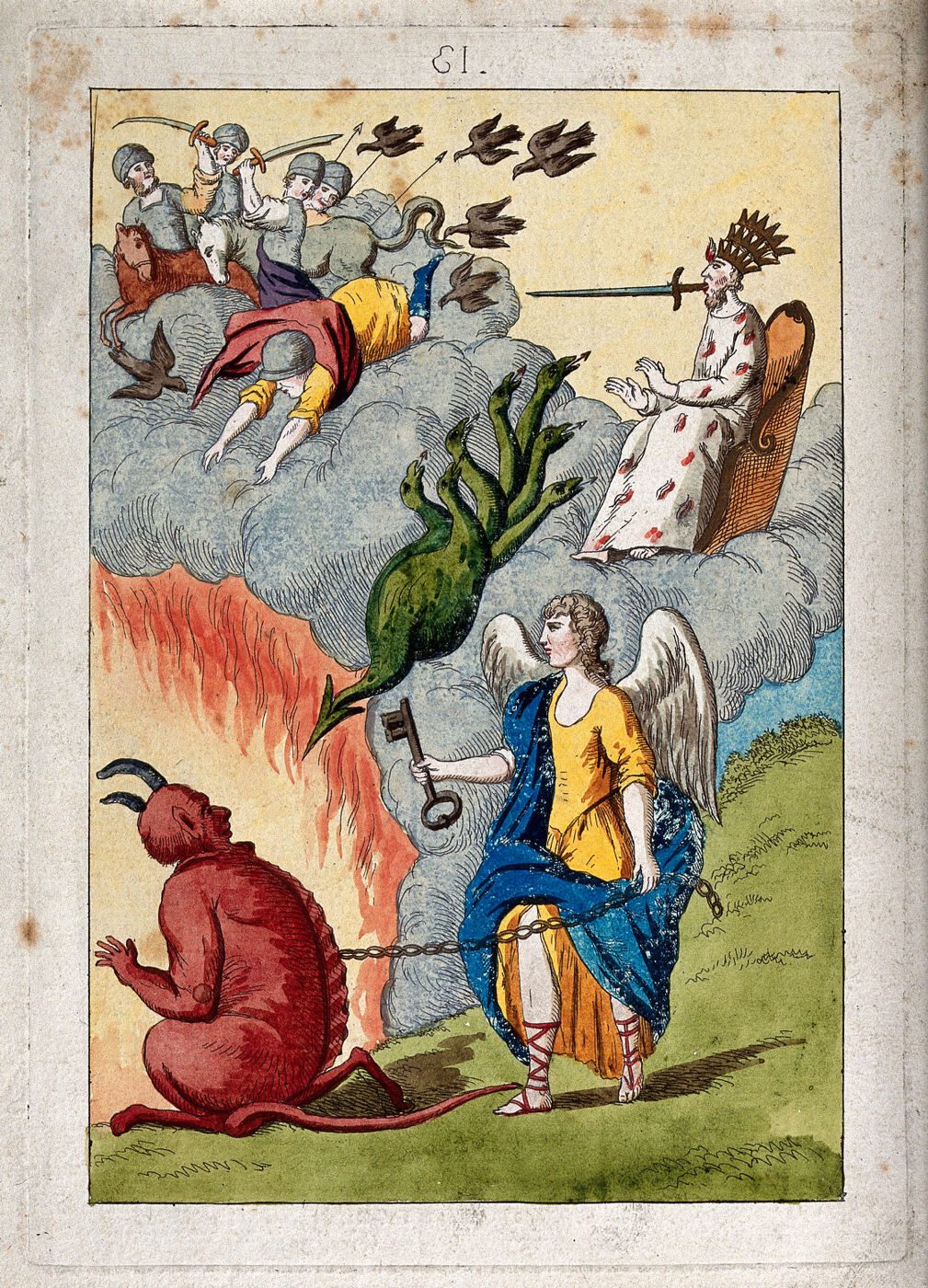
The King and the Queen
the crowned pair, the royal figures
A rank rather than a person. Read the robe, the throne and what comes out of the mouth before you read the face.
Thirty-six works here carry a king, a queen or the pair, and the ones the archive has read fall into two kinds: the sovereign, read by his clothes and his crown, and the couple, read by what is about to happen to them.
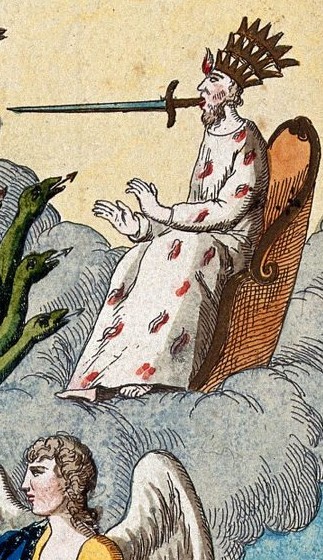
Where the king is read, he is read by his clothes and his mouth rather than his face. The Apocalypse describes the rider of the nineteenth chapter twice over: “And he was clothed with a garment sprinkled with blood. And his name is called: THE WORD OF GOD”, and “And out of his mouth proceedeth a sharp two-edged sword, that with it he may strike the nations.” The painter of the sheet after the figures attributed to Flamel has drawn both, the flecked robe and the blade in the mouth, so the identification does not rest on a guess.
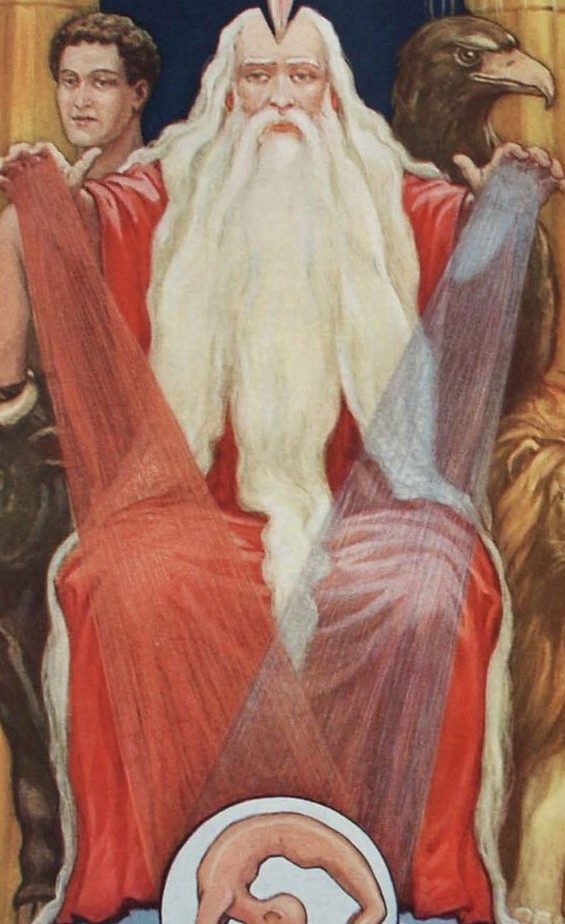
Hall's throned figure is the same kind of reading and it is unusually candid about its own liberties. “He sits upon a throne of flaming light and the flashes of the fire are subject to His will”, and then, of the robes: “In the Zohar His robes are said to be white, but they are here shown as red to signify that the garments of Divinity partake of the nature of cosmic activity.” That second sentence is worth more than the first. The plate departs from the text it is illustrating, and the caption says so in the same breath.
Waite's Emperor of 1909 is “a crowned monarch--commanding, stately, seated on a throne”, and Waite gives him two readings at once: “On the surface, as I have indicated, they stand for mundane royalty, uplifted on the seats of the mighty; but above this there is the suggestion of another presence. They signify also--and the male figure especially--the higher kingship, occupying the intellectual throne.” The Empress is the one queen the archive can read, and Waite reads her by her crown: “Her diadem is of twelve stars, gathered in a cluster”, and among the names she “has been correctly described as” is “the woman clothed with the sun”, whose crown of twelve stars the Apocalypse gives her. The pair without crowns is on two of his cards, and he says they are the same pair twice. On the Lovers they are “two human figures, male and female, unveiled before each other, as if Adam and Eve when they first occupied the paradise of the earthly body”, and the card “is in all simplicity the card of human love”; on the Devil they are chained by the neck to the block, “as if Adam and Eve after the Fall. Hereof is the chain and fatality of the material life.”
Maier's kings of 1618 are patients, and his couples are ingredients. The king of the thirty-first emblem swims in the sea, “Rex Diadema caput cui praegravat”, a king whose head is weighed down by his crown, shouting for rescue; King Duenech of the twenty-eighth, “Bile tumens rigidis moribus usus erat”, swollen with bile and harsh-tempered, sweats it out in a glass bath; the king of the forty-eighth drinks too much of a spring and is purged until “mox tincta est utraque mala rosis”, both his cheeks are tinged with roses. Each king is the metal at a stage of its treatment, and each comes out redder. The couples are the two things the work joins: the brother and sister of the fourth emblem, “ut sint foemina masque toro”, that there be woman and man in one bed; the man and woman inside the geometer's circle in the twenty-first; Isis gathering the pieces of Osiris in the forty-fourth. What the queen is doing in the alchemical pictures, Maier says plainly: she is the other half of the matter, and the marriage is the operation.
Crowned figures also come in pairs in the Splendor Solis copies, over the sun and the moon, beside Mercury. The archive holds those works and holds nothing that explains them, so this entry does not pretend otherwise.
Contested
The Splendor Solis copies' kings and queens are tagged by eye and unread; Maier's are marked and read on their records, and his discourses are not yet transcribed. Hall is describing traditions rather than transmitting them, and his plates were drawn to his own instructions, so plate and caption are one voice. The Apocalypse identification holds only because the painter drew the two details the text names. Waite's account of his cards is his own, and the filing of the Lovers and of the Devil's chained pair under the king and the queen is the archive's, made because this is its heading for the two who belong together; Waite calls neither card royal.
Sources
- The Apocalypse of Saint John, Douay Rheims, Challoner revision: Quoted from the Challoner revision, the English text the archive uses for the Apocalypse throughout.
- Manly P. Hall, The Secret Teachings of All Ages: Hall's text and plate captions, 1928. Transcribed here, not yet read against a printed folio.
- Arthur Edward Waite, The Pictorial Key to the Tarot: Waite commissioned the 1909 designs and wrote the key to them, so his account is the closest thing the deck has to an author's statement.
- Michael Maier, Atalanta Fugiens, 1618: The mottoes and epigrams of the fifty emblems, Oppenheim 1618, read against the page images of the Getty Research Institute copy; the English is the archive's own and is marked as such on every record. Maier's discourses, in which he explains each emblem at length, are not yet transcribed.
On the same plate
Where it appears · 36
36 works in the archive carry the King and the Queen. First the 21 where it has been read, with the King and the Queen itself picked out.
The King with Three Crowns and the Seven-Headed Hydra
The Ancient of the Ancients
The Macrocosm and the Microcosm
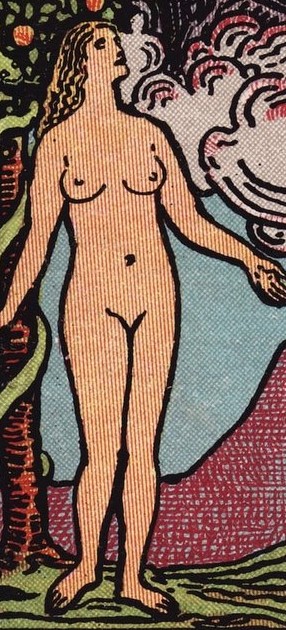
The Lovers (VI)
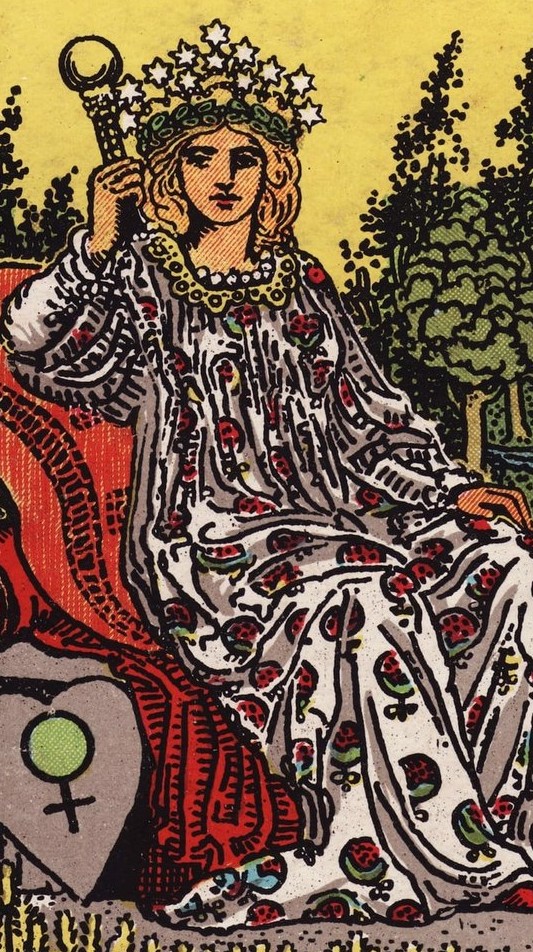
The Empress (III)
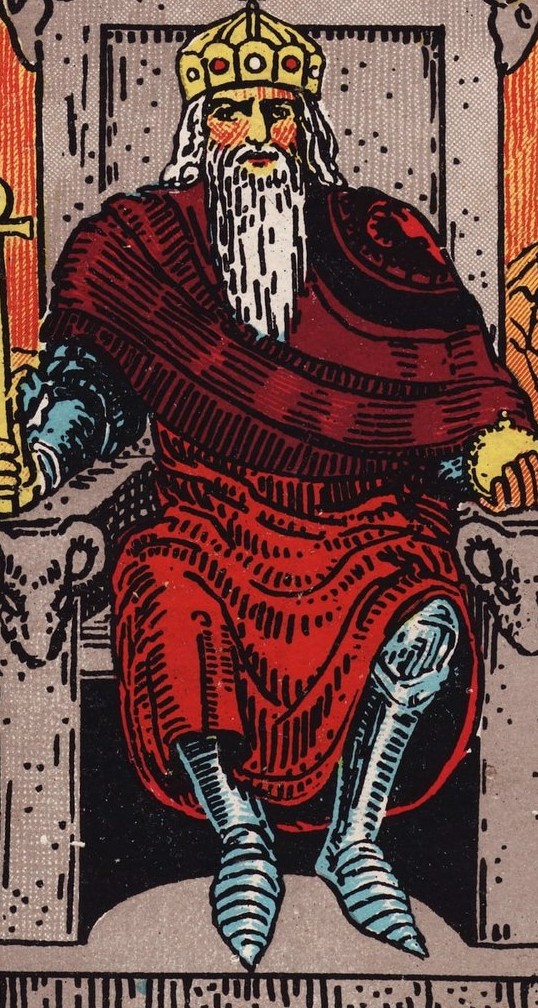
The Emperor (IV)
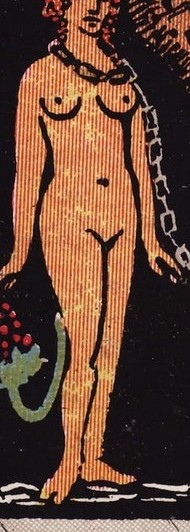
The Devil (XV)
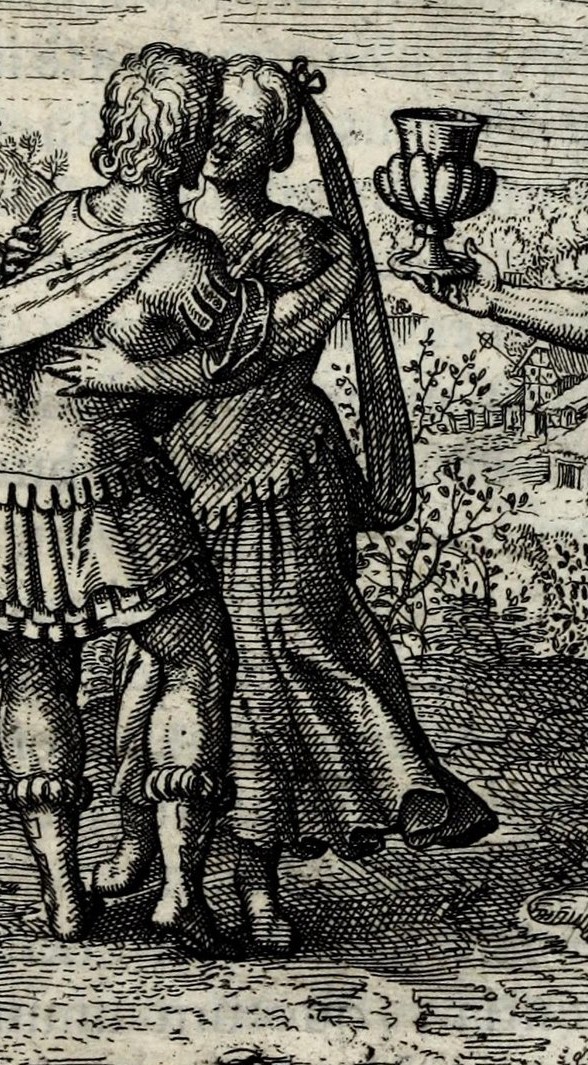
Conjunge fratrem cum sorore & propina illis poculum amoris
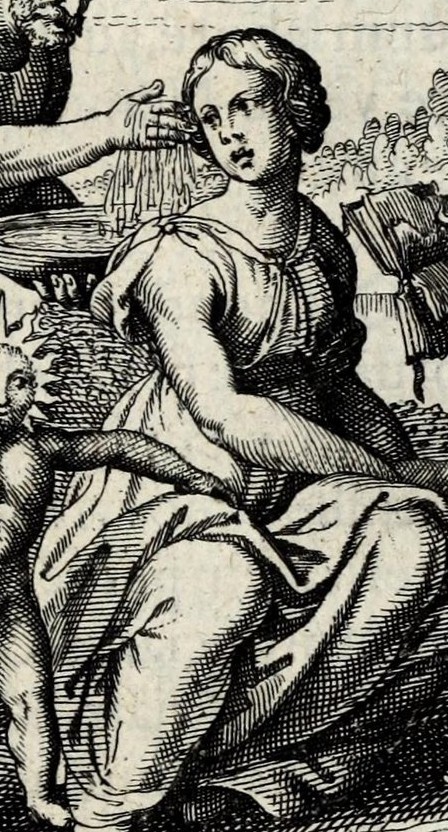
Dealbate Latonam & rumpite libros
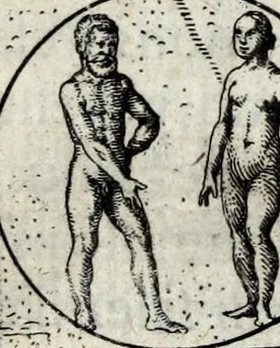
Fac ex mare & fœmina circulum, inde quadrangulum, hinc triangulum, fac circulum & habebis lap. Philosophorum
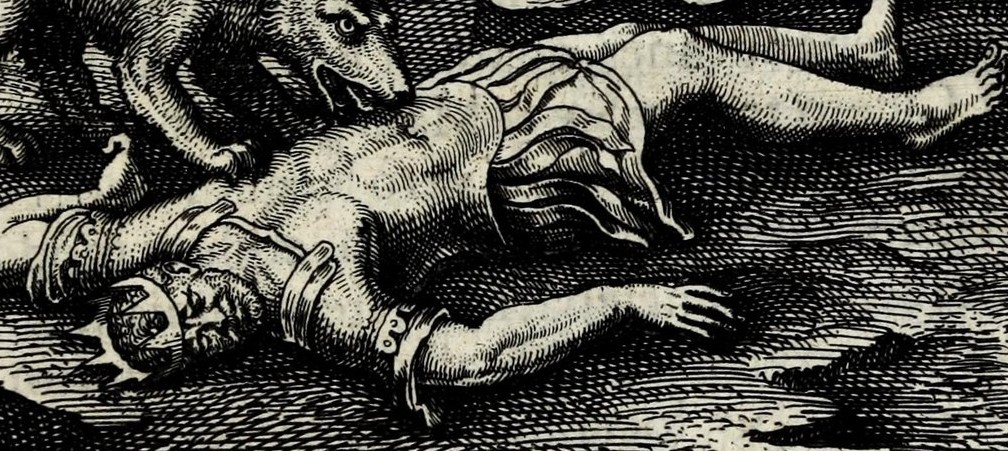
Regem lupus voravit & vitæ crematus reddidit
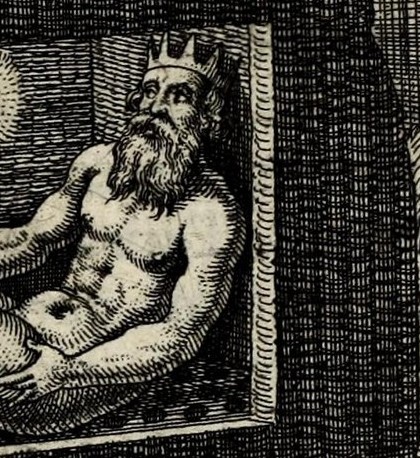
Rex balneatur in Laconico sedens, Atrâque bile liberatur à Pharut
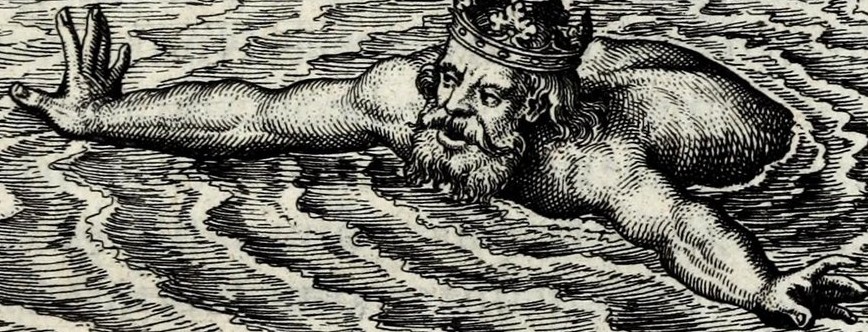
Rex natans in mari, clamans altâ voce: Qui me eripiet, ingens præmium habebit
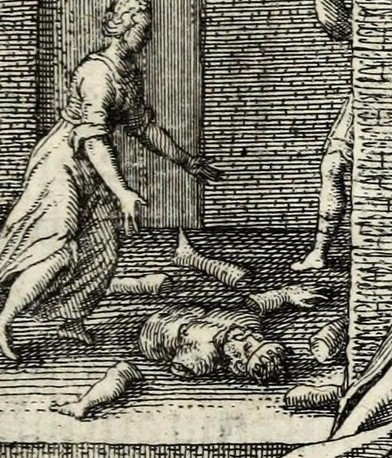
Dolo Typhon Osyridem trucidat, artúsque illius Hinc inde dissipat, sed hos collegit Isis inclyta
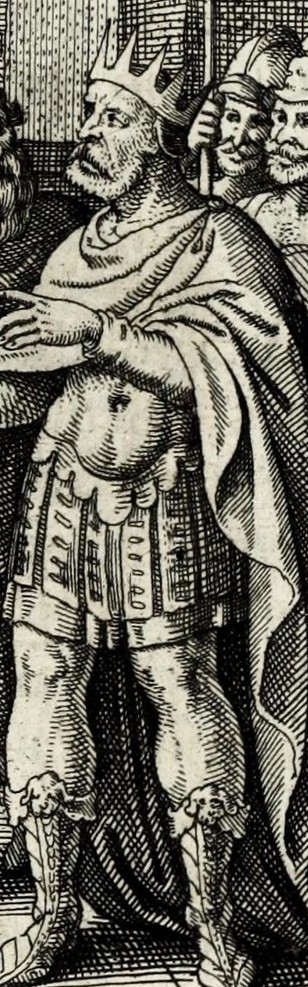
Rex ab aquis potatis morbum, à medicis curatus sanitatem obtinet
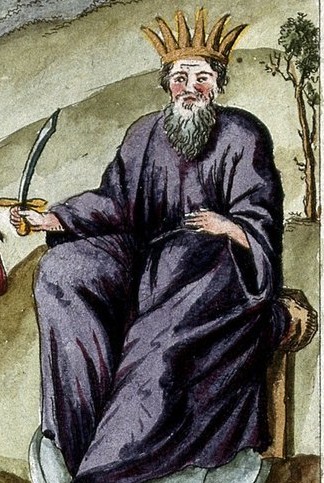
The King with the Falchion, and the Blood of the Infants
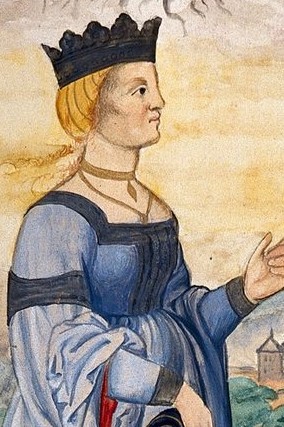
The Sun and the Moon over the King and the Queen
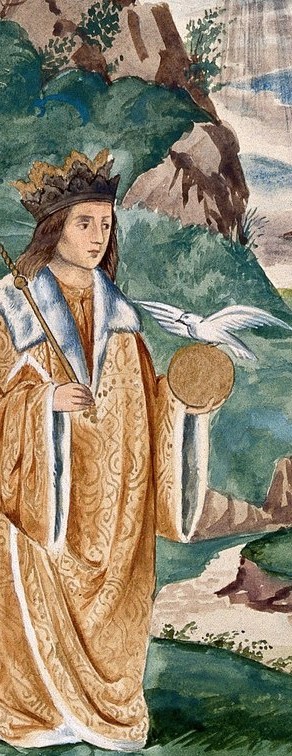
The young king with the sceptre of seven stars
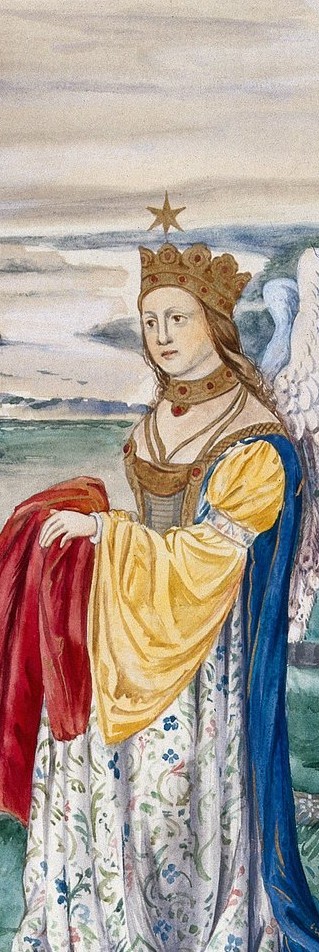
The winged queen holds out a robe to the black man
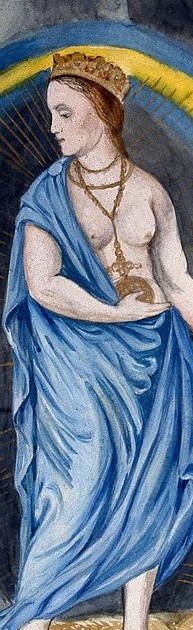
The queen in the crowned flask
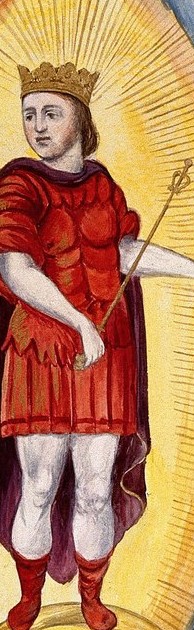
The red king in the crowned flask
As the subject · 6
Works filed under the King and the Queen as their central motif, not yet read symbol by symbol.
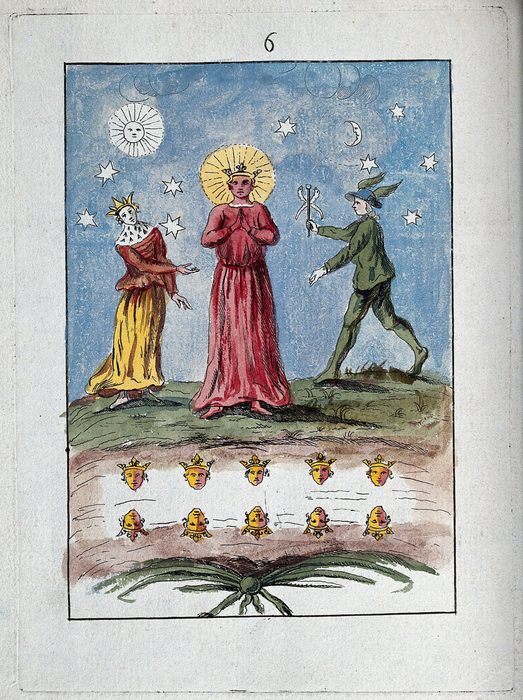 The Red King, the Queen and Mercury
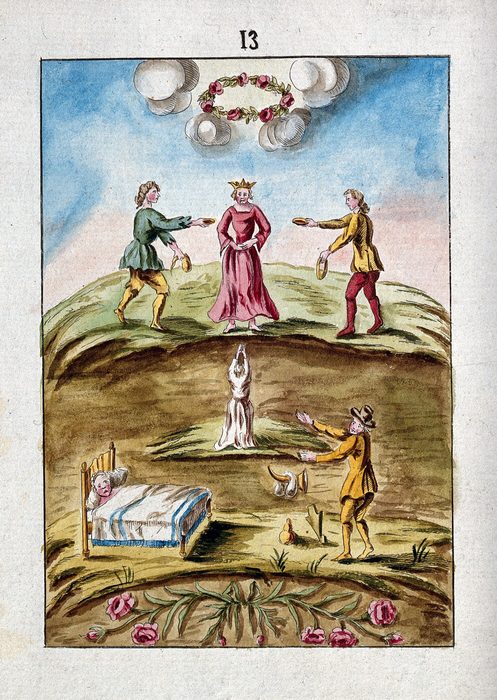 A Queen in Red is Presented with Dishes of Blood
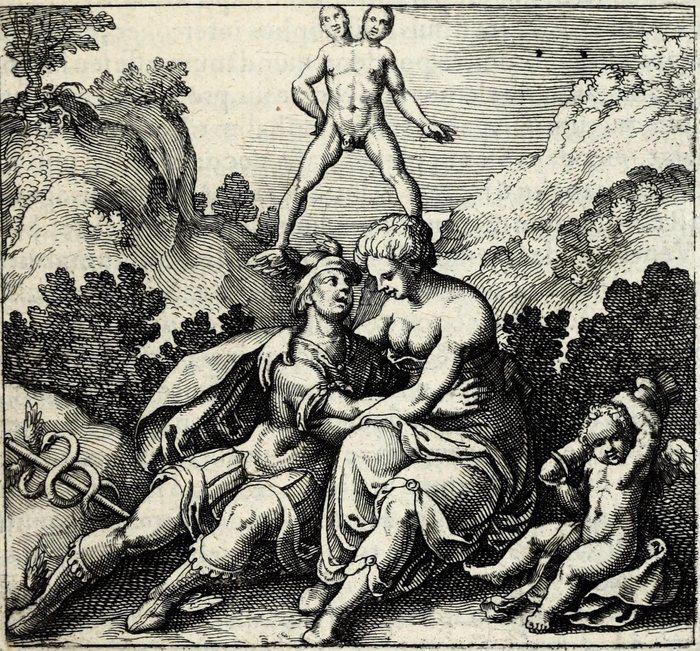 Rebis, ut Hermaphroditus, nascitur ex duobus montibus, Mercurii & Veneris
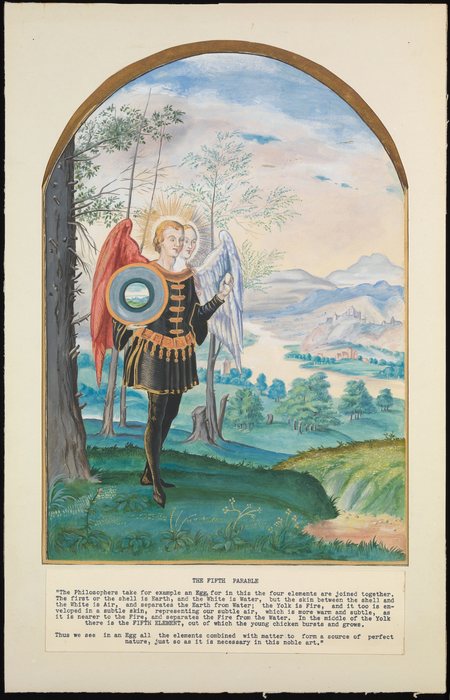 The Hermetic Androgyne
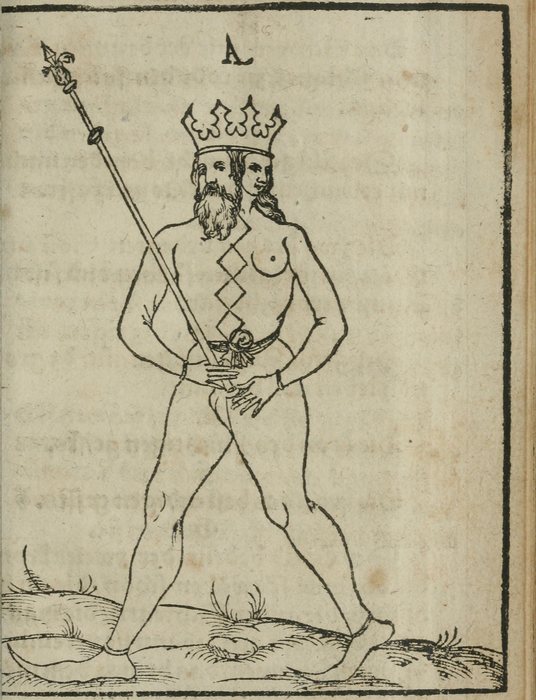 The king and the queen in one body
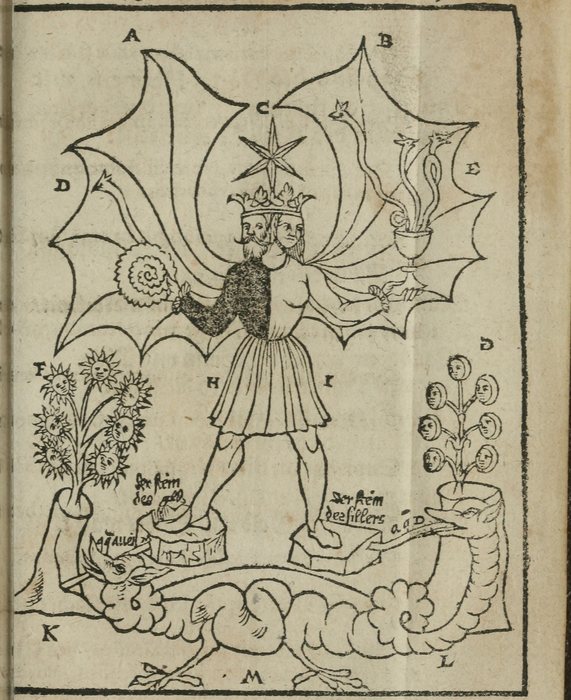 The tree of the sun and the tree of the moon
As a detail in 9 more
In these the King and the Queen is somewhere in the picture, tagged by eye, and nobody has read it yet. When one of them is read, it goes out on a Sunday.
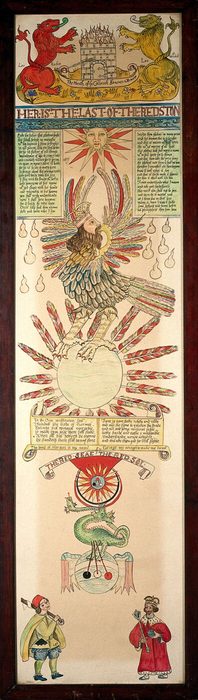 The Bird of Hermes
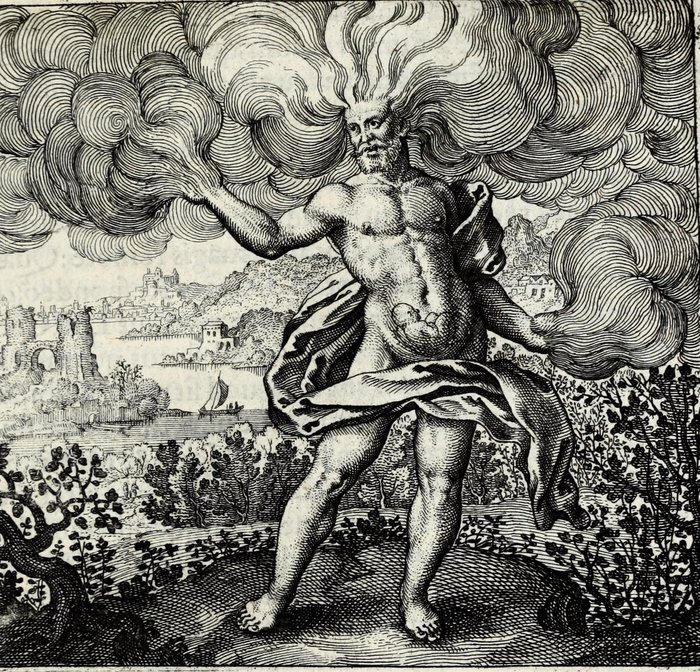 Portavit eum ventus in ventre suo
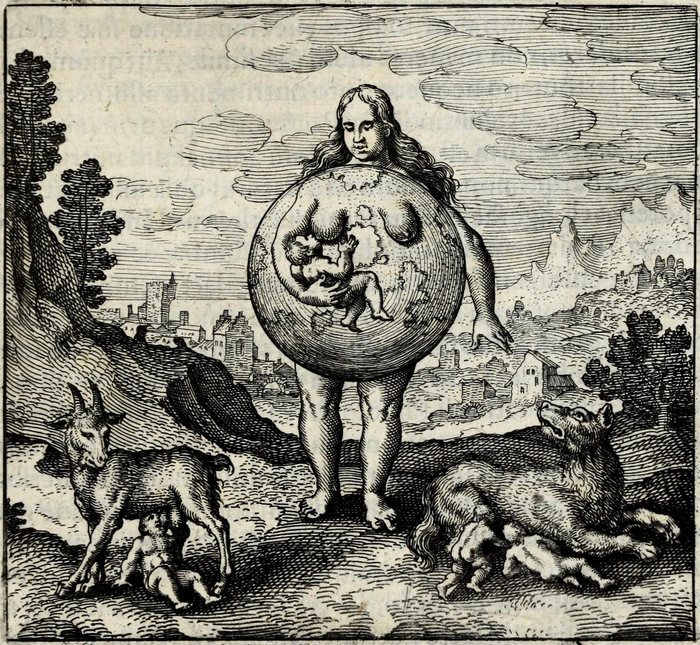 Nutrix ejus terra est
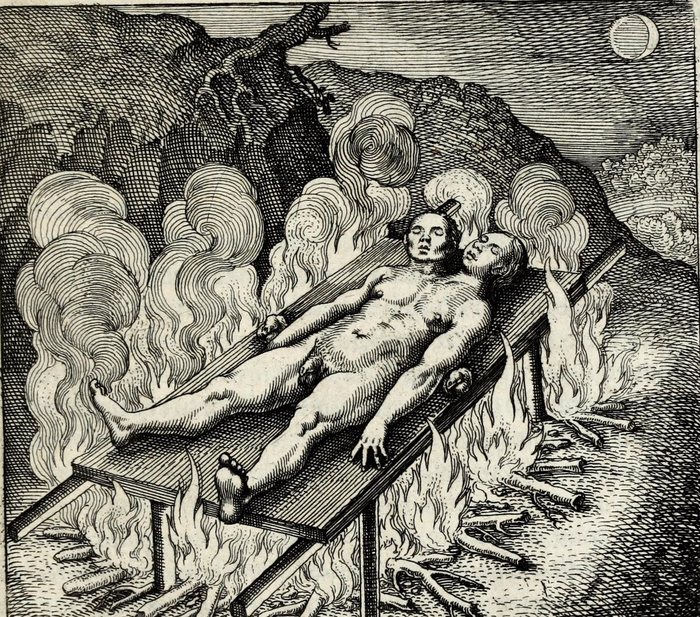 Hermaphroditus mortuo similis, in tenebris jacens, igne indiget
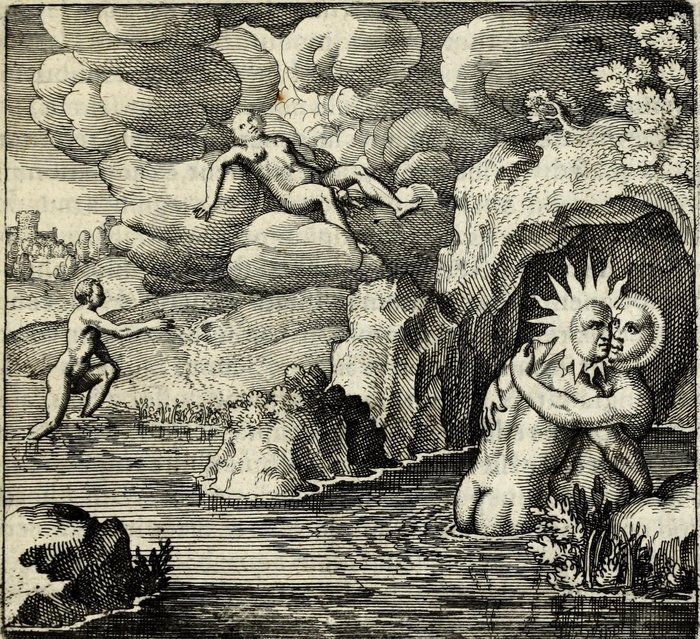 In balneis concipitur, & in aëre nascitur, rubeus verò factus graditur super aquas
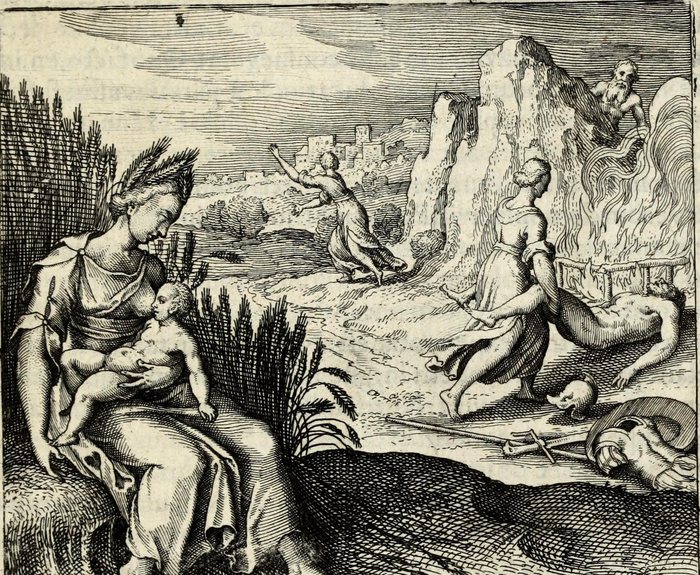 Ceres Triptolemum, Thetis Achillem, ut sub igne morari assuefecit, sic artifex lapidem
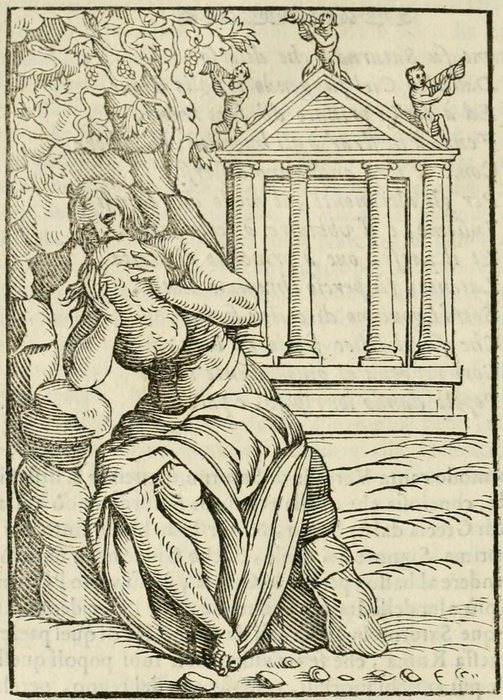 Imagine di Saturno, ò del Tempo divoratore de suoi figliuoli
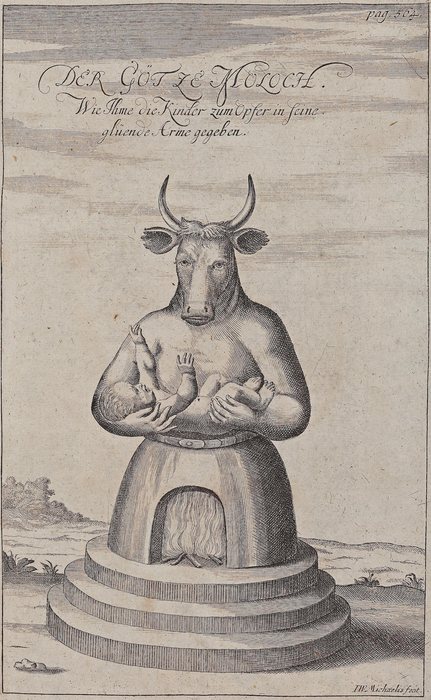 The idol Moloch with the children in his arms
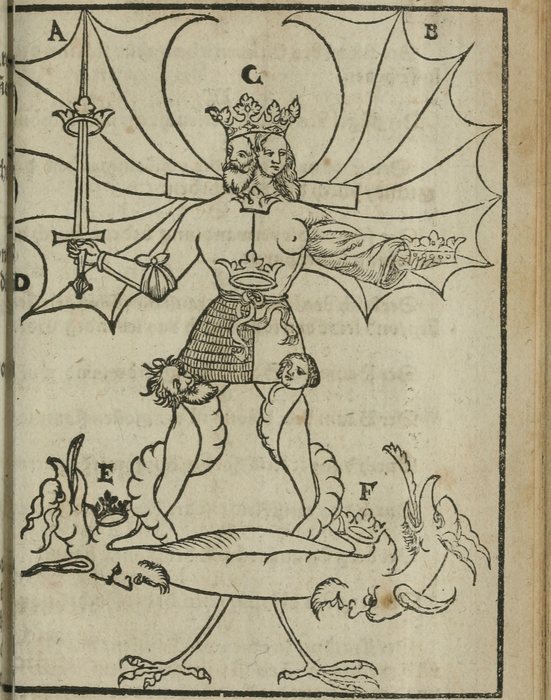 The sword, the two crowns and the dragon