The Water
the bath, the river, the sea
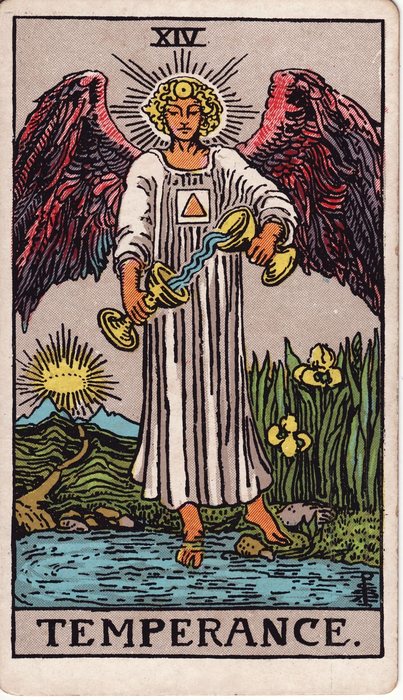
Where a thing is taken apart rather than destroyed. Note whether the figure is in the water, on it, or pouring it.
Thirty-nine works here carry water, and it is almost never scenery.
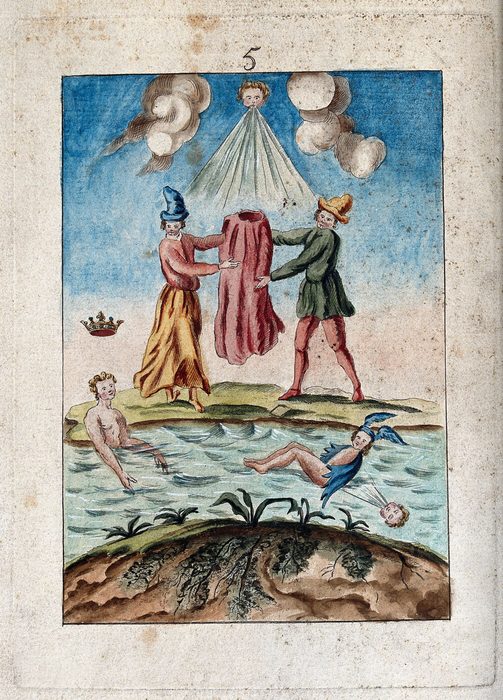
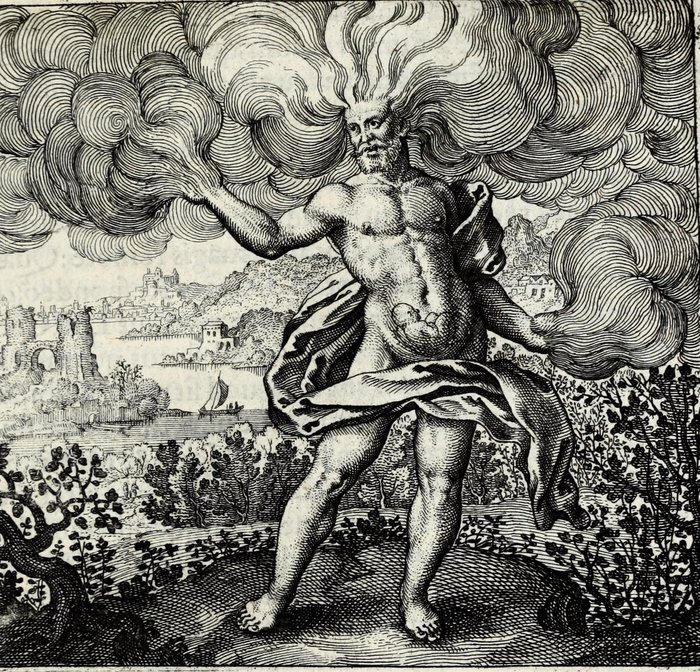
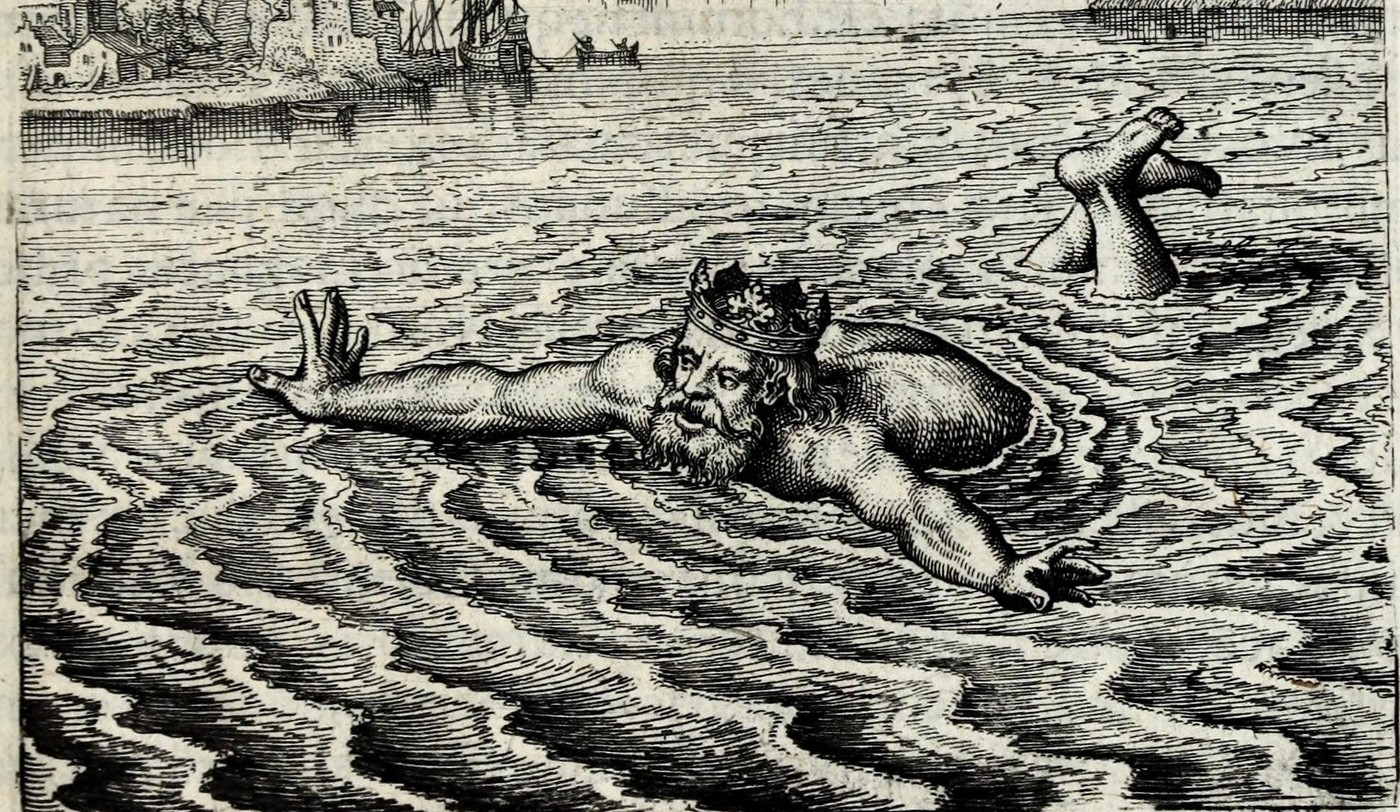
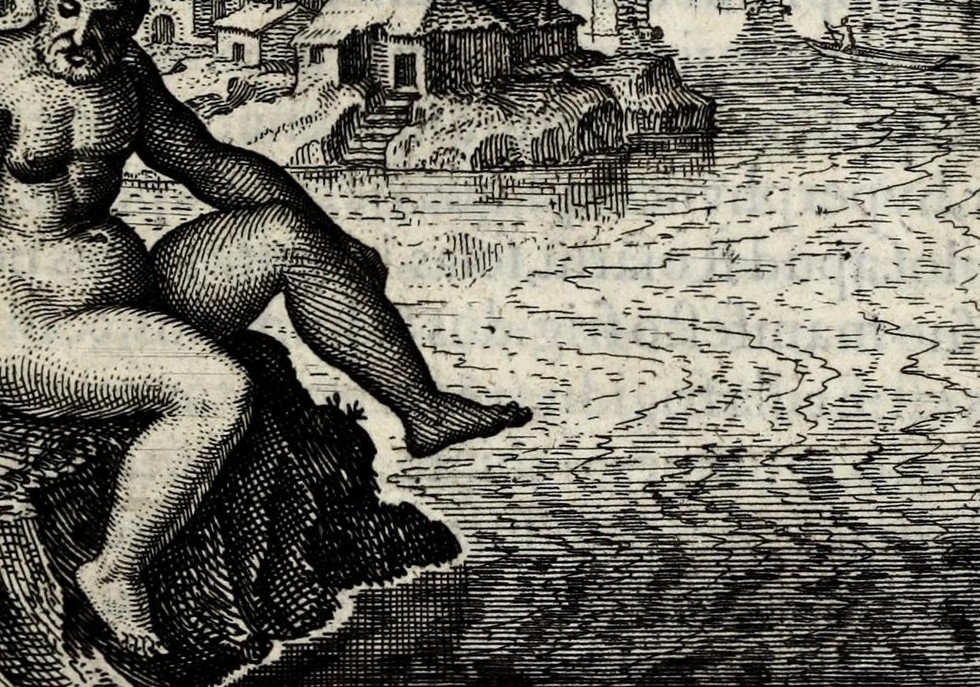
In the alchemical plates water is a stage with a job: it dissolves. Maier sends the metal to be washed like a leper: “Æs Philosophorum hydropicum est, & vult lavari septies in fluvio, ut Naaman leprosus in Jordane.” He puts a king into the sea to drown or be saved: “Rex natans in mari, clamans altâ voce: Qui me eripiet, ingens præmium habebit.” He sits another in a sweating box over a fire. And the operation can be stated as pure arithmetic: “Ex duabus aquis, fac unam, & erit aqua sanctitatis.” Of two waters make one. The coral of his thirty-second emblem grows soft under the water and hardens in the air, “Fit lapis”, it becomes a stone; and the trout of the twenty-second is to be cooked in nothing but itself, “Fac sed ut in propriis TRUTA liquescat aquis”, see that the trout dissolves in its own waters.
The striking thing is how often the picture puts a figure at the edge rather than in it. Waite describes the woman on the Star card: “Her left knee is on the land and her right foot upon the water.” Blake's angel is astride both, and the text says so: “And the angel whom I saw standing upon the sea and upon the earth lifted up his hand to heaven.” Maier's coral fisher works from the bank with a line. Being at the boundary is the position these pictures keep returning to.
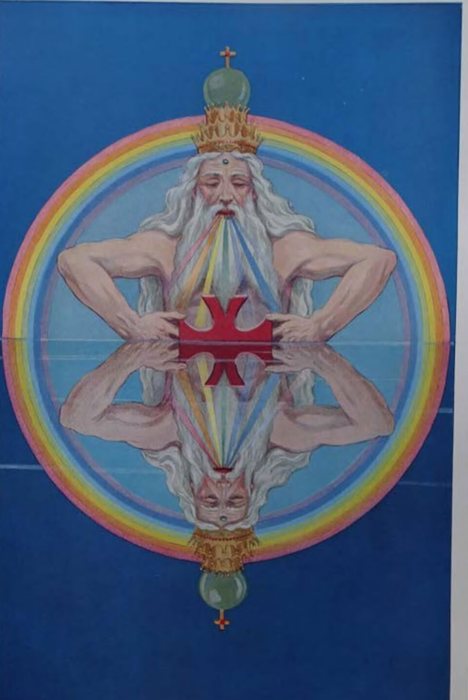
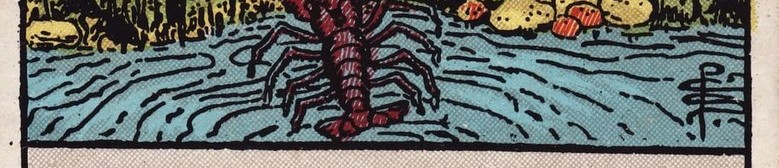
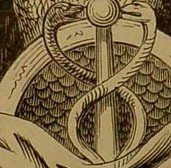
The marked works say the same thing about the edge, and say why. Fludd's Nature stands with “pes enim dexter terram occupat sinister verò aquam”, the right foot on the earth and the left on the water, and his explanation is that “nihil posse generari & crescere sine amborum unione”, nothing can be generated or grow without the union of both. Lévi's Adam Kadmon, in Waite's translation, “stood at length erect, having one foot upon the earth and one upon the waters”. Waite's Moon card has a creature at the edge that never quite makes it: “It strives to attain manifestation, symbolized by crawling from the abyss of water to the land, but as a rule it sinks back whence it came.” And Lévi reads the scales on Baphomet's belly as water outright: “The scale-covered belly typifies water; the circle above it is the atmosphere”. Cross's ark rides on the water of his plate of 1819, and the monitor names the water: “this tempestuous sea of troubles”, over which the ark “safely wafts us”. One foot in, one foot out, is the position of a thing that is being made.
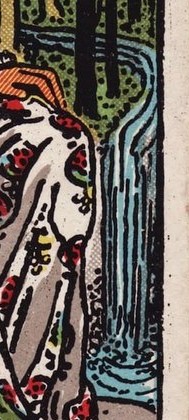
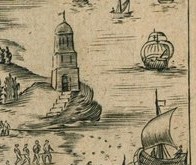
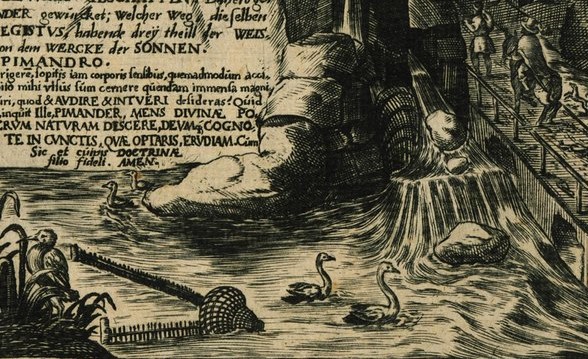
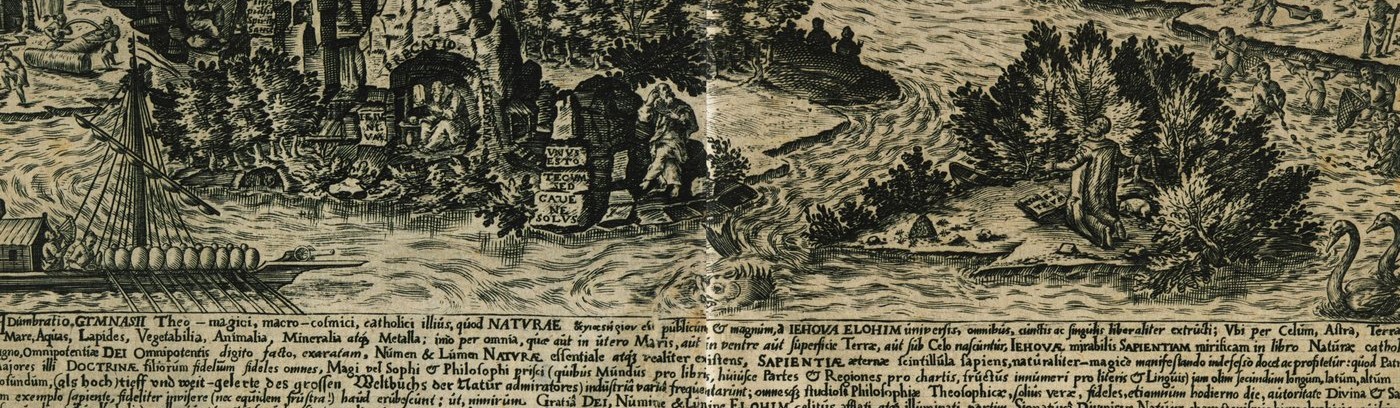
Khunrath's waters of 1609 are the moisture the work begins from, and he says so in captions. His rock of the Emerald Tablet has a waterfall pouring from it into a pool with swans, and the caption calls the plate a design “de Humido Radicali aut Primigenio Catholico Mundi hujus”, concerning the radical or first-born universal moisture of this world; the text carved on the rock above the water says the one thing's father is the Sun and its mother the Moon. The text at the centre of his citadel gives the Stone “venas habens Aquae vivae et vitae salientis in vitam beatam”, veins of living water leaping up into blessed life. And his school of Nature gives the lake the whole foot of the plate, with a galley on it and a hermit's cell on the shore lettered “Precatio. Eleemosyna. Ieiunium.”, because the caption lists the waters first among the things Nature teaches from: “Mare, Aquas, Lapides, Vegetabilia, Animalia, Mineralia atque Metalla.” Water at the edge of the picture and water named as the source, in one book.
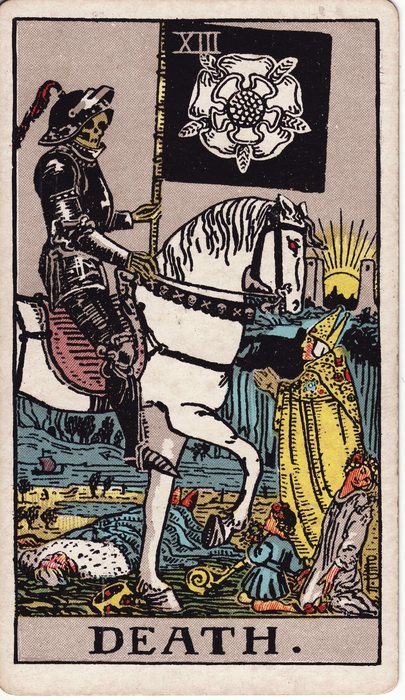
What water is not, in this material, is death. The king in the sea calls for rescue and is worth a reward. The metal comes out of the river clean. Where the archive holds a picture of something ending, the water is somewhere else in the frame.
Contested
Fludd's Latin is put into English by the archive, with the original on the record; Lévi is quoted in Waite's translations of 1896 and 1913. Maier's mottoes and epigrams are quoted from the 1618 printing and his discourse is not yet transcribed; his waters are marked and read on their records. Several works here carry water at the edge of the picture rather than at its centre, and they are tagged rather than read; Khunrath's three are read from his captions and the text carved on his rock, put into English by the archive.
Sources
- Michael Maier, Atalanta Fugiens, 1618: The motto printed over each engraving, read off the 1618 Oppenheim printing rather than off the scan's machine reading.
- Arthur Edward Waite, The Pictorial Key to the Tarot: Waite commissioned the 1909 designs and wrote the key to them.
- The Apocalypse of Saint John, Douay Rheims, Challoner revision: Quoted from the Challoner revision, the English text the archive uses for the Apocalypse throughout.
- Manly P. Hall, The Secret Teachings of All Ages: Hall's text and plate captions, 1928. Transcribed here, not yet read against a printed folio.
- Robert Fludd, Utriusque cosmi historia, 1617: The explanation of the mirror of nature in the first tractate, Oppenheim 1617, on Nature's two feet, read in the Latin of the Getty Research Institute copy.
- Éliphas Lévi, Dogme et Rituel de la Haute Magie, and The History of Magic: The Baphomet described in the fifteenth chapter of the Rituel, in Waite's translation of 1896, and the Adam Kadmon of the History of Magic in Waite's translation of 1913.
- Jeremy L. Cross, The True Masonic Chart, or Hieroglyphic Monitor, 1826: The printed lectures of Cross's monitor, New Haven 1826, read against the page images of the Library of Congress copy; each emblem's sentence is quoted where the monitor carries it, and the plates whose lectures went unprinted say so.
- Heinrich Khunrath, Amphitheatrum Sapientiae Aeternae, 1609: The lettering of the plates of the Amphitheatrum, Hanau 1609, read off the page images of the Wellcome and Paris copies at the size of the archive's own images; the Hebrew and Greek are given in transliteration and the English is the archive's.
On the same plate
Where it appears · 39
39 works in the archive carry the Water. First the 30 where it has been read, with the Water itself picked out.
Rex natans in mari, clamans altâ voce: Qui me eripiet, ingens præmium habebit
Æs Philosophorum hydropicum est, & vult lavari septies in fluvio, ut Naaman leprosus in Jordane
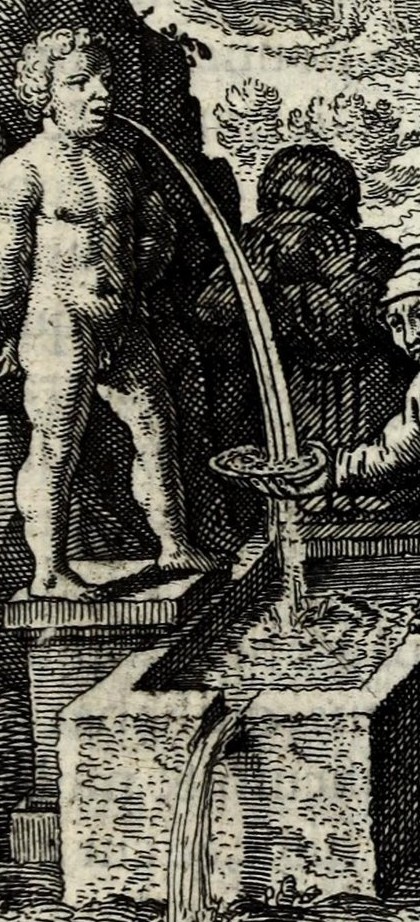
Ex duabus aquis, fac unam, & erit aqua sanctitatis
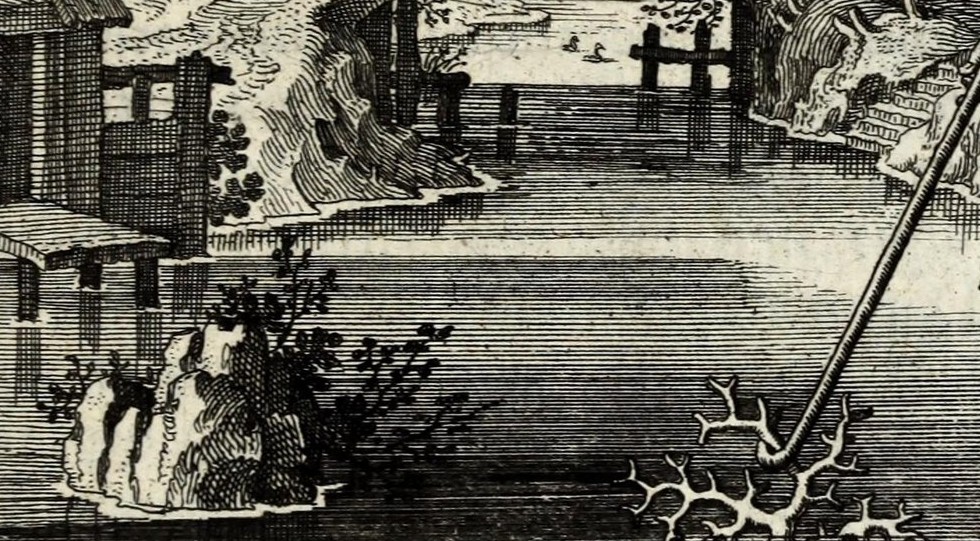
Corallus sub aquis ut crescit & aëre induratur, sic lapis

The Star (XVII)
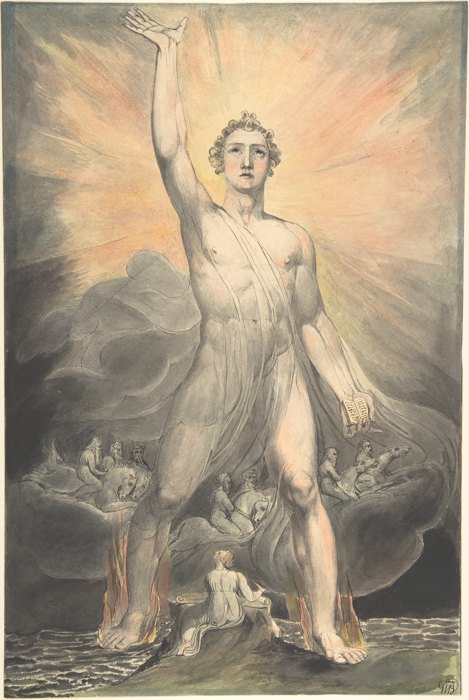
Angel of the Revelation (Book of Revelation, chapter 10)
Integrae Naturae Speculum Artisque Imago
The Grand Man of the Zohar
The Moon (XVIII)
The Empress (III)
Baphomet
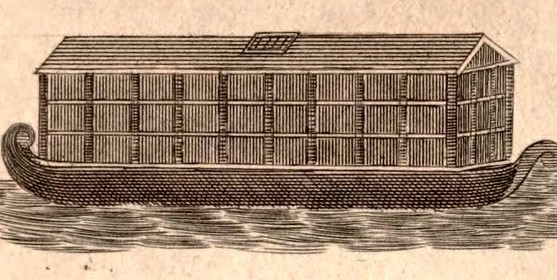
The Anchor and the Ark, the Forty-seventh Problem, the Hourglass and the Scythe
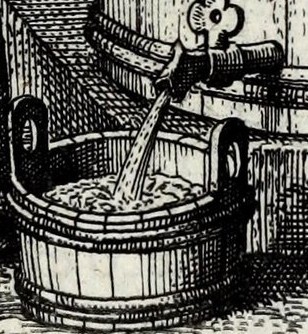
Vade ad mulierem lavantem pannos, tu fac similiter
Opus figuli, consistens in sicco & humido, te doceat
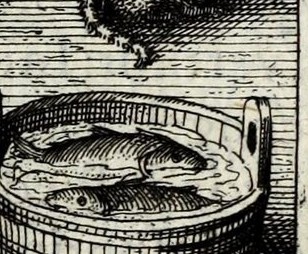
Plumbo habito candido fac opus mulierum, hoc est, COQUE
Rex balneatur in Laconico sedens, Atrâque bile liberatur à Pharut
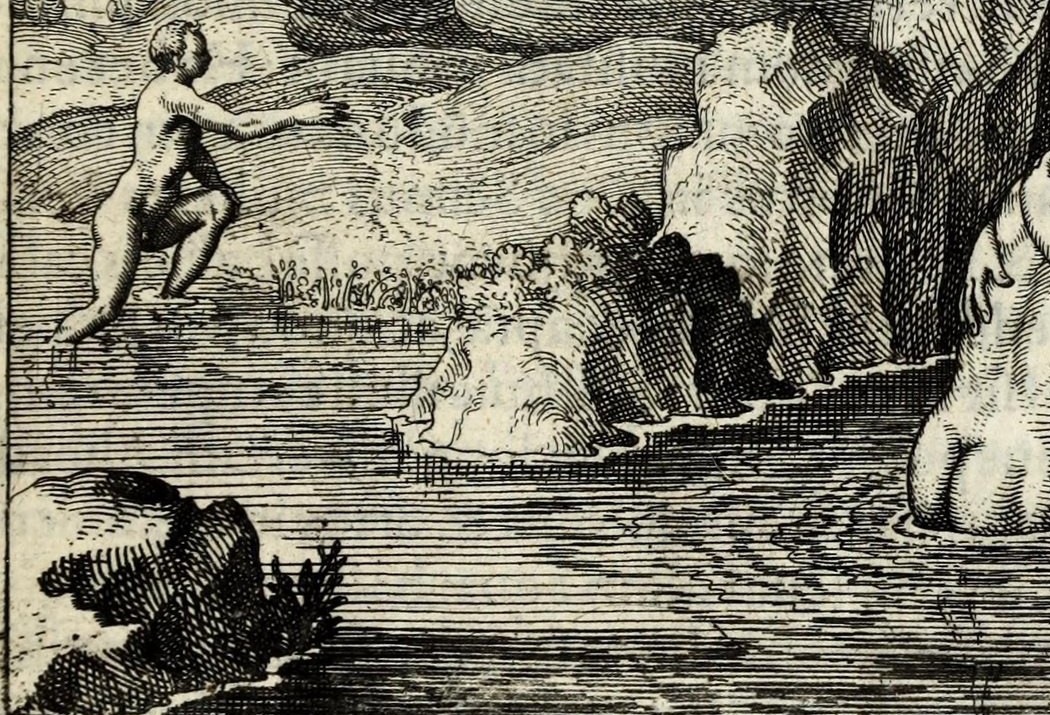
In balneis concipitur, & in aëre nascitur, rubeus verò factus graditur super aquas
Lapis projectus est in terras, & in montibus exaltatus, & in aëre habitat, & in flumine pascitur, id est, Mercurius
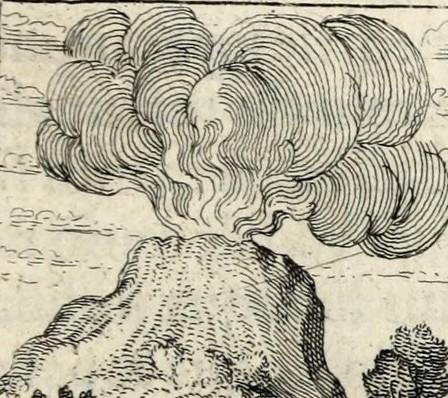
Tria sufficiunt ad magisterium, fumus albus, hoc est, aqua, leo viridis, id est, æs Hermetis, & aqua fœtida
Rex ab aquis potatis morbum, à medicis curatus sanitatem obtinet
Typosis Arcis Pri-materialis
Designatio Pyramidum Petrosarum Triumphalium
Adumbratio Gymnasii Theo-magici, macro-cosmici, catholici
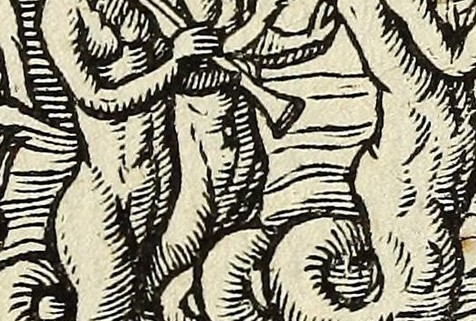
Sirenes

Rivers in the Wilderness, with Serpents and Fire
The Rose Tree on the Hollow Oak, and the Blind Diggers
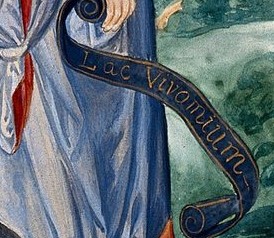
The Sun and the Moon over the King and the Queen
The young king with the sceptre of seven stars
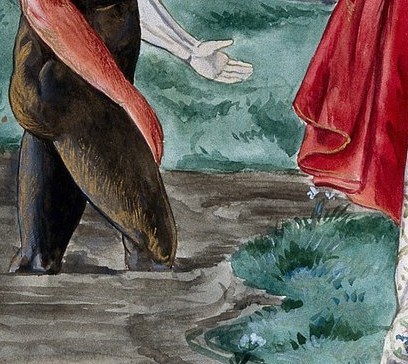
The winged queen holds out a robe to the black man
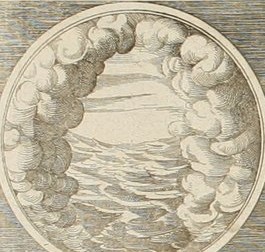
Creation in ten roundels, with Ripley’s prologue beneath
As a detail in 9 more
In these the Water is somewhere in the picture, tagged by eye, and nobody has read it yet. When one of them is read, it goes out on a Sunday.