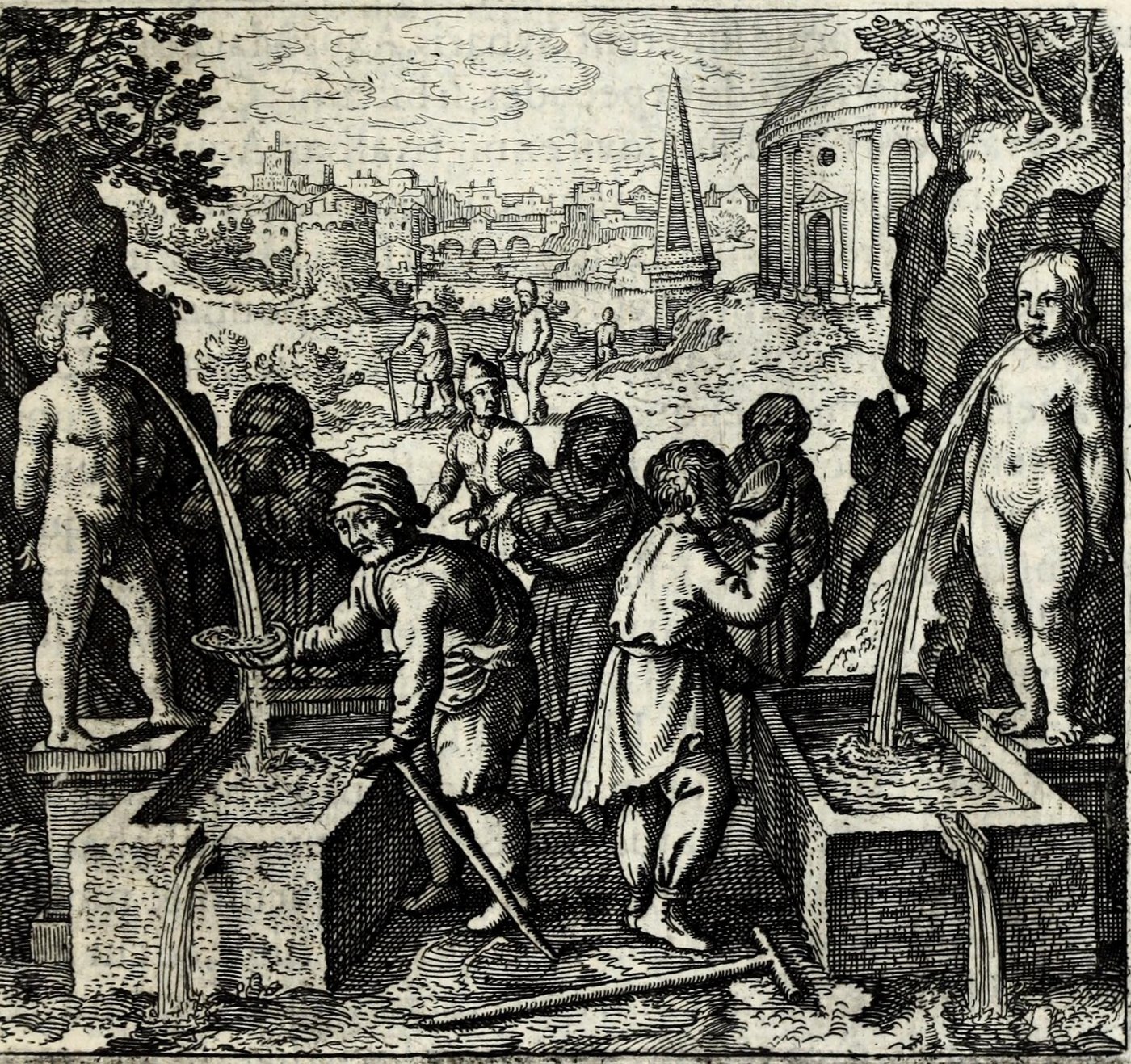
Ex duabus aquis, fac unam, & erit aqua sanctitatis
The Water as the central motif, with the Vessel in a secondary part. From Atalanta Fugiens.
What is happening
Michael Maier, 1618 “Ex duabus aquis, fac unam, & erit aqua sanctitatis.”
Symbolica, 2026 Maier’s Latin, put into English here: Of two waters make one, and it will be the water of holiness.
Michael Maier, 1618 “Sunt bini liquido salientes gurgite fontes,
Hinc Pueri calidam suggerit unus aquam:
Alter habet gelidam, quae Virginis Unda vocatur,
Hanc illi jungas, sint aquae ut una duae:
Rivus & hic mixtas vires utriusque tenebit,
Ceu Jovis Hammonii fons calet atque riget.”
Symbolica, 2026 Maier’s epigram, put into English here: There are two springs leaping with clear water. One of them supplies the Boy's warm water; the other has cold, which is called the Virgin's Wave. Join this to that, so that the two waters are one, and this stream will hold the mixed powers of both, as the spring of Jupiter Ammon is both hot and cold.
Key · 2 motifs
Tap a motif on the picture, or a line below. Its note opens under the line, with the reading its author gave it.
- Primary motif
- Secondary motifs · 1
The picture
Two fountain figures, a boy at the left and a virgin at the right, pouring water from their mouths into basins, workers between them joining the streams, a round temple and an obelisk behind. By eye
The reading
The picture read whole, in the archive's words, from the sources quoted on the marks. Read on, and the picture follows: the motif under discussion keeps its colour.
‘Ex duabus aquis, fac unam, & erit aqua sanctitatis’: of two waters make one, and it will be the water of holiness. A boy and a young woman stand at either edge of the plate pouring water from their mouths into basins, and men work between them; a round temple and an obelisk stand behind.
‘Sunt bini liquido salientes gurgite fontes’, there are two springs leaping with clear water. ‘Hinc Pueri calidam suggerit unus aquam’, one of them supplies the boy's warm water; ‘Alter habet gelidam, quae Virginis Unda vocatur’, the other has cold, which is called the virgin's wave. Warm and cold, male and female: the two waters are the pair of the other emblems in another state.
‘Hanc illi jungas, sint aquae ut una duae’, join this to that, so that the two waters are one, ‘Rivus & hic mixtas vires utriusque tenebit’, and this stream will hold the mixed powers of both, ‘Ceu Jovis Hammonii fons calet atque riget’, as the spring of Jupiter Ammon is both hot and cold. The basins are the vessel of the mixing, and the temple behind them says what the mixed water is called: holy.
Decoded: every motif is marked, and each mark carries the reading its author gave it, quoted from the text, or says that it is observed on the picture and not read. The reading above is the archive's own, made from those sources and no others.
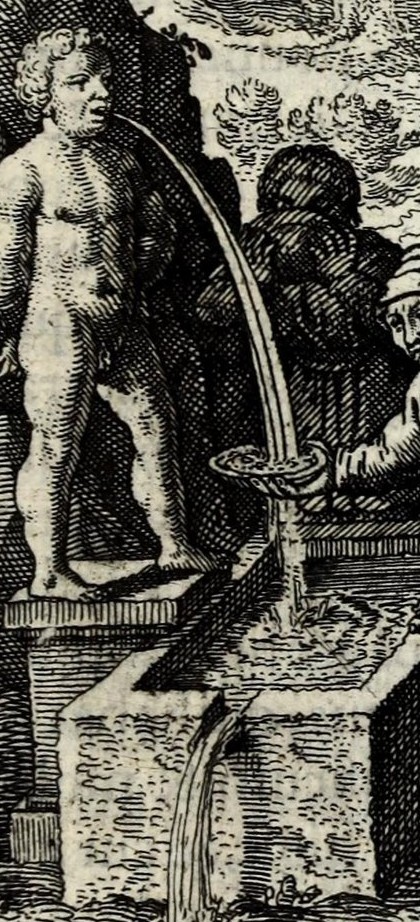
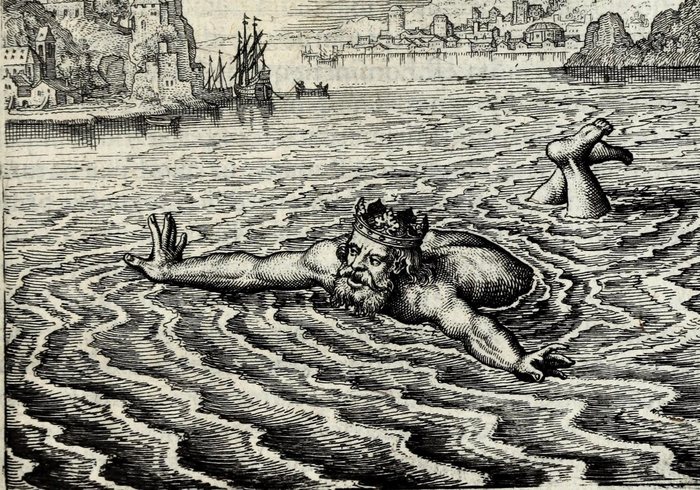
Where a thing is taken apart rather than destroyed. Note whether the figure is in the water, on it, or pouring it.
In plain words Two figures pour water from their mouths into basins, a boy at the left and a young woman at the right. One water is warm and one is cold, the boy's and the virgin's, and the emblem is about joining them: of two waters make one, and it will be the water of holiness.
Michael Maier, 1618 “Sunt bini liquido salientes gurgite fontes, / Hinc Pueri calidam suggerit unus aquam:”
Symbolica Maier's Latin, put into English here: There are two springs leaping with clear water. One of them supplies the Boy's warm water;
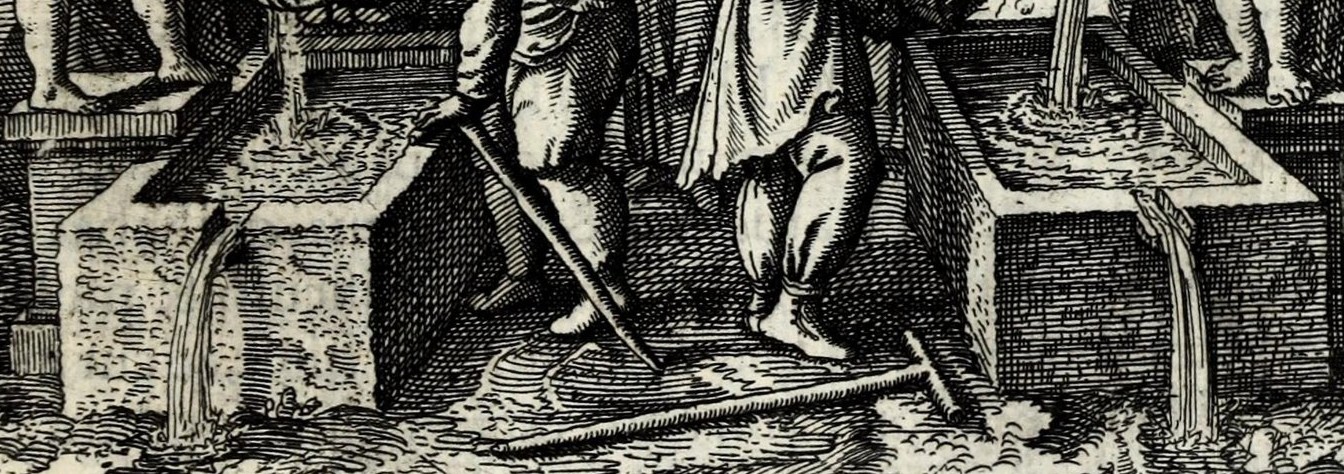
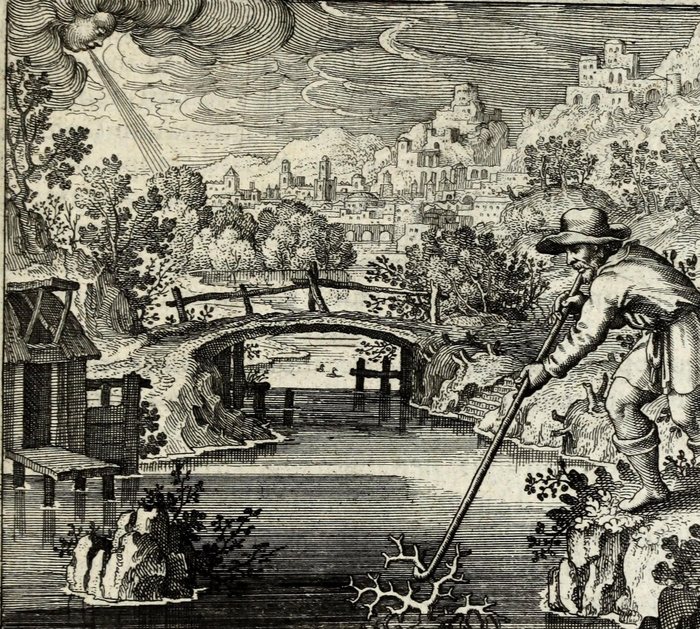
Never the subject. What is inside it is.
In plain words Stone basins catch the two waters, and workmen with a dish and a shovel are joining them. The vessel is where the mixing happens; what comes out of it, Maier says, keeps the powers of both, hot and cold at once, like the spring of Jupiter Ammon.
Michael Maier, 1618 “Hanc illi jungas, sint aquae ut una duae: / Rivus & hic mixtas vires utriusque tenebit,”
Symbolica Maier's Latin, put into English here: Join this to that, so that the two waters are one, and this stream will hold the mixed powers of both,
Also carrying the Water
38 works carry it. The 5 where it is the central motif are here. The symbol.
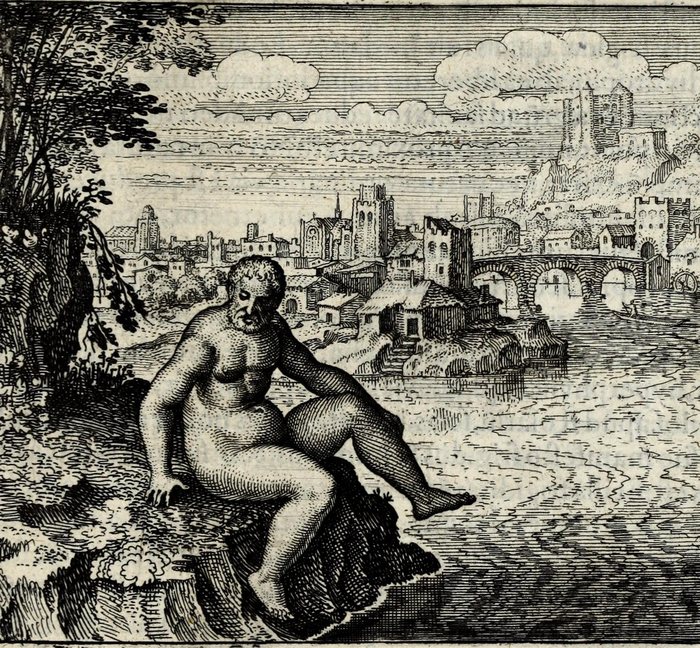
Where the detail is the subject
This is in the picture without being what it is about. Below, one work that is about it.
In the same series
 Portavit eum ventus in ventre suo
 Nutrix ejus terra est
 Vade ad mulierem lavantem pannos, tu fac similiter
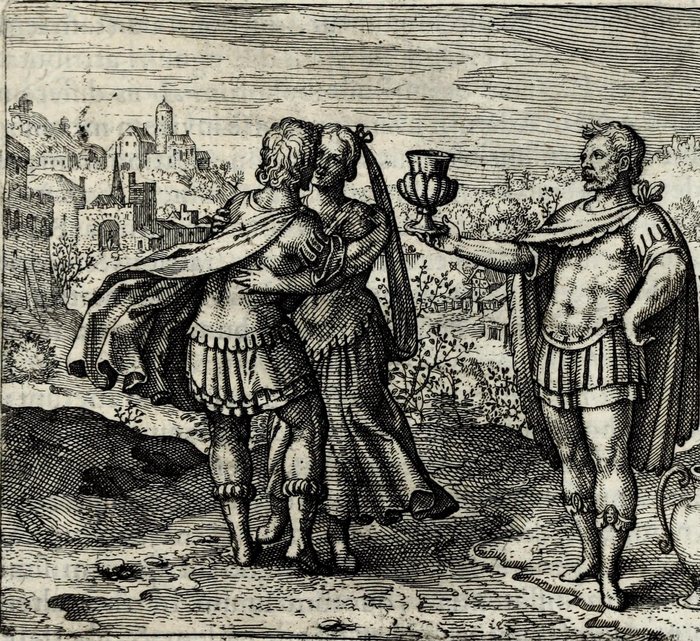 Conjunge fratrem cum sorore & propina illis poculum amoris
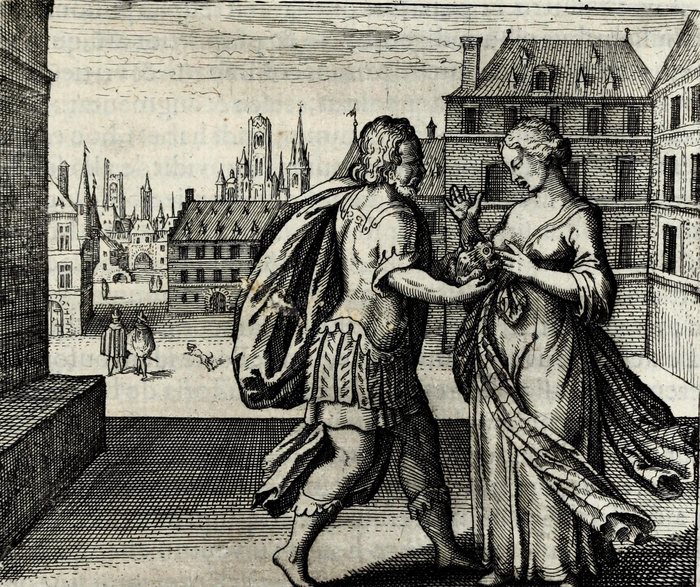 Appone mulieri super mammas bufonem, ut ablactet eum, & moriatur mulier, sitque bufo grossus de lacte
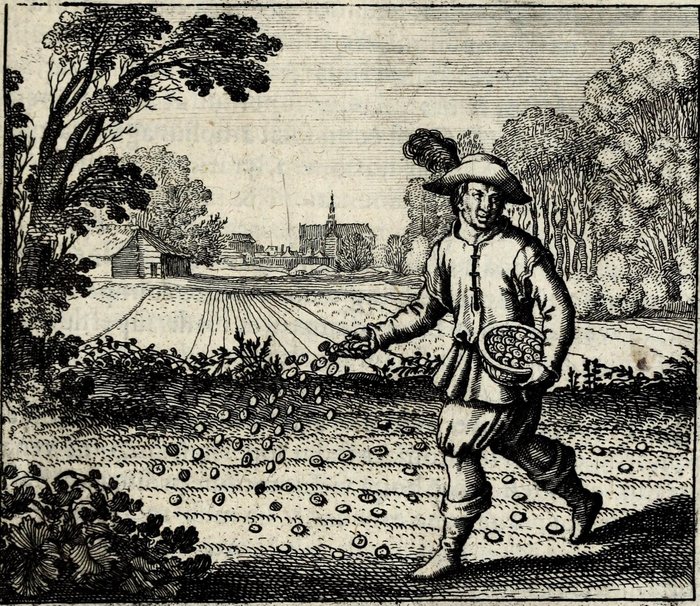 Seminate aurum vestrum in terram albam foliatam
Record
One symbol a week, decoded.
This picture is free at full size from its source, linked above. What an address gets is the Sunday letter: one picture, one symbol marked on it, what it meant and who said so, and the master files of the decoded plates as they are verified. Leave any time.
Free, one letter a week, unsubscribe in one click. How the address is used.
Scroll or pinch to zoom · drag to move · double-tap for 1:1 · 1400 by 1317 pixel web copy; the source file is linked under Record