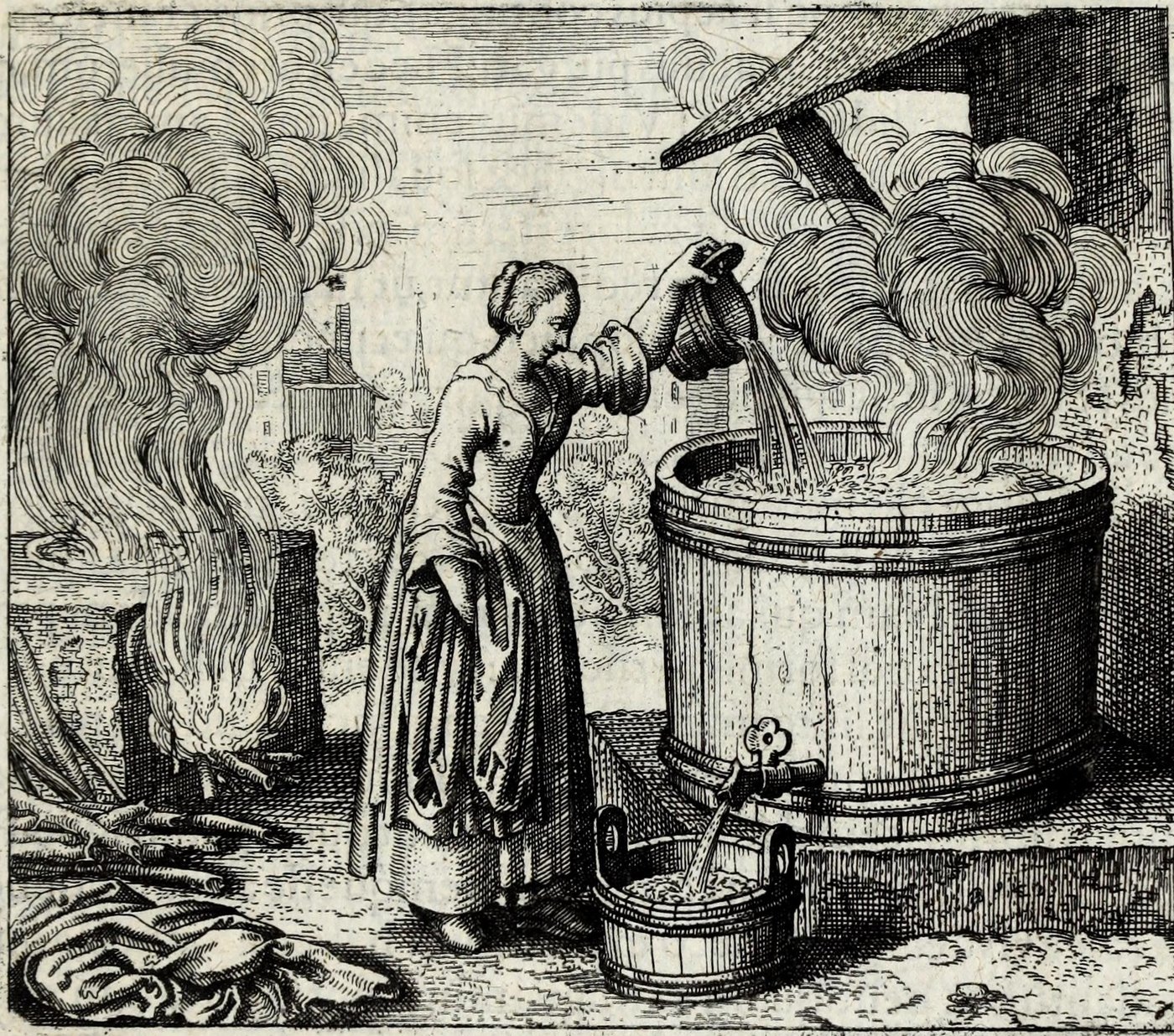
Vade ad mulierem lavantem pannos, tu fac similiter
The Vessel as the central motif, with Fire and the Water in a secondary part. From Atalanta Fugiens.
What is happening
Michael Maier, 1618 “Vade ad mulierem lavantem pannos, tu fac similiter.”
Symbolica, 2026 Maier’s Latin, put into English here: Go to the woman washing the sheets, and do likewise.
Michael Maier, 1618 “Abdita quisquis amas scrutari dogmata, ne sis
Deses, in exemplum, quod juvet, omne trahas:
Anne vides, mulier maculis abstergere pannos
Ut soleat calidis, quas superaddit, aquis?
Hanc imitare, tua nec sic frustraberis arte,
Namque nigri faecem corporis unda lavat.”
Symbolica, 2026 Maier’s epigram, put into English here: Whoever you are who love to search out hidden teachings, do not be idle: draw into your example everything that helps. Do you not see how a woman scours the stains from cloth with the hot water she pours over it? Imitate her, and your art will not cheat you, for the wave washes the dregs from the black body.
Key · 3 motifs
Tap a motif on the picture, or a line below. Its note opens under the line, with the reading its author gave it.
- Primary motif
- Secondary motifs · 2
The picture
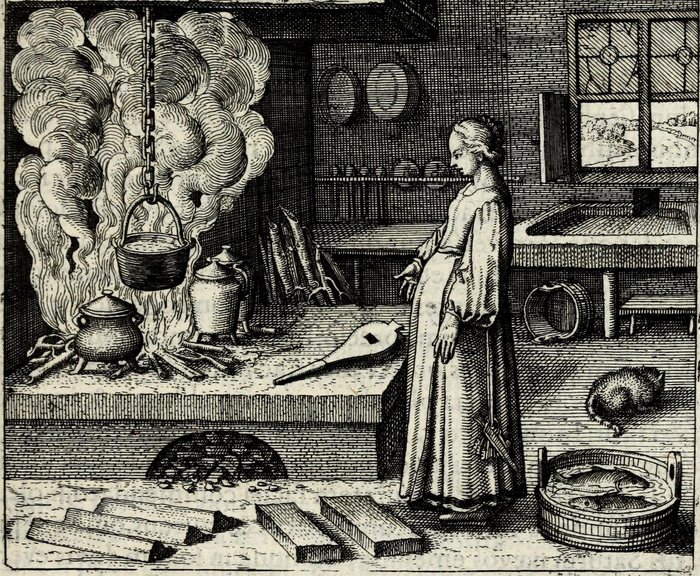
A woman pouring water into a great tub over a fire, linen on the ground. By eye
The reading
The picture read whole, in the archive's words, from the sources quoted on the marks. Read on, and the picture follows: the motif under discussion keeps its colour.
‘Vade ad mulierem lavantem pannos, tu fac similiter’: go to the woman washing the sheets, and do likewise. The third emblem is a laundry. Maier begins by telling the seeker not to be idle, ‘in exemplum, quod juvet, omne trahas’, to draw into your example everything that helps, and the example he draws is the most ordinary work there is.
‘Anne vides, mulier maculis abstergere pannos’: do you not see how a woman scours the stains from cloth? The tub is the vessel, and the linen in it is the black body of the work.
The water is heated on the fire at the left, and heated water is the whole of the method: ‘calidis, quas superaddit, aquis’, with the hot water she pours over it.
‘Hanc imitare, tua nec sic frustraberis arte’, imitate her, and your art will not cheat you, ‘Namque nigri faecem corporis unda lavat’, for the wave washes the dregs from the black body. Merian drew the water twice, going in from the jug and coming out through the tap into a bucket, so that the reader can see the dirt leave.
Decoded: every motif is marked, and each mark carries the reading its author gave it, quoted from the text, or says that it is observed on the picture and not read. The reading above is the archive's own, made from those sources and no others.
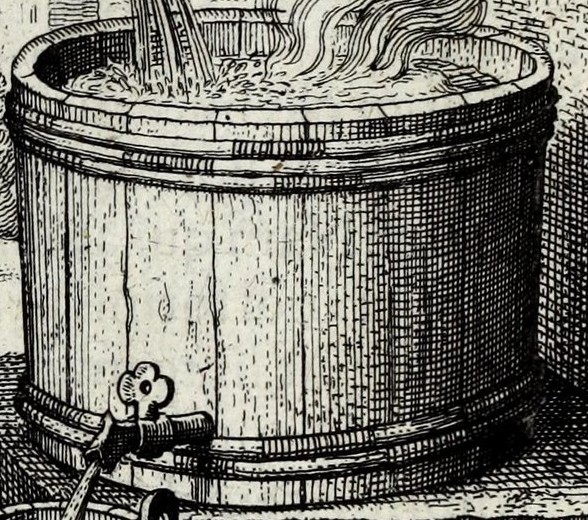
Never the subject. What is inside it is.
In plain words A washerwoman pours hot water into a great tub of linen. Maier tells the reader to imitate her, and the vessel is the tub: the place where the black body is washed.
Michael Maier, 1618 “Anne vides, mulier maculis abstergere pannos / Ut soleat calidis, quas superaddit, aquis?”
Symbolica Maier's Latin, put into English here: Do you not see how a woman scours the stains from cloth with the hot water she pours over it?
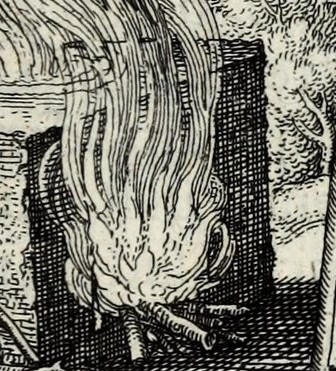
A count, a catastrophe, or the visible part of something that has no body. Note whether the flames are arranged in a number, breaking something, or standing where a figure would be.
In plain words The water has to be hot, so a fire burns under a pot at the left. The heat is the point: the washing works because the water is heated, and the epigram says calidis aquis, hot waters.
Michael Maier, 1618 “calidis, quas superaddit, aquis”
Symbolica Maier's Latin, put into English here: the hot water she pours over it
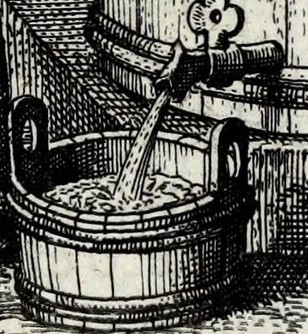
Where a thing is taken apart rather than destroyed. Note whether the figure is in the water, on it, or pouring it.
In plain words Water goes in at the top from her jug and comes out at the bottom through a tap into a bucket, carrying the dirt with it. That is the whole lesson: the wave washes the dregs from the black body.
Michael Maier, 1618 “Namque nigri faecem corporis unda lavat.”
Symbolica Maier's Latin, put into English here: for the wave washes the dregs from the black body
Also carrying the Vessel
32 works carry it. The 6 where it is the central motif are here. The symbol.
Where the detail is the subject
Each of these is in the picture without being what it is about. Below, one work that is about each.
In the same series
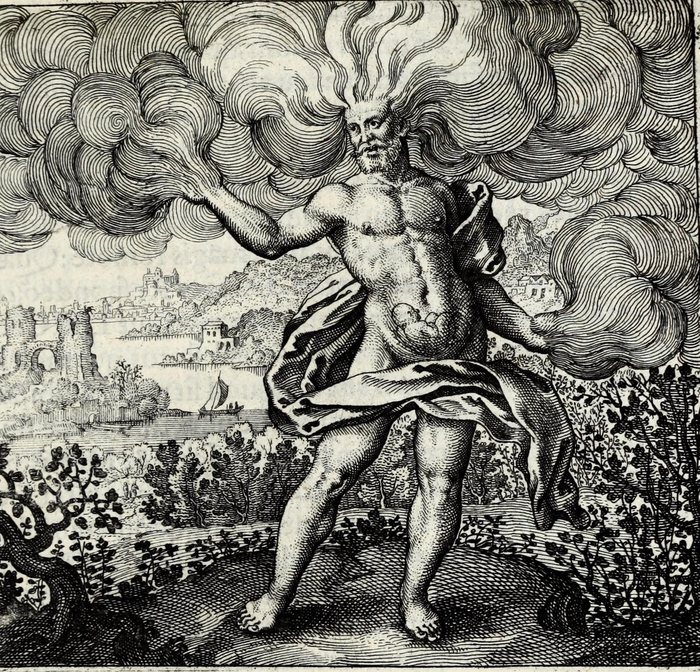 Portavit eum ventus in ventre suo
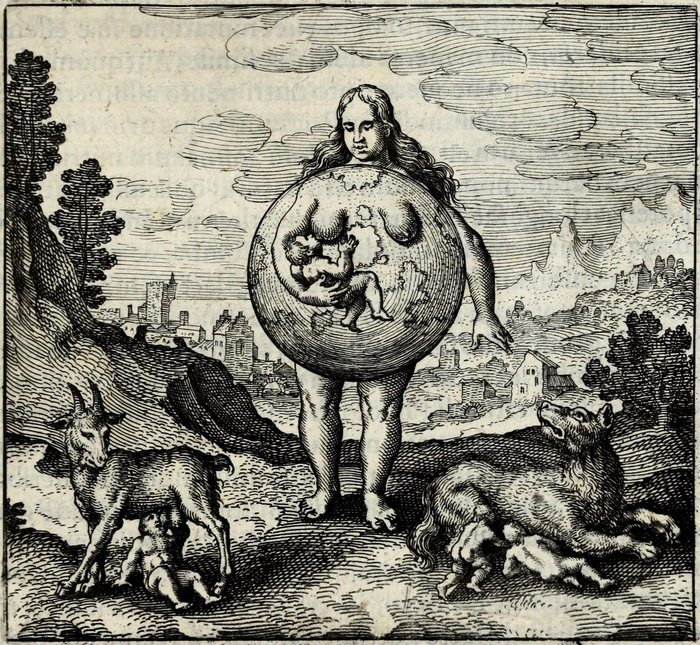 Nutrix ejus terra est
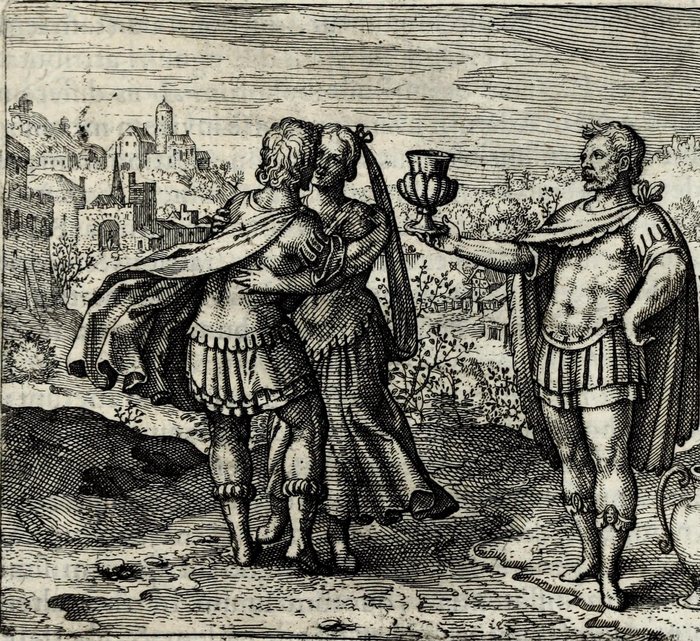 Conjunge fratrem cum sorore & propina illis poculum amoris
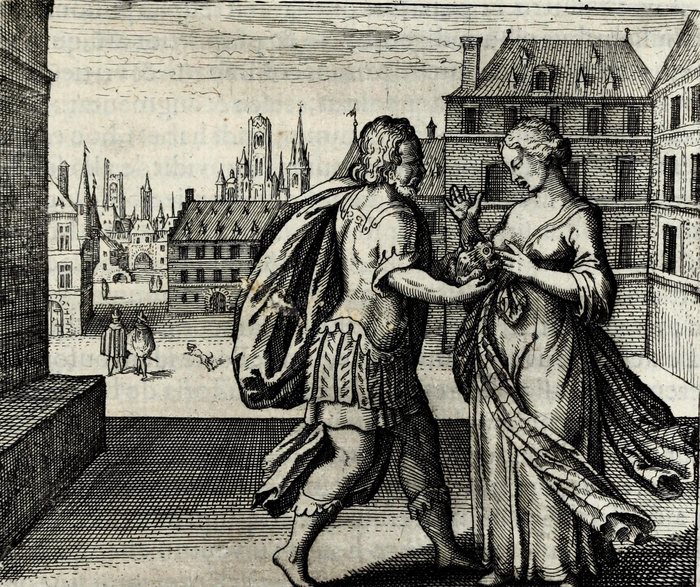 Appone mulieri super mammas bufonem, ut ablactet eum, & moriatur mulier, sitque bufo grossus de lacte
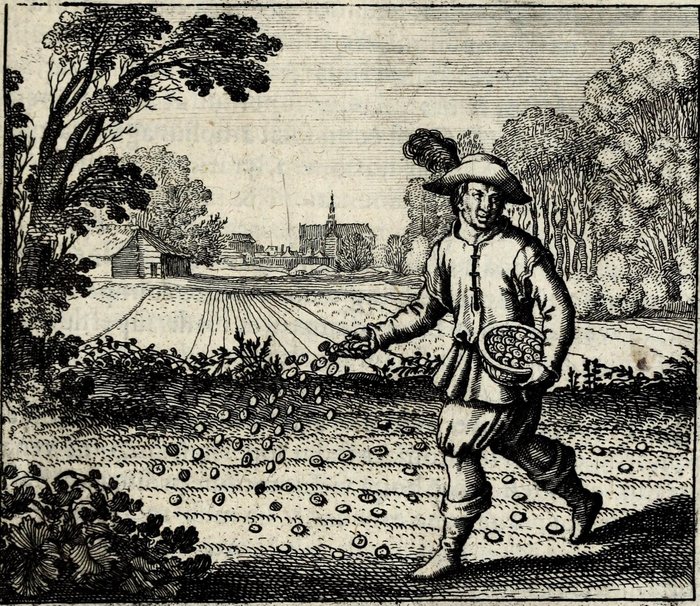 Seminate aurum vestrum in terram albam foliatam
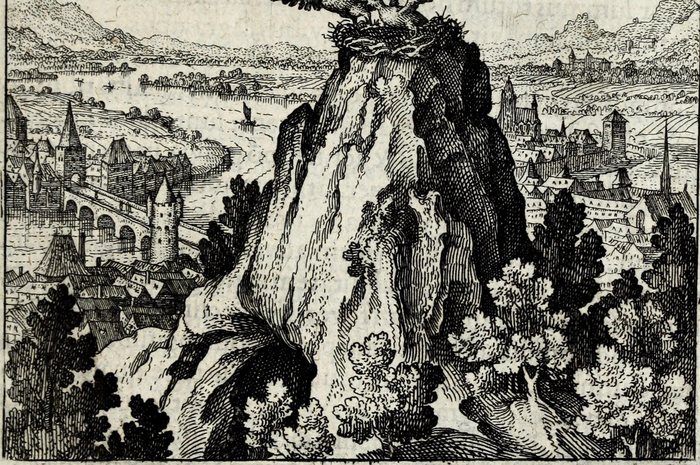 Fit pullus à nido volans, qui iterùm cadit in nidum
Record
One symbol a week, decoded.
This picture is free at full size from its source, linked above. What an address gets is the Sunday letter: one picture, one symbol marked on it, what it meant and who said so, and the master files of the decoded plates as they are verified. Leave any time.
Free, one letter a week, unsubscribe in one click. How the address is used.
Scroll or pinch to zoom · drag to move · double-tap for 1:1 · 1400 by 1236 pixel web copy; the source file is linked under Record