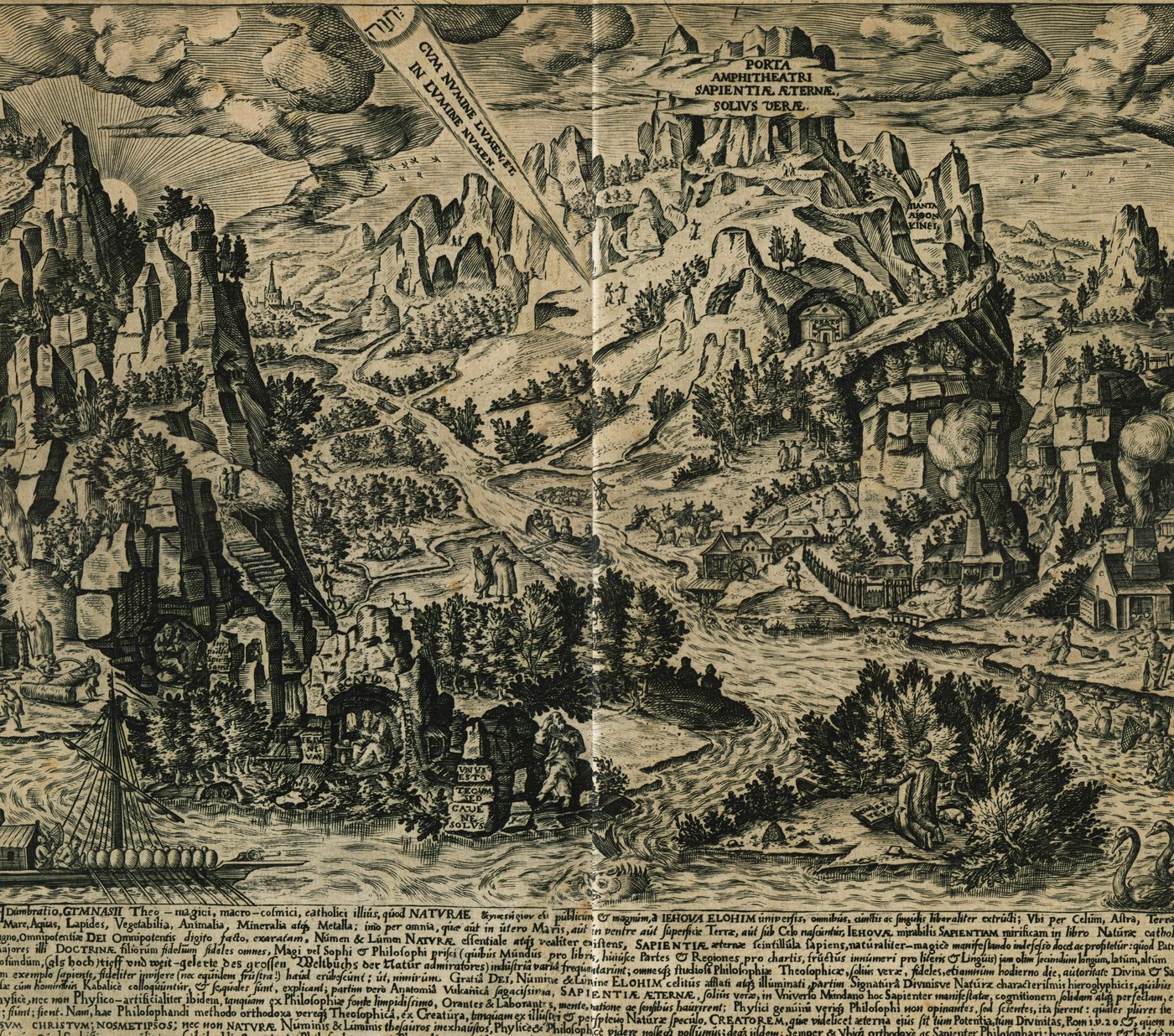
Adumbratio Gymnasii Theo-magici, macro-cosmici, catholici
The Water as the central motif, with the Heavens, the Divine, and the Sun and the Moon in a secondary part. From Amphitheatrum.
What is happening
Symbolica, 2026 Khunrath's Latin, put into English here: A Sketch of that Theo-magical, Macrocosmic, Universal School which is the public school of Nature. The German phrase is the great World-Book of Nature. The picture is the world itself as the school in which the sages read: sea, waters, stones, plants, animals, minerals and metals, which the caption lists. Transcribed here only in part. Read again at the size of the archive's image: on the beam from the Name, With the Deity, light, and in the light, the Deity; on the mountain at the upper right, The gate of the amphitheatre of eternal wisdom, the only true one, which is the gate of the Porta plate seen from afar; on a crag in Greek, Move every stone; on the hermit's cell by the water, Prayer, Alms, Fasting, and Be alone with yourself, but beware of being alone. The caption lists what the school of Nature teaches from: the sea, the waters, stones, plants, animals, minerals and metals.
Key · 4 motifs
Tap a motif on the picture, or a line below. Its note opens under the line, with the reading its author gave it.
- Primary motif
- Secondary motifs · 3
The picture
A wide landscape of mountains, a lake with a galley, woods and a town, the Name in a glory at the upper left sending a lettered beam of light down into it, the sun rising behind a crag at the left, small figures of the learned walking and reading in it. By eye
The reading
The picture read whole, in the archive's words, from the sources quoted on the marks. Read on, and the picture follows: the motif under discussion keeps its colour.
‘Adumbratio Gymnasii Theo-magici, macro-cosmici, catholici illius, quod Naturae est publicum’: a sketch of that theo-magical, macrocosmic, universal school which is the public school of Nature. There is no building. The school is a landscape.
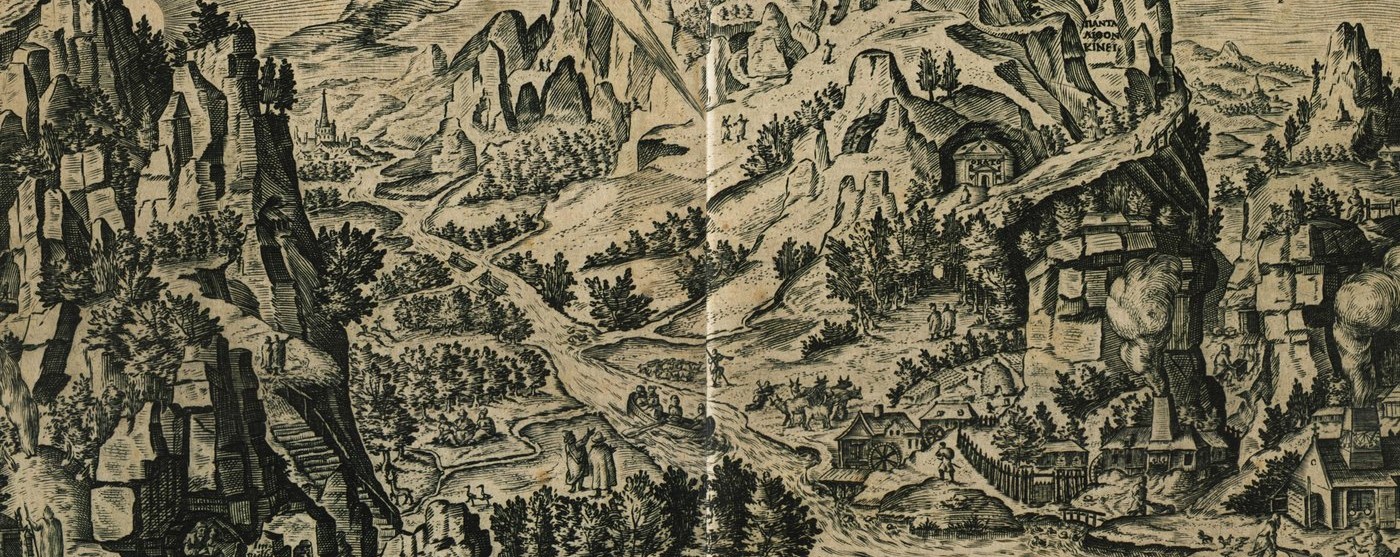
Mountains, a lake, woods, a town with a spire, a road winding up a crag, and small men everywhere in it with books, walking, reading, pointing. The caption's German calls it ‘des grossen Weltbuchs der Natur’, the great World-Book of Nature, and lists what it is written in: ‘Mare, Aquas, Lapides, Vegetabilia, Animalia, Mineralia atque Metalla’, the sea, the waters, stones, plants, animals, minerals and metals. On one crag a Greek motto, ‘Panta lithon kinei’, move every stone. On the mountain at the upper right stands the gate of the Porta plate, seen from far off and labelled ‘Porta Amphitheatri Sapientiae Aeternae, solius verae’, so that this landscape and that doorway are one country.
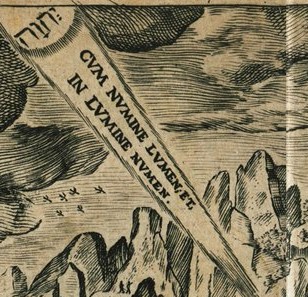
Over it all, at the upper left, the Name burns in a glory of four Hebrew letters, and from it a beam comes down into the landscape, ruled straight and lettered along its length ‘Cum Numine Lumen, et in Lumine Numen’: with the Deity, light, and in the light, the Deity. The sentence turns back on itself the way the beam does not.
The sun rises behind a crag at the left, lower than the Name and beside its beam, half a disc with rays. Natural light, under the other.
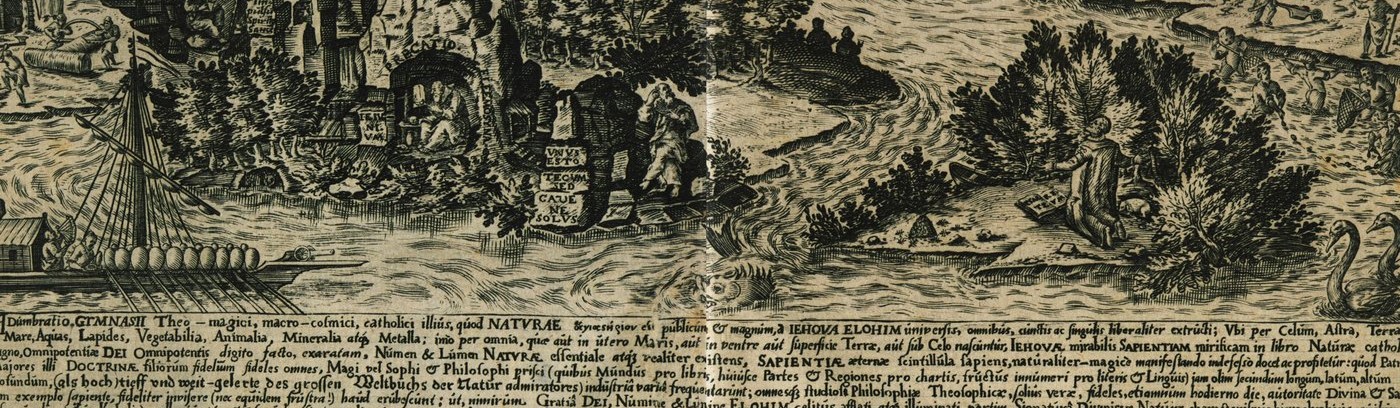
The foot of the plate is the lake, with a rowed galley on it and a monster surfacing at the right. On the shore a hermit's cell is lettered ‘Precatio. Eleemosyna. Ieiunium.’, prayer, alms, fasting, and the rock beside it ‘Unus esto tecum, sed cave ne solus’, be alone with yourself, but beware of being alone. The waters the caption names first are given the most room, and the one man who lives in the picture lives at their edge.
The plate is Khunrath's argument that Nature is a book with readers in it, and that the reading is done outdoors. The caption below runs to many lines in Latin and German, and the archive holds it in part.
Decoded: every motif is marked, and each mark carries the reading its author gave it, quoted from the text, or says that it is observed on the picture and not read. The reading above is the archive's own, made from those sources and no others.
Where a thing is taken apart rather than destroyed. Note whether the figure is in the water, on it, or pouring it.
In plain words The lower third of the plate is water: a lake with a rowed galley, a hermit's cell at the shore lettered prayer, alms and fasting, and a monster surfacing at the right. The caption lists the sea and the waters first among the things Nature teaches from, and the plate gives them the most room.
Heinrich Khunrath, 1609 “Mare, Aquas, Lapides, Vegetabilia, Animalia, Mineralia atque Metalla.”
Heinrich Khunrath, 1609 “Precatio. Eleemosyna. Ieiunium. Unus esto tecum, sed cave ne solus.”
Symbolica The Latin, put into English here: the sea, the waters, stones, plants, animals, minerals and metals; prayer, alms, fasting; be alone with yourself, but beware of being alone.
A diagram of everything, drawn so that a person can be found inside it. Note where the human figure stands in the scheme.
In plain words There is no diagram here. Mountains, woods, a town, a lake and small men walking in them with books: the caption calls the whole picture the macrocosmic school and the great World-Book of Nature, and the learned in the picture are reading it. The archive files the landscape with the heavens because Khunrath's word for it is the macrocosm, and on one crag a Greek motto tells the reader to move every stone.
Heinrich Khunrath, 1609 “Adumbratio Gymnasii Theo-magici, macro-cosmici, catholici illius, quod Naturae est publicum.”
Heinrich Khunrath, 1609 “des grossen Weltbuchs der Natur.”
Heinrich Khunrath, 1609 “Panta lithon kinei.”
Heinrich Khunrath, 1609 “Porta Amphitheatri Sapientiae Aeternae, solius verae.”
Symbolica The Latin and German, put into English here: a sketch of that theo-magical, macrocosmic, universal school which is the public school of Nature; the great World-Book of Nature; move every stone, which is Greek for leave no stone unturned; the gate of the amphitheatre of eternal wisdom, the only true one.
God shown, or pointed at. Look for what stands where a face would be: a name in a cloud, a circle above the top of a diagram, a ring of verses, a sign over a head.
In plain words The Name is in the sky at the upper left, four Hebrew letters in a burst of light, and a straight beam runs down from it into the mountains. The beam is lettered: with the Deity, light, and in the light, the Deity. It is the only ruled line in the plate.
Heinrich Khunrath, 1609 “Cum Numine Lumen, et in Lumine Numen.”
Symbolica Cum Numine Lumen, et in Lumine Numen: with the Deity, light, and in the light, the Deity.
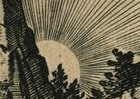
Gold, the perfected metal, and the illuminated intellect. The most overloaded symbol in the tradition.
In plain words The sun comes up behind a crag at the left edge, half a disc with rays, lower in the sky than the Name and beside its beam. It is the natural light, and the plate sets it under the lettered light of the other.
Symbolica The sun is marked by eye; the caption the archive holds does not name it.
Also carrying the Water
38 works carry it. The 5 where it is the central motif are here. The symbol.
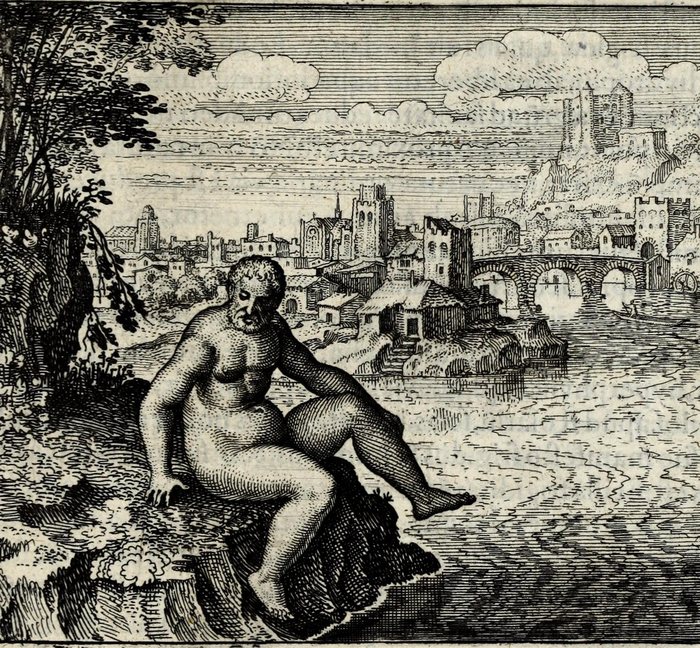
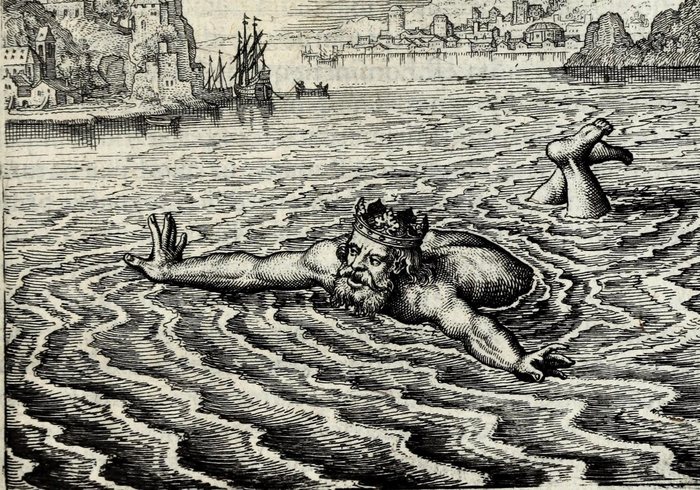
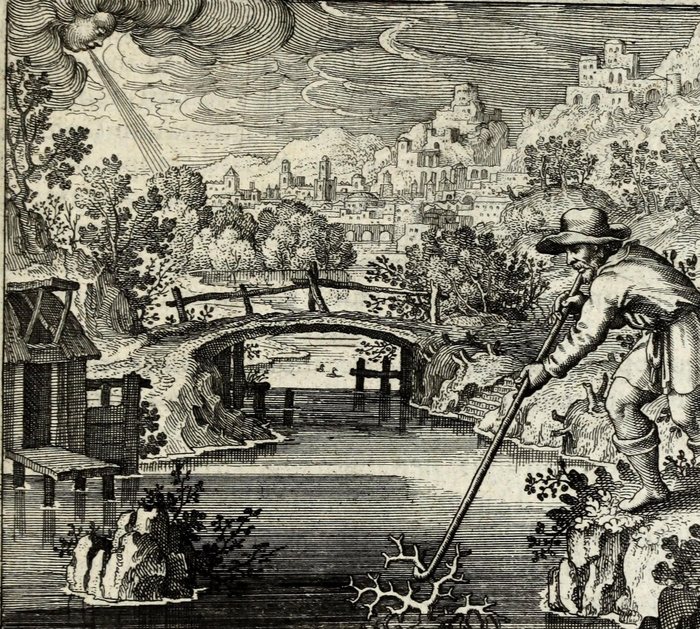
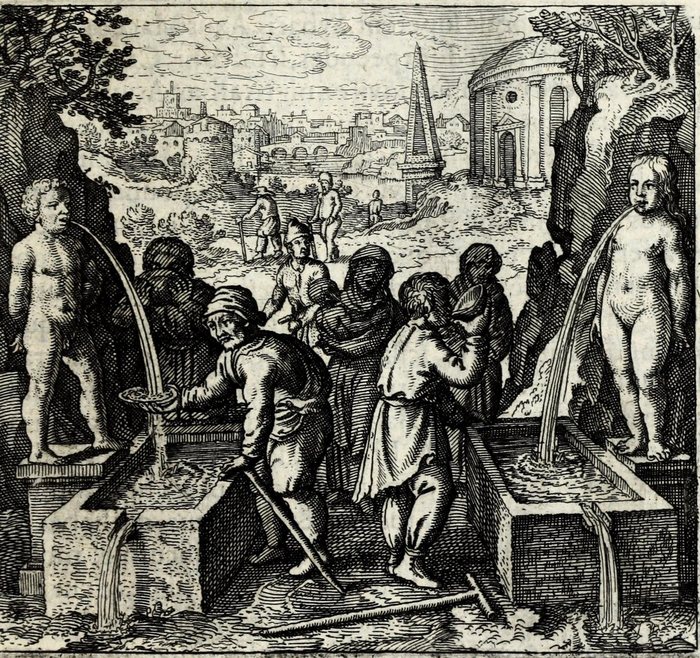
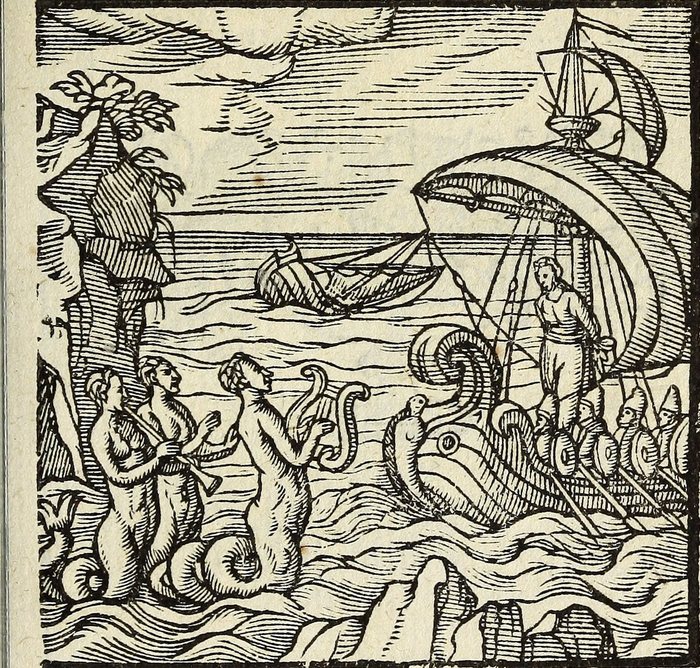
Where the detail is the subject
the Heavens · the Divine · the Sun and the Moon
Each of these is in the picture without being what it is about. Below, one work that is about each.
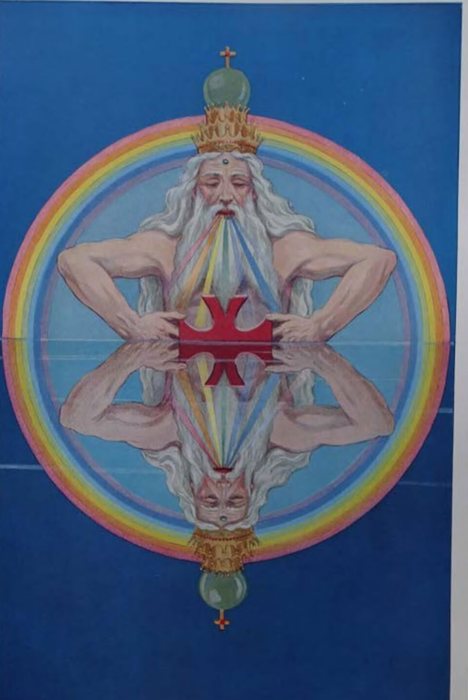
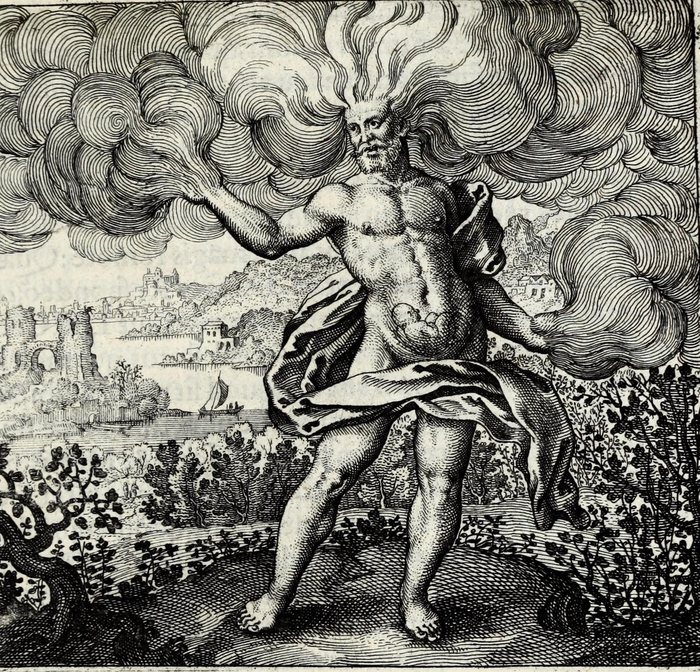
In the same series
Record
One symbol a week, decoded.
This picture is free at full size from its source, linked above. What an address gets is the Sunday letter: one picture, one symbol marked on it, what it meant and who said so, and the master files of the decoded plates as they are verified. Leave any time.
Free, one letter a week, unsubscribe in one click. How the address is used.
Scroll or pinch to zoom · drag to move · double-tap for 1:1 · 1400 by 1236 pixel web copy; the source file is linked under Record