Archive
202 plates, gathered into the books and sets they came from. To browse them all at once, by symbol, by century or by hand, the wall of symbols does that, and the makers are listed by hand.
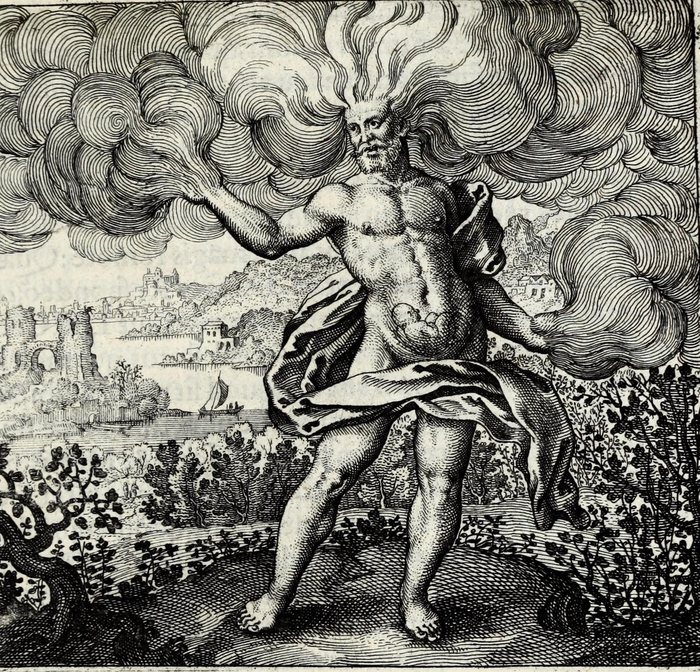
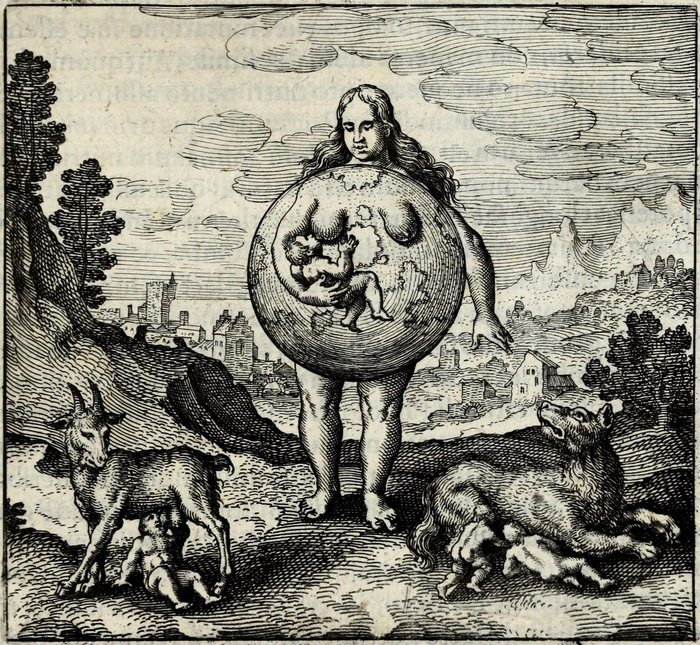
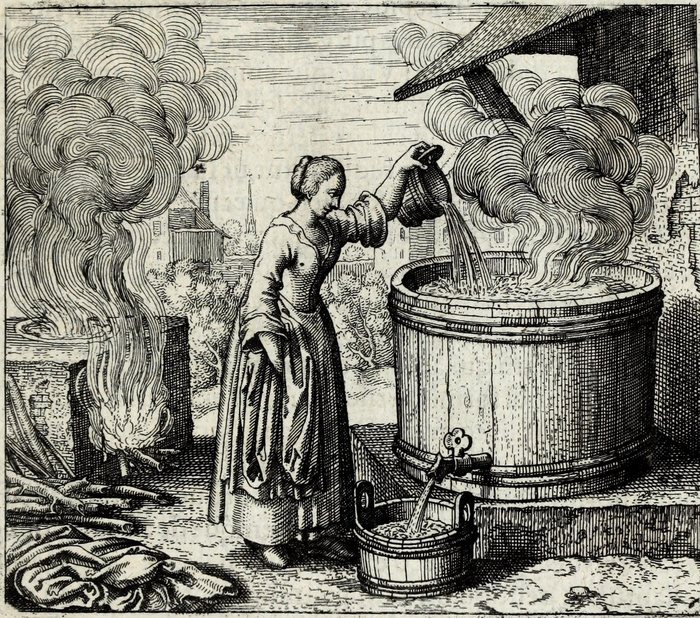
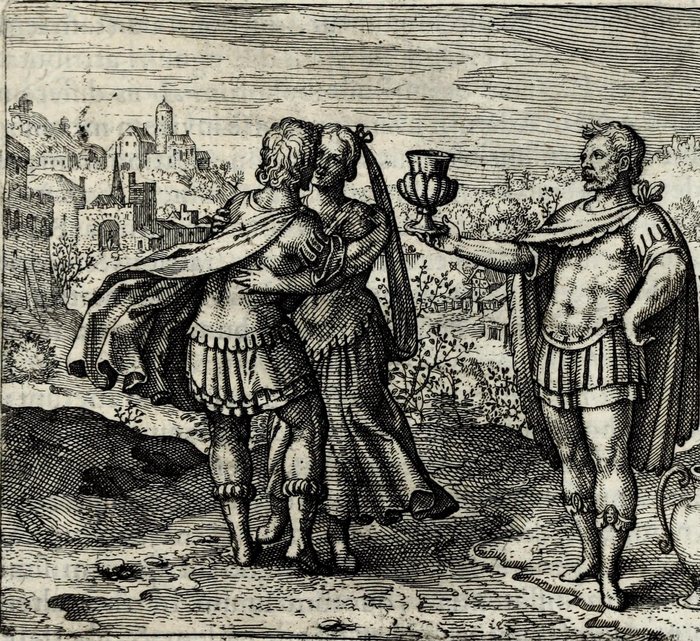
Atalanta Fugiens, 1618
Michael Maier's book of fifty emblems, printed at Oppenheim in 1618 by Hieronymus Galler for Johann Theodor de Bry, the engravings attributed to Matthaus Merian. Each emblem carries a motto, a six-line epigram and a discourse of a page or two in which Maier explains his own picture, which makes it the one book in this archive where every image arrives with its maker's own reading.
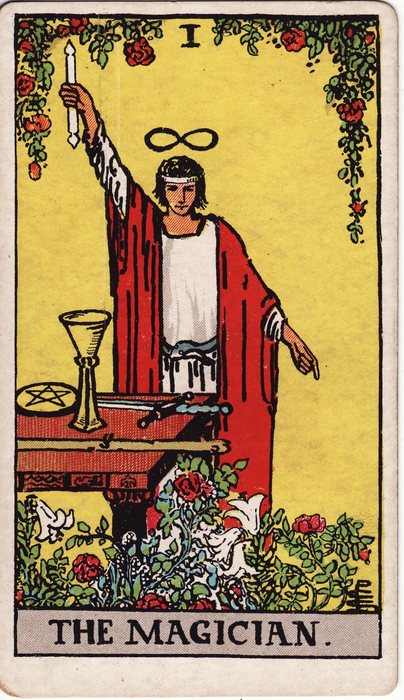
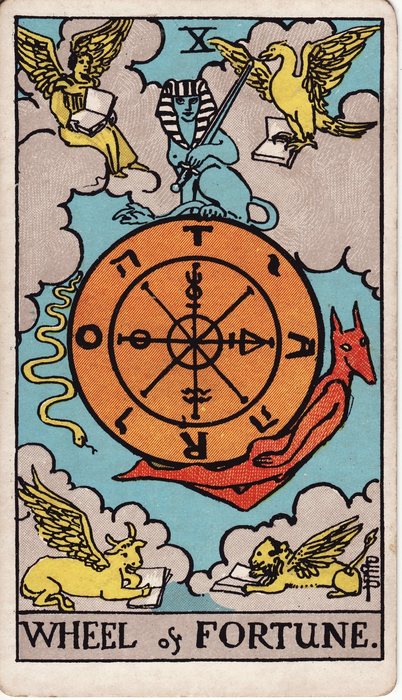
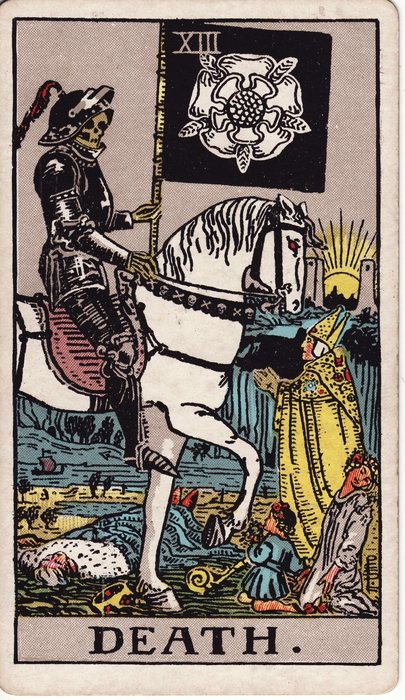
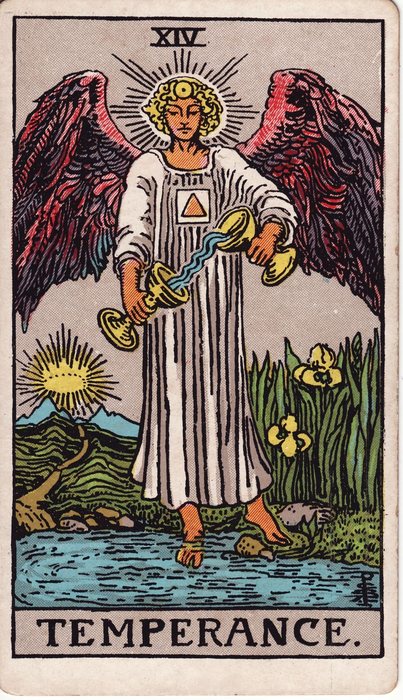
The tarot of Pamela Colman Smith, 1909
The seventy-eight cards Pamela Colman Smith drew in 1909 for Arthur Edward Waite, published in London by William Rider and Son and described by Waite card by card in The Pictorial Key to the Tarot (1911). The Major Arcana that land on the archive's central motifs come first. The scans are of a printed deck of the 1909 design on the Internet Archive, printing not identified; the design is public domain in the United States, the United Kingdom and the European Union. Waite's descriptions are quoted from the 1911 book, which is public domain.
The Secret Teachings of All Ages, 1928
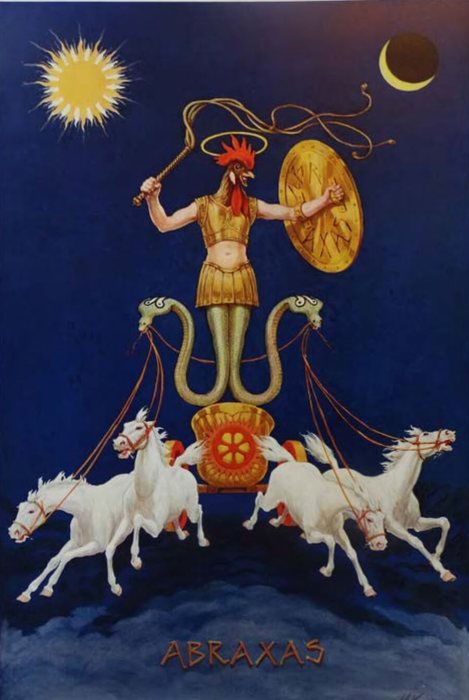
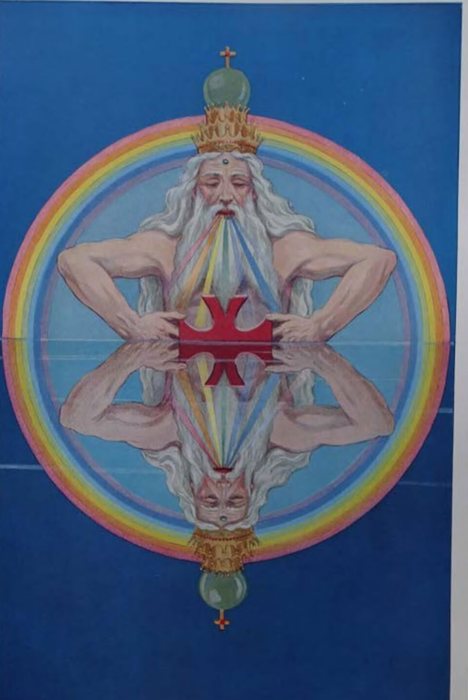
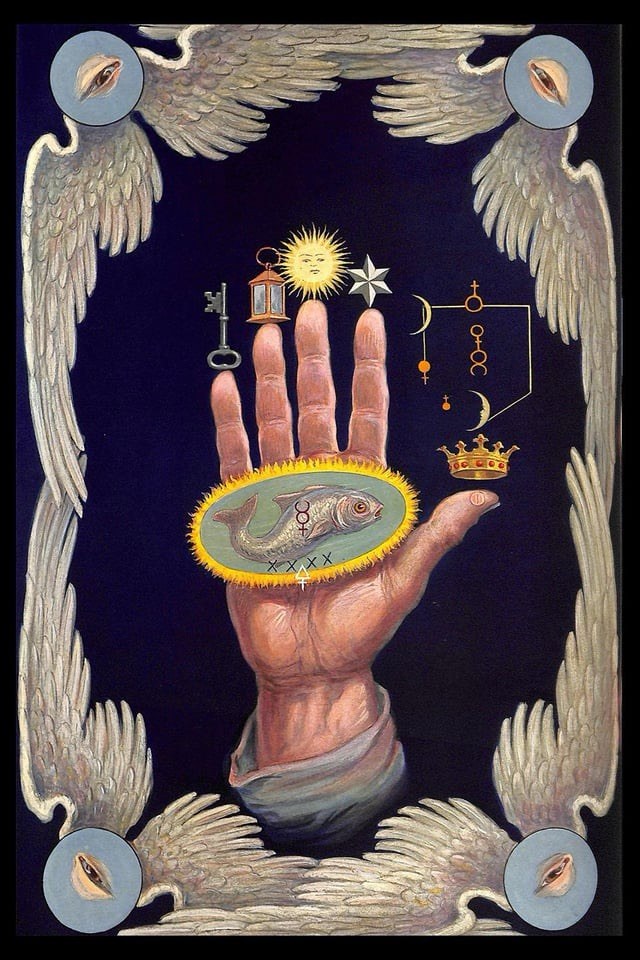
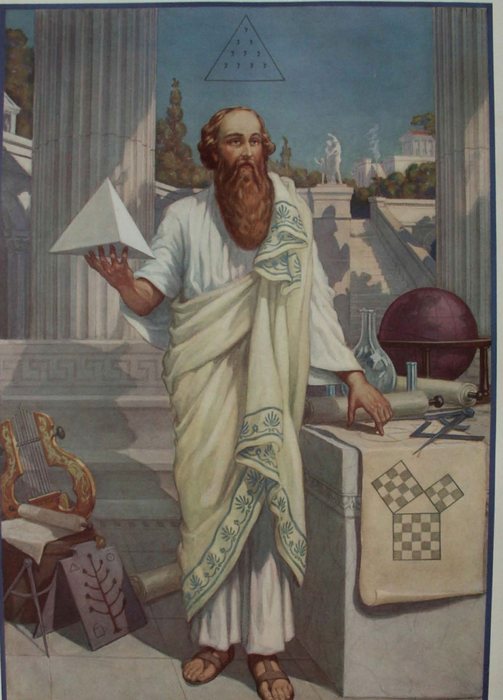
The colour plates of Manly P. Hall's folio encyclopaedia of symbolism, published in San Francisco in 1928. Most were painted by J. Augustus Knapp; two reproduce oil paintings by Mihran K. Serailian; two carry no artist's credit. The copy here is a photographed first edition on the Internet Archive, cropped to the plates, with Hall's own captions read from the page. The pictures and the words have different rights and the archive states both. The plates are public domain in the United States, the 95-year term on the 1928 publication having expired on 1 January 2024, and in the European Union and United Kingdom, Knapp having died in 1938 so that the life-plus-seventy term expired in 2009. Hall's text, which this archive quotes, is public domain in the United States on the same 95-year term, but Hall died on 29 August 1990, so in the European Union and the United Kingdom his writing remains in copyright until 1 January 2061. What is printed here are short attributed extracts, each naming Hall, his book and its year, quoted so that the picture can be read against what its author said about it. That is quotation for criticism and review rather than public-domain reuse, and the distinction is set down here rather than left to be assumed from the plate's own licence. Mihran K. Serailian's dates have not been established, so the two paintings credited to him carry the plate rights above only for the United States until they are.
The True Masonic Chart, 1819
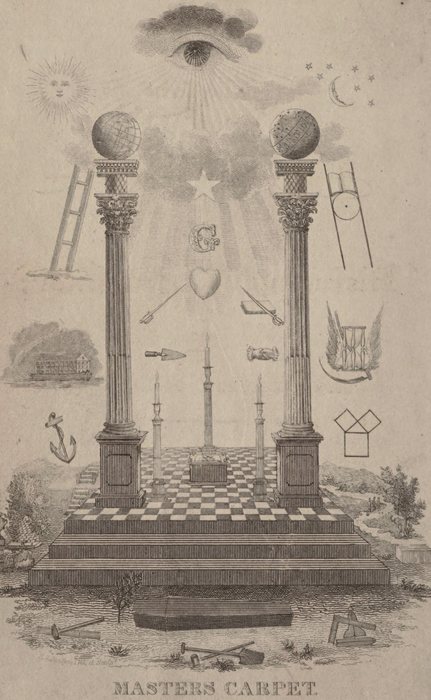
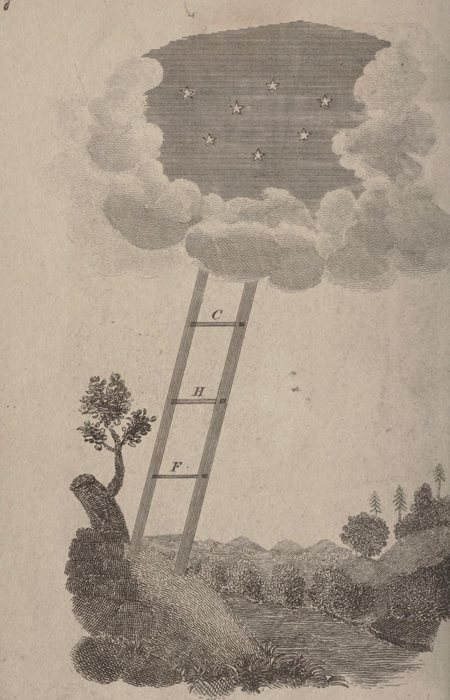
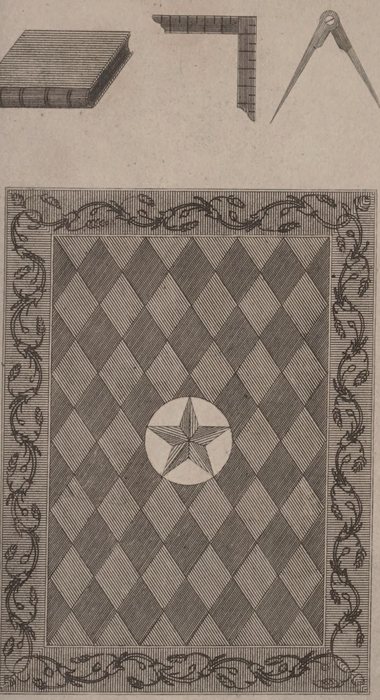
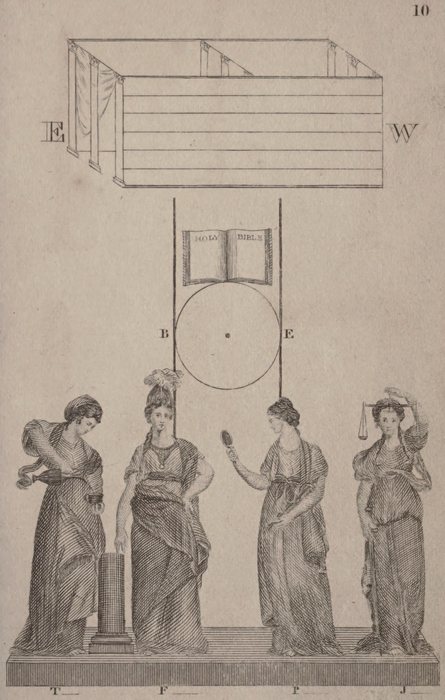
Jeremy Ladd Cross's Hieroglyphic Monitor, first published at New Haven in 1819 with emblem plates engraved by Amos Doolittle, the source of most American masonic emblem imagery for a century. It is a chart with its own lecture: the monitor printed alongside the plates walks through every emblem in order and says what it stands for, which is what makes it an archive of pictures made to be read. The copy is the Library of Congress's printing of 1826.
After Splendor Solis, watercolours by Edith A. Ibbs, 1900 to 1909
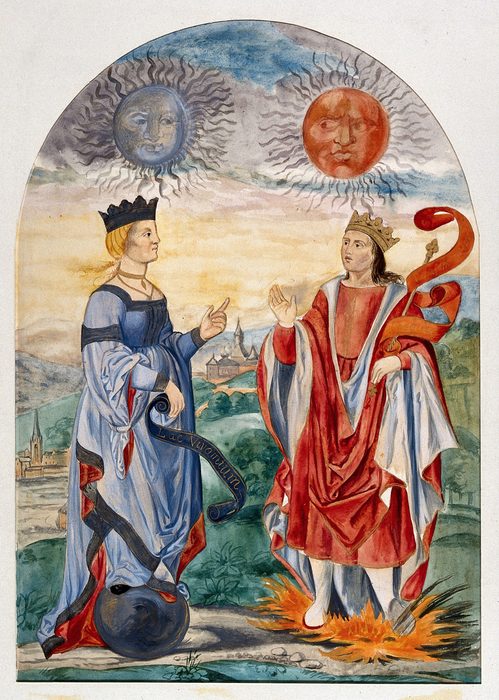
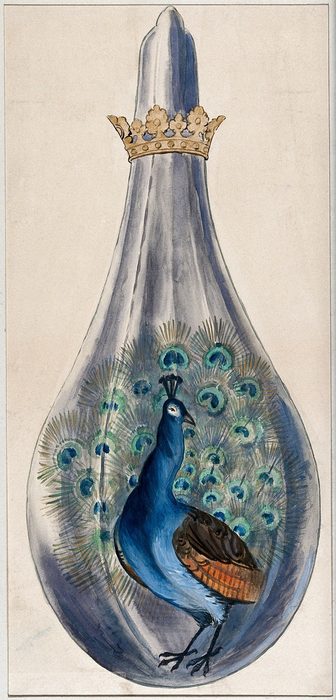
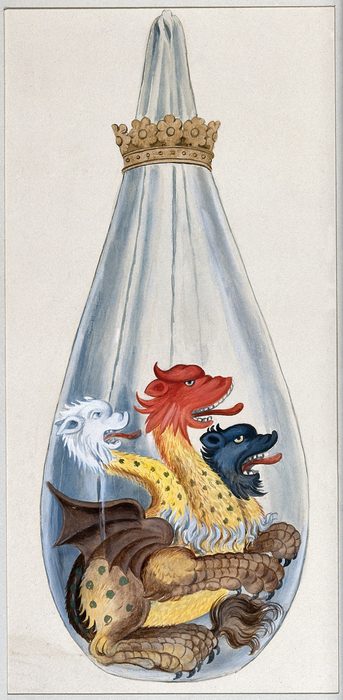
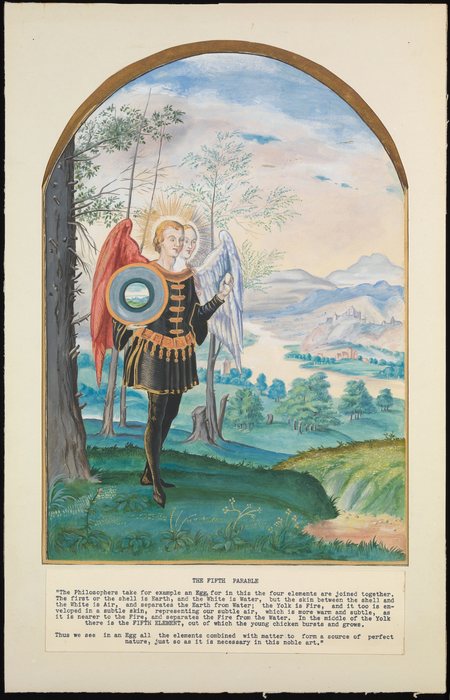
Edith Annie Ibbs painted these for Henry Wellcome's Historical Medical Exhibition around 1907, copying the Splendor Solis manuscript of 1582 now in the British Library as Harley MS 3469. She cut each figure out of its page: the manuscript sets its flasks in gilt niches with a planet driving over each one and a scene of ordinary life underneath, and none of that is here. What is here is decoded from the book itself, in J. K.'s English of 1920, which describes all twenty-two pictures one at a time and then, fifty pages later, gives the order the colours have to arrive in.
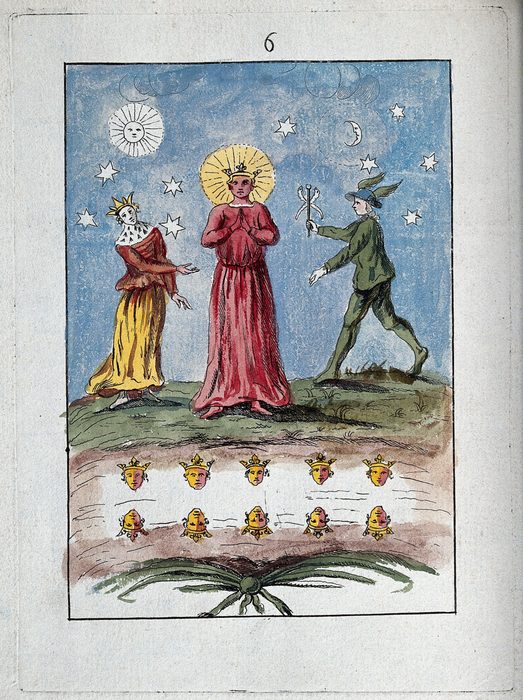
The Hieroglyphic Figures attributed to Nicolas Flamel
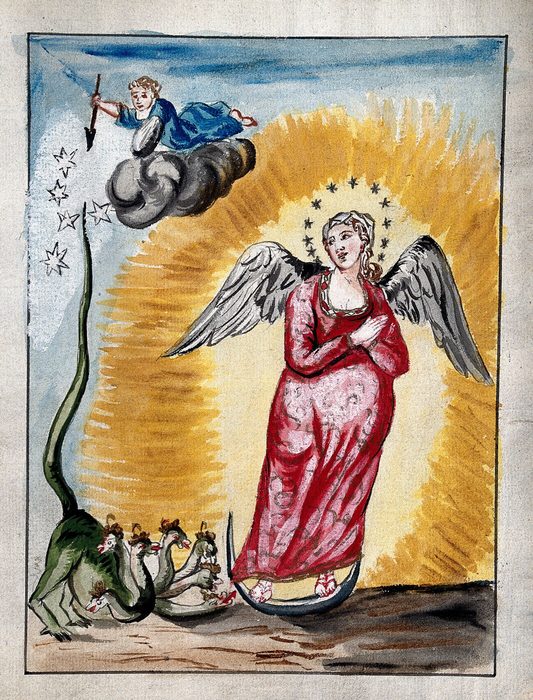
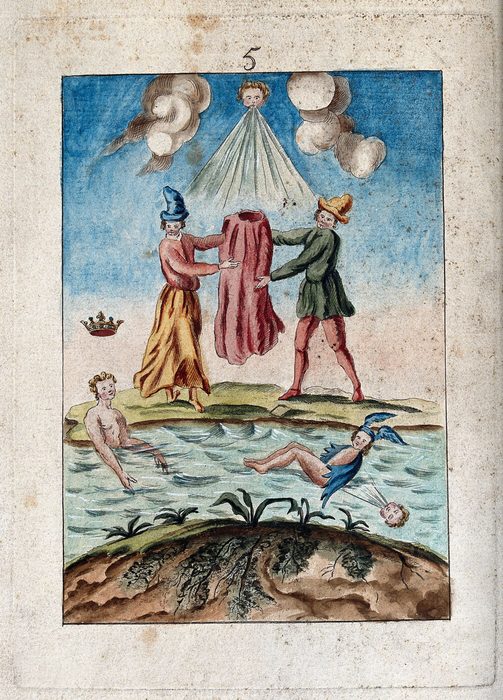
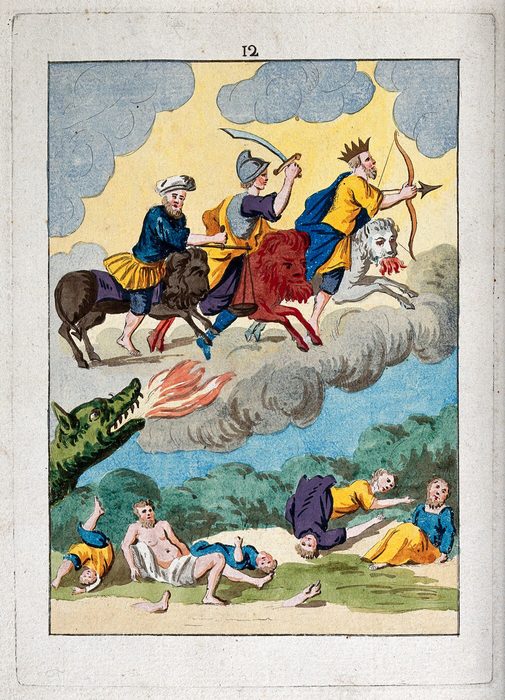
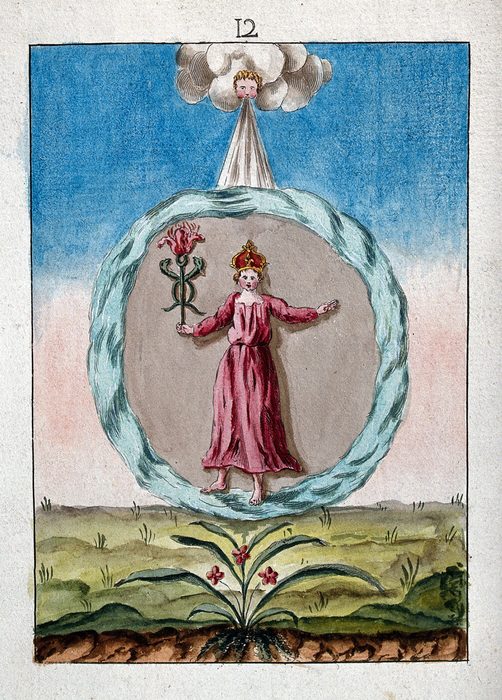
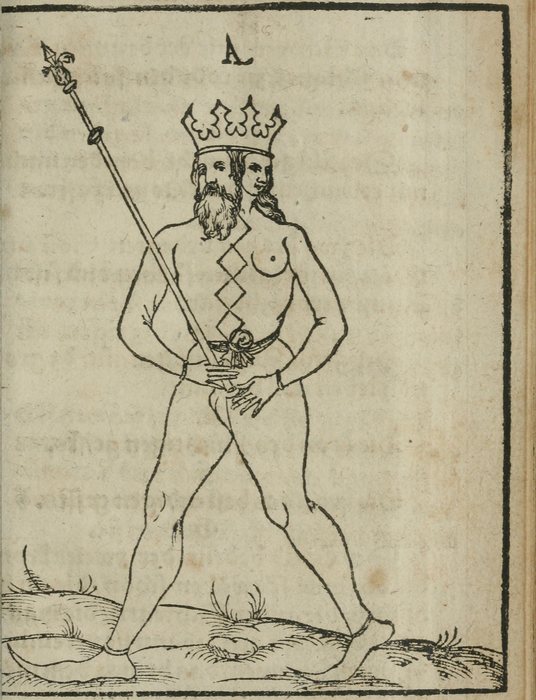
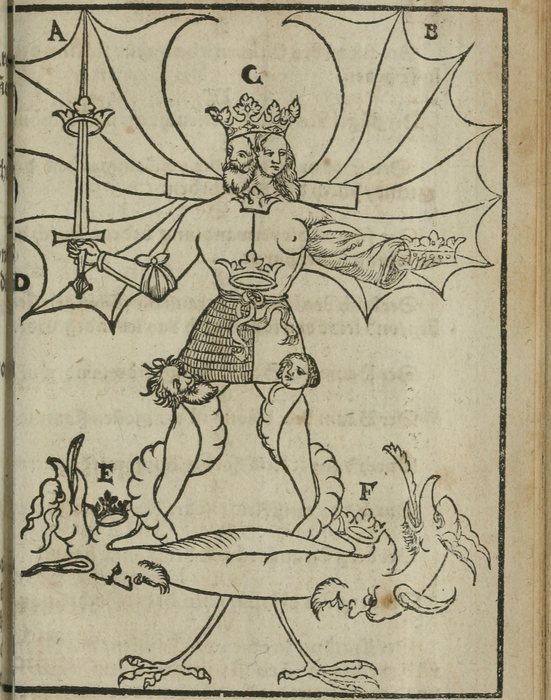
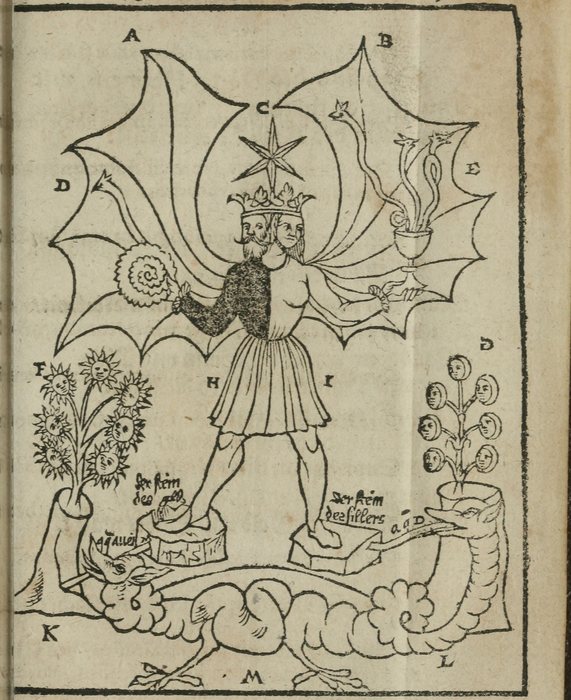
Coloured etchings and paintings after the emblematic figures attributed to the Paris scrivener Nicolas Flamel, held by Wellcome Collection. Flamel's text describes, at length and in the first person, the paintings on a book he says he bought secondhand, and pointedly declines to reproduce them; the museum's note on this series records that the images were only actualised in 1672, in W. Salmon's edition. Thirteen sheets are here and they fall into four kinds. Four of them, numbered 4, 6, 7 and 8, draw Flamel's descriptions clause by clause and are keyed against Eirenaeus Orandus's English of 1624. Four more take their details from the Apocalypse and are keyed against the Douay-Rheims. Four were filed under Flamel in September and are not his, on the museum's own evidence, and their records now say so. One, the magi sheltering in a cave, is still unread.
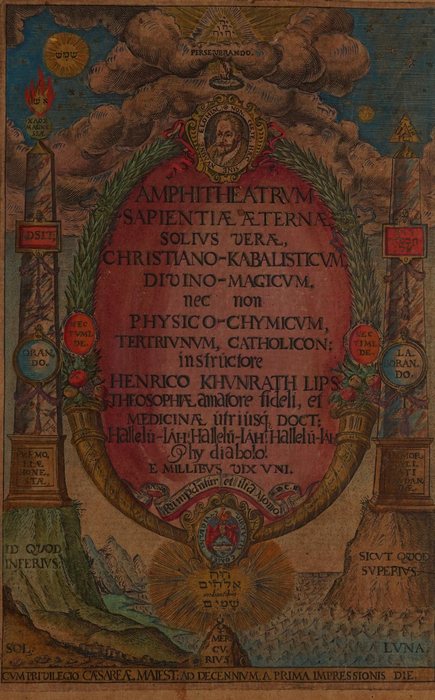
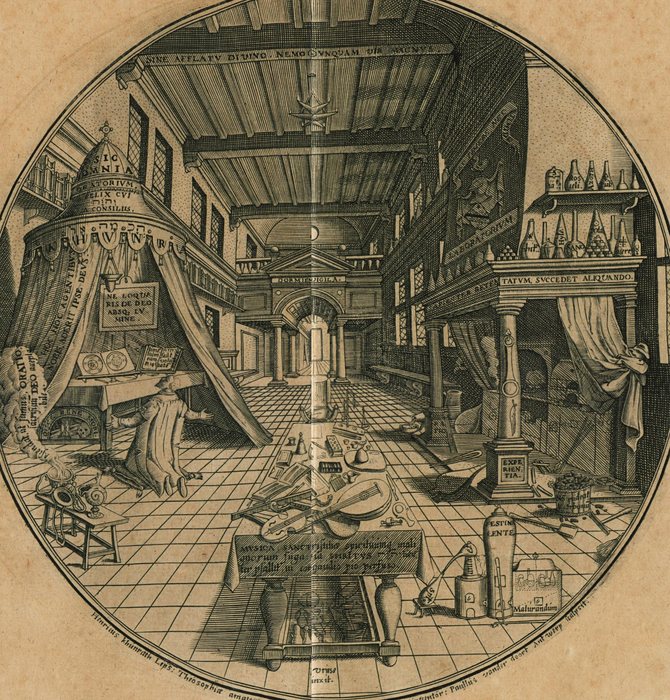
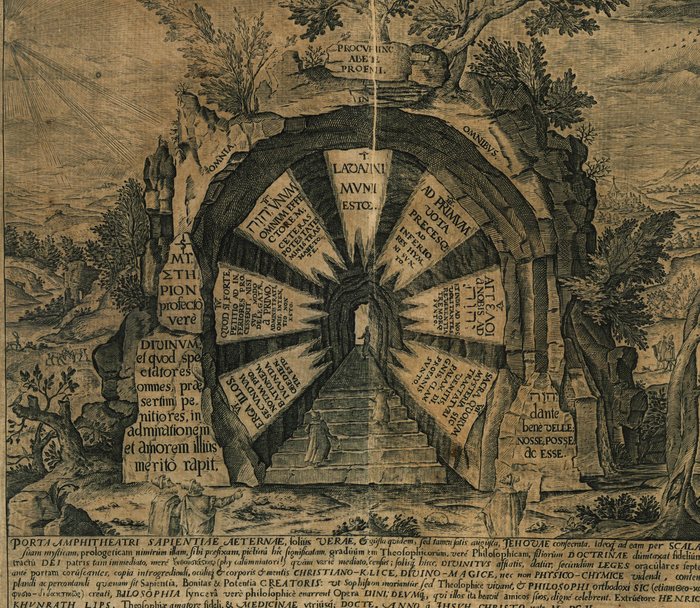
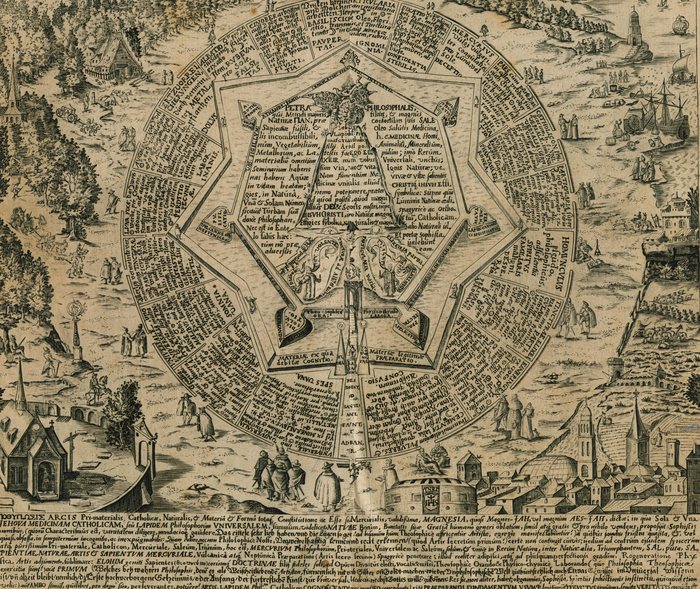
Amphitheatrum Sapientiae Aeternae, 1609
Heinrich Khunrath's Amphitheatre of Eternal Wisdom, printed at Hanau in 1609 by Wilhelm Antonius, four years after the author's death, with the engraved plates he had made between 1595 and 1602. Each plate carries a long caption in his own Latin, with German asides, saying what it shows and dating itself, so that the pictures arrive with their maker's reading. Nine plates are from the Paris copy, whose fold-outs were scanned open; the title is from the Wellcome copy, which is hand coloured.
Manuscripts and prints
Single sheets that belong to no series in the archive: a painting, an engraving, a leaf from a book whose other leaves are elsewhere. They are filed by their maker rather than by a volume, and the makers filter is the way into them.
Monas Hieroglyphica, 1564
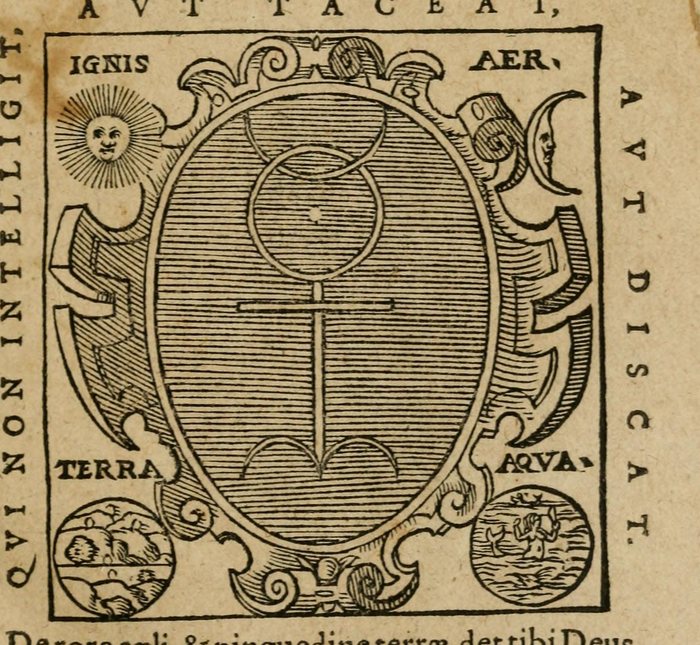
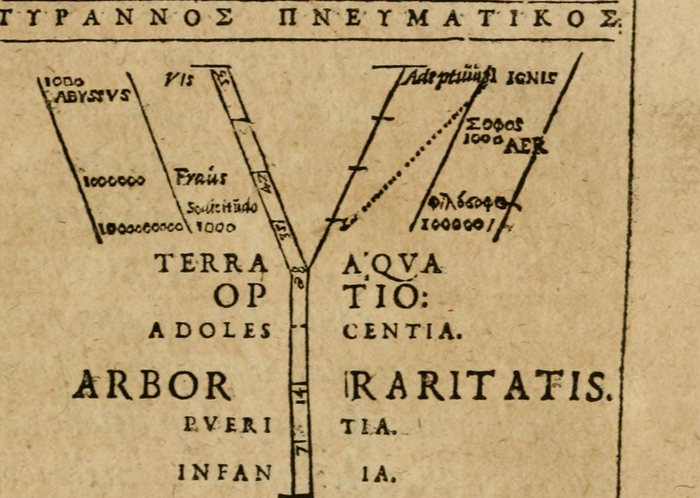
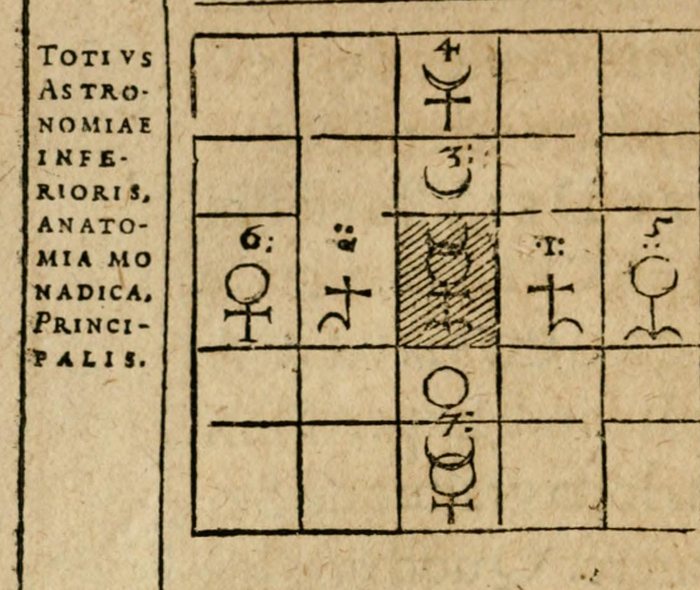
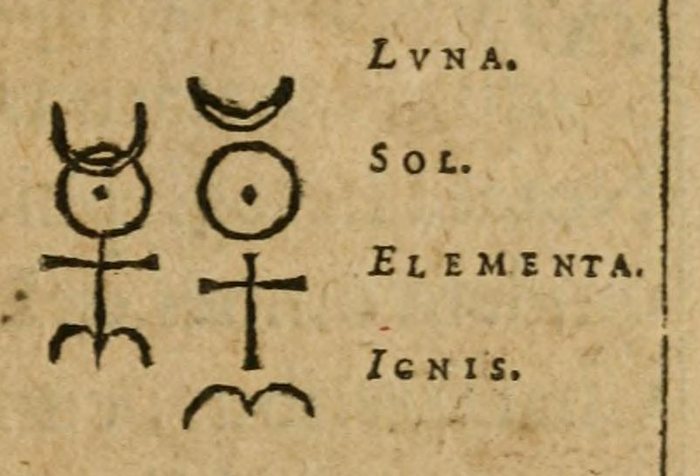
John Dee's book of one glyph and twenty four theorems, written and first printed at Antwerp in 1564 and dedicated to the Emperor Maximilian II. The monad joins the signs of the moon, the sun, the elements and Aries into a single figure, and the theorems take it apart and put it together again, which makes it the plainest case in this archive of a picture made to be decoded. The copy is the Getty Research Institute's Frankfurt printing of 1591.
Gemma Sapientiae et Prudentiae, c. 1735
This set has no description yet.
Utriusque cosmi historia, 1617
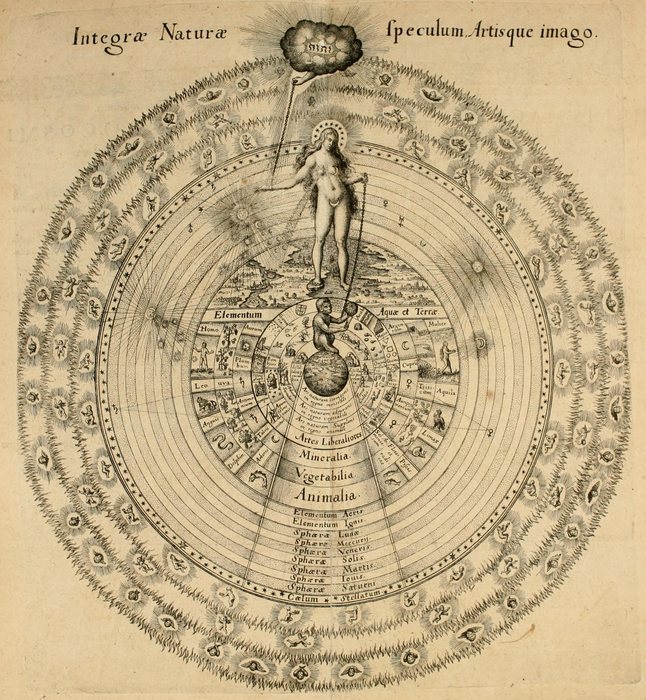
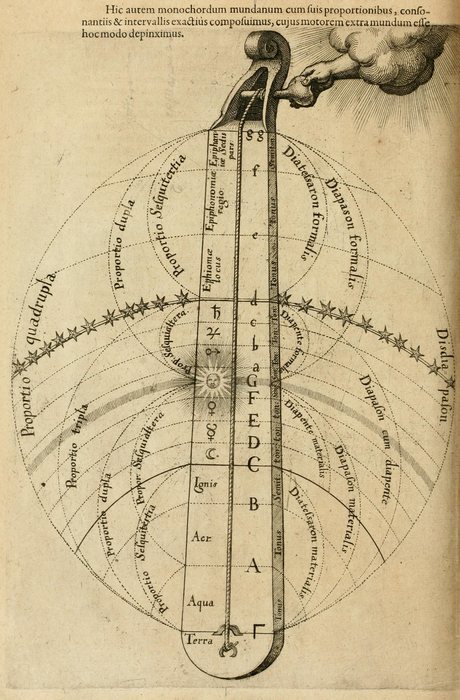
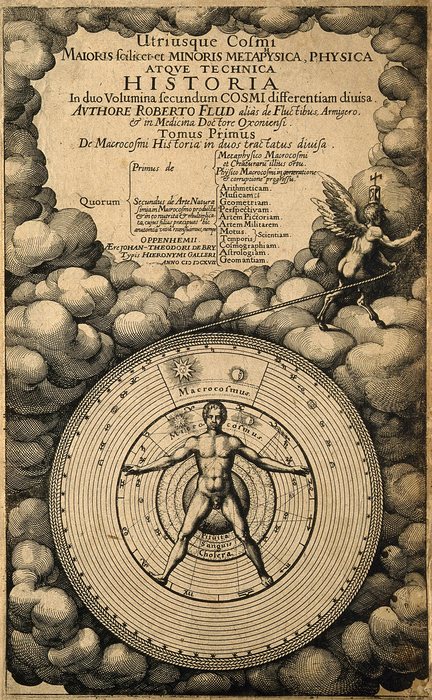
Robert Fludd's Utriusque cosmi maioris scilicet et minoris metaphysica, physica atque technica historia, the history of the two worlds, the great one and the little one, published at Oppenheim by Johann Theodor de Bry from 1617. The first tractate of the first volume, on the making of the macrocosm, carries the engravings the archive holds: the folded mirror of nature, the black square of the first matter, the world monochord, and the title page with man the microcosm inside the wheel of the heavens. Fludd explains his own plates in the text, sometimes in a caption, sometimes in a chapter, and the archive quotes him in his Latin with an English rendering. The book pages are from the Getty Research Institute copy on the Internet Archive; the title page is a separate impression in the Wellcome Collection.
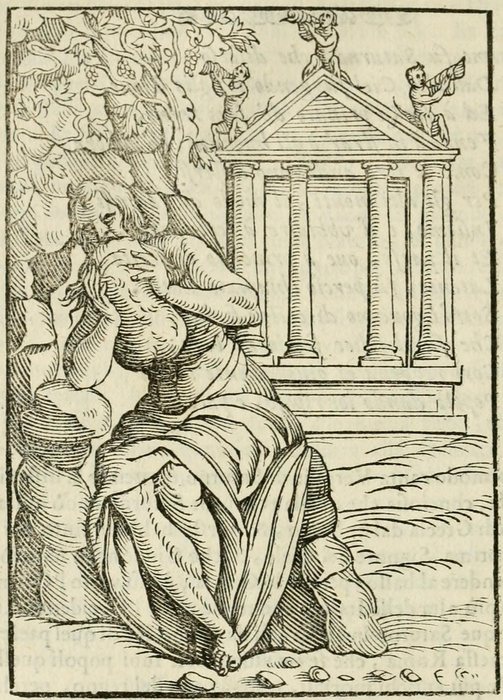
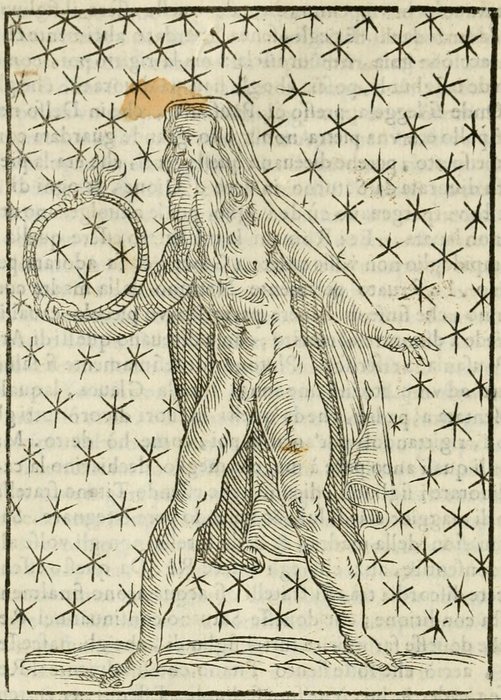
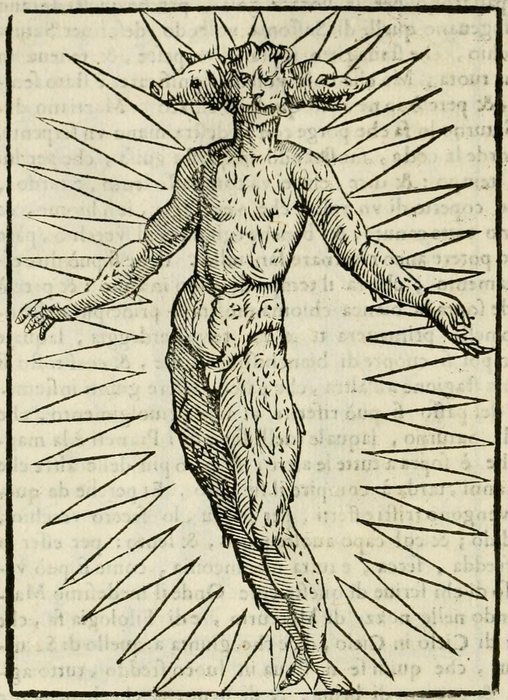
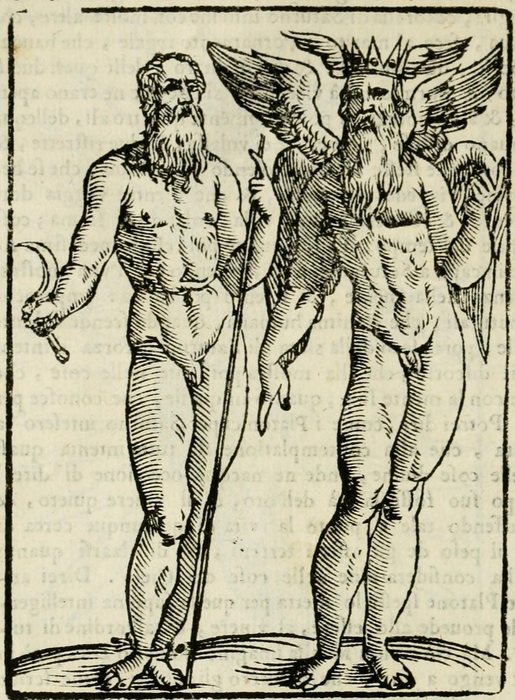
Le vere e nove imagini de gli dei delli antichi, 1615
This set has no description yet.
Musaeum Hermeticum, 1678
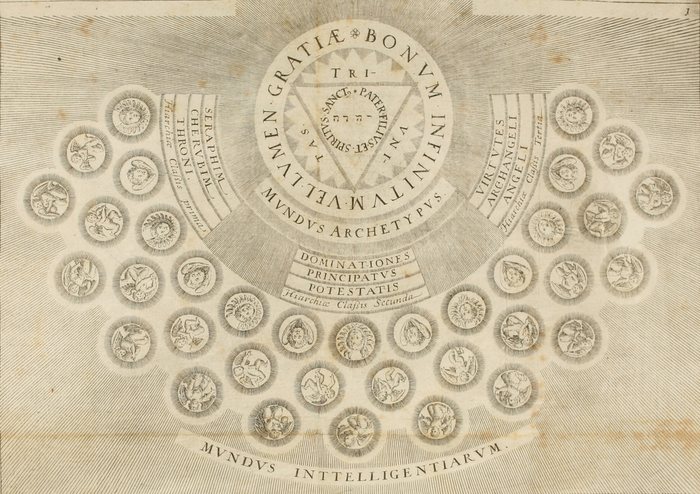
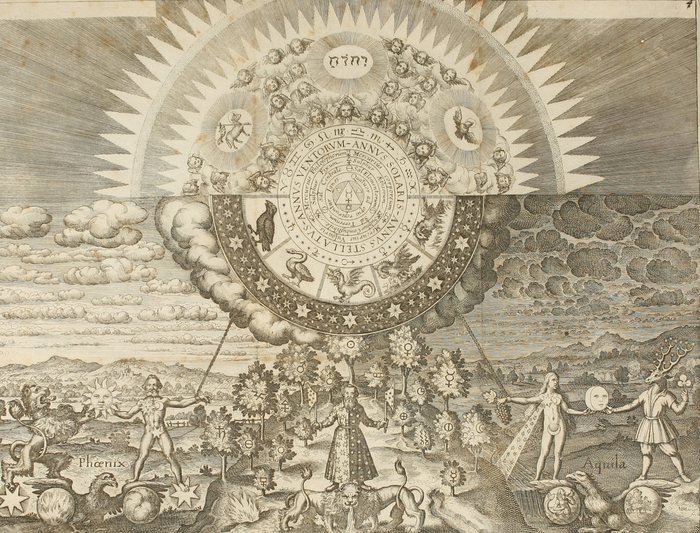
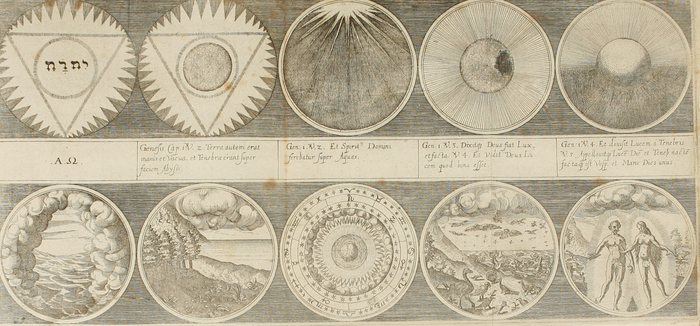
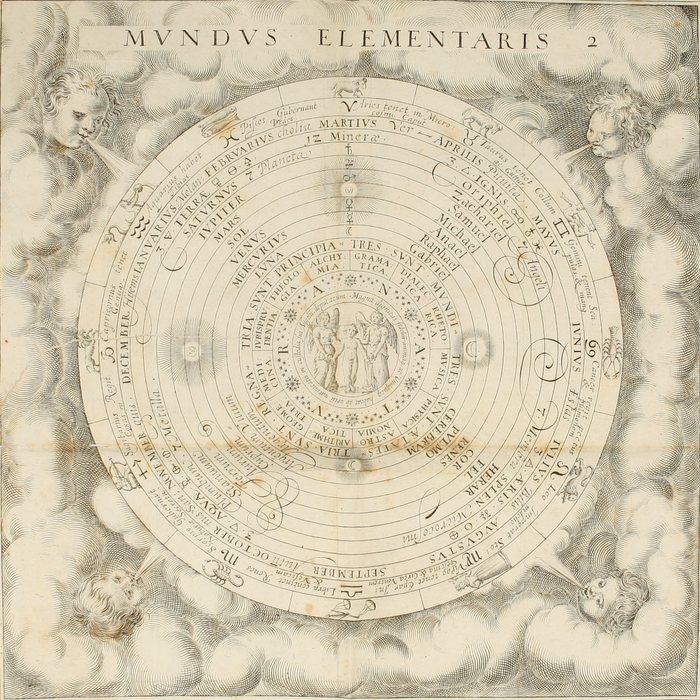
Four large plates fold into the back of the Musaeum hermeticum, reformatum et amplificatum, printed at Frankfurt in 1678, apud Hermannum a Sande as the title page has it, an enlarged edition of a collection first issued in 1625. Each is an engraving with its own explanation printed in letterpress on the same sheet, so the picture and the key were made to be read together. They number themselves FIGURA I to IV and run from the world of angels down to the world under the moon. One is signed M. Merian fecit and the other three carry no signature the archive has found.
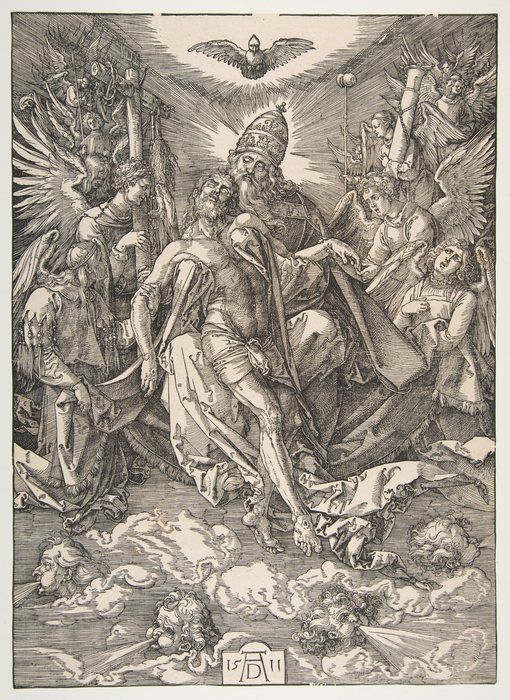
The Apocalypse, 1498 and 1511
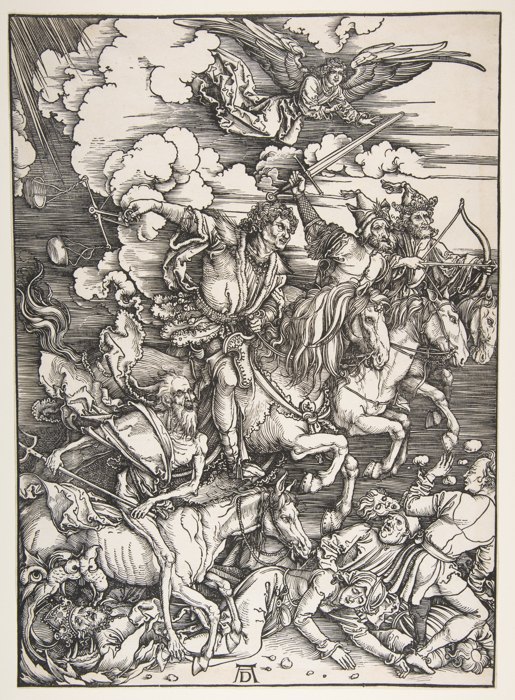
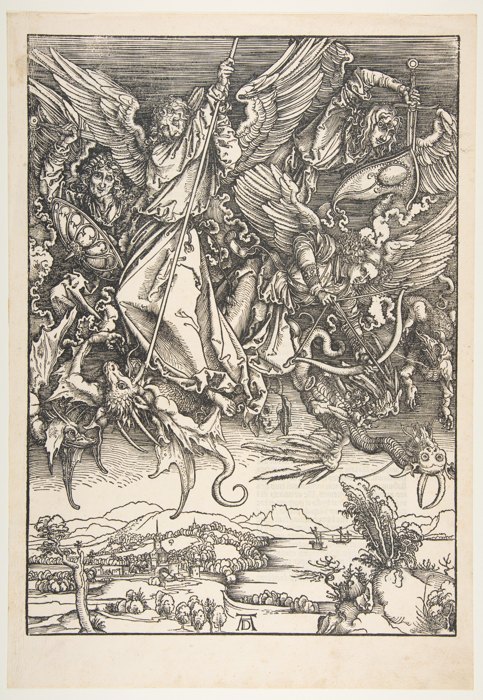
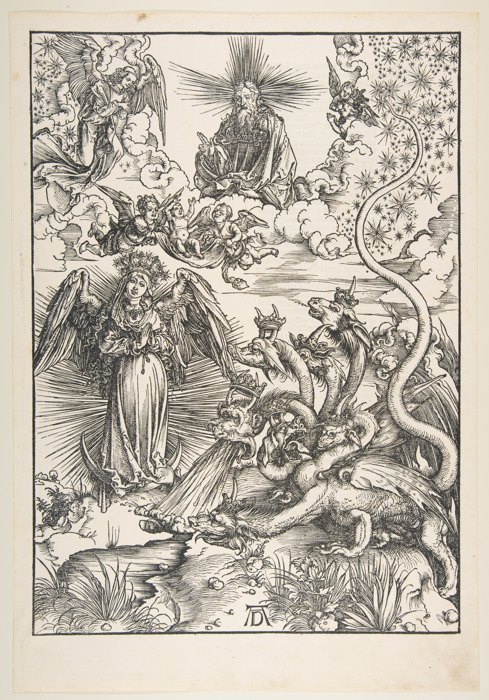
Woodcuts from Albrecht Durer's Apocalypse, the book he cut, printed and published himself: the fifteen sheets of 1498 and the Latin edition of 1511. Each sheet sets a passage of the Revelation of John into a single picture, which is why the text can be quoted against the marks.
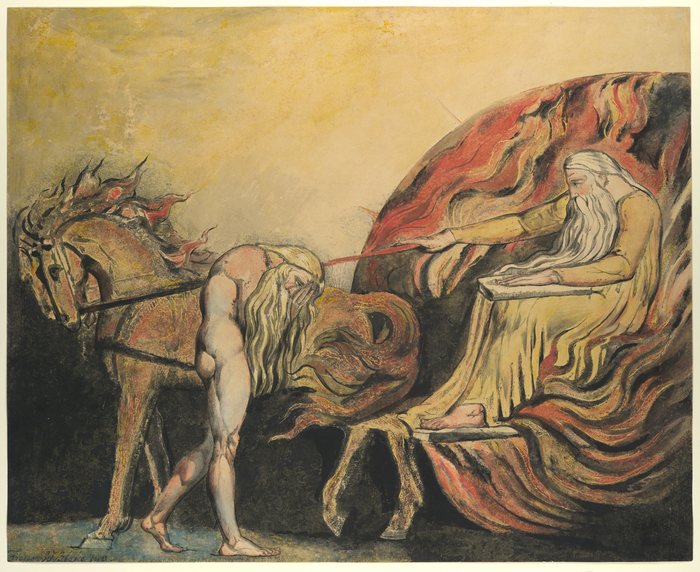
Illustrations of the Book of Job, 1825
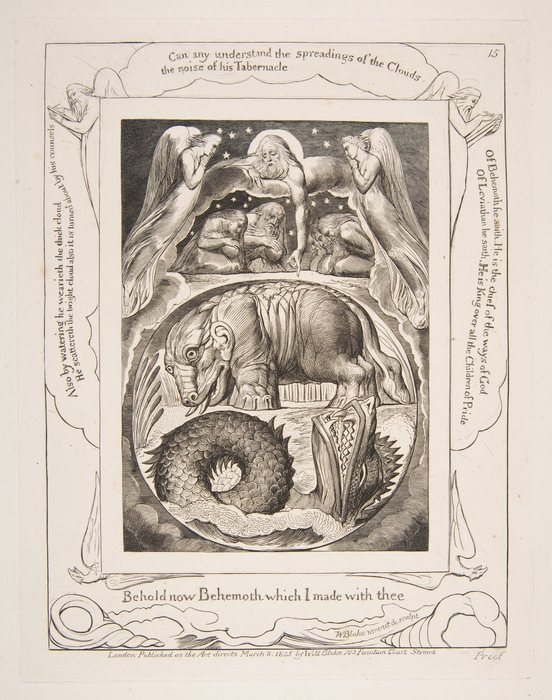
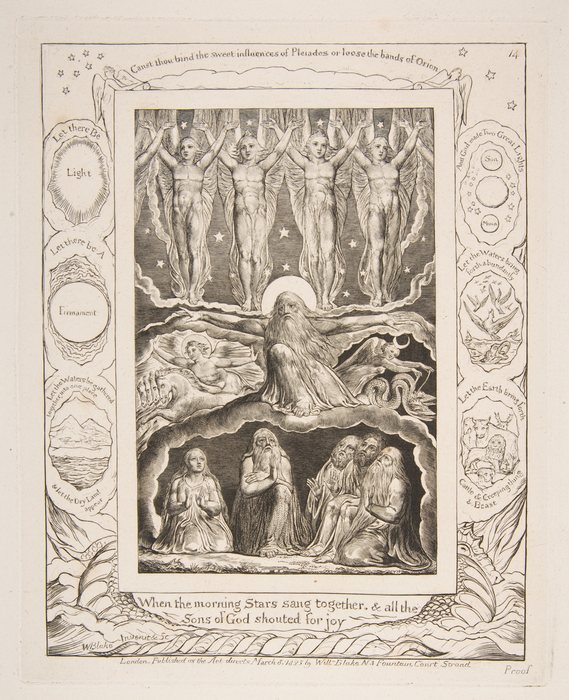
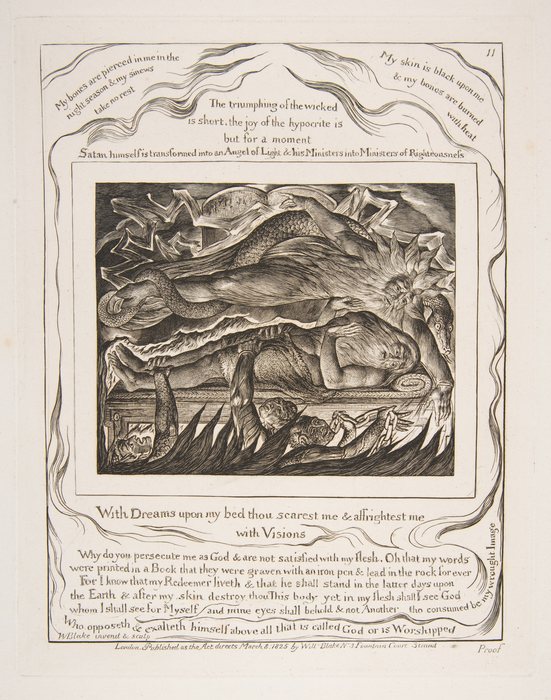
Twenty-two engravings published by William Blake himself in March 1825, the last major work he finished. Blake cut his own selected scripture into the margins of every plate, so each picture carries its key on the same sheet in the same hand, and the choosing of the verses is itself his reading of the book. The Metropolitan Museum of Art holds the series and releases it under CC0.
Emblemata, 1648
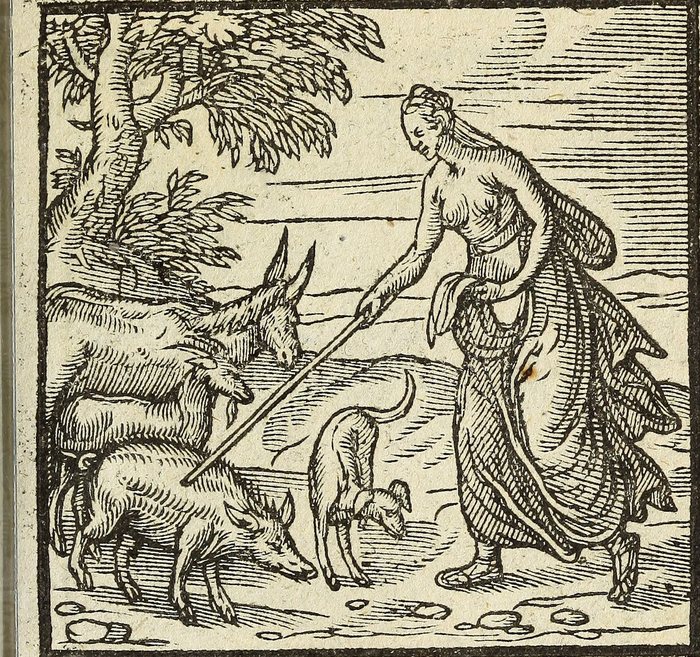
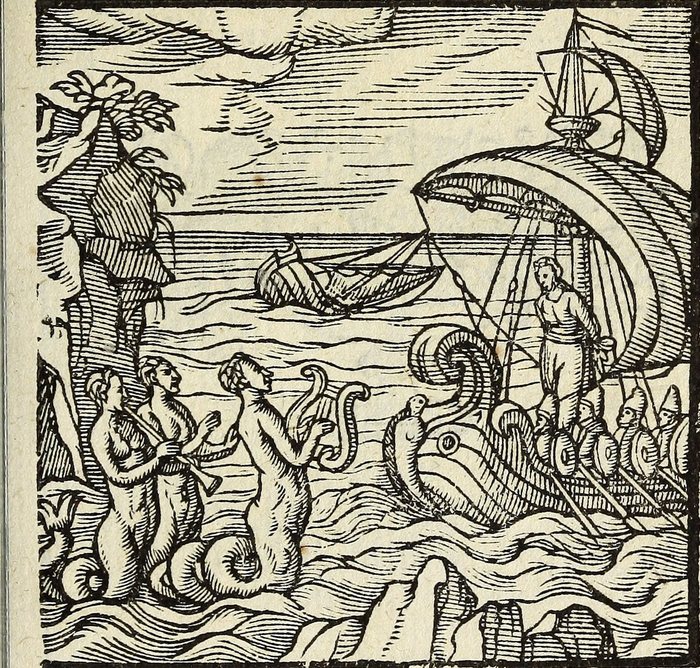
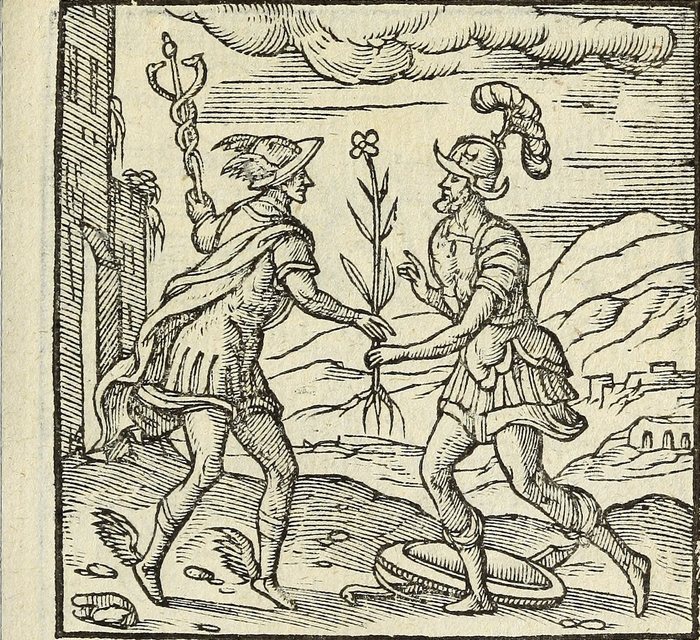
Andrea Alciato invented the emblem book. His Emblemata first appeared in 1531 and was still being reprinted a century later; this is the Plantin press edition of 1648, with Claude Mignault's commentary. Every emblem is the same four things on one page: a motto, a woodcut, an epigram, and a gloss. That is the whole reason the archive holds it. A picture printed under a motto and over an explanation is a picture whose maker expected to be decoded, and said so on the page. The three kept here are the Homeric ones.
Nimrud, the palaces of Ashurnasirpal II, about 883 to 859 BCE
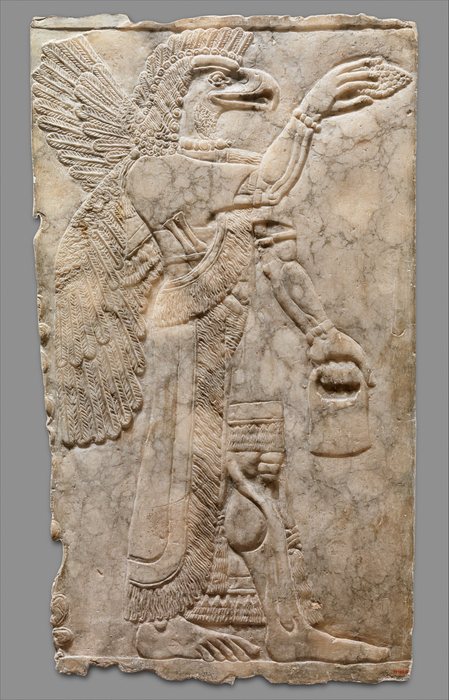
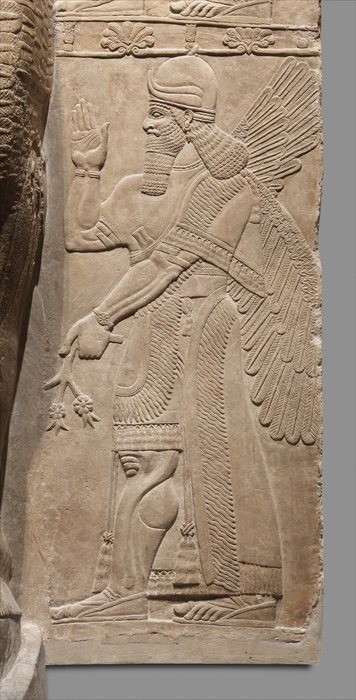
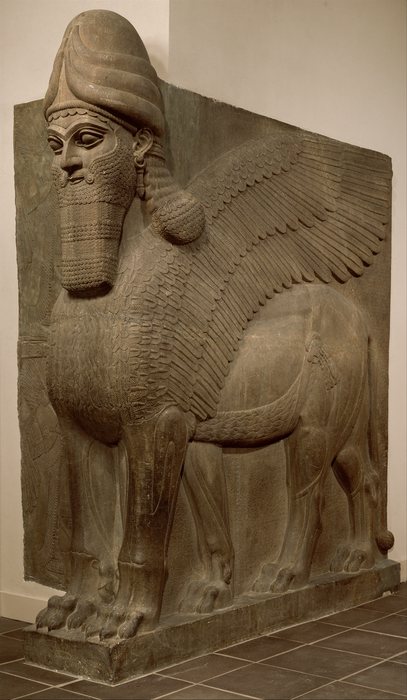
Slabs of gypsum alabaster cut for Ashurnasirpal II of Assyria at Nimrud, ancient Kalhu, between about 883 and 859 BCE, and excavated by Austen Henry Layard in the 1840s. They are the pictures that circulate as Sumerian and as evidence of visitors, and they are neither: Sumer's cities had been gone for more than a thousand years when they were carved. Layard published the first reading of the eagle-headed figure in 1849, named it Nisroch, and set a footnote under his own identification withdrawing most of it. The records here quote him on both counts, and quote the king's own inscription, which runs across the middle of the pictures and never explains them.
Pandora, 1582
This set has no description yet.
After the Ripley Scroll
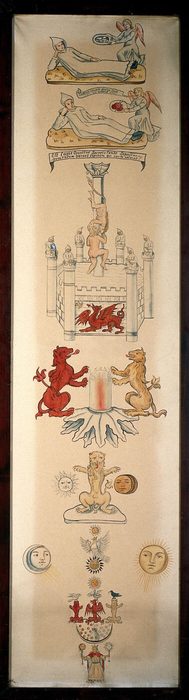
Two watercolour sheets of alchemical devices after the Ripley Scroll, the fifteenth-century English emblem roll attributed to George Ripley, from Wellcome Collection under the Public Domain Mark.
De occulta philosophia libri tres, 1533
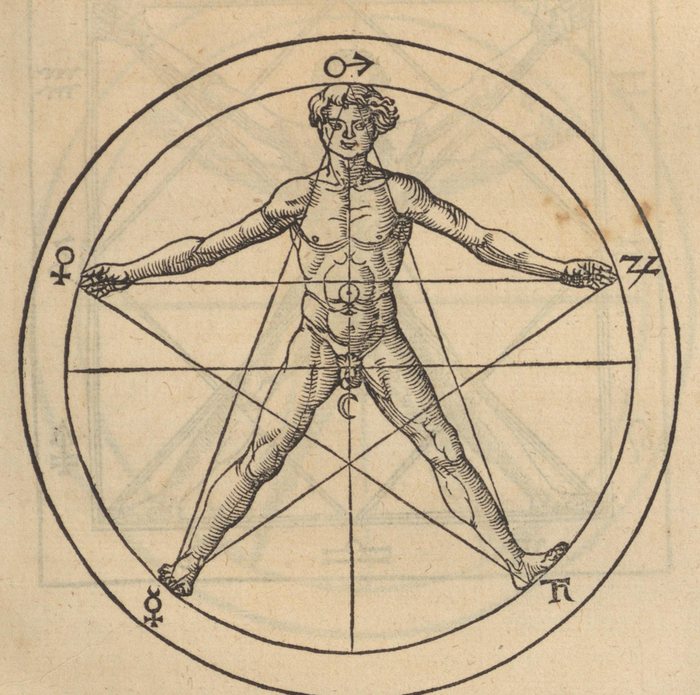
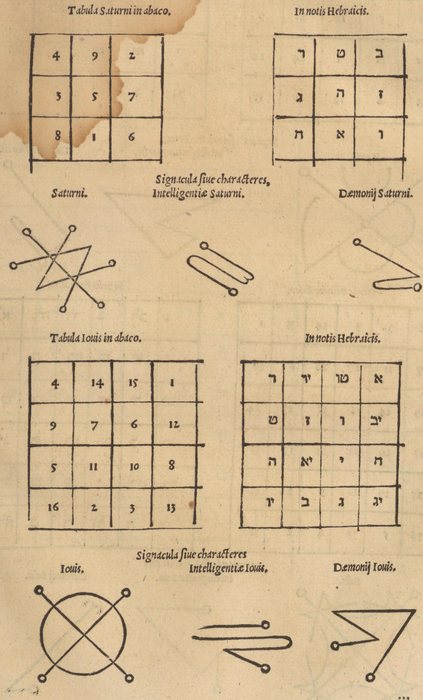
Heinrich Cornelius Agrippa's three books of occult philosophy, written by 1510 and printed complete at Cologne in 1533, the most copied handbook of Renaissance magic. Its woodcuts of the human body measured against circle, square and pentagram, in the second book's chapter on proportion, are the source of every later picture of a person inside a five-pointed star. The archive quotes Agrippa's Latin from the 1533 printing in the U.S. National Library of Medicine's copy, and the English of the 1651 translation.
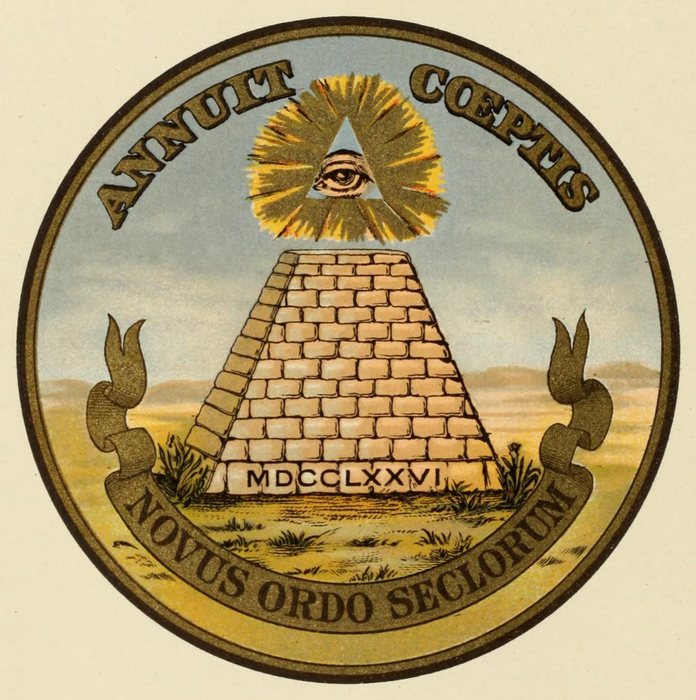
The Great Seal of the United States, 1782
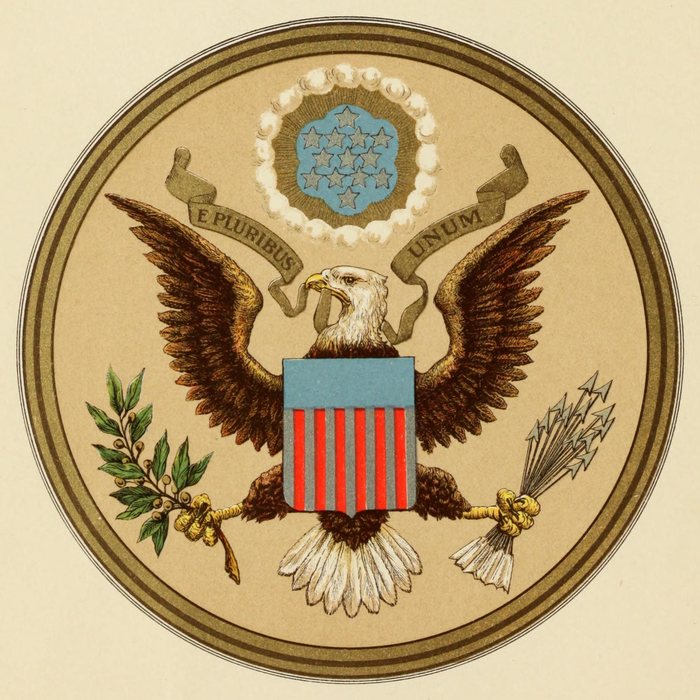
The device adopted by the Congress of the United States on 20 June 1782, on the report of Charles Thomson, Secretary of Congress. It is one of the few emblems anywhere whose explanation was adopted as law along with the picture: Thomson's Remarks and Explanation reads the escutcheon, the eagle, the olive branch and arrows, the constellation, the pyramid and the eye in turn, and says what each is for. The plates here are the Department of State's own colour renderings from its history of the seal, Washington 1909. The obverse was cut in brass in 1782 and has been in use since; no die of the reverse has ever been cut.
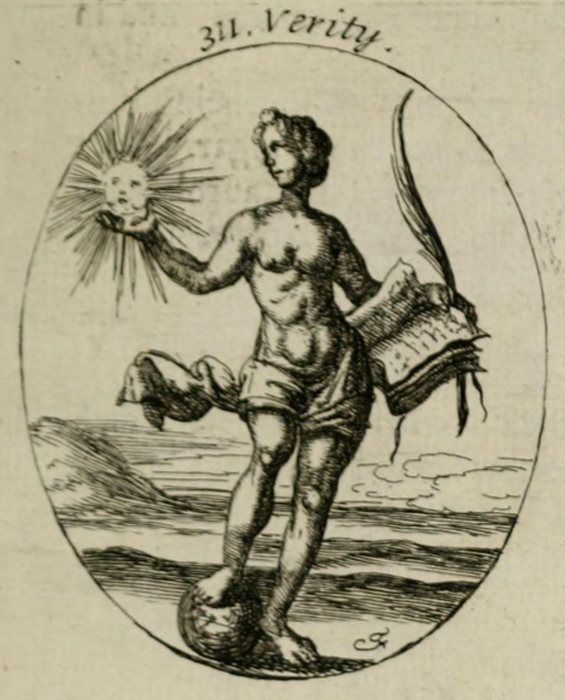
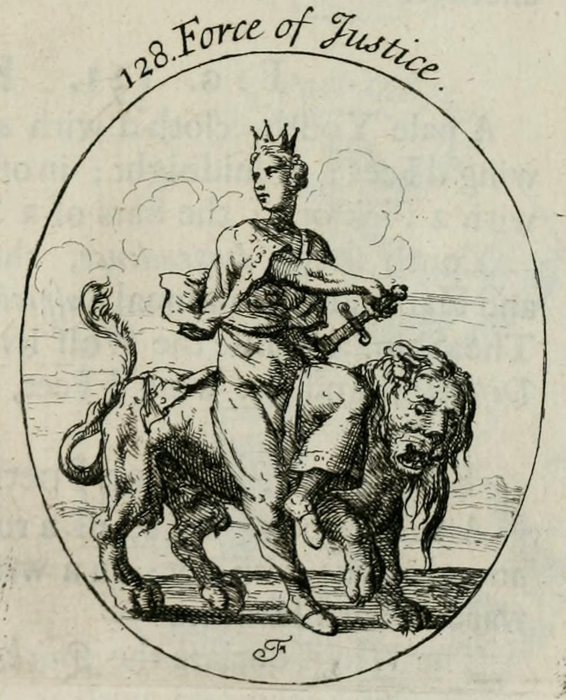
Iconologia, or Moral Emblems, 1709
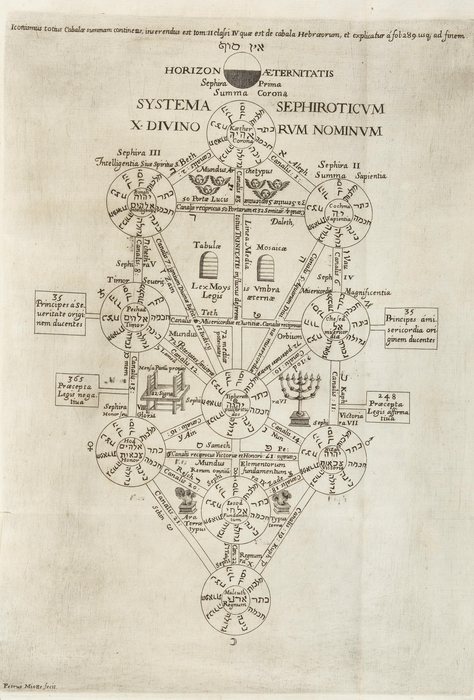
Cesare Ripa's dictionary of allegory, first published in Italian in 1593 and given here in the English edition of 1709, printed in London by Benjamin Motte with the figures engraved by Isaac Fuller at the charge of Pierce Tempest. Three hundred and twenty-six abstract ideas are drawn as human figures, four to a plate, with Ripa's own explanation of every attribute on the facing page. It is the book painters, engravers, sculptors and architects worked from for two hundred years, which is why so much allegory on public buildings can still be read: the key was printed alongside the picture.
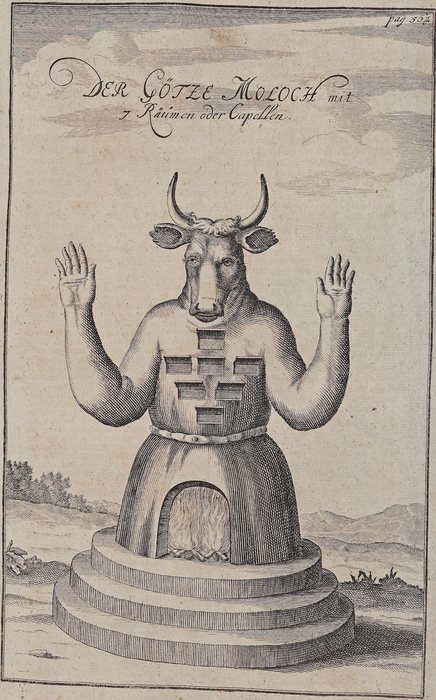
The Jewish Antiquities of Johann Lund, 1738
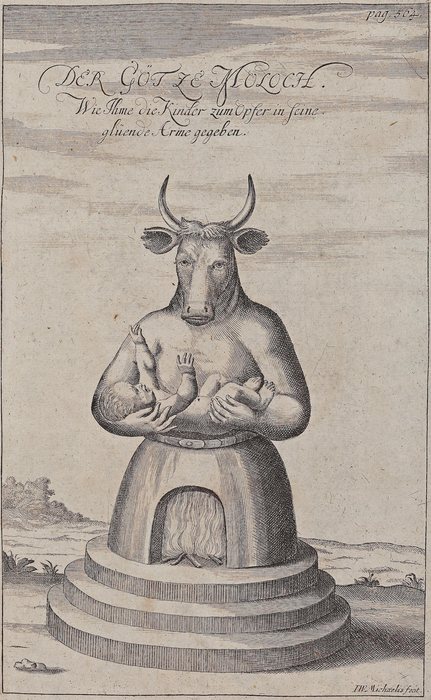
Johann Lund's Die Alten Jüdischen Heiligthümer, Gottesdienste und Gewohnheiten, printed at Hamburg by Christian Wilhelm Brand in 1738, edited from the author's manuscript by Heinrich Muhlius and Johann Christoph Wolf. Five books on the Levitical priesthood, its tabernacle, temple, vestments and daily service, illustrated with 118 engraved leaves inserted through the volume. The title page claims the figures are there to explain rather than to decorate, and the two Moloch plates prove it: Lund prints two reconstructions of the same idol on facing leaves because his sources disagree about it, credits the first and doubts it in the next sentence. The first of them is the engraving that circulates everywhere under Athanasius Kircher's name, which is a mistake Lund's own footnote is precise enough to correct.
Los Caprichos, 1799
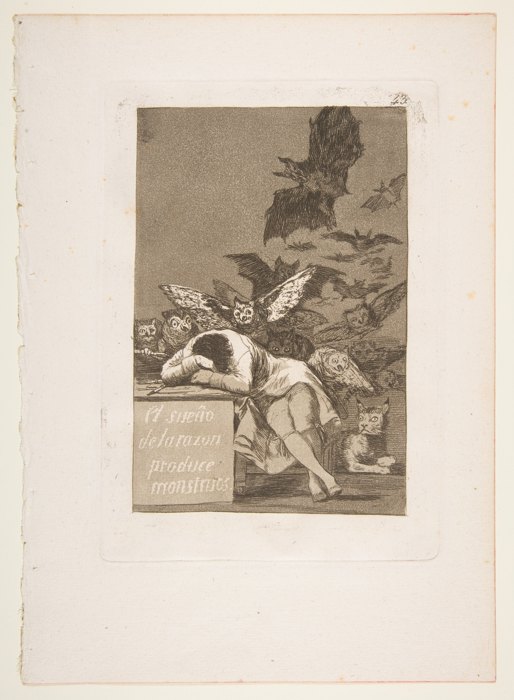
Etchings from the eighty plates Goya published in 1799 and withdrew from sale within days. The Prado holds his own manuscript captions, which is the rare case of a maker writing down what his picture means.
Dogme et Rituel de la Haute Magie, 1856
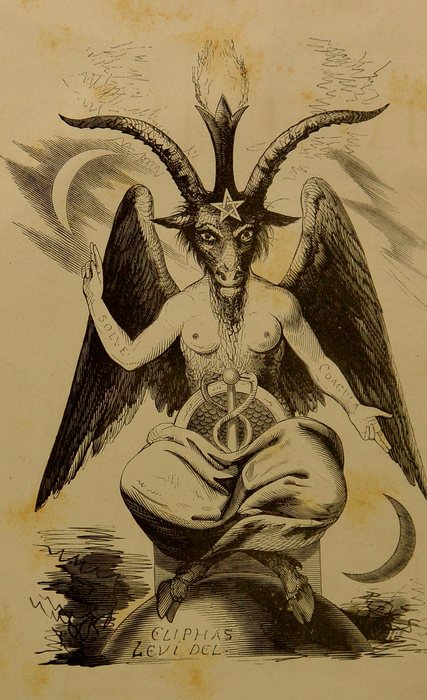
Éliphas Lévi's two volumes on magic, the Doctrine and the Ritual, published in Paris in 1855 and 1856 and reissued in a second edition in 1861, with figures drawn by the author. The Baphomet at the front of the Ritual is the most reproduced picture of a devil in the world, and Lévi's own text reads it sign by sign to show it is no devil. The archive quotes his French from the 1861 printing in the Wellcome Library copy, and Arthur Edward Waite's English translation of 1896.
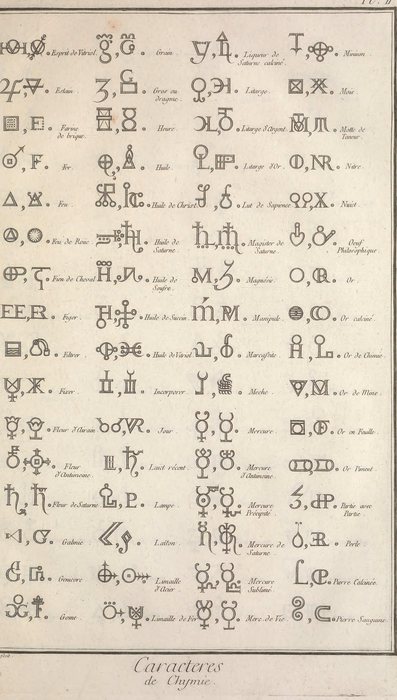
Encyclopédie, Recueil de planches, 1763
This set has no description yet.
Oedipus Aegyptiacus, 1652 to 1654
This set has no description yet.
L'atmosphère: météorologie populaire, 1888
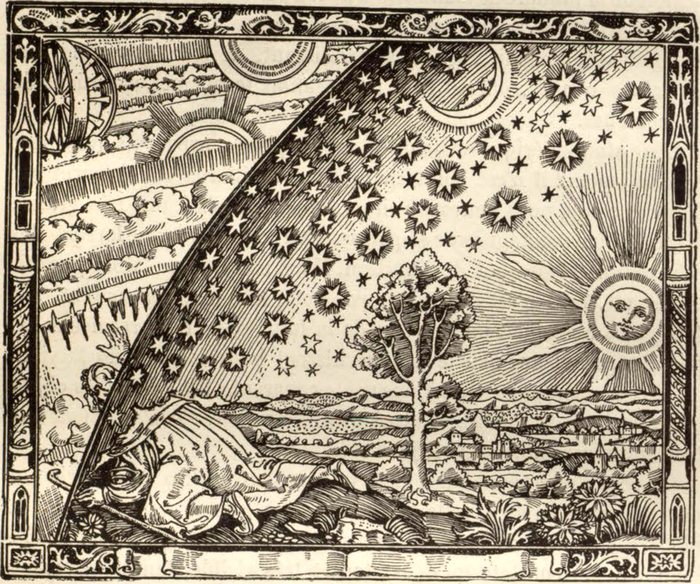
Camille Flammarion's popular meteorology, printed at Paris by Hachette in 1888: eight hundred and eight pages with three hundred and seven figures in the text, fifteen plates in chromotypography and two coloured maps. The engraving the archive holds is one of the text figures, on page 163, in the chapter on the shape of the sky. The copy read here is McGill University Library's, on the Internet Archive.
Aureum Vellus, 1598
This set has no description yet.