Sirenes
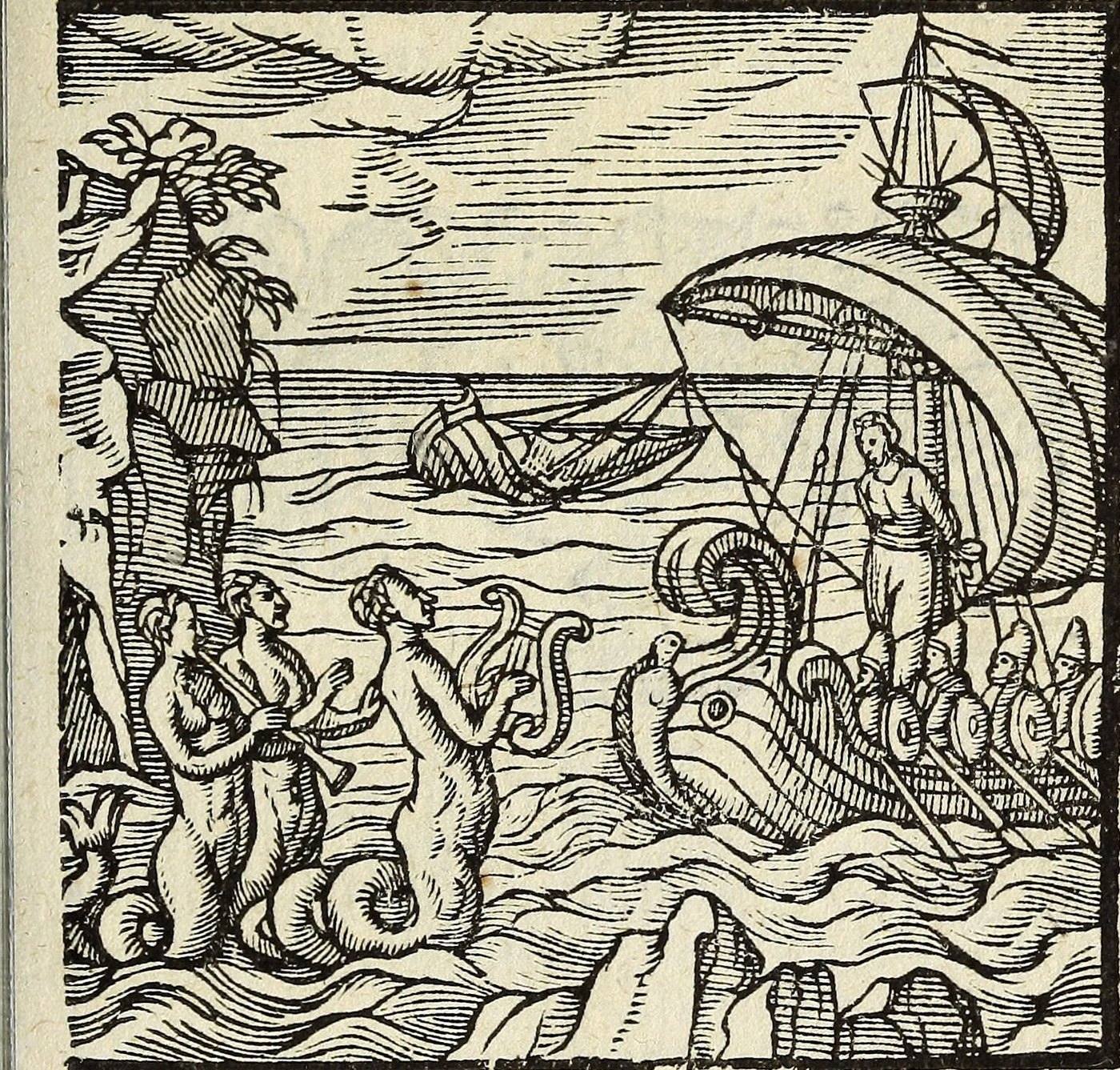
The Water as the central motif, with the Demon and the Monster in a secondary part. From Alciato's Emblemata.
What is happening
Andrea Alciato, 1648 “Sirenes.”
Andrea Alciato, 1648 “Absque alis volucres, & cruribus absque puellas,
Rostro absque & pisces, qui tamen ore canant,
Quis putat esse ullos? iungi hæc Natura negauit:
Sirenes fieri sed potuisse docent.
Illicium est mulier, quæ in piscem desinit atrum,
Plurima quòd secum monstra libido vehit.
Aspectu, verbis, animi candore trahuntur,
Parthenope, Ligia, Leucosiaque viri.
Has Musæ explumant, has atque illudit Vlysses:
Scilicet est doctis cum meretrice nihil.”
Symbolica, 2026 Alciato's epigram, put into English here: Birds without wings, and girls without legs, and fish without a snout, which nevertheless sing with their mouths. Who thinks any such things exist? Nature denied that these be joined: but the Sirens teach that it could be done. A lure is the woman who ends in a black fish, because lust carries very many monsters along with it. By sight, by words, by brightness of spirit, men are drawn: Parthenope, Ligeia and Leucosia. The Muses pluck these of their feathers, and Ulysses mocks them, which is to say that the learned man has nothing to do with a harlot.
Key · 2 motifs
Tap a motif on the picture, or a line below. Its note opens under the line, with the reading its author gave it.
- Primary motif
- Secondary motifs · 1
The picture
Three sirens drawn with fish tails, playing a lute, a flute and a lyre, and the ship with a figure at the mast. By eye
The reading
The picture read whole, in the archive's words, from the sources quoted on the marks. Read on, and the picture follows: the motif under discussion keeps its colour.
Three sirens rise out of the water at the left, each with a woman's head and torso and a coiled fish tail, and each holding an instrument: a lute, a flute and a lyre. At the right a ship under a curved sail carries a standing figure amidships and a bank of oarsmen; a sea creature breaks the surface between them, and a smaller boat lies on the water behind. An island with trees closes the left edge.
Homer never says what the Sirens look like. Greek art gave them wings and taloned feet; this block, printed in Antwerp in 1648, gives them fish tails. Alciato's epigram names all three natures in one line, birds without wings, girls without legs, fish without a snout that sing with their mouths, and asks who thinks any such creature exists. His answer is the point of the emblem: Nature denied that these things be joined, but the Sirens teach that it could be done.
The epigram is ten lines, not four. It runs over the page break, and the printer's catchword at the foot of page 139 is Illicium, the first word of page 140, so the two halves are one poem. The second half names the three sirens, Parthenope, Ligeia and Leucosia, says men are drawn by sight, by words and by brightness of spirit, and then closes on what defeats them: the Muses pluck them of their feathers, and Ulysses mocks them, because the learned man has nothing to do with a harlot. The feathers are worth noticing. The block draws fish tails, and the poem printed under it still remembers birds.
Decoded: every motif is marked, and each mark carries the reading its author gave it, quoted from the text, or says that it is observed on the picture and not read. The reading above is the archive's own, made from those sources and no others.
Where a thing is taken apart rather than destroyed. Note whether the figure is in the water, on it, or pouring it.
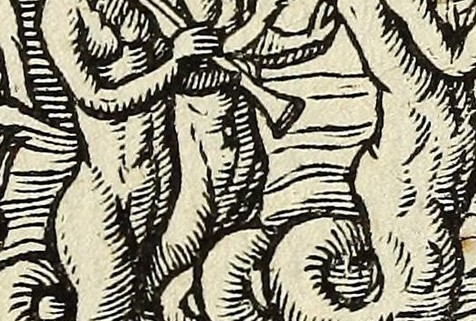
In plain words The block gives them fish tails, and the fifth line of the epigram names exactly that: a lure is the woman who ends in a black fish. Homer describes no Siren anywhere in the poem, and Greek art gave them wings and taloned feet. The fish is a choice this printing makes.
Andrea Alciato, 1648 “Illicium est mulier, quæ in piscem desinit atrum,”
Symbolica Alciato's Latin, put into English here: A lure is the woman who ends in a black fish.
Almost always a composite and almost always subordinate. Note what it is made of and whether it is bound.
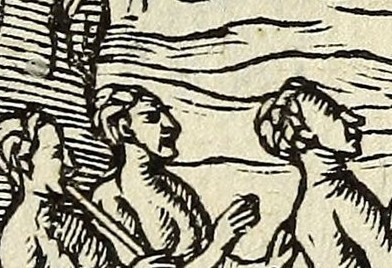
In plain words Alciato opens by listing three impossible natures at once, birds without wings, girls without legs, fish without a snout that sing with their mouths, and asks who thinks any such thing exists. His answer is the emblem: Nature denied the join, and the Sirens teach that it could be done. The poem gives them mouths and the block gives them instruments: a lute, a flute and a lyre, none of them asked for by the epigram and all read here by eye.
Andrea Alciato, 1648 “Absque alis volucres, & cruribus absque puellas, / Rostro absque & pisces, qui tamen ore canant, / Quis putat esse ullos? iungi hæc Natura negauit: / Sirenes fieri sed potuisse docent.”
Symbolica Alciato's Latin, put into English here: Birds without wings, and girls without legs, and fish without a snout, which nevertheless sing with their mouths. Who thinks any such things exist? Nature denied that these be joined: but the Sirens teach that it could be done.
Symbolica The instruments are not in the epigram. Symbolica reads them by eye.
Also carrying the Water
38 works carry it. The 5 where it is the central motif are here. The symbol.
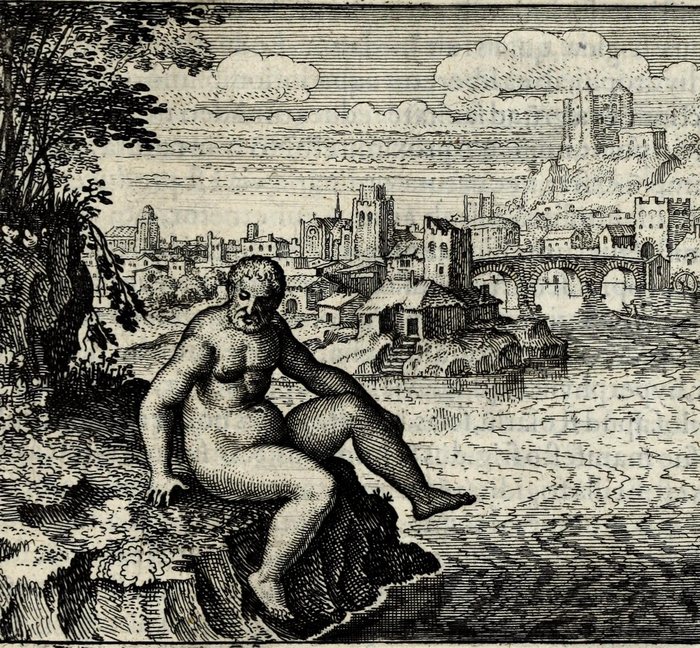 Æs Philosophorum hydropicum est, & vult lavari septies in fluvio, ut Naaman leprosus in Jordane
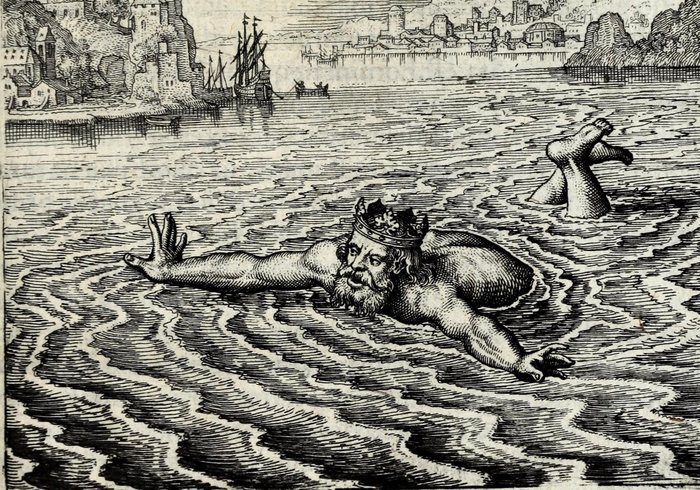 Rex natans in mari, clamans altâ voce: Qui me eripiet, ingens præmium habebit
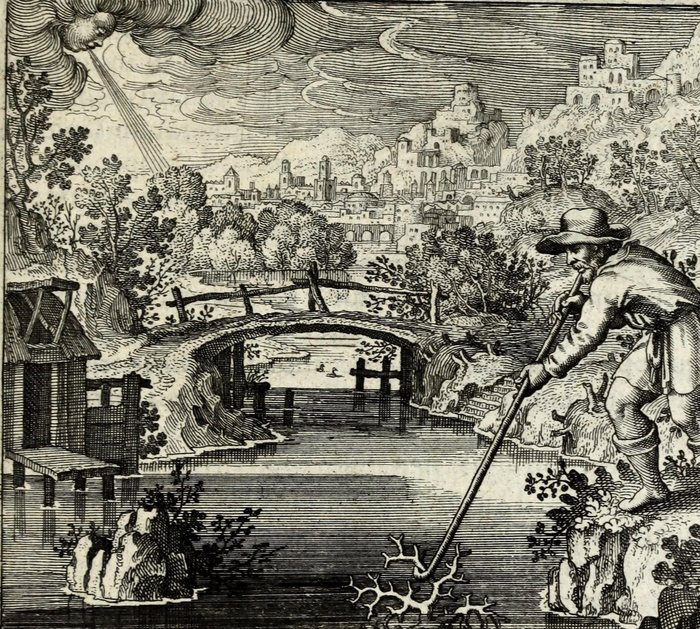 Corallus sub aquis ut crescit & aëre induratur, sic lapis
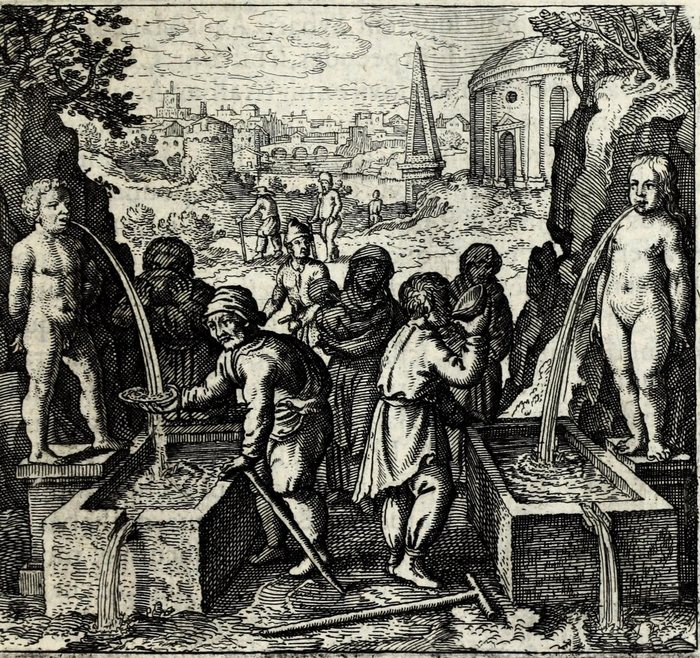 Ex duabus aquis, fac unam, & erit aqua sanctitatis
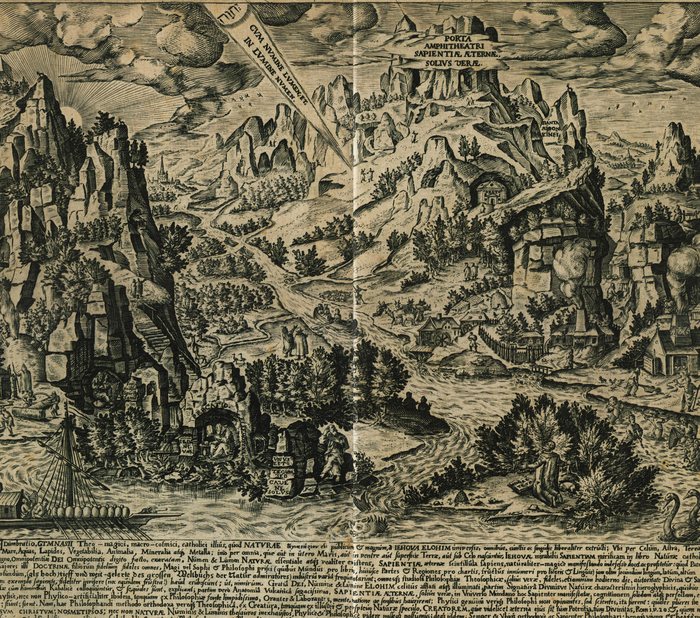 Adumbratio Gymnasii Theo-magici, macro-cosmici, catholici
Where the detail is the subject
This is in the picture without being what it is about. Below, one work that is about it.
In the same series
Record
One symbol a week, decoded.
This picture is free at full size from its source, linked above. What an address gets is the Sunday letter: one picture, one symbol marked on it, what it meant and who said so, and the master files of the decoded plates as they are verified. Leave any time.
Free, one letter a week, unsubscribe in one click. How the address is used.
Scroll or pinch to zoom · drag to move · double-tap for 1:1 · 1400 by 1337 pixel web copy; the source file is linked under Record