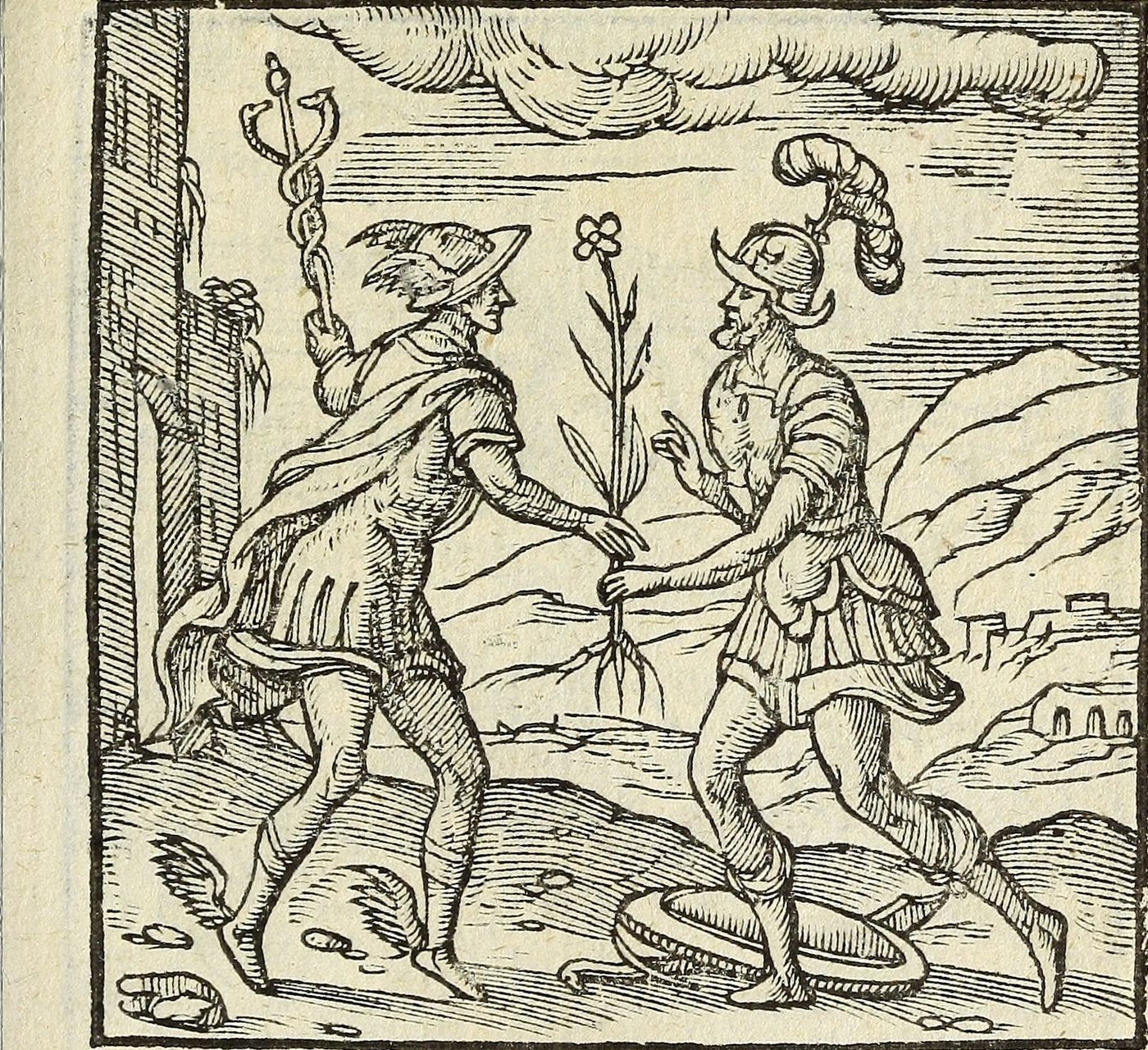
Facundia difficilis
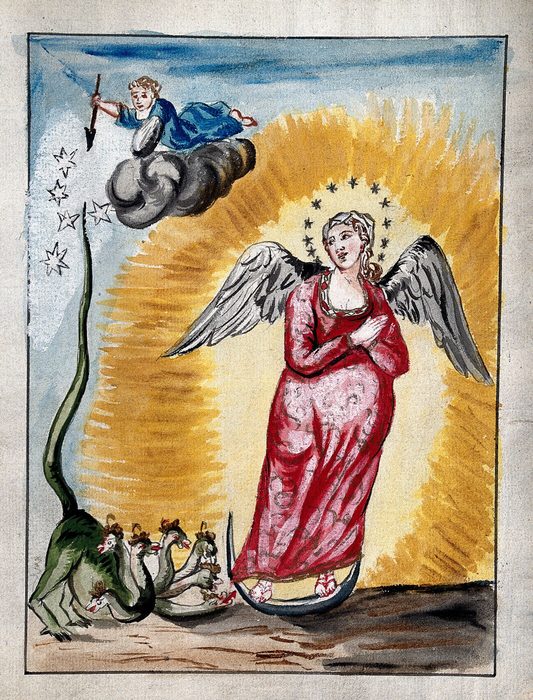
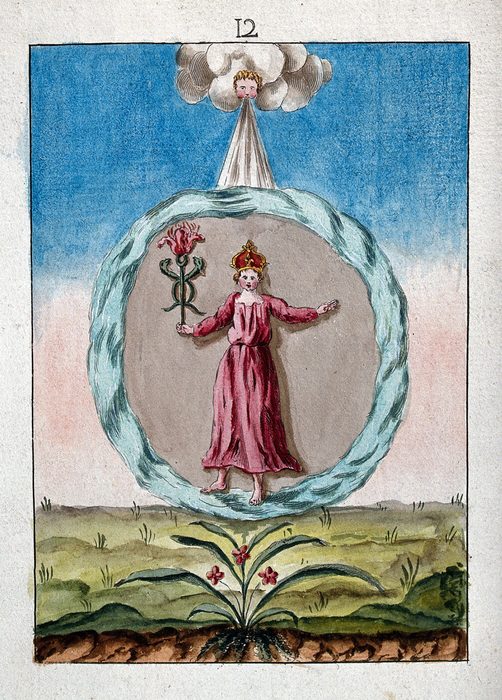
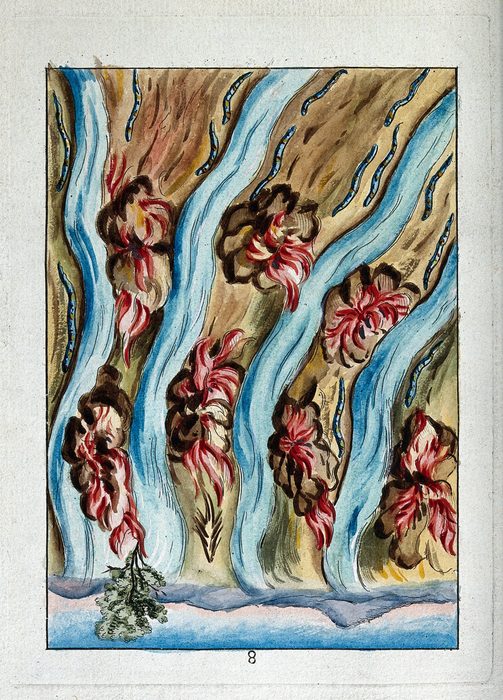
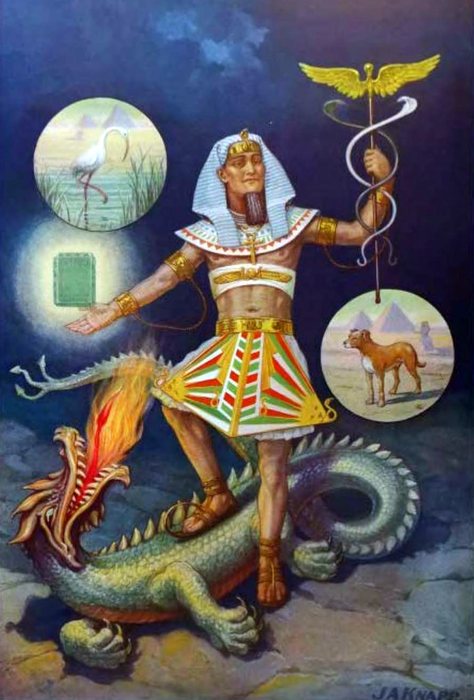
The Serpent and the Dragon as the central motif, with the Angel and the Wing, and the Hand in a secondary part. From Alciato's Emblemata.
What is happening
Andrea Alciato, 1648 “Facundia difficilis.”
Symbolica, 2026 Alciato's motto, put into English here: Eloquence is difficult.
Andrea Alciato, 1648 “Antidotum Ææa medicata in pocula Circes
Mercurium hoc Ithaco fama dedisse fuit.
Moly vocant: id vix radice euellitur atrâ,
Purpureus sed flos, lactis & instar habet.
Eloquij candor facundiaque allicit omnes:
Sed multi res est tanta laboris opus.”
Symbolica, 2026 Alciato's epigram, put into English here: The antidote to the drugged cups of Aeaean Circe, this the story says Mercury gave to the Ithacan. They call it Moly: it is pulled up only with difficulty by its black root, but its flower is purple and has the likeness of milk. The brightness of eloquence and fluency attracts everyone, but a thing so great is the work of much labour.
Key · 3 motifs
Tap a motif on the picture, or a line below. Its note opens under the line, with the reading its author gave it.
- Primary motif
- Secondary motifs · 2
The picture
The caduceus with its two snakes, the winged cap and heels, and the two hands meeting over the plant. By eye
The reading
The picture read whole, in the archive's words, from the sources quoted on the marks. Read on, and the picture follows: the motif under discussion keeps its colour.
Two figures face each other across a small flowering plant that grows between them, its dark root drawn bare at the foot. At the left Mercury, in a winged cap and winged heels, holds up a caduceus with two snakes twined at its head and reaches down to the plant with his other hand. At the right a soldier in a plumed helmet and a short armoured skirt bends to take it. A wall stands at the left edge and a walled town sits in the distance at the right.
This is the herb Hermes gives Odysseus against Circe, and Alciato spends the emblem on what it is for. He describes it accurately first, hard to pull up by its black root, a purple flower with the likeness of milk, and then gives it its meaning: the brightness of eloquence and fluency attracts everyone, but a thing that great is the work of much labour. The antidote to enchantment in this book is not a charm. It is a skill, and the emblem says plainly that it is difficult.
Decoded: every motif is marked, and each mark carries the reading its author gave it, quoted from the text, or says that it is observed on the picture and not read. The reading above is the archive's own, made from those sources and no others.
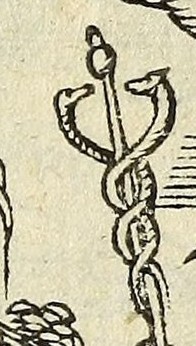
A single creature doing two opposite jobs. Note whether it is bound, killed, or eating itself.
In plain words The epigram names Mercury and says nothing about how to recognise him. The caduceus is how the block answers that, and it is read here by eye.
Andrea Alciato, 1648 “Antidotum Ææa medicata in pocula Circes / Mercurium hoc Ithaco fama dedisse fuit.”
Symbolica The caduceus is not described in the epigram. Symbolica reads it on the block and says so.
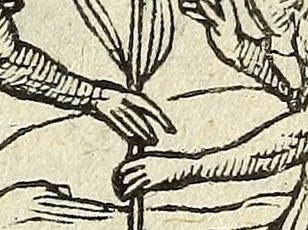
The hand as a sign in itself: what it holds, where it points, which fingers are raised. On the Hand of the Mysteries every finger carries a sign of its own.
In plain words The epigram makes the handing over the whole event: the story says Mercury gave this to the Ithacan. The block draws the moment itself, with the herb still in the ground between the two of them and neither man yet holding it alone.
Andrea Alciato, 1648 “Antidotum Ææa medicata in pocula Circes / Mercurium hoc Ithaco fama dedisse fuit.”
Symbolica Alciato's Latin, put into English here: The antidote to the drugged cups of Aeaean Circe, this the story says Mercury gave to the Ithacan.
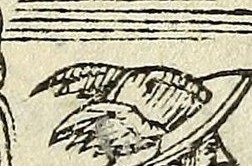
The mark of an errand rather than a nature. Note whether the wings are open, folded, or given to the figure by someone else.
In plain words The attribute the cutter uses twice, at the top of the figure and at the bottom, to name the man the epigram names. Together with the caduceus it is the whole of how the block says which of the two men is the god. Read by eye: the epigram describes neither wing.
Andrea Alciato, 1648 “Antidotum Ææa medicata in pocula Circes / Mercurium hoc Ithaco fama dedisse fuit.”
Symbolica The winged cap is not described in the epigram. Symbolica reads it on the block and says so.
Also carrying the Serpent and the Dragon
30 works carry it. The 6 where it is the central motif are here. The symbol.
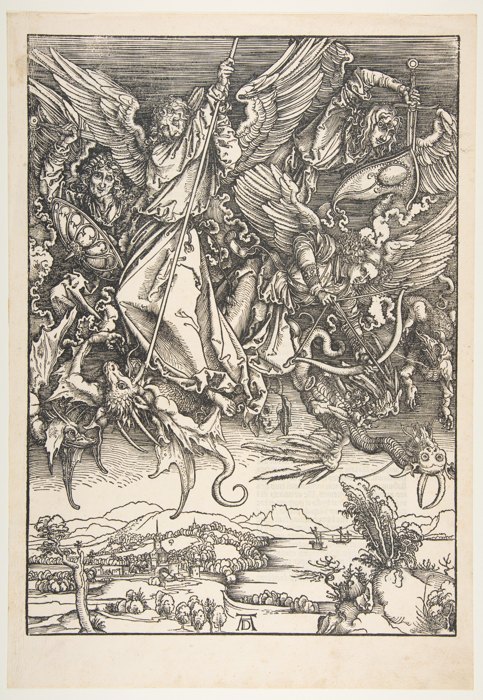
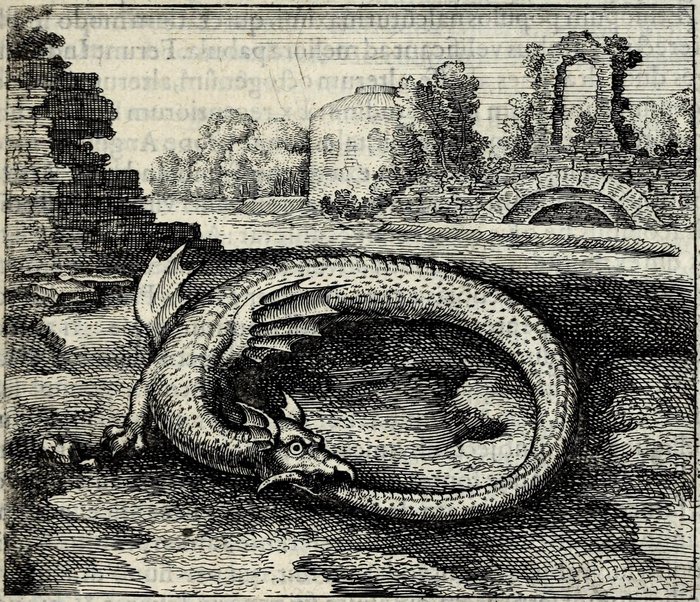
Where the detail is the subject
the Angel and the Wing · the Hand
Each of these is in the picture without being what it is about. Below, one work that is about each.
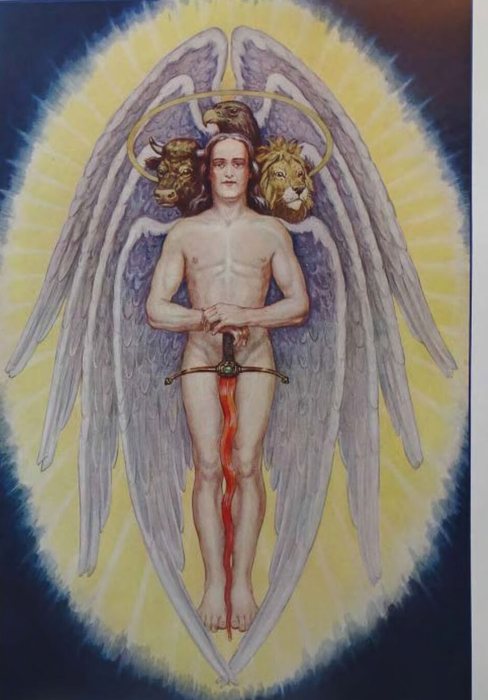
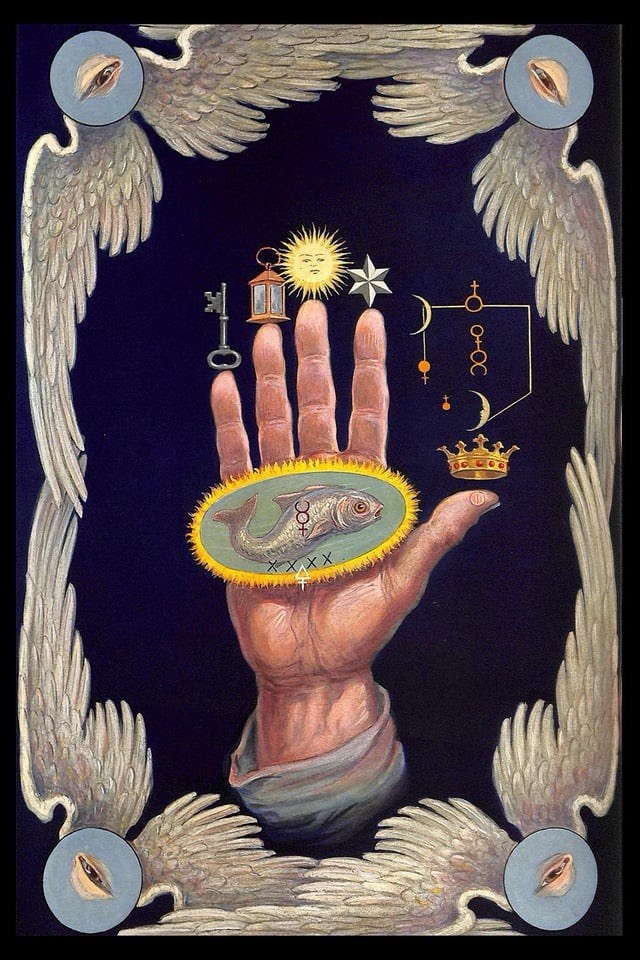
In the same series
Record
One symbol a week, decoded.
This picture is free at full size from its source, linked above. What an address gets is the Sunday letter: one picture, one symbol marked on it, what it meant and who said so, and the master files of the decoded plates as they are verified. Leave any time.
Free, one letter a week, unsubscribe in one click. How the address is used.
Scroll or pinch to zoom · drag to move · double-tap for 1:1 · 1400 by 1280 pixel web copy; the source file is linked under Record