The Angel and the Wing
wings, the angel
The mark of an errand rather than a nature. Note whether the wings are open, folded, or given to the figure by someone else.
Forty-two works here carry a wing, and they do not agree about what a wing is.
In the Apocalypse a wing is issued rather than owned. Of the woman driven into the desert the text says “And there were given to the woman two wings of a great eagle, that she might fly into the desert”, and the passive voice is the whole of it. The wings arrive from outside, for one journey, and the sentence never says she keeps them. The coloured etching of 1772 by Molinier, after the figures attributed to Flamel, sets them at her shoulders and nothing else on the sheet accounts for them.
Where a wing does belong to the figure it marks an office rather than a nature. Michael has wings because he is fighting: “Michael and his angels fought with the dragon”. Blake's angel of the tenth chapter has them because he has been sent. Waite, writing about the angel Pamela Colman Smith drew for Temperance in 1909, refuses to fix what the figure even is: “I speak of him in the masculine sense, but the figure is neither male nor female.” The wing is what the messenger carries, not what the messenger is.
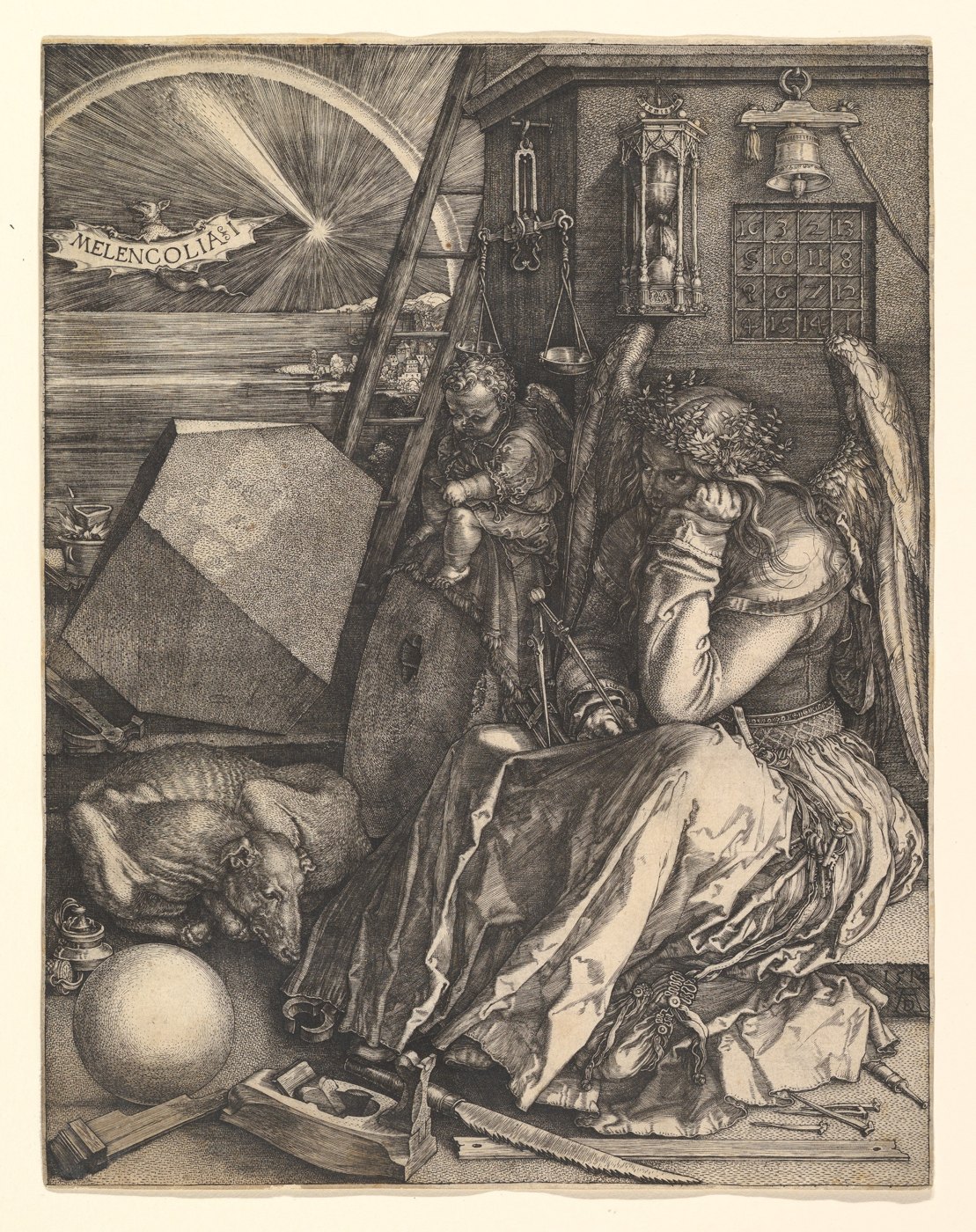
Then there is the case where the wing does not work. Melencolia I, cut by Dürer in 1514, gives its seated figure a pair and she does not use them. Conway's reading is the one the archive holds: “The great genius with her mighty wings sits there, wrapt in thought.” A folded wing is a capacity not taken up, and that is most of what the print is arguing.
Two more pairs in the archive are equipment rather than anatomy. The angel on the sheet after the figures attributed to Flamel arrives with his tools in his fists, and the chapter hands them to him by name: “And I saw an angel coming down from heaven, having the key of the bottomless pit and a great chain in his hand.” He is winged because he has been sent, and what he was sent with is what he is holding. Knapp's Cherub of Ezekiel of 1928 goes the other way and lets the wings take the whole plate: they rise over the figure's head, fall past his feet and fill the flame-shaped light he stands in. The note Hall leaves is about Ezekiel's creatures rather than about this painting of them, “each having four heads, four wings, and brazen hoofs like those of a calf”, so one man's body here carries the wings of a whole vision and the caption never says why.
One thing is visible and unexplained. Twice Dürer put angels into scenes whose text has none, over the horsemen of the sixth chapter and above the woman of the twelfth. Nobody in the archive accounts for that, and both records say so rather than guessing.
Contested
Conway is a scholar reading the prints long afterwards, not Dürer explaining himself, and Melencolia I carries no statement of its own beyond the banner. Several of the wings here are marked as observed and left unread, and the rest of the winged figures on the wall are tagged by eye. Hall's caption for the Cherub of Ezekiel is a transcription that has not been checked against a printed folio.
Sources
- The Apocalypse of Saint John, Douay Rheims, Challoner revision: Quoted from the Challoner revision, the English text the archive uses for the Apocalypse throughout.
- William Martin Conway, Literary Remains of Albrecht Durer: Conway's translations and commentary. A nineteenth-century scholar reading the prints, not Durer explaining himself.
- Arthur Edward Waite, The Pictorial Key to the Tarot: Waite commissioned the 1909 designs and wrote the key to them, so his account is the closest thing the deck has to an author's statement.
- Manly P. Hall, The Secret Teachings of All Ages: Hall's text and plate captions, 1928. Transcribed here, not yet read against a printed folio.
On the same plate
Where it appears · 42
42 works in the archive carry the Angel and the Wing. First the 28 where it has been read, with the Angel and the Wing itself picked out.
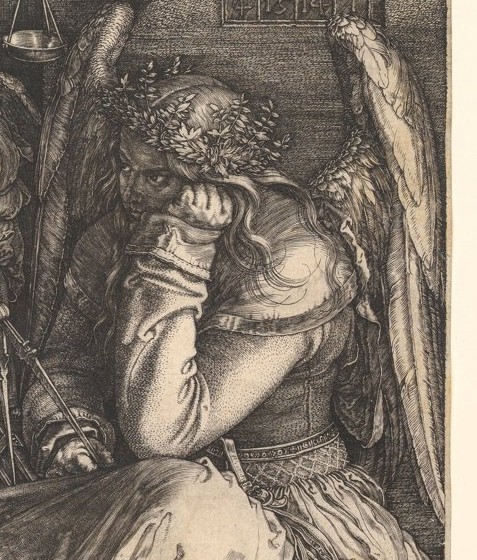
Melencolia I
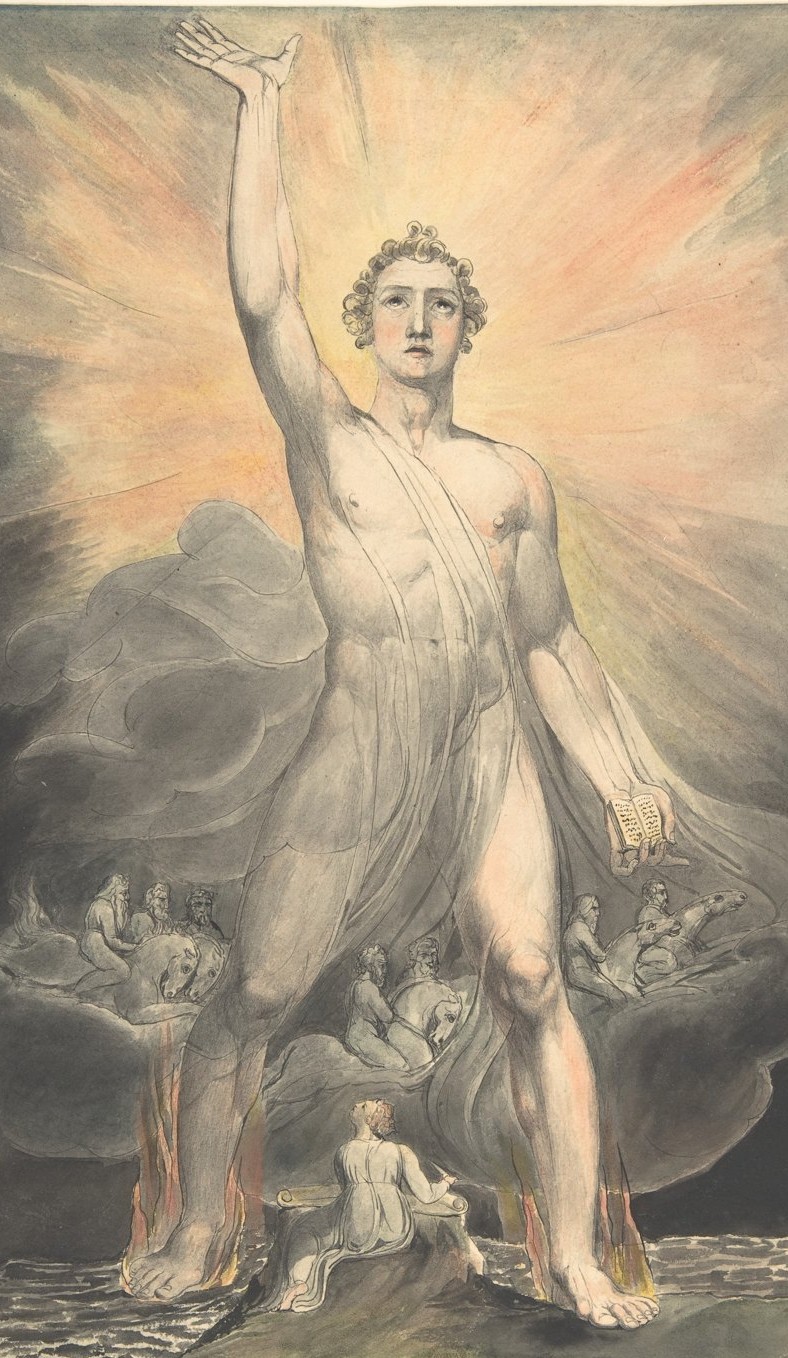
Angel of the Revelation (Book of Revelation, chapter 10)
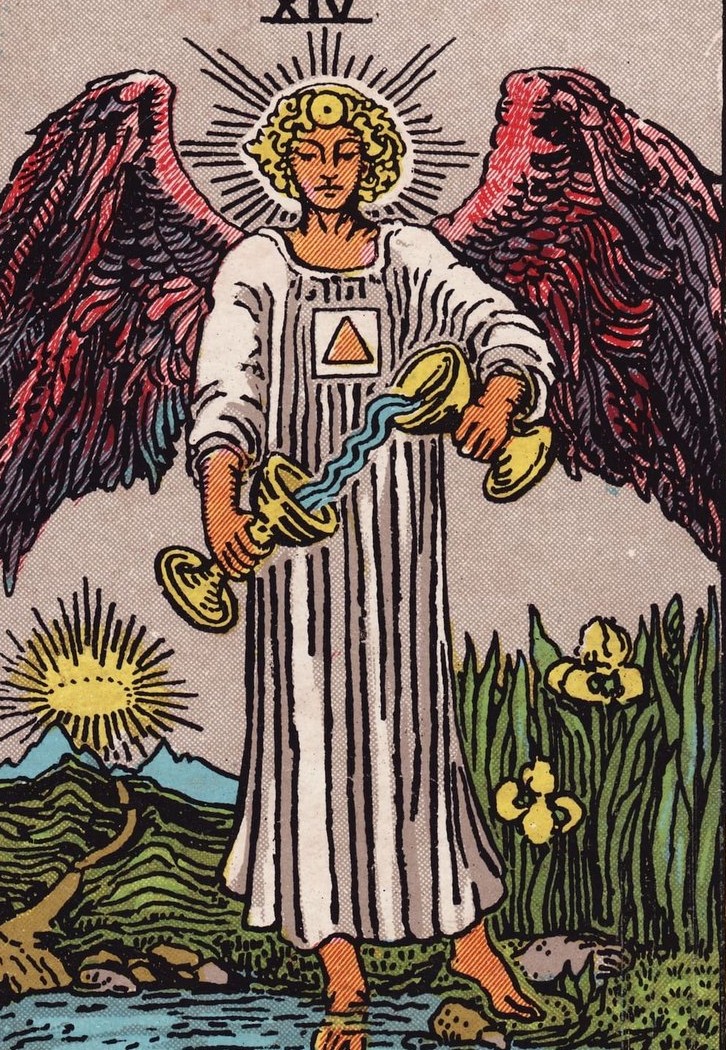
Temperance (XIV)
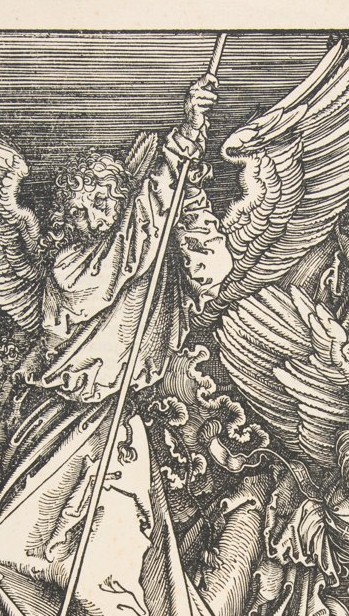
Saint Michael Fighting the Dragon
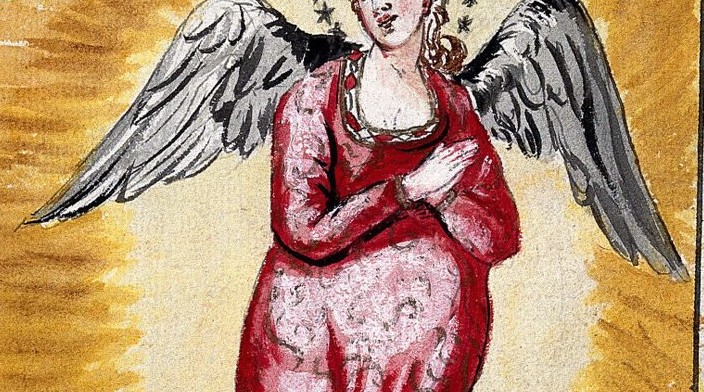
The Virgin with a Dragon at Her Feet
Baphomet
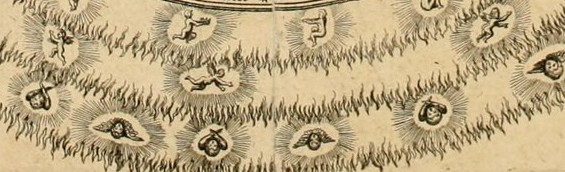
Integrae Naturae Speculum Artisque Imago
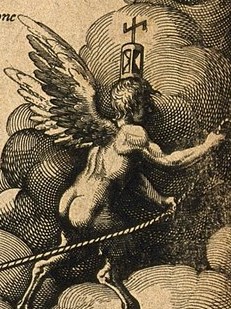
Man the Microcosm, the title page of Utriusque Cosmi Historia
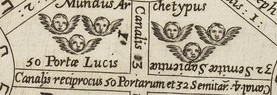
Systema Sephiroticum, the Tree of the Sephiroth
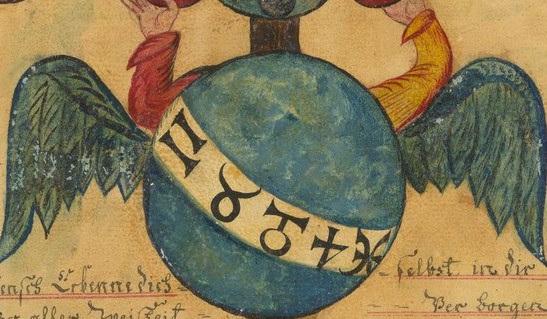
The Tree of the Knowledge of Good and Evil, Microcosma
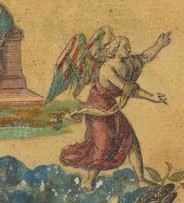
Der Baum des Lebens, the Tree of Life
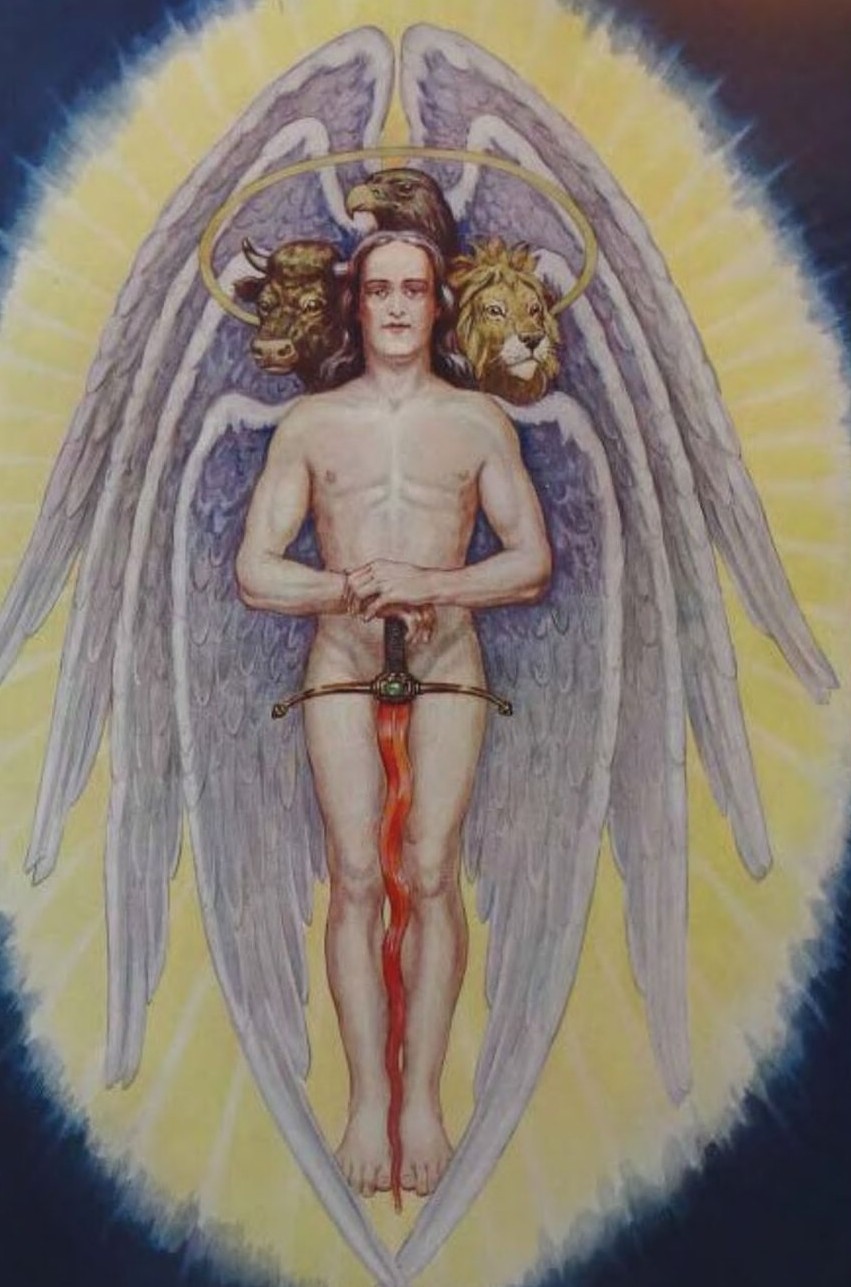
The Cherub of Ezekiel
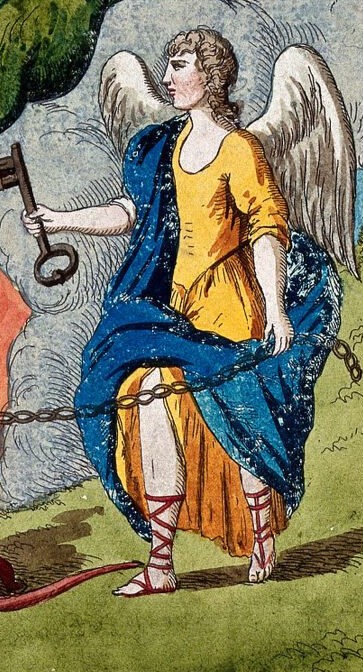
The King with Three Crowns and the Seven-Headed Hydra
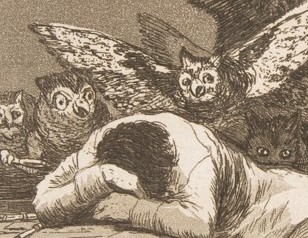
The Sleep of Reason Produces Monsters
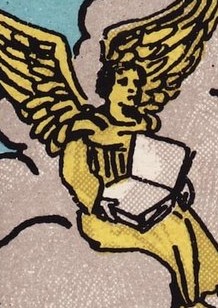
Wheel of Fortune (X)
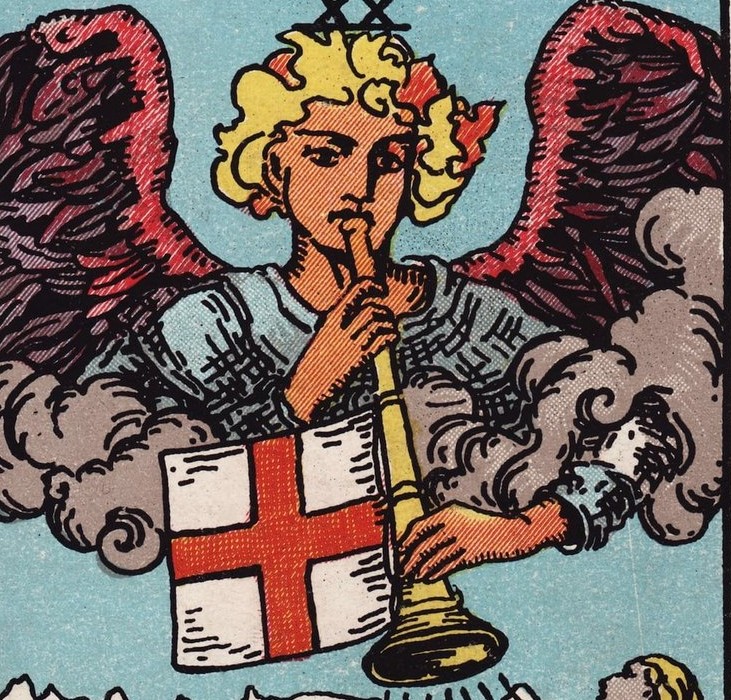
Judgement (XX)
The World (XXI)
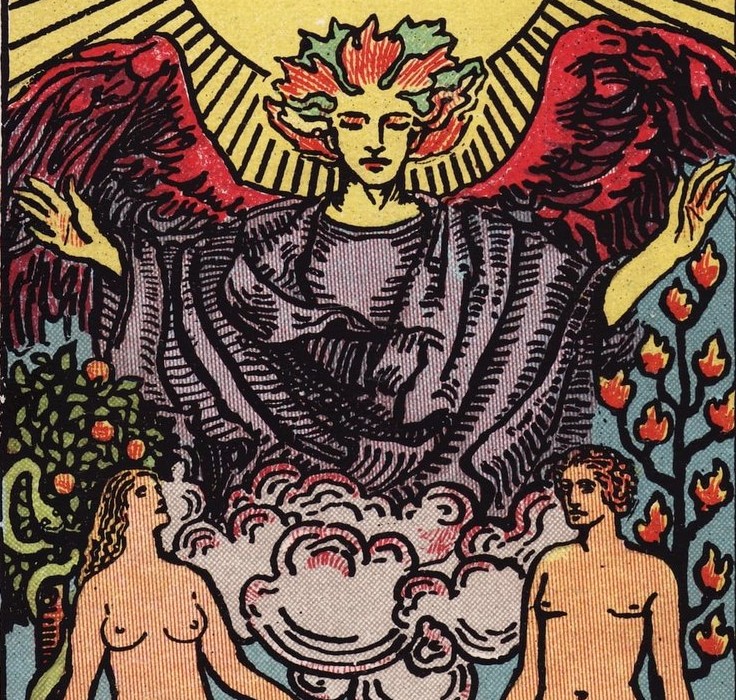
The Lovers (VI)
The Devil (XV)
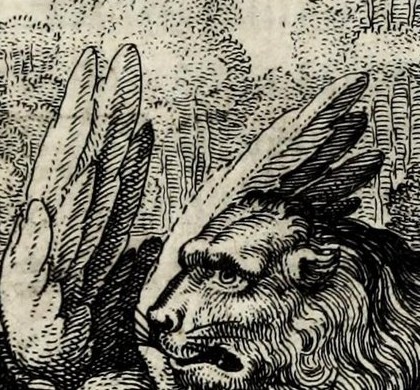
Hic leo, quas plumas non habet, alter habet
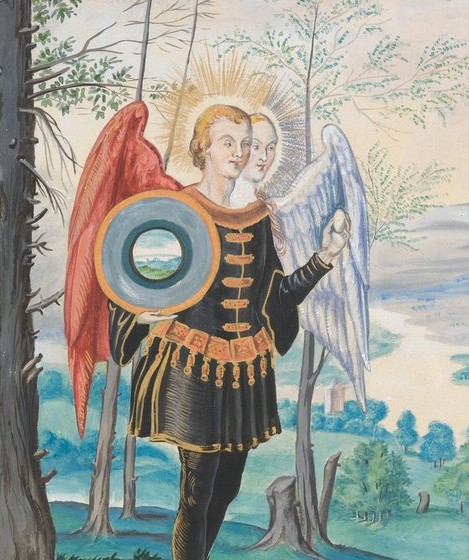
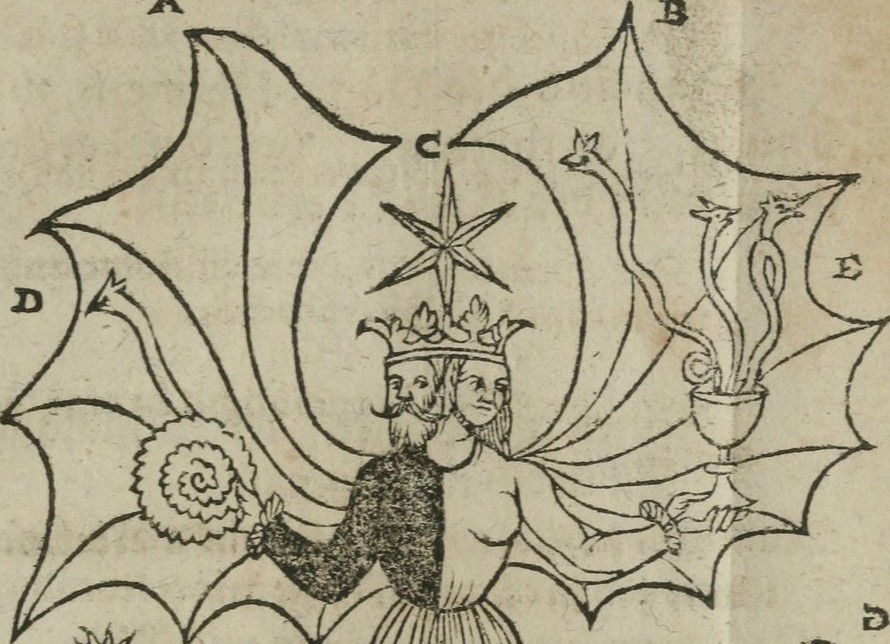
The Hermetic Androgyne
Facundia difficilis
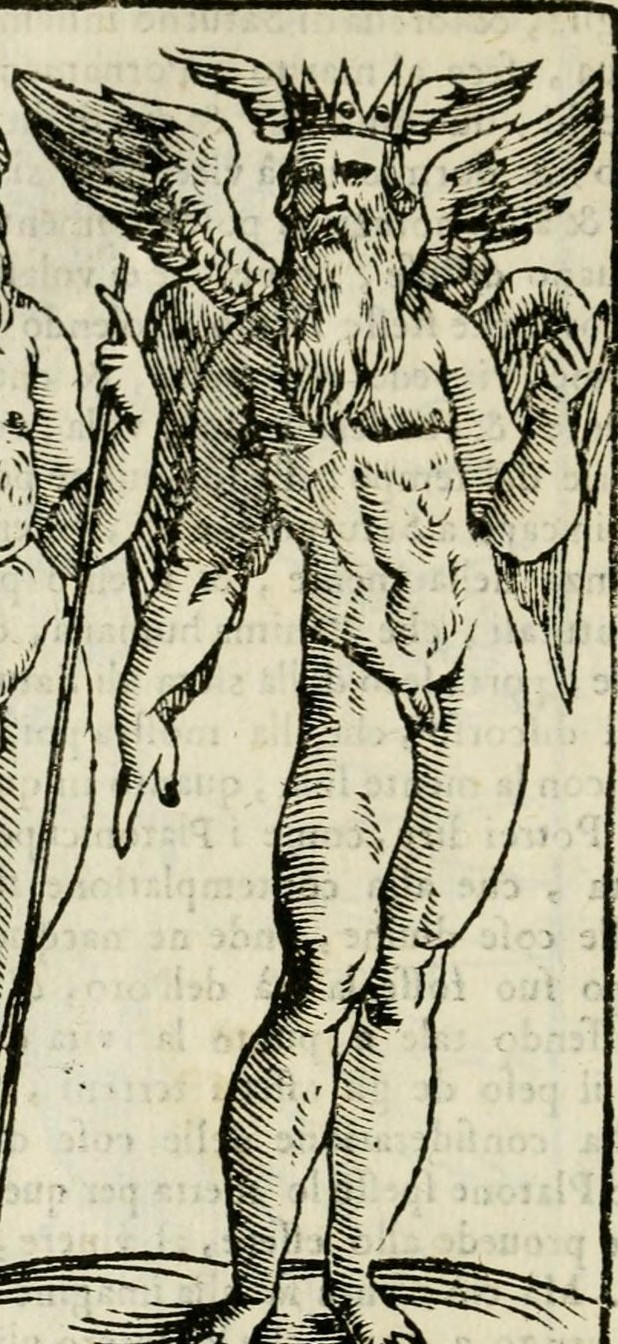
Imagine di Saturno, & del Tempo, che co' piedi legati di fil di lana
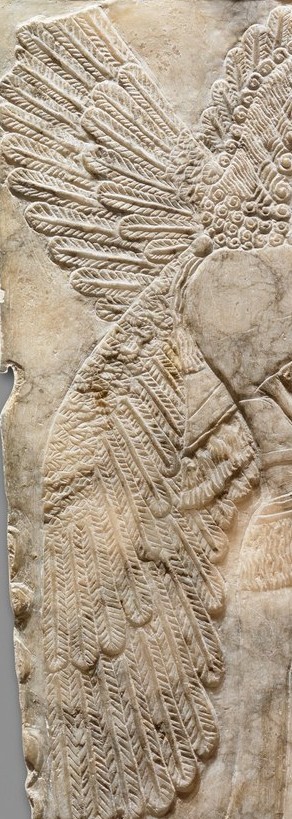
Eagle-headed figure with the bucket and the cone
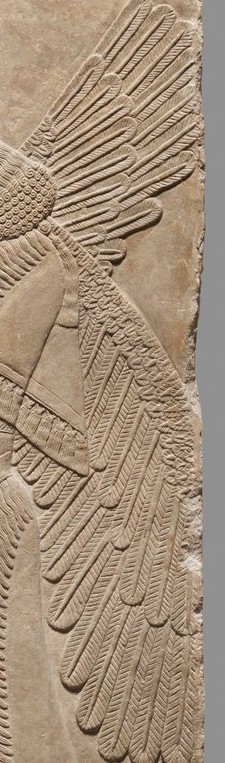
Winged figure with the rosette branch
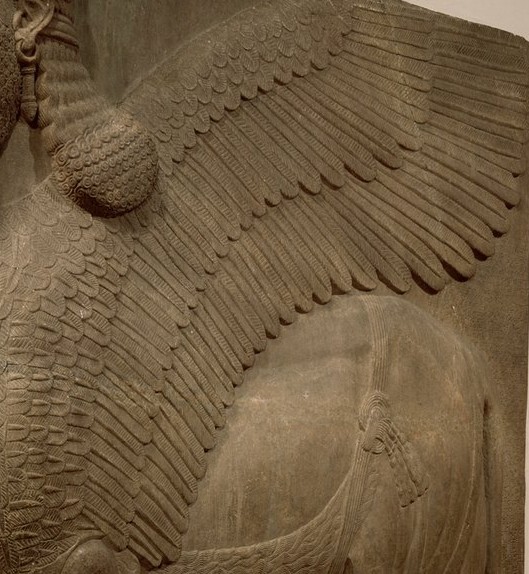
Human-headed winged lion
The tree of the sun and the tree of the moon
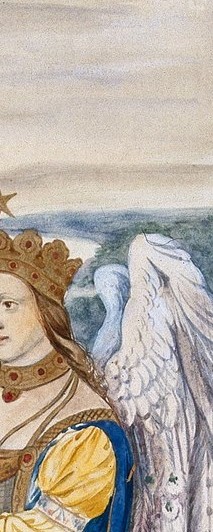
The winged queen holds out a robe to the black man
As the subject · 2
Works filed under the Angel and the Wing as their central motif, not yet read symbol by symbol.
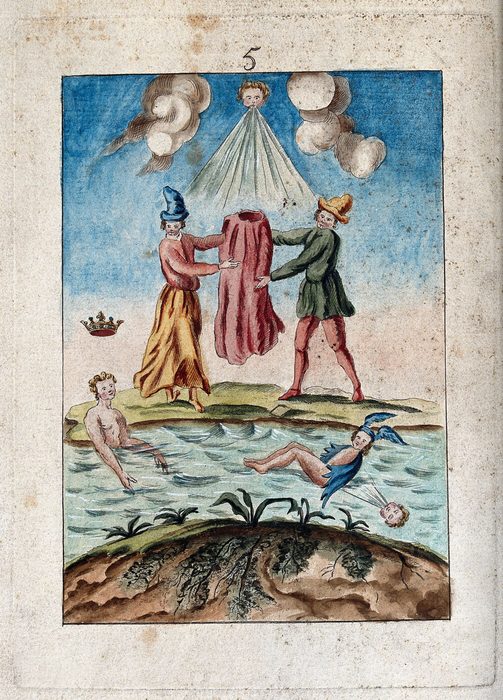 Two Peasants Hold a Red Robe, Mercury Rests on the Water Below
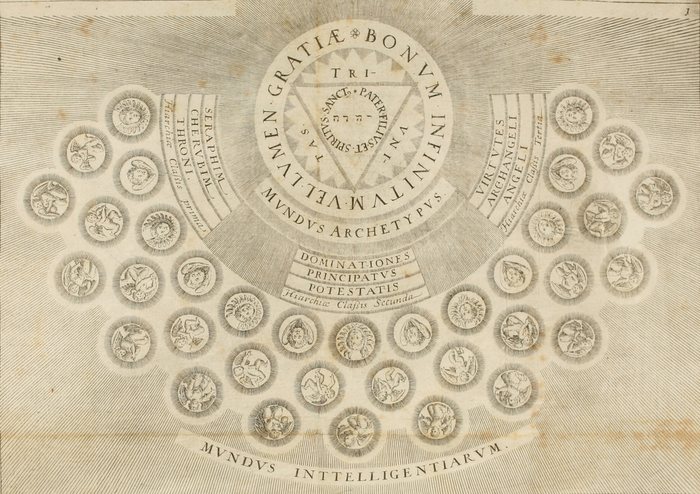 The archetypal world and the nine orders of angels
As a detail in 12 more
In these the Angel and the Wing is somewhere in the picture, tagged by eye, and nobody has read it yet. When one of them is read, it goes out on a Sunday.
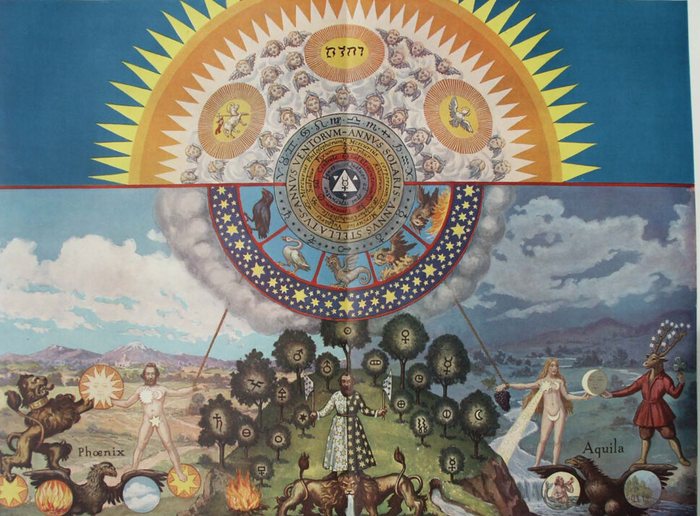 Grand Rosicrucian Alchemical Formula
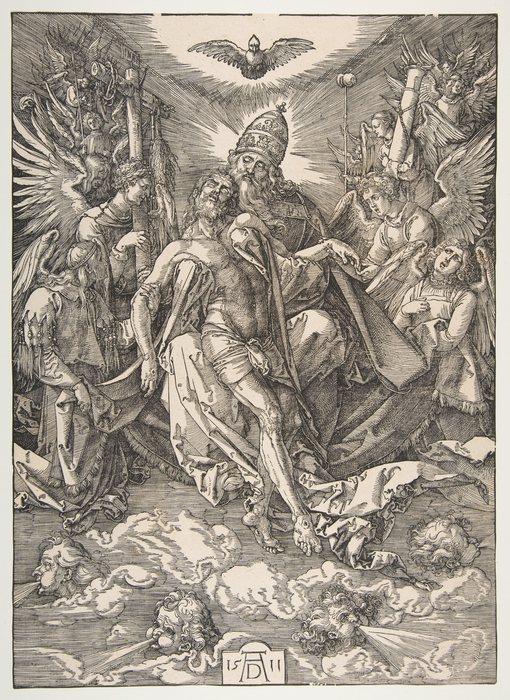 The Holy Trinity
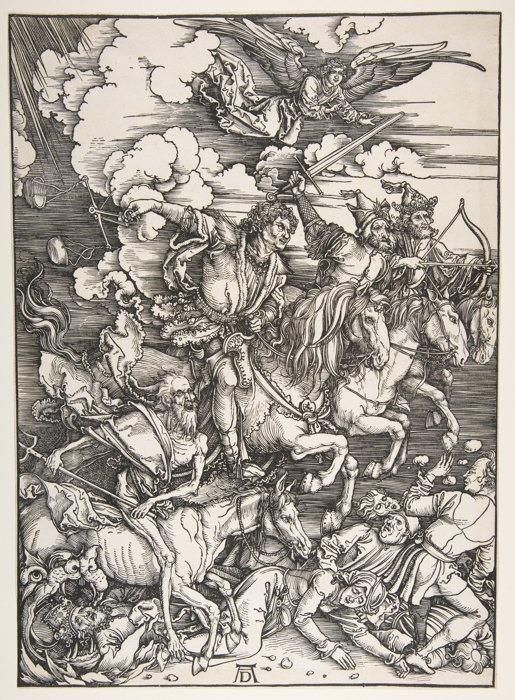 The Four Horsemen
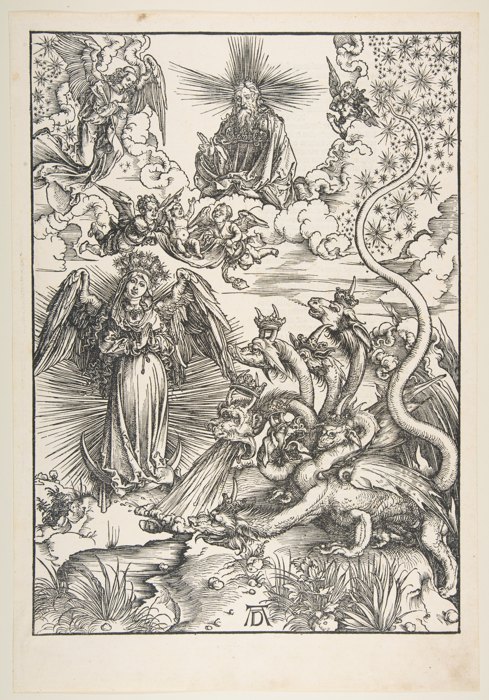 The Apocalyptic Woman
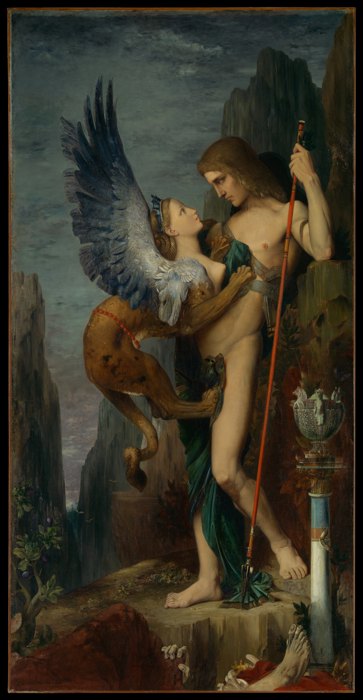 Oedipus and the Sphinx
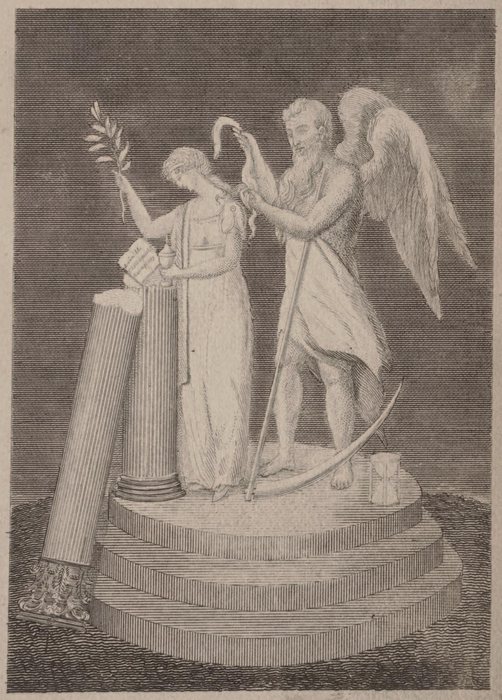 The Weeping Virgin, the Broken Column and Time
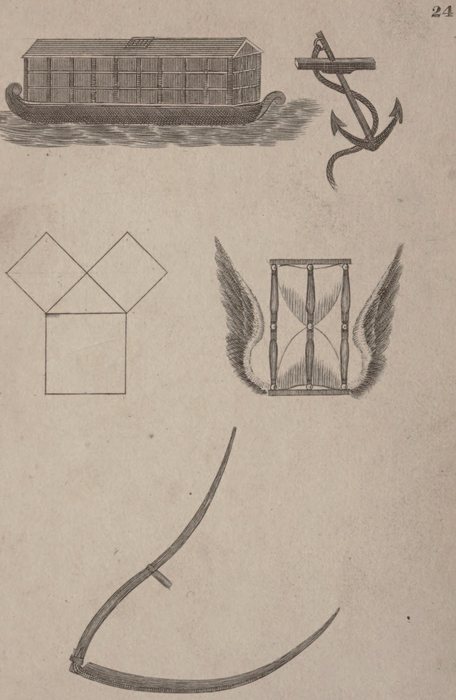 The Anchor and the Ark, the Forty-seventh Problem, the Hourglass and the Scythe
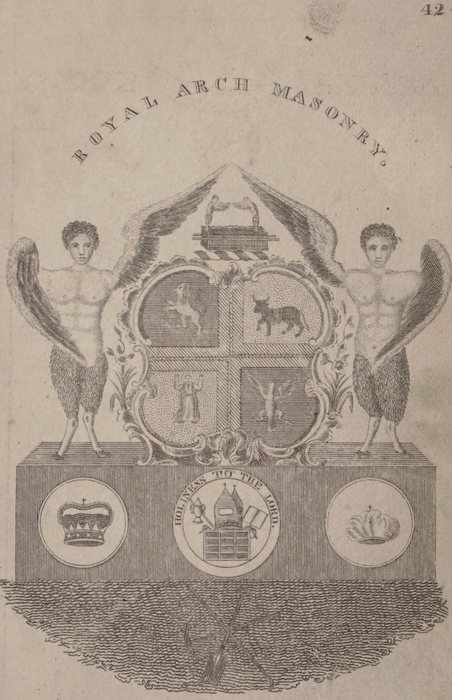 The Arms of Royal Arch Masonry
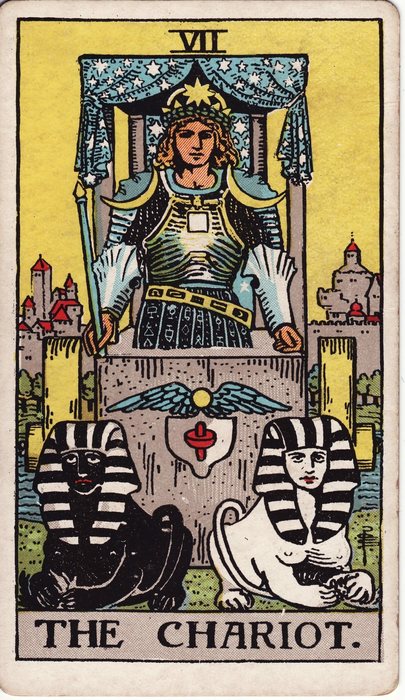 The Chariot (VII)
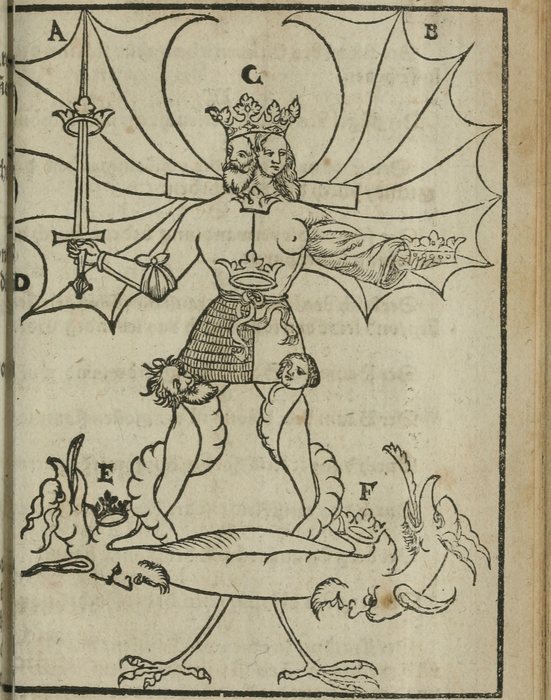 The sword, the two crowns and the dragon
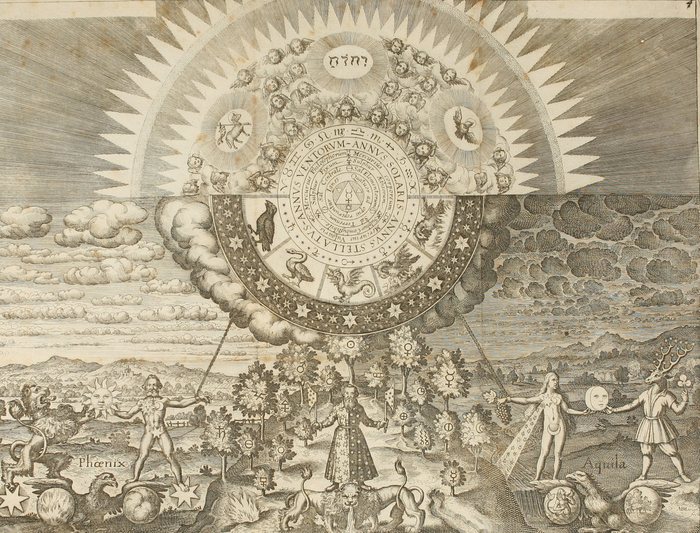 The operation of the sun, with the Emerald Tablet under it
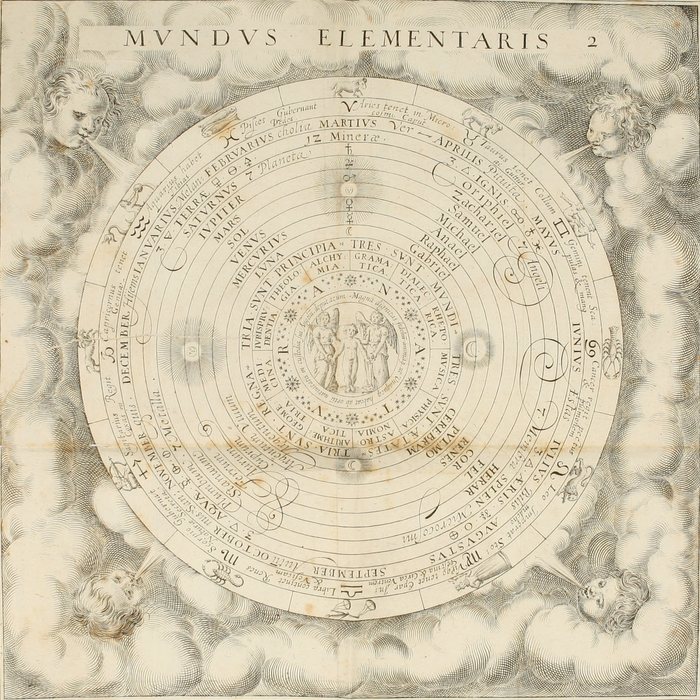 Mundus Elementaris, the world under the moon as a wheel