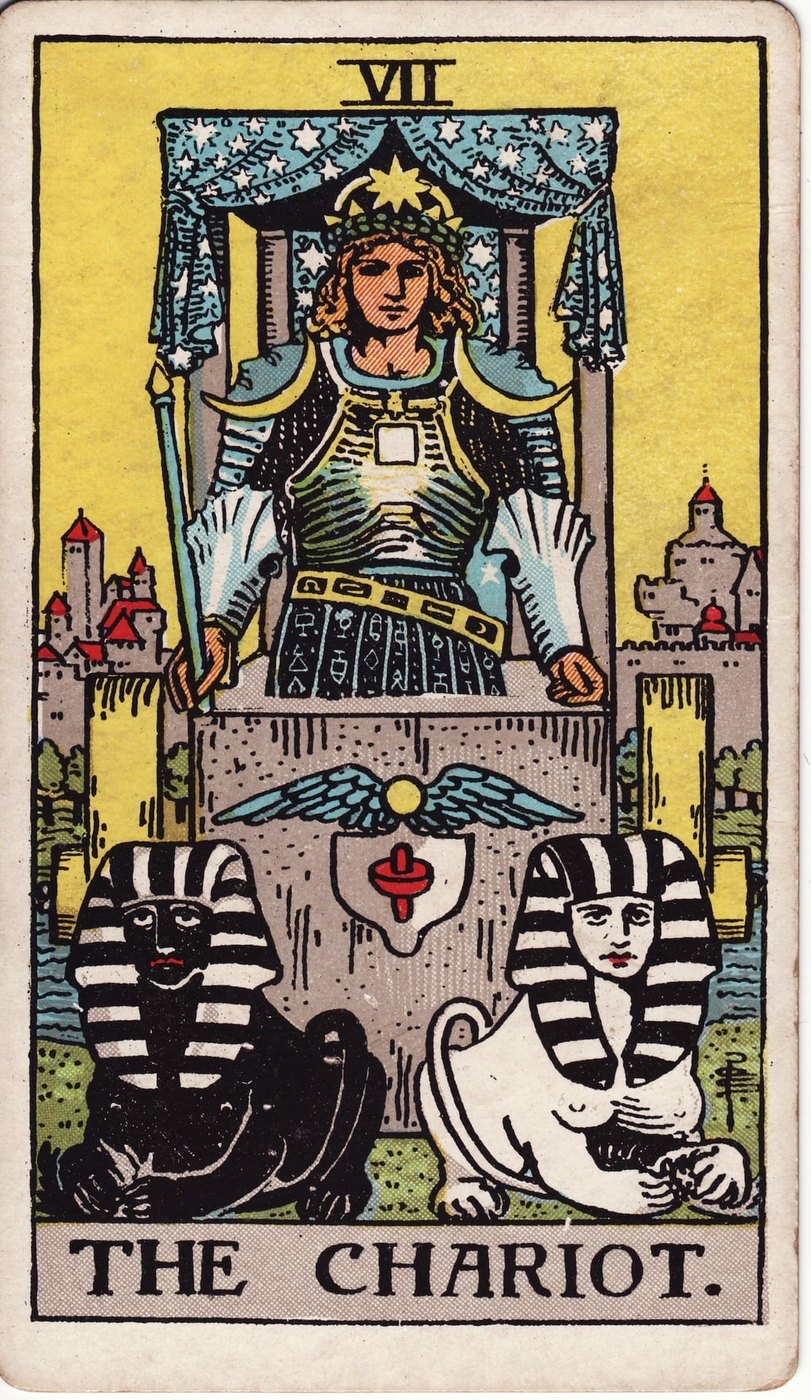
The Chariot (VII)
The Chariot as the central motif, filed under the Heavens, with the Sun and the Moon, the Demon and the Monster, and the Angel and the Wing in a secondary part. From The 1909 tarot.
What is happening
Waite, 1911 “An erect and princely figure carrying a drawn sword and corresponding, broadly speaking, to the traditional description which I have given in the first part.”
Key · 4 motifs
Tap a motif on the picture, or a line below. Its note opens under the line, with the reading its author gave it.
- Primary motif
- Secondary motifs · 3
The picture
A crowned young man in armour standing in a stone chariot under a canopy of stars, a wand in his hand, crescent moons on his shoulders, a winged disc on the chariot's front, two sphinxes, one black and one white, lying before it, a walled town behind; the Chariot as the central motif. By eye
The reading
The picture read whole, in the archive's words, from the sources quoted on the marks. Read on, and the picture follows: the motif under discussion keeps its colour.
Waite describes the man in the car as ‘an erect and princely figure carrying a drawn sword’, and Pamela Colman Smith gave him a wand. It is the one place in the deck where the text and the picture openly disagree, and neither of them ever mentions it again. Everything else matches. Waite's man ‘has led captivity captive; he is conquest on all planes, in the mind, in science, in progress, in certain trials of initiation’, and he is drawn not by horses but by two sphinxes, a change taken from Lévi.
The sphinxes are the key, because a sphinx asks a riddle. This man has answered it, and Waite says he is ‘above all things triumph in the mind’. Then, in five lettered clauses, he fences the triumph in. The question was concerned with a Mystery of Nature and not with the world of Grace. The conquests are external and not within himself. And the liberation ‘may leave himself in the bondage of the logical understanding’.
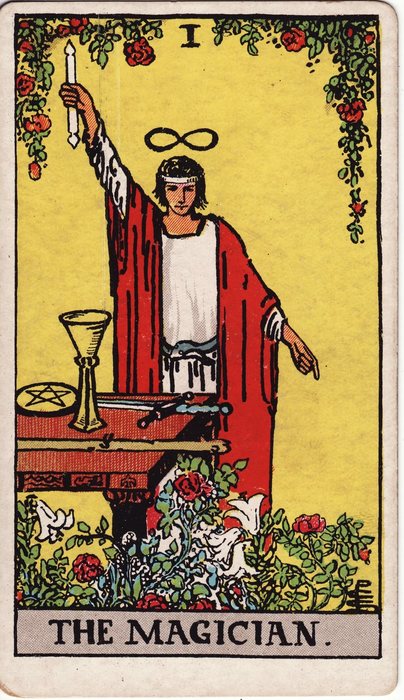
The last clause reaches back across the deck to card two. If this conqueror came to the pillars where the High Priestess sits, Waite says, ‘he could not open the scroll called Tora, nor if she questioned him could he answer’. The crescents on his shoulders, which Waite takes for the Urim and Thummim, the high priest's oracle, are the nearest he gets to that temple. ‘He is not hereditary royalty and he is not priesthood.’ He is a man who won.
The canopy of stars, the star in his crown, the winged disc on the front of the car, the walled town he has left behind: Smith drew all of them and Waite names none. Two are marked here as observed and left unread, because a picture may carry more than its author chose to explain and this one plainly does. The riddle he solved is on the page. Whatever the stars over his head are asking, he is not looking up.
Readings quoted
Waite, 1911 “He has led captivity captive; he is conquest on all planes--in the mind, in science, in progress, in certain trials of initiation.”
Waite, 1911 “(c) that the liberation which he effects may leave himself in the bondage of the logical understanding; (d) that the tests of initiation through which he has passed in triumph are to be understood physically or rationally; and (e) that if he came to the pillars of that Temple between which the High Priestess is seated, he could not open the scroll called Tora, nor if she questioned him could he answer. He is not hereditary royalty and he is not priesthood.”
Decoded: every motif is marked, and each mark carries the reading its author gave it, quoted from the text, or says that it is observed on the picture and not read. The reading above is the archive's own, made from those sources and no others.
A diagram of everything, drawn so that a person can be found inside it. Note where the human figure stands in the scheme.
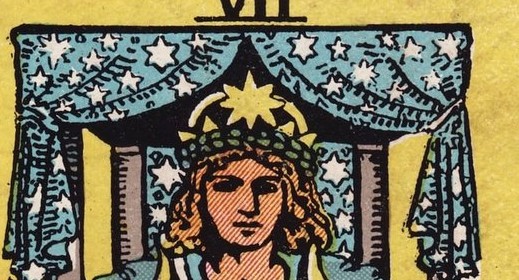
In plain words A blue canopy sewn with stars, held up on four posts, roofs the car; the same star sits in his crown. Waite’s account of the card does not mention either, so the archive records them and says no more.
Symbolica The starred canopy, and the eight-pointed star on the charioteer's crown, are on the card and not in Waite's text. Marked as observed, and left unread rather than guessed.
The borrowed light, the mother of the work, and the crescent a woman stands on. The one body here that every source explains against another.
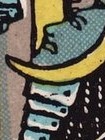
In plain words Two crescent moons on the shoulder pieces of his armour, each with a face. Waite does not call them moons: he says they are ‘supposed to be’ the Urim and Thummim, the two objects the high priest of Israel carried in his breastplate to obtain answers from God. So the moons, on his reading, are oracles worn on the shoulders.
Waite, 1911 “On the shoulders of the victorious hero are supposed to be the Urim and Thummim.”
Almost always a composite and almost always subordinate. Note what it is made of and whether it is bound.
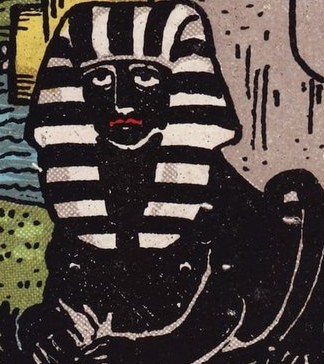
In plain words Two sphinxes, one black and one white, lie where horses would be. The sphinx is the riddling monster of the Oedipus story, which is why it sits under the Monster heading here, and Waite’s point is that this man has answered its riddle: he has won the contest of wits. It is a victory of the mind, and Waite spends the rest of his page on what that victory leaves out.
Waite, 1911 “He has thus replied to the sphinx, and it is on this account that I have accepted the variation of Eliphas Lévi; two sphinxes thus draw his chariot. He is above all things triumph in the mind.”
Waite, 1911 “It is to be understood for this reason (a) that the question of the sphinx is concerned with a Mystery of Nature and not of the world of Grace, to which the charioteer could offer no answer; (b) that the planes of his conquest are manifest or external and not within himself;”
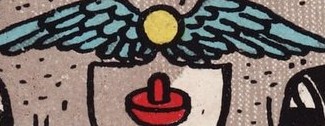
The mark of an errand rather than a nature. Note whether the wings are open, folded, or given to the figure by someone else.
In plain words A disc between two spread wings, the shape of the Egyptian winged sun, painted on the chariot’s front. Waite does not mention it. Below it is a red and blue emblem he does not mention either.
Symbolica The winged disc on the front of the car is on the card and not in Waite's text. Marked as observed, and left unread rather than guessed.
Also carrying the Heavens
61 works carry it. The 6 where it is the central motif are here. The symbol.
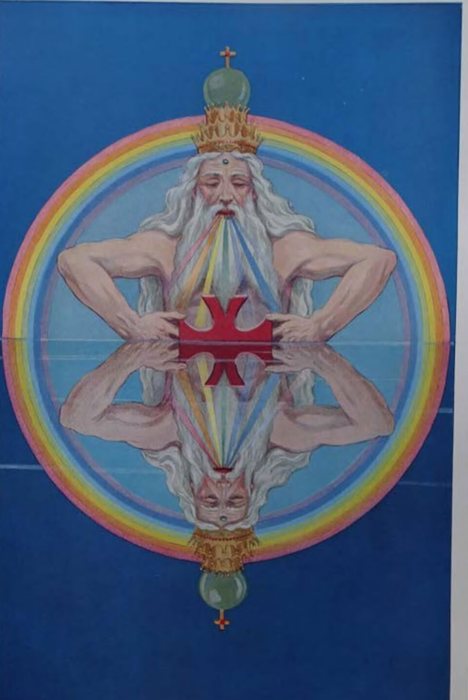
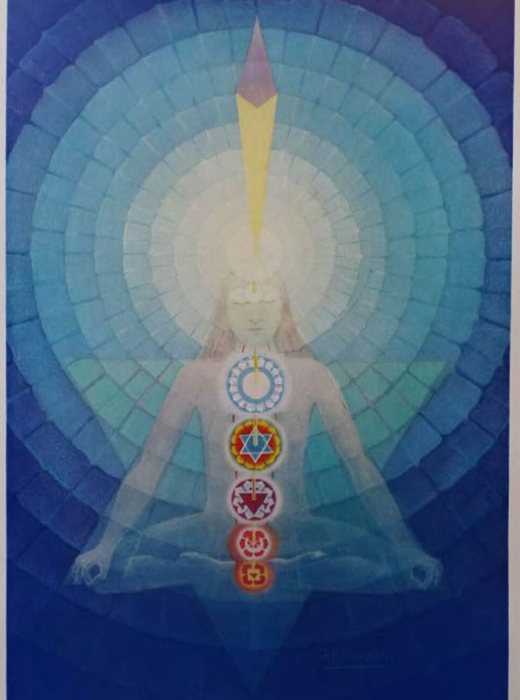
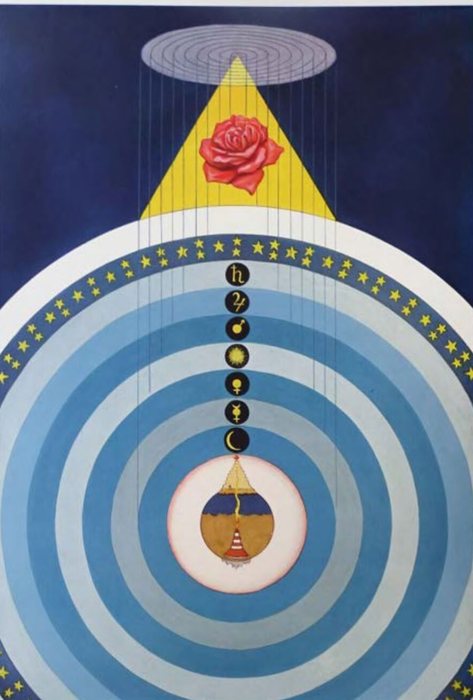
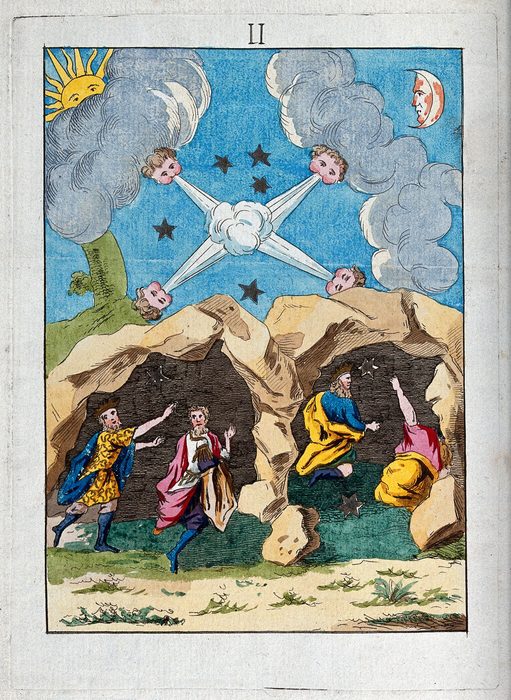
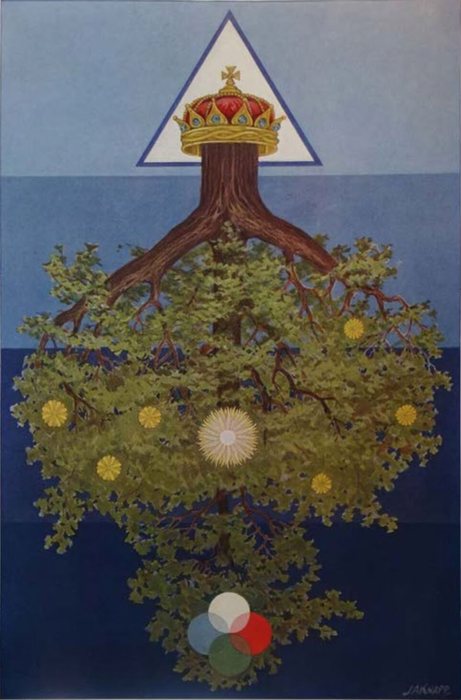
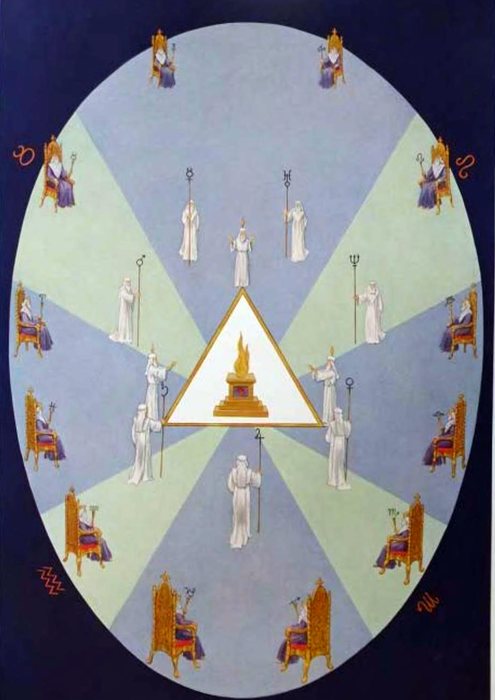
Where the detail is the subject
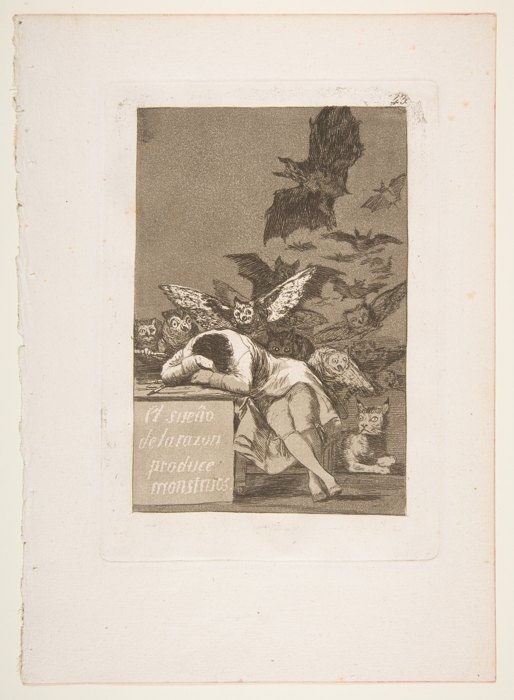
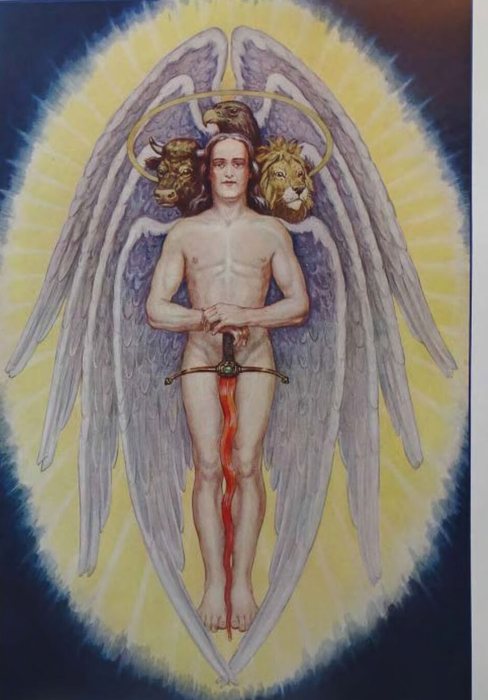
the Sun and the Moon · the Demon and the Monster · the Angel and the Wing
Each of these is in the picture without being what it is about. Below, one work that is about each.
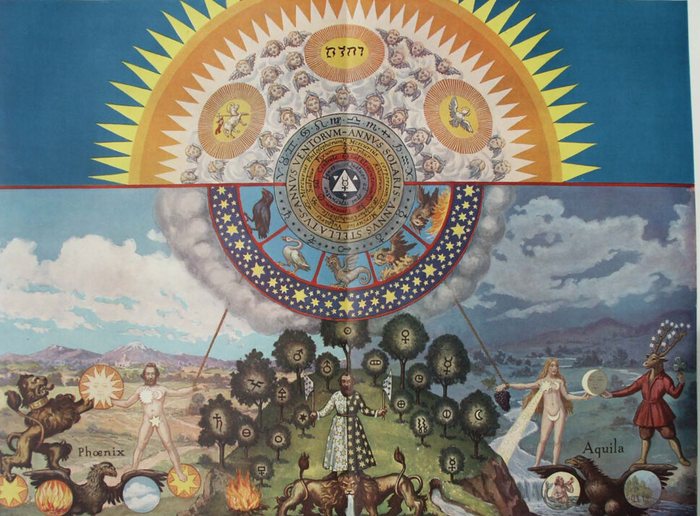
In the same series
Record
One symbol a week, decoded.
This picture is free at full size from its source, linked above. What an address gets is the Sunday letter: one picture, one symbol marked on it, what it meant and who said so, and the master files of the decoded plates as they are verified. Leave any time.
Free, one letter a week, unsubscribe in one click. How the address is used.
Scroll or pinch to zoom · drag to move · double-tap for 1:1 · 811 by 1400 pixel web copy; the source file is linked under Record