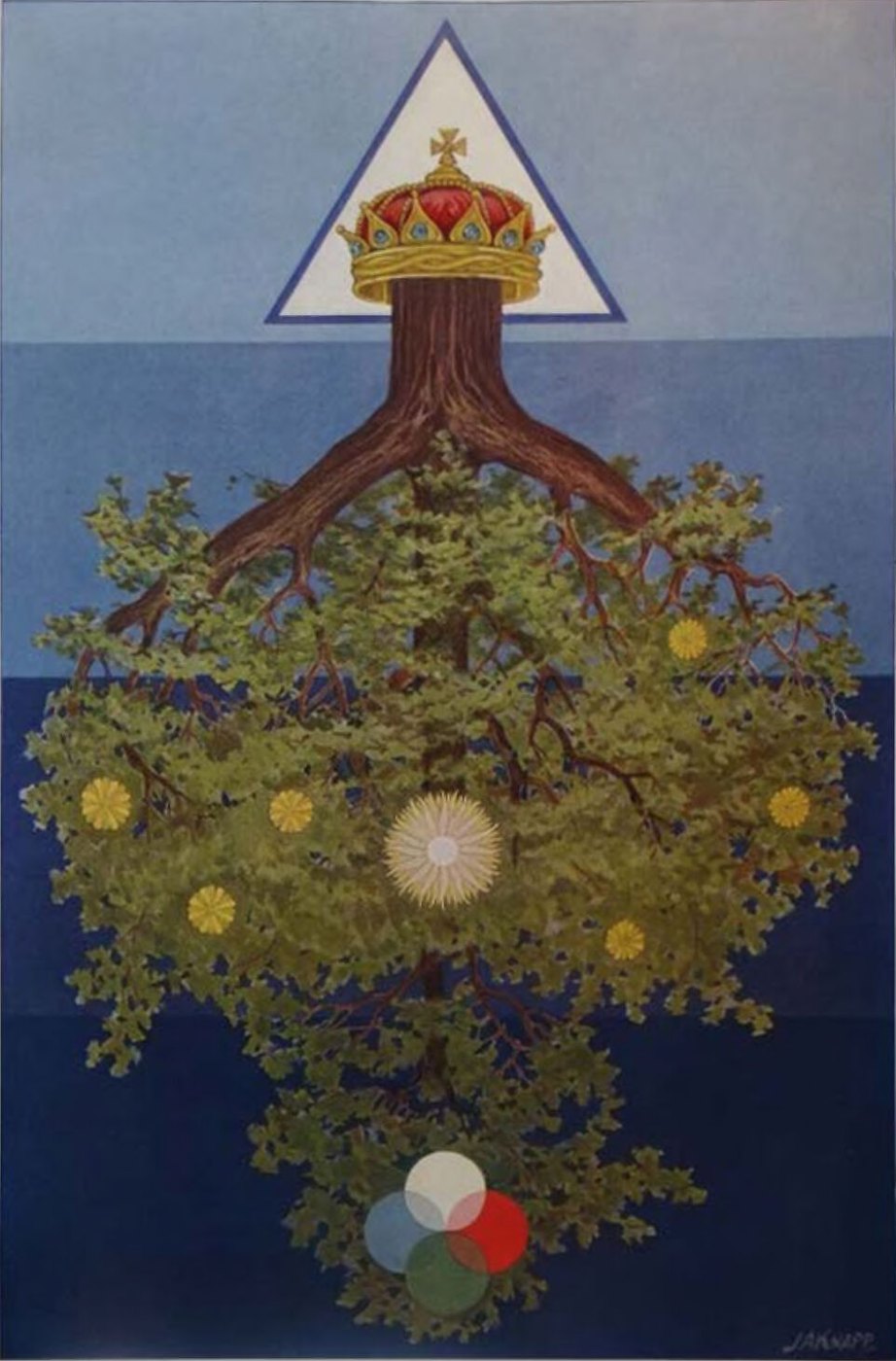
The Tree of the Sephiroth
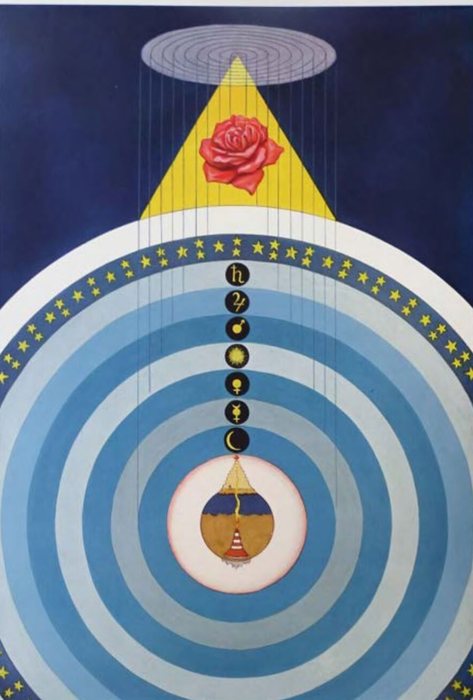
The Heavens as the central motif, with the Crown, the Triangle and the Pyramid, and the Tree in a secondary part. From The Secret Teachings.
What is happening
Hall, 1928 “The tree has also been accepted as symbolic of the Microcosm, that is, man.”
Key · 4 motifs
Tap a motif on the picture, or a line below. Its note opens under the line, with the reading its author gave it.
- Primary motif
- Secondary motifs · 2
The picture
An inverted tree, its trunk rising into a white triangle where a crown sits upon the roots; the foliage spreads downward with nine sun-like globes among the leaves and a white radiant one at the heart; four overlapping circles of white, blue, red and green at the foot; the Heavens as the central motif, the Crown and the Triangle by eye. By eye
The reading
The picture read whole, in the archive's words, from the sources quoted on the marks. Read on, and the picture follows: the motif under discussion keeps its colour.
Knapp painted the tree of the sephiroth the way Hall describes it and the way almost no one else draws it: upside down. The roots gather at the top inside a white triangle with a crown sitting on them; the trunk drops; the branches and leaves spread downward across the lower two-thirds of the plate, and among the leaves hang nine globes like small suns, with a tenth, white and radiant, at the heart of the foliage. At the foot, four overlapping circles of white, blue, red and green lie on the ground like fallen fruit.
Hall explains the inversion in his chapter on plants and trees: ‘The medieval Qabbalists represented creation as a tree with its roots in the reality of spirit and its branches in the illusion of tangible existence. The Sephirothic tree was therefore inverted, with its roots in heaven and its branches upon the earth.’ The ten globes are the ten sephiroth, the emanations by which, in the Cabala, the infinite God comes down into a world. Kircher's engraving of 1653, elsewhere in this archive, arranges them as circles in three columns with the crown at the top and the kingdom at the bottom, and Knapp's painting is the same doctrine grown into a plant: what is highest is the root, and our world is the tips of the leaves.
The crown on the roots is Kether, the first sephira, whose name means crown. Hall's sentence about it is a strange and good one: the tree ‘consists of nine branches, or worlds, emanating from the First Cause, or Crown, which surrounds its emanations as the shell surrounds the egg’. On the plate the crown does not surround anything; it sits at the top like a king's. But it is at the root, which is the point. Everything below it grows out of it.
The white triangle that holds the roots and the crown is Knapp's, not Hall's. The chapters do not mention it. A reader of the book will take it for the Trinity, since Hall spends pages arguing that the three highest sephiroth are one, or for those three themselves, Crown, Wisdom and Understanding, which Kircher called the three highest numerations; either reading fits, and the archive does not choose. The four circles at the foot, white, blue, red and green, are unexplained too, and the likeliest guess, the four elements or the four worlds of the Cabalists that Hall describes, is left as a guess.
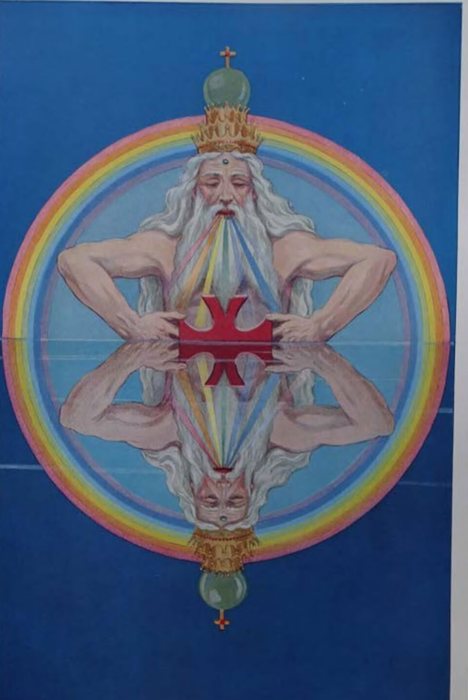
Hall adds one more line that the scene keeps: ‘the tree has also been accepted as symbolic of the microcosm, that is, man’. A person, in this reading, is also upside down, rooted in spirit and leafing into the body, and Knapp's plate of the Macrocosm and the Microcosm, two plates earlier in this archive's rotation, makes the same claim with a mirror instead of a tree.
Decoded: every motif is marked, and each mark carries the reading its author gave it, quoted from the text, or says that it is observed on the picture and not read. The reading above is the archive's own, made from those sources and no others.
A diagram of everything, drawn so that a person can be found inside it. Note where the human figure stands in the scheme.
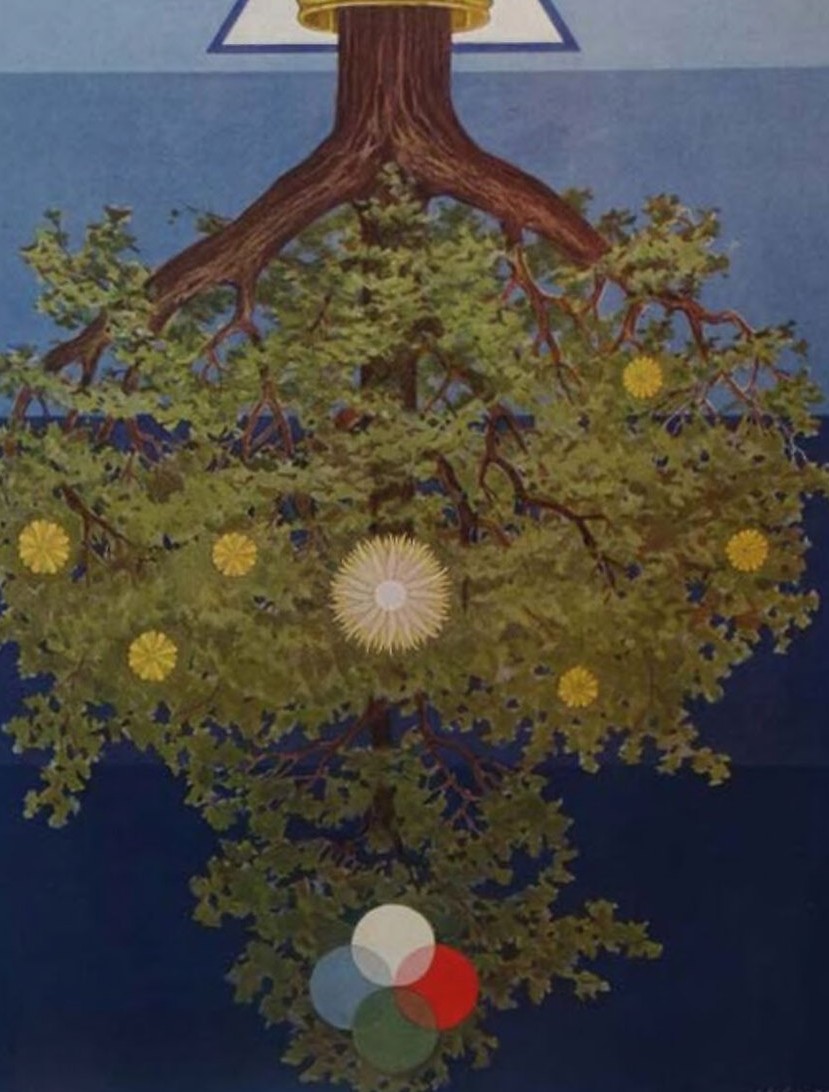
In plain words The tree is upside down. Its roots are at the top and its leaves spread downward, because in Hall's account the Cabalists drew creation as a tree rooted in spirit and branching into the world we can touch. The ten globes among the leaves are the ten sephiroth, the ten emanations of God.
Hall, 1928 “The medieval Qabbalists represented creation as a tree with its roots in the reality of spirit and its branches in the illusion of tangible existence. The Sephirothic tree of the Qabbalah was therefore inverted, with its roots in heaven and its branches upon the earth.”
Hall, 1928 “The Sephirothic Tree consists of ten globes of luminous splendor arranged in three vertical columns and connected by 22 channels or paths. The ten globes are called the Sephiroth and to them are assigned the numbers 1 to 10.”
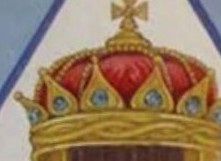
Completion, and in the Kabbalistic reading the first sephirah, the point at which the work is no longer yours.
In plain words The crown sits on the roots, inside the triangle at the top. It is Kether, the first sephira, the Crown, which Hall says surrounds its emanations as the shell surrounds the egg. The tree grows down from it.
Hall, 1928 “The Qabbalistic tree of the Jews also consists of nine branches, or worlds, emanating from the First Cause or Crown, which surrounds its emanations as the shell surrounds the egg.”
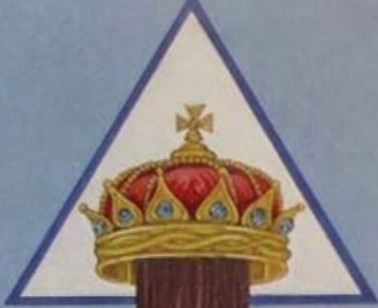
A number made visible. Count the points and then find what else in the picture comes in threes.
In plain words The white triangle at the apex holds the roots and the crown together. Hall's chapters do not mention it. It is recorded as seen; a reader of this book will take it for the Trinity or for the three highest sephiroth, and the archive leaves the choice open.
Symbolica The white triangle at the apex, where the roots gather under the crown, is on the plate and not in Hall's chapters, which read the Crown and the tree. Observed on the plate, and left unread rather than guessed.
Also carrying the Heavens
61 works carry it. The 6 where it is the central motif are here. The symbol.
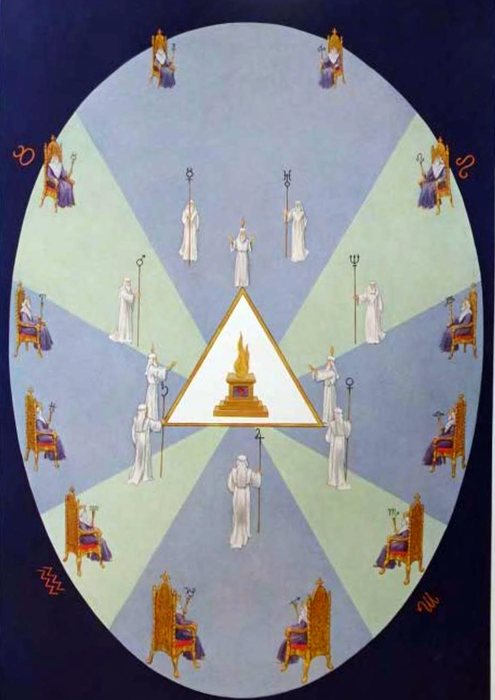
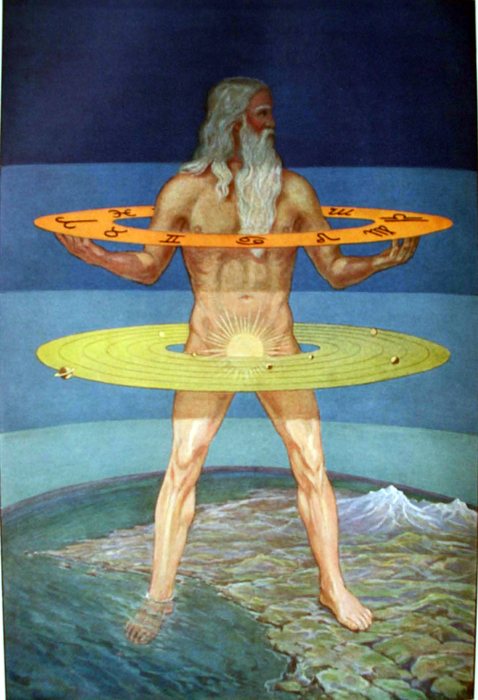
Where the detail is the subject
the Crown · the Triangle and the Pyramid · the Tree
Each of these is in the picture without being what it is about. Below, one work that is about each.
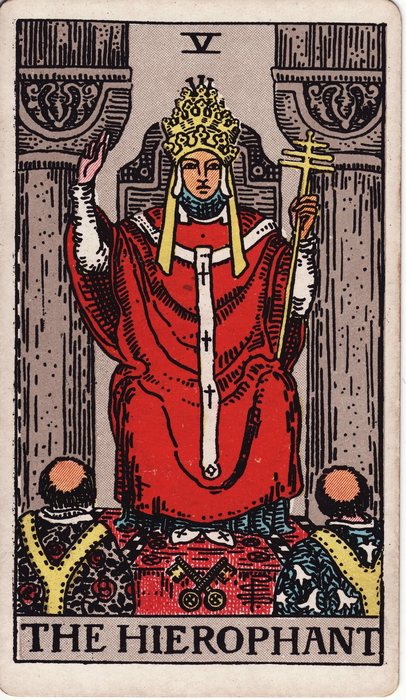
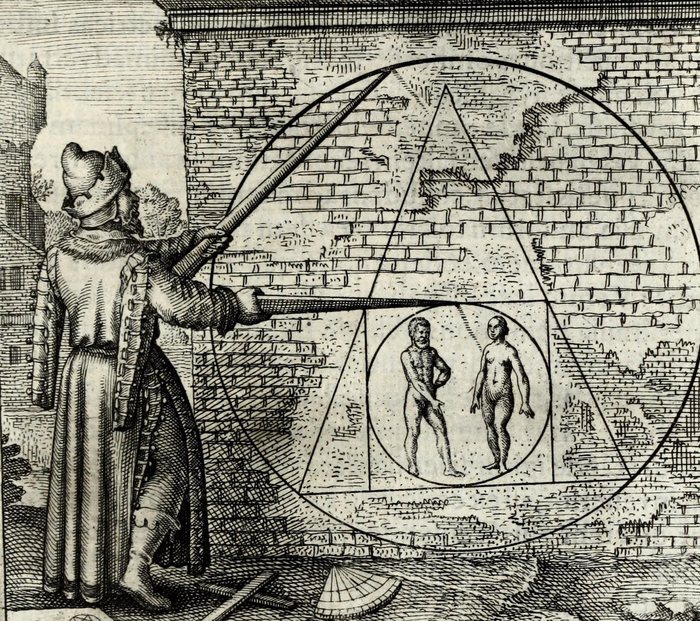
By the same hand
In the same series
Record
One symbol a week, decoded.
This picture is free at full size from its source, linked above. What an address gets is the Sunday letter: one picture, one symbol marked on it, what it meant and who said so, and the master files of the decoded plates as they are verified. Leave any time.
Free, one letter a week, unsubscribe in one click. How the address is used.
Scroll or pinch to zoom · drag to move · double-tap for 1:1 · 922 by 1400 pixel web copy; the source file is linked under Record