The Triangle and the Pyramid
the tetractys, the delta
A number made visible. Count the points and then find what else in the picture comes in threes.
Twenty-six works here carry a triangle, and in this material a triangle is almost always a count rather than a shape.
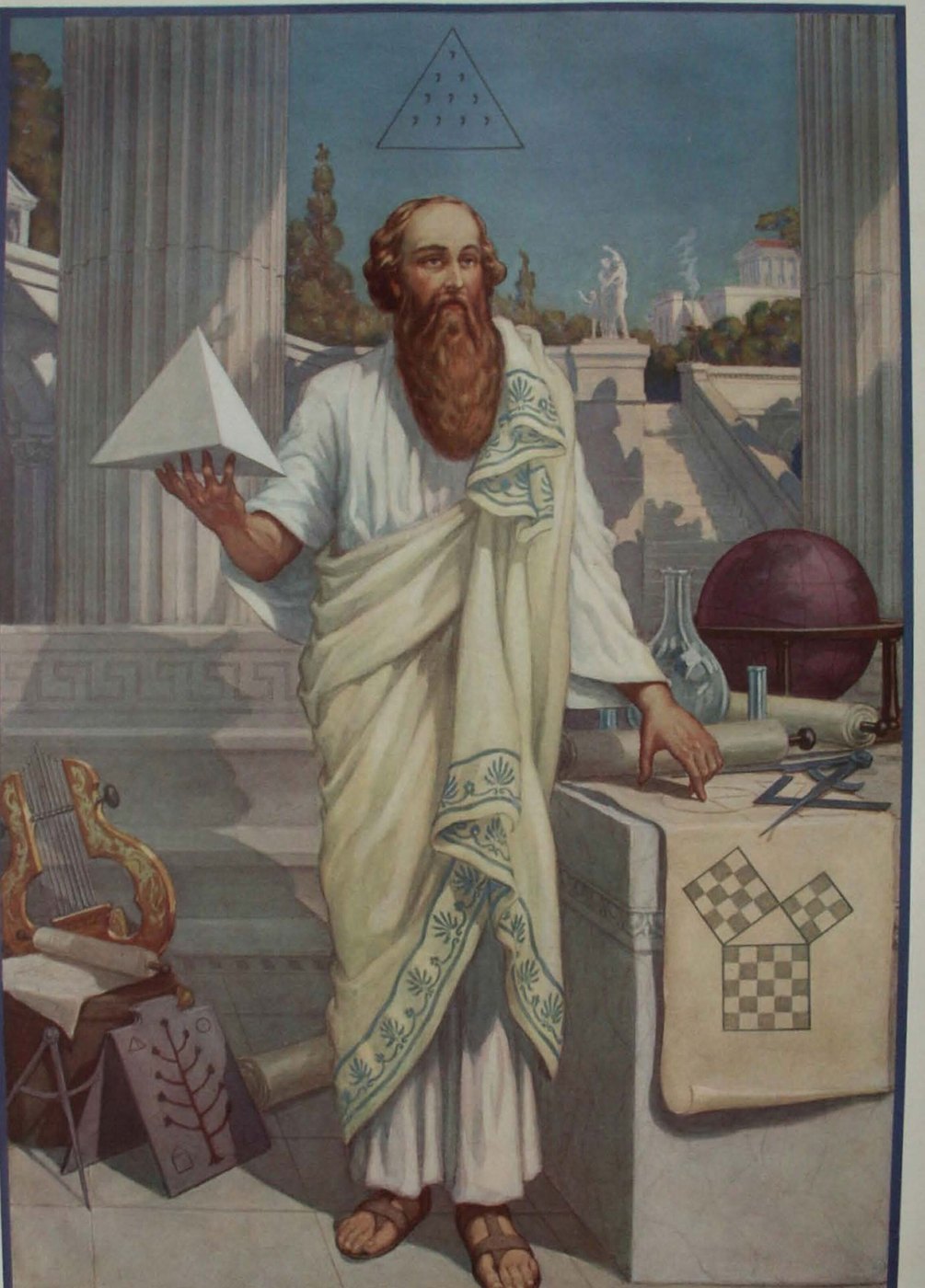
The plate of Pythagoras of Crotona makes the method explicit. Hall writes that “Pythagoras taught that 10, or the unit of the decimal system, was the most perfect of all numbers”, and the figure above the seated man is the tetractys, ten dots arranged as a triangle, so that a number can be looked at. Hall adds a second voice: “Theon of Smyrna declares that the ten dots, or tetractys of Pythagoras, was a symbol of the greatest importance”. Whether or not the attribution holds, the principle it describes is what the plates keep doing. Cross's chart of 1819 draws the same man's theorem as a right-angled triangle with a square on each side and calls it “The Forty-Seventh Problem of Euclid. This was an invention of our ancient friend and brother, the great Pythagoras. It teaches masons to be general lovers of the arts and sciences.” A triangle as a count again: three squares, one relation, and a moral hung on it.
Waite does the same thing in one clause. Of the angel on the card of 1909 he notes “on his breast the square and triangle of the septenary”, and the arithmetic is the whole gloss: three and four, side by side, making seven. The shapes are there to be added.
Maier's geometer of 1618 draws the triangle as one step of four, “Hinc Trigonum ducas, omni qui parte rotundam / In sphaeram redeat”, from this draw a triangle, which on every side returns into a round sphere, and “Tum LAPIS ortus erit”, then the stone will have come to birth. Circle, square, triangle, circle: the shape is a stage in a construction, which is another way of being a count.
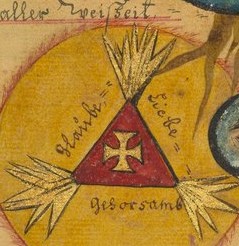
The Gemma manuscript of about 1735 counts the same way, and writes the sums down. On the page headed “Christus. 3. 6.” the six-pointed star is two triangles, gold over black, with a 7 at each point and 12 along the edges; three and six, which the archive takes for the Trinity and the six points, and the rest of the page is a book of such numbers. On the Figura divina the two triangles that make the star carry letters at the points and a medallion at the heart reading “Ewigkeit gebihret Natur und Zeit”, eternity begets nature and time, with “Coelesti” written on the heavenly side and “Terrestri” on the earthly. On the Tree of Knowledge two triangles answer each other at the foot of the page, a red one pointing up with a cross in it and “Glaube. Liebe. Gehorsamb.”, faith, love, obedience, round it, and a pale one pointing down with a serpent inside; on the Tree of Life two more meet point to point under the words “Lumen Naturae. Lumen Gratiae.”, the light of nature and the light of grace. Up and down, gold and dark, nature and grace: the writer uses the shape as a pair of scales.
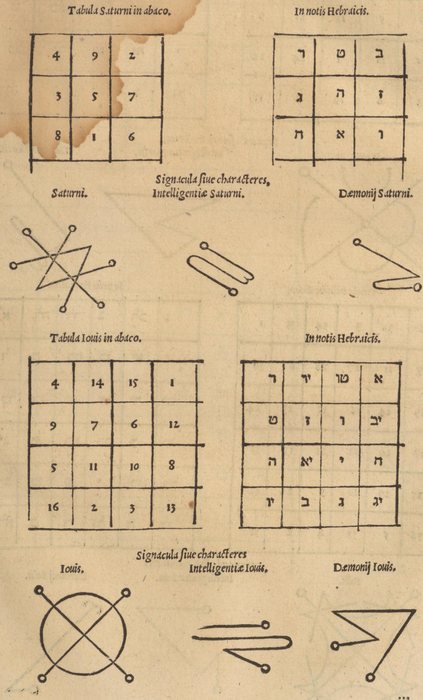
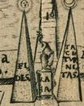
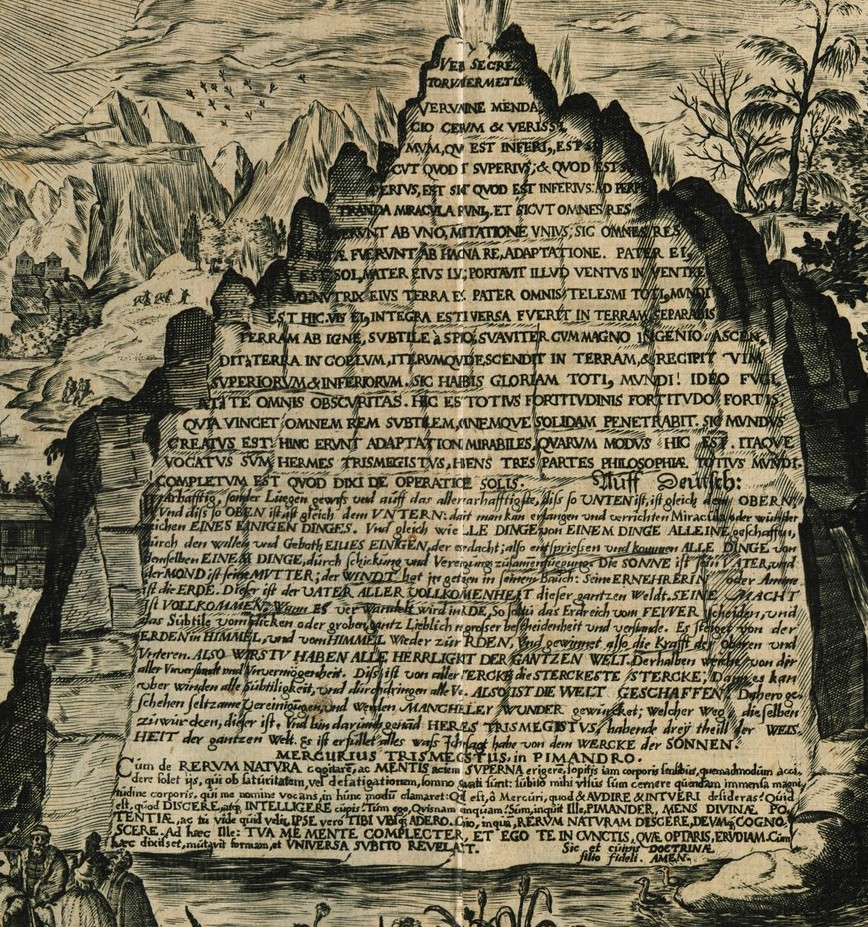
Khunrath's plates of 1609 count in triangles too, and letter them. Dee had drawn the same four rows as numbers forty years before, in the Monas of 1564, and written beside them “Omnis possibilis Metathesis, 24. Summa Pythagorica, 10. Omnimoda partium additio, dat 30.”, every possible transposition twenty four, the Pythagorean sum ten, the addition of the parts in every way thirty; Khunrath does the same arithmetic in Hebrew at the head of his plate of the Name. On his title the Name fills a triangle of light at the top and the sign of Mercury stands on a stone triangle lettered “Mercurius.” at the foot; on his plate of the regenerate man the figure stands inside a triangle whose three sides are a sentence, “Quaerite primum Regnum Dei, et iustitiam eius, et haec omnia adiicientur vobis.”, seek first the Kingdom of God. A triangle in these plates is a place to write on, and what is written on it is a count of three or four or ten, or a text that begins with one thing. Where Khunrath stands one of them up as a solid, at his citadel gate and on the great rock of the Emerald Tablet, it stops being a count and becomes a building.
One triangle in the archive counts nothing at all, and it is Khunrath's. On the plate against the slanderers a small pediment is cut into the rock at the centre of the picture, under an arch reading “ADHVC STAT, ET SEMPER VBIQ. DVRAT!”, it still stands and endures always and everywhere, with “Veritatem sitientibus.”, for those thirsting after truth, along the base. There is no unit here and nothing is being summed. The shape is doing what a pediment does on a building, which is to say that the thing beneath it is a foundation and not an opinion, and it is aimed at readers who had said in print that it was neither.
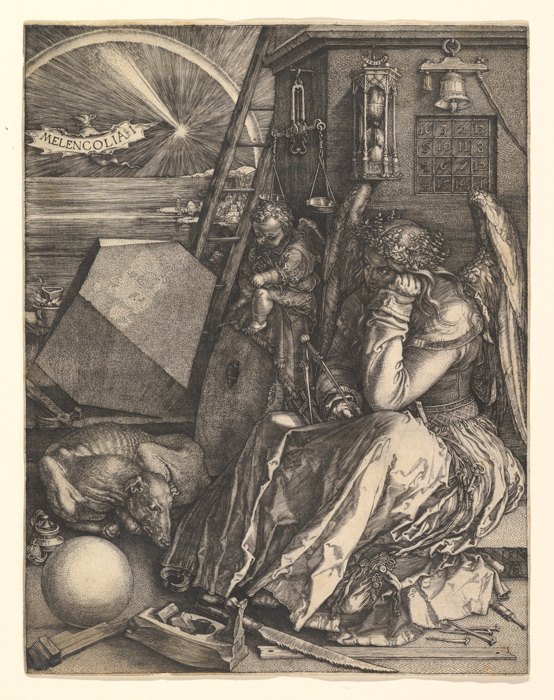
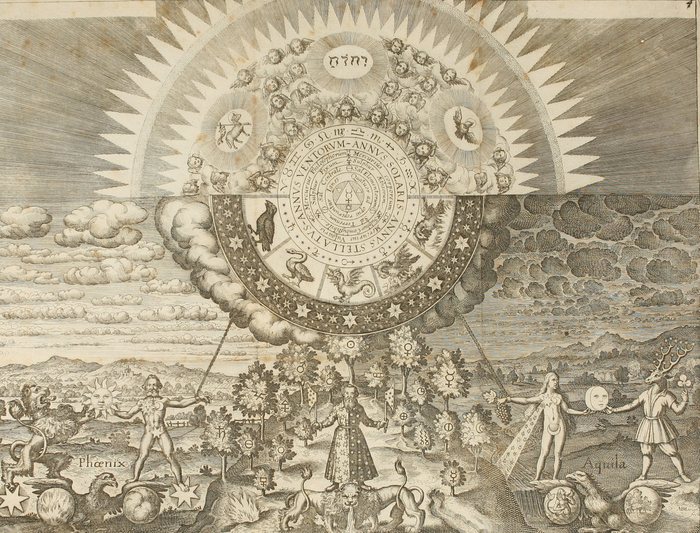
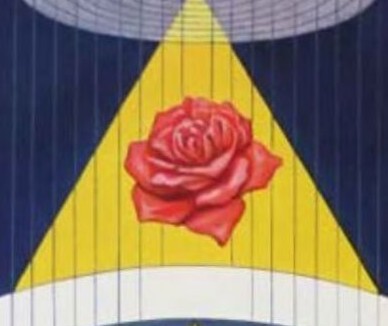
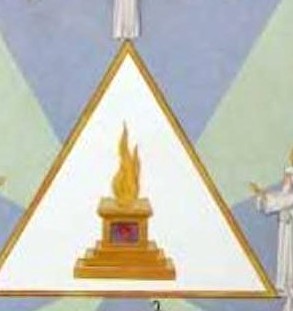
The other triangles on Hall's plates are at the tops of things. One stands white above the Tree of the Sephiroth where the roots gather under the crown. One holds the Name above Hall's throne. One sits gold over the spheres of the Divine Comedy with a rose inside it. None of the three is named in Hall's chapters, and all three are recorded here as observed rather than read; the white triangle at the centre of the Zodiacal Egg is the exception, because Hall's caption puts the “Three Holy Powers” at its points. A triangle at the apex of a diagram is doing something, and in this archive nobody has yet written down what.
Contested
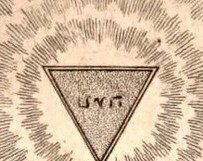
Three of Hall's plates carry triangles that are unread. Hall attributes a claim to Theon of Smyrna at second hand and the archive holds the attribution, not the source. Hall is also writing about Pythagorean teaching rather than quoting it, and no text by Pythagoras survives to check him against. The Gemma's numbers are copied as written and the archive's reading of the 3 and the 6 is its own. Khunrath's pyramids and Dee's quaternary are read from the words lettered on and beside them, put into English by the archive; Cross's delta in glory is tagged by eye and unread.
Sources
- Manly P. Hall, The Secret Teachings of All Ages: Hall's text and plate captions, 1928. Transcribed here, not yet read against a printed folio.
- Arthur Edward Waite, The Pictorial Key to the Tarot: Waite commissioned the 1909 designs and wrote the key to them, so his account is the closest thing the deck has to an author's statement.
- Gemma Sapientiae et Prudentiae, Wellcome Collection MS.2492, c. 1735: A German Rosicrucian manuscript of about 1735 whose five coloured figures carry their own captions and Bible references; quoted in the writer's German with the archive's English. The Wellcome's catalogue matches four figures to the plates printed at Altona in 1785 as the Geheime Figuren der Rosenkreuzer.
- Jeremy L. Cross, The True Masonic Chart, or Hieroglyphic Monitor, 1826: The printed lectures of Cross's monitor, New Haven 1826, read against the page images of the Library of Congress copy; each emblem's sentence is quoted where the monitor carries it, and the plates whose lectures went unprinted say so.
- Michael Maier, Atalanta Fugiens, 1618: The mottoes and epigrams of the fifty emblems, Oppenheim 1618, read against the page images of the Getty Research Institute copy; the English is the archive's own and is marked as such on every record. Maier's discourses, in which he explains each emblem at length, are not yet transcribed.
- Heinrich Khunrath, Amphitheatrum Sapientiae Aeternae, 1609: The lettering of the plates of the Amphitheatrum, Hanau 1609, read off the page images of the Wellcome and Paris copies at the size of the archive's own images; the Hebrew and Greek are given in transliteration and the English is the archive's.
- John Dee, Monas Hieroglyphica, 1564: The lettering of the figures and the theorems beside them in the Frankfurt printing of 1591, read off the page images of the Getty Research Institute copy; the English is the archive's.
On the same plate
Where it appears · 26
26 works in the archive carry the Triangle and the Pyramid. First the 23 where it has been read, with the Triangle and the Pyramid itself picked out.
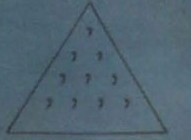
Pythagoras of Crotona
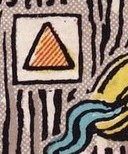
Temperance (XIV)
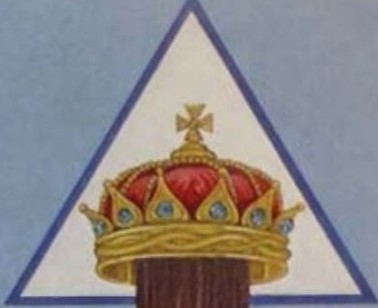
The Tree of the Sephiroth
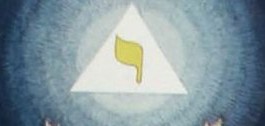
The Ancient of the Ancients
The Key to Dante's Divine Comedy
The Contents of the Zodiacal Egg
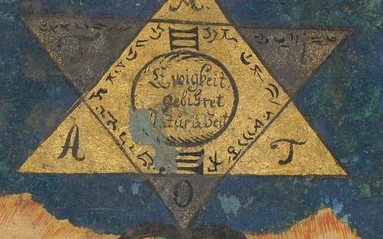
Figura Divina: Theosophia, Cabalia, Chimia
The Tree of the Knowledge of Good and Evil, Microcosma
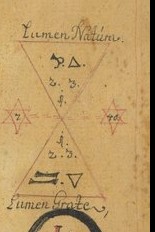
Der Baum des Lebens, the Tree of Life
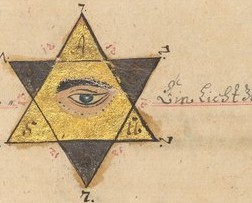
Christus 3. 6., the Star and the Book of Numbers
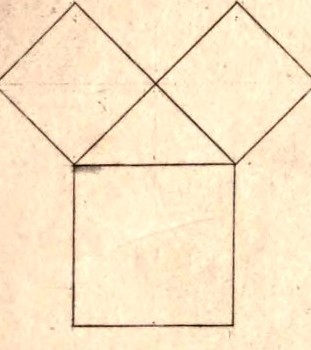
The Anchor and the Ark, the Forty-seventh Problem, the Hourglass and the Scythe
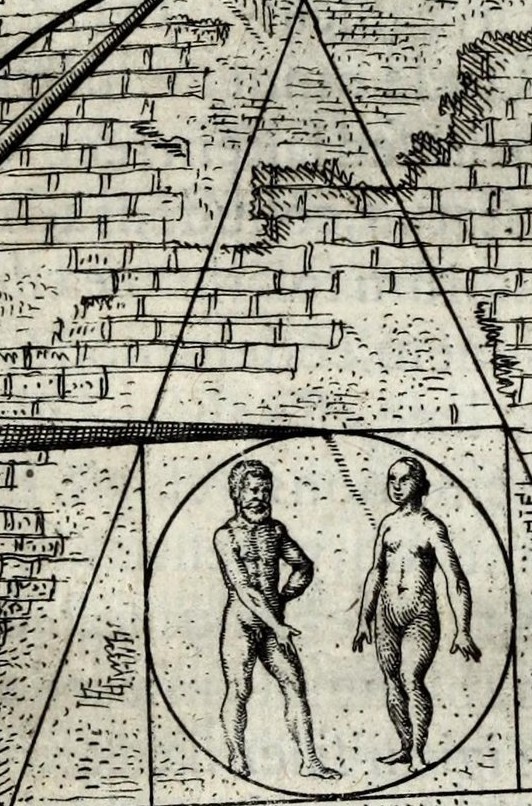
Fac ex mare & fœmina circulum, inde quadrangulum, hinc triangulum, fac circulum & habebis lap. Philosophorum
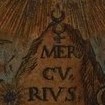
The engraved title of the Amphitheatrum Sapientiae Aeternae
Typosis Arcis Pri-materialis
Designatio Pyramidum Petrosarum Triumphalium
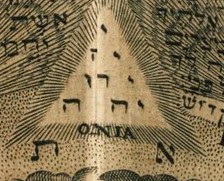
The Name in the pyramid, Christ in the sun, and the two commandments round the rim
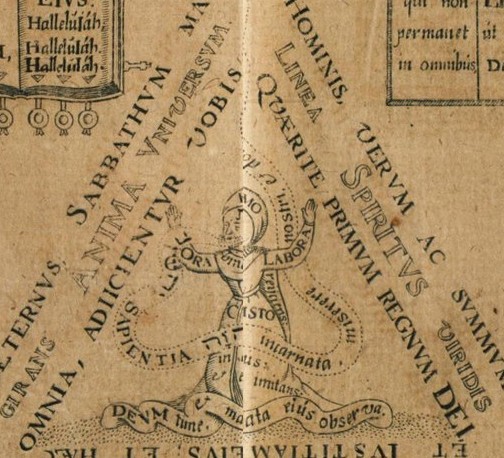
The regenerate man, Ora and Labora lettered on his arms, with the Book and its seals
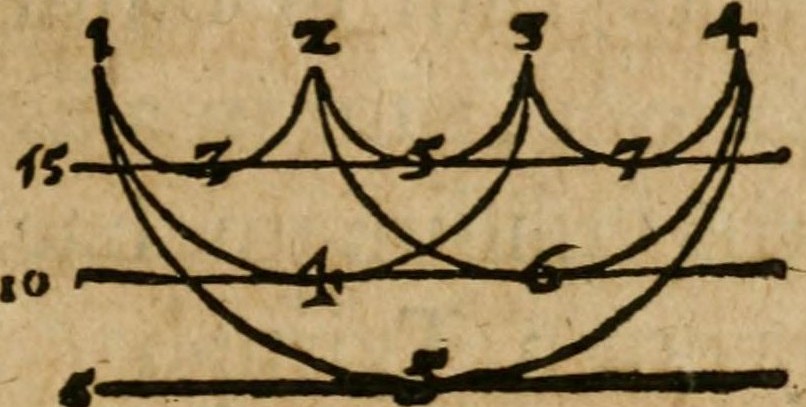
Quaternarii Pythagorici
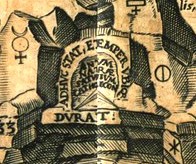
Against the slanderers, by right of retort
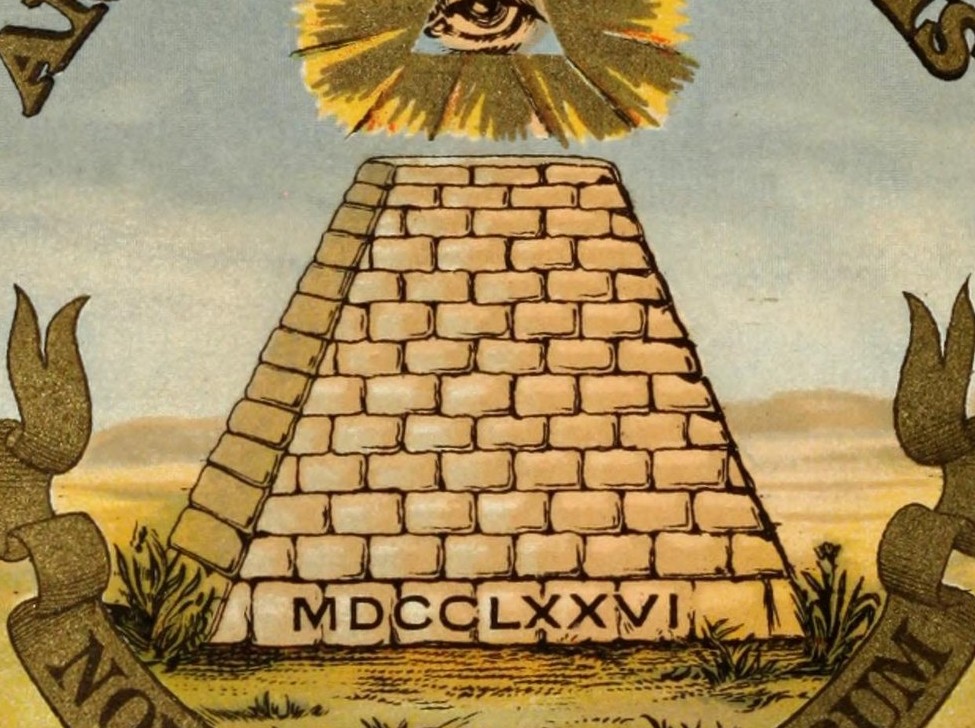
The Great Seal of the United States, the reverse
The Vault and the Delta in Glory

Grand Rosicrucian Alchemical Formula
Mundus Elementaris, the world under the moon as a wheel
As a detail in 3 more
In these the Triangle and the Pyramid is somewhere in the picture, tagged by eye, and nobody has read it yet. When one of them is read, it goes out on a Sunday.