The Ancient of the Ancients
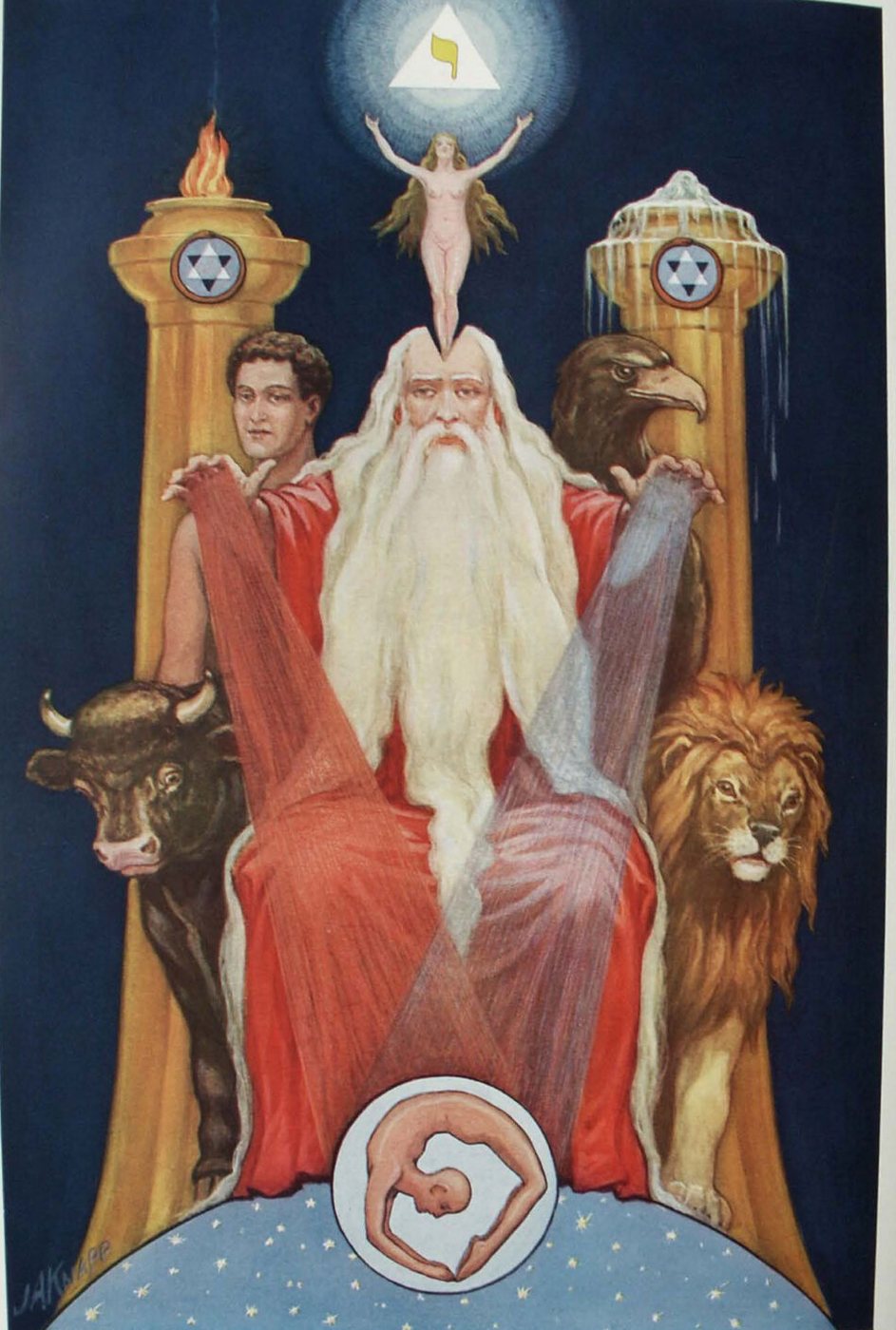
The King and the Queen as the central motif, with the Lion, the Triangle and the Pyramid, the Divine, the Bird, and the Pillar in a secondary part. From The Secret Teachings.
Key · 6 motifs
Tap a motif on the picture, or a line below. Its note opens under the line.
- Primary motif
- Secondary motifs · 4
The picture
The Name in a triangle of light above the throne, hexagrams on the pillars; the Triangle and the Divine secondary, by eye. By eye
The reading
The picture read whole, in the archive's words, from the sources quoted on the marks. Read on, and the picture follows: the motif under discussion keeps its colour.
Knapp paints the Kabbalistic figure the Zohar calls the Vast Countenance, and the plate is built to be read downward.
At the top is a white triangle in a radiance with one gold Hebrew letter in it, and nothing else. Beneath it a naked woman stands with her arms raised into the light, holding nothing. Beneath her, filling the picture, is the old man on his throne of flame, and beneath him a starry globe with a curled unborn child in a roundel at its face. A letter, a figure of light, a body, a world, a child not yet born: the plate is a descent, and every stage is smaller in meaning and larger on the page than the one above it.
Hall's caption does one useful thing and refuses another. It explains the colour, which a reader would otherwise take for an error, since the Zohar gives the robes as white and Knapp has painted them red, and Hall says the change is deliberate, to show that the garments of divinity partake of the nature of cosmic activity. What it does not do is name the standing figure or read the letter, so the archive leaves both unread on their marks rather than guess.
Round the throne are the four faces of Ezekiel's living creature, a man and an eagle at the shoulders, a bull and a lion at the knees. Knapp sets them behind the figure rather than under it, which is a choice: they are not bearing the throne, they are looking out of it, so the enthroned One is drawn as the thing the four faces are faces of.
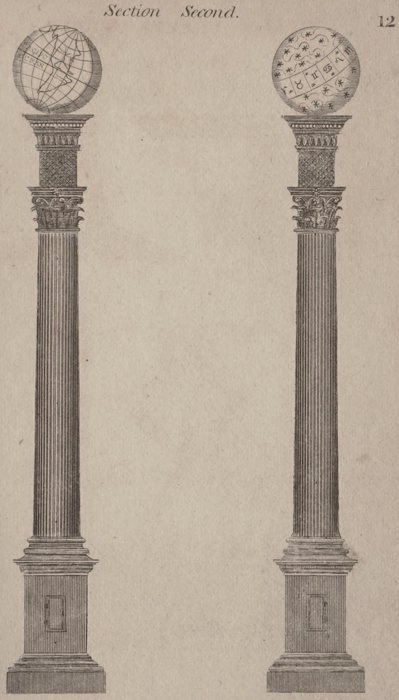
Two pillars close the picture at the sides, each with a hexagram in a roundel, one crowned with flame and one running with water. They are the plate's only pair, and they say the same thing the four faces say and the descent says: that whatever is at the top of this picture is single, and everything under it arrives in twos and fours.
Not yet decoded: the motifs are marked, but most of the marks carry no reading yet and say so. The sourced notes come with the entry.
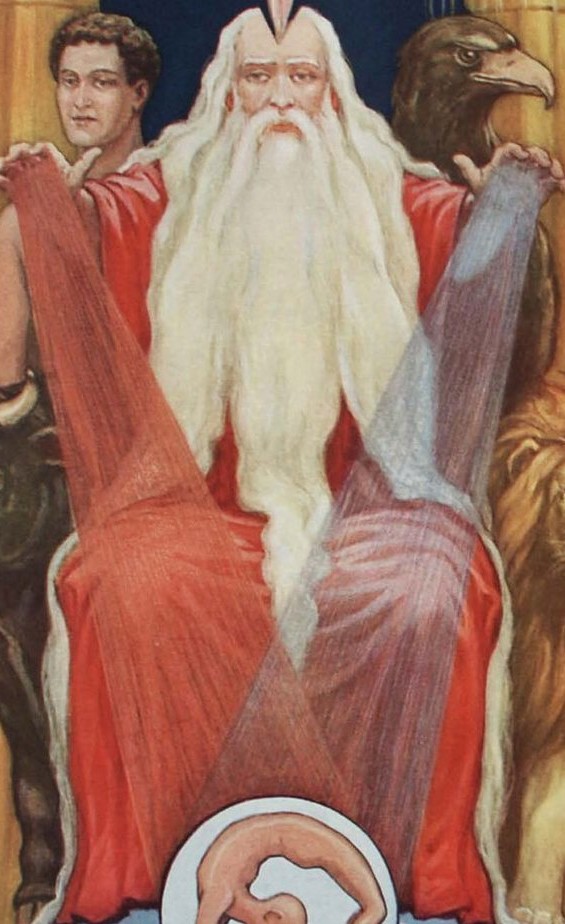
A rank rather than a person. Read the robe, the throne and what comes out of the mouth before you read the face.
In plain words An old man with a white beard fills the middle of the plate, enthroned and robed in red, his hands open on the arms of the throne. He is the Vast Countenance of the Kabbalists, and Hall's caption explains the one thing a reader would otherwise take for a mistake: the Zohar gives him white robes, and Knapp has painted them red on purpose, to say that what clothes divinity is activity.
Hall, 1928 “In the Zohar His robes are said to be white, but they are here shown as red to signify that the garments of Divinity partake of the nature of cosmic activity.”
Hall, 1928 “He sits upon a throne of flaming light and the flashes of the fire are subject to His will.”
God shown, or pointed at. Look for what stands where a face would be: a name in a cloud, a circle above the top of a diagram, a ring of verses, a sign over a head.
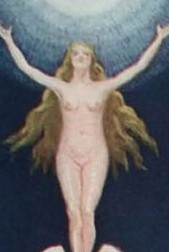
In plain words Directly above the old man's head a naked woman stands with both arms raised, in a disc of pale light, and above her hands is the triangle with the letter. She is the one figure on the plate with nothing to sit on and nothing to hold, and the archive does not know who she is, because Hall's caption reads the enthroned One and names neither her nor the letter.
Symbolica The letter of the Name in the light above the throne, and the figure standing beneath it with arms raised, are on the plate; Hall's caption reads the enthroned One and names neither. Observed on the plate, and left unread rather than guessed.
A number made visible. Count the points and then find what else in the picture comes in threes.
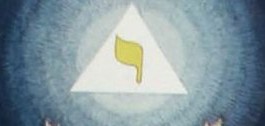
In plain words At the top of the plate a white triangle stands in a radiance, and inside it, in gold, is a single Hebrew letter. It is the smallest thing in the picture and everything else is arranged beneath it: the light, the standing figure, the throne, the four faces, and at the foot the globe. The triangle is where the plate begins.
Symbolica Observed on the plate. Hall's caption does not name the triangle, and the entry decides whether it is the same triangle of light that stands over the Sephiroth in his other plates.
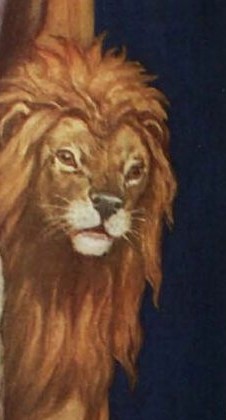
Usually not an animal but one face of a set of four. Count the other three before reading it alone.
In plain words A lion looks out from behind the throne at the right, and a bull from behind it at the left, with a young man's head at the far left and an eagle's at the far right. They are the four faces of Ezekiel's living creature, set around the throne rather than carrying it, so that the enthroned figure is shown as what they are faces of.
Symbolica The bull, the man, the eagle and the lion stand about the throne, the four faces of the tetramorph; Hall's caption for this plate names none of them. Observed on the plate, and left unread rather than guessed.
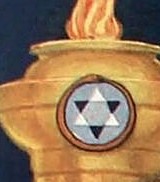
Two columns, and the thing that matters is between them. Note what stands there, and whether the pillars are told apart.
In plain words Two golden pillars close the picture at the sides and each carries a hexagram in a roundel on its capital. The left one is crowned with flame and the right one runs with water, so the pair is the plate's one statement of opposites, set at the outer edge of everything else.
Symbolica The pillars, their hexagrams and the flame and water on their capitals are on the plate; Hall's caption reads the enthroned One and names none of them. Observed on the plate, and left unread rather than guessed.
Also carrying the King and the Queen
35 works carry it. The 6 where it is the central motif are here. The symbol.
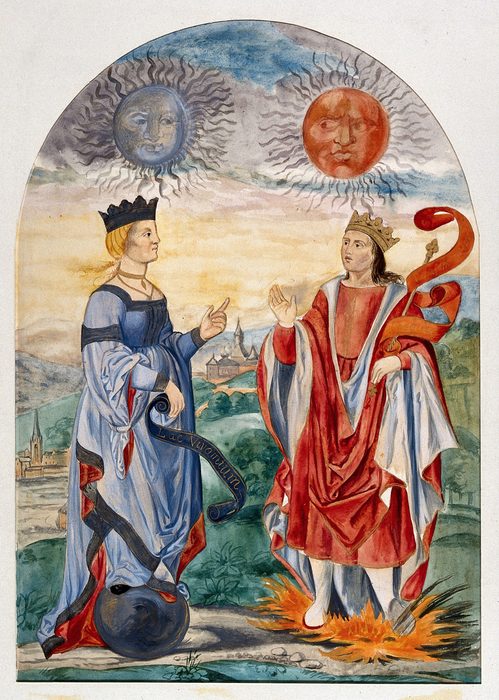
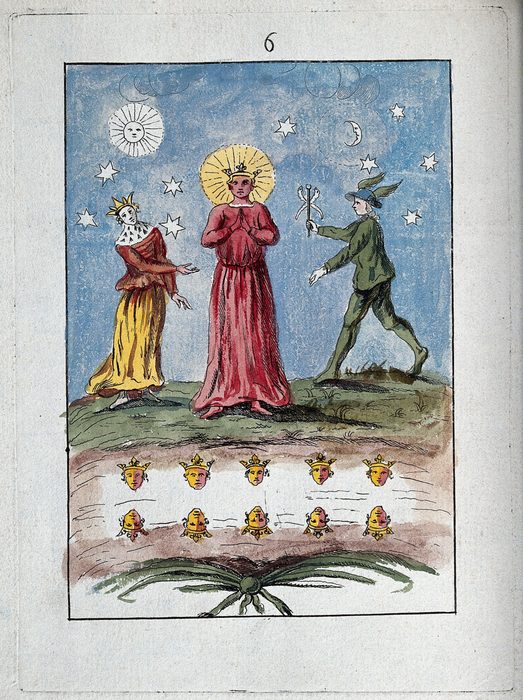
Where the detail is the subject
the Lion · the Triangle and the Pyramid · the Divine · the Bird · the Pillar
Each of these is in the picture without being what it is about. Below, one work that is about each.
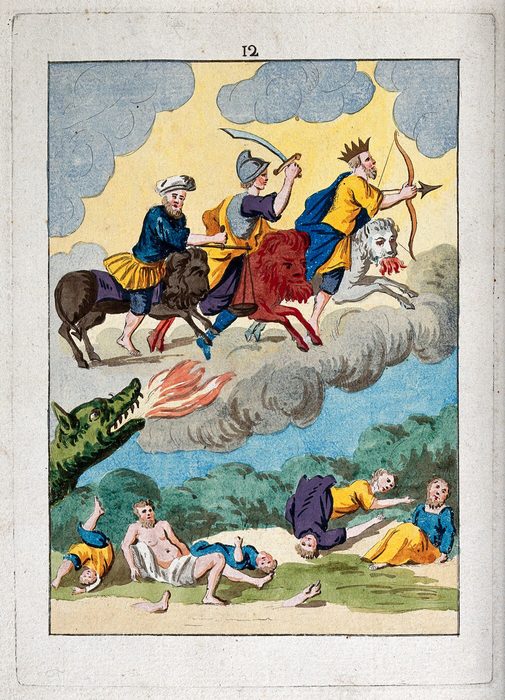 the LionThree Riders on Black, Red and White Lions
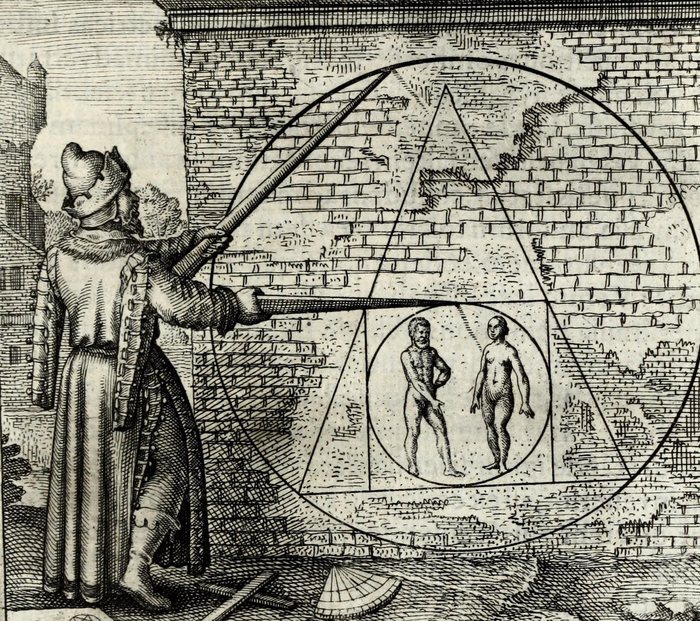 the Triangle and the PyramidFac ex mare & fœmina circulum, inde quadrangulum, hinc triangulum, fac circulum & habebis lap. Philosophorum
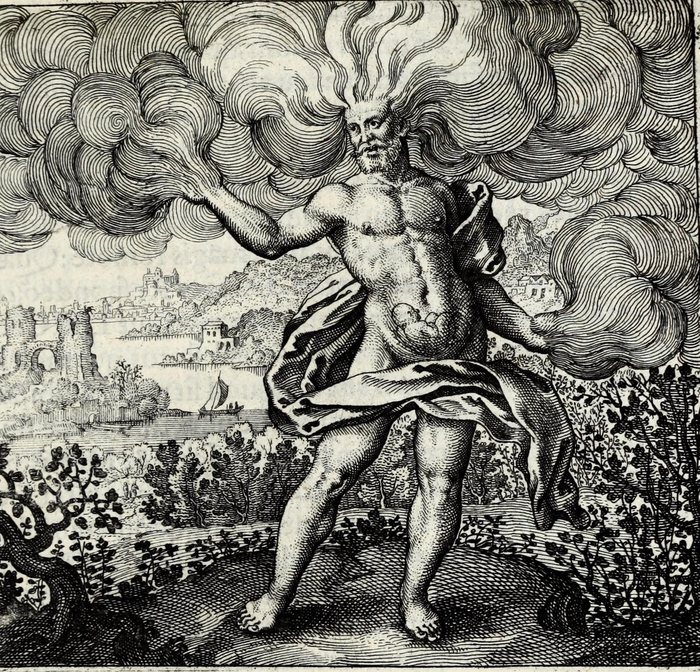 the DivinePortavit eum ventus in ventre suo
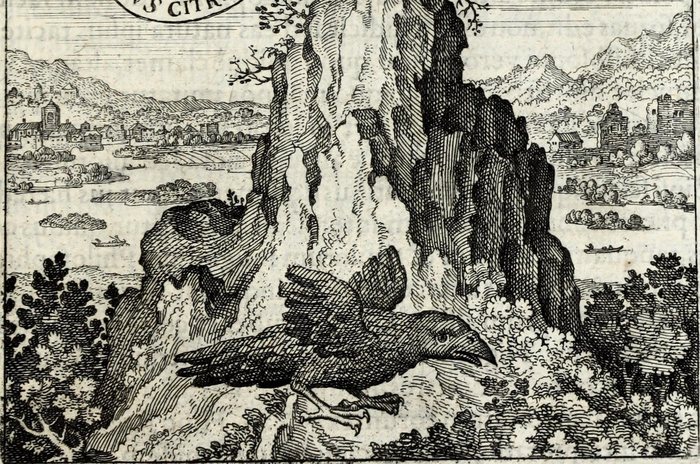 the BirdAudi loquacem vulturem, qui neutiquam te decipit
 the PillarThe Two Pillars
By the same hand
In the same series
Record
One symbol a week, decoded.
This picture is free at full size from its source, linked above. What an address gets is the Sunday letter: one picture, one symbol marked on it, what it meant and who said so, and the master files of the decoded plates as they are verified. Leave any time.
Free, one letter a week, unsubscribe in one click. How the address is used.
Scroll or pinch to zoom · drag to move · double-tap for 1:1 · 943 by 1400 pixel web copy; the source file is linked under Record