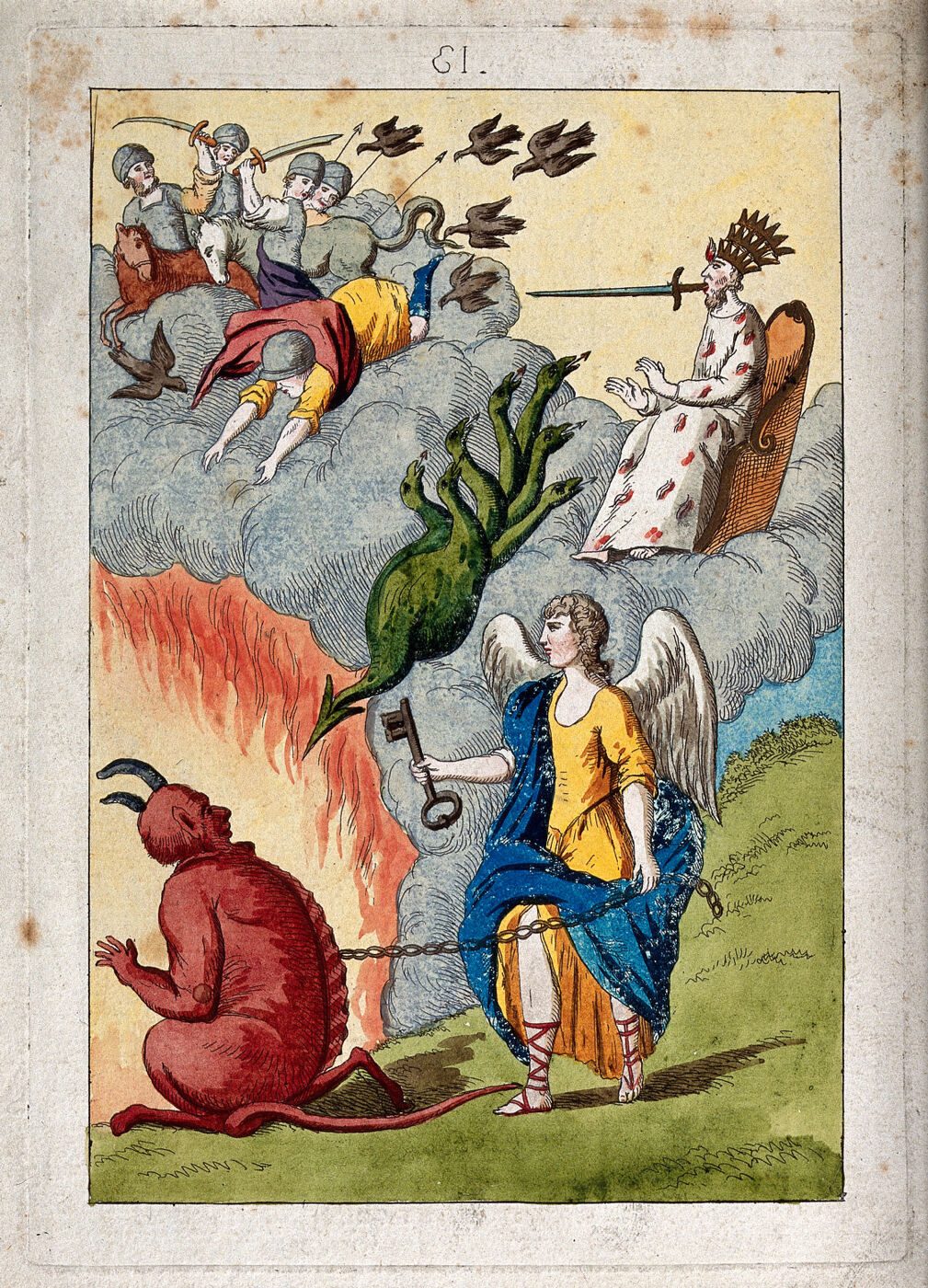
The King with Three Crowns and the Seven-Headed Hydra
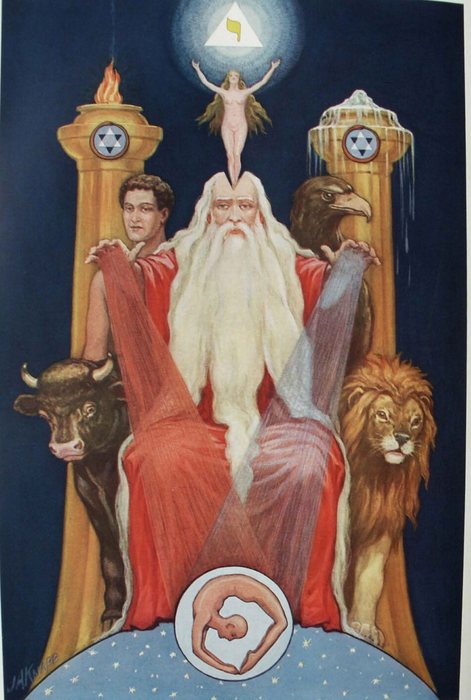
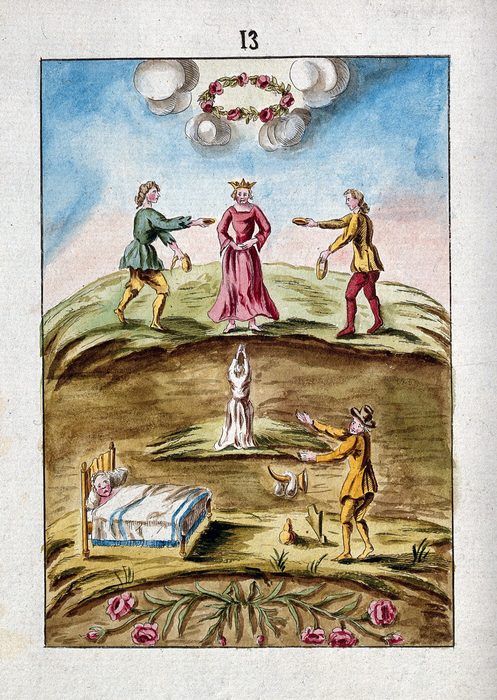
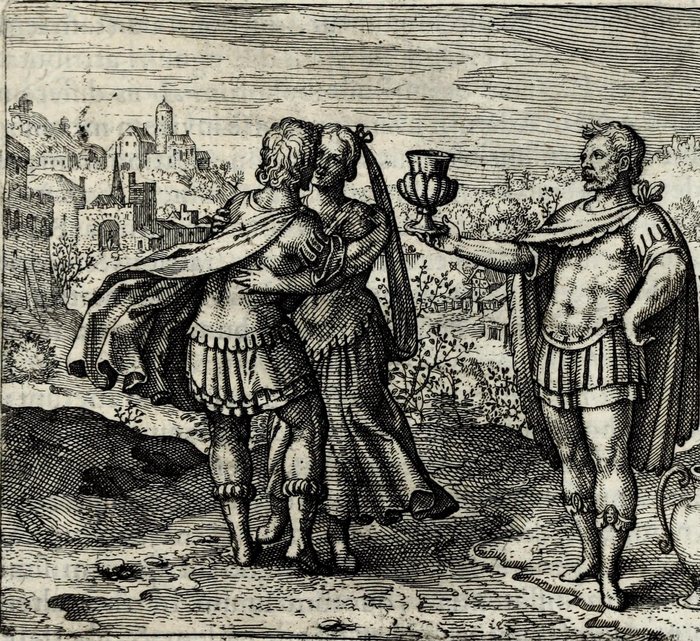
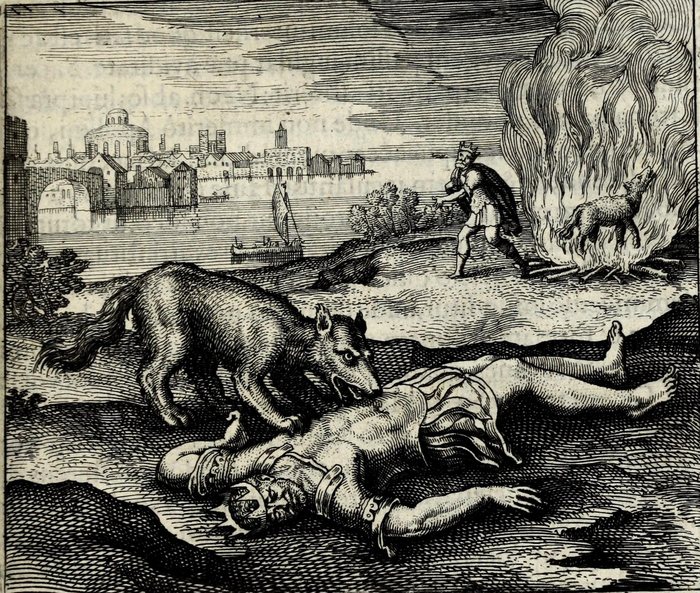
The King and the Queen as the central motif, with the Serpent and the Dragon, the Crown, the Demon and the Monster, and the Angel and the Wing in a secondary part. From The Flamel figures.
What is happening
Apocalypse 19:11 “And I saw heaven opened: and behold a white horse. And he that sat upon him was called faithful and true: and with justice doth he judge and fight.”
Apocalypse 19:14 “And the armies that are in heaven followed him on white horses, clothed in fine linen, white and clean.”
Apocalypse 20:3 “And he cast him into the bottomless pit and shut him up and set a seal upon him, that he should no more seduce the nations till the thousand years be finished.”
Key · 5 motifs
Tap a motif on the picture, or a line below. Its note opens under the line, with the reading its author gave it.
- Primary motif
- Secondary motifs · 4
The picture
A king wearing three crowns is enthroned on a cloud at the right while a green many-headed hydra rises before him; below, a red horned figure kneels and a winged figure in blue holds a key; riders on clouds at the upper left; the King and the Queen as the central motif, the Serpent and the Dragon and the Crown by eye; a red horned figure kneels in chains below the throne. By eye
The reading
The picture read whole, in the archive's words, from the sources quoted on the marks. Read on, and the picture follows: the motif under discussion keeps its colour.
Two chapters of the Apocalypse are painted on one sheet, and the seam between them runs through the middle. Above, on a cloud at the right, a king sits enthroned with a sword coming out of his mouth and three crowns stacked on his head, while riders come across the clouds at the upper left and a green many-headed beast rears up before him. Below, an angel in blue and gold holds a key in one hand and a chain in the other, and at the end of the chain a red horned devil kneels beside a fire. The Wellcome's cataloguer read the whole as the culmination of the alchemical process, the sublimation of base matter. The archive reads the two halves from the nineteenth and twentieth chapters, which is where every detail comes from.
The king is the rider of the nineteenth chapter, the one called Faithful and True and the Word of God, who comes on a white horse with the armies of heaven behind him. Out of his mouth proceedeth a sharp two-edged sword, that with it he may strike the nations; he was clothed with a garment sprinkled with blood. The painter has taken both literally: the sword stands straight out of the king's mouth, and his white robe is flecked with red. The riders on the clouds at the upper left are the armies that followed him on white horses.
The chapter says that on his head were many diadems. Three are painted, one on another, and the record's title counts them.
The angel is the twentieth chapter's: I saw an angel coming down from heaven, having the key of the bottomless pit and a great chain in his hand. He is painted with wings, a key held up in the right hand and the chain running down from the left, and his face is calm. He is doing a job.
The job is binding the devil. The chapter says the angel laid hold on the dragon, the old serpent, which is the devil and Satan, and bound him for a thousand years, and cast him into the pit. Smith's painter drew the bound one as a red devil with horns and a tail, on his knees, chained at the neck, at the edge of a roaring fire that stands for the pit.
A complication rises through the cloud above, a green beast, with several heads on long necks, in front of the king. The chapter calls the thing that is bound a dragon and an old serpent, and here are both a dragon above and a devil below. Perhaps the painter meant the beast for the seven-headed beast of the earlier chapters, whom the rider on the white horse defeats in the nineteenth, and the devil for the dragon bound in the twentieth; that would make the sheet a sequence, defeat above, imprisonment below. The archive thinks so but cannot prove it from the sheet, and records the beast as seen.
As alchemy, the Wellcome's reading is plausible: the king with the sword is the perfected stone, and the devil in chains is the base matter overcome. The designer left no words to say so, and the words that are on the sheet, if it once had a caption, are not held. What the archive can give is the text the picture was made from, and it gives that verse by verse.
Decoded: every motif is marked, and each mark carries the reading its author gave it, quoted from the text, or says that it is observed on the picture and not read. The reading above is the archive's own, made from those sources and no others.
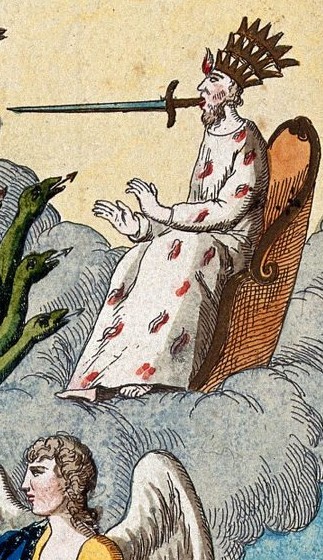
A rank rather than a person. Read the robe, the throne and what comes out of the mouth before you read the face.
In plain words The king on the cloud has a sword coming out of his mouth, which is how the nineteenth chapter of the Apocalypse describes the rider called the Word of God: out of his mouth proceedeth a sharp two-edged sword. His robe is flecked red because the chapter says his garment was sprinkled with blood.
Apocalypse 19:15 “And out of his mouth proceedeth a sharp two-edged sword, that with it he may strike the nations.”
Apocalypse 19:13 “And he was clothed with a garment sprinkled with blood. And his name is called: THE WORD OF GOD.”
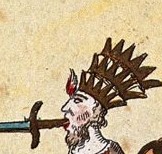
Completion, and in the Kabbalistic reading the first sephirah, the point at which the work is no longer yours.
In plain words The chapter says on his head were many diadems. The painter has stacked three.
Apocalypse 19:12 “And his eyes were as a flame of fire: and on his head were many diadems.”
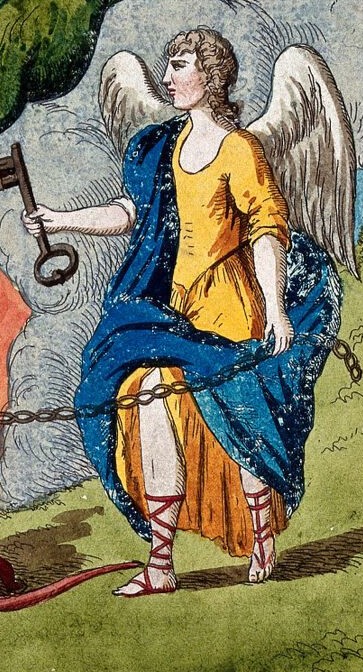
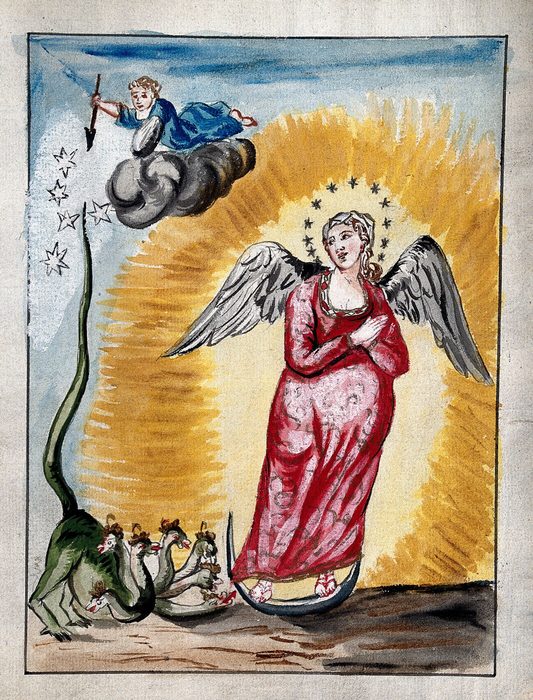
The mark of an errand rather than a nature. Note whether the wings are open, folded, or given to the figure by someone else.
In plain words The angel below with the key and the chain is the angel of the twentieth chapter, who comes down with the key of the bottomless pit and a great chain to bind the dragon for a thousand years.
Apocalypse 20:1 “And I saw an angel coming down from heaven, having the key of the bottomless pit and a great chain in his hand.”
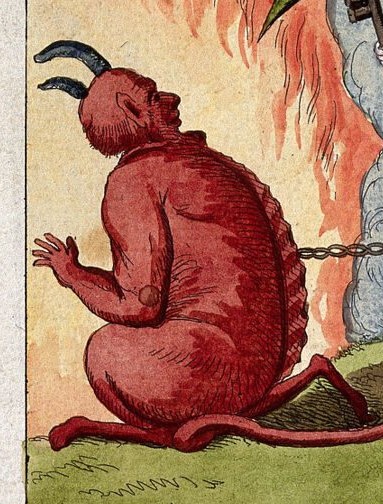
Almost always a composite and almost always subordinate. Note what it is made of and whether it is bound.
In plain words The red horned figure kneeling in chains at the edge of the fire is the one the angel binds: the dragon, the old serpent, which is the devil and Satan. The painter has drawn him as a devil rather than a dragon.
Apocalypse 20:2 “And he laid hold on the dragon, the old serpent, which is the devil and Satan, and bound him for a thousand years.”
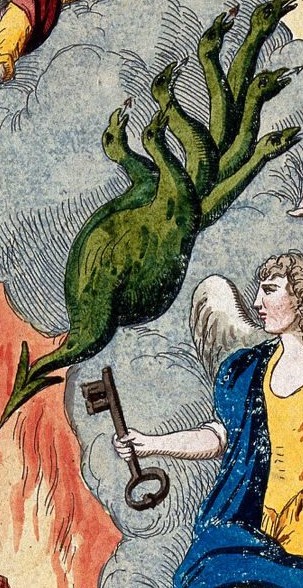
A single creature doing two opposite jobs. Note whether it is bound, killed, or eating itself.
In plain words The green many-headed beast rising through the cloud is the other candidate for the chapter's dragon, and the painter has drawn both. Which one the text means is not settled here, so the beast is recorded and left unread.
Symbolica The chapter that gives the angel, the key and the chain calls what is bound a dragon and an old serpent, and this painter has drawn both: a serpent in chains below and a many-headed beast above. Which one the twentieth chapter means is not settled here, so the beast is recorded and left unread.
Also carrying the King and the Queen
35 works carry it. The 6 where it is the central motif are here. The symbol.
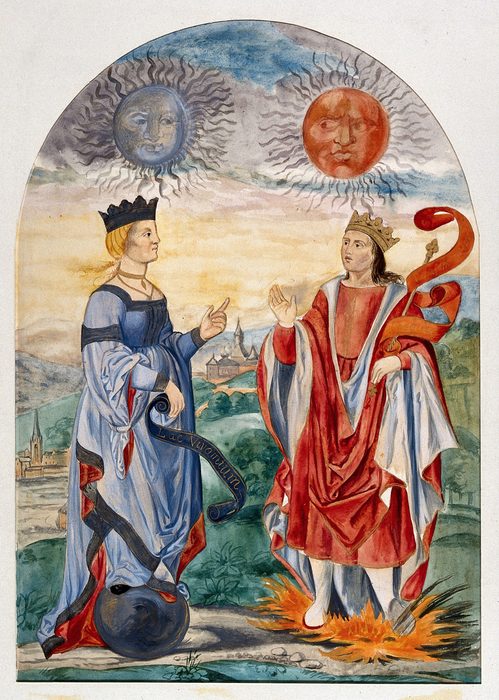
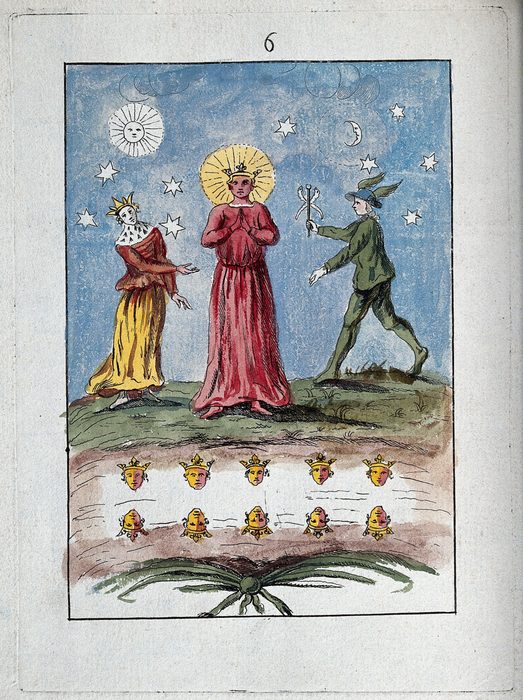
Where the detail is the subject
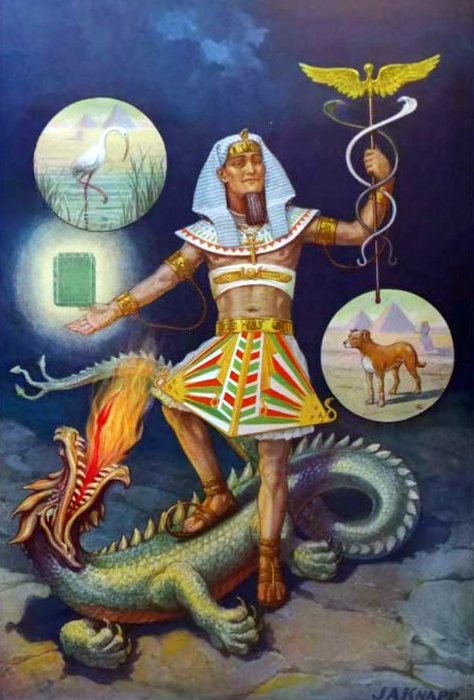
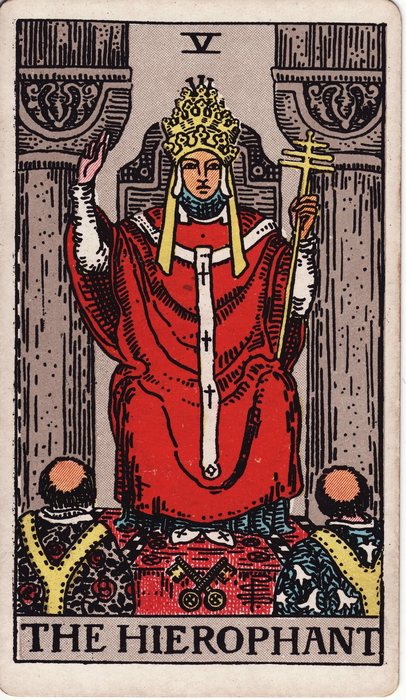
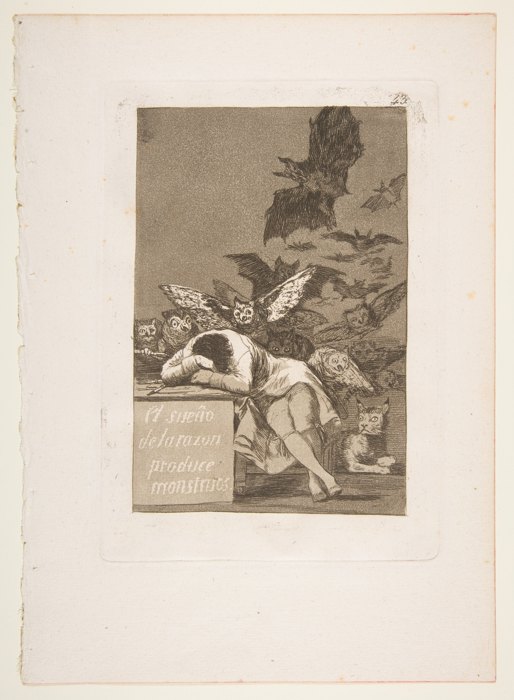
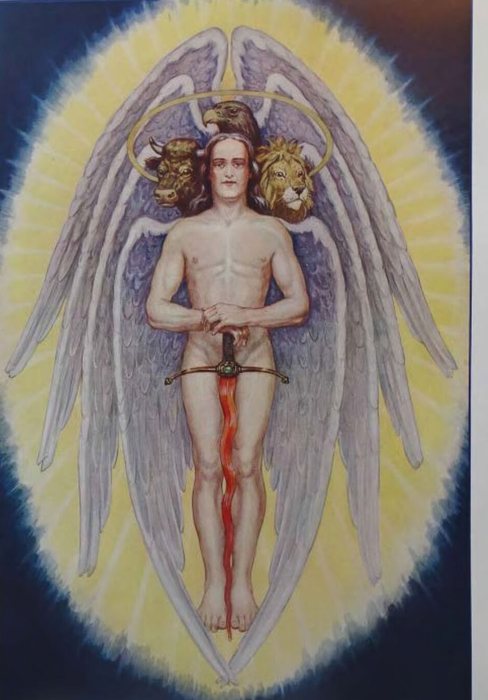
the Serpent and the Dragon · the Crown · the Demon and the Monster · the Angel and the Wing
Each of these is in the picture without being what it is about. Below, one work that is about each.
In the same series
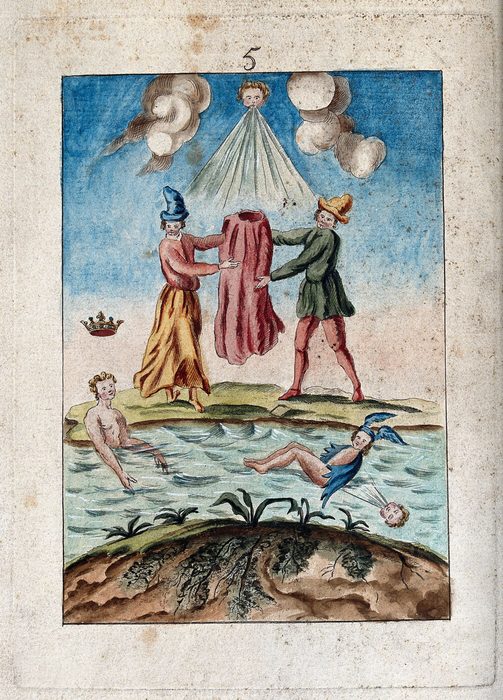
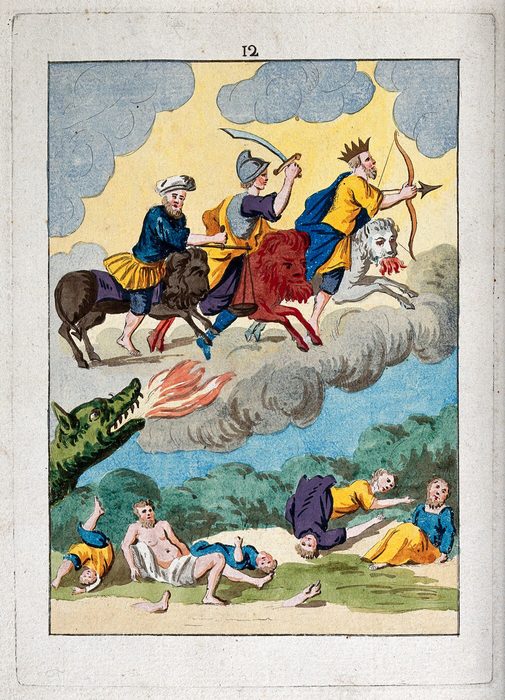
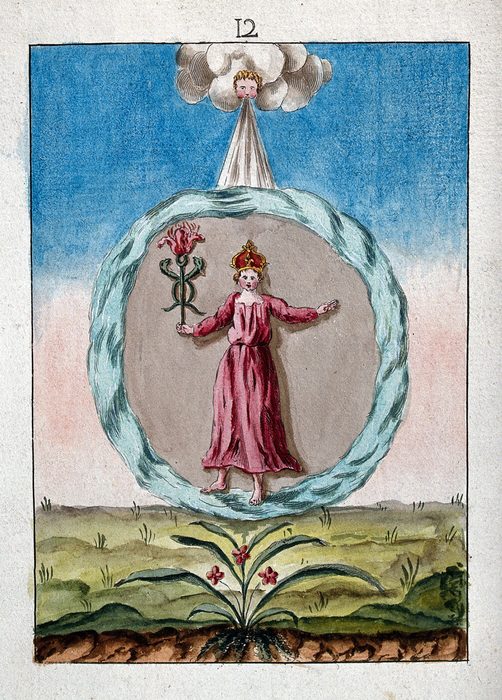
Record
One symbol a week, decoded.
This picture is free at full size from its source, linked above. What an address gets is the Sunday letter: one picture, one symbol marked on it, what it meant and who said so, and the master files of the decoded plates as they are verified. Leave any time.
Free, one letter a week, unsubscribe in one click. How the address is used.
Scroll or pinch to zoom · drag to move · double-tap for 1:1 · 1009 by 1400 pixel web copy; the source file is linked under Record