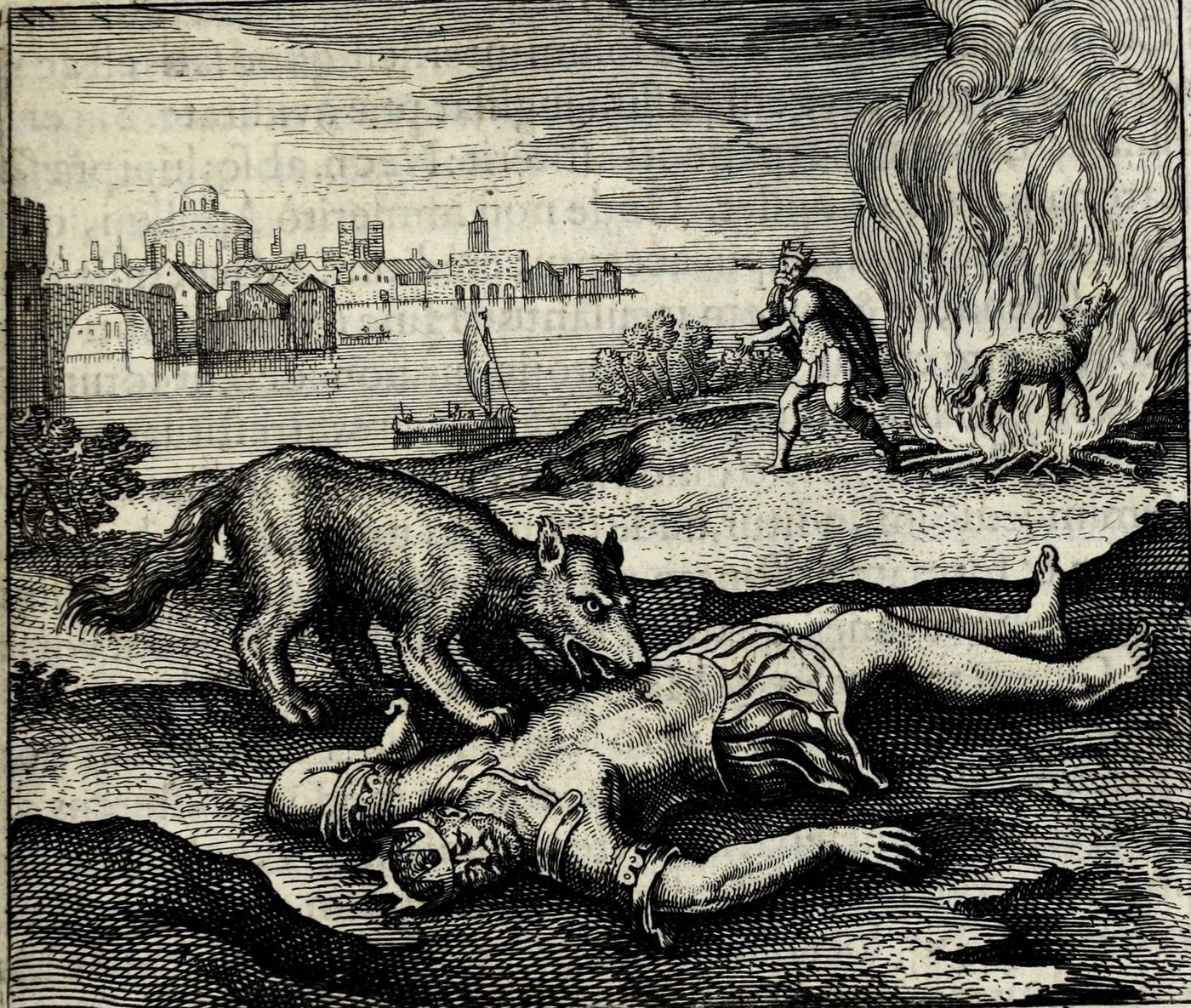
Regem lupus voravit & vitæ crematus reddidit
The King and the Queen as the central motif, with Death and the Skull, and Fire in a secondary part. From Atalanta Fugiens.
What is happening
Michael Maier, 1618 “Regem lupus voravit & vitæ crematus reddidit.”
Symbolica, 2026 Maier’s Latin, put into English here: The wolf devoured the king and, burned, gave him back to life.
Michael Maier, 1618 “Multivorum captare lupum tibi cura sit, illi
Projiciens Regis corpus, ut ingluviem
Hoc domet, hunc dispone rogo, Vulcanus ubi ignem
Exicet, in cineres belua quo redeat.
Illud agas iterum atque iterum, sic morte resurget
Rexque Leonino corde superbus erit.”
Symbolica, 2026 Maier’s epigram, put into English here: Make it your care to catch the all-devouring wolf, and throw him the body of the King, that his gluttony may tame it. Then lay the wolf on a pyre where Vulcan will rouse the fire, so that the beast returns to ashes. Do this again and again, and so the King will rise again through death, and be proud with the heart of a Lion.
Key · 3 motifs
Tap a motif on the picture, or a line below. Its note opens under the line, with the reading its author gave it.
- Primary motif
- Secondary motifs · 2
The picture
The wolf over the body of the king, and the burning at the right where he is given back. By eye
The reading
The picture read whole, in the archive's words, from the sources quoted on the marks. Read on, and the picture follows: the motif under discussion keeps its colour.
‘Regem lupus voravit & vitæ crematus reddidit’: the wolf devoured the king and, burned, gave him back to life. The plate has the whole sequence: the wolf at his meal in the foreground, the king's crowned body under him, and at the upper right the same wolf driven onto a pyre.
‘Multivorum captare lupum tibi cura sit’, make it your care to catch the all-devouring wolf, ‘illi / Projiciens Regis corpus’, throw him the body of the king, ‘ut ingluviem / Hoc domet’, that his gluttony may tame it. The wolf is the devouring agent, and the king has to go into him.
‘hunc dispone rogo, Vulcanus ubi ignem / Exicet’, then lay the wolf on a pyre where Vulcan will rouse the fire, ‘in cineres belua quo redeat’, so that the beast returns to ashes. What ate the king is itself consumed.
‘Illud agas iterum atque iterum’, do this again and again, ‘sic morte resurget / Rexque Leonino corde superbus erit’, and so the king will rise again through death, and be proud with the heart of a lion. The king is the metal, the wolf is what dissolves it, and the fire burns the solvent off; repeated, the metal comes back purer each time. Maier drew a king to make the reader care whether he came back.
Decoded: every motif is marked, and each mark carries the reading its author gave it, quoted from the text, or says that it is observed on the picture and not read. The reading above is the archive's own, made from those sources and no others.
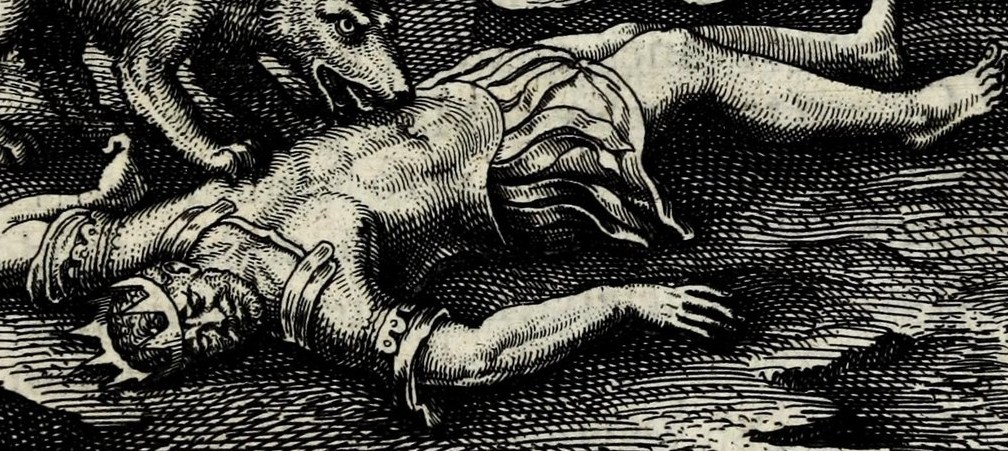
A rank rather than a person. Read the robe, the throne and what comes out of the mouth before you read the face.
In plain words A crowned king lies dead on the ground and a wolf feeds on him. Maier's promise is at the end of the epigram: do this again and again, and the king will rise through death with the heart of a lion. He has to be eaten to be renewed.
Michael Maier, 1618 “Illud agas iterum atque iterum, sic morte resurget / Rexque Leonino corde superbus erit.”
Symbolica Maier's Latin, put into English here: Do this again and again, and so the King will rise again through death, and be proud with the heart of a Lion.
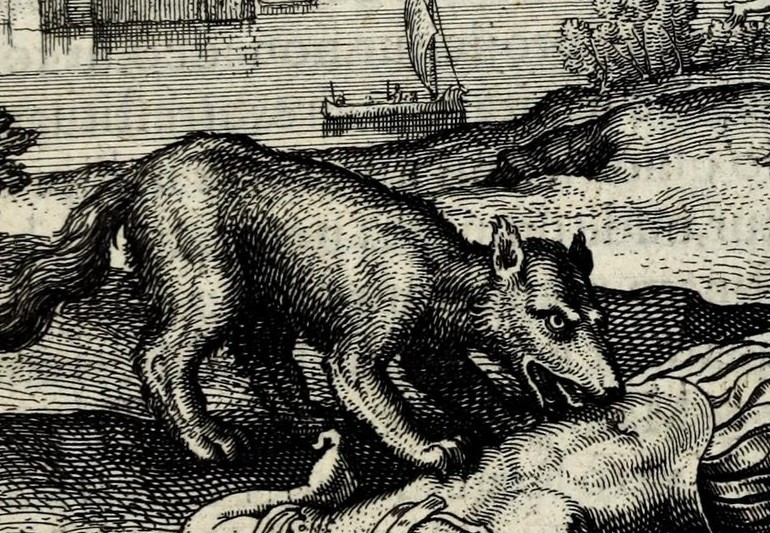
An office, not an ending. Note what Death is holding and who is being made to look at it.
In plain words The wolf is the king's death and the means of his return. Maier tells the reader to catch the all-devouring wolf and throw him the body of the king, so that his gluttony tames it. The eating is the operation.
Michael Maier, 1618 “Multivorum captare lupum tibi cura sit, illi / Projiciens Regis corpus, ut ingluviem / Hoc domet,”
Symbolica Maier's Latin, put into English here: Make it your care to catch the all-devouring wolf, and throw him the body of the King, that his gluttony may tame it.
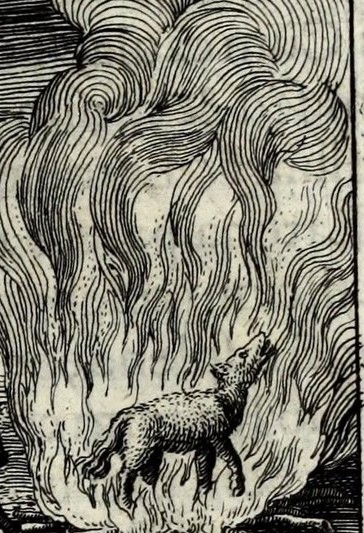
A count, a catastrophe, or the visible part of something that has no body. Note whether the flames are arranged in a number, breaking something, or standing where a figure would be.
In plain words In the background a man drives the wolf toward a pyre, and the flames go up. Once the wolf has eaten the king he is burned to ashes, and the king comes out of the ashes. The fire is the second half of the operation.
Michael Maier, 1618 “hunc dispone rogo, Vulcanus ubi ignem / Exicet, in cineres belua quo redeat.”
Symbolica Maier's Latin, put into English here: Then lay the wolf on a pyre where Vulcan will rouse the fire, so that the beast returns to ashes.
Also carrying the King and the Queen
35 works carry it. The 6 where it is the central motif are here. The symbol.
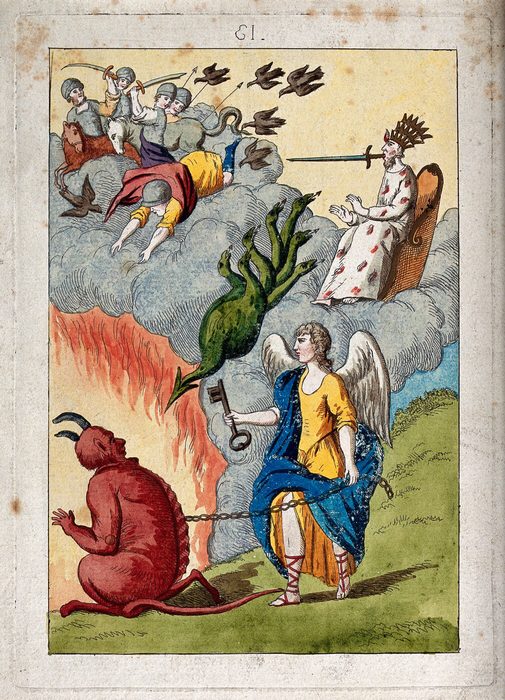
Where the detail is the subject
Each of these is in the picture without being what it is about. Below, one work that is about each.
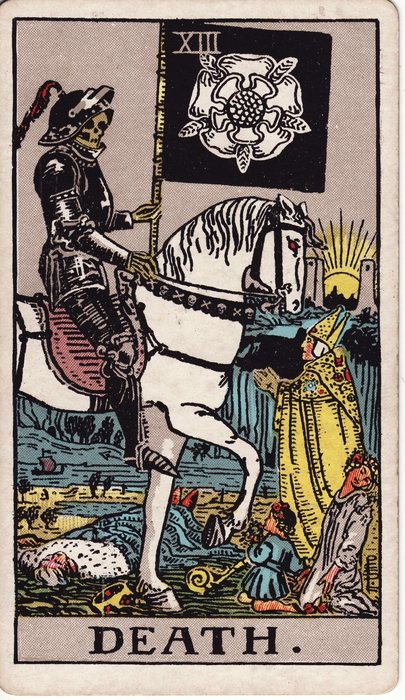
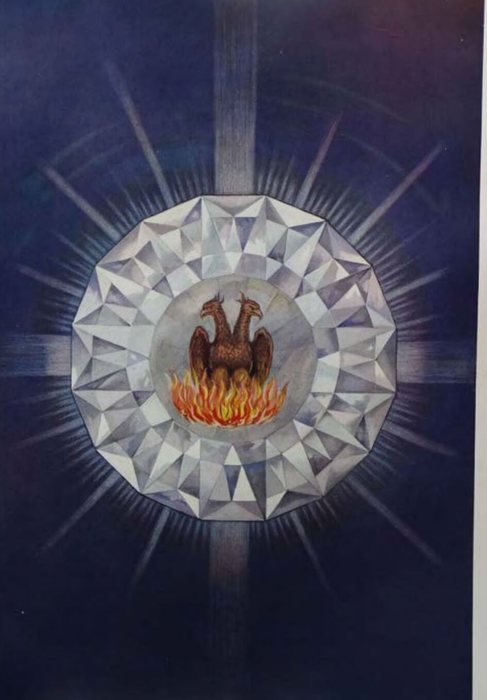
In the same series
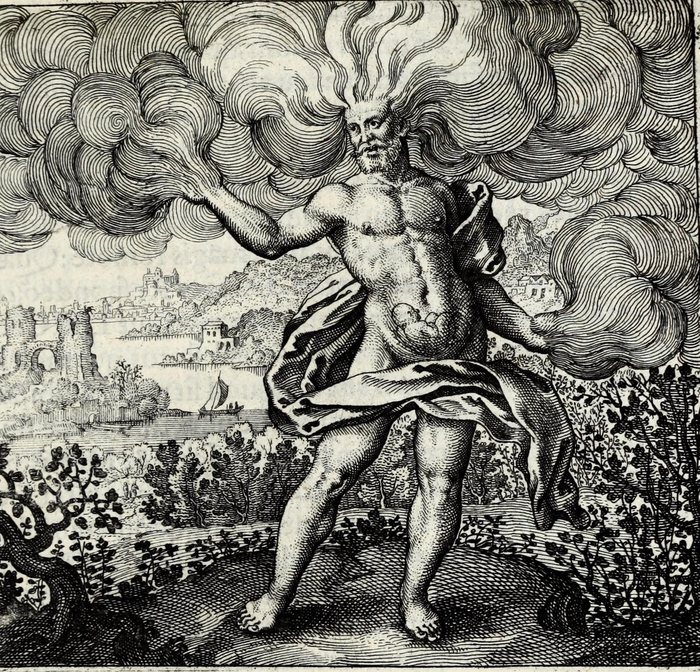 Portavit eum ventus in ventre suo
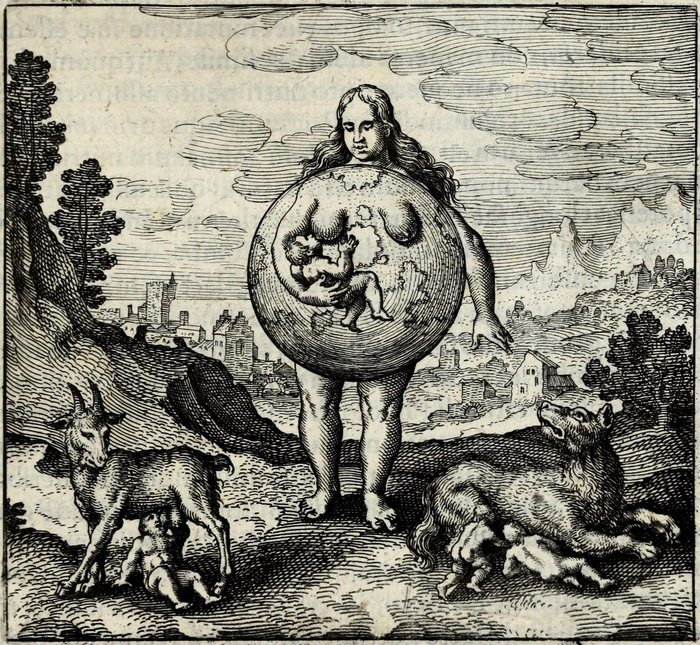 Nutrix ejus terra est
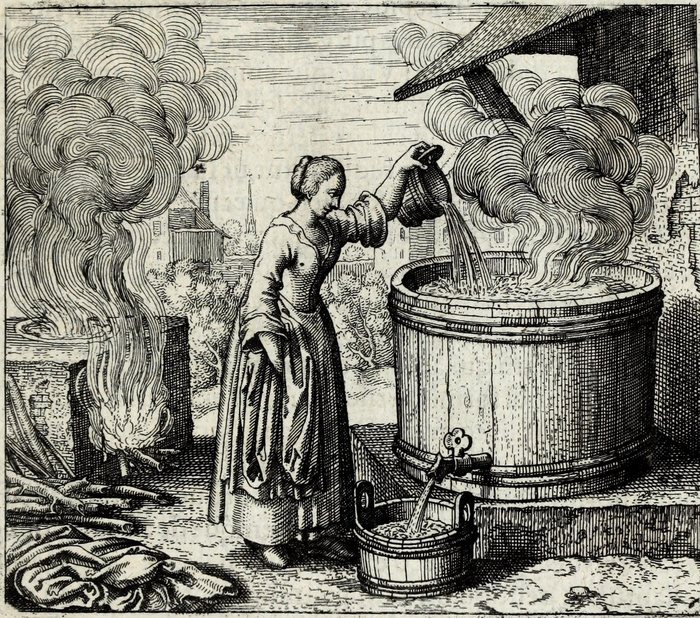 Vade ad mulierem lavantem pannos, tu fac similiter
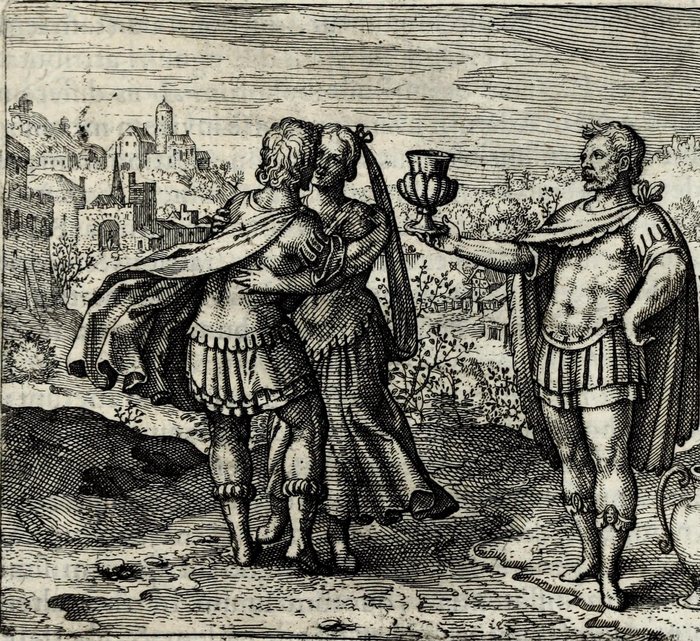 Conjunge fratrem cum sorore & propina illis poculum amoris
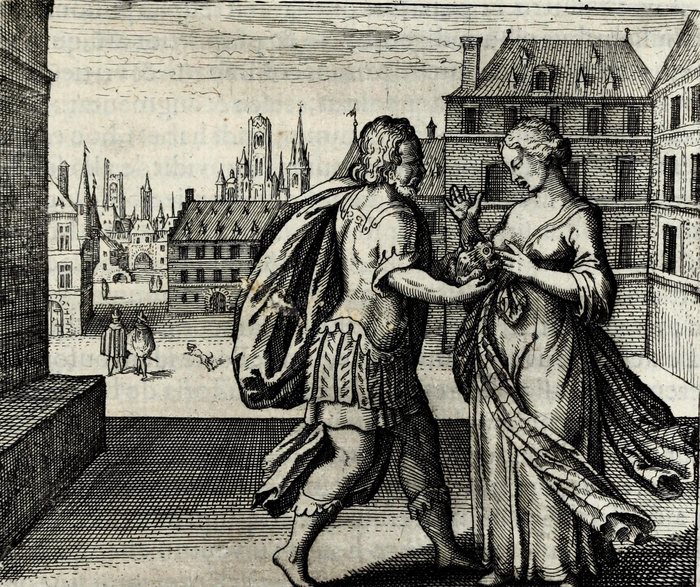 Appone mulieri super mammas bufonem, ut ablactet eum, & moriatur mulier, sitque bufo grossus de lacte
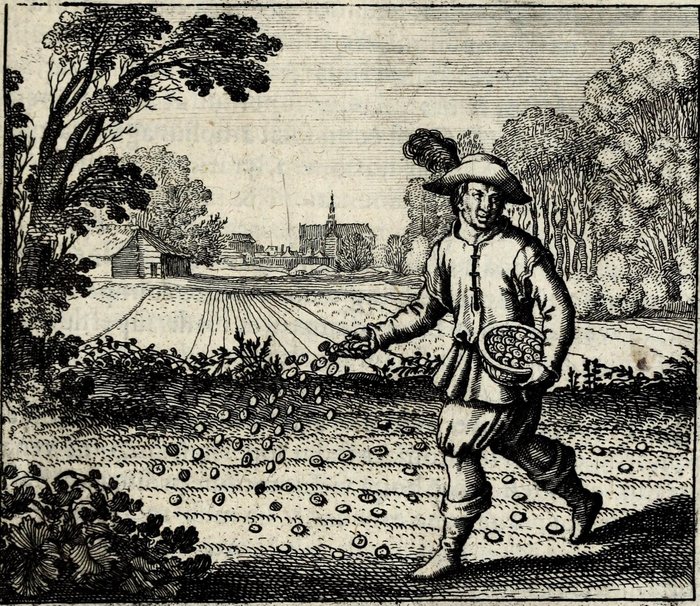 Seminate aurum vestrum in terram albam foliatam
Record
One symbol a week, decoded.
This picture is free at full size from its source, linked above. What an address gets is the Sunday letter: one picture, one symbol marked on it, what it meant and who said so, and the master files of the decoded plates as they are verified. Leave any time.
Free, one letter a week, unsubscribe in one click. How the address is used.
Scroll or pinch to zoom · drag to move · double-tap for 1:1 · 1400 by 1185 pixel web copy; the source file is linked under Record