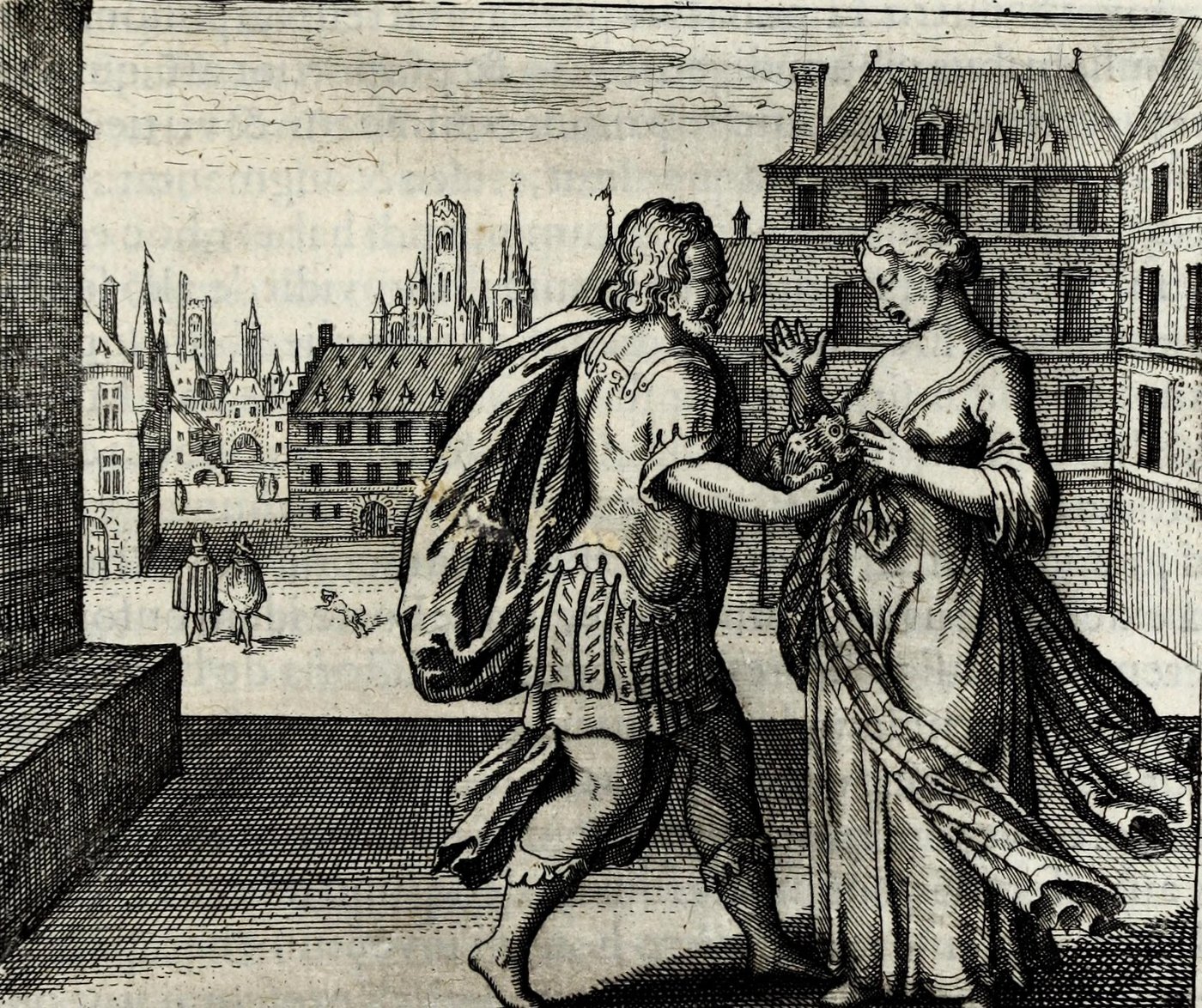
Appone mulieri super mammas bufonem, ut ablactet eum, & moriatur mulier, sitque bufo grossus de lacte
The toad as the central motif, filed under the Demon and the Monster. From Atalanta Fugiens.
What is happening
Michael Maier, 1618 “Appone mulieri super mammas bufonem, ut ablactet eum, & moriatur mulier, sitque bufo grossus de lacte.”
Symbolica, 2026 Maier’s Latin, put into English here: Set the toad at the woman's breast.
Michael Maier, 1618 “Foemineo gelidus ponatur pectore Bufo,
Instar ut infantis lactea pocla bibat.
Crescat & in magnum vacuata per ubera tuber,
Et mulier vitam liquerit aegra suam.
Inde tibi facies medicamen nobile, virus
Quod fuget humano corde, levetque luem.”
Symbolica, 2026 Maier’s epigram, put into English here: Let a cold Toad be set on a woman's breast, that it may drink the milky draught the way an infant does. Let it swell into a great tumour as the breasts are emptied, and let the woman, sickening, leave her life. From this you will make a noble medicine, one that drives the poison from the human heart and lifts the plague.
Key · 1 motif
Tap a motif on the picture, or a line below. Its note opens under the line, with the reading its author gave it.
- Primary motif
The picture
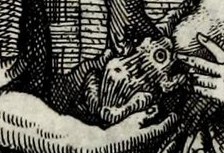
The toad at the breast, which the motto names; the archive has no group for a toad and files it with the beasts. By eye
The reading
The picture read whole, in the archive's words, from the sources quoted on the marks. Read on, and the picture follows: the motif under discussion keeps its colour.
The fifth emblem is the cruellest picture in the book, and Maier means it. ‘Appone mulieri super mammas bufonem, ut ablactet eum, & moriatur mulier, sitque bufo grossus de lacte’: set the toad at the woman's breast to be weaned, let the woman die, and let the toad grow fat on the milk. Merian drew a man doing it in a town square.
‘Foemineo gelidus ponatur pectore Bufo’, let a cold toad be set on a woman's breast, ‘Instar ut infantis lactea pocla bibat’, that it may drink the milky draught the way an infant does. Then it swells, ‘Et mulier vitam liquerit aegra suam’, and the woman, sickening, leaves her life. The last two lines turn it round: ‘Inde tibi facies medicamen nobile’, from this you will make a noble medicine, one that drives the poison from the human heart.
The archive has no group for a toad and files it with the beasts. What the emblem says about the beast is what the whole book says about its dragons: the poison is the material of the cure, and the cure costs the nurse her life.
Decoded: every motif is marked, and each mark carries the reading its author gave it, quoted from the text, or says that it is observed on the picture and not read. The reading above is the archive's own, made from those sources and no others.
Almost always a composite and almost always subordinate. Note what it is made of and whether it is bound.
In plain words A toad is being set to a woman's breast to drink like an infant. Maier's recipe is grim and exact: the toad swells as the breasts empty, the woman dies of it, and from the toad a medicine is made that drives poison from the human heart. The toad is the poison that becomes the cure.
Michael Maier, 1618 “Foemineo gelidus ponatur pectore Bufo, / Instar ut infantis lactea pocla bibat.”
Symbolica Maier's Latin, put into English here: Let a cold Toad be set on a woman's breast, that it may drink the milky draught the way an infant does.
Also carrying the Demon and the Monster
23 works carry it. The 6 where it is the central motif are here. The symbol.
In the same series
Record
One symbol a week, decoded.
This picture is free at full size from its source, linked above. What an address gets is the Sunday letter: one picture, one symbol marked on it, what it meant and who said so, and the master files of the decoded plates as they are verified. Leave any time.
Free, one letter a week, unsubscribe in one click. How the address is used.
Scroll or pinch to zoom · drag to move · double-tap for 1:1 · 1400 by 1174 pixel web copy; the source file is linked under Record