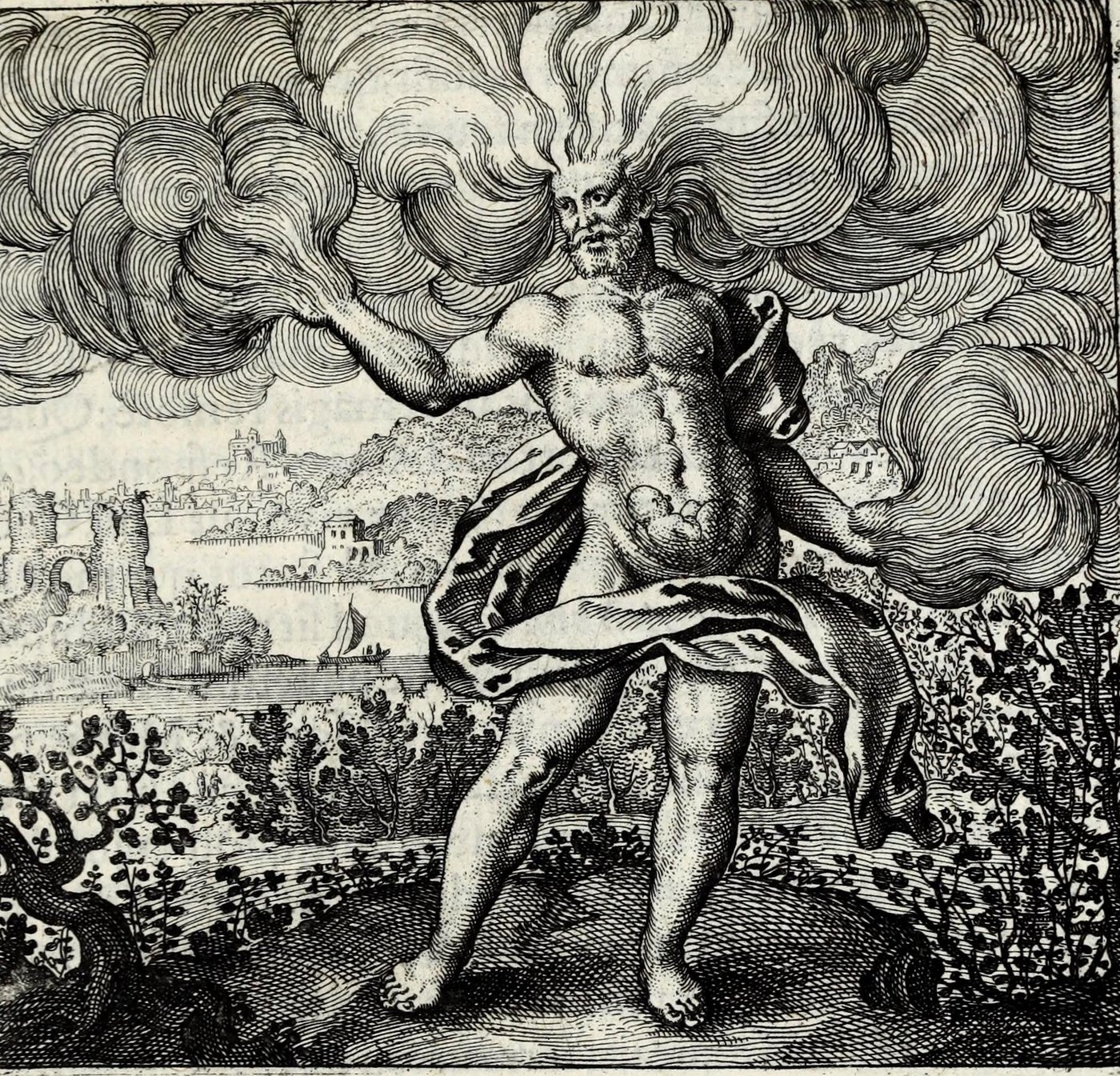
Portavit eum ventus in ventre suo
The Divine as the central motif, with the King and the Queen, and the Water in a secondary part. From Atalanta Fugiens.
What is happening
Michael Maier, 1618 “Portavit eum ventus in ventre suo.”
Symbolica, 2026 Maier’s Latin, put into English here: The wind carried him in its belly.
Michael Maier, 1618 “Embryo ventosa Boreae qui clauditur alvo,
Vivus in hanc lucem si semel ortus erit;
Unus is Heroum cunctos superare labores
Arte, manu, forti corpore, mente, potest.
Ne tibi sit Caeso, nec abortus inutilis ille,
Non Agrippa, bono sydere sed genitus.”
Symbolica, 2026 Maier’s epigram, put into English here: The embryo shut in the windy belly of Boreas, if once it is born alive into this light, can alone surpass every labour of the Heroes, by art, by hand, by strong body, by mind. Let him be no Caeso to you, nor that useless miscarriage, nor an Agrippa, but one born under a good star.
Key · 3 motifs
Tap a motif on the picture, or a line below. Its note opens under the line, with the reading its author gave it.
- Primary motif
- Secondary motifs · 2
The picture
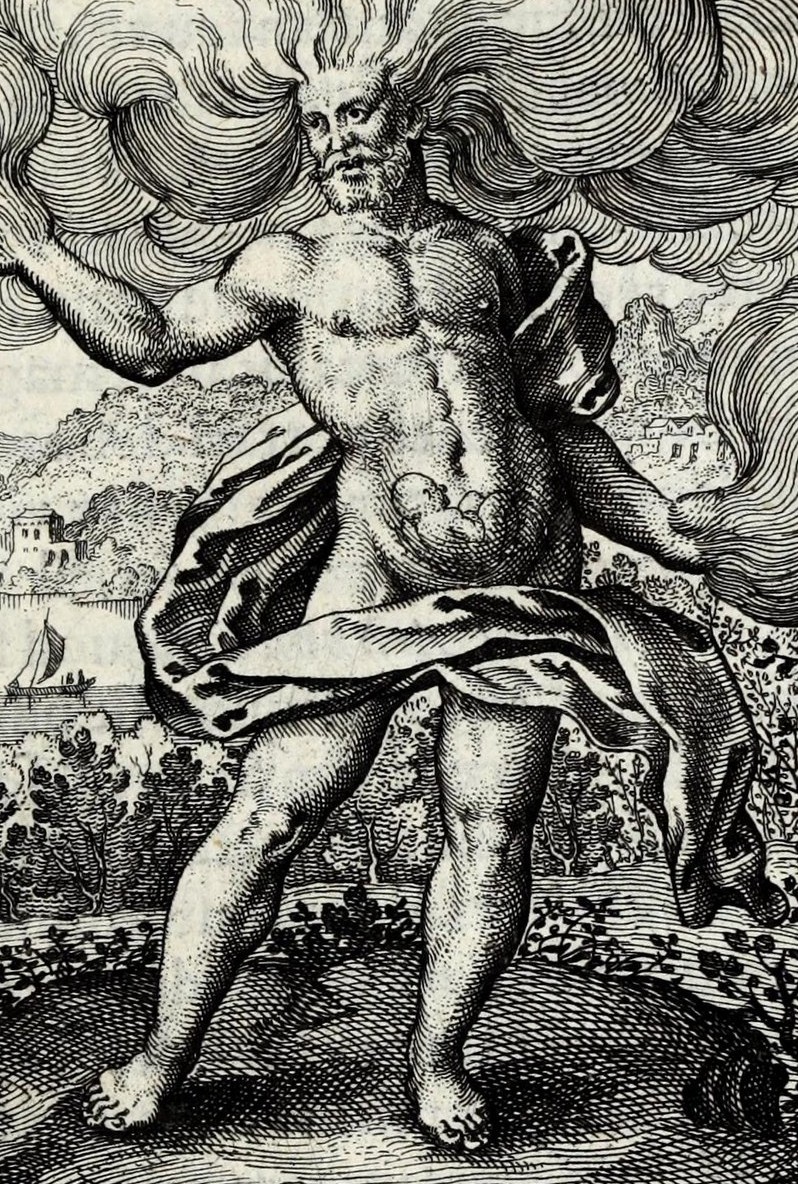
Boreas the north wind strides through his own clouds with the child visible in his belly, a bay and a ruin behind. By eye
The reading
The picture read whole, in the archive's words, from the sources quoted on the marks. Read on, and the picture follows: the motif under discussion keeps its colour.
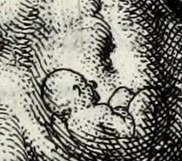
Maier opens the Atalanta Fugiens with a birth that has not happened yet. The motto is ‘Portavit eum ventus in ventre suo’, the wind carried him in its belly, and Merian drew the sentence literally: Boreas the north wind striding through the clouds he breathes out, with a child visible inside him.
The god is only the container. Maier's epigram is about the ‘Embryo ventosa Boreae qui clauditur alvo’, the embryo shut in the windy belly of Boreas, and about what it will be ‘Vivus in hanc lucem si semel ortus erit’, if once it is born alive into this light.
It will be a hero: ‘Unus is Heroum cunctos superare labores’, able alone to surpass every labour of the heroes, ‘Arte, manu, forti corpore, mente, potest’, by art, by hand, by strong body, by mind. Then three names for how births go wrong, Caeso, the useless miscarriage, Agrippa, and the wish that this one be ‘bono sydere sed genitus’, born under a good star.
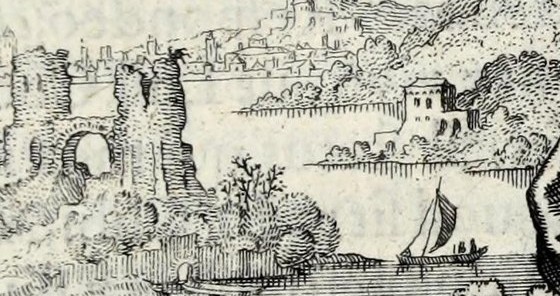
The bay behind him, with its boat and its ruin, is scenery, and the epigram has nothing to say about it. So the first emblem sets the rule for the forty-nine after it: the picture is a motto acted out, the epigram says what the actors stand for, and everything else is a landscape for them to stand in.
Decoded: every motif is marked, and each mark carries the reading its author gave it, quoted from the text, or says that it is observed on the picture and not read. The reading above is the archive's own, made from those sources and no others.
God shown, or pointed at. Look for what stands where a face would be: a name in a cloud, a circle above the top of a diagram, a ring of verses, a sign over a head.
In plain words The wind is drawn as a god: a bearded giant striding through the clouds he breathes out, with a child showing through the skin of his belly. Maier's first emblem is about the child, not the god; Boreas is the belly it has to be born from.
Michael Maier, 1618 “Embryo ventosa Boreae qui clauditur alvo, / Vivus in hanc lucem si semel ortus erit;”
Symbolica Maier's Latin, put into English here: The embryo shut in the windy belly of Boreas, if once it is born alive into this light
In the alchemical pictures a child is the thing being made. In the Apocalypse it is the thing under attack.
In plain words The child in the belly is what the work makes. Maier says that if it is once born alive it will outdo every labour of the heroes, and he names three ways a birth goes wrong, Caeso, the useless miscarriage, Agrippa, before wishing this one born under a good star.
Michael Maier, 1618 “Unus is Heroum cunctos superare labores / Arte, manu, forti corpore, mente, potest.”
Symbolica Maier's Latin, put into English here: can alone surpass every labour of the Heroes, by art, by hand, by strong body, by mind
Where a thing is taken apart rather than destroyed. Note whether the figure is in the water, on it, or pouring it.
In plain words A bay with a boat and a ruined arch fills the left of the picture. It is where Boreas happens to be striding; the epigram has nothing to say about it, and the archive records it as seen.
Symbolica The sea, the boat and the ruin are the landscape of the emblem, and the epigram does not mention them. Observed on the plate.
Also carrying the Divine
39 works carry it. The 6 where it is the central motif are here. The symbol.
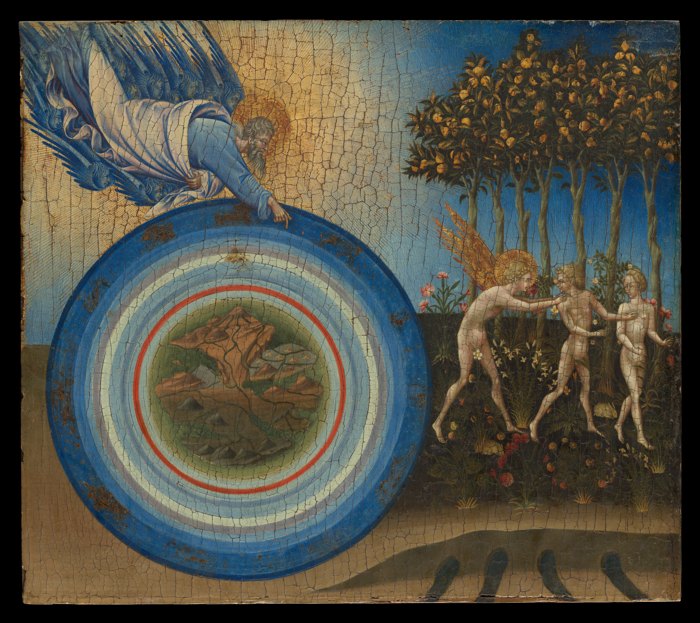 The Creation of the World and the Expulsion from Paradise
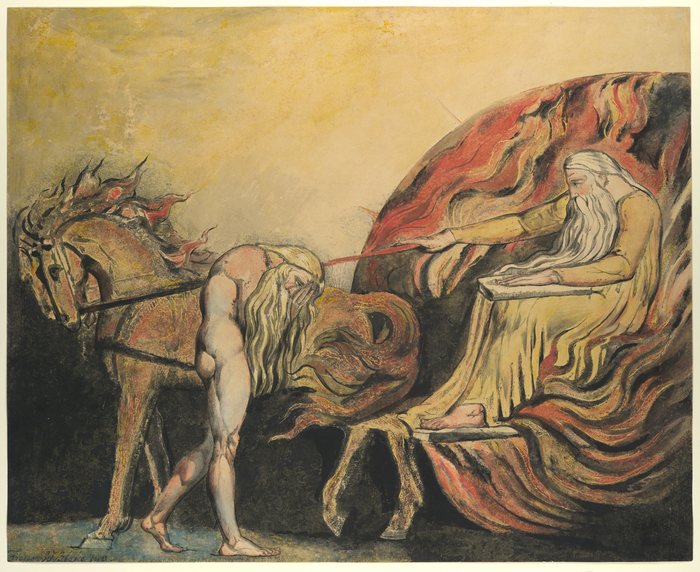 God Judging Adam
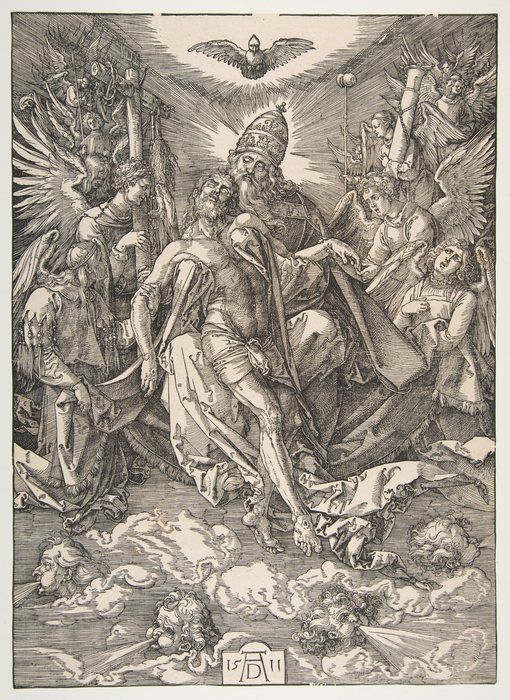 The Holy Trinity
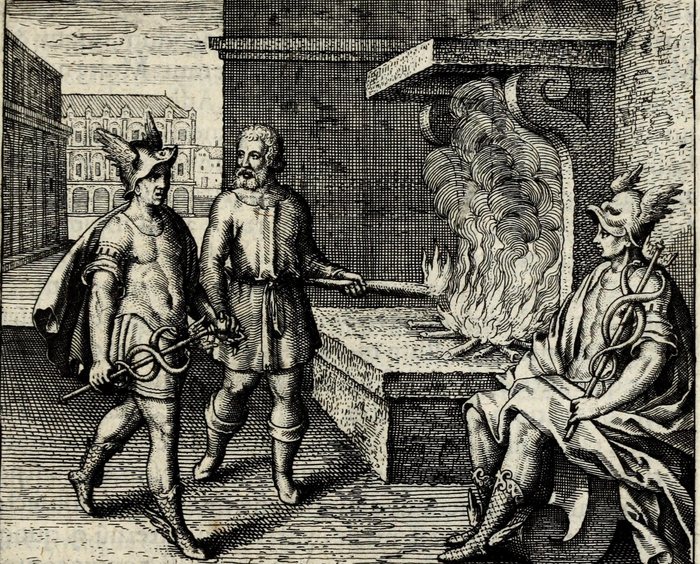 Da ignem igni, Mercurium Mercurio, & sufficit tibi
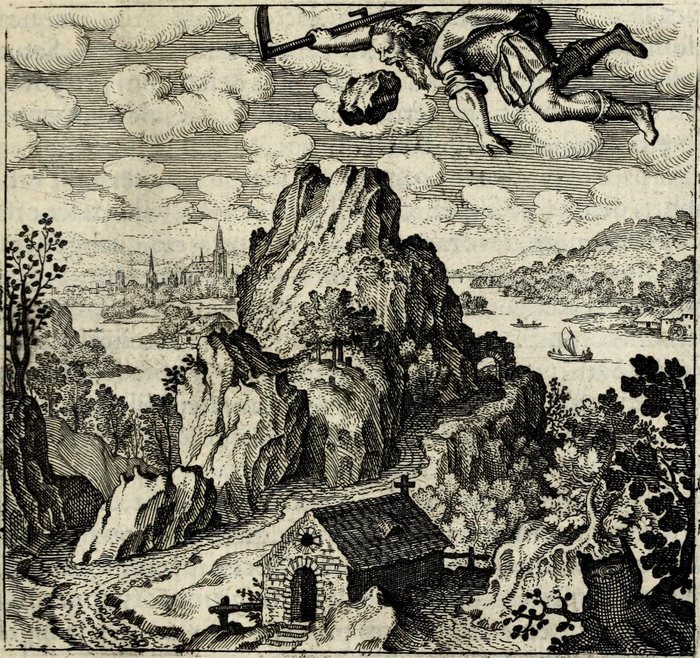 Lapis, quem Saturnus, pro Jove filio devoratum, evomuit, Pro monumento in Helicone mortalibus est positus
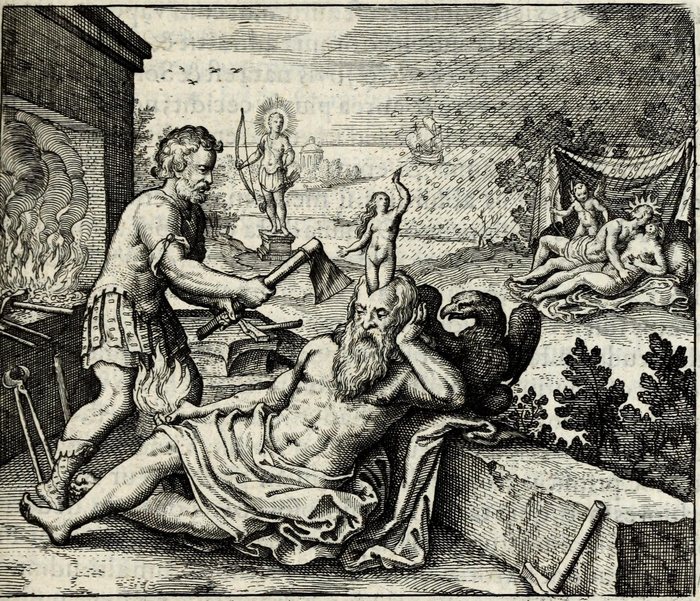 Aurum pluit, dum nascitur Pallas Rhodi, & Sol concumbit Veneri
Where the detail is the subject
the King and the Queen · the Water
Each of these is in the picture without being what it is about. Below, one work that is about each.
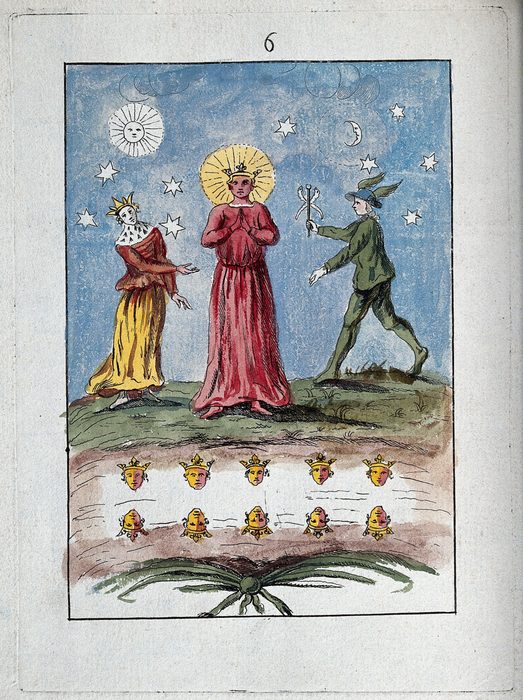
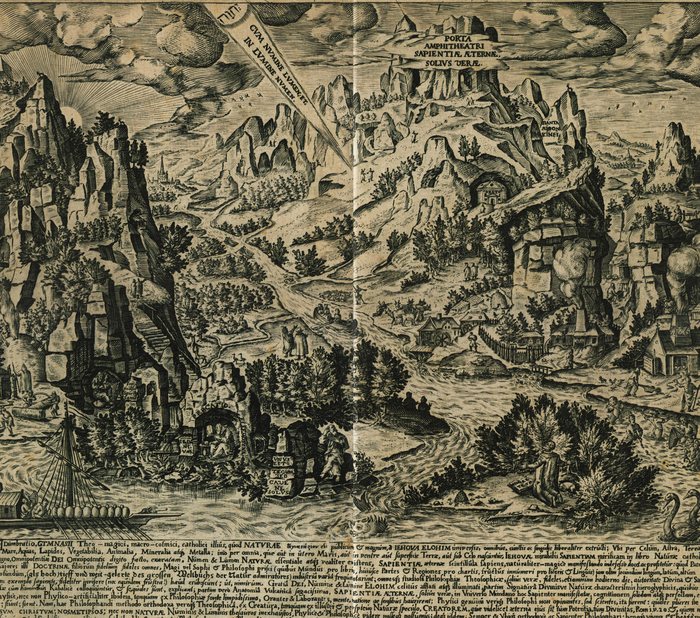
In the same series
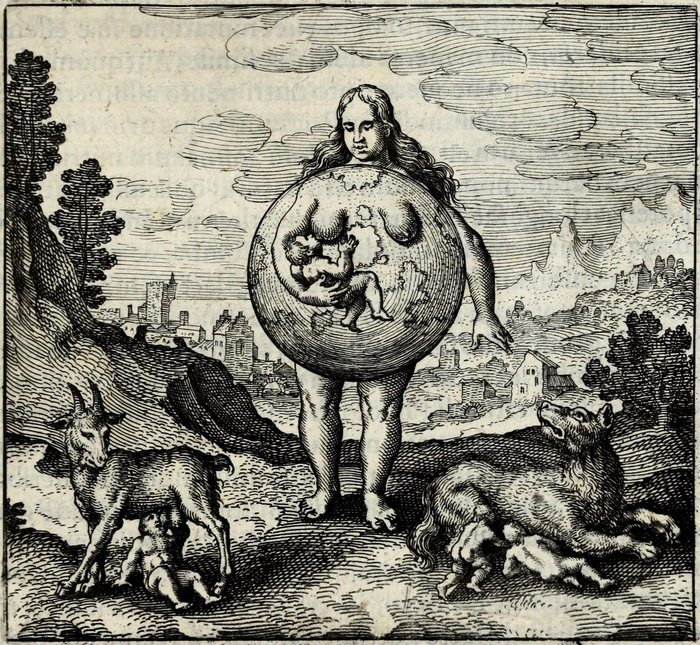 Nutrix ejus terra est
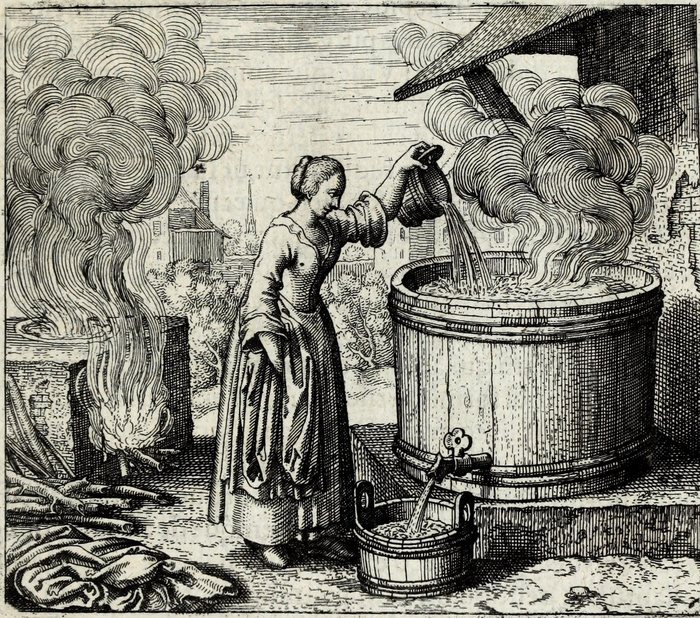 Vade ad mulierem lavantem pannos, tu fac similiter
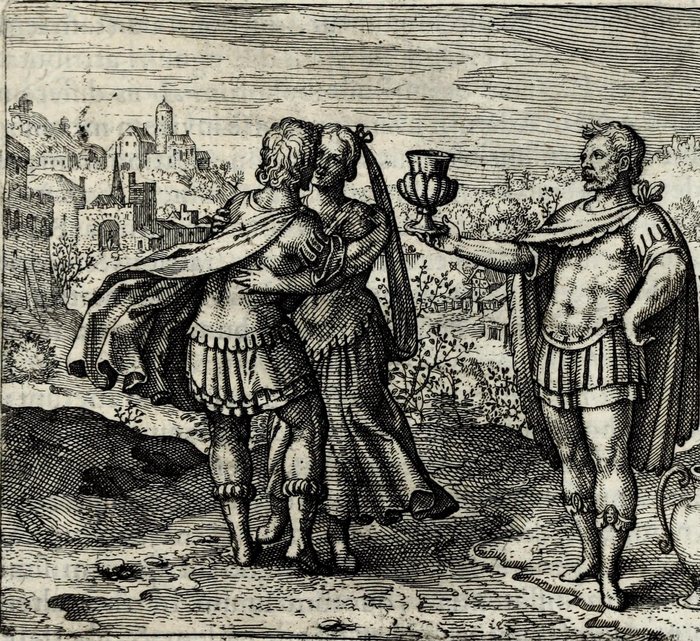 Conjunge fratrem cum sorore & propina illis poculum amoris
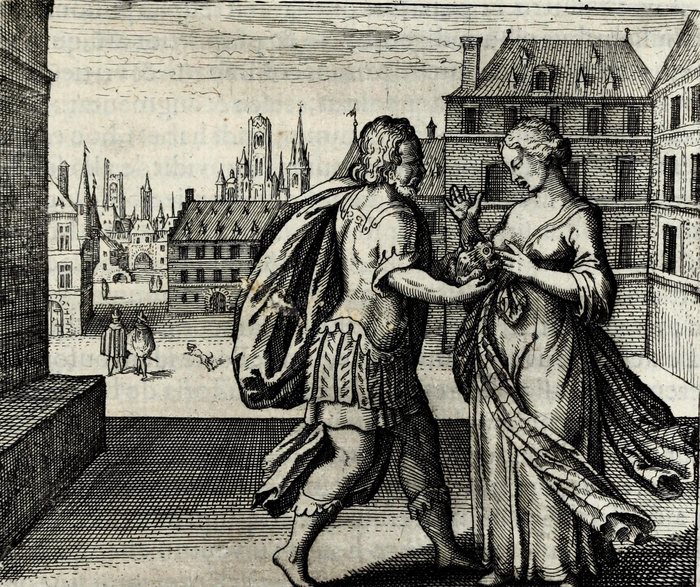 Appone mulieri super mammas bufonem, ut ablactet eum, & moriatur mulier, sitque bufo grossus de lacte
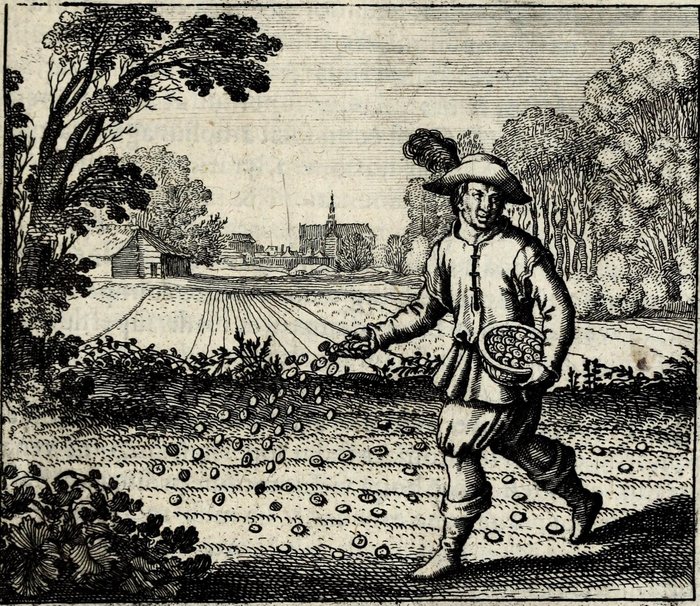 Seminate aurum vestrum in terram albam foliatam
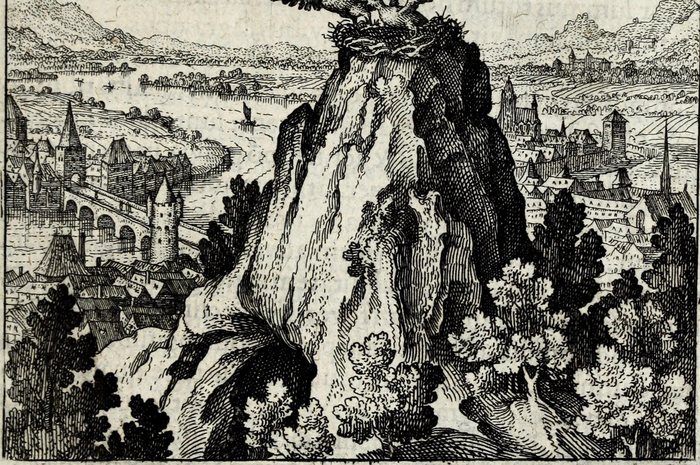 Fit pullus à nido volans, qui iterùm cadit in nidum
Record
One symbol a week, decoded.
This picture is free at full size from its source, linked above. What an address gets is the Sunday letter: one picture, one symbol marked on it, what it meant and who said so, and the master files of the decoded plates as they are verified. Leave any time.
Free, one letter a week, unsubscribe in one click. How the address is used.
Scroll or pinch to zoom · drag to move · double-tap for 1:1 · 1400 by 1345 pixel web copy; the source file is linked under Record