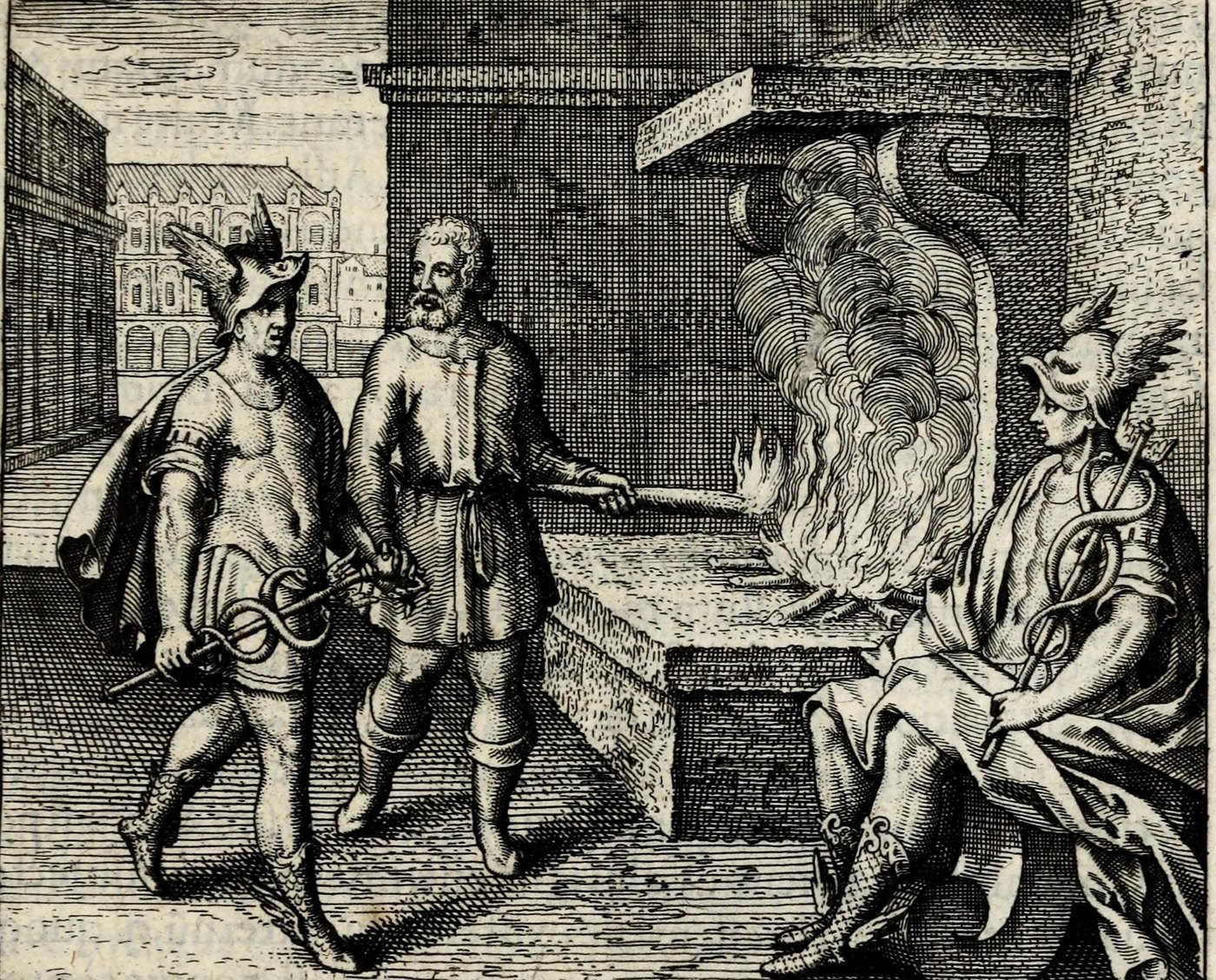
Da ignem igni, Mercurium Mercurio, & sufficit tibi
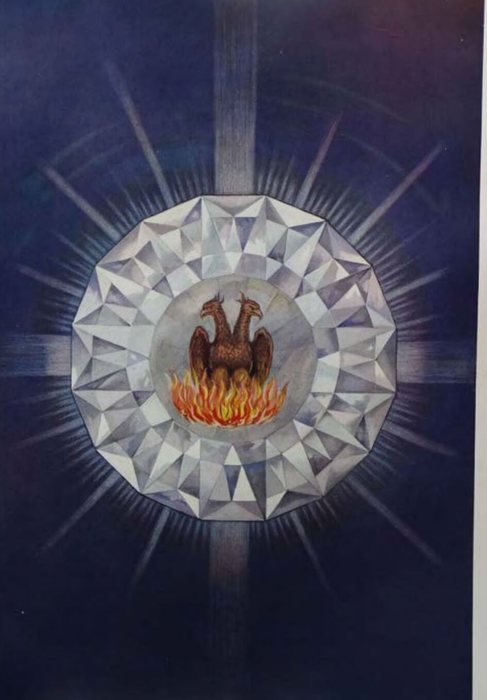
The Divine as the central motif, with Fire in a secondary part. From Atalanta Fugiens.
What is happening
Michael Maier, 1618 “Da ignem igni, Mercurium Mercurio, & sufficit tibi.”
Symbolica, 2026 Maier’s Latin, put into English here: Give fire to fire, mercury to mercury, and it is enough.
Michael Maier, 1618 “Machina pendet ab hac mundi connexa catena
Tota, SUO QUOD PAR GAUDEAT OMNE PARI:
Mercurius sic Mercurio, sic jungitur igni
Ignis, & haec arti sit data meta tuae.
Hermetem Vulcanus agit, sed penniger Hermes,
Cynthia, te solvit, te sed, Apollo, soror.”
Symbolica, 2026 Maier’s epigram, put into English here: The whole engine of the world hangs linked from this chain, BECAUSE EVERY LIKE REJOICES IN ITS LIKE. So Mercury is joined to Mercury and fire to fire, and let that be the goal set for your art. Vulcan drives Hermes, but winged Hermes dissolves you, Cynthia, and you, Apollo, are dissolved by your sister.
Key · 2 motifs
Tap a motif on the picture, or a line below. Its note opens under the line, with the reading its author gave it.
- Primary motif
- Secondary motifs · 1
The picture
Mercury with his caduceus led toward a furnace where a crowned figure sits. By eye
The reading
The picture read whole, in the archive's words, from the sources quoted on the marks. Read on, and the picture follows: the motif under discussion keeps its colour.
‘Da ignem igni, Mercurium Mercurio, & sufficit tibi’: give fire to fire, mercury to mercury, and it is enough. Merian draws the sentence: two Mercuries and one fire.
Maier gives the rule behind the recipe in capitals: the whole engine of the world hangs from one chain, ‘SUO QUOD PAR GAUDEAT OMNE PARI’, because every like rejoices in its like. ‘Mercurius sic Mercurio, sic jungitur igni’, so Mercury joins Mercury and fire joins fire, and let that stand as the goal set for your art. The god in the winged cap carries the metal's name, and Merian draws him twice because the line joins him to himself.
The last couplet runs a chain of dissolutions. ‘Hermetem Vulcanus agit’, Vulcan drives Hermes: the fire works the mercury. Winged Hermes in turn dissolves the moon, ‘Cynthia, te solvit’, and his sister dissolves the sun, ‘te sed, Apollo, soror’. Fire, mercury, moon, sun: the chain starts at the furnace between the two gods.
Decoded: every motif is marked, and each mark carries the reading its author gave it, quoted from the text, or says that it is observed on the picture and not read. The reading above is the archive's own, made from those sources and no others.
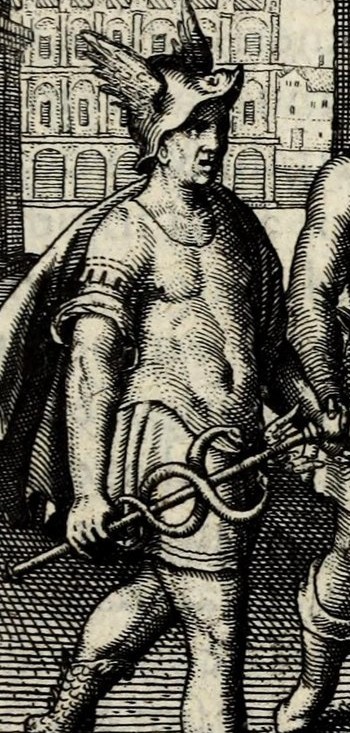
God shown, or pointed at. Look for what stands where a face would be: a name in a cloud, a circle above the top of a diagram, a ring of verses, a sign over a head.
In plain words Mercury, the god with the winged cap and the caduceus, is drawn twice: one Mercury is led toward the fire, another sits beyond it. The god stands for the metal that bears his name, and the emblem joins like to like, mercury to mercury, fire to fire.
Michael Maier, 1618 “Mercurius sic Mercurio, sic jungitur igni / Ignis, & haec arti sit data meta tuae.”
Symbolica Maier's Latin, put into English here: So Mercury is joined to Mercury and fire to fire, and let that be the goal set for your art.
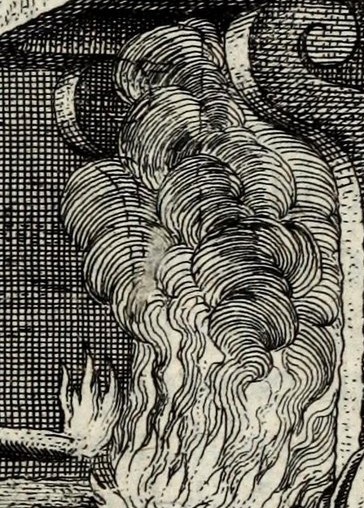
A count, a catastrophe, or the visible part of something that has no body. Note whether the flames are arranged in a number, breaking something, or standing where a figure would be.
In plain words The fire is Vulcan, and Vulcan drives Hermes: the fire works on the mercury, the mercury dissolves the moon, and the moon dissolves the sun. A chain of four, of which the fire is the first link.
Michael Maier, 1618 “Hermetem Vulcanus agit, sed penniger Hermes, / Cynthia, te solvit, te sed, Apollo, soror.”
Symbolica Maier's Latin, put into English here: Vulcan drives Hermes, but winged Hermes dissolves you, Cynthia, and you, Apollo, are dissolved by your sister.
Also carrying the Divine
39 works carry it. The 6 where it is the central motif are here. The symbol.
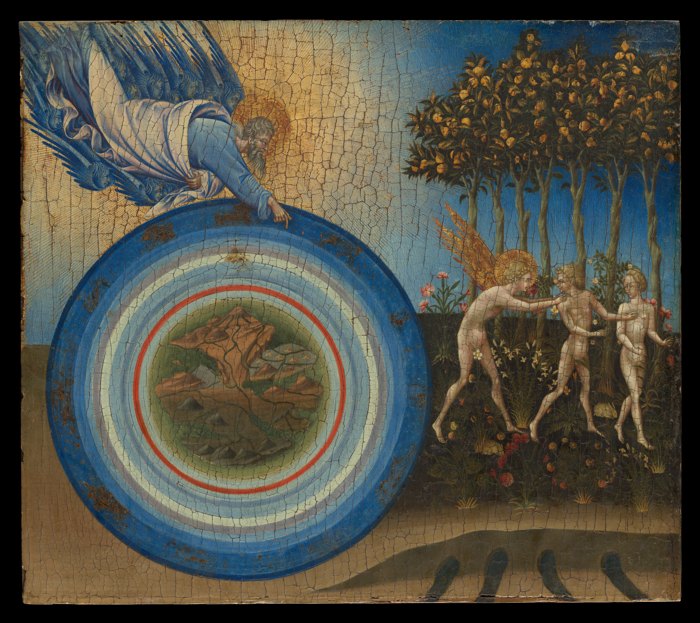
Where the detail is the subject
This is in the picture without being what it is about. Below, one work that is about it.
In the same series
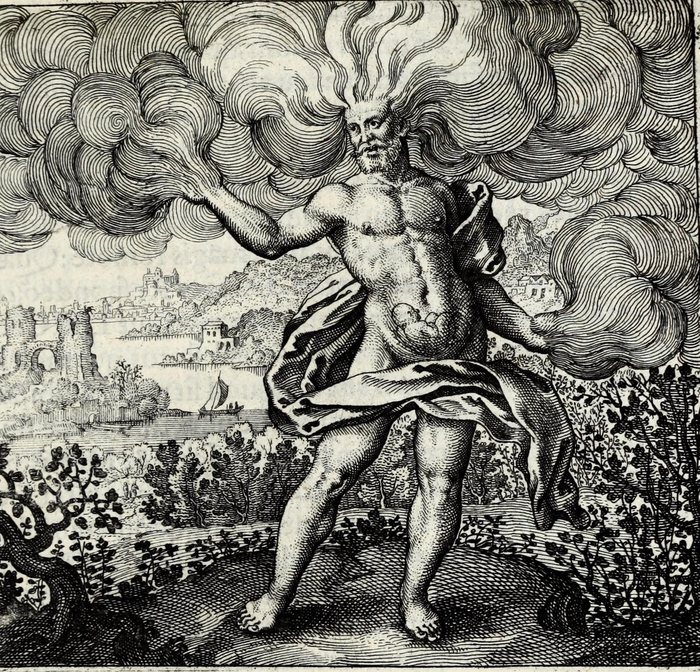 Portavit eum ventus in ventre suo
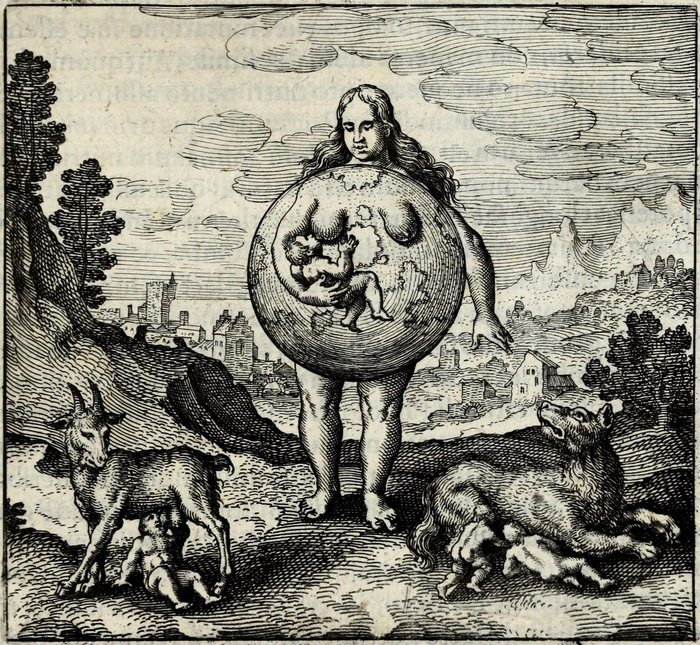 Nutrix ejus terra est
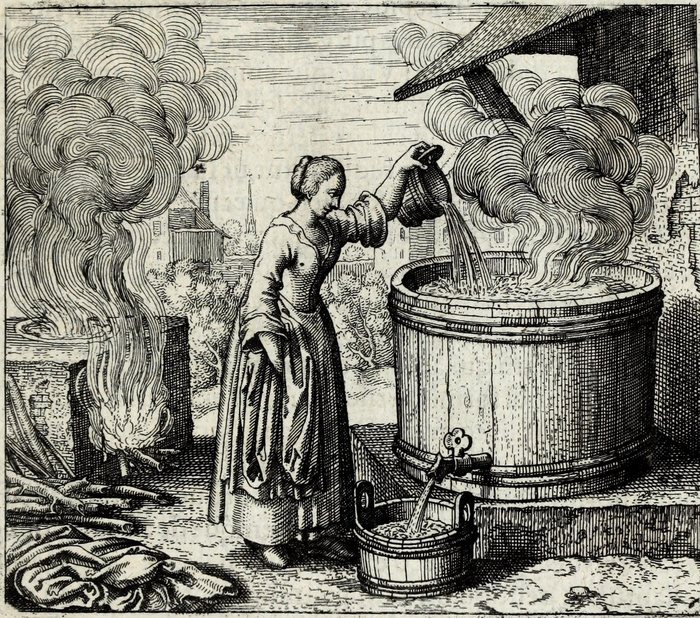 Vade ad mulierem lavantem pannos, tu fac similiter
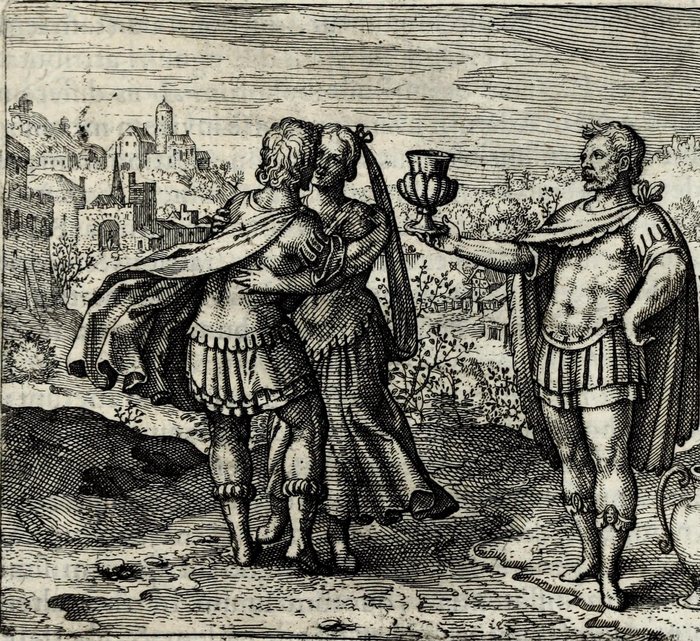 Conjunge fratrem cum sorore & propina illis poculum amoris
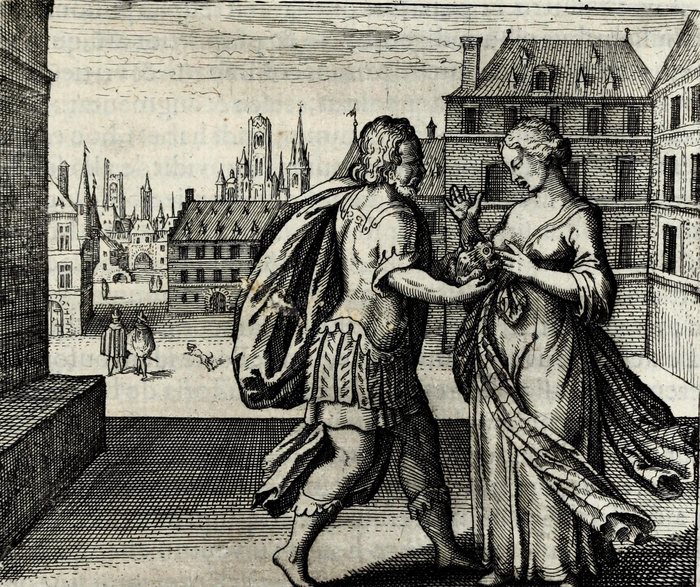 Appone mulieri super mammas bufonem, ut ablactet eum, & moriatur mulier, sitque bufo grossus de lacte
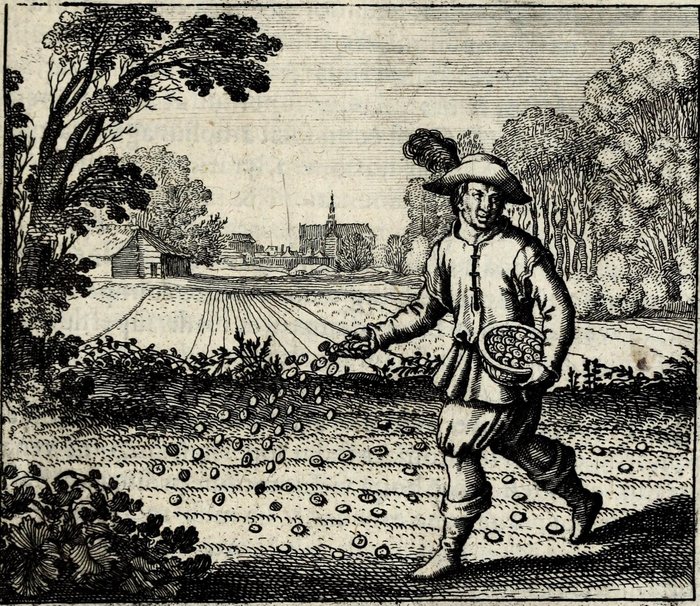 Seminate aurum vestrum in terram albam foliatam
Record
One symbol a week, decoded.
This picture is free at full size from its source, linked above. What an address gets is the Sunday letter: one picture, one symbol marked on it, what it meant and who said so, and the master files of the decoded plates as they are verified. Leave any time.
Free, one letter a week, unsubscribe in one click. How the address is used.
Scroll or pinch to zoom · drag to move · double-tap for 1:1 · 1400 by 1128 pixel web copy; the source file is linked under Record