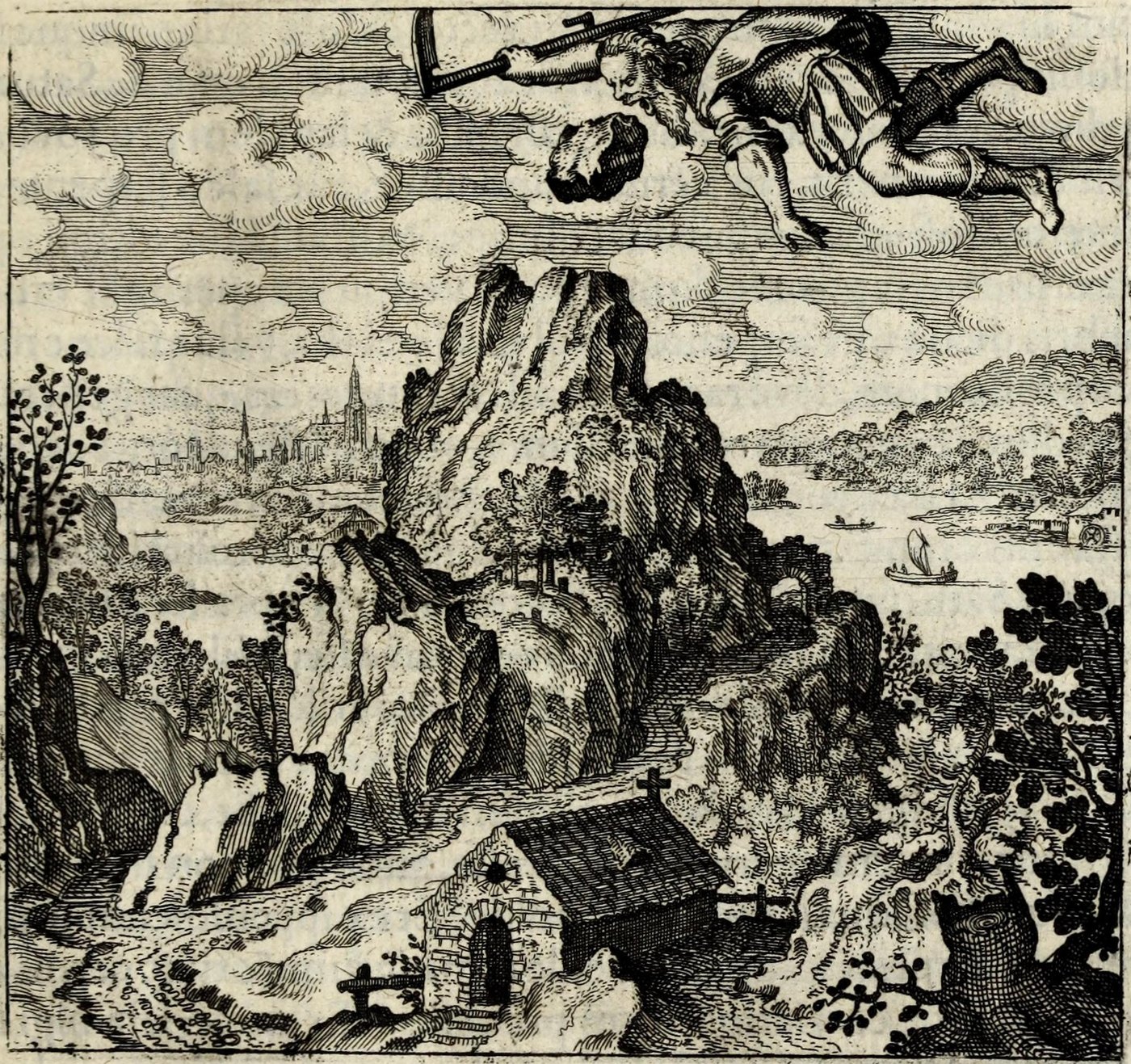
Lapis, quem Saturnus, pro Jove filio devoratum, evomuit, Pro monumento in Helicone mortalibus est positus
The Divine as the central motif. From Atalanta Fugiens.
What is happening
Michael Maier, 1618 “Lapis, quem Saturnus, pro Jove filio devoratum, evomuit, Pro monumento in Helicone mortalibus est positus.”
Symbolica, 2026 Maier’s Latin, put into English here: The stone Saturn vomited up stands on Helicon.
Michael Maier, 1618 “Nosse cupis causam, tot cur HELICONA poetae
Dicant, quodque ejus cuique petendus apex?
Est LAPIS in summo, MONUMENTUM, vertice postus,
Pro Jove deglutiit quem vomuitque pater.
Sic ceu verba sonant rem captas, mens tibi laeva est,
Namque est Saturni CHEMICUS ille LAPIS.”
Symbolica, 2026 Maier’s epigram, put into English here: Do you want to know why so many poets speak of HELICON, and why each of them must seek its summit? A STONE is set on the topmost peak, a MONUMENT, the one the father swallowed in Jove's place and vomited up again. If you take the thing as the words sound, your mind is turned the wrong way, for that STONE of Saturn is a CHEMICAL one.
Key · 1 motif
Tap a motif on the picture, or a line below. Its note opens under the line, with the reading its author gave it.
- Primary motif
The picture
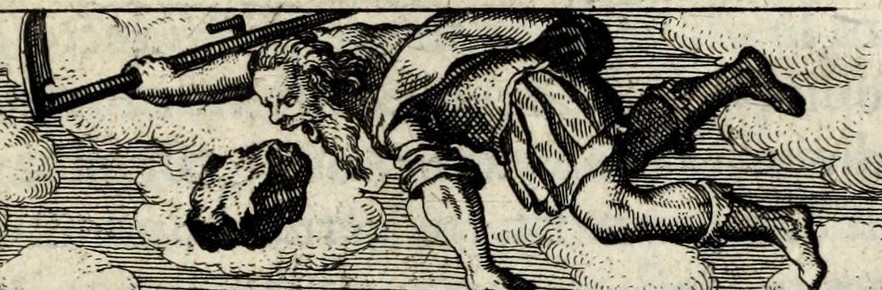
The peak of Helicon, with the gods above throwing down the stone. By eye
The reading
The picture read whole, in the archive's words, from the sources quoted on the marks. Read on, and the picture follows: the motif under discussion keeps its colour.
‘Lapis, quem Saturnus, pro Jove filio devoratum, evomuit, Pro monumento in Helicone mortalibus est positus’: the stone that Saturn swallowed in place of his son Jove and vomited up is set on Helicon as a monument for mortals. The plate is a mountain with a chapel at its foot and the gods in the clouds above it, and the stone is in the air between them.
Maier asks why the poets talk so much of Helicon, ‘Nosse cupis causam, tot cur HELICONA poetae / Dicant’, and answers with the stone on its summit: ‘Est LAPIS in summo, MONUMENTUM, vertice postus’, a stone is set on the topmost peak, a monument, ‘Pro Jove deglutiit quem vomuitque pater’, the one the father swallowed in Jove's place and vomited up again. Saturn is the god who did the swallowing, and Saturn, in the alchemists' names for the metals, is lead, so the stone he gives up comes out of the heaviest and darkest of them.
Then the warning that governs the whole book: ‘Sic ceu verba sonant rem captas, mens tibi laeva est’, if you take the thing as the words sound, your mind is turned the wrong way, ‘Namque est Saturni CHEMICUS ille LAPIS’, for that stone of Saturn is a chemical one. The gods are drawn because the story is told in gods, and the emblem says in the same breath that the gods are not the point.
Decoded: every motif is marked, and each mark carries the reading its author gave it, quoted from the text, or says that it is observed on the picture and not read. The reading above is the archive's own, made from those sources and no others.
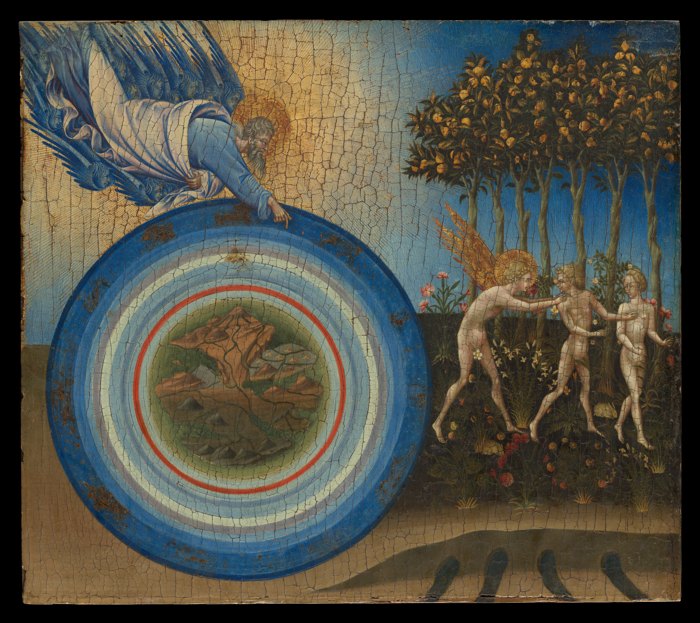
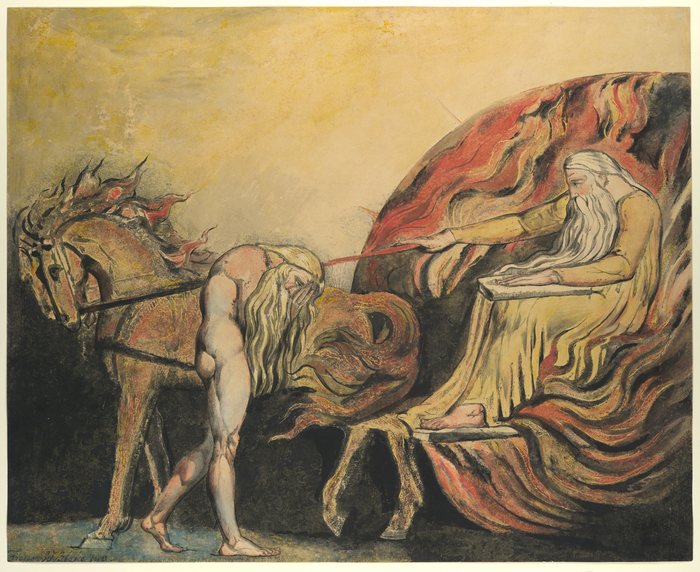
God shown, or pointed at. Look for what stands where a face would be: a name in a cloud, a circle above the top of a diagram, a ring of verses, a sign over a head.
In plain words The gods are in the clouds above the mountain, and one of them flings down a stone. It is the stone Saturn swallowed instead of the infant Jove and vomited up, set on the top of Helicon as a monument. Maier says the poets' Helicon is the chemists' stone, if you do not take the words as they sound.
Michael Maier, 1618 “Est LAPIS in summo, MONUMENTUM, vertice postus, / Pro Jove deglutiit quem vomuitque pater.”
Symbolica Maier's Latin, put into English here: A STONE is set on the topmost peak, a MONUMENT, the one the father swallowed in Jove's place and vomited up again.
Also carrying the Divine
39 works carry it. The 6 where it is the central motif are here. The symbol.
In the same series
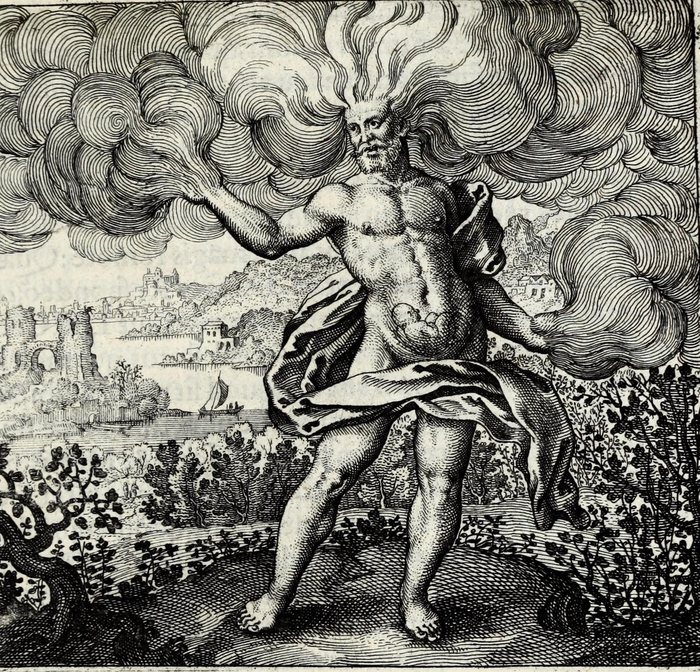 Portavit eum ventus in ventre suo
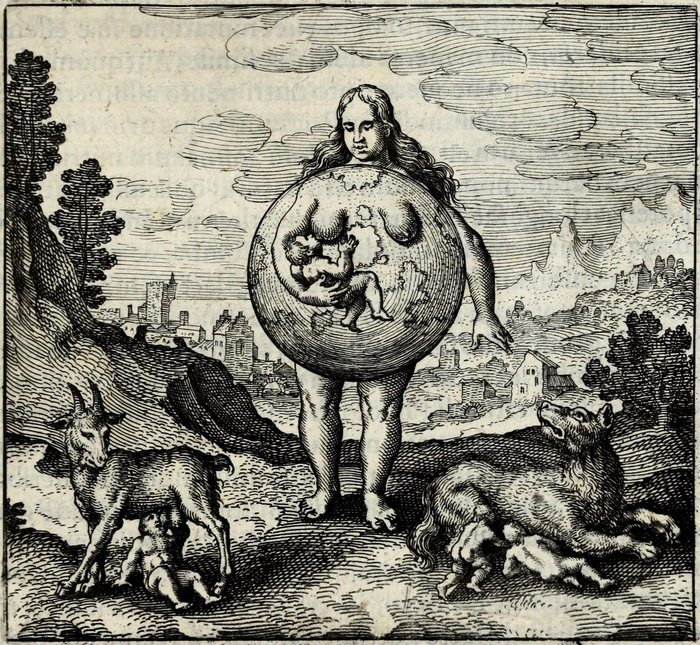 Nutrix ejus terra est
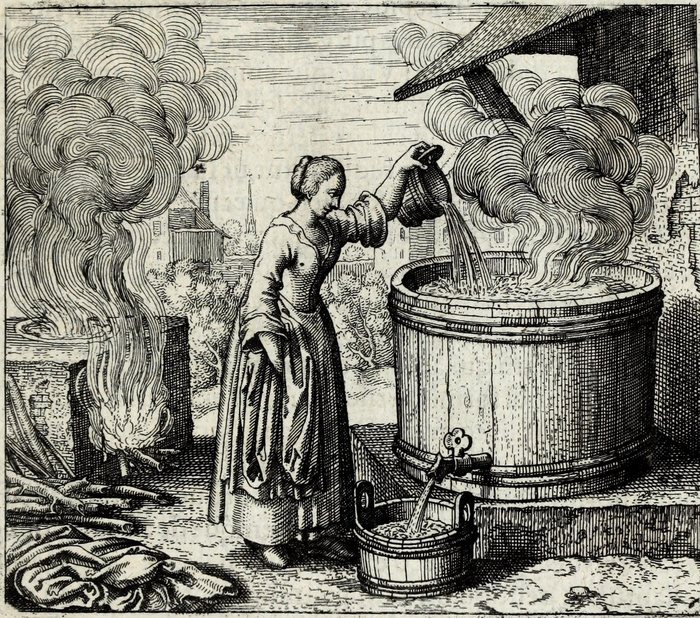 Vade ad mulierem lavantem pannos, tu fac similiter
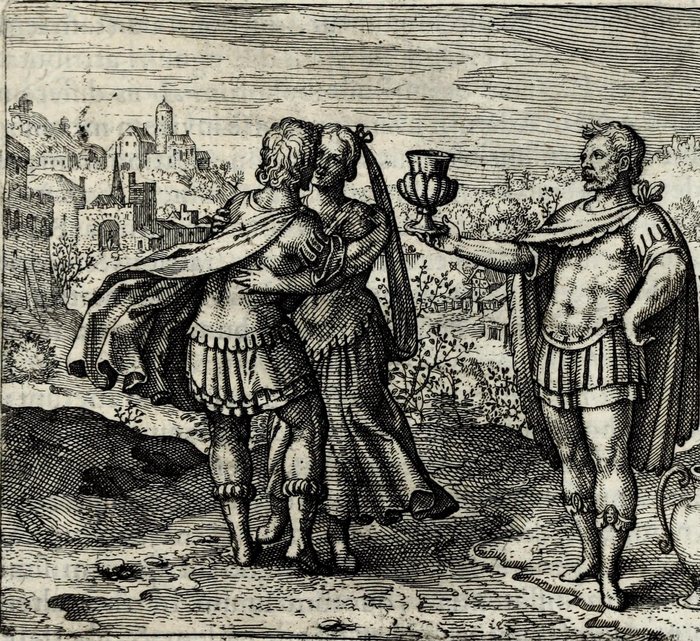 Conjunge fratrem cum sorore & propina illis poculum amoris
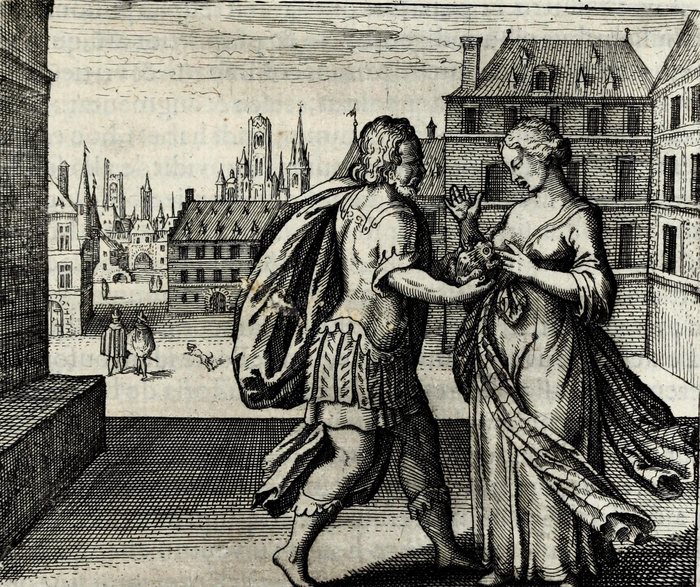 Appone mulieri super mammas bufonem, ut ablactet eum, & moriatur mulier, sitque bufo grossus de lacte
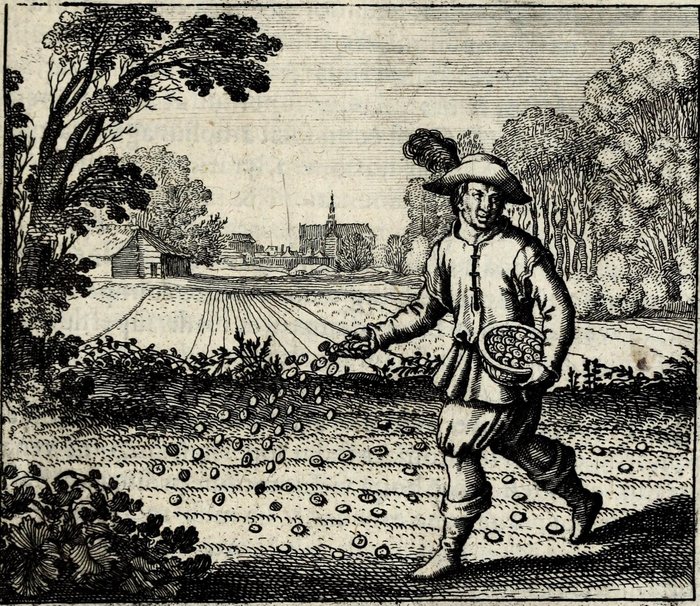 Seminate aurum vestrum in terram albam foliatam
Record
One symbol a week, decoded.
This picture is free at full size from its source, linked above. What an address gets is the Sunday letter: one picture, one symbol marked on it, what it meant and who said so, and the master files of the decoded plates as they are verified. Leave any time.
Free, one letter a week, unsubscribe in one click. How the address is used.
Scroll or pinch to zoom · drag to move · double-tap for 1:1 · 1400 by 1317 pixel web copy; the source file is linked under Record