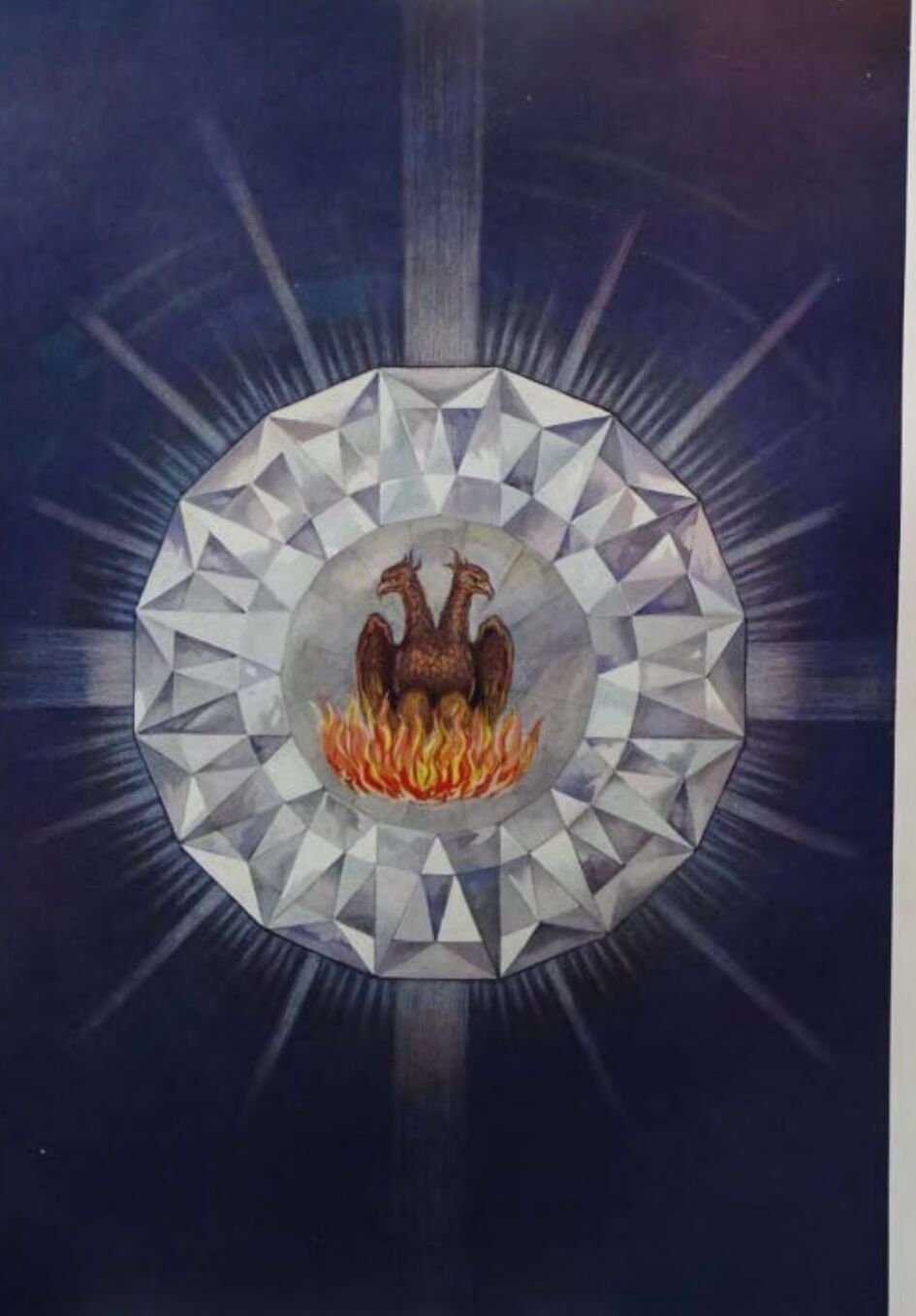
Occultum Lapidem, the Philosopher's Stone
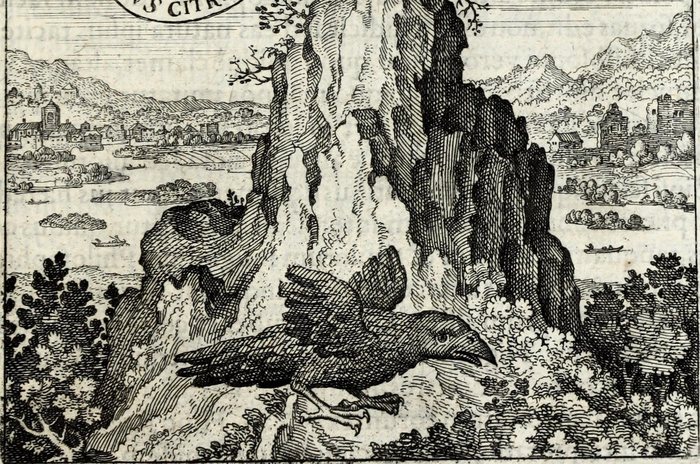
Fire as the central motif, with the Bird in a secondary part. From The Secret Teachings.
What is happening
Hall, 1928 “The Philosopher's Stone is an ancient symbol of the perfected and regenerated man whose divine nature shines forth through a chain of purified and unfolded vehicles.”
Hall, 1928 “To the mystic, the Philosopher's Stone is perfect love, which transmutes all that is base and raises all that is dead.”
Key · 2 motifs
Tap a motif on the picture, or a line below. Its note opens under the line.
- Primary motif
- Secondary motifs · 1
The picture
A double-headed eagle stands in flames at the heart of a many-faceted white crystal, on a dark blue ground crossed by rays; Fire as the central motif, by eye. By eye
The reading
The picture read whole, in the archive's words, from the sources quoted on the marks. Read on, and the picture follows: the motif under discussion keeps its colour.
This is the plainest plate in Hall's book and the one that argues most by arrangement. There is one object: a faceted white gem, filling the picture, on a dark blue ground with a cross of pale rays behind it. In a round window at its heart a double-headed eagle stands in flames.
The argument is containment. The fire is not around the stone, burning it, and the eagle is not perched on it. Both are inside it, seen through a window in the facets, so the hardest and coldest thing in the picture has the hottest and most alive thing at its centre and is not consumed. That is the alchemical claim about the Stone stated without a word of text.
Hall's caption gives the reading twice, once for the philosopher and once for the mystic. He calls the Stone a symbol of the perfected and regenerated man whose divine nature shines forth through a chain of purified and unfolded vehicles, and then, for the mystic, perfect love, which transmutes all that is base and raises all that is dead. Both readings are about something inside a person rather than in a crucible, which is why the picture is a window and not a furnace.
The eagle has two heads and the caption does not mention it, so the archive marks it and leaves it. In this material a doubled head is normally the two natures held in one body, which would sit well with everything else here, but Hall does not say so on this plate and the record does not say it for him.
Not yet decoded: the motifs are marked, but most of the marks carry no reading yet and say so. The sourced notes come with the entry.
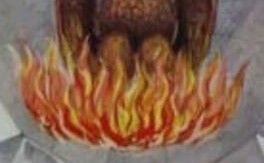
A count, a catastrophe, or the visible part of something that has no body. Note whether the flames are arranged in a number, breaking something, or standing where a figure would be.
In plain words In a round window at the heart of the crystal a double-headed eagle stands in flames. It is the only warm colour in the picture and the only thing in it that moves. The gem does not burn; the fire is inside the gem, which is the whole argument of the plate put in one image.
Symbolica Hall's caption reads the Stone as a whole, the perfected man and the love that transmutes, and does not name the flames or the eagle in them. Observed on the plate, and left unread rather than guessed.
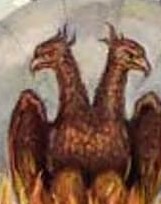
What rises and what comes back down. Note whether the bird is flying, caught, or paired with a second one.
In plain words The thing in the fire is an eagle with two heads, facing opposite ways, wings folded. It is the only living figure in the picture and it is entirely enclosed by the gem.
Symbolica The eagle's two heads are on the plate and Hall's caption does not mention them. In this material a doubled head is usually the two natures held in one body, but the caption does not say so here. Observed on the plate, and left unread rather than guessed.
Also carrying Fire
44 works carry it. The 6 where it is the central motif are here. The symbol.
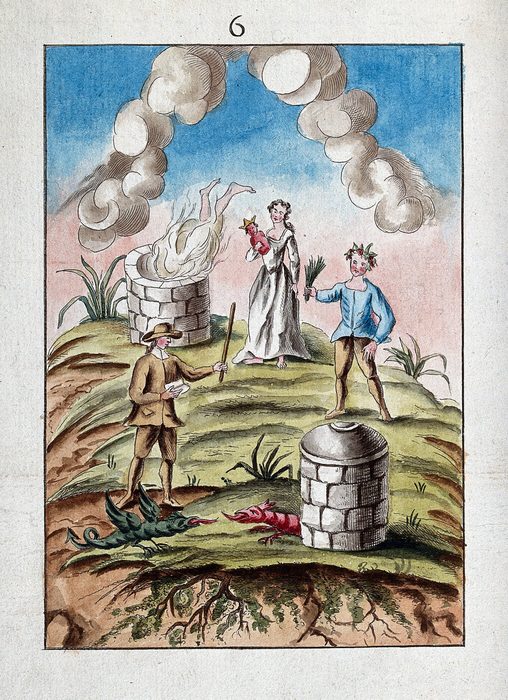
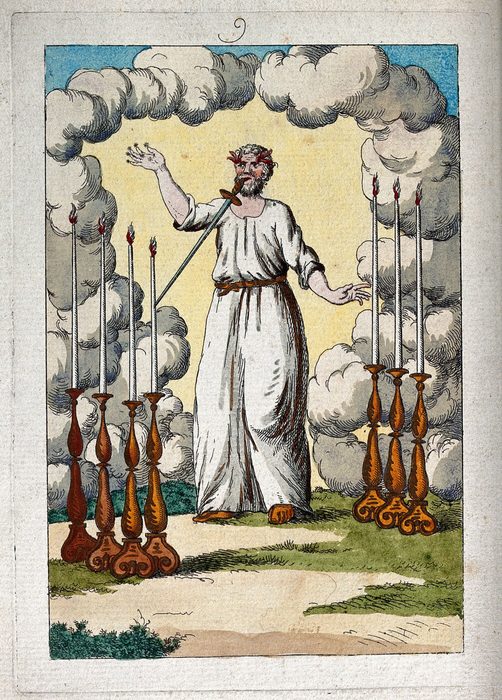
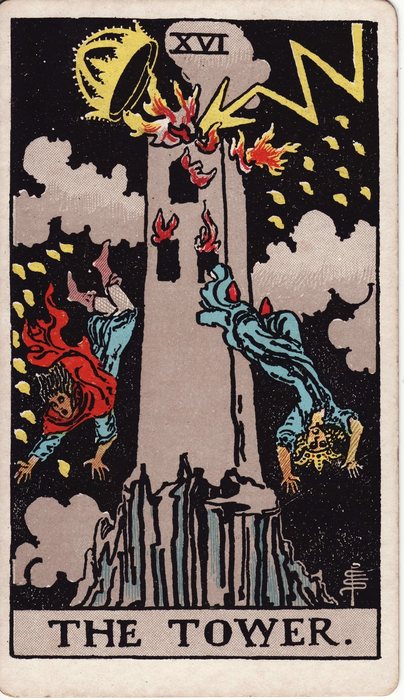
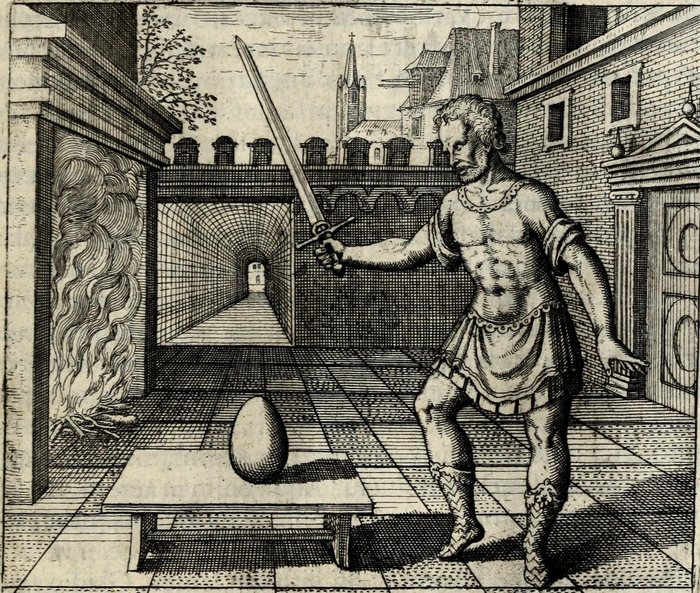
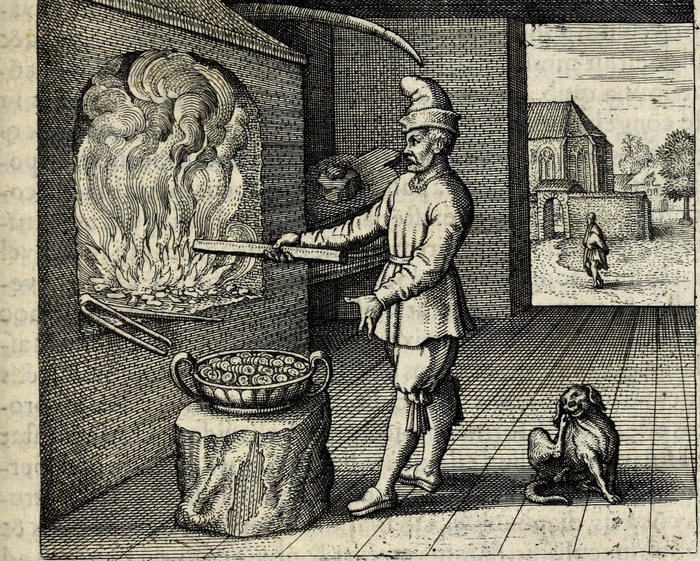
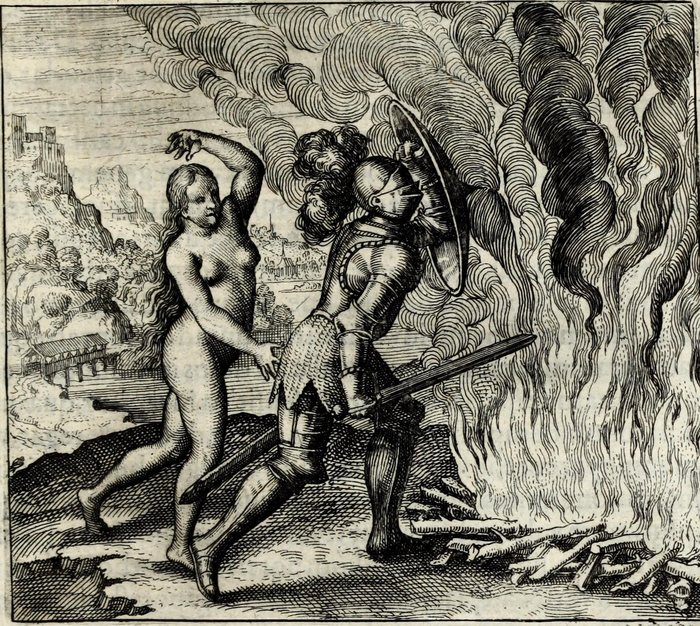
Where the detail is the subject
This is in the picture without being what it is about. Below, one work that is about it.
By the same hand
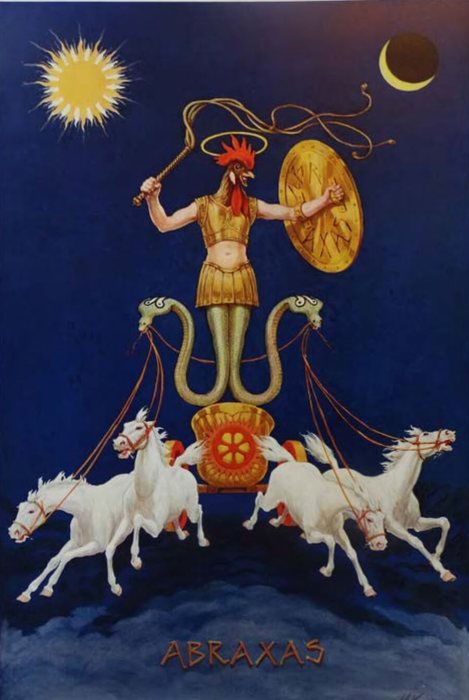
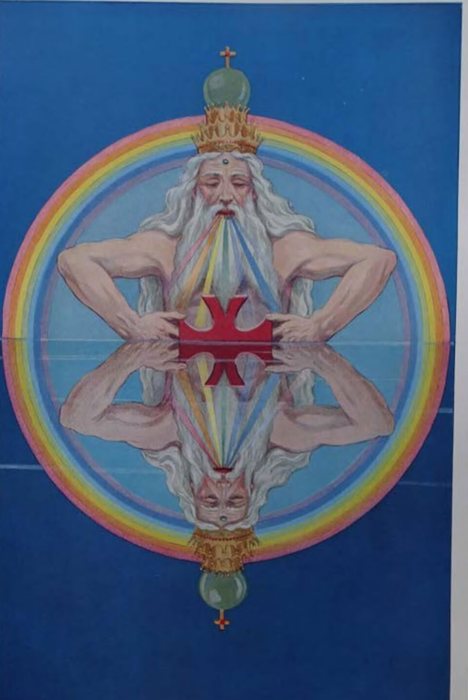
In the same series
Record
One symbol a week, decoded.
This picture is free at full size from its source, linked above. What an address gets is the Sunday letter: one picture, one symbol marked on it, what it meant and who said so, and the master files of the decoded plates as they are verified. Leave any time.
Free, one letter a week, unsubscribe in one click. How the address is used.
Scroll or pinch to zoom · drag to move · double-tap for 1:1 · 945 by 1358 pixel web copy; the source file is linked under Record