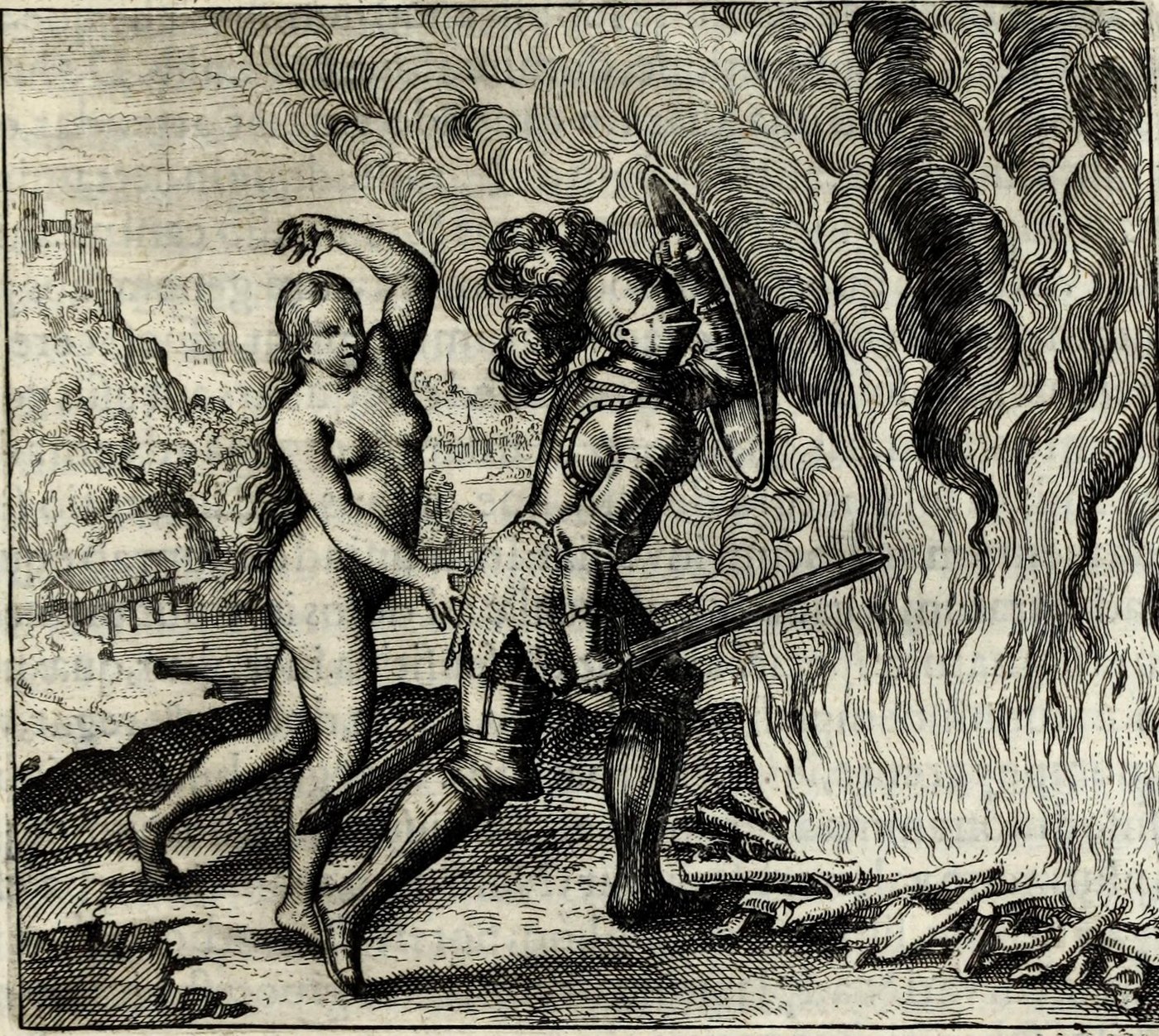
Naturam natura docet, debellet ut ignem
Fire as the central motif. From Atalanta Fugiens.
What is happening
Michael Maier, 1618 “Naturam natura docet, debellet ut ignem.”
Symbolica, 2026 Maier’s Latin, put into English here: Nature teaches nature to overcome fire.
Michael Maier, 1618 “Flamma, vorat quae cuncta, velut Draco, gnaviter ursit
Virginis eximium vi superare decus:
Hinc lachrymis suffusa viro dum forte videtur,
Ille fuit miserae ferre paratus opem.
Protinus hanc clypeo velans contendit in hostem,
Et docuit tantas spernere mente minas.”
Symbolica, 2026 Maier’s epigram, put into English here: The flame that devours everything pressed hard, like a Dragon, to overcome by force the rare beauty of a Virgin. When she was seen by a man, in tears, he was ready to bring the poor girl help. At once, veiling her with his shield, he went at the enemy, and taught her to despise such threats in her mind.
Key · 1 motif
Tap a motif on the picture, or a line below. Its note opens under the line, with the reading its author gave it.
- Primary motif
The picture
A woman leading an armed figure toward the flames. By eye
The reading
The picture read whole, in the archive's words, from the sources quoted on the marks. Read on, and the picture follows: the motif under discussion keeps its colour.
‘Naturam natura docet, debellet ut ignem’: nature teaches nature to overcome fire. A naked woman leads an armed man by the hand toward a blaze; he holds his shield up before her.
‘Flamma, vorat quae cuncta, velut Draco, gnaviter ursit / Virginis eximium vi superare decus’, the flame that devours everything pressed hard, like a dragon, to overcome by force the rare beauty of a virgin. She weeps, a man sees her, ‘Ille fuit miserae ferre paratus opem’, he was ready to bring the poor girl help. ‘Protinus hanc clypeo velans contendit in hostem’, at once, veiling her with his shield, he went at the enemy, ‘Et docuit tantas spernere mente minas’, and taught her to despise such threats in her mind.
The fire is a dragon and the man is a shield: nature attacked and nature defended, and the motto says that the second teaches the first. In the work, the matter has to learn to bear the fire, and something in the matter itself is what teaches it.
Decoded: every motif is marked, and each mark carries the reading its author gave it, quoted from the text, or says that it is observed on the picture and not read. The reading above is the archive's own, made from those sources and no others.
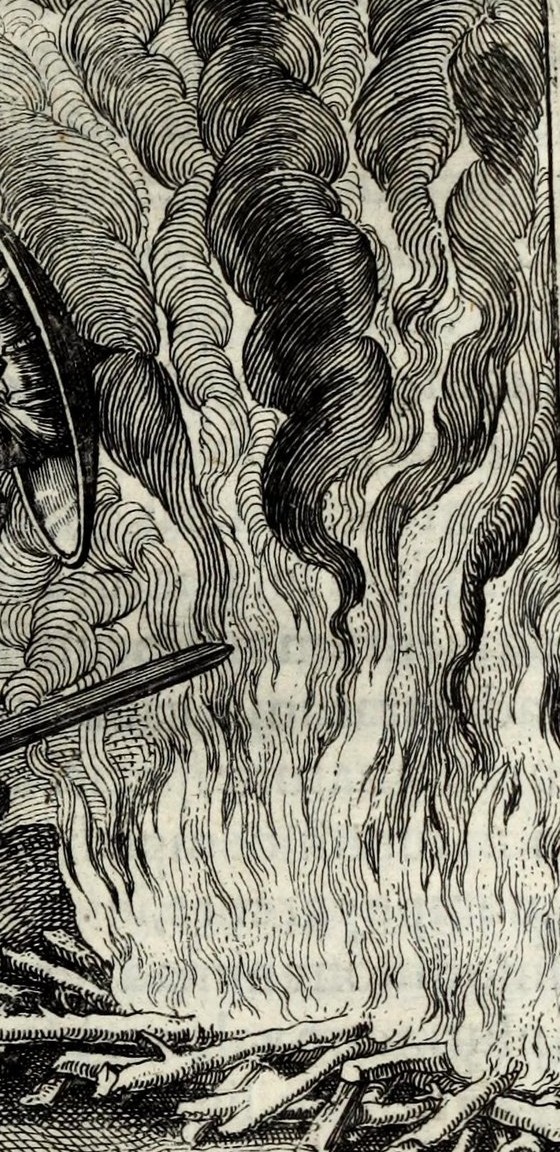
A count, a catastrophe, or the visible part of something that has no body. Note whether the flames are arranged in a number, breaking something, or standing where a figure would be.
In plain words A wall of fire fills the right of the plate, and Maier writes it as an attacker: the flame that devours everything went at a virgin like a dragon. The armed man with the shield is the one who teaches her not to fear it. Fire is the enemy here, and the lesson is how to stand up to it.
Michael Maier, 1618 “Flamma, vorat quae cuncta, velut Draco, gnaviter ursit / Virginis eximium vi superare decus:”
Symbolica Maier's Latin, put into English here: The flame that devours everything pressed hard, like a Dragon, to overcome by force the rare beauty of a Virgin.
Also carrying Fire
44 works carry it. The 6 where it is the central motif are here. The symbol.
In the same series
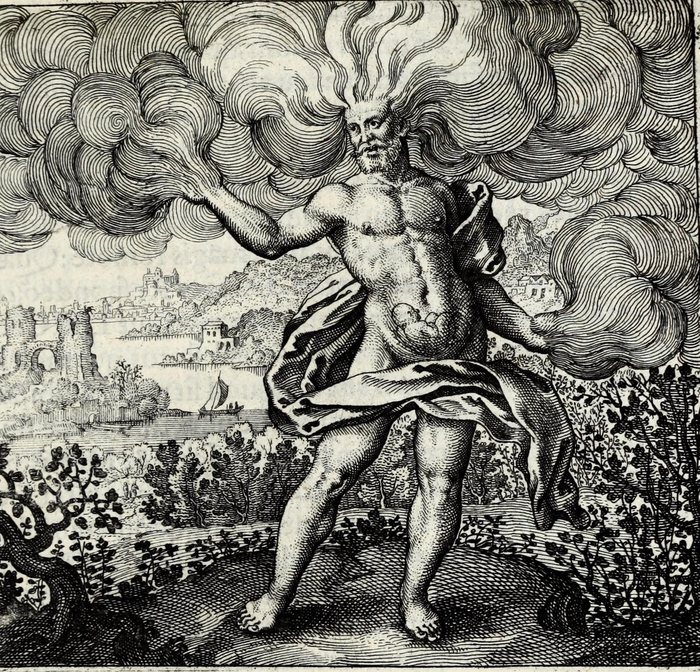 Portavit eum ventus in ventre suo
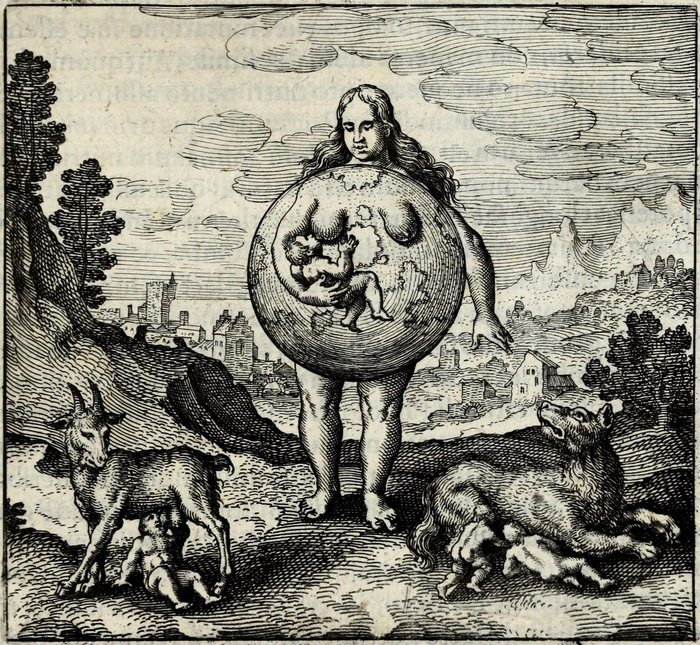 Nutrix ejus terra est
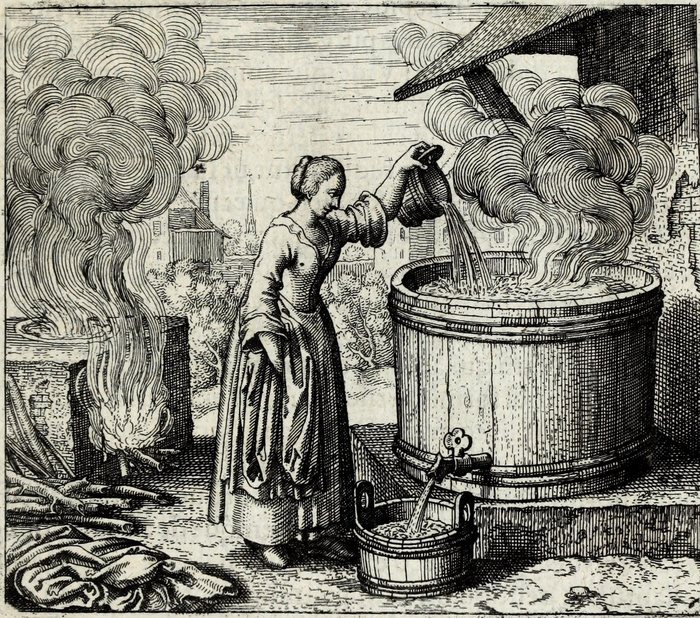 Vade ad mulierem lavantem pannos, tu fac similiter
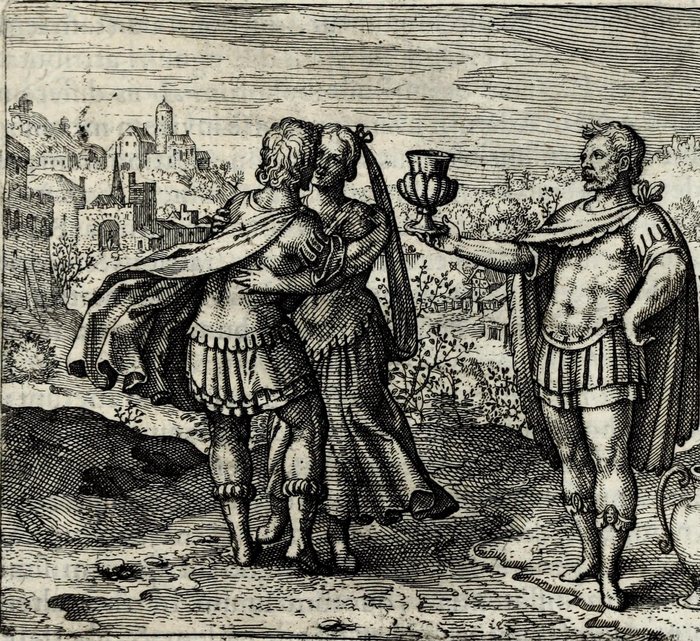 Conjunge fratrem cum sorore & propina illis poculum amoris
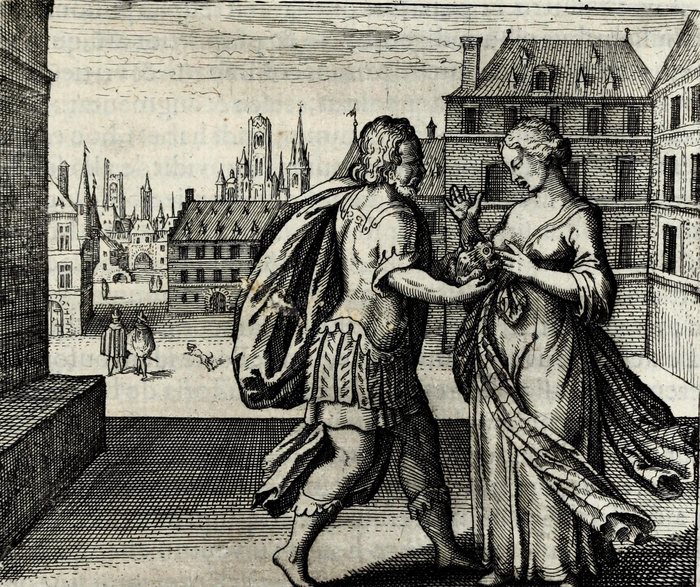 Appone mulieri super mammas bufonem, ut ablactet eum, & moriatur mulier, sitque bufo grossus de lacte
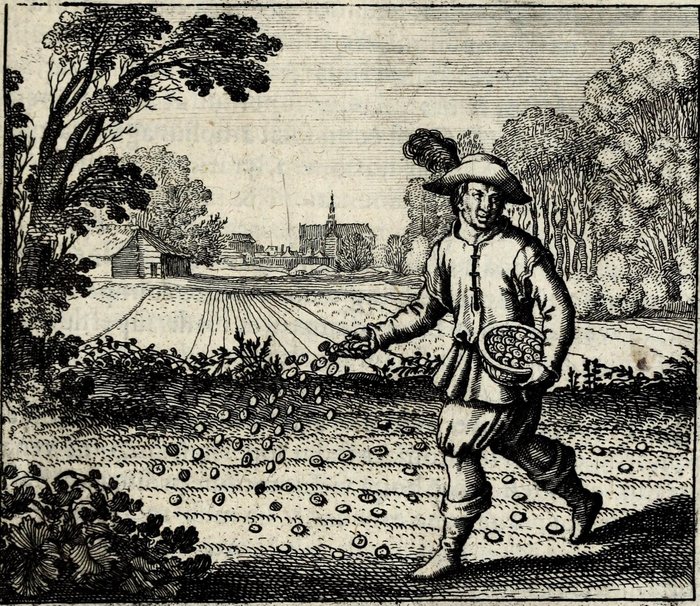 Seminate aurum vestrum in terram albam foliatam
Record
One symbol a week, decoded.
This picture is free at full size from its source, linked above. What an address gets is the Sunday letter: one picture, one symbol marked on it, what it meant and who said so, and the master files of the decoded plates as they are verified. Leave any time.
Free, one letter a week, unsubscribe in one click. How the address is used.
Scroll or pinch to zoom · drag to move · double-tap for 1:1 · 1400 by 1252 pixel web copy; the source file is linked under Record