The Child
the philosophical infant, the son, the infant
In the alchemical pictures a child is the thing being made. In the Apocalypse it is the thing under attack.
Twelve works here carry a child, and in the alchemical ones it is never simply a child.
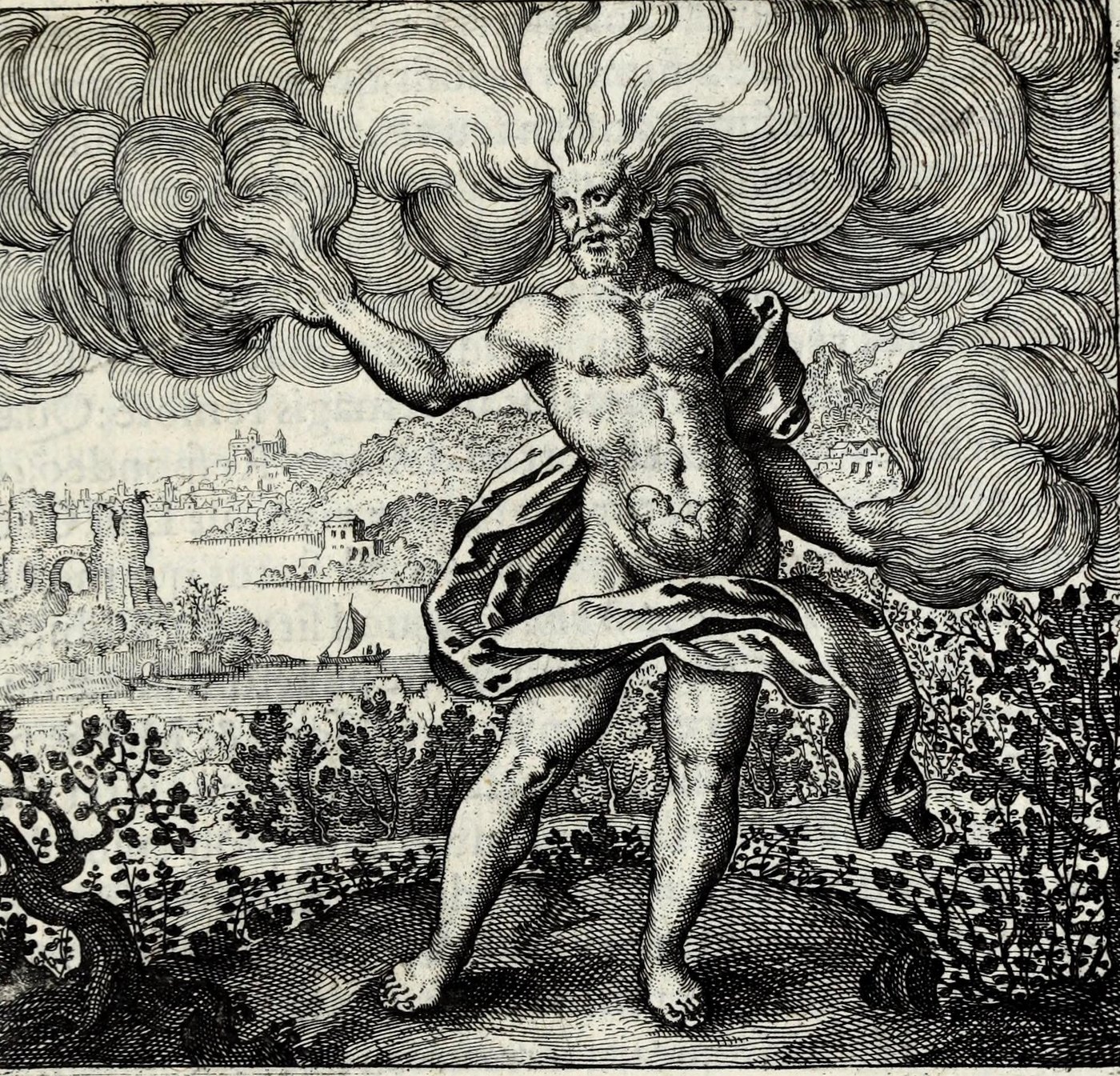
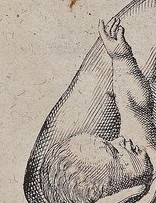
Maier's first emblem shows Boreas striding through the clouds with the infant visible in his belly, and the epigram says what the picture is for: the child “shut in the windy belly of Boreas, if once it is born alive into this light” is the one who “can alone surpass every labour of the Heroes, by art, by hand, by strong body, by mind”. The second emblem gives the same child a nurse, the earth herself, and asks “how great will he be whose Nurse is the Earthly Globe?” By the forty-ninth the child has three fathers, like Orion: “The SUN is the first, Vulcan is said to be the second, and the third, outstanding in art, is his father too.” Maier names this child in that motto, Infans Philosophicus, the philosophical infant. It is the product of the work.
The Apocalypse uses a child the other way round, not made by art but hunted. “And being with child, she cried travailing in birth”, and the dragon “stood before the woman who was ready to be delivered: that, when she should be delivered, he might devour her son.” Dürer's Apocalyptic Woman and the Flamel Virgin with a dragon at her feet both draw that verse.
Waite's Sun of 1909 sets “The naked child mounted on a white horse and displaying a red standard”, and calls that the better symbolism of the card. Dee's Tree of Rarity begins its trunk at Infantia and climbs through the ages of a life to the point of choice.
So the archive holds two children. One is made, in a vessel, by fire, out of a marriage. The other is born, threatened, and carried off to a throne. They meet only in Maier's first emblem, where the birth and the making are one act.
Contested
The English of Maier's epigrams is the archive's own translation and is marked as such on every record; the Latin stands beside it. The distinction between the made child and the hunted child is the archive's way of sorting what the sources say, not a distinction any one of them draws. Waite's account of the Sun is his own; Pamela Colman Smith left no statement about the child on the horse.
Sources
- Michael Maier, Atalanta Fugiens: The mottoes and the six-line epigrams, read off the 1618 page on each record. The Latin is Maier's; the English quoted here is the archive's own translation and is marked as such on the records.
- The Apocalypse of Saint John, Douay Rheims, Challoner revision: Quoted from the Challoner revision, the English text the archive uses for the Apocalypse throughout.
- Arthur Edward Waite, The Pictorial Key to the Tarot: Waite commissioned the 1909 designs and wrote the key to them, so his account is the closest thing the deck has to an author's statement.
- John Dee, Monas Hieroglyphica: The lettering on the Arbor Raritatis, read off the 1591 page.
On the same plate
Where it appears · 12
12 works in the archive carry the Child. First the 12 where it has been read, with the Child itself picked out.
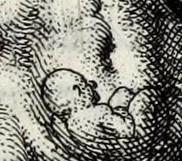
Portavit eum ventus in ventre suo
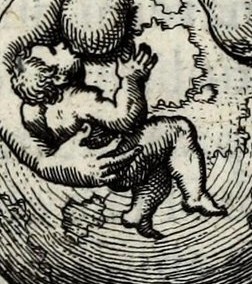
Nutrix ejus terra est
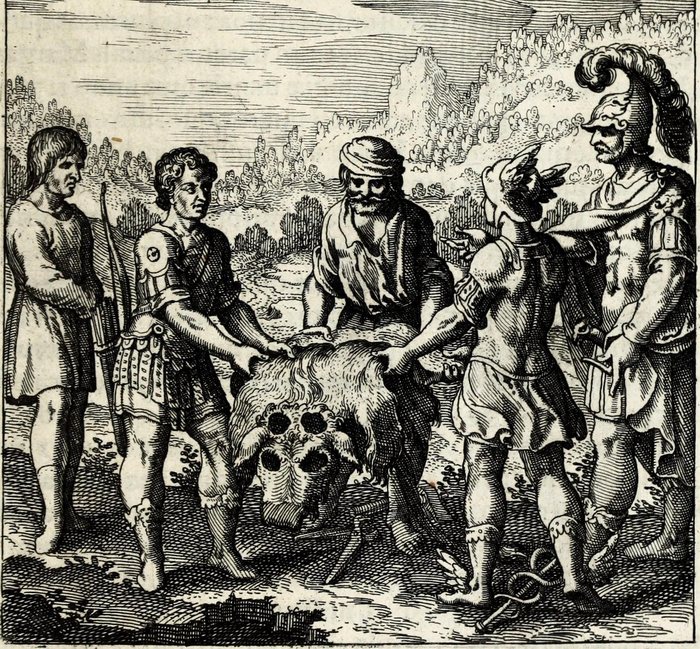
Infans Philosophicus tres agnoscit patres, ut Orion
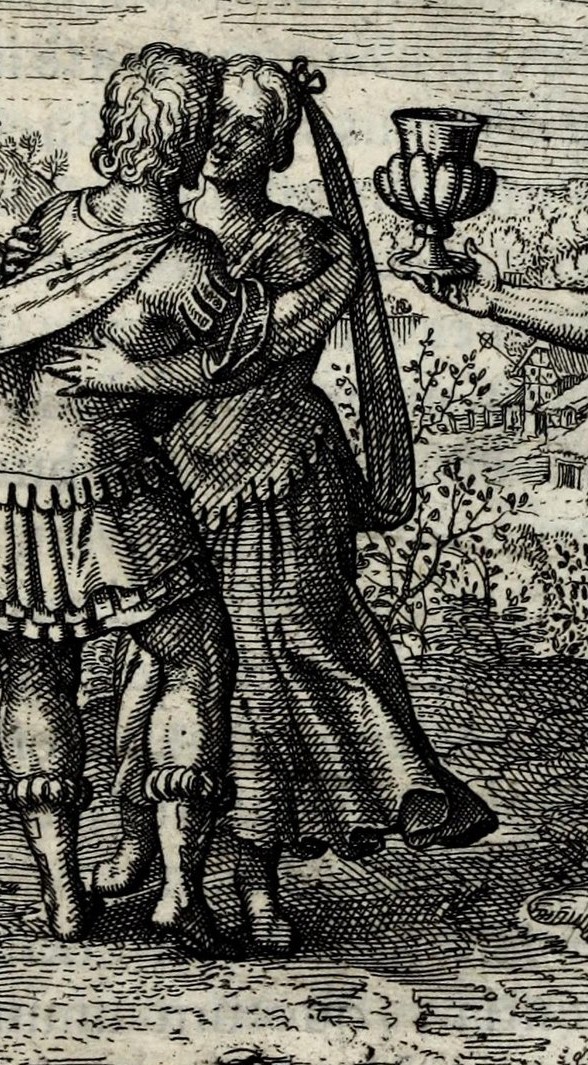
Conjunge fratrem cum sorore & propina illis poculum amoris
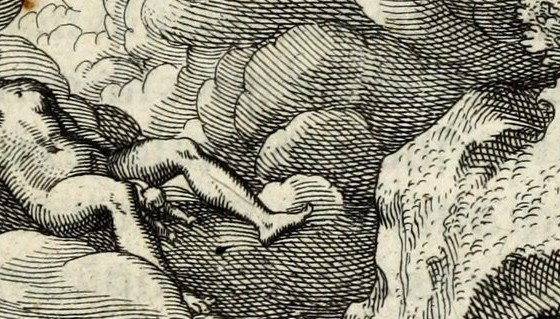
In balneis concipitur, & in aëre nascitur, rubeus verò factus graditur super aquas
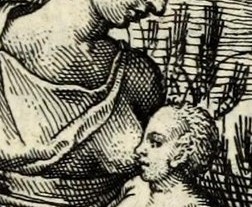
Ceres Triptolemum, Thetis Achillem, ut sub igne morari assuefecit, sic artifex lapidem
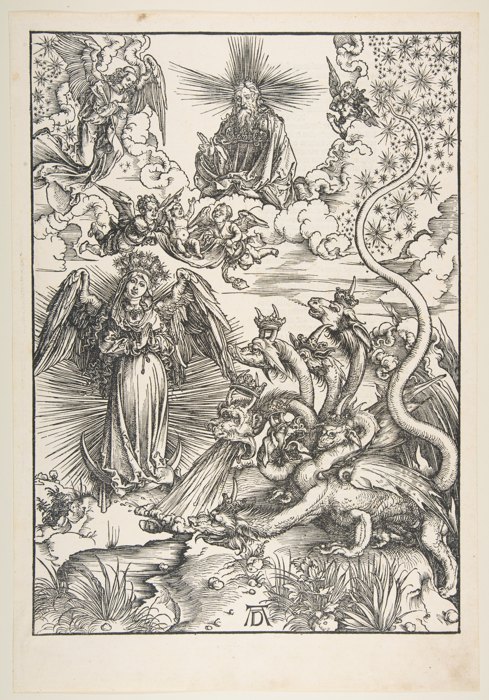
The Apocalyptic Woman
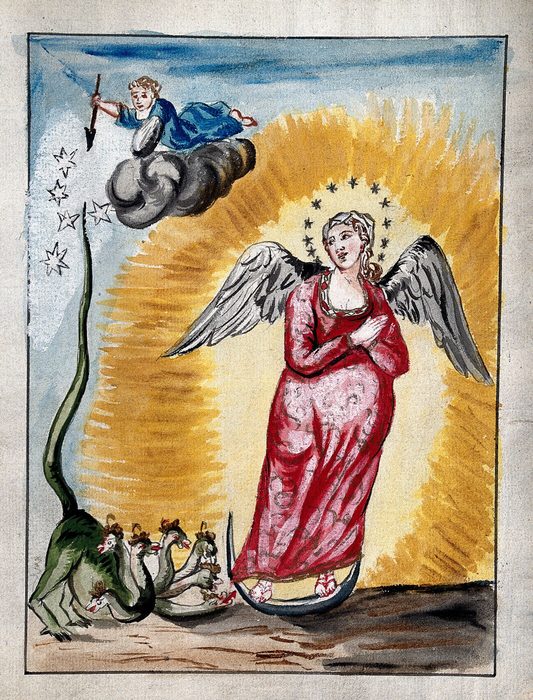
The Virgin with a Dragon at Her Feet
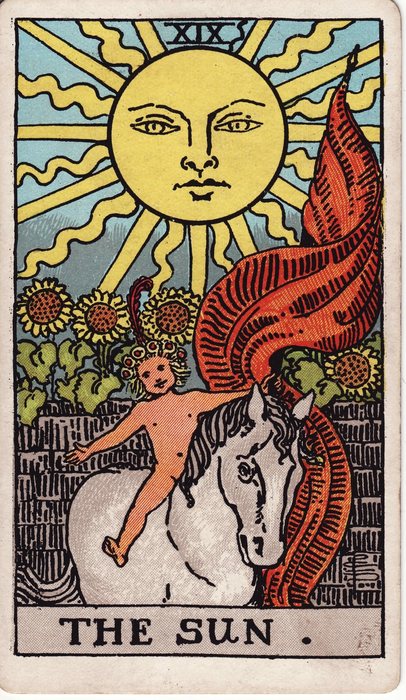
The Sun (XIX)
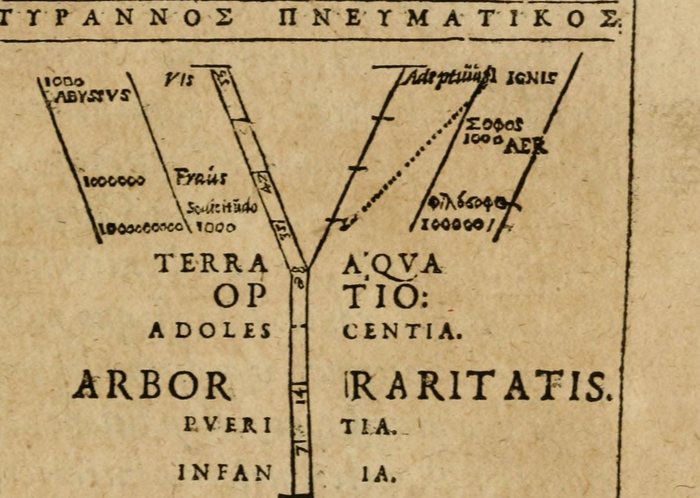
Arbor Raritatis
Imagine di Saturno, ò del Tempo divoratore de suoi figliuoli
The idol Moloch with the children in his arms