The Horse
the horseman, the rider
Almost never the subject. Read the rider, then read what the colour of the horse is doing.
Seven works here carry a horse, and in every one the archive has read, the horse is a colour before it is an animal.
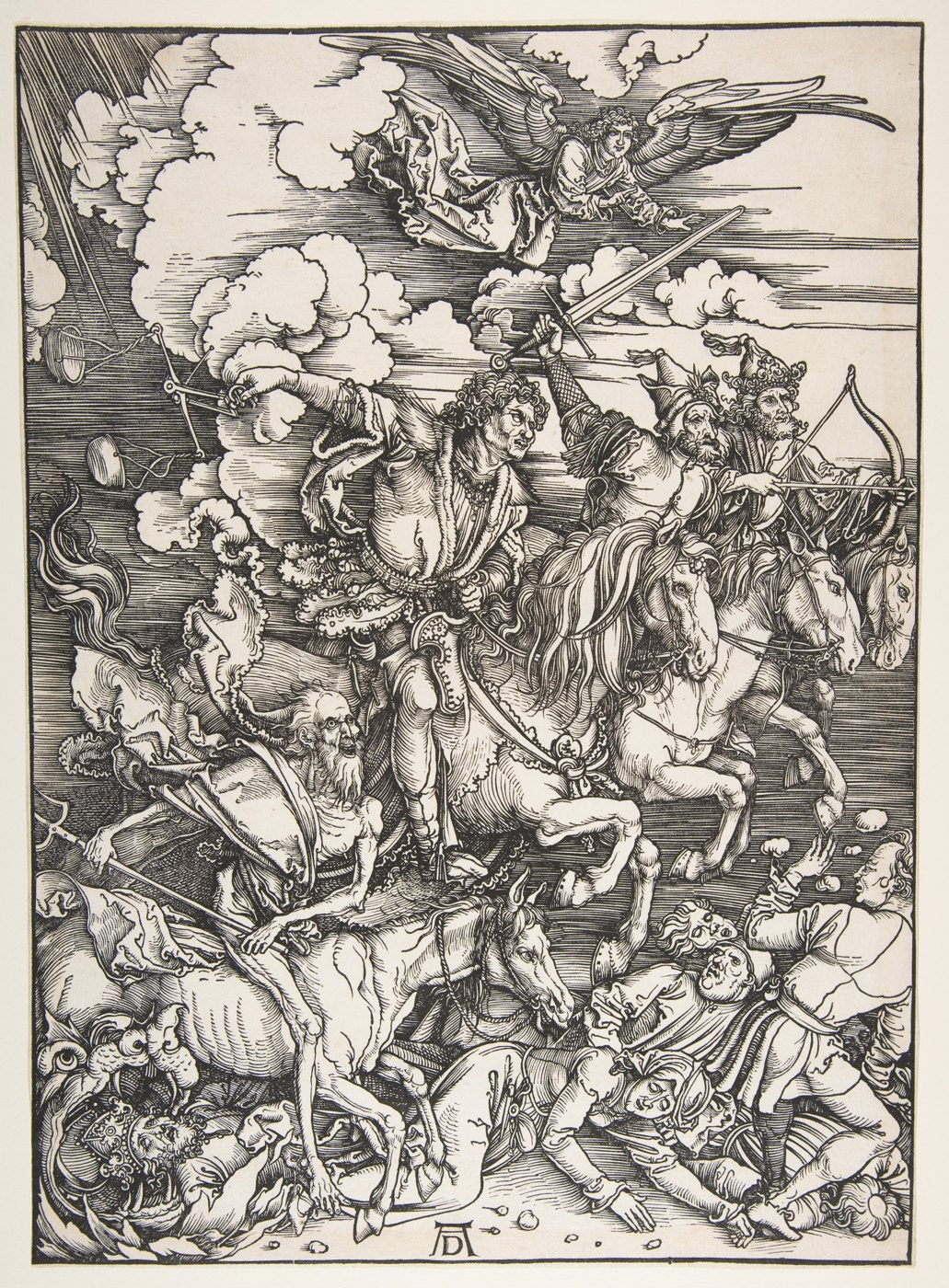
The sixth chapter of the Apocalypse is the source of that habit, and it is unusually plain. “And I saw: and behold a white horse, and he that sat on him had a bow, and there was a crown given him, and he went forth conquering that he might conquer.” Then red, then “And behold a black horse. And he that sat on him had a pair of scales in his hand”, then the fourth, which the text names outright: “And behold a pale horse: and he that sat upon him, his name was Death. And hell followed him.” Four horses, four colours, four offices. Dürer's woodcut of 1498 rides all four down the page at once.
The colours travel. On the Flamel sheet the three riders are carried by lions rather than horses, black, red and white, and the archive records that swap as the painter's own since the chapter puts them on horses. In the Abraxas plate the team is white and Hall makes them elemental: “The four white horses drawing the chariot of ABRAXAS symbolize the four ethers”.
Where the horse is single it is white and it carries someone the picture wants you to trust or fear. Waite on Death: “The mysterious horseman moves slowly, bearing a black banner emblazoned with the Mystic Rose, which signifies life.” Waite on the Sun: “The naked child mounted on a white horse and displaying a red standard”, which he calls “the great and holy light which goes before the endless procession of humanity”. Conway on the knight of 1513: “He is S. George, the Reformer, fearlessly riding through the dark valley of life.” The animal is the same. Everything else has changed.
Contested
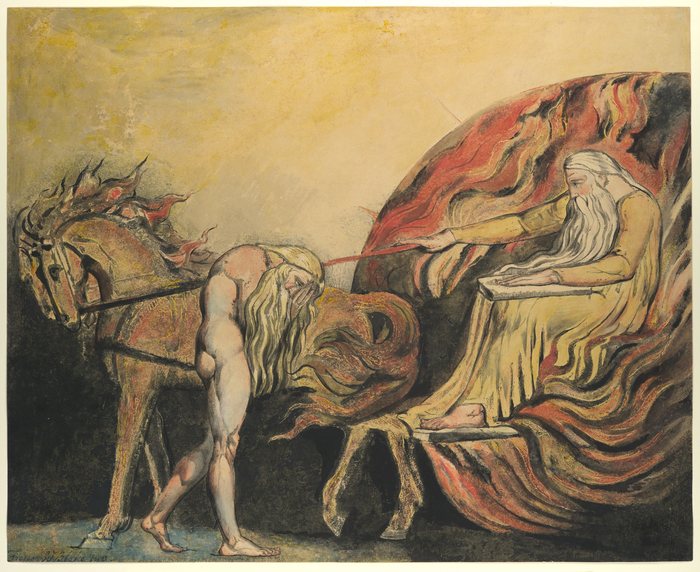
Conway's identification of the knight as S. George is his reading and not a title Dürer gave the print. The lions on the Flamel sheet are the painter's substitution for the horses of the sixth chapter, and the archive says so rather than treating the two as equivalent. The horses of the chariot in Blake's God Judging Adam are tagged by eye and unread.
Sources
- The Apocalypse of Saint John, Douay Rheims, Challoner revision: Quoted from the Challoner revision, the English text the archive uses for the Apocalypse throughout.
- William Martin Conway, Literary Remains of Albrecht Durer: Conway's translations and commentary. A nineteenth-century scholar reading the prints, not Durer explaining himself.
- Arthur Edward Waite, The Pictorial Key to the Tarot: Waite commissioned the 1909 designs and wrote the key to them, so his account is the closest thing the deck has to an author's statement.
- Manly P. Hall, The Secret Teachings of All Ages: Hall's text and plate captions, 1928. Transcribed here, not yet read against a printed folio.
On the same plate
Where it appears · 7
7 works in the archive carry the Horse. First the 5 where it has been read, with the Horse itself picked out.
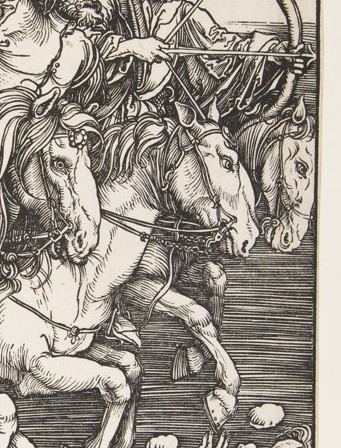
The Four Horsemen
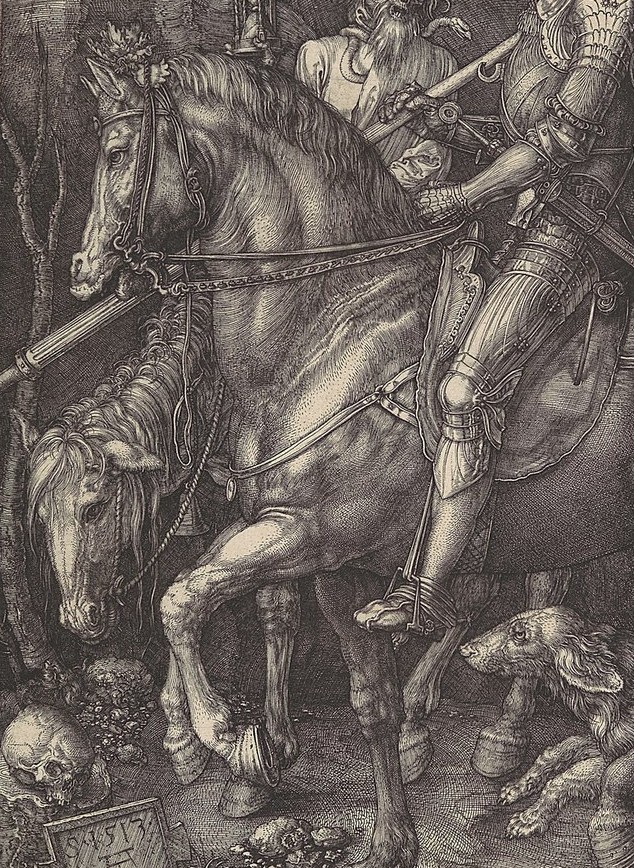
Knight, Death, and the Devil
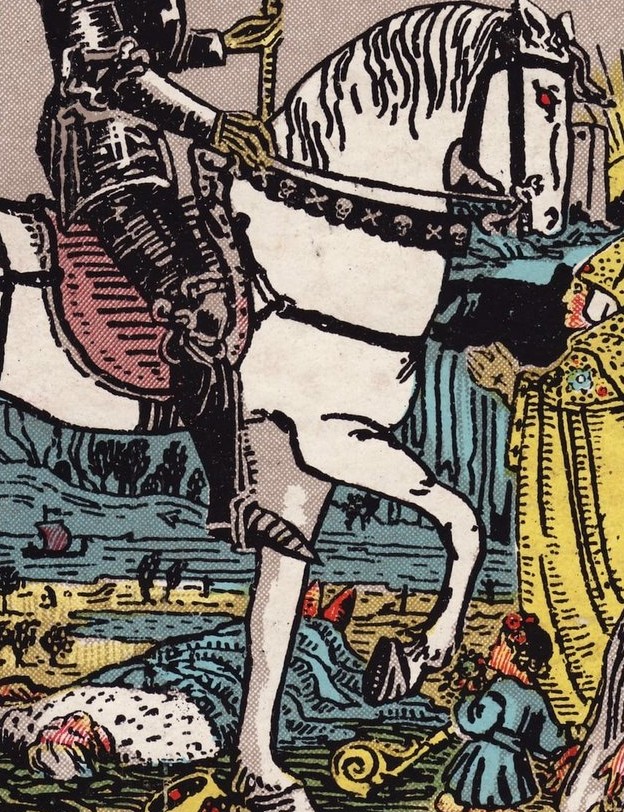
Death (XIII)
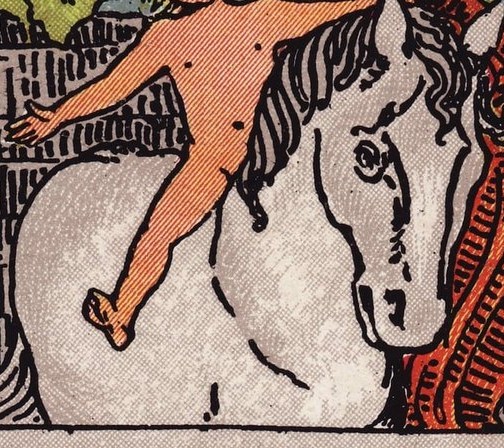
The Sun (XIX)
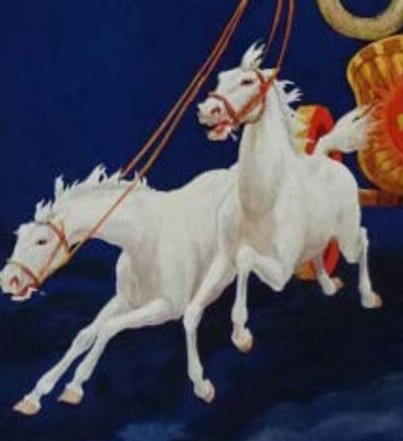
Abraxas, a Gnostic Pantheos
As a detail in 2 more
In these the Horse is somewhere in the picture, tagged by eye, and nobody has read it yet. When one of them is read, it goes out on a Sunday.