Abraxas
Abrasax, the Gnostic Pantheos
A cock-headed figure with serpents for legs whose name counts to three hundred and sixty five. The teacher the name is attached to is Basilides of Alexandria; the ancient objects that carry it are engraved gems small enough to wear.
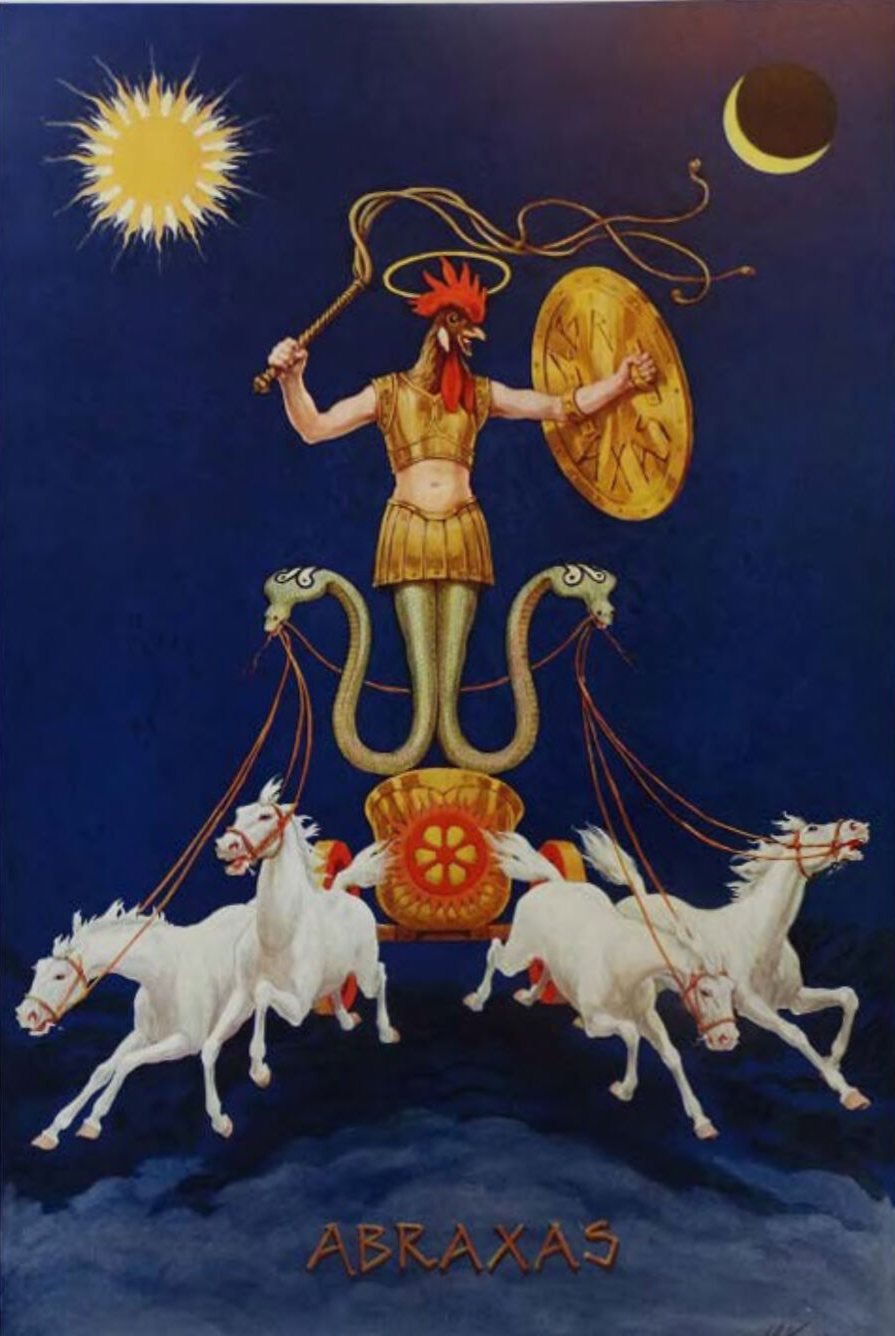
The name is most of the point and it is set under the picture in red capitals. ABRAXAS has seven letters, and in the Greek habit of counting letters as numbers the word comes to 365, the days of the year. Manly Hall credits Basilides of Alexandria, teaching in the second century, with dividing the powers of the universe into that many and gathering them under one name.
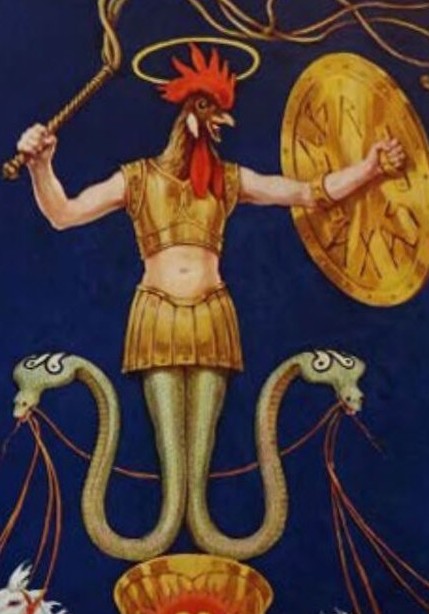
J. Augustus Knapp painted the figure for Hall in 1928 and every part of it is an argument about scope. A man's body. A cock's head, which crows at the sun. Two serpents where the legs should be, running into the ground. A whip in one hand and a shield in the other, so the figure holds the instrument of driving and the instrument of defending at once. Head in the sky, feet in the earth, and one name over the whole span.
The ancient objects are tiny. Abraxas survives on carved gems, cut to be worn, a few centimetres across, and those gems are the primary evidence for what the figure ever looked like. Knapp was working from descriptions of them seventeen centuries later, and he gave them colour they do not have.
Contested
Sources
- Manly P. Hall, The Secret Teachings of All Ages, 1928: The caption to the Knapp plate, on the seven letters, the number 365 and Basilides of Alexandria.
- J. Augustus Knapp, The colour plate painted for Hall, 1928: The picture itself: the cock's head, the serpent legs, the whip and the shield.
On the same plate
Where it appears · 1
1 work in the archive carries Abraxas. First the one where it has been read, with Abraxas itself picked out.