The Serpent and the Dragon
the dragon, the old serpent
A single creature doing two opposite jobs. Note whether it is bound, killed, or eating itself.
Thirty-one works here carry a serpent, and the archive can show the same animal being used for two flatly opposed purposes.
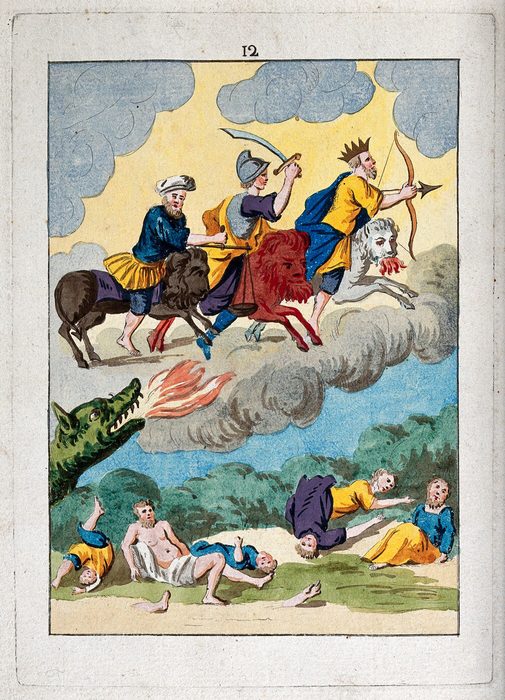
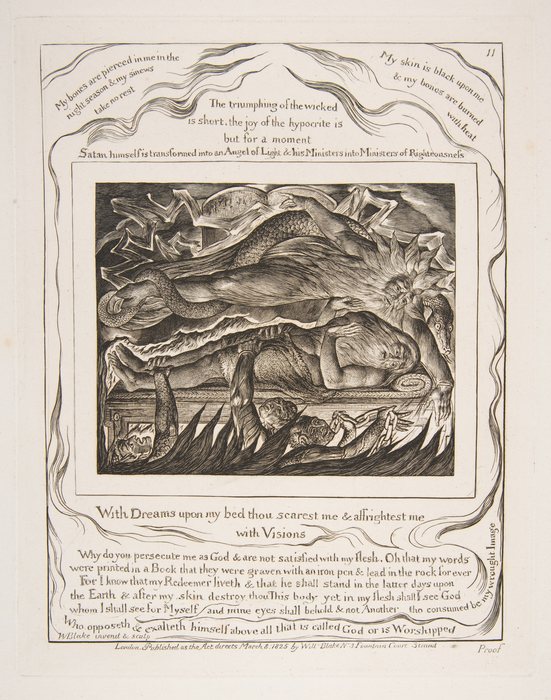
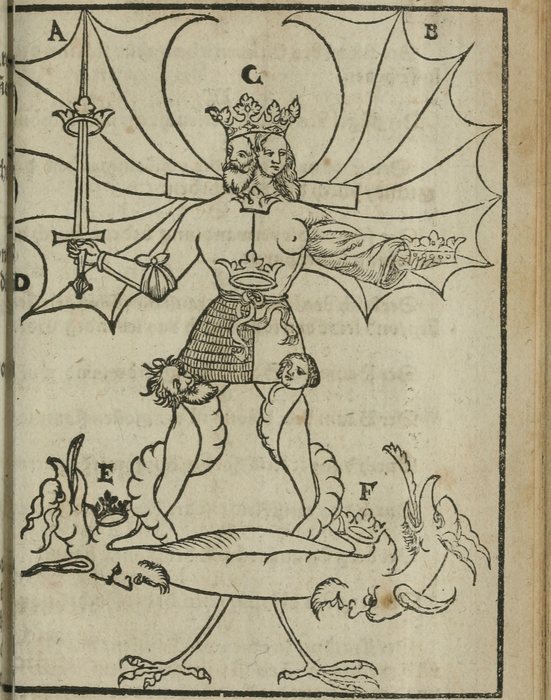
In the Apocalypse it is the enemy and it is named as one: “And there was seen another sign in heaven. And behold a great red dragon, having seven heads and ten horns and on his heads seven diadems.” Later the same text collapses four names into one creature: “And that great dragon was cast out, that old serpent, who is called the devil and Satan, who seduceth the whole world.” That verse is why a picture can put a dragon and a chained serpent on the same sheet and mean one thing by both, which is what the painter of the king with three crowns has done.
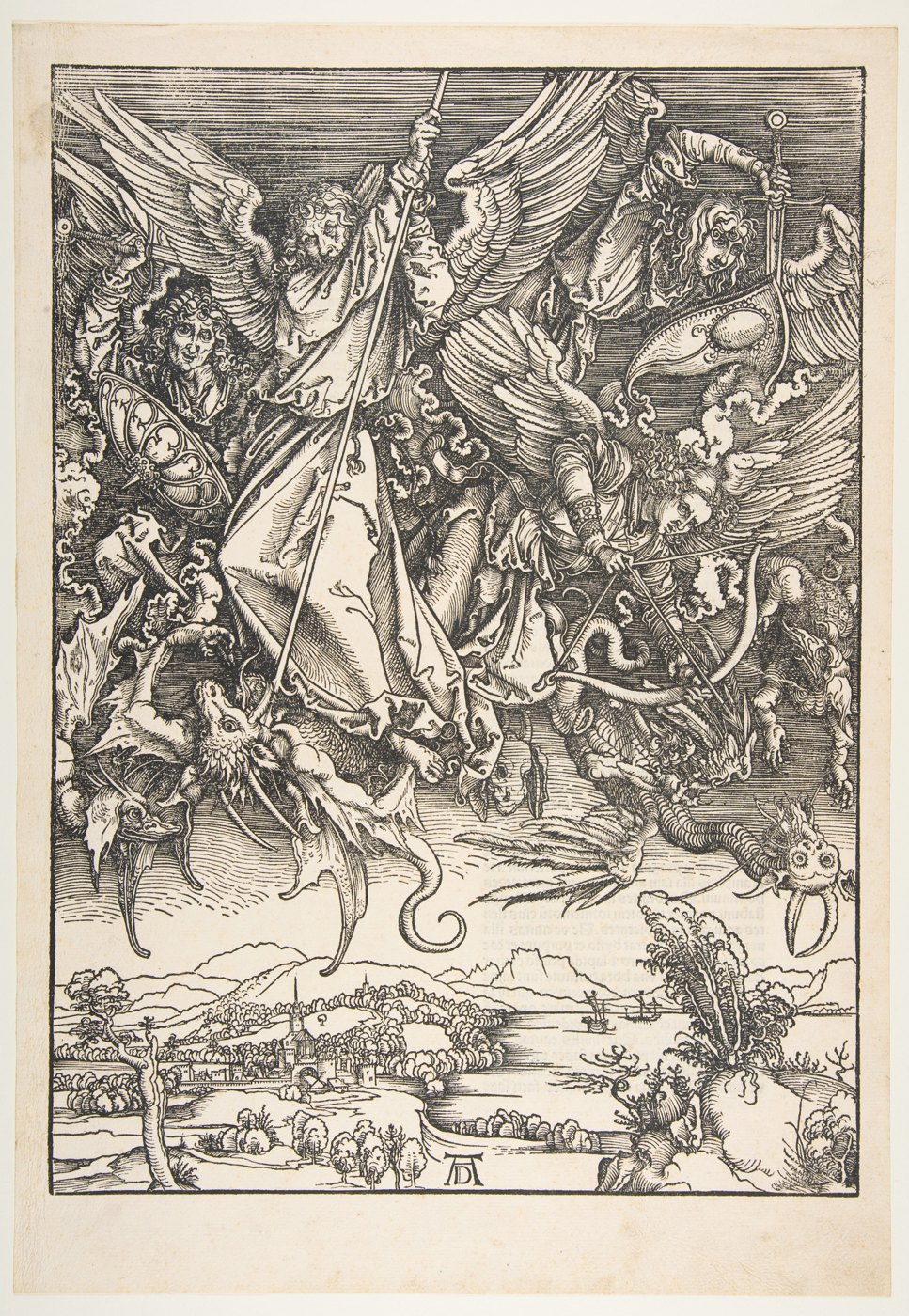
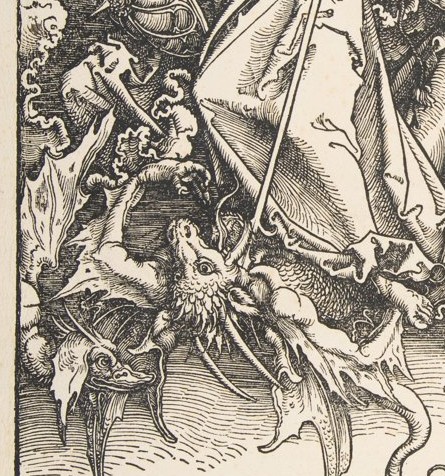
Dürer's woodcuts follow the text exactly. The dragon fights on both sides of Michael in the sheet of 1511, and the seven crowned heads appear again beside the woman clothed with the sun.
The other use is not an enemy at all. On the Magician of 1909 the serpent is worn: Waite describes “About his waist is a serpent-cincture, the serpent appearing to devour its own tail”, and the creature has become a belt, a closed system, a thing the figure has mastered rather than fought. In the Abraxas plate the serpents are structural. Hall quotes a reading in which they are “the two supporters, Nous and Logos, expressed in the serpents”, so the legs of the god are made of the animal that elsewhere is the adversary.
The two uses meet on one plate. Hall's Hermes carries “a winged rod, entwined with serpents” and strikes the dragon Typhon with it: “Suddenly Hermes struck the advancing reptile with the serpent-wound staff and with snarling cry the dragon fell over upon its side”. The serpent on the staff defeats the serpent on the floor. Waite puts Typhon on the Wheel of Fortune too, “in his serpent form”, going down the left side of the wheel, and on the Lovers he names the tree the serpent twines round, the Tree of the Knowledge of Good and Evil, while refusing the obvious reading of the woman beside it: “she is rather the working of a Secret Law of Providence than a willing and conscious temptress.” Lévi's Baphomet wears the caduceus at the groin, and his gloss is one clause: it “represents eternal life”. The Gemma manuscript of about 1735 has the serpent of Eden twice, coiled inside a downturned triangle on the page of the Tree of Knowledge, and head down at the roots of the Tree of Life with the fruit in its mouth, under the line “Transgressio Adae fuit truncatio Malcuth de caeteris plantis”, Adam's transgression was the cutting of Malkuth from the other plants.
A third use sits between the two, on Khunrath's plate against the slanderers. At the edge of the sky a serpent coils with a banner wound along its length, and the banner carries two words, “Lingue veneno.”, by the poison of the tongue. It is not an enemy waiting to be bound and it is not an emblem anybody has chosen to wear. It is a mouth. On a sheet crowded with accusers this is the only one given a body instead of a face, and the body chosen is the oldest one there is for speech that does harm.
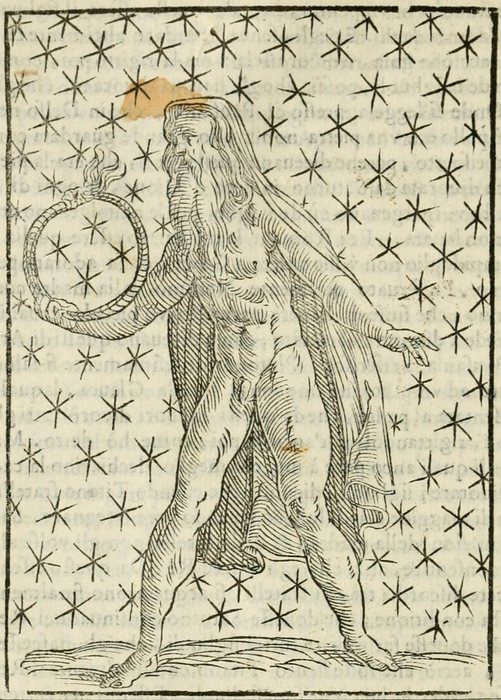
That contradiction is the entry. A serpent is not good or evil in this material. It is whatever the picture has decided to do with a thing that renews itself and has no limbs. See also the ouroboros, which is the same creature turned into a diagram.
Contested
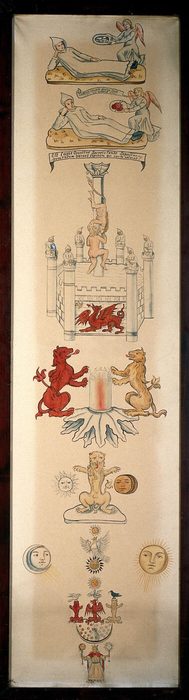
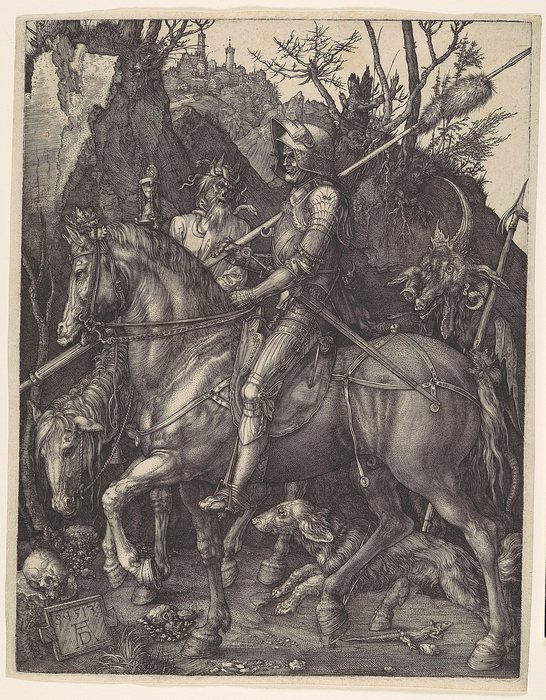
The sentence about Nous and Logos reaches the archive at second hand: Hall is quoting another author in his own book. Three works carry a serpent that no source in the archive explains, the fire-breathing beast on the Flamel sheet of riders, the many-headed beast rising through the cloud above the king with three crowns, and the snakes in Death's hair on the Knight, and all three are recorded as observed rather than read. Lévi is quoted in Waite's translation of 1896, checked against the French of 1861; the Gemma's Latin is put into English by the archive. Maier's dragons have an entry of their own.
Sources
- The Apocalypse of Saint John, Douay Rheims, Challoner revision: Quoted from the Challoner revision, the English text the archive uses for the Apocalypse throughout.
- Arthur Edward Waite, The Pictorial Key to the Tarot: Waite commissioned the 1909 designs and wrote the key to them, so his account is the closest thing the deck has to an author's statement.
- Manly P. Hall, The Secret Teachings of All Ages: Hall's text and plate captions, 1928. Transcribed here, not yet read against a printed folio.
- William Martin Conway, Literary Remains of Albrecht Durer: Conway's translations and commentary. A nineteenth-century scholar reading the prints, not Durer explaining himself.
- Éliphas Lévi, Dogme et Rituel de la Haute Magie: The description of the frontispiece in the fifteenth chapter of the Rituel, quoted in Waite's translation of 1896 and checked against the 1861 French printing.
- Gemma Sapientiae et Prudentiae, Wellcome Collection MS.2492, c. 1735: The two tree pages of a German Rosicrucian manuscript of about 1735, quoted in the writer's Latin and German with the archive's English.
On the same plate
Where it appears · 31
31 works in the archive carry the Serpent and the Dragon. First the 21 where it has been read, with the Serpent and the Dragon itself picked out.
Saint Michael Fighting the Dragon
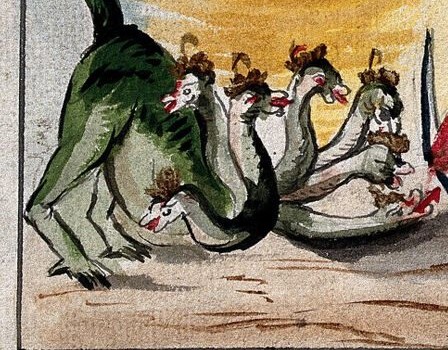
The Virgin with a Dragon at Her Feet
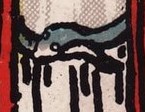
The Magician (I)
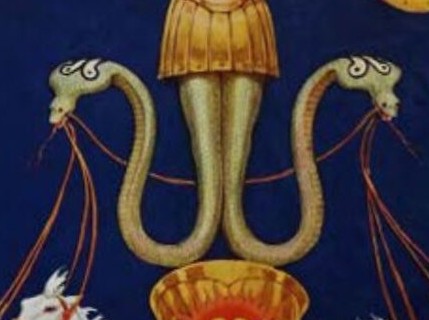
Abraxas, a Gnostic Pantheos
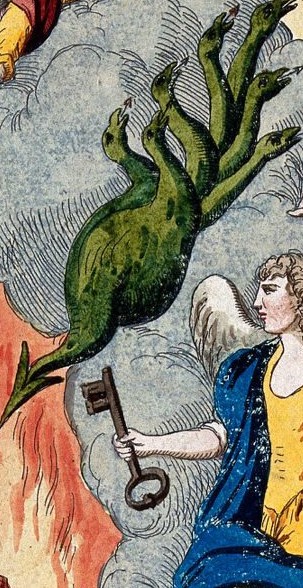
The King with Three Crowns and the Seven-Headed Hydra
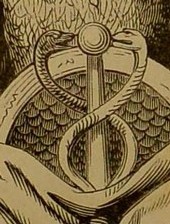
Baphomet
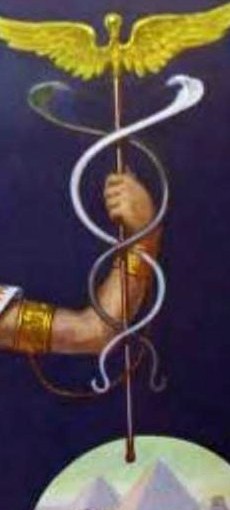
Hermes Standing upon the Back of Typhon
The Tree of the Knowledge of Good and Evil, Microcosma
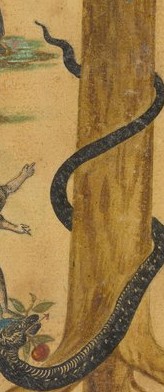
Der Baum des Lebens, the Tree of Life
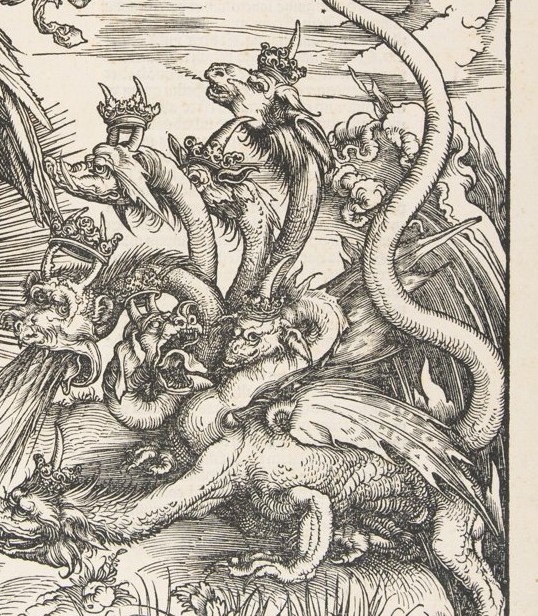
The Apocalyptic Woman
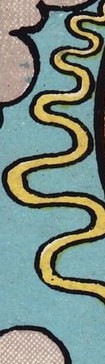
Wheel of Fortune (X)

The Lovers (VI)
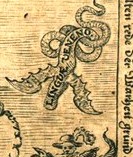
Against the slanderers, by right of retort
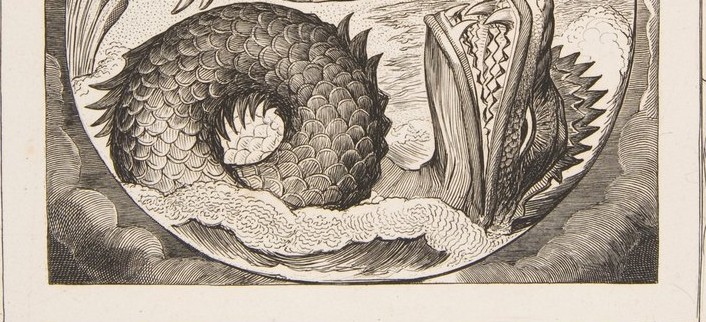
Behold now Behemoth which I made with thee
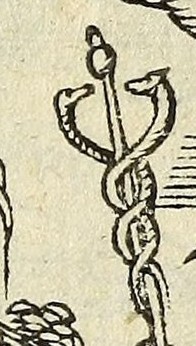
Facundia difficilis
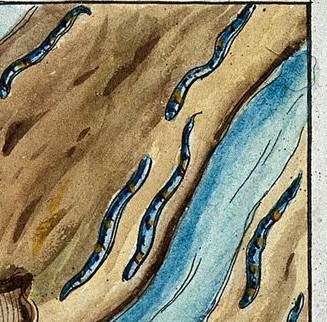
Rivers in the Wilderness, with Serpents and Fire
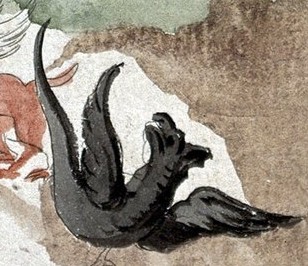
The Flowering Tree on the Mountain, with the Dragons and Griffons
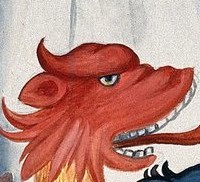
The Three-Headed Monster in the Flask
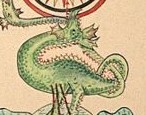
The Bird of Hermes
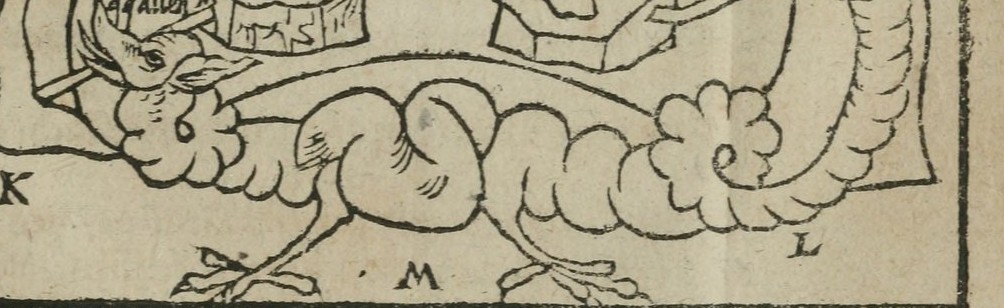
The tree of the sun and the tree of the moon
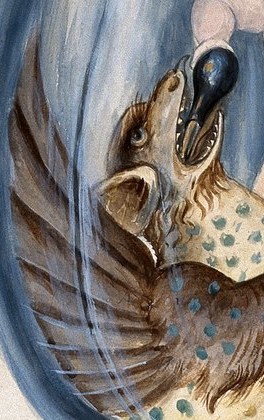
The child pouring the black flask down the dragon
As the subject · 4
Works filed under the Serpent and the Dragon as their central motif, not yet read symbol by symbol.
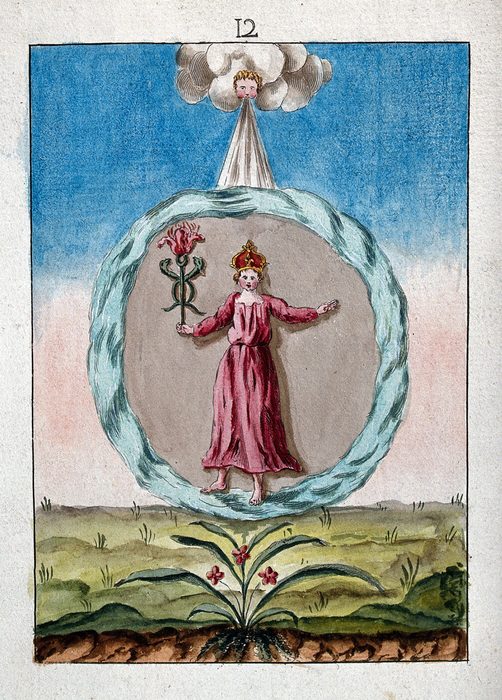 A Crowned Woman with a Rose-Topped Caduceus, in a Circle of Water
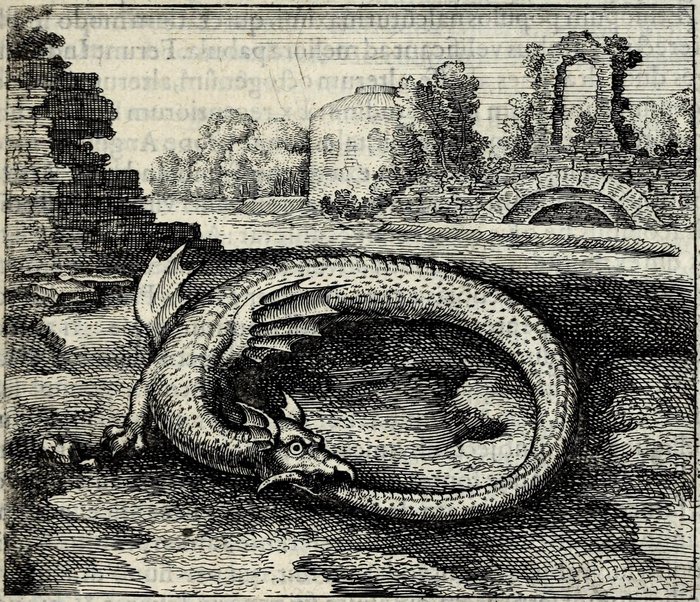 Hic est Draco caudam suam devorans
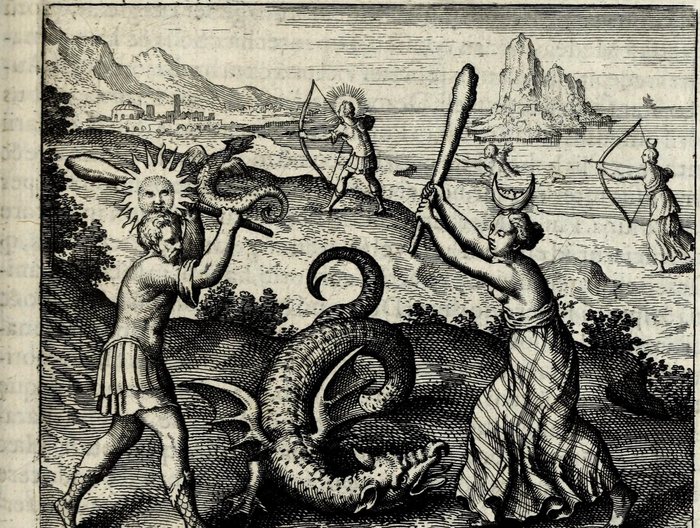 DRACO non moritur, nisi cum fratre & sorore sua interficiatur, qui sunt Sol & Luna
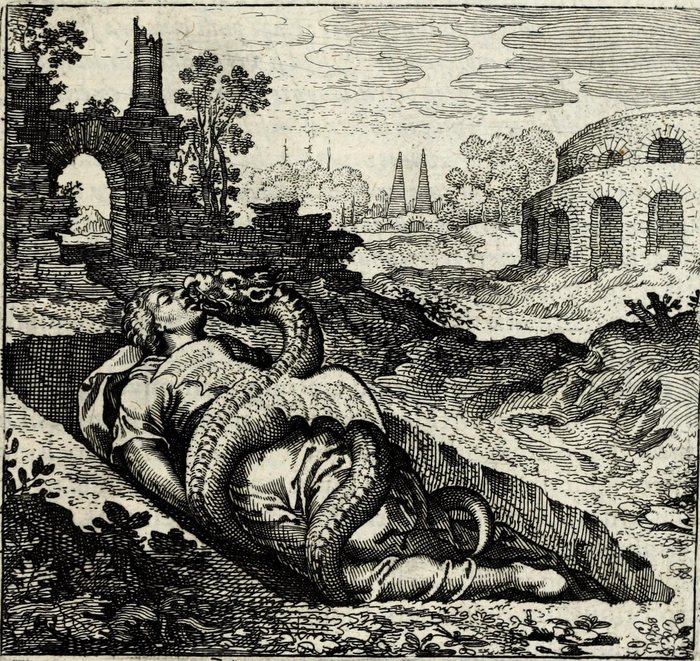 Draco mulierem, & hæc illum interimit, simulque sanguine perfunduntur
As a detail in 6 more
In these the Serpent and the Dragon is somewhere in the picture, tagged by eye, and nobody has read it yet. When one of them is read, it goes out on a Sunday.