The Tree
the tree of life, the arbor
A body drawn as growth. Note which way it grows and what is at the root rather than at the top.
Twenty-four works here carry a tree, and the ones the archive has read agree on one thing: the tree is never scenery. It is a body, and it is drawn to be read from the top down.
Hall's Tree of the Sephiroth has its trunk rising into a white triangle where a crown sits on the roots, and the foliage spreading downward. The inversion is the argument, and Hall states what the tree is a picture of: “The tree has also been accepted as symbolic of the Microcosm, that is, man.” Not a diagram of the world, then, but of a person, with the origin at the top and the growth hanging under it.
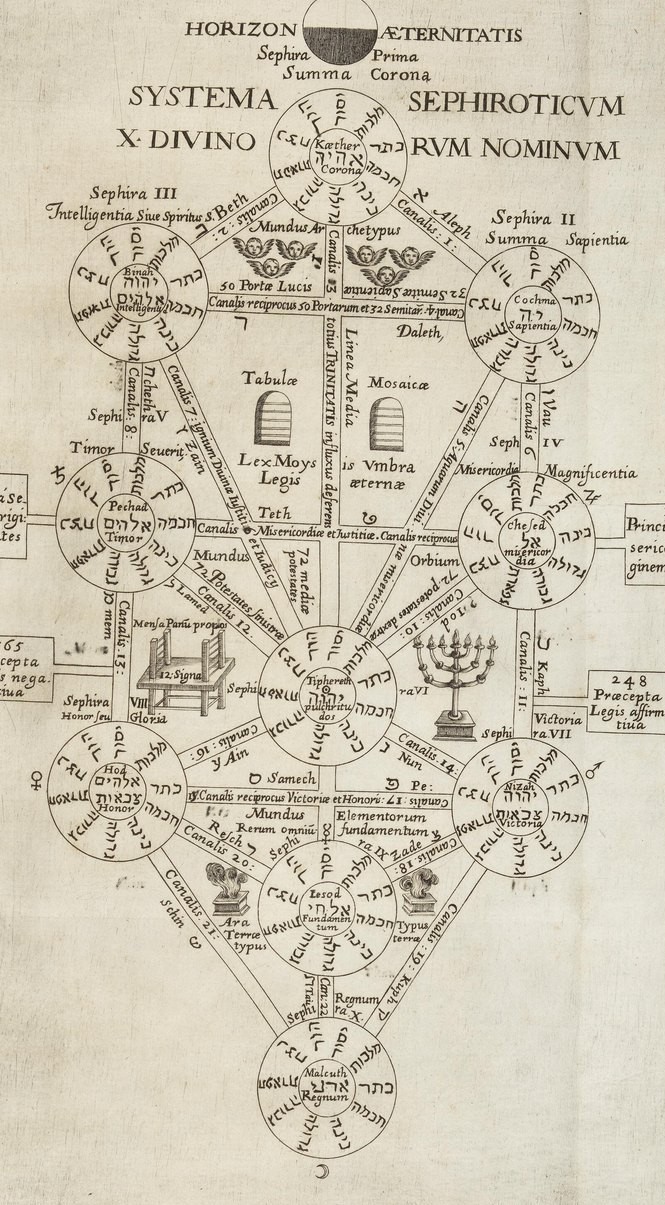
Kircher, in 1653, explains the convention. The Cabalists, he writes, set the ten names out “per similitudinem arboris”, under the likeness of a tree, or “sub similitudine hominis microcosmi”, under the likeness of man the microcosm, and his own plate draws the tree so that “tres superiores Coronae supremum arboris locum occupent”, the three upper Crowns occupy the top of the tree, Tiphereth in the middle stands “veluti truncus”, like the trunk, and “radices verò fundamentum & regnum”, the roots are Foundation and Kingdom. A tree with its roots at the bottom and its crowns at the top, then, but grown from above: the whole thing hangs from the circle of Ain Soph over it. He also says what happens when it is cut: “si septem inferiores truncentur, quod in peccato Adae factum est, tum tota arbor maledicto subiecta”, if the seven lower ones are lopped, which is what happened in the sin of Adam, the whole tree falls under a curse and withers.
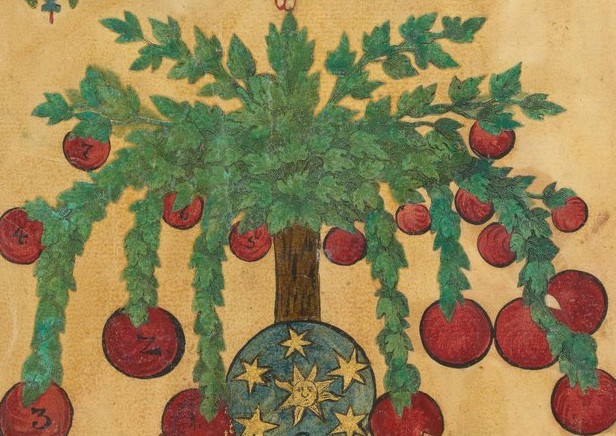
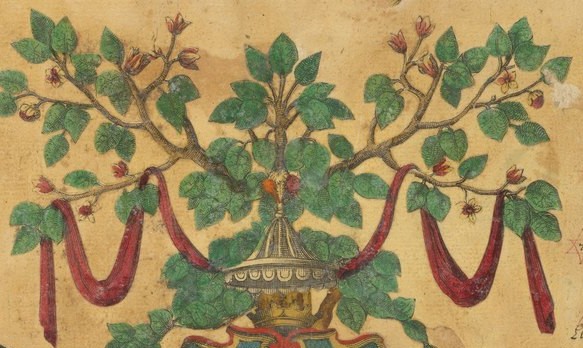
The Gemma manuscript of about 1735 draws that sentence. Its Tree of Life carries the banner “Der Baum des Lebens”, a cartouche on the trunk reading “Est Deus”, God is, over a pair of scales, and along the foot of the page the doctrine in Latin, “Transgressio Adae fuit truncatio Malcuth de caeteris plantis”, Adam's transgression was the cutting of Malkuth from the other plants, with the serpent's head down at the roots and the fruit in its mouth. Its Tree of Knowledge is labelled “Micro Cosma”, the little world, grows out of a winged globe, which the archive takes for the human being the motto addresses, and has that motto written either side: “O Mensch, erkenne dich selbst, in dir liget der Schatz aller Weisheit verborgen”, O man, know thyself, in thee lies hidden the treasure of all wisdom. Hall's sentence about the microcosm is two centuries late; the manuscript had already written it on the tree.
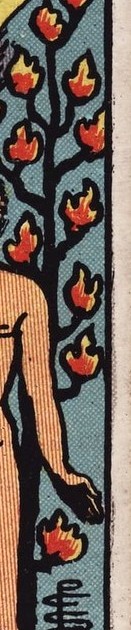
Waite's two trees of 1909 are the same two. Behind the Lovers, “Behind the man is the Tree of Life, bearing twelve fruits, and the Tree of the Knowledge of Good and Evil is behind the woman; the serpent is twining round it.” The Hanged Man's gallows is a tree as well: “the tree of sacrifice is living wood, with leaves thereon”, and the figure hanging from it “suggests life in suspension, but life and not death”.
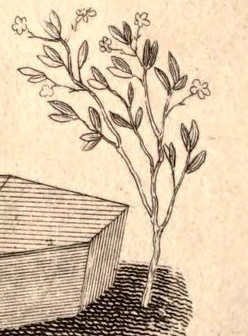
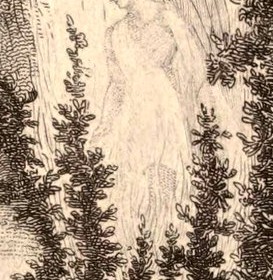
Cross's chart of 1819 has two plants that are not scenery either. The sprig of acacia beside the coffin is, in the sentence that closes his lecture on the emblems, “the ever green and ever living sprig of Faith in the merits of the Lion of the tribe of Judah”; and the burning bush of his Royal Arch plate is the plant that “was on fire, and was not burnt”, drawn whole under the flame with every leaf on it.
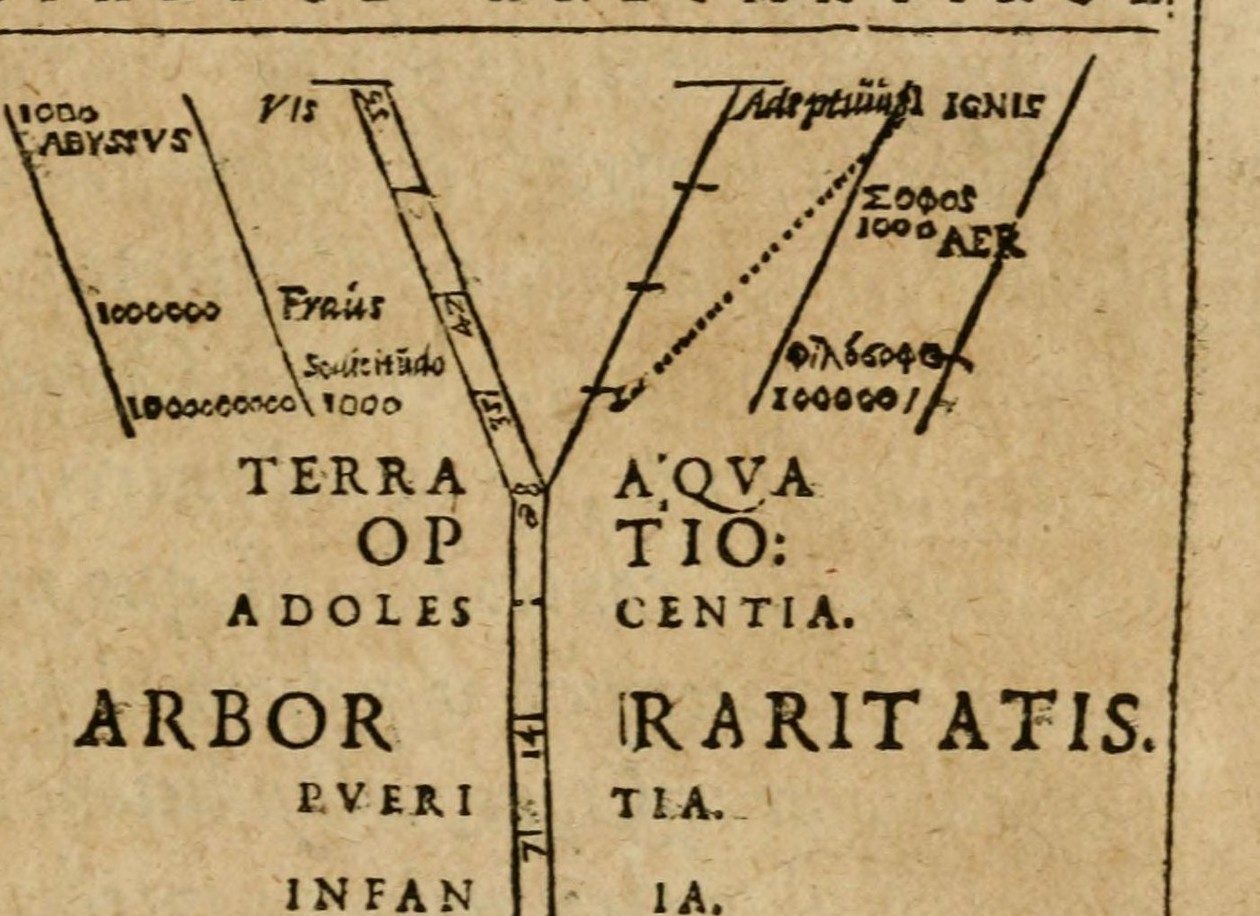
Dee's Arbor Raritatis of 1564 is a tree only in that it forks, and it is a body in the plainest sense: a life. The trunk is lettered from the root up “Infantia. Pueritia. Adolescentia. Optio.”, infancy, boyhood, adolescence, choice, and at the fork “Terra. Aqua.”, earth and water, the two branches the choice is between. Up the branch of earth climb “Abyssus. Fraus. Sollicitudo. Vis.”, abyss, fraud, care and force, with numbers in the millions beside them; up the branch of water “Philosophos. Sophos. Adeptivus.”, the philosopher, the wise man, the adept, with the numbers dwindling to a few; and over both, in Greek, “Tyrannos pneumatikos.”, the spiritual tyrant. Dee calls it the tree of rarity because the good branch is the empty one, and it stands in his letter to the Emperor before the theorems begin, as a warning about who will read them.
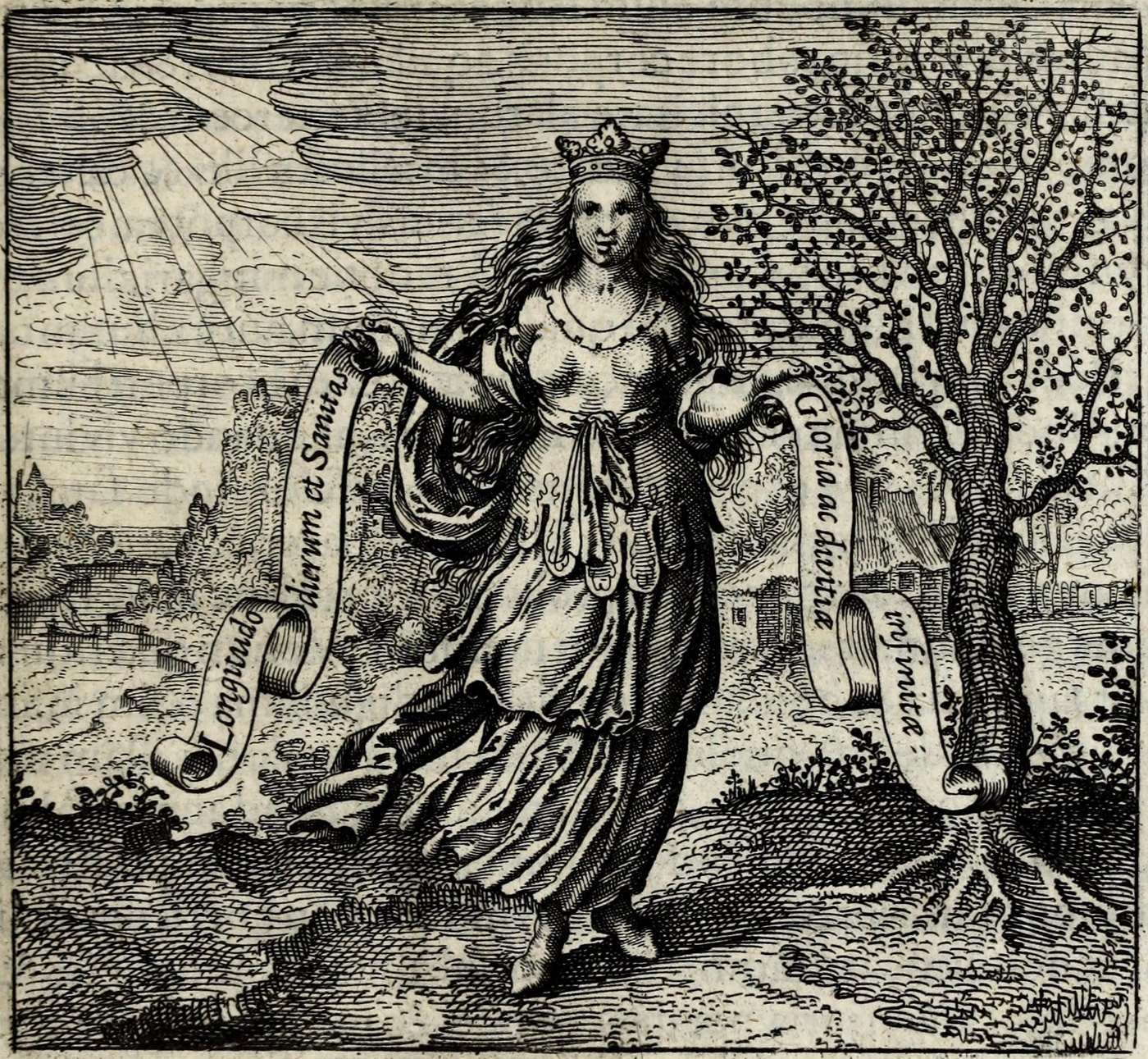
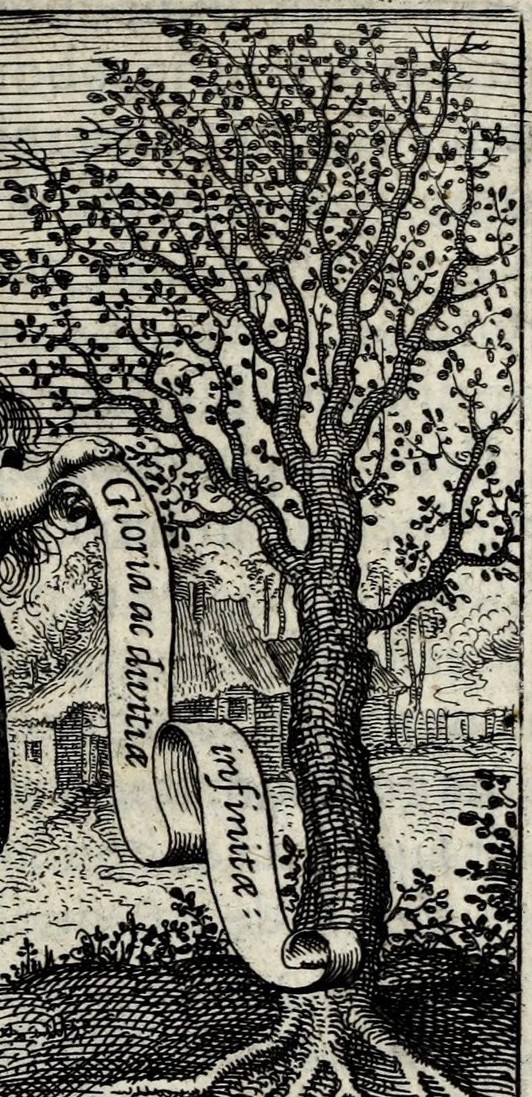
Maier ties the tree to time rather than to structure. His ninth emblem shuts a tree and an old man together in a glass house: “Arborem cum sene conclude in rorida domo, & comedens de fructu ejus fiet juvenis.” Eat the fruit and the old man is made young. The twenty-sixth names the tree outright: “Sapientiæ humanæ fructus Lignum vitæ est”, the fruit of human wisdom is the tree of life. The forty-first stains one: Venus, running to dead Adonis, cut her foot, and “cruore ruborem / Contulit ipsa rosae, quae prius alba fuit”, with her blood gave redness to the rose itself, which before was white.
So the tree in this material is a body that grows, bears and can be eaten from, and the pictures use it wherever they want to say that something takes time and produces something else. Even Fludd's trees, which are trees and nothing more, stand in a ring of his mirror of nature that says how living things multiply: “arbores surculatione”, trees by grafting.
Contested
Kircher's Latin and the Gemma's Latin and German are put into English by the archive, with the originals on the records; who the Gemma's writer was is not known. The line drawn here from Kircher's lopped tree to the manuscript's is the archive's, made because the two say the same thing in nearly the same word, truncentur and truncatio, eighty years apart; no source here draws it. Maier's own discourse on both emblems is not yet transcribed, and Hall's caption is not yet read against a printed folio. The tree with the bird on the Star card is tagged and unread; Maier's trees are marked and read on their records. Dee's Latin and Greek are read off the page and put into English by the archive, the Greek in transliteration.
Sources
- Manly P. Hall, The Secret Teachings of All Ages: Hall's text and plate captions, 1928. Transcribed here, not yet read against a printed folio.
- Michael Maier, Atalanta Fugiens, 1618: The motto printed over each engraving, read off the 1618 Oppenheim printing rather than off the scan's machine reading.
- Arthur Edward Waite, The Pictorial Key to the Tarot: Waite commissioned the 1909 designs and wrote the key to them.
- Athanasius Kircher, Oedipus Aegyptiacus, 1653: The chapter on the Cabala of the Hebrews in the second volume, Rome 1653, read in the Latin of the Universidad de Sevilla copy with the archive's English beside it: a Jesuit's account of the ten Sephiroth, written to explain his own plate of the tree.
- Gemma Sapientiae et Prudentiae, Wellcome Collection MS.2492, c. 1735: A German Rosicrucian manuscript of about 1735 whose five coloured figures carry their own captions and Bible references; quoted in the writer's German with the archive's English. The Wellcome's catalogue matches four figures to the plates printed at Altona in 1785 as the Geheime Figuren der Rosenkreuzer.
- Robert Fludd, Utriusque cosmi historia, 1617: The explanation of the mirror of nature in the first tractate, Oppenheim 1617, on the ring of vegetables, read in the Latin of the Getty Research Institute copy.
- Jeremy L. Cross, The True Masonic Chart, or Hieroglyphic Monitor, 1826: The printed lectures of Cross's monitor, New Haven 1826, read against the page images of the Library of Congress copy; each emblem's sentence is quoted where the monitor carries it, and the plates whose lectures went unprinted say so.
- Exodus, Douay Rheims, Challoner revision: The third chapter, for the plate that cites it.
- John Dee, Monas Hieroglyphica, 1564: The lettering of the figures and the theorems beside them in the Frankfurt printing of 1591, read off the page images of the Getty Research Institute copy; the English is the archive's.
On the same plate
Where it appears · 24
24 works in the archive carry the Tree. First the 22 where it has been read, with the Tree itself picked out.
Sapientiæ humanæ fructus Lignum vitæ est
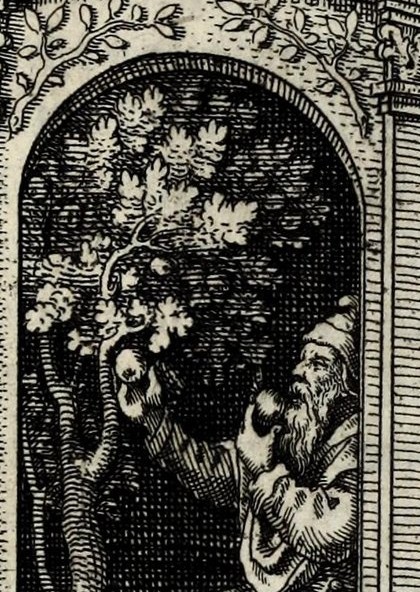
Arborem cum sene conclude in rorida domo, & comedens de fructu ejus fiet juvenis
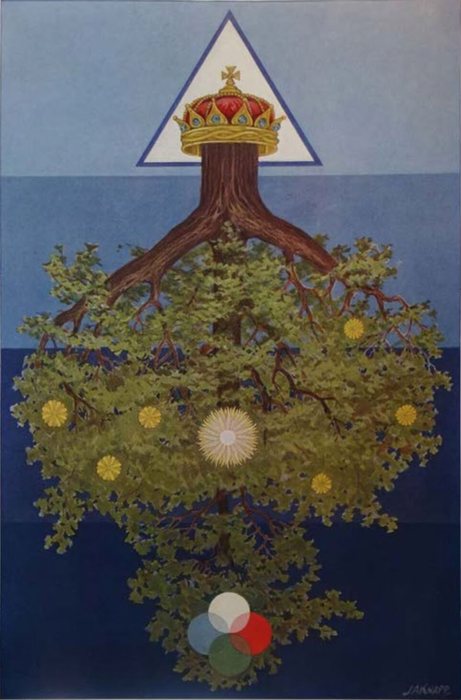
The Tree of the Sephiroth
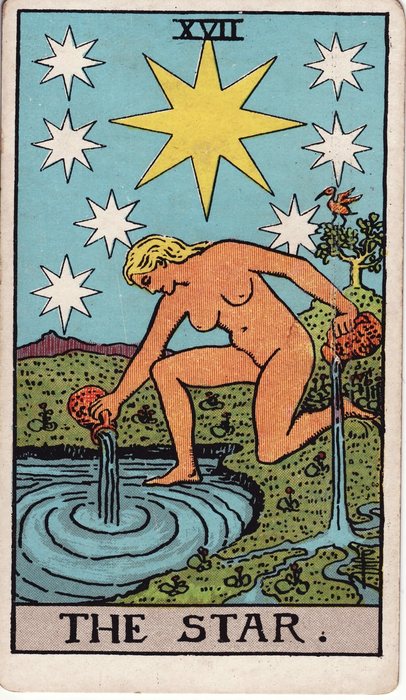
The Star (XVII)
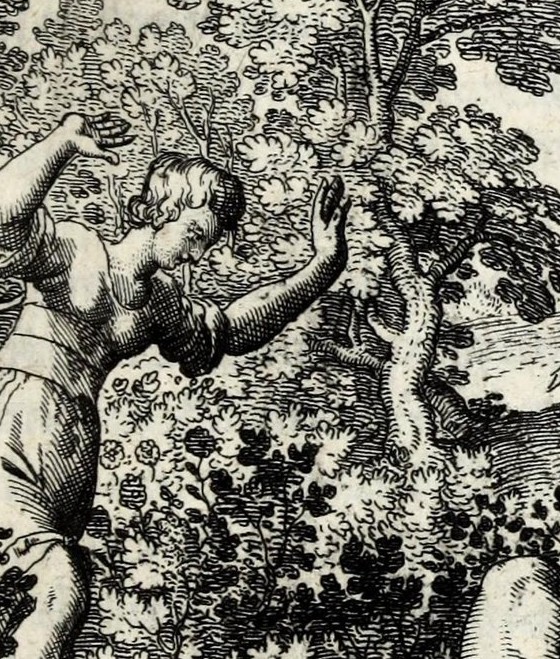
Adonis ab apro occiditur, cui Venus accurrens tinxit Rosas sanguine

The Hanged Man (XII)
The Lovers (VI)

Integrae Naturae Speculum Artisque Imago
Systema Sephiroticum, the Tree of the Sephiroth
The Tree of the Knowledge of Good and Evil, Microcosma
Der Baum des Lebens, the Tree of Life
The Setting Maul, the Spade, the Coffin and the Sprig of Acacia
The Burning Bush
Arbor Raritatis
Imagine di Saturno, ò del Tempo divoratore de suoi figliuoli
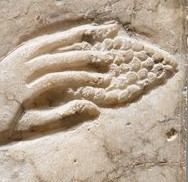
Eagle-headed figure with the bucket and the cone
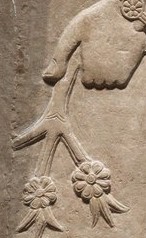
Winged figure with the rosette branch
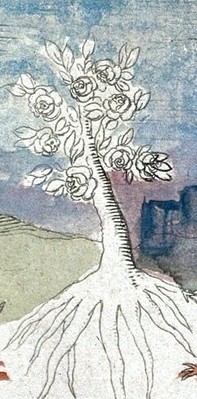
The Flowering Tree on the Mountain, with the Dragons and Griffons
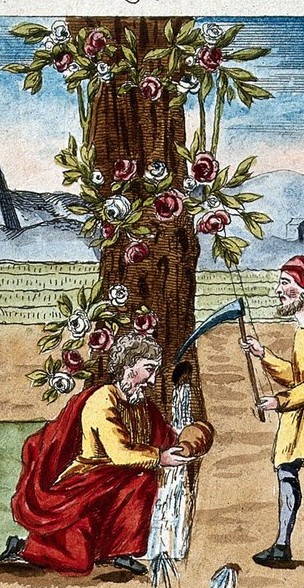
The Rose Tree on the Hollow Oak, and the Blind Diggers
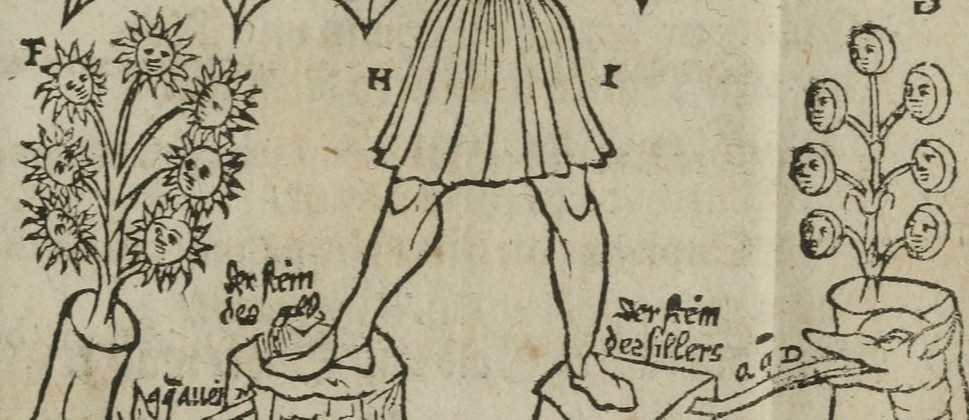
The tree of the sun and the tree of the moon
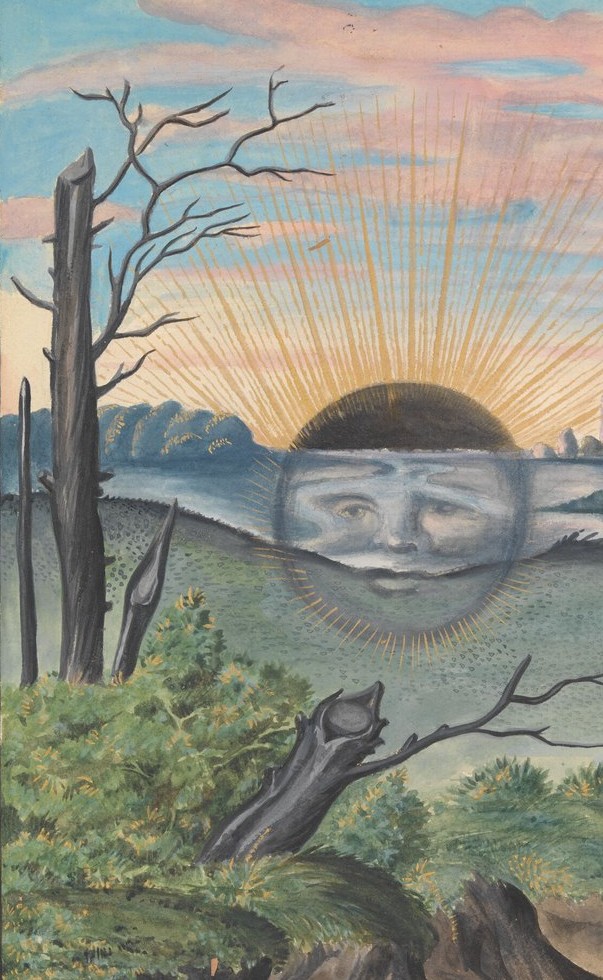
The black sun over the blighted country
Creation in ten roundels, with Ripley’s prologue beneath
As a detail in 2 more
In these the Tree is somewhere in the picture, tagged by eye, and nobody has read it yet. When one of them is read, it goes out on a Sunday.