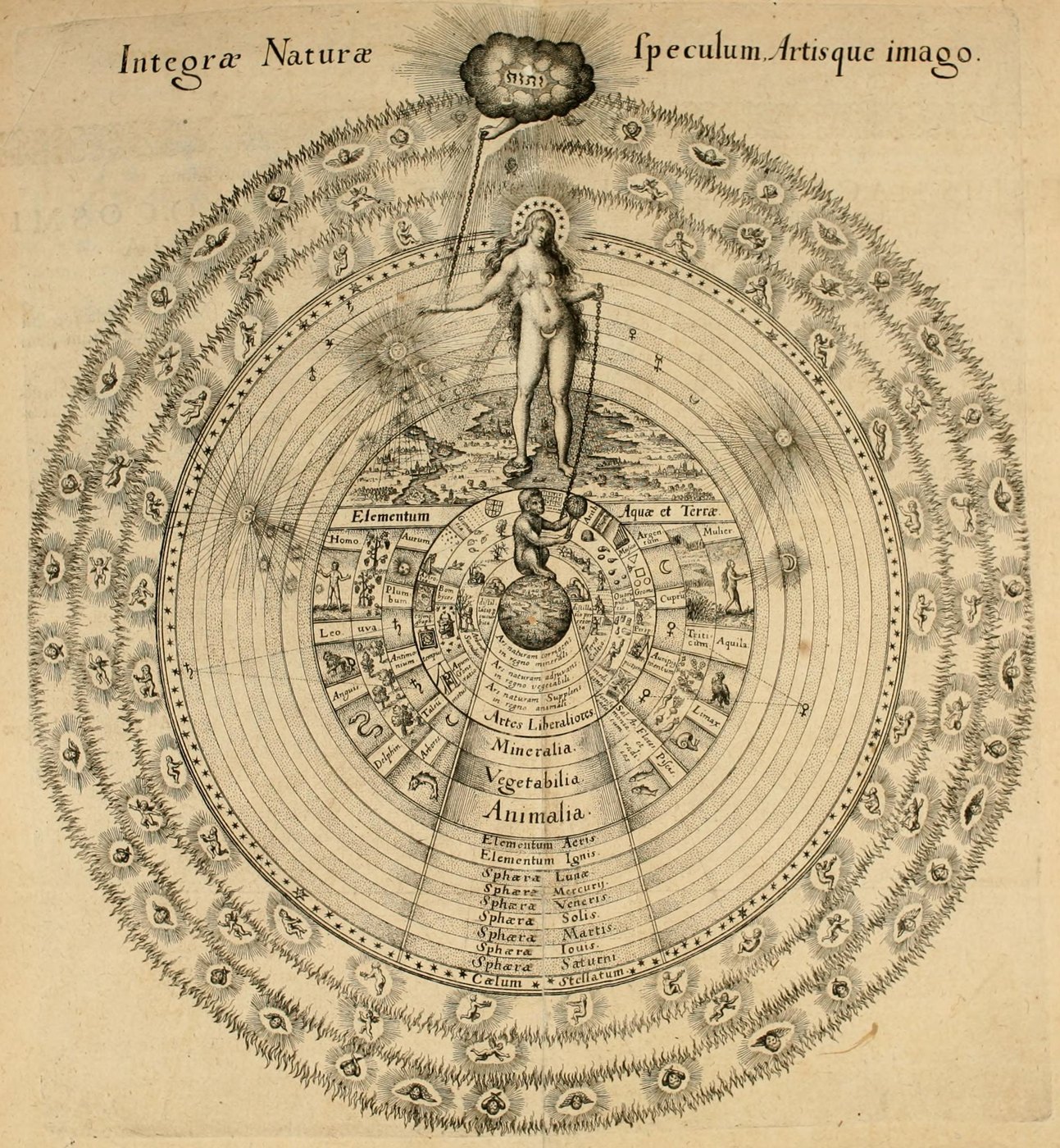
Integrae Naturae Speculum Artisque Imago
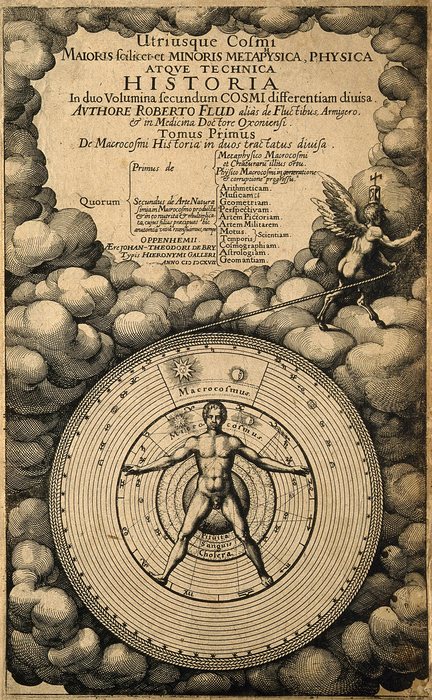
The mirror of nature as the central motif, filed under the Heavens, with the Divine, the Hand, the Sun and the Moon, the Angel and the Wing, the Water, the Tree, and the Lion in a secondary part. From Fludd's history of the two worlds.
What is happening
Robert Fludd, 1617 “In hoc ergo speculo Emblematico demonstratur, quomodo Deus In principio omnia metaphysicè creavit. A principio, quae voluit, ordinavit. Daemones metaphysicè Ordinationes divinas exsequuntur. Mandata Dei annuntiant. Natura Physicè Voluntatem divinam implet. Ordinationi creatoris, res Physicas generando easque rursus corrumpendo, obedit. Ars permissione divina operationes Physicas Imitatur. Adjuvat. Perficit.”
Symbolica, 2026 Fludd's Latin, put into English here: In this emblematic mirror, then, it is shown how God in the beginning created all things metaphysically, and from the beginning ordered what he willed; how the daemons, metaphysically, carry out the divine ordinances and announce God's commands; how Nature, physically, fulfils the divine will, and obeys the Creator's ordinance by generating physical things and corrupting them again; and how Art, by divine permission, imitates, assists and perfects the operations of nature.
Robert Fludd, 1617 “Duae autem harum partium in hac Macrocosmi fabrica contentarum causae effectrices enumerantur: Natura scilicet, & ejus Simia, quam Artem appellamus.”
Symbolica, 2026 Fludd's Latin, put into English here: Two efficient causes of these parts contained in the fabric of the macrocosm are counted: Nature, namely, and her Ape, which we call Art.
Key · 8 motifs
Tap a motif on the picture, or a line below. Its note opens under the line, with the reading its author gave it.
- Primary motif
- Secondary motifs · 7
The picture
A circular diagram of the whole world in rings: a cloud with the Hebrew name of God at the top, a hand from it holding a chain fastened to the wrist of a naked woman with a starry crown who stands on the earth, a second chain from her hand to an ape with a compass sitting on the globe; rings of angels in fire, the fixed stars, the seven planets, the elements, animals, plants and minerals, each ring halved into a male and a female side; the mirror of nature as the central motif. By eye
The reading
The picture read whole, in the archive's words, from the sources quoted on the marks. Read on, and the picture follows: the motif under discussion keeps its colour.
Fludd folded this plate into the front of his history of the two worlds, before a word of the argument, and printed a two-page explanation of it. The title runs across the top: the mirror of the whole of nature, and the image of art. It is a diagram of everything, drawn as rings, and the three figures on its vertical axis are the whole argument of the book. A cloud with the name of God at the top; a naked woman standing on the earth in the middle; an ape sitting on the globe at her feet.
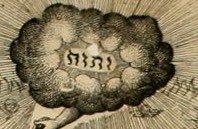
God is a cloud with four Hebrew letters in it. Fludd's table on the facing page says what he does in this mirror: in the beginning he created all things, and from the beginning he ordered what he willed. He does not appear in the world he made, and the rest of the picture is a chain of command that begins in that cloud.
The hand reaching out of the cloud holds a chain, and the chain is fastened to the woman's wrist. She is Nature, not a goddess, Fludd writes, but the nearest servant of God, and from her other hand a second chain runs down to the ape. Nature is led, and she leads. Fludd's readers were being told, before the book began, that nothing in the physical world acts on its own.
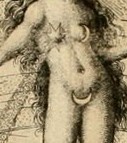
Nature is drawn as a young woman with stars in her hair, a sun on her right breast and a crescent moon over her belly. Fludd explains the anatomy: the region of her heart is the true seat of the heavenly sun, her womb is filled with the body of the moon, and from her breasts she suckles every creature of the elements with the heat and moisture they live by. The sun and moon are not ornaments here. They are her organs.
Beyond the ring of fixed stars the picture turns to fire, three rings of it, each full of winged heads and small winged bodies. These are the angelic orders, which Fludd says God made from the purest part of the first matter, and whose work is to carry out the divine ordinances and announce God's commands. Craven, reading the plate in 1902, took them for cherubim, seraphim, and a third rank he could not name.
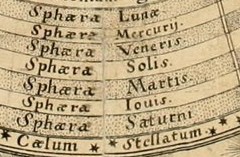
Inside the stars come the seven spheres of the planets, Saturn outermost and the moon nearest the earth, then the elements of fire and air, then the three rings of the creatures. The planets, Fludd writes, are Nature's instruments, hammers that beat the metals into being underground. Dotted lines run from each planet's sign to its metal in the ring of minerals, Saturn to lead, Venus to copper, and the whole wheel is a table of correspondences that happens to be a picture.
The three rings of creatures are each divided down the middle into a male half and a female half. Lion, serpent and dolphin, gold, lead and antimony, the man and the vine stand on the left; eagle, snail and fishes, silver and copper, the woman and the wheat on the right. Fludd's world is sexed all the way down, and the pairing is the point: every kingdom has its Saturn side and its Venus side.
The plant ring holds the vine and the trees on one side and the wheat and the flowers on the other, and the ring inside it says what art may do among them. It ploughs and harrows, it grafts trees, it plants herbs, and so the crops grow and multiply. Fludd's word for this is adjuvans, helping. Art assists nature among the plants; it corrects her only among the minerals.
At the centre sits the ape, on the globe of the earth, a compass in one hand and a little globe in the other, copying. Fludd calls it Nature's ape and then gives it a worthier name, Art. The three rings it sits on say what art may do: correct nature in the kingdom of minerals, help her among the plants, supply her among the animals. Then come the liberal arts. The second half of Fludd's volume is a history of this ape's daughters, arithmetic, music, geometry, painting, fortification, and the mirror is their family tree. Art is permitted, on the facing page, to imitate, assist and perfect. It is never permitted to lead.
One detail carries a doctrine. Nature's right foot stands on land and her left foot in the sea. Fludd reads the two feet as sulphur and mercury, the dry principle and the wet one, and writes that nothing can be born or grow without the union of both. The alchemists' pair is standing in plain sight at the centre of a picture of the whole world.
Decoded: every motif is marked, and each mark carries the reading its author gave it, quoted from the text, or says that it is observed on the picture and not read. The reading above is the archive's own, made from those sources and no others.
A diagram of everything, drawn so that a person can be found inside it. Note where the human figure stands in the scheme.
In plain words Seven rings for the seven planets, the moon nearest the earth and Saturn farthest out, then the ring of the fixed stars. Fludd's planets are not gods. They are Nature's tools, hammers that beat the metals into shape underground.
The plate, 1617 “Sphaera Lunae. Sphaera Mercurij. Sphaera Veneris. Sphaera Solis. Sphaera Martis. Sphaera Iouis. Sphaera Saturni. Caelum Stellatum.”
Robert Fludd, 1617 “Planetarum etiam corpora Naturae operibus instrumentorum loco inserviunt; sunt etiam quasi marculi, quibus metalla in mineris terrestribus producuntur.”
Symbolica, 2026 Fludd's Latin, put into English here: The bodies of the planets, too, serve Nature's works in the place of instruments; they are, as it were, the hammers with which the metals are produced in the mines of the earth.
God shown, or pointed at. Look for what stands where a face would be: a name in a cloud, a circle above the top of a diagram, a ring of verses, a sign over a head.
In plain words God is not drawn. A cloud at the top of the picture holds the four Hebrew letters of his name, and from it a hand reaches down. Fludd's table on the facing page says what God does in this mirror: he created everything at the beginning and ordered what he wished.
Robert Fludd, 1617 “In hoc ergo speculo Emblematico demonstratur, quomodo Deus In principio omnia metaphysicè creavit. A principio, quae voluit, ordinavit.”
Symbolica, 2026 Fludd's Latin, put into English here: In this emblematic mirror, then, it is shown how God in the beginning created all things metaphysically, and from the beginning ordered what he willed.
Robert Fludd, 1617 “Naturae Pater & Dominus est DEUS Optimus Maximus; cui ipsa est proxima, & à quo omnes ejus virtutes, & effectus derivari cognoscimus.”
Symbolica, 2026 Fludd's Latin, put into English here: The Father and Lord of Nature is God, best and greatest; she stands next to him, and from him we know all her powers and effects to derive.

The hand as a sign in itself: what it holds, where it points, which fingers are raised. On the Hand of the Mysteries every finger carries a sign of its own.
In plain words The chain runs from God's hand to Nature's wrist, and a second chain from Nature's hand to the ape below. Each is led by the one above. Nature is not a goddess, Fludd insists, but God's nearest servant, and art is hers.
Robert Fludd, 1617 “Haec, inquam, Natura, non DEA, sed proxima Dei ministra sub se ancillam seu pedissequam habet, quae Dominam suam imitando, rerum ab ea productarum similitudines per consensum in se imprimens eius vestigia delineationesque mirum in modum prosequitur & imitatur.”
Symbolica, 2026 Fludd's Latin, put into English here: This Nature, I say, not a goddess but the nearest servant of God, has under her a handmaid or attendant who, imitating her mistress and impressing on herself by sympathy the likenesses of the things her mistress has produced, follows and imitates her footsteps and outlines in a wonderful way.
J. B. Craven, 1902 “At the top stand in cloud, surrounded by a glory, the Sacred Name; a hand issuing holds a chain, which, going down, is fastened on the hand of the universal mother.”
Gold, the perfected metal, and the illuminated intellect. The most overloaded symbol in the tradition.
In plain words The sun sits on her heart and the moon on her belly: heat and moisture, the two things Fludd thought every living body needs. Her milk, he says, is the warmth and the wetness that keep the creatures of the elements alive.
Robert Fludd, 1617 “Cordis & pectoris istius virginis regio est vera Solis coelestis sedes matrixque, & venter ejus corpore lunari repletur; ex mammillis ejus omnibus elementorum creaturis calidum innatum humidumque radicale, à quibus illarum vita & vegetatio oriuntur, perpetuò instillat ipsasque lactat.”
Symbolica, 2026 Fludd's Latin, put into English here: The region of this virgin's heart and breast is the true seat and womb of the heavenly Sun, and her belly is filled with the body of the moon; from her breasts she drips without cease into all the creatures of the elements the innate heat and the radical moisture from which their life and growth arise, and suckles them.
J. B. Craven, 1902 “She has a starry nimbus, and is adorned with the sun and moon on her breasts. From the sun, which covers the right breast, issues a fructifying shower.”
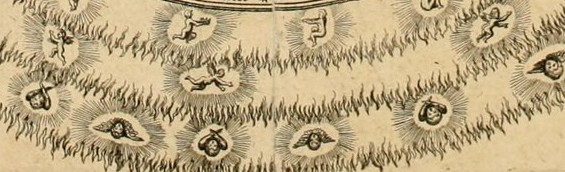
Nine ranks of angels, drawn as rings or as rungs. Note which order the picture puts at the top, and whether the book beside it agrees.
In plain words Beyond the stars the picture turns to fire, and in the fire are winged heads and small winged bodies: the angels, in three rings. Fludd made them from the purest part of the first matter, and their work in this picture is to carry out God's orders and announce them.
Robert Fludd, 1617 “Ante rerum creationem massam universam in partes tres puritate differentes immensa sua potestate divisit incomprehensibilis & omnipotens Macrocosmi opifex; ex quarum puriore Cherubin, Seraphin, Archangelos & omnes aliorum Angelorum ordines; ex minùs pura coelum atque regiones aethereas, & ex maximè impura elementa resque omnes sublunares creari ordinavit, dicendo; Fiant, & facta sunt.”
Symbolica, 2026 Fludd's Latin, put into English here: Before the creation of things the incomprehensible and almighty maker of the macrocosm, by his immense power, divided the universal mass into three parts differing in purity; from the purer of these he ordained the Cherubim, Seraphim, Archangels and all the other orders of angels to be created, from the less pure the heaven and the aethereal regions, and from the most impure the elements and all things under the moon, saying: Let them be, and they were made.
Robert Fludd, 1617 “Daemones metaphysicè Ordinationes divinas exsequuntur. Mandata Dei annuntiant.”
Symbolica, 2026 Fludd's Latin, put into English here: The daemons, metaphysically, carry out the divine ordinances and announce God's commands. Fludd's daemons are the angelic spirits, not devils.
J. B. Craven, 1902 “The system, in circle, as drawn by Fludd, has at the three outermost regions, illumined by tongues of fire, three orders of angels; cherubim highest, next seraphim, then what appear to be either ransomed souls or more ordinary angelic beings.”
Dionysius the Areopagite, 1897 “The Word of God has designated the whole Heavenly Beings as nine, by appellations, which shew their functions. These our Divine Initiator divides into three threefold Orders.”
Dionysius the Areopagite, 1897 “the most Holy Thrones, and the many-eyed and many-winged hosts, named in the Hebrew tongue Cherubim and Seraphim, are established immediately around God, with a nearness superior to all.”
Dionysius the Areopagite, 1897 “But he says that which is composed of the Authorities, and Lordships, and Powers is second; and, as respects the lowest of the Heavenly Hierarchies, the Order of the Angels and Archangels and Principalities is third.”
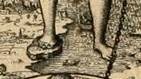
Where a thing is taken apart rather than destroyed. Note whether the figure is in the water, on it, or pouring it.
In plain words Look at her feet: the right stands on land, the left in the sea. Fludd reads it as sulphur and mercury, the dry and the wet, and says nothing can be born or grow unless the two are joined.
The plate, 1617 “Elementum Aquae et Terrae.”
Robert Fludd, 1617 “pes enim dexter terram occupat sinister verò aquam naturae sulphureae & mercurialitatis ejusdem coniunctione significando: quib. arguitur, nihil posse generari & crescere sine amborum unione.”
Symbolica, 2026 Fludd's Latin, put into English here: For the right foot occupies the earth and the left the water, signifying the conjunction of its sulphurous nature and its mercurial quality; by which it is argued that nothing can be generated or grow without the union of both.

A body drawn as growth. Note which way it grows and what is at the root rather than at the top.
In plain words Trees and the vine on the man's side, wheat and flowers on the woman's. This ring is the plant kingdom, and the ring inside it says what art does there: it ploughs, grafts and plants, helping nature along.
The plate, 1617 “uva. Arbores. Triticum.”
Robert Fludd, 1617 “in circulo vegetabili segetes aratri artificio, quo agri excoluntur & occantur, arbores surculatione, herbas & alia vegetabilia plantatione tum grescere, tum multiplicari”
Symbolica, 2026 Fludd's Latin, put into English here: in the vegetable circle, crops grow and multiply by the craft of the plough, by which the fields are tilled and harrowed, trees by grafting, herbs and other plants by planting.

Usually not an animal but one face of a set of four. Count the other three before reading it alone.
In plain words The animal ring is split in two. On the man's side stand the lion, the serpent and the dolphin; on the woman's the eagle, the snail and the fishes. Male and female run through every kingdom of Fludd's world, down to the metals.
The plate, 1617 “Leo. Aquila.”
J. B. Craven, 1902 “At either side are the male and female persons and qualities.”
J. B. Craven, 1902 “On the feminine side, we have woman, the eagle, the snail, the fishes, wheat, flowers and roots, silver, copper, Auripigmentum, 'sal Armoniacum,' with the sign of Venus, connected with the 'Sphaera Veneris.'”
Also carrying the Heavens
61 works carry it. The 6 where it is the central motif are here. The symbol.
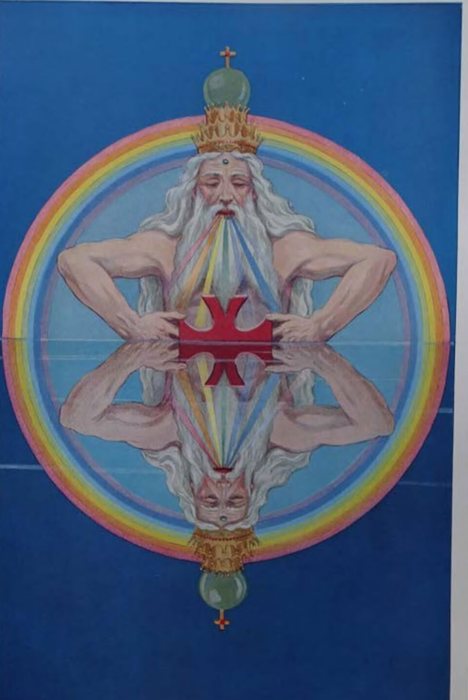
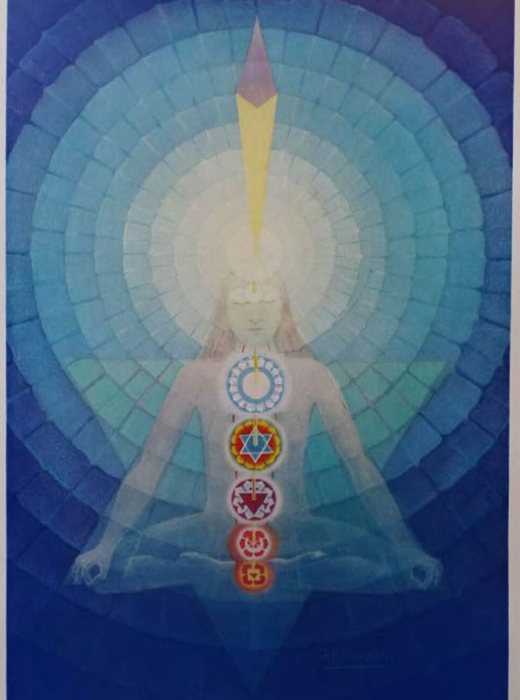
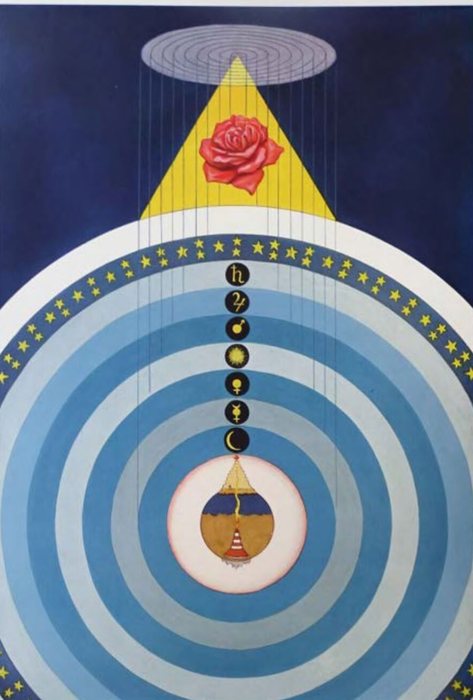
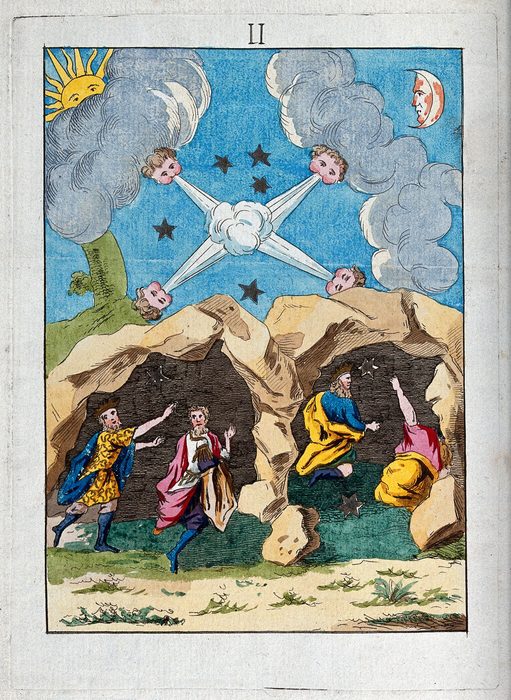
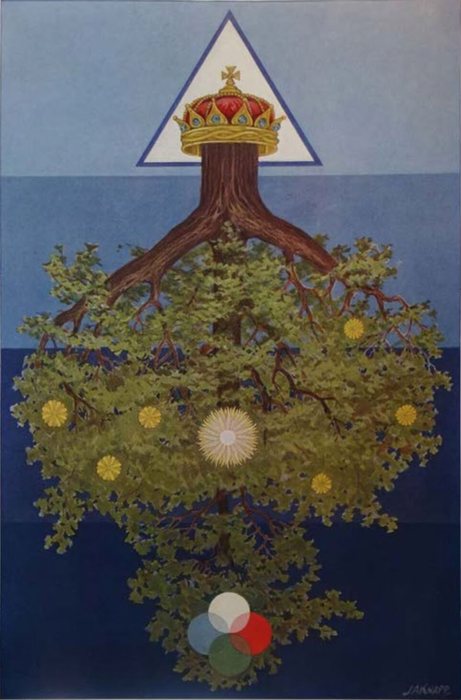
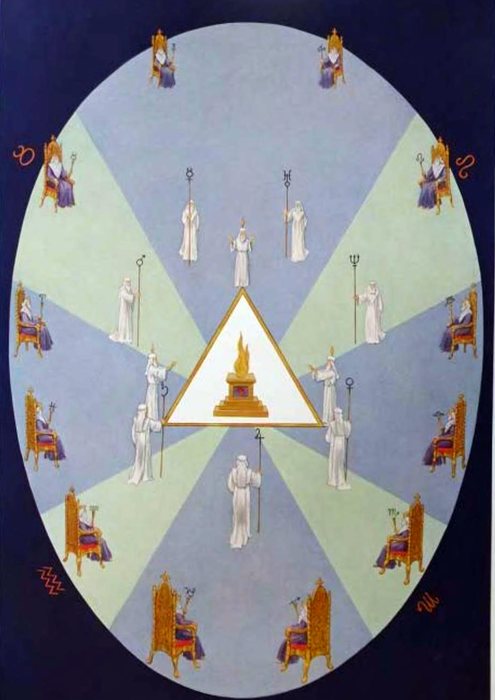
Where the detail is the subject
the Divine · the Hand · the Sun and the Moon · the Angel and the Wing · the Water · the Tree · the Lion
Each of these is in the picture without being what it is about. Below, one work that is about each.
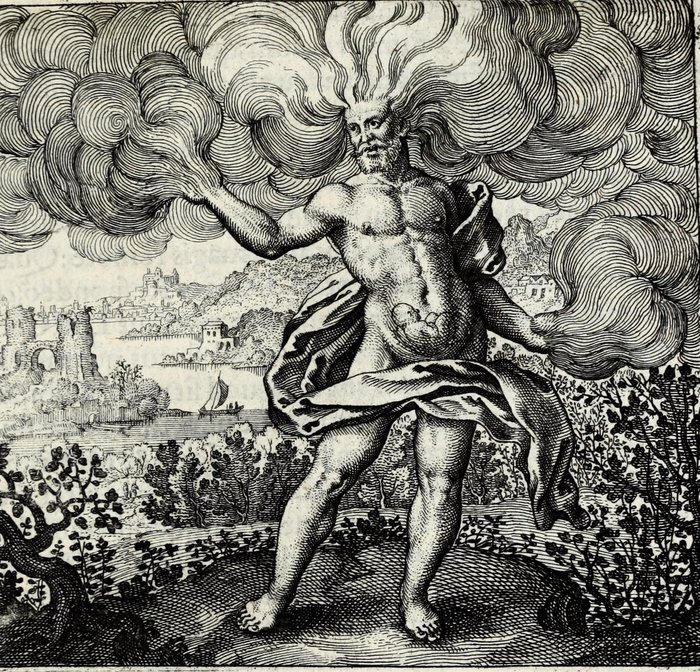 the DivinePortavit eum ventus in ventre suo
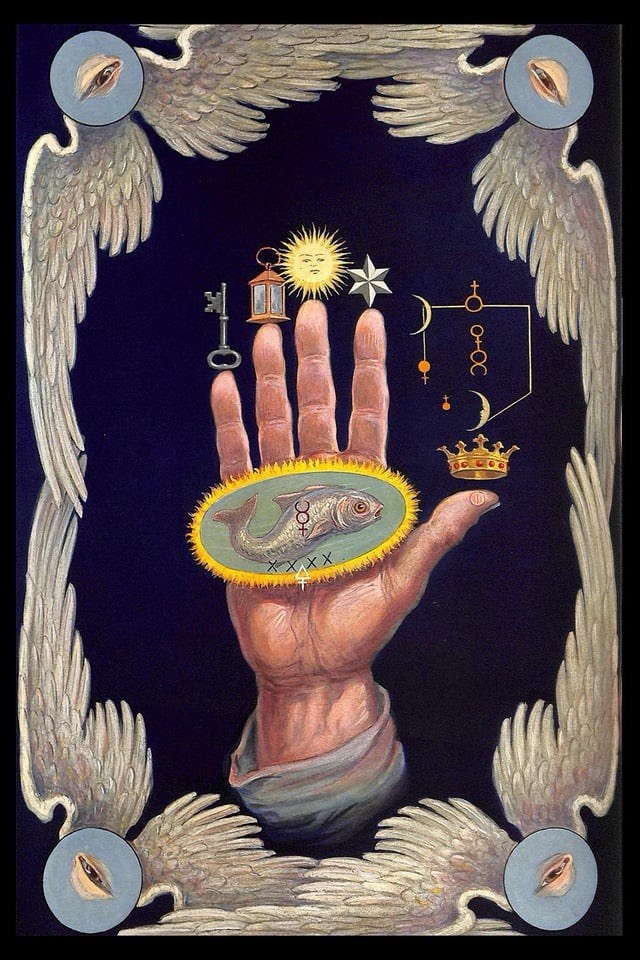 the HandThe Hand of the Mysteries
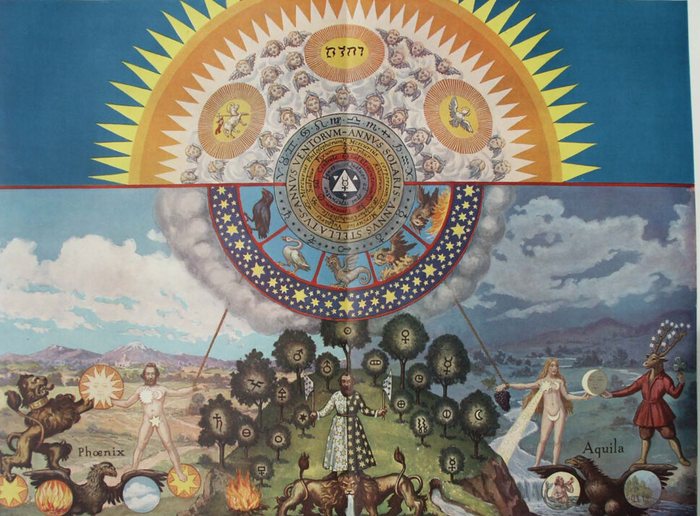 the Sun and the MoonGrand Rosicrucian Alchemical Formula
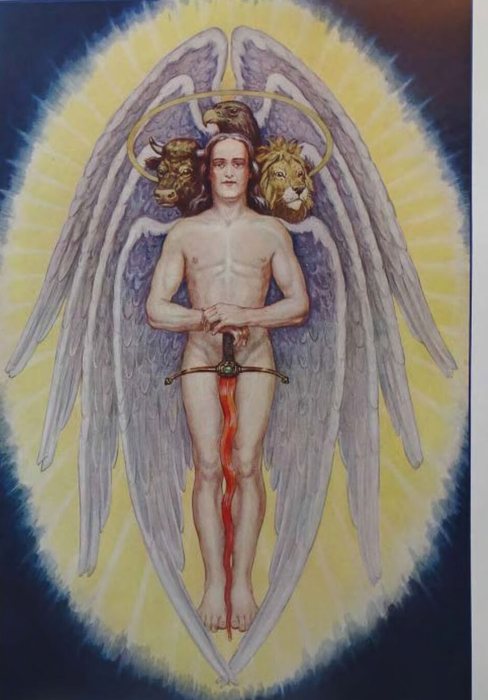 the Angel and the WingThe Cherub of Ezekiel
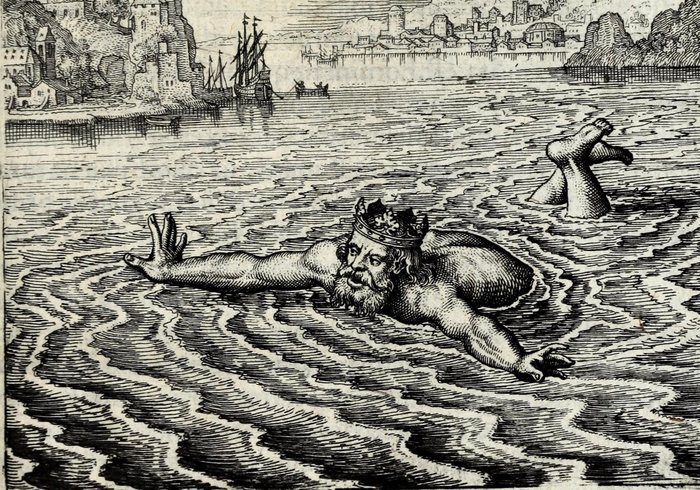 the WaterRex natans in mari, clamans altâ voce: Qui me eripiet, ingens præmium habebit
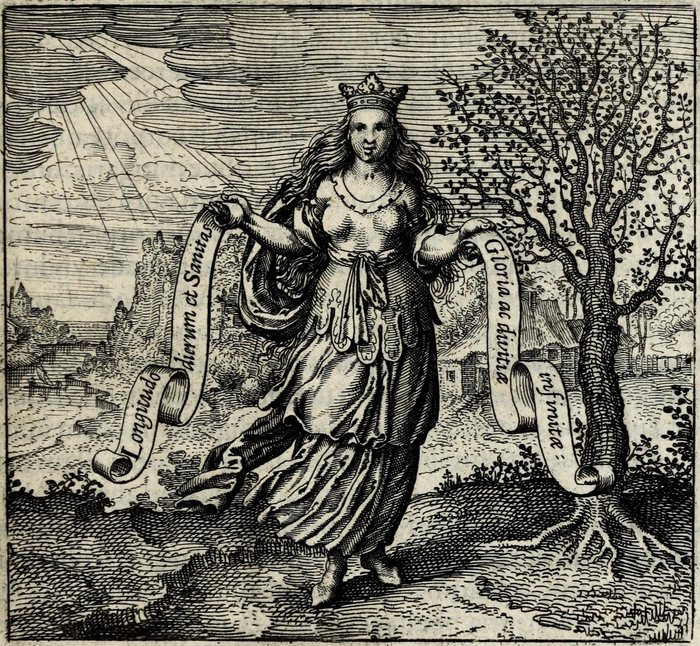 the TreeSapientiæ humanæ fructus Lignum vitæ est
In the same series
Record
One symbol a week, decoded.
This picture is free at full size from its source, linked above. What an address gets is the Sunday letter: one picture, one symbol marked on it, what it meant and who said so, and the master files of the decoded plates as they are verified. Leave any time.
Free, one letter a week, unsubscribe in one click. How the address is used.
Scroll or pinch to zoom · drag to move · double-tap for 1:1 · 1293 by 1400 pixel web copy; the source file is linked under Record