The Hand
the hand of the philosopher, the hand of the Mysteries, the hand of the Master Mason
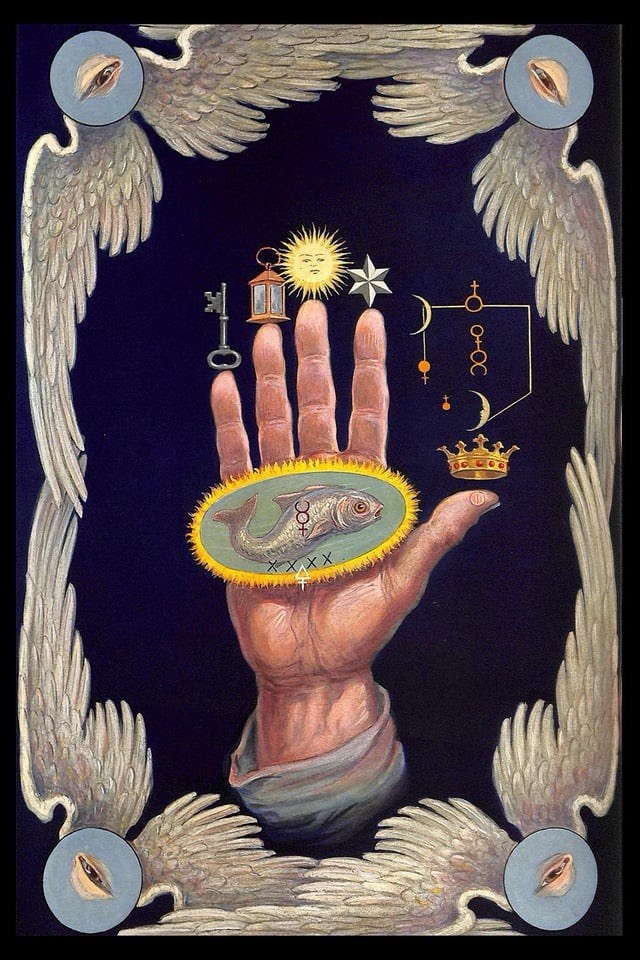
The hand as a sign in itself: what it holds, where it points, which fingers are raised. On the Hand of the Mysteries every finger carries a sign of its own.
Twenty-five works here carry a hand, and one of them is the only symbol in this archive that is also a whole picture. Everything else sits inside a plate; the Hand of the Mysteries is the plate.
Hall reads it twice in a single caption and does not reconcile the two. First it is “designated the hand of the philosopher which is extended to those who enter into the Mysteries”, an offer made to someone arriving. Then, in the next breath, it is “the figure symbolizes the hand of a Master Mason with which he raises the martyred Builder of the Divine House”, which is not an offer but a lift, a grip taken on someone already down. An invitation and a rescue, the same open palm. He adds a third reading for the Qabbalist, in which the crowned thumb is the One Power and the four fingers with their emblems are the four worlds.
The seventeenth-century Hand of the Philosophers, which this archive files under Hollandus, is not interested in what the hand offers. It is interested in who is allowed to look. Nobody understands the hand and its secret signs, that text says, without first taking the philosophers' oath. Those are the archive's words for it and not the text's, because what we hold is a reading and not a quotation.
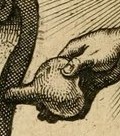
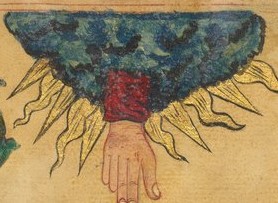
Away from that plate, the first thing to say is that when God appears in this material he appears as a hand. On Fludd's mirror of nature of 1617 the Name stands in a cloud and, as Craven described the plate in 1902, “a hand issuing holds a chain, which, going down, is fastened on the hand of the universal mother”. A second chain runs from Nature's hand to the ape below, so the whole picture is a hierarchy of grips. On Fludd's world monochord the same hand comes out of the same cloud to turn the tuning peg, and his caption says why it has to be a hand and not a face: “cujus motorem extra mundum esse hoc modo depinximus”, we have depicted its mover as being outside the world. The player is not one of the notes. The German manuscript of about 1735 copies the gesture onto its Tree of the Knowledge of Good and Evil, a hand reaching down out of a cloud over the tree and two more reaching up from the winged globe below to pick the fruit. Above, the hand that planted; below, the hands that take.
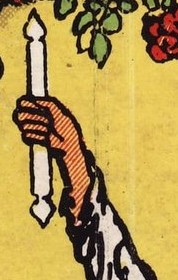
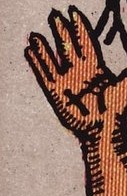
Waite, writing in 1911, uses hands as a grammar and expects the reader to conjugate them. Of the Magician: “In the Magician's right hand is a wand raised towards heaven, while the left hand is pointing to the earth. This dual sign is known in very high grades of the Instituted Mysteries; it shews the descent of grace, virtue and light, drawn from things above and derived to things below.” One hand takes, one gives, and the figure is the wire between them. Of the Hierophant, four cards later: “with his right hand he gives the well-known ecclesiastical sign which is called that of esotericism, distinguishing between the manifest and concealed part of doctrine. It is noticeable in this connexion that the High Priestess makes no sign.” Two fingers raised and two folded, so the gesture itself says that some of the teaching is spoken and some kept back. Then the Devil, ten cards further on: “The right hand is upraised and extended, being the reverse of that benediction which is given by the Hierophant in the fifth card.” All five fingers open, nothing held back and nothing blessed. A hand that withholds, a hand that withholds nothing, and a hand that makes no sign at all.
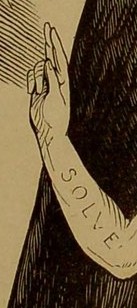
Lévi had already written the Magician's two directions onto the arms themselves. His Baphomet of 1856 “makes the sign of occultism with both hands, pointing upward to the white moon of Chesed, and downward to the black moon of Geburah. This sign expresses the perfect harmony of mercy with justice”, and the arms carry the words, “SOLVE inscribed upon the right and COAGULA on the left”. One arm is a woman's and the other a man's, taken, he says, from Khunrath's androgyne.
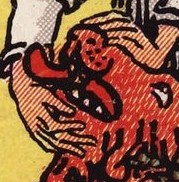
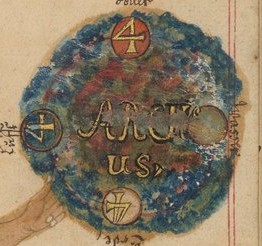
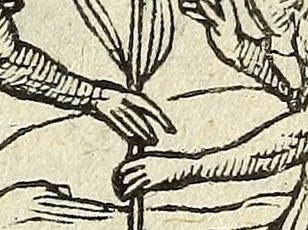
The rest of the hands in the archive are named by what is in them. Maier's forty-second emblem puts a lantern in an old man's fist and the motto sets out the whole kit, nature for a guide, reason for a staff, experience for spectacles and reading for the lamp: “Lectio sit lampas tenebris dilucida”, let reading be a lamp bright in the dark. His twenty-seventh does the reverse and shows a hand that has nothing: a locked gate, a man without feet, and the key missing from the picture, because “Unica cui clavis res vilis habetur in orbe”, its one key is a thing held cheap in the world. Sophia, in the German manuscript, holds a globe lettered “Archaeus. Feuer. Lufft. Wasser. Erde.” in one hand and a sceptre in the other, so that wisdom both rules and holds nature's engine. And Pamela Colman Smith's Strength holds nothing whatever, which is the argument: bare hands closing a lion's jaws, on a card that Waite says “concerns the confidence of those whose strength is God, who have found their refuge in Him”.
So a hand in this material is a threshold. It is the thing you are let through, lifted over, blessed by, handed something across, or made into.
Contested
Hall gives three readings of one picture and does not choose between them, and this archive does not choose for him. Whether the philosopher's hand, the Master Mason's grip and the Qabbalist's four worlds are one idea or three borrowed ideas laid over the same drawing is not answered by anything held here.
The relation between the Knapp plate of 1928 and the older Hand of the Philosophers is stated on the plate's own page and is worth reading with the entry: the two hands agree on the arrangement of the signs and disagree on what the signs are for. Hall's caption is a transcription not yet read against the printed page, and the Hollandus material reaches us through an English translation of 1986 by a route the record sets out. Neither is quoted here as though it were settled.
Craven is a reader of 1902 describing Fludd's plate, not Fludd describing it; Fludd's own Latin and the manuscript's German are put into English by the archive, with the originals on the records, and Lévi is quoted in Waite's translation of 1896. That God's hand on Fludd's two plates, the manuscript's hand over the tree and Hall's hand of the philosopher are one figure is the archive's grouping and not a claim any of them makes.
The four eyes in the corners of the Knapp plate belong to no reading at all. Hall never mentions them and the older hand has none. They are recorded as observed and left unread.
Sources
- Manly P. Hall, The Secret Teachings of All Ages, 1928: The plate caption to the Hand of the Mysteries. Transcribed, not yet read against the printed page.
- Hollandus, attributed, The Hand of the Philosophers, 17th c.: Through Leone Muller's English translation, RAMS, 1986. Not yet read against a seventeenth-century printing, and the authorship of the Hollandus texts is disputed. What the archive holds is a reading of the text rather than a quotation from it.
- A. E. Waite, The Pictorial Key to the Tarot, 1911: Part II, on the cards of the 1909 deck drawn by Pamela Colman Smith.
- J. B. Craven, Doctor Robert Fludd, the English Rosicrucian, 1902: An Orkney clergyman's book-by-book account of Fludd, describing the mirror of nature plate in English. A reader of 1902 looking at the page, not Fludd explaining himself.
- Éliphas Lévi, Dogme et Rituel de la Haute Magie: The Baphomet of the frontispiece, described in the second and fifteenth chapters of the Ritual, quoted in Waite's translation of 1896 and checked against the 1861 French printing.
- Michael Maier, Atalanta Fugiens, 1618: The mottoes and epigrams of the fifty emblems, Oppenheim 1618, read against the page images; the English is the archive's own and is marked as such on every record.
- Gemma Sapientiae et Prudentiae, Wellcome Collection MS.2492, c. 1735: A German Rosicrucian manuscript of about 1735 whose figures carry their own captions; quoted in the writer's German with the archive's English.
On the same plate
Where it appears · 25
25 works in the archive carry the Hand. First the 20 where it has been read, with the Hand itself picked out.
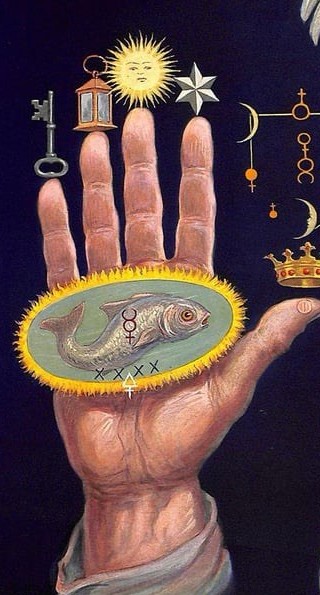
The Hand of the Mysteries
Strength (VIII)
Baphomet
The Man in the Pentagram

Integrae Naturae Speculum Artisque Imago
Monochordum Mundanum, the Divine Monochord
Jungfrau Sophia, the Virgin Wisdom
The Tree of the Knowledge of Good and Evil, Microcosma
Hermes Standing upon the Back of Typhon
The Magician (I)
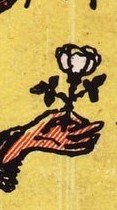
The Fool (0)
The Emperor (IV)
The Hierophant (V)
Justice (XI)
The Devil (XV)
Facundia difficilis
The idol Moloch with seven chambers
The idol Moloch with the children in his arms

Tabula Smaragdina Hermetis Trismegisti
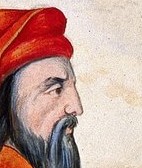
The adept with the flask of the four elements
As the subject · 3
Works filed under the Hand as their central motif, not yet read symbol by symbol.
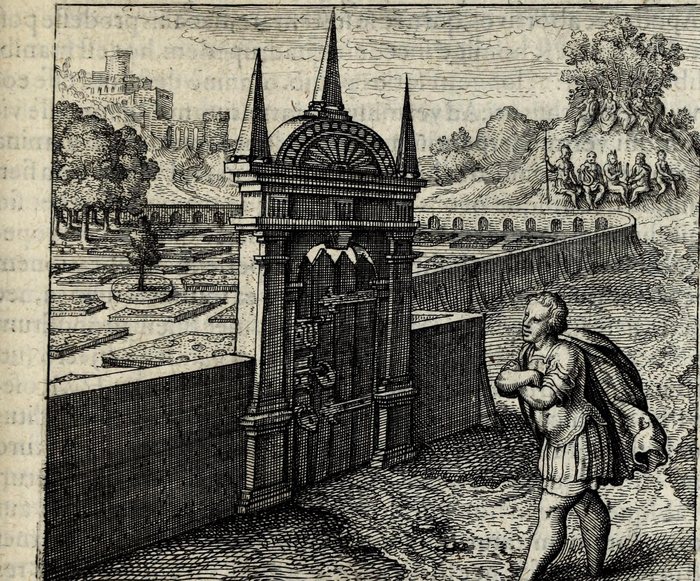 Qui Rosarium intrare conatur Philosophicum absque clave, assimilatur homini ambulare volenti absq; pedibus
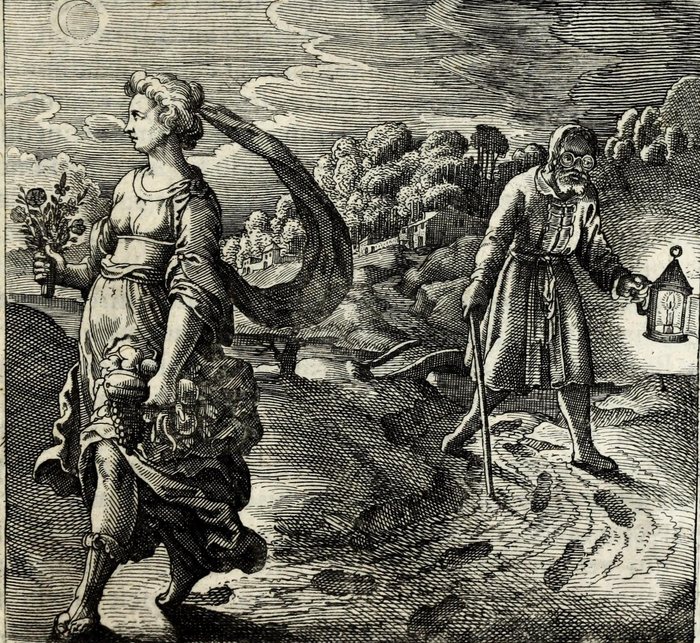 In Chymicis versanti Natura, Ratio, Experientia & lectio, sint Dux, scipio, perspicilia & lampas
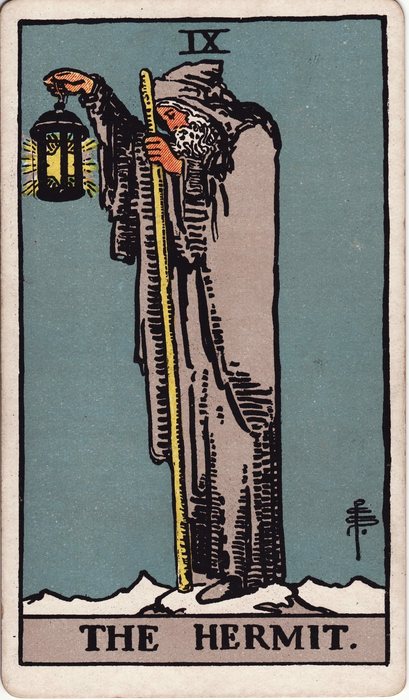 The Hermit (IX)
As a detail in 2 more
In these the Hand is somewhere in the picture, tagged by eye, and nobody has read it yet. When one of them is read, it goes out on a Sunday.