Tabula Smaragdina Hermetis Trismegisti
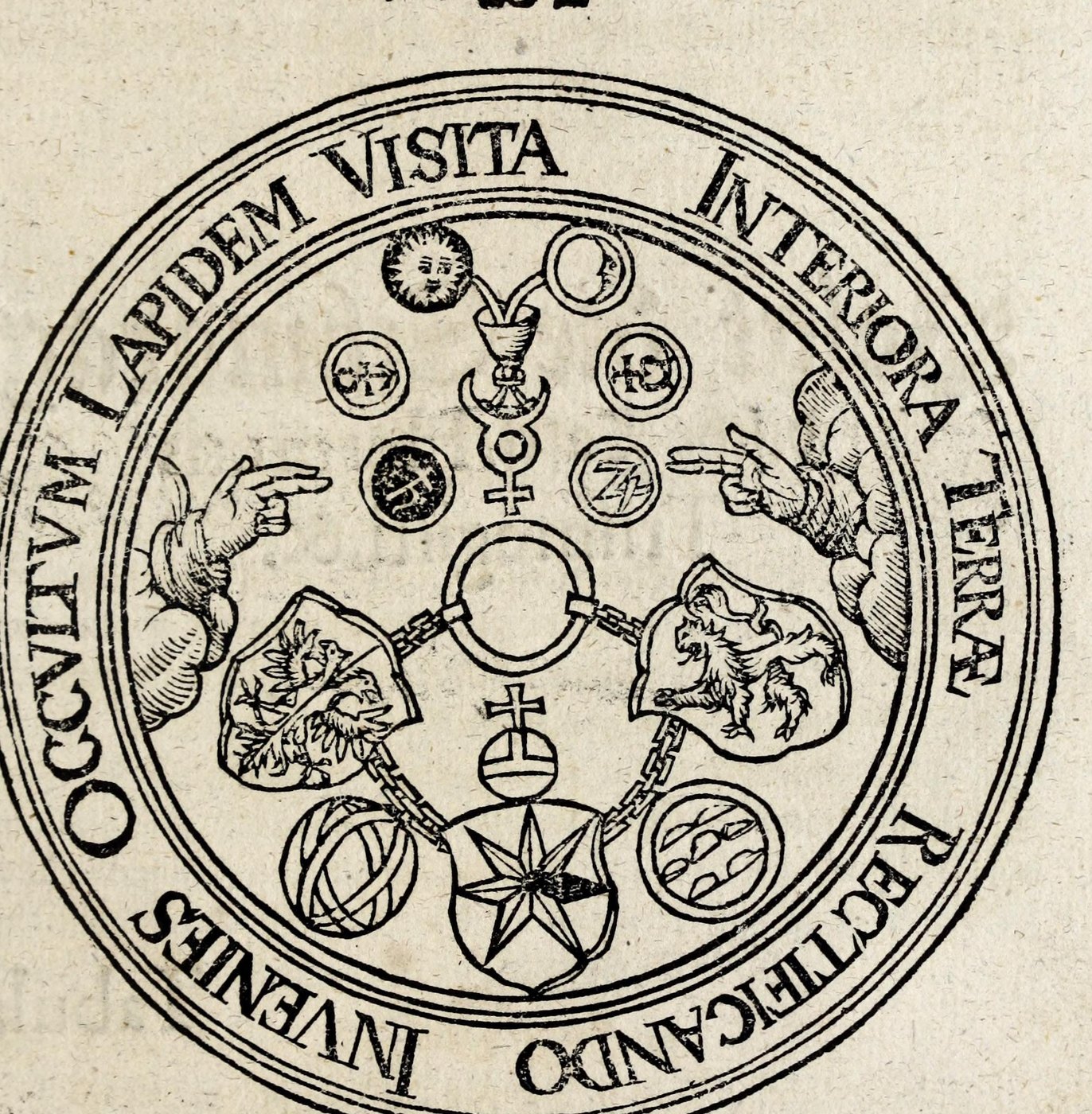
The Sun and the Moon as the central motif, with the Vessel, the Heavens, the Hand, the Crown, the Bird and the Lion in a secondary part. From Aureum Vellus, 1598.
What is happening
The block itself, 1598 “VISITA INTERIORA TERRAE RECTIFICANDO INVENIES OCCULTUM LAPIDEM”
Symbolica The ring, put into English here: visit the interior of the earth, and by rectifying you will find the hidden stone. Its initials spell the word the trade made of it.
Salomon Trismosin, attributed, 1598 “Volget hernach die Schmaragdische Taffel / welche Hermes Trismegistus gemacht hat / vnd ist nach seinem Todt in einer höle gefunden / darinnen er begraben gelegen / welche er in seinen henden gehalten hat.”
Symbolica The book's own account, put into English here: there follows hereafter the Emerald Tablet, which Hermes Trismegistus made, and which was found after his death in a cave in which he lay buried, and which he had held in his hands.
Salomon Trismosin, attributed, 1598 “Verum sine mendacio certum & verissimum. Quod est inferius est sicut quod est superius, & quod est superius, est sicut quod est inferius, ad præparanda miracula rei unius. Et sicut omnes res fuerunt ab VNO, meditatione unius, sic omnes res natæ fuerunt ab hac una re adoptione. Pater eius est Sol, Mater eius Luna. Portauit illud ventus in ventre suo. Nutrix eius terra est. Hîc est vis totius mundi. Si versa fuerit in terram, separabis terram ab igne, subtile à spisso, suauiter cum magno ingenio. Ascendit à terra in cœlum, & iterum descendit in terram, & recipit vim superiorum & inferiorum. Sic habebis gloriam totius mundi. Ideo fugit à te omnis obscuritas, hæc est totius fortitudinis fortitudo fortis, quæ vincit omnem rem subtilem, & omne solidum penetrabit. Sic mundus creatus est. Hic erunt adoptiones mirabiles, quorum modus est hic, itaque vocatus sum Hermes Trismegistus, habens tres partes philosophiæ totius mundi. Completum est quod dixi de operatione Solis.”
Symbolica The Tablet entire, as this book prints it on the page facing the block, put into English here: true, without falsehood, certain and most true. What is below is as what is above, and what is above is as what is below, for the working of the miracles of one thing. And as all things came from ONE, by the meditation of one, so all things were born from this one thing by adoption. Its father is the Sun, its mother the Moon. The wind carried it in its belly. Its nurse is the earth.
Salomon Trismosin, attributed, 1598 “Außlegung vnd erklärung des Gemähls oder Figur.”
Symbolica The heading standing over the block, put into English here: exposition and explanation of the painting, or figure. What follows it runs for five pages and takes the picture apart.
Key · 7 motifs
Tap a motif on the picture, or a line below. Its note opens under the line, with the reading its author gave it.
- Primary motif
- Secondary motifs · 6
The picture
A ring lettered in Latin encloses a sun and a moon pouring into a cup, Mercury's sign beneath it, six planetary roundels round it, two hands reaching out of clouds, an eagle and a lion on shields chained to a ring, an orb and cross, and a star. By eye
The reading
The picture read whole, in the archive's words, from the sources quoted on the marks. Read on, and the picture follows: the motif under discussion keeps its colour.
The most quoted sentence in this whole field is a line about a father and a mother, and for four hundred years it circulated as text. Here somebody drew it. A printer at Rorschach am Bodensee set this block in 1598, put a heading over it promising an exposition, and then spent five pages delivering one.
Read the ring first: “VISITA INTERIORA TERRAE RECTIFICANDO INVENIES OCCULTUM LAPIDEM”, visit the interior of the earth, and by rectifying you will find the hidden stone. Inside it a sun and a moon lean together and pour into one cup. The Tablet itself, printed on the page before, hands them their parts: “Pater eius est Sol, Mater eius Luna”, its father is the Sun, its mother the Moon. The archive has carried that sentence since Khunrath, cut into a rock. This is the page it comes off.
Under the cup hangs Mercury's sign, and the exposition puts him between the other two principles rather than beside them. Salt makes a fixed body, sulphur is the soul without which the body can make nothing, and “Mercurius ist der Geist der Krafft / Beid Seel vnd Leib zusammen hafft”, Mercury is the spirit of power that holds soul and body together. So he earns a title: “Daher wirdt er ein mitler gnannt”, therefore he is called a mediator, and whatever gets made without him will not last.
The roundels round the cup carry the planetary signs, and here the book stops being poetry and starts being a table. “Nun bleibt nichts als die siben wort”, now nothing remains but the seven words, and then it takes them in order, printing each sign in the margin against its line: gold yellow, silver fair white, “Die dritt Mercurium ist gleich graw”, quicksilver grey, tin sky blue, iron blood red. A page later it widens the count, “Siben zeit / auch siben Metall / Auch siben Tag / vnd siben Zal”, seven times, seven metals, seven days and seven numbers.
Two hands come out of clouds at the sides, and a reader expects them to point at something. The verse gives them a different job. “Die zwo Händ bzeugen mit eim Eidt”: the two hands testify with an oath to the right ground and the true account. They swear to the picture.
Low in the middle hangs an orb with a cross on it, and the book takes one couplet over it: “Des Reichs Apffel außweisen thut / Das Zeichen dises höchsten gut”, the orb of the realm shows forth the sign of this highest good. The line before it puts heaven, earth and the four elements inside the same figure.
What the exposition never touches, across all five pages, is the eagle and the lion on the two shields chained to the central ring. Both stand on the block, both go unnamed, and the archive leaves them that way. A book this willing to explain itself makes its silences worth noticing.
Decoded: every motif is marked, and each mark carries the reading its author gave it, quoted from the text, or says that it is observed on the picture and not read. The reading above is the archive's own, made from those sources and no others.
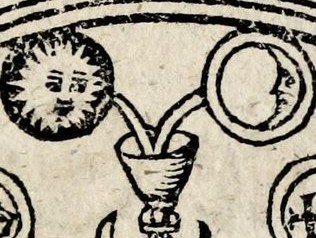
Gold, the perfected metal, and the illuminated intellect. The most overloaded symbol in the tradition.
In plain words Two discs with faces lean together over a cup and pour into it. The Tablet printed on the facing page gives them their parts in one line, and the verse under the block gives them their metals and their colours.
Salomon Trismosin, attributed, 1598 “Pater eius est Sol, Mater eius Luna. Portauit illud ventus in ventre suo. Nutrix eius terra est.”
Symbolica The Tablet's line, put into English here: its father is the Sun, its mother the Moon. The wind carried it in its belly. Its nurse is the earth. The archive already held this sentence twice, cut into the rock of Khunrath's Designatio Pyramidum and quoted by Hall. This is the page it comes off.
Salomon Trismosin, attributed, 1598 “Die erst bdeut Gold / ist gelb mit fleiß. Die ander Silber / ist schön weiß.”
Symbolica The first means gold, and is yellow indeed; the second silver, and is fair white. The sun's sign and the moon's are printed in the margin against those two lines.
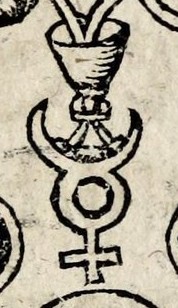
Never the subject. What is inside it is.
In plain words Everything above runs into one small cup, and under the cup hangs a crescent over a circle over a cross, which is Mercury's sign. The exposition explains why he sits in the middle.
Salomon Trismosin, attributed, 1598 “Mercurius ist der Geist der Krafft / Beid Seel vnd Leib zusammen hafft. Daher wirdt er ein mitler gnannt / Das ohn jhn gmacht wirdt / hat kein bstandt.”
Symbolica Mercury is the spirit of power, which holds both soul and body together. Therefore he is called a mediator, and what is made without him has no permanence. The two lines before these give the other two principles: salt a fixed body, sulphur the soul without which the body can make nothing.
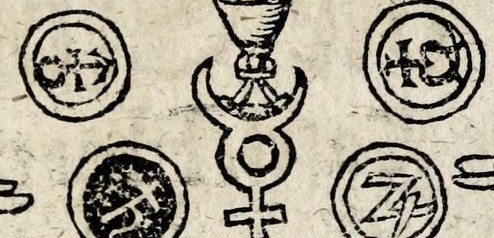
A diagram of everything, drawn so that a person can be found inside it. Note where the human figure stands in the scheme.
In plain words Small discs carrying planetary signs stand round the cup. The exposition counts them out as seven words, and then names a metal and a colour for each, with the sign printed in the margin beside its line.
Salomon Trismosin, attributed, 1598 “Nun bleibt nichts als die siben wort / Was sie bedeuten / weiter hört.”
Salomon Trismosin, attributed, 1598 “Die dritt Mercurium ist gleich graw. Die vierdt ist Zinn / ist himmelblaw. Die fünfft deut Eisen / ist blut rot.”
Salomon Trismosin, attributed, 1598 “Siben zeit / auch siben Metall / Auch siben Tag / vnd siben Zal.”
Symbolica The third means quicksilver, and is likewise grey; the fourth is tin, and is sky blue; the fifth means iron, and is blood red. Then, on the next page: seven times, and seven metals, and seven days, and seven numbers.

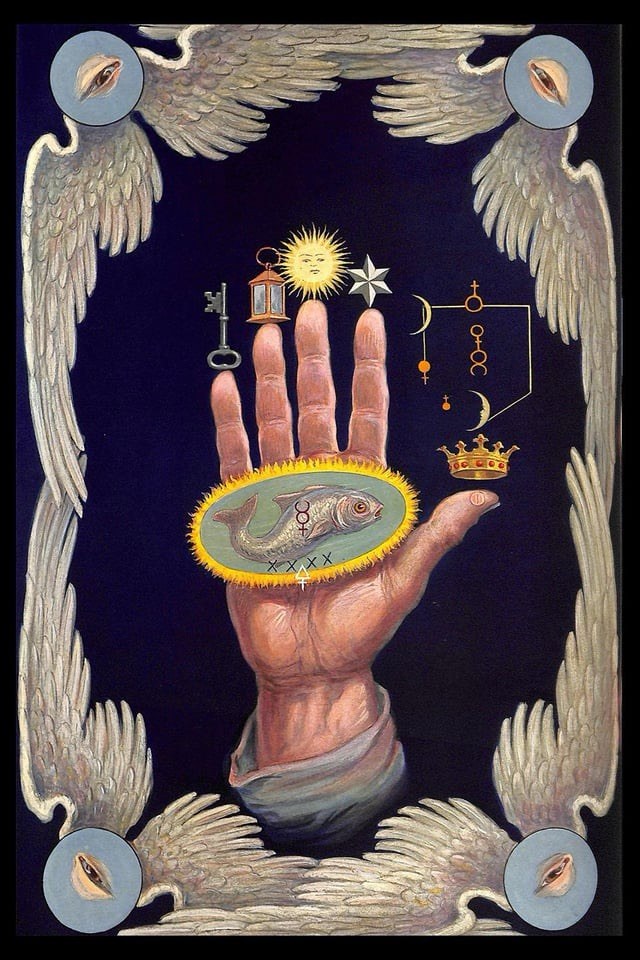
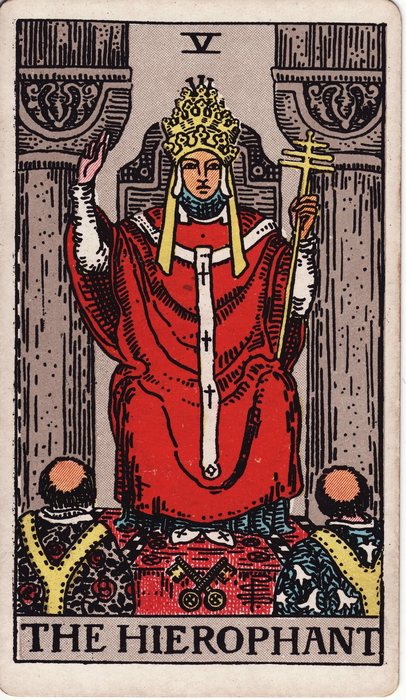
The hand as a sign in itself: what it holds, where it points, which fingers are raised. On the Hand of the Mysteries every finger carries a sign of its own.
In plain words A hand comes out of a cloud at either side and points inward. The verse says what they are doing, and it is not pointing.
Salomon Trismosin, attributed, 1598 “Den Rechten grund vnd wahren bscheidt / Die zwo Händ bzeugen mit eim Eidt.”
Symbolica The two hands testify with an oath to the right ground and the true account. They swear to the picture rather than explain it.
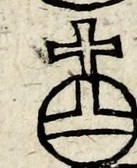
Completion, and in the Kabbalistic reading the first sephirah, the point at which the work is no longer yours.
In plain words A globe banded and surmounted by a cross, the imperial orb, hanging in the lower middle.
Salomon Trismosin, attributed, 1598 “Des Reichs Apffel außweisen thut / Das Zeichen dises höchsten gut.”
Symbolica The orb of the realm shows forth the sign of this highest good. The line before it puts heaven and earth and the four elements in the same figure.
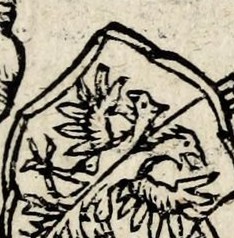
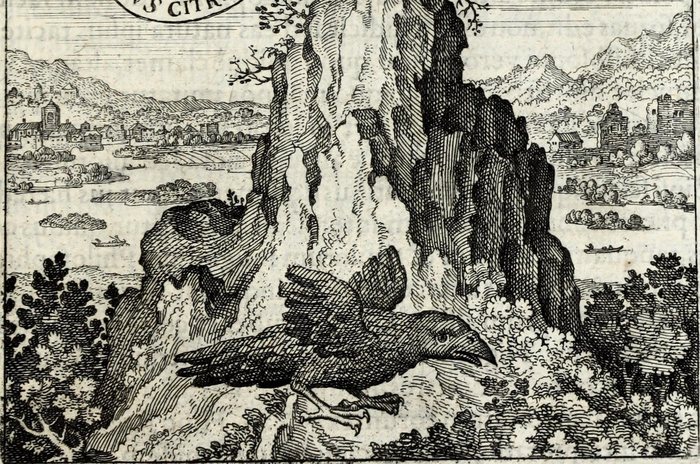
What rises and what comes back down. Note whether the bird is flying, caught, or paired with a second one.
In plain words An eagle displayed on a shield, joined by a chain to the ring in the centre. The exposition runs from page 239 to 243 and never names it.
Symbolica The eagle is on the block and not in the exposition, read from page 239 to page 243. Recorded as observed and left unread rather than guessed at.
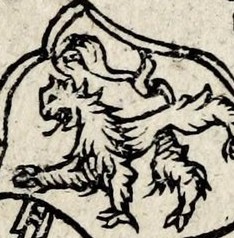
Usually not an animal but one face of a set of four. Count the other three before reading it alone.
In plain words A lion rampant on a shield facing the eagle, chained to the same ring. The exposition does not name it either.
Symbolica The lion is on the block and not in the exposition, read from page 239 to page 243. Recorded as observed, and its pairing with the eagle left unread.
Also carrying the Sun and the Moon
59 works carry it. The 6 where it is the central motif are here. The symbol.
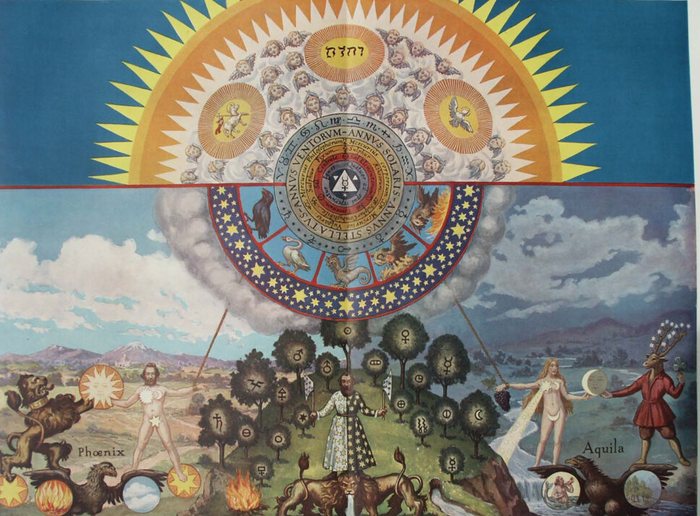
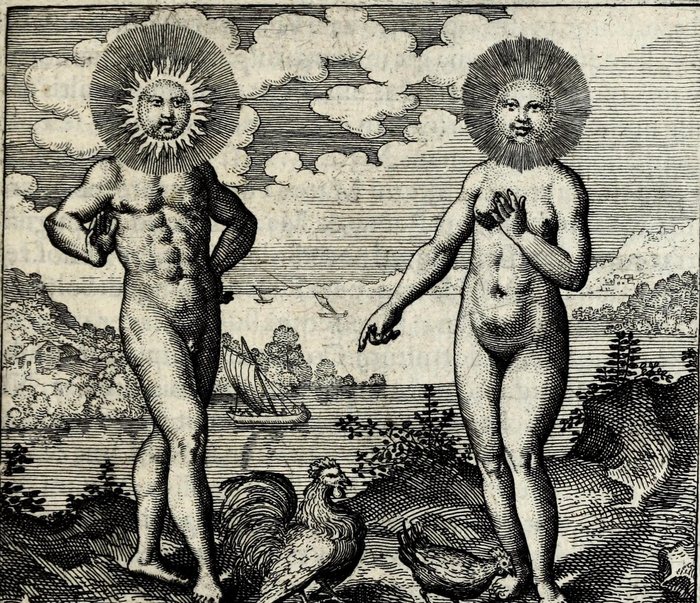
Where the detail is the subject
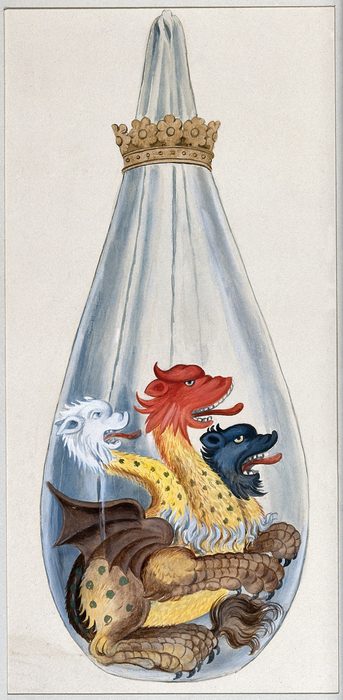
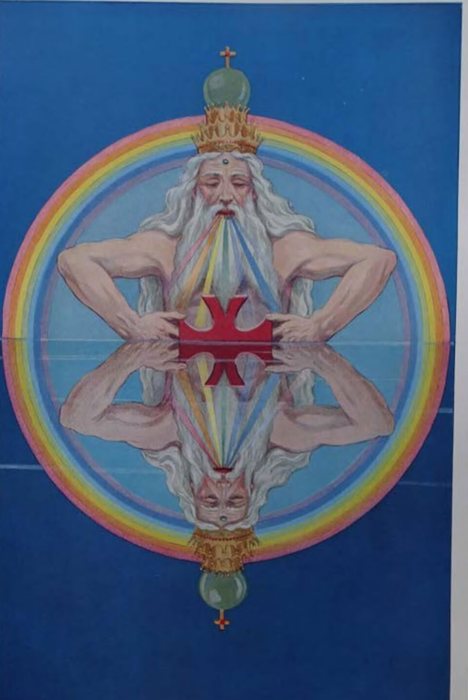
the Vessel · the Heavens · the Hand · the Crown · the Bird · the Lion
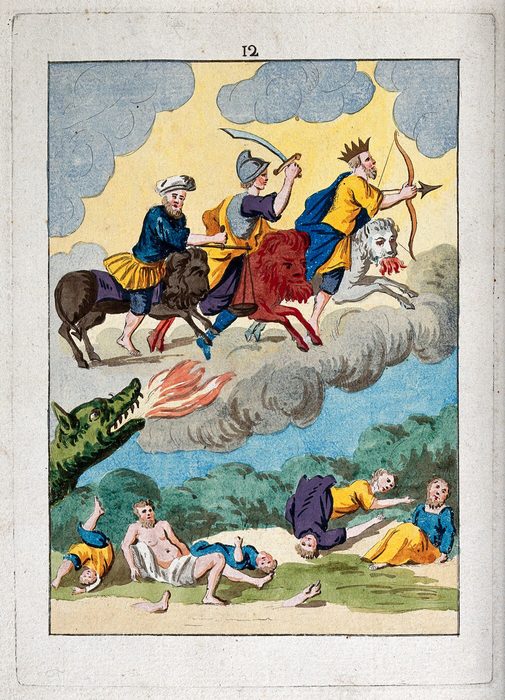
Each of these is in the picture without being what it is about. Below, one work that is about each.
Record
One symbol a week, decoded.
This picture is free at full size from its source, linked above. What an address gets is the Sunday letter: one picture, one symbol marked on it, what it meant and who said so, and the master files of the decoded plates as they are verified. Leave any time.
Free, one letter a week, unsubscribe in one click. How the address is used.
Scroll or pinch to zoom · drag to move · double-tap for 1:1 · 1372 by 1400 pixel web copy; the source file is linked under Record