As above, so below: three printings of the sentence, and they do not agree
Four words in English, out of a text of about fifteen sentences, and they have travelled a long way from it. This archive holds the Emerald Tablet printed three times between 1598 and 1678. Read past the famous clause and the three books part company: one prepares the miracles, the other two perform them, and one of the three is missing a sentence the others carry.
The English everyone says runs to four words. As above, so below.
The Latin behind it runs both ways at once, and the half the slogan drops carries the argument.
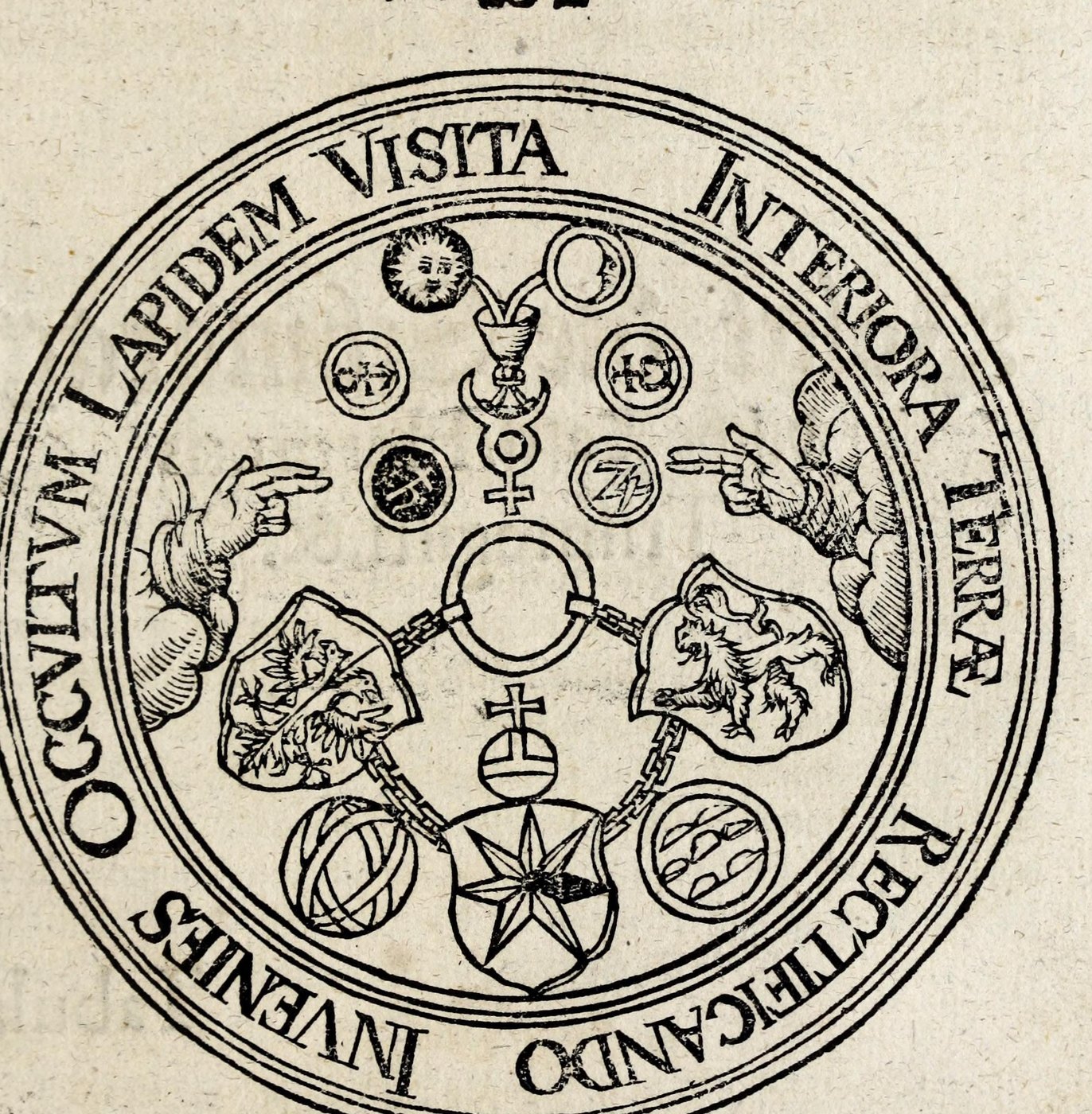
Quod est inferius est sicut quod est superius, & quod est superius, est sicut quod est inferius, ad præparanda miracula rei unius.
the Tabula Smaragdina, page 238 of the Aureum Vellus, Rorschach 1598
What is below is as what is above, and what is above is as what is below, to prepare the miracles of the one thing. The sentence turns round on itself halfway through. Keep only the first half and a reader gets a ladder; keep both and the same reader gets a mirror, which happens to be the claim the text makes.
Now look at the last four words of it. Ad præparanda, to prepare.
Khunrath cut the same sentence into a rock a few years later, at the head of a plate of stone pyramids with a flame at the apex.
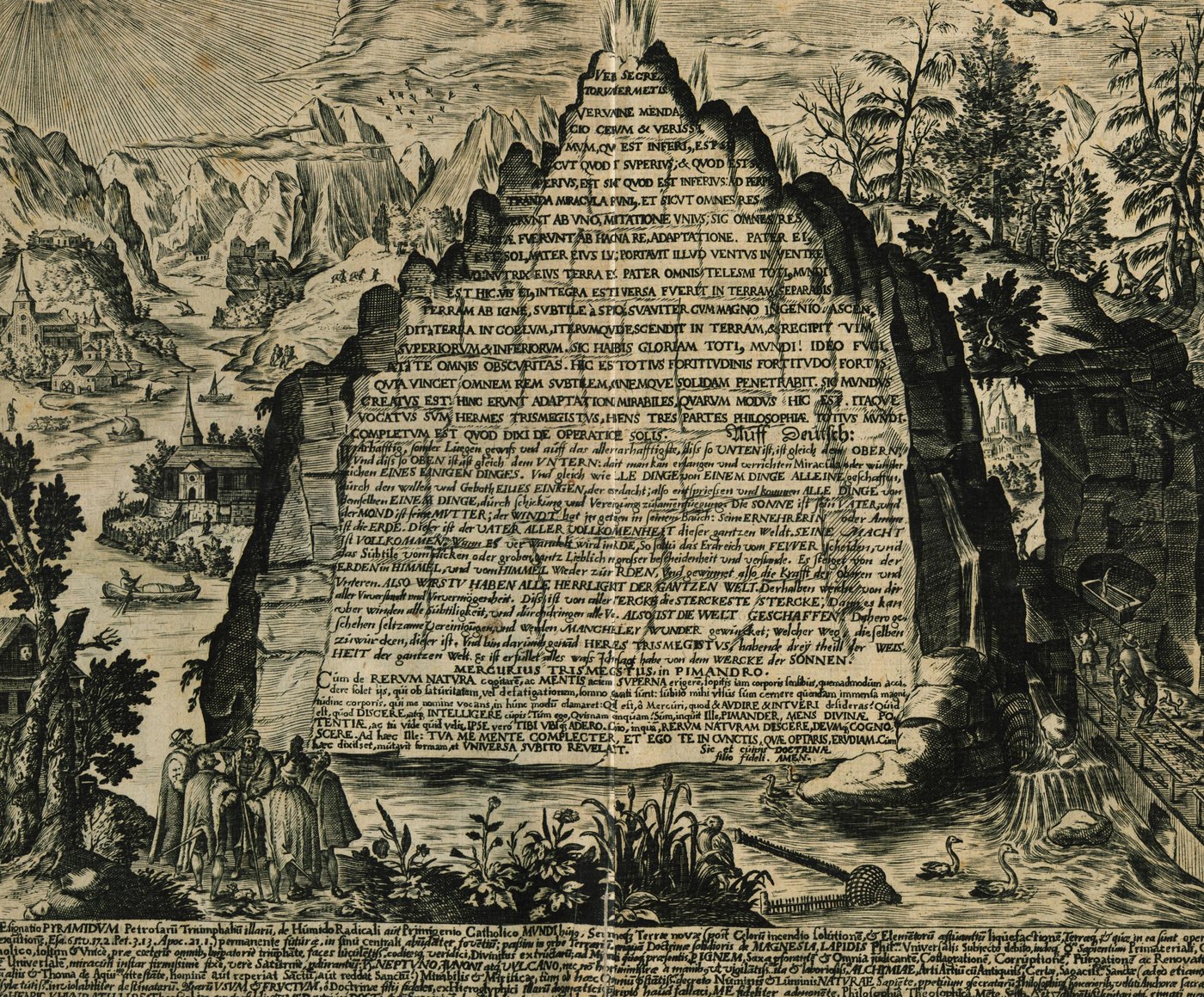
quod est inferius, est sicut quod est superius; et quod est superius, est sicut quod est inferius, ad perpetranda miracula rei unius.
Heinrich Khunrath, carved on the rock face, the Amphitheatrum Sapientiae Aeternae, 1609
Ad perpetranda, to carry through. In one book the correspondence prepares the miracles; in the other it performs them. One word, and the sentence changes from a condition into an act.
A printer at Frankfurt set the whole text in letterpress under a folding engraving of the sun in 1678, and he sides with the rock.
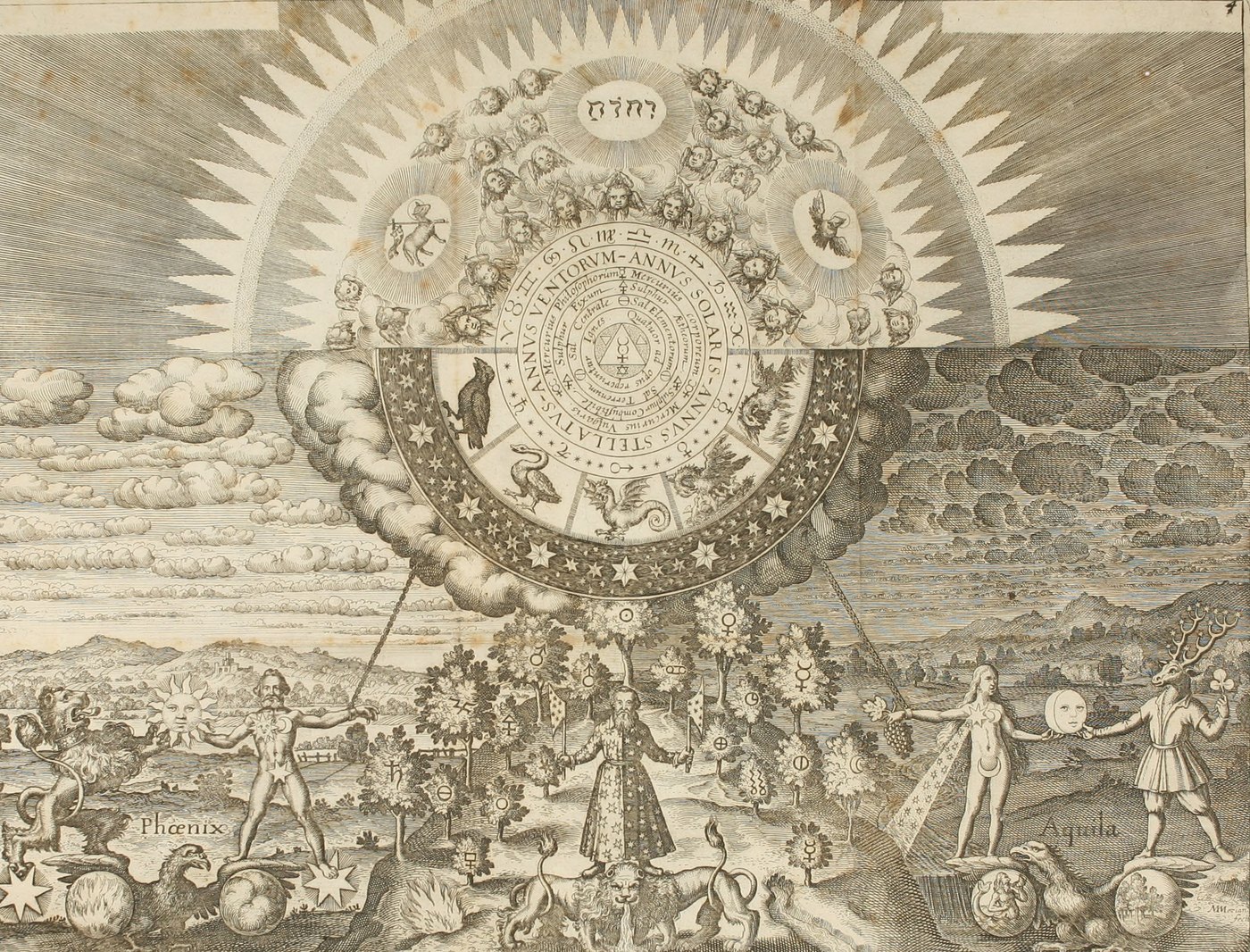
Quod est inferius, est sicut quod est Superius, & quod est Superius est sicut quod est inferius ad perpetranda miracula Rei Unius.
the letterpress under FIGURA IV, Musaeum Hermeticum, Frankfurt 1678
Two against one. And the split does not stop at the verb.
Where the rock of 1609 and the letterpress of 1678 have all things coming from the one by adaptatione, an adapting, the Rorschach book of 1598 has adoptione, an adopting. A compositor's slip would show up once. This one holds: at the far end of the same text, where Frankfurt prints adaptationes mirabiles, Rorschach prints adoptiones mirabiles. The book keeps its word throughout.
And one whole clause goes missing between them. Both texts name the nurse and then carry on, but they do not carry on with the same sentence.
Nutrix eius terra est. Hîc est vis totius mundi.
the Rorschach printing, 1598
Nutrix ejus Terra est. Pater omnis Telesmi totius mundi est hic. Vis ejus integra est
the Frankfurt letterpress, 1678
Its nurse is the earth, and here is the force of the whole world, says the book. Its nurse is the earth, the father of all the telesm of the whole world stands here, and its force holds whole, says the plate. Khunrath's rock carries the same clause as Frankfurt. The Rorschach text has no telesm anywhere in it.
Khunrath does one more thing with the sentence, and it belongs here because it shows how little he treated it as a motto.
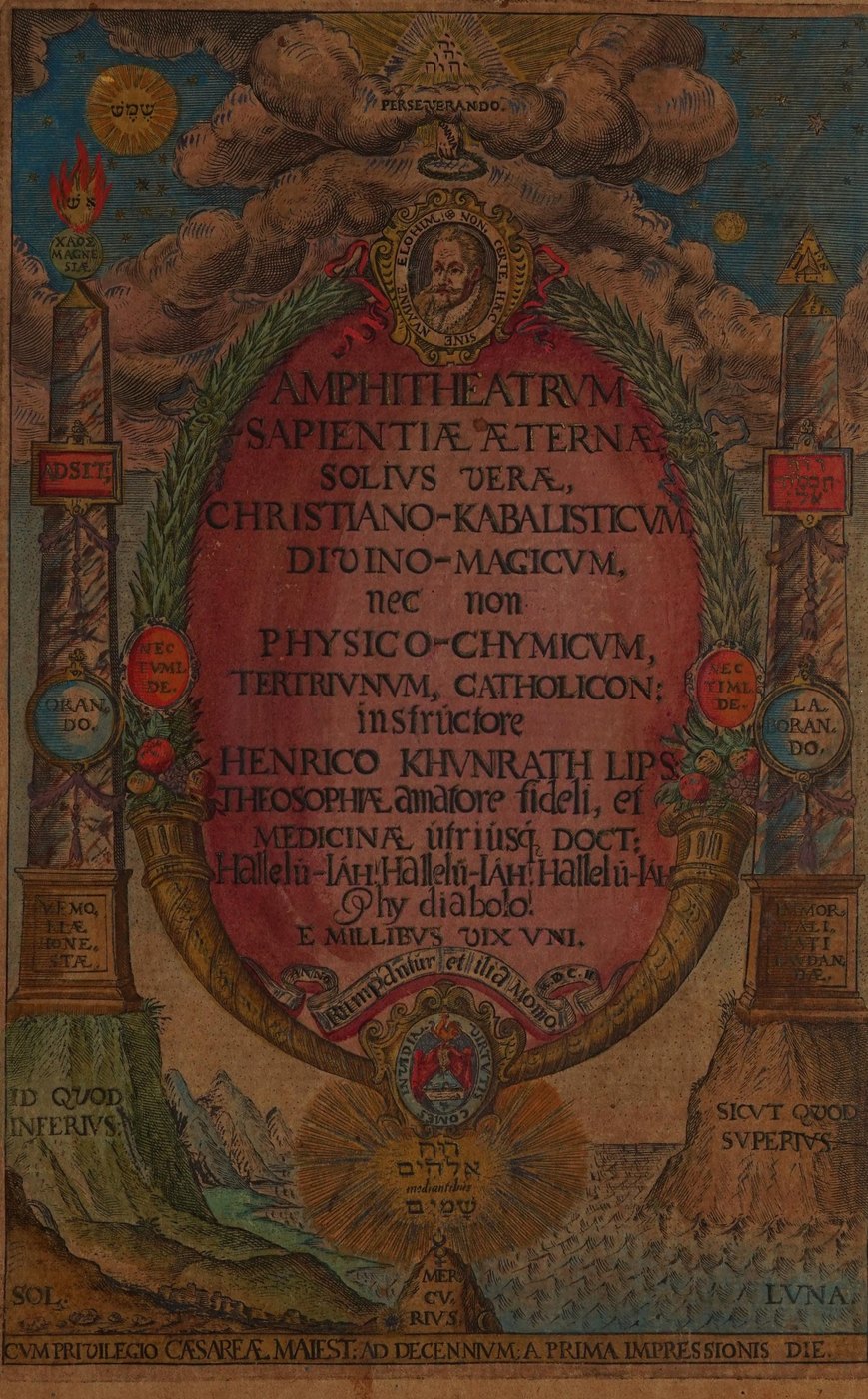
On his own title page he cuts the famous half down to five words and splits them across the foot of the sheet. Id quod inferius goes into the ground under one obelisk, Sicut quod superius under the other, with Sol and Luna lettered beneath them. A reader crossing the page assembles the sentence on the way and gets handed the two luminaries as the demonstration. The sentence works there as a caption to a picture, not as a slogan on a wall.
So no single sentence exists to quote. Printings exist, they differ, and this archive can show only what each maker actually cut or set. The text carries no author, no original and no agreed date; it reaches Latin through Arabic, and Khunrath in 1609 already quotes a version centuries old. Anyone saying as above, so below quotes four words of an English rendering of one among several Latin texts, and nobody can check any of them against a first copy, because none survives. None of which argues for dropping the phrase. It argues for knowing what the phrase stands in for.