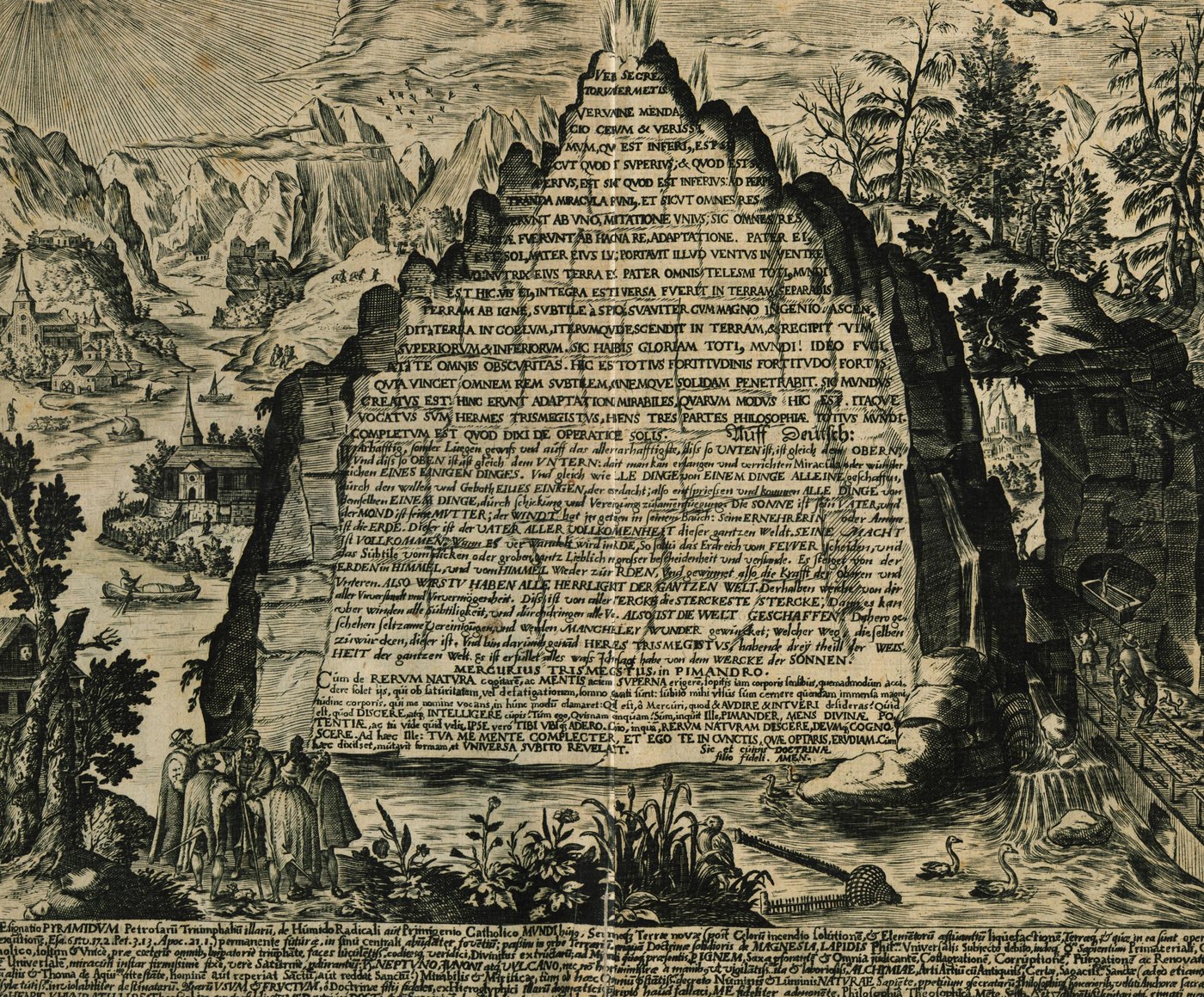
Designatio Pyramidum Petrosarum Triumphalium
The Triangle and the Pyramid as the central motif, with the Sun and the Moon, Fire, and the Water in a secondary part. From Amphitheatrum.
What is happening
Heinrich Khunrath, 1609 “Esa. 65 v. 17, 2 Pet. 3. 13, Apoc. 21. 1.”
Heinrich Khunrath, 1609 “Mercurius Trismegistus in Pimandro.”
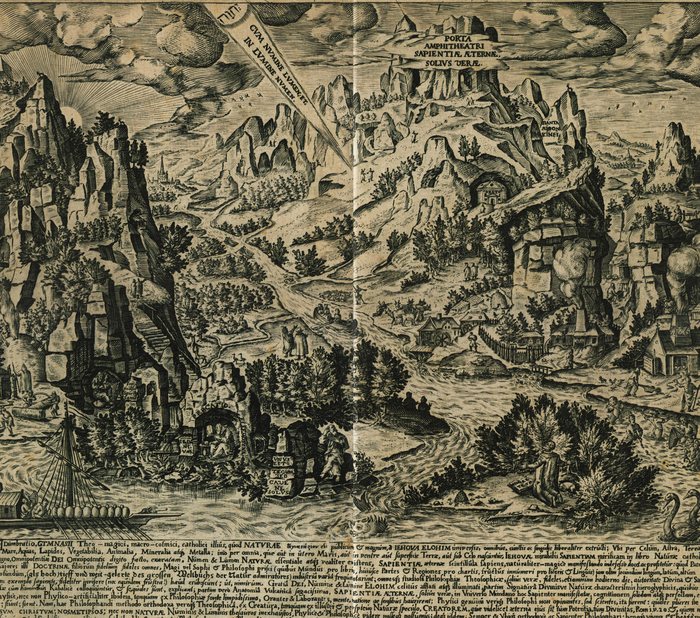
Symbolica, 2026 Khunrath's Latin, put into English here: The Design of those Triumphal Rocky Pyramids, concerning the Radical or First-born Universal Moisture of this World. The three scriptures named are the ones that promise a new heaven and a new earth. The text carved on the rock is the Tabula Smaragdina, the Emerald Tablet of Hermes, given in Latin with the German beneath under the heading Auff Deutsch. The caption is transcribed here only in part. The Latin of the rock, put into English here: The secret words of Hermes. True without lie, certain and most true: what is below is as what is above, and what is above is as what is below, to work the miracles of one thing. Its father is the Sun, its mother the Moon; the wind carried it in its belly; its nurse is the Earth. You shall separate earth from fire, the subtle from the thick, gently and with great skill. And so I am called Hermes Thrice-Greatest, having the three parts of the philosophy of the whole world. Beneath the Tablet and its German a second text is headed Mercurius Trismegistus in the Pimander.
Key · 4 motifs
Tap a motif on the picture, or a line below. Its note opens under the line, with the reading its author gave it.
- Primary motif
- Secondary motifs · 3
The picture
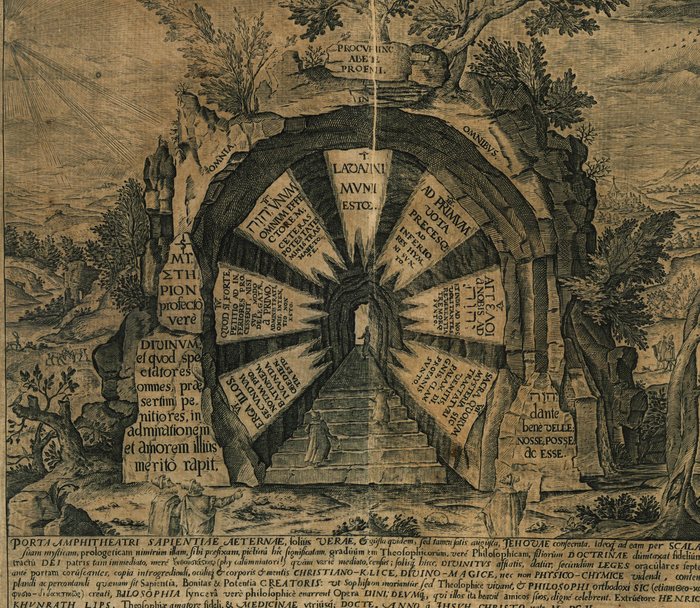
A great rock cut as a pyramid, its face carved with the text of the Emerald Tablet in Latin and German, a flame at its apex, the sun's rays in the upper corner, a waterfall and a pool with swans at its foot, a quarry at the right, figures of the learned reading it. By eye
The reading
The picture read whole, in the archive's words, from the sources quoted on the marks. Read on, and the picture follows: the motif under discussion keeps its colour.
‘Designatio Pyramidum Petrosarum Triumphalium illarum, de Humido Radicali aut Primigenio Catholico Mundi hujus’: the design of those triumphal rocky pyramids, concerning the radical or first-born universal moisture of this world. A rock stands in a landscape with its face cut flat, and the flat face is carved from top to bottom with writing.
The writing is the Emerald Tablet, the text every alchemist knew by heart, here made into a monument. It begins at the apex: ‘Verba secretorum Hermetis. Verum sine mendacio, certum et verissimum: quod est inferius, est sicut quod est superius; et quod est superius, est sicut quod est inferius, ad perpetranda miracula rei unius’, the secret words of Hermes; true without lie, certain and most true, what is below is as what is above and what is above is as what is below, to work the miracles of one thing. It ends where the Tablet ends, ‘Itaque vocatus sum Hermes Trismegistus, habens tres partes philosophiae totius mundi’, and so I am called Hermes Thrice-Greatest, having the three parts of the philosophy of the whole world. Under the Latin the German follows, headed as German, and under that a second text headed ‘Mercurius Trismegistus in Pimandro’. Men stand at the foot of the rock reading it, one with a book open to compare.
The sun's rays come in from the upper left corner, the disc itself outside the plate. The rock says where it belongs: ‘Pater eius est Sol, mater eius Luna; portavit illud ventus in ventre suo; nutrix eius Terra est’, its father is the Sun, its mother the Moon, the wind carried it in its belly, its nurse is the Earth. The whole vocabulary of sun and moon in alchemy stands on that one carved line.
Flame breaks from the apex of the pyramid, and lower on the face the reader is told what to do with it: ‘Separabis terram ab igne, subtile a spisso, suaviter cum magno ingenio’, you shall separate earth from fire, the subtle from the thick, gently and with great skill.
At the right a waterfall pours from the rock into a pool with swans on it, and men work a quarry above it, hauling stone. The caption says the pyramids are about the first-born moisture of the world, and the water running out of the written rock is that moisture drawn as a river: the Tablet's one thing, whose father is the Sun, coming out of the stone as water.
Khunrath's caption names three scriptures, ‘Esa. 65 v. 17, 2 Pet. 3. 13, Apoc. 21. 1’, the three that promise a new heaven and a new earth, and calls the pyramids triumphal because of them. The archive holds the caption in part and the Tablet as far as the fold and the shading of the rock let it be read.
Decoded: every motif is marked, and each mark carries the reading its author gave it, quoted from the text, or says that it is observed on the picture and not read. The reading above is the archive's own, made from those sources and no others.
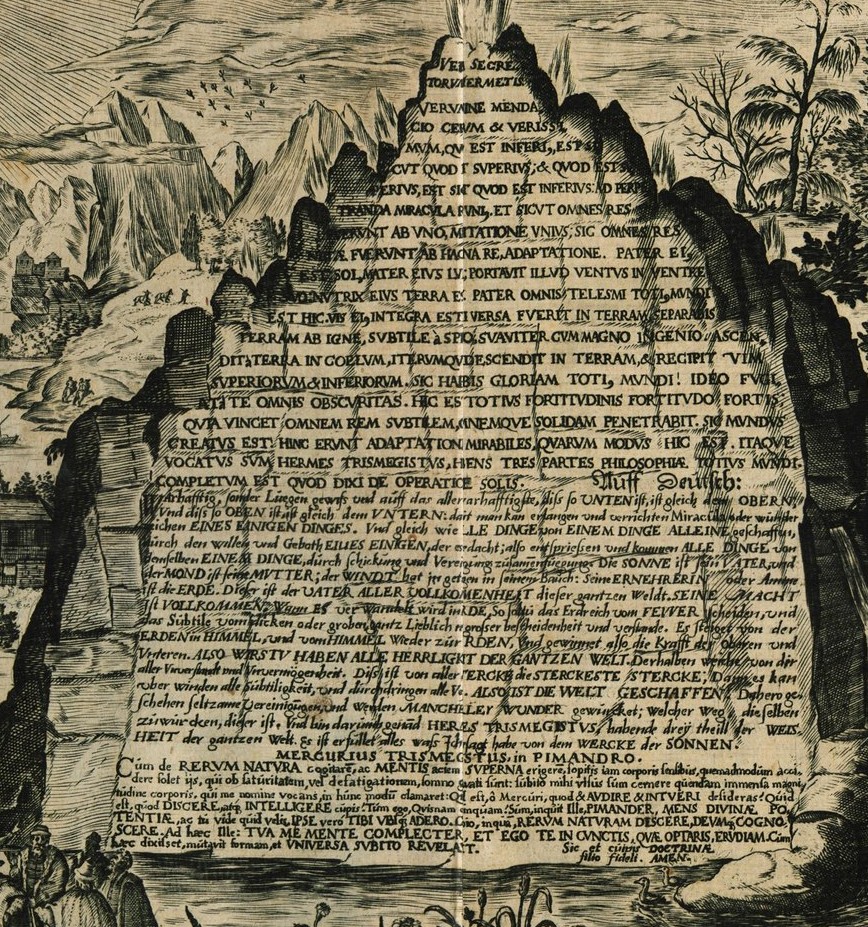
The short text the whole tradition quotes, and the one sentence of it everybody knows. This collection holds it four ways: printed entire, carved into a rock, split across two obelisks, and held out in a hand.
In plain words The pyramid is a rock face made into a page. Khunrath's caption calls it the triumphal rocky pyramid, and its whole front is carved with the Emerald Tablet of Hermes, the shortest and most quoted text of alchemy, in Latin and then in German, so that the learned at its foot can read it as one reads a monument.
Heinrich Khunrath, 1609 “Designatio Pyramidum Petrosarum Triumphalium illarum, de Humido Radicali aut Primigenio Catholico Mundi hujus.”
Heinrich Khunrath, 1609 “Verba secretorum Hermetis. Verum sine mendacio, certum et verissimum: quod est inferius, est sicut quod est superius; et quod est superius, est sicut quod est inferius, ad perpetranda miracula rei unius.”
Heinrich Khunrath, 1609 “Itaque vocatus sum Hermes Trismegistus, habens tres partes philosophiae totius mundi.”
Symbolica The Latin, put into English here: the design of those triumphal rocky pyramids, concerning the radical or first-born universal moisture of this world; the secret words of Hermes, true without lie, certain and most true, what is below is as what is above and what is above is as what is below, to work the miracles of one thing; and so I am called Hermes Thrice-Greatest, having the three parts of the philosophy of the whole world.
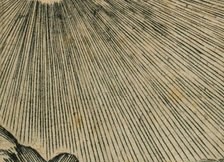
Gold, the perfected metal, and the illuminated intellect. The most overloaded symbol in the tradition.
In plain words The sun is at the top left corner, rays only, the disc cut off by the edge of the plate. The line carved on the rock is where the sun and moon of alchemy come from: its father is the Sun, its mother the Moon, the wind carried it in its belly, its nurse is the Earth.
Heinrich Khunrath, 1609 “Pater eius est Sol, mater eius Luna; portavit illud ventus in ventre suo; nutrix eius Terra est.”
Symbolica The Latin, put into English here: its father is the Sun, its mother the Moon; the wind carried it in its belly; its nurse is the Earth.
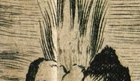
A count, a catastrophe, or the visible part of something that has no body. Note whether the flames are arranged in a number, breaking something, or standing where a figure would be.
In plain words Fire breaks from the point of the pyramid like light from a lamp. Lower down, the carved text tells the reader to separate earth from fire and the subtle from the thick, gently and with great skill: the flame at the top is what the separation frees.
Heinrich Khunrath, 1609 “Separabis terram ab igne, subtile a spisso, suaviter cum magno ingenio.”
Symbolica The Latin, put into English here: you shall separate earth from fire, the subtle from the thick, gently and with great skill.
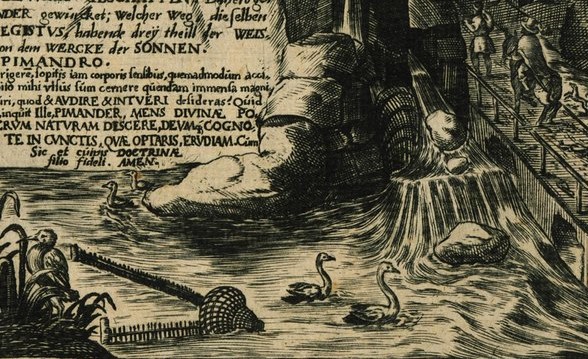
Where a thing is taken apart rather than destroyed. Note whether the figure is in the water, on it, or pouring it.
In plain words Water falls out of the rock at the right and spreads into a pool with swans and a fish trap, under a quarry where men haul stone. Khunrath's caption says the pyramids are about the radical or first-born moisture of this world, and the Tablet on the rock says the one thing's father is the Sun and its mother the Moon: the water at the foot is that moisture, shown as a river coming out of the written stone.
Heinrich Khunrath, 1609 “Designatio Pyramidum Petrosarum Triumphalium illarum, de Humido Radicali aut Primigenio Catholico Mundi hujus.”
Symbolica De Humido Radicali aut Primigenio Catholico Mundi hujus: concerning the radical or first-born universal moisture of this world.
Also carrying the Triangle and the Pyramid
25 works carry it. The 5 where it is the central motif are here. The symbol.
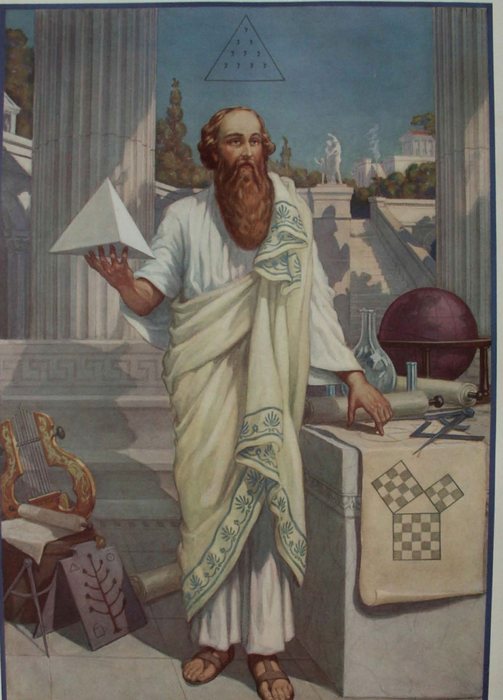
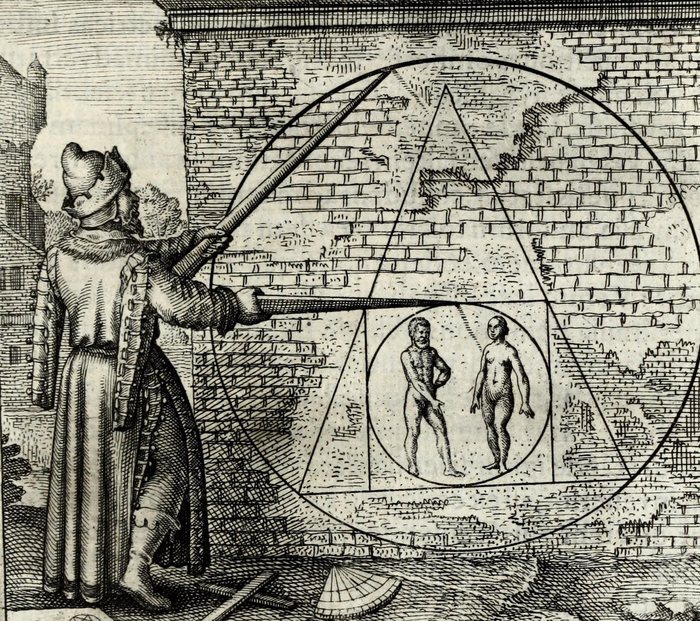
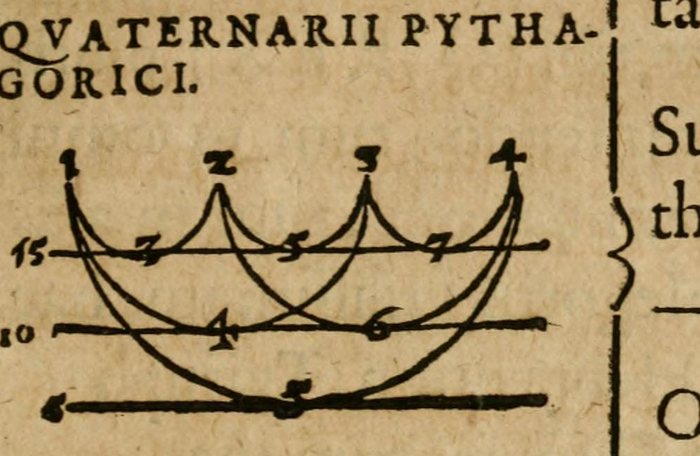
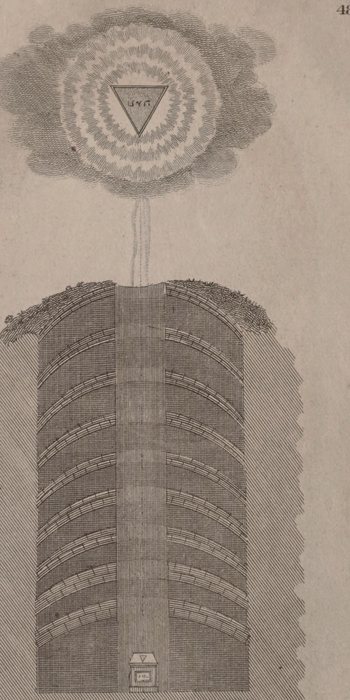
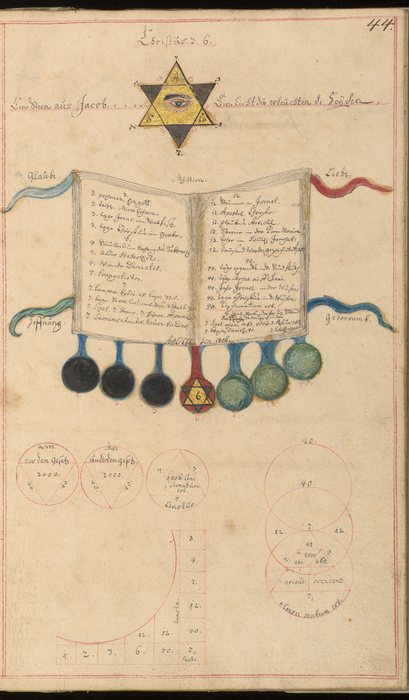
Where the detail is the subject
the Sun and the Moon · Fire · the Water
Each of these is in the picture without being what it is about. Below, one work that is about each.
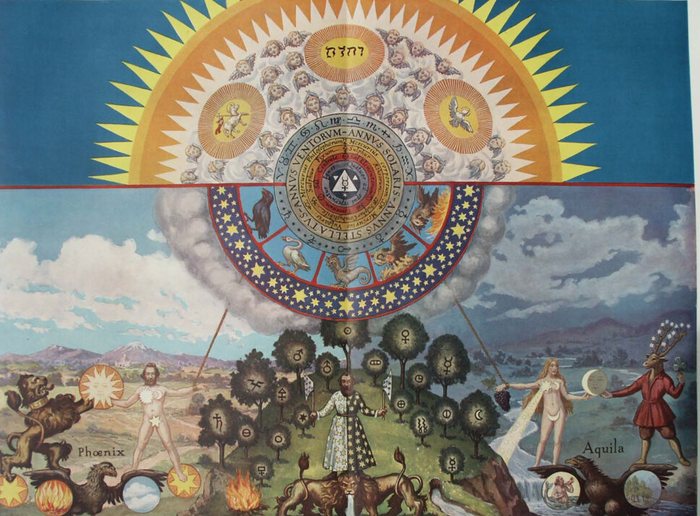
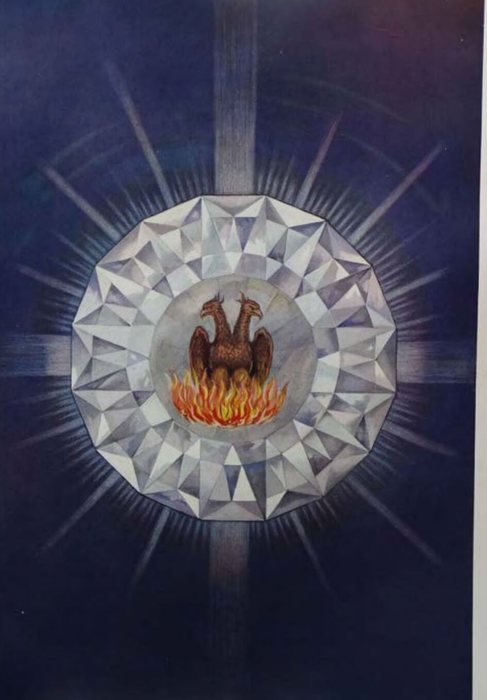
In the same series
Record
One symbol a week, decoded.
This picture is free at full size from its source, linked above. What an address gets is the Sunday letter: one picture, one symbol marked on it, what it meant and who said so, and the master files of the decoded plates as they are verified. Leave any time.
Free, one letter a week, unsubscribe in one click. How the address is used.
Scroll or pinch to zoom · drag to move · double-tap for 1:1 · 1400 by 1159 pixel web copy; the source file is linked under Record