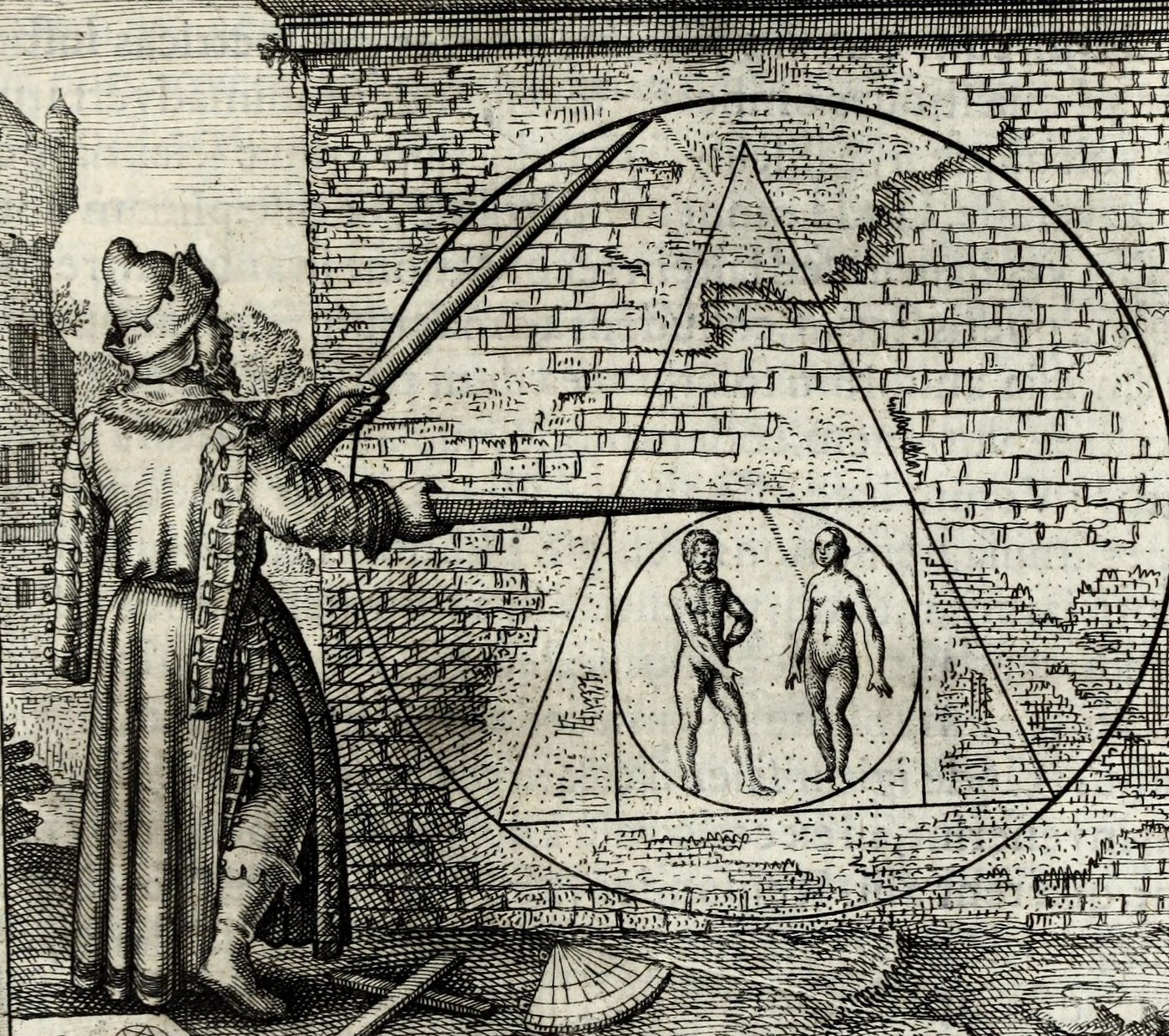
Fac ex mare & fœmina circulum, inde quadrangulum, hinc triangulum, fac circulum & habebis lap. Philosophorum
The Triangle and the Pyramid as the central motif, with the Heavens, and the King and the Queen in a secondary part. From Atalanta Fugiens.
What is happening
Michael Maier, 1618 “Fac ex mare & fœmina circulum, inde quadrangulum, hinc triangulum, fac circulum & habebis lap. Philosophorum.”
Symbolica, 2026 Maier’s Latin, put into English here: Make a circle of the man and the woman, then a square, then a triangle, then a circle, and you will have the philosophers' stone.
Michael Maier, 1618 “Foemina masque unus fiant tibi circulus, ex quo
Surgat, habens aequum forma quadrata latus.
Hinc Trigonum ducas, omni qui parte rotundam
In sphaeram redeat: Tum LAPIS ortus erit.
Si res tanta tuae non mox venit obvia menti,
Dogma Geometra si capis, omne scies.”
Symbolica, 2026 Maier’s epigram, put into English here: Let woman and man become for you one circle, from which a square figure with equal sides may rise. From this draw a Triangle, which on every side returns into a round sphere. Then the STONE will have come to birth. If so great a thing does not at once meet your mind, you will know it all if you grasp the Geometer's teaching.
Key · 3 motifs
Tap a motif on the picture, or a line below. Its note opens under the line, with the reading its author gave it.
- Primary motif
- Secondary motifs · 2
The picture
The geometer setting his compass to the circle, the square and the triangle, the man and the woman inside them: the figure the site's mark is drawn from. By eye
The reading
The picture read whole, in the archive's words, from the sources quoted on the marks. Read on, and the picture follows: the motif under discussion keeps its colour.
‘Fac ex mare & fœmina circulum, inde quadrangulum, hinc triangulum, fac circulum & habebis lap. Philosophorum’: make a circle of the man and the woman, then a square, then a triangle, then a circle, and you will have the philosophers' stone. Merian drew a geometer in a scholar's gown setting his compass to a great circle on a brick wall, with all four figures nested inside it.
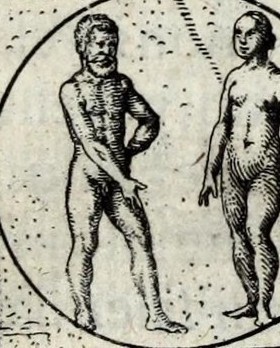
The sequence starts with the pair. ‘Foemina masque unus fiant tibi circulus’, let woman and man become for you one circle, ‘ex quo / Surgat, habens aequum forma quadrata latus’, from which a square figure with equal sides may rise. The man and the woman stand in the innermost circle, and the square is drawn round them.
‘Hinc Trigonum ducas’, from this draw a triangle, ‘omni qui parte rotundam / In sphaeram redeat’, which on every side returns into a round sphere: ‘Tum LAPIS ortus erit’, then the stone will have come to birth. The triangle is the third figure, and in this archive's terms a count rather than a shape: two become four become three become one.
The outer circle is the one everything returns into. ‘Si res tanta tuae non mox venit obvia menti’, if so great a thing does not at once meet your mind, ‘Dogma Geometra si capis, omne scies’, you will know it all if you grasp the geometer's teaching. The compass on the wall is the whole promise of the book: the work is a construction, and can be drawn.
Decoded: every motif is marked, and each mark carries the reading its author gave it, quoted from the text, or says that it is observed on the picture and not read. The reading above is the archive's own, made from those sources and no others.
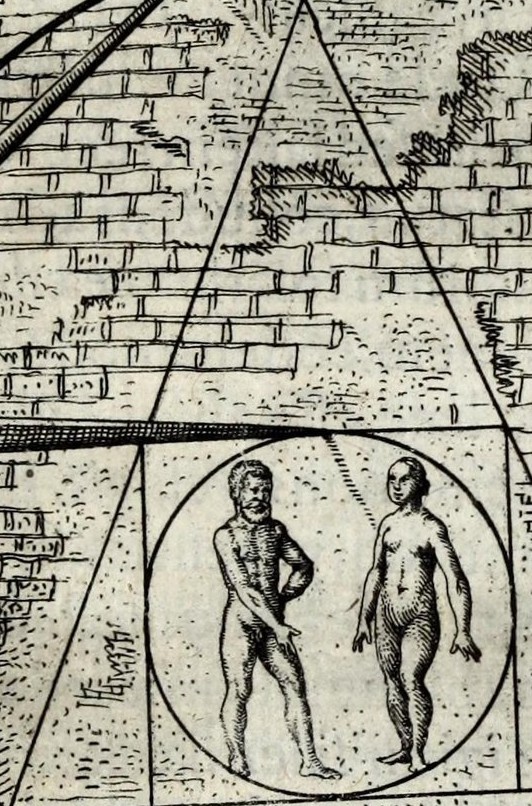
The end of the work, named in Latin on the page in five works here. What it is made of changes with the book. That there is a stone at the end does not.
In plain words A triangle stands inside the circle, and inside the triangle a square, and inside the square a smaller circle with a man and a woman in it. The geometer is drawing the sequence of the motto: circle, square, triangle, circle. The triangle is the third step, and Maier says the stone is born when it returns into the sphere.
Michael Maier, 1618 “Hinc Trigonum ducas, omni qui parte rotundam / In sphaeram redeat: Tum LAPIS ortus erit.”
Symbolica Maier's Latin, put into English here: From this draw a Triangle, which on every side returns into a round sphere. Then the STONE will have come to birth.
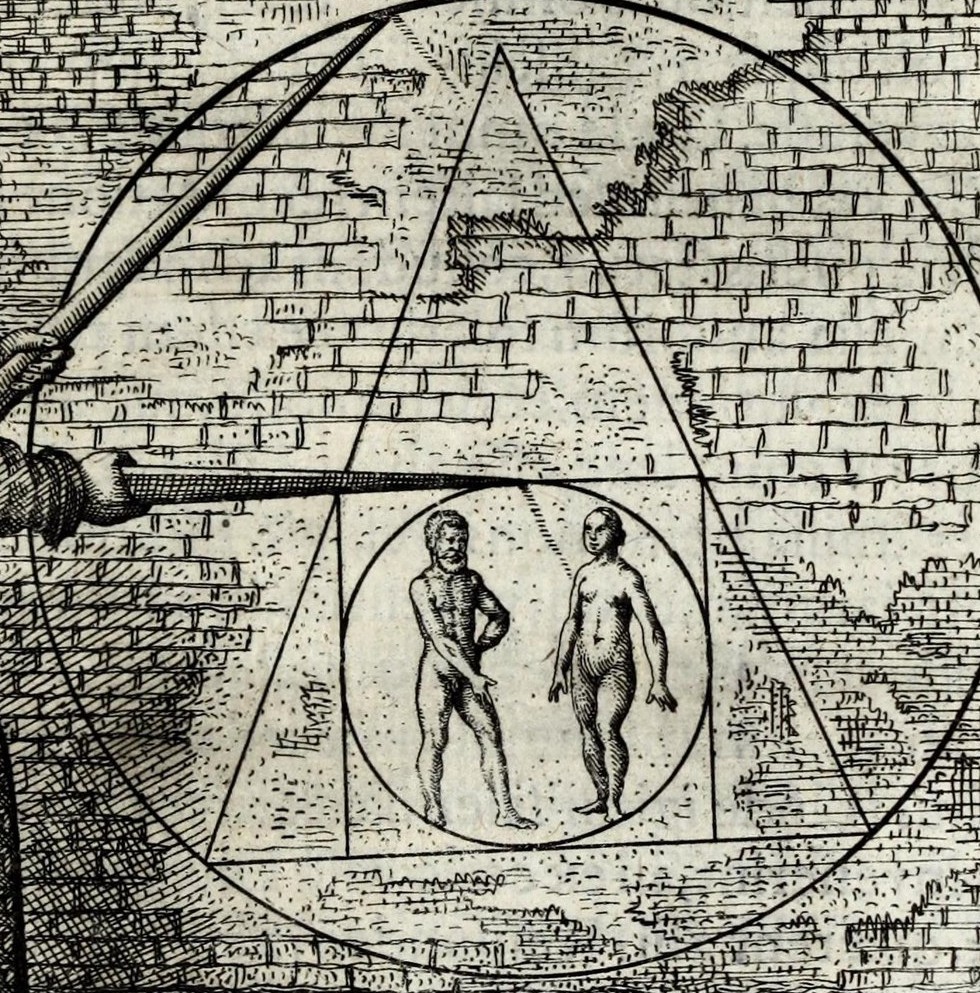
A diagram of everything, drawn so that a person can be found inside it. Note where the human figure stands in the scheme.
In plain words The outer circle is the whole figure, the sphere everything returns into, and the geometer in his gown has his compass on it. Maier's promise is that the stone is a matter of geometry: grasp the geometer's teaching and you will know it all. The archive files the circle with the heavens, its usual home for a diagram of everything.
Michael Maier, 1618 “Si res tanta tuae non mox venit obvia menti, / Dogma Geometra si capis, omne scies.”
Symbolica Maier's Latin, put into English here: If so great a thing does not at once meet your mind, you will know it all if you grasp the Geometer's teaching.
A rank rather than a person. Read the robe, the throne and what comes out of the mouth before you read the face.
In plain words At the centre of everything stand a naked man and woman inside a small circle. They are the first step: make one circle of the male and the female, and from it raise the square. The pair is the matter the geometry is done on.
Michael Maier, 1618 “Foemina masque unus fiant tibi circulus, ex quo / Surgat, habens aequum forma quadrata latus.”
Symbolica Maier's Latin, put into English here: Let woman and man become for you one circle, from which a square figure with equal sides may rise.
Also carrying the Triangle and the Pyramid
25 works carry it. The 5 where it is the central motif are here. The symbol.
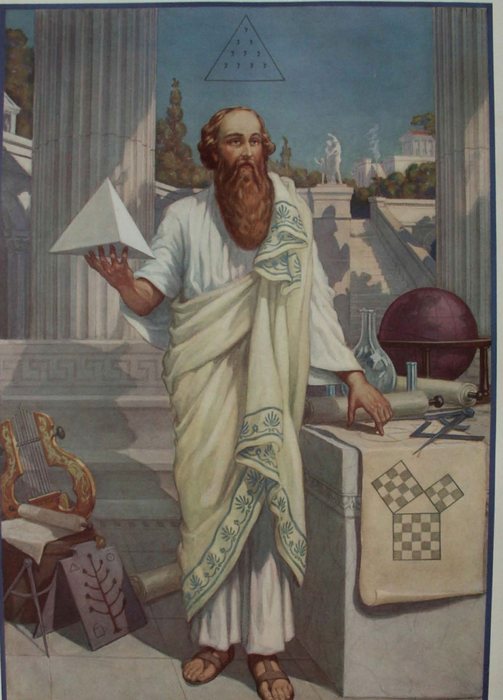
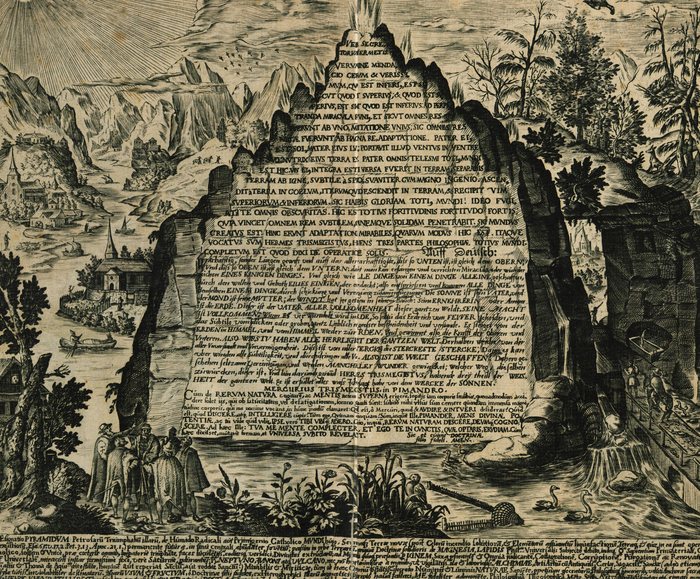
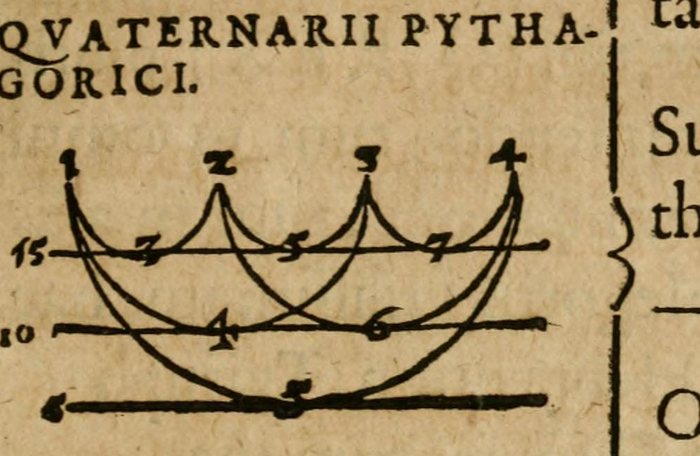
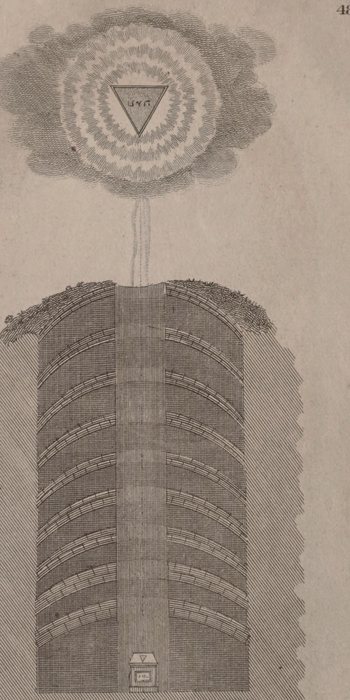
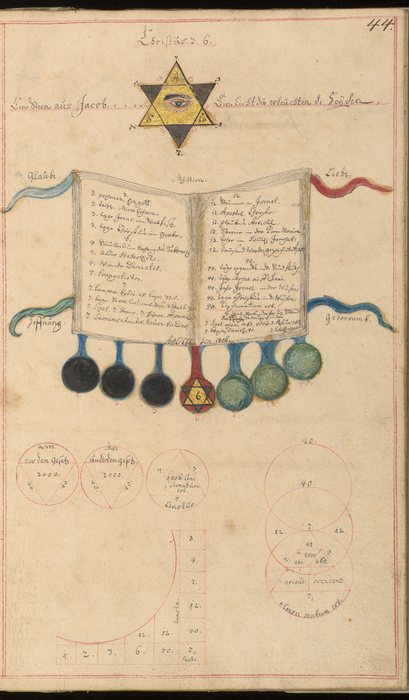
Where the detail is the subject
the Heavens · the King and the Queen
Each of these is in the picture without being what it is about. Below, one work that is about each.
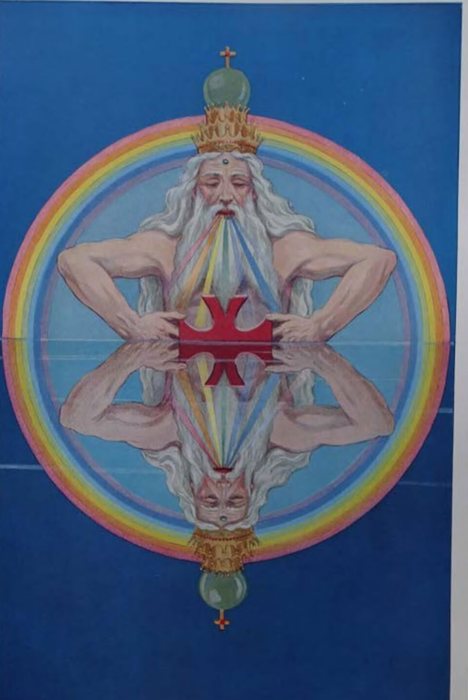
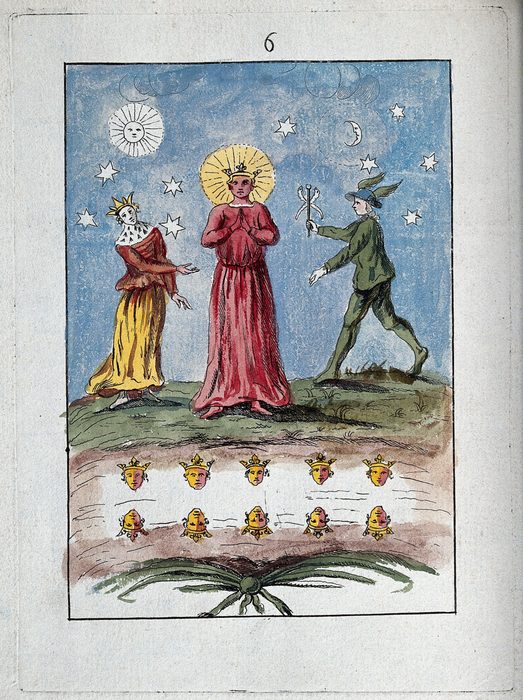
In the same series
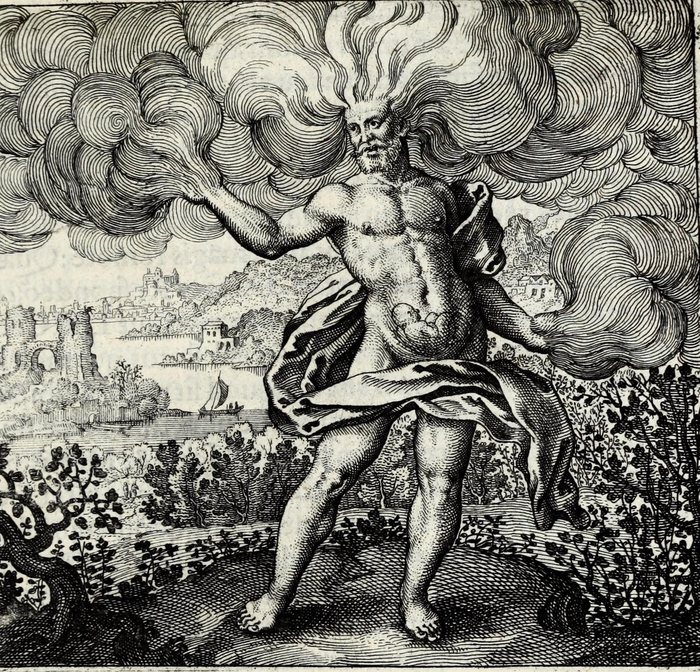 Portavit eum ventus in ventre suo
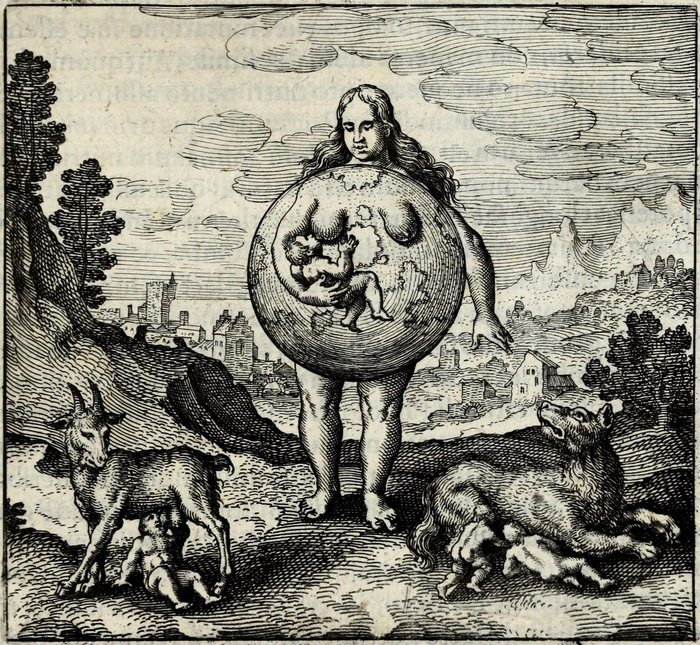 Nutrix ejus terra est
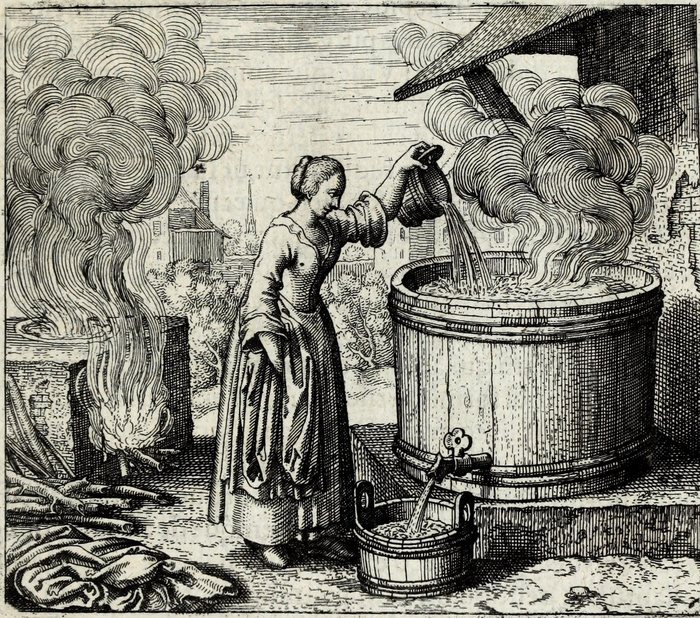 Vade ad mulierem lavantem pannos, tu fac similiter
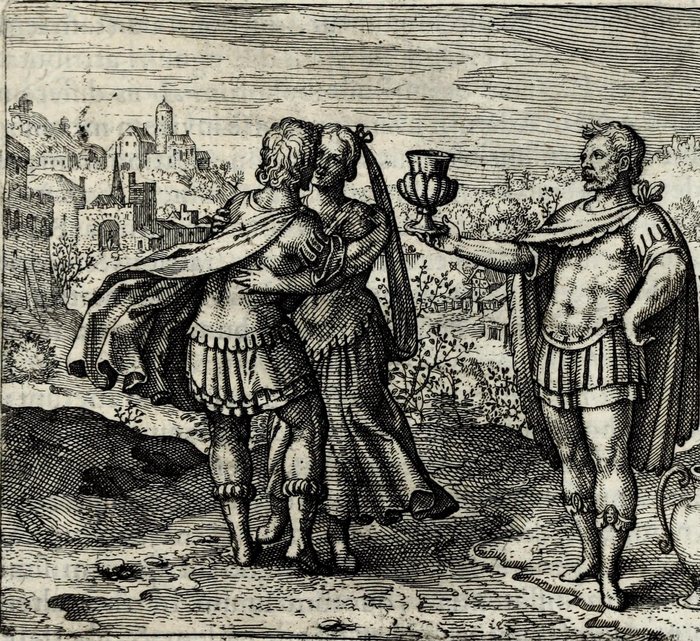 Conjunge fratrem cum sorore & propina illis poculum amoris
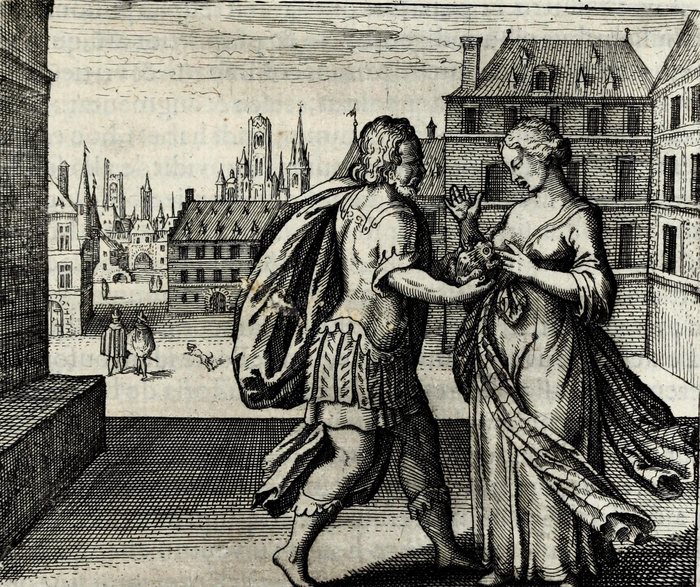 Appone mulieri super mammas bufonem, ut ablactet eum, & moriatur mulier, sitque bufo grossus de lacte
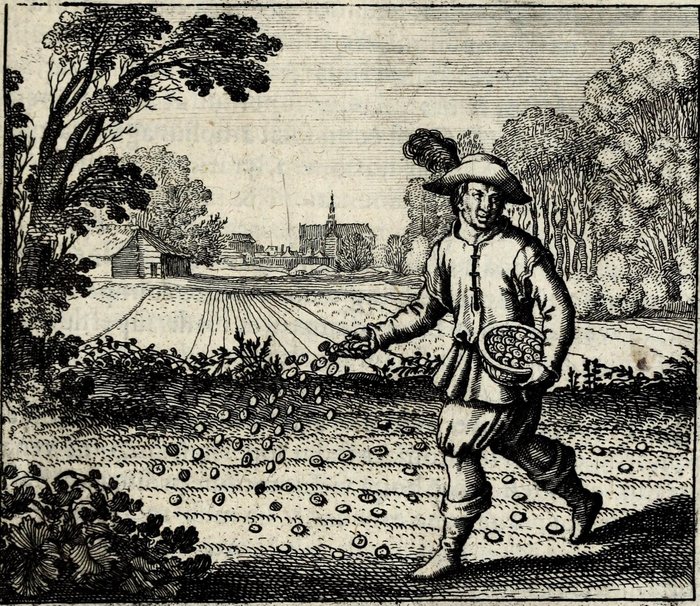 Seminate aurum vestrum in terram albam foliatam
Record
One symbol a week, decoded.
This picture is free at full size from its source, linked above. What an address gets is the Sunday letter: one picture, one symbol marked on it, what it meant and who said so, and the master files of the decoded plates as they are verified. Leave any time.
Free, one letter a week, unsubscribe in one click. How the address is used.
Scroll or pinch to zoom · drag to move · double-tap for 1:1 · 1400 by 1241 pixel web copy; the source file is linked under Record