The Philosopher's Stone
Lapis, Lapis Philosophorum, Petra Philosophalis, the Stone
The end of the work, named in Latin on the page in five works here. What it is made of changes with the book. That there is a stone at the end does not.
Five works in this collection name it in their own printed text, and no two of them agree about what it is.
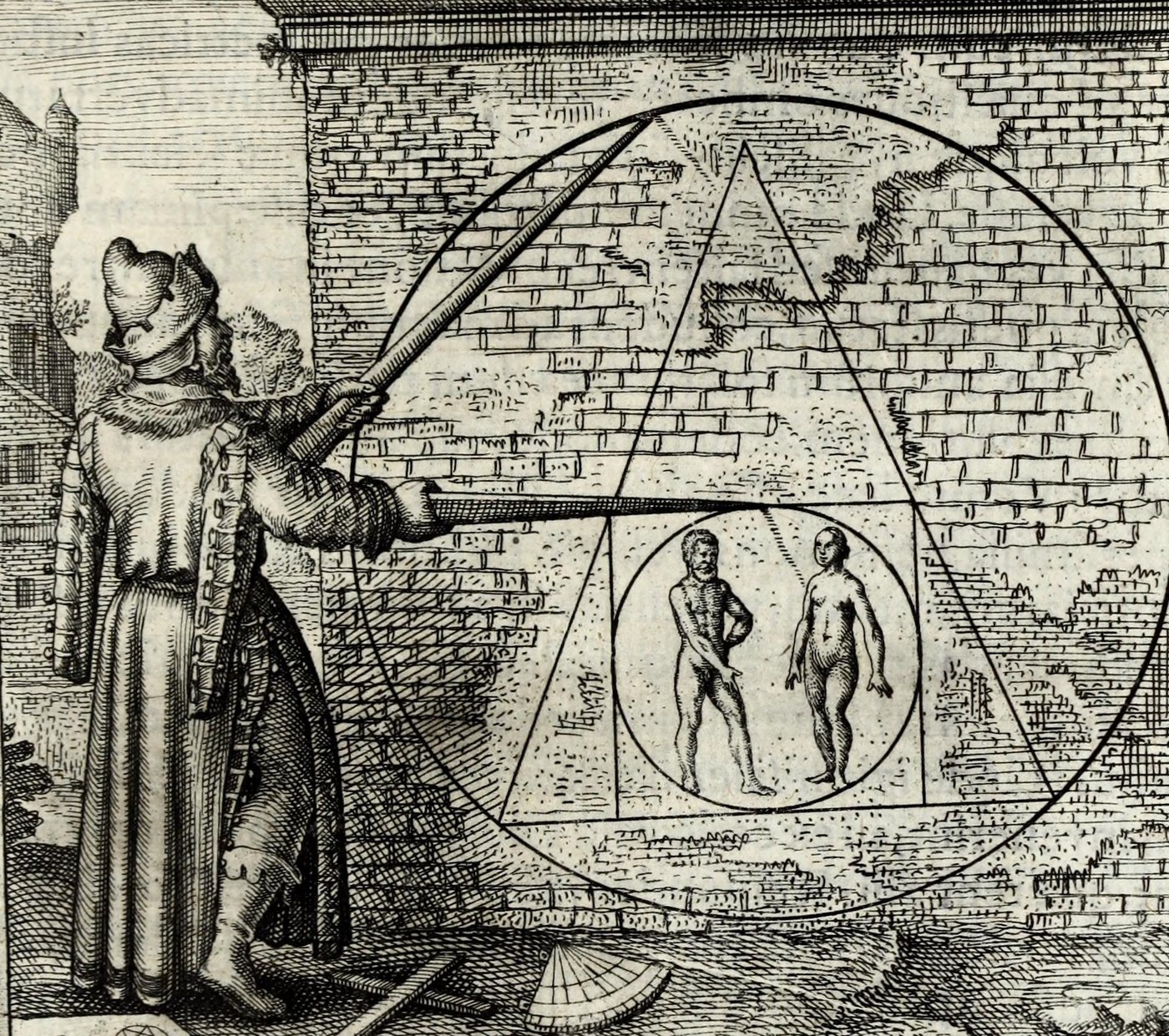
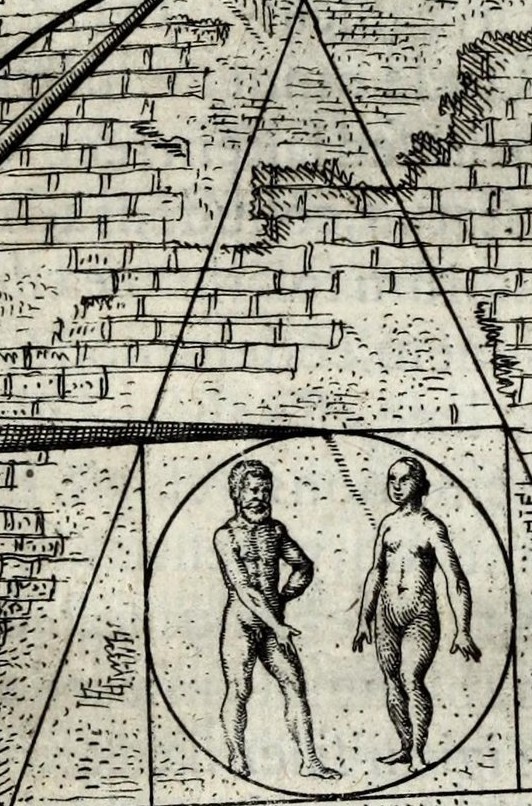
Maier's twenty first emblem gives a recipe with no matter in it at all, only shapes. Make the man and the woman into one circle, he writes, and out of that a square with equal sides; then draw a triangle which returns on every side into a sphere: Tum LAPIS ortus erit, and then the Stone will be born. His last line tells the reader where to go if that was too fast. If you understand the teaching of geometry, you will know all of it.
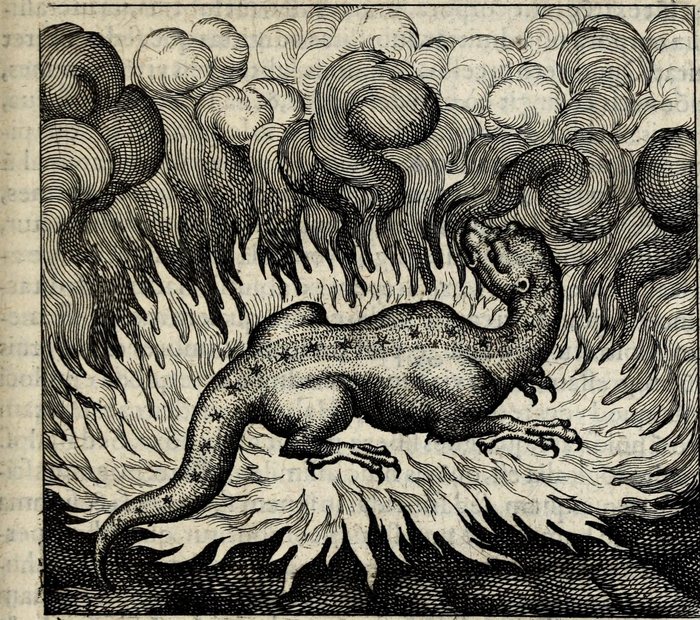
His twenty ninth says the Stone is what survives fire. The salamander lives in the burning flame and thinks nothing of Vulcan's threats, and so the Stone does not refuse the cruel burning of the flames, because it was born in unbroken fire. The salamander comes out cold and free; the Stone gets hot, and the heat is what helps it.
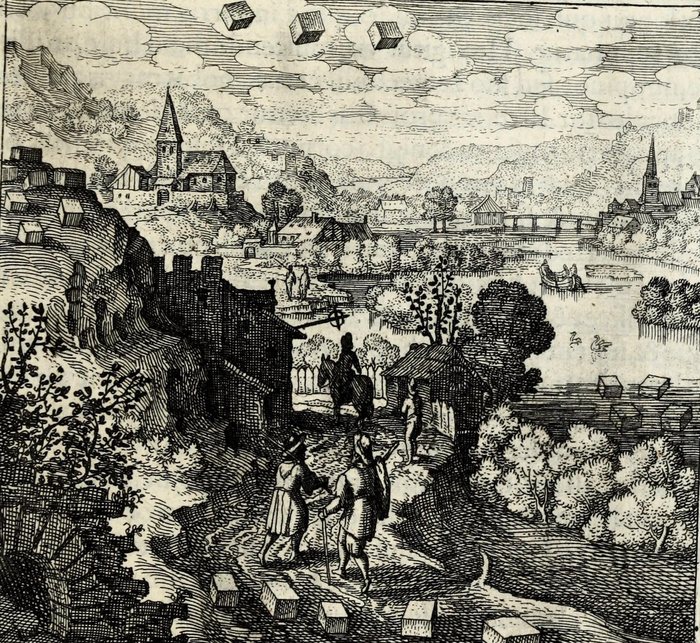
His thirty sixth says the Stone is Mercury, and gives it four addresses to prove it: cast into the earth, exalted in the mountains, living in the air, fed in the river.
His twelfth says it is the stone Saturn swallowed in place of his son and brought up again, set on the top of Helicon as a monument for mortals. Then he stops the reader from taking it as a story. If you take the thing as the words sound, he writes, your mind is turned the wrong way, for that Stone of Saturn is a chemical one. The same swallowed stone is on four Cartari woodcuts elsewhere here, where it is a fable about time and nothing else.
Khunrath makes the largest claim of the five and cuts it into the middle of a fortified city. Petra Philosophalis, the Philosophers' Stone, who is the son of the greater world and the great Pan of Nature; and the text closes with a line borrowed from the gospel and pointed at his enemies: et portae Sophistarum non praevalebunt adversus eam, and the gates of the Sophists shall not prevail against it.
So the Stone is a geometrical construction, a thing that survives fire, Mercury, a Greek fable about Saturn, and a rock at the centre of a citadel. That is not confusion. Each writer is naming the end of his own work, and the end of the work is the one thing all of them have in common.
Contested
Sources
- Michael Maier, Atalanta Fugiens, 1618: Emblems XII, XXI, XXIX and XXXVI, motto and epigram, Oppenheim 1618, read against the page images of the Getty Research Institute copy.
- Heinrich Khunrath, Amphitheatrum Sapientiae Aeternae, 1609: The text lettered at the centre of the plan of the citadel, read off the plate at the size of the archive's own image.
On the same plate
Where it appears · 5
5 works in the archive carry the Philosopher's Stone. First the 5 where it has been read, with the Philosopher's Stone itself picked out.
Fac ex mare & fœmina circulum, inde quadrangulum, hinc triangulum, fac circulum & habebis lap. Philosophorum
Ut Salamandra vivit igne sic lapis
Lapis projectus est in terras, & in montibus exaltatus, & in aëre habitat, & in flumine pascitur, id est, Mercurius
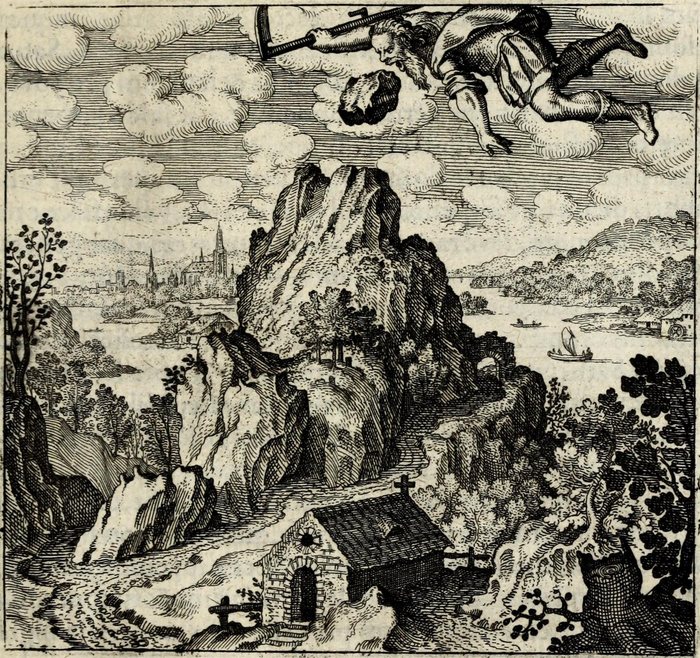
Lapis, quem Saturnus, pro Jove filio devoratum, evomuit, Pro monumento in Helicone mortalibus est positus
Typosis Arcis Pri-materialis