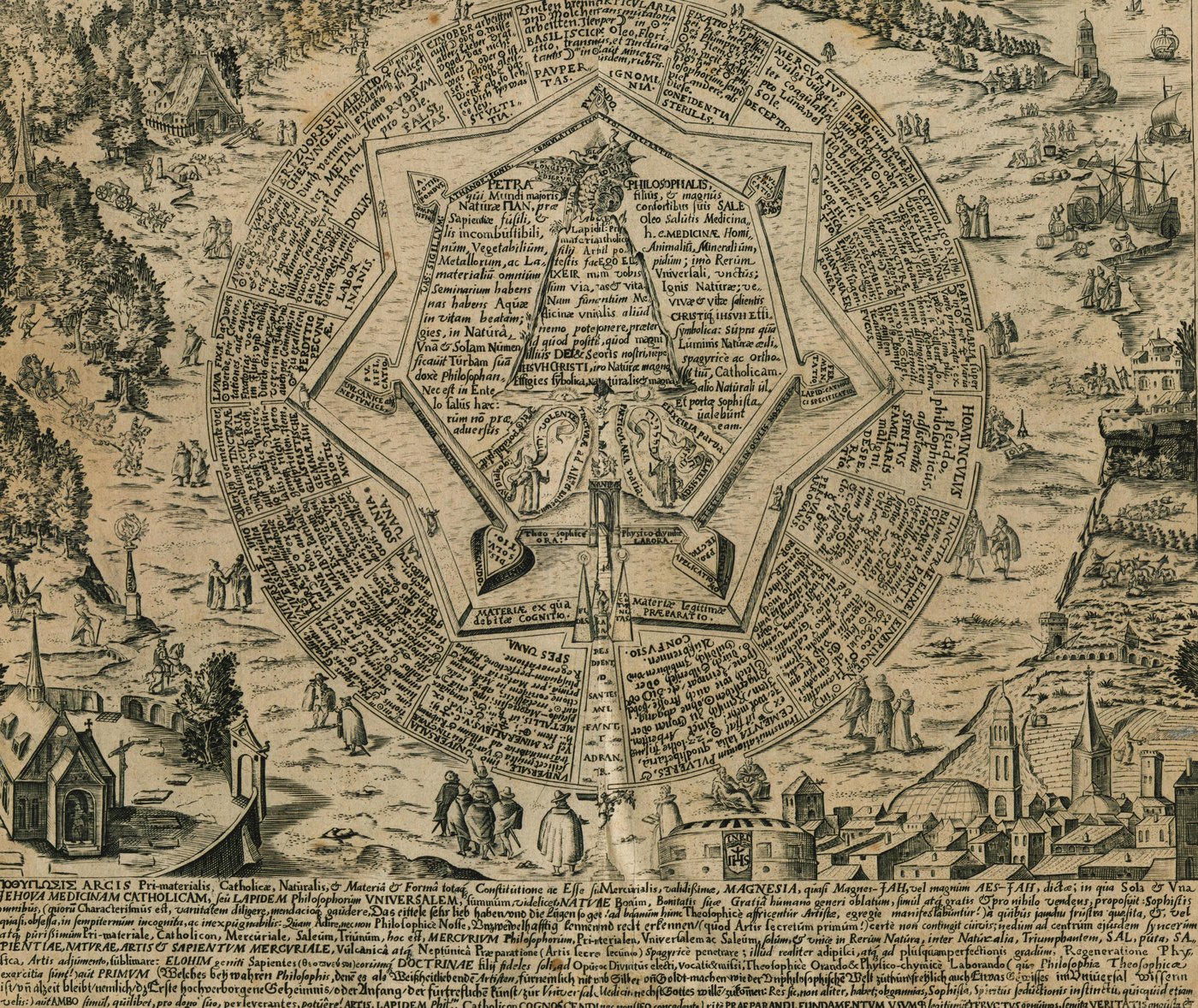
Typosis Arcis Pri-materialis
The Heavens as the central motif, with the Triangle and the Pyramid, and the Water in a secondary part. From Amphitheatrum.
What is happening
Heinrich Khunrath, 1609 “Spes vana. Confusio. Perditio pecuniae. Labor inanis.”
Symbolica, 2026 Khunrath's Latin, put into English here: The Figure of the Citadel of First Matter, universal, natural, most strong in its whole mercurial being, called Magnesia, as it were the Magnet of God; in which alone the one Jehovah set forth the Universal Medicine, or Universal Stone of the Philosophers, the highest good of Nature. And further on, the pair of words the whole book turns on: by praying theosophically and by working physico-chemically. The caption runs to many more lines, in Latin and German, and is transcribed here only in part. Read again at the size of the archive's image, the centre of the plan carries a text on the Stone: the Philosophers' Stone, who is the son of the greater world and the great Pan of Nature; having the seed-bed of the Fire of Nature, having veins of living water leaping up into blessed life; and the gates of the Sophists shall not prevail against it. The road in is lettered Pray theosophically, work physico-chemically, and passes between two pyramids lettered Faith and Silence; the tablets inside the wall read Knowledge of the due matter from which, and Preparation of the lawful matter; and the outer ring names the false ways, vain hope, confusion, loss of money, useless labour.
Key · 3 motifs
Tap a motif on the picture, or a line below. Its note opens under the line, with the reading its author gave it.
- Primary motif
- Secondary motifs · 2
The picture
A citadel drawn in plan as a many-pointed star inside a ring, the text on the Stone at its centre, one road in between two pyramids lettered Fides and Taciturnitas, every wall lettered, set in a landscape of sea and shore with the learned standing about its walls. By eye
The reading
The picture read whole, in the archive's words, from the sources quoted on the marks. Read on, and the picture follows: the motif under discussion keeps its colour.
‘Typosis Arcis Pri-materialis, Catholicae, Naturalis, et Materia et Forma totaque Constitutione ac Esse sui Mercurialis, validissimae, Magnesia, quasi Magnes-Jah, vel magnum Aes-Jah, dictae’: the figure of the citadel of the first matter, universal, natural, most strong, called Magnesia, as it were the magnet of God. It is a fortress seen from above, and the whole plate is its plan.
The plan is a star. Bastion behind bastion, the walls run out into points inside a ring, and every wall is written on. At the centre, where a plan would show the keep, there is a text instead: ‘Petra Philosophalis, qui Mundi majoris filius, et magnus Naturae Pan’, the Philosophers' Stone, son of the greater world and the great Pan of Nature, with Pan in Greek. It goes on to give the Stone the seed-bed of the fire of nature and ‘venas habens Aquae vivae et vitae salientis in vitam beatam’, veins of living water leaping up into blessed life, and it ends with a sentence turned from the Gospel: ‘Et portae Sophistarum non praevalebunt adversus eam’, and the gates of the sophists shall not prevail against it.
There is one road in. It comes up from the foot of the plate between two pyramids lettered ‘Fides. Taciturnitas.’, faith and silence, and at the gate the road itself is lettered ‘Theosophice ora. Physico-chymice labora.’, pray theosophically, work physico-chemically: the two words of the whole book, which the caption also gives as ‘Theosophice Orando et Physico-chymice Laborando’. Two tablets inside the wall name what the road leads to, ‘Materiae ex qua debitae cognitio. Materiae legitimae praeparatio.’, knowledge of the due matter and preparation of the lawful matter.
Outside the ring the landscape has a sea at the upper right with ships on it, a town and a church, and the learned standing about with books. The outer ring they stand beside is lettered with the false ways, ‘Spes vana. Confusio. Perditio pecuniae. Labor inanis.’, vain hope, confusion, loss of money, useless labour, so that the plan reads from outside in: the wrong roads round the rim, the two pyramids, the one road, the Stone.
The caption runs to many lines of Latin and German below the plate, and the archive holds it only in part. What the plate itself says is complete, because a fortress plan is a set of instructions: this wall, this gate, this order.
Decoded: every motif is marked, and each mark carries the reading its author gave it, quoted from the text, or says that it is observed on the picture and not read. The reading above is the archive's own, made from those sources and no others.
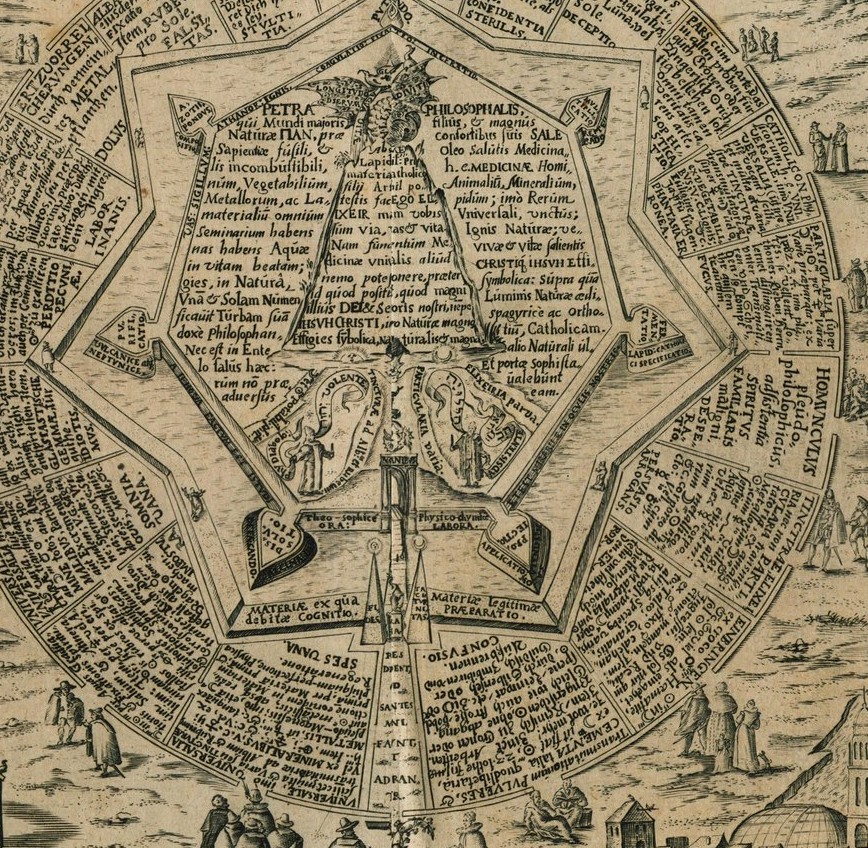
Guidance from something that does not move. Count the points before reading it: five, six and eight are all here, and no source treats them as one sign.
In plain words The citadel of the first matter is drawn from above, as a fortress plan whose bastions make a star of many points inside a ring. At its centre the Stone is described as the son of the greater world and the great Pan of Nature, which is why the archive files the plan with the heavens and the star: the fortress is the world, the Stone is its child, and the star is the plan of both.
Heinrich Khunrath, 1609 “Typosis Arcis Pri-materialis, Catholicae, Naturalis, et Materia et Forma totaque Constitutione ac Esse sui Mercurialis, validissimae, Magnesia, quasi Magnes-Jah, vel magnum Aes-Jah, dictae; in qua Sola et Una Jehova Medicinam Catholicam, seu Lapidem Philosophorum Universalem, summum videlicet Naturae Bonum, proposuit.”
Heinrich Khunrath, 1609 “Petra Philosophalis, qui Mundi majoris filius, et magnus Naturae Pan.”
Heinrich Khunrath, 1609 “Et portae Sophistarum non praevalebunt adversus eam.”
Symbolica The Latin, put into English here: the Figure of the Citadel of First Matter, universal, natural, most strong in its whole mercurial being, called Magnesia, as it were the magnet of God, in which alone the one Jehovah set forth the Universal Medicine, or Universal Stone of the Philosophers, the highest good of Nature; the Philosophers' Stone, who is the son of the greater world and the great Pan of Nature; and the gates of the Sophists shall not prevail against it, which turns the Gospel's gates of hell.
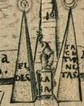
A triangle given a fourth side and set down as a solid. Three of them here, and only one has ever been explained by anybody who worked on it.
In plain words The only road into the citadel passes between two pyramids, and they are lettered Faith and Silence. Behind them the road itself says pray theosophically and work physico-chemically. The two pyramids are the two conditions of entry, set before the two methods.
Heinrich Khunrath, 1609 “Fides. Taciturnitas.”
Heinrich Khunrath, 1609 “Theosophice ora. Physico-chymice labora.”
Heinrich Khunrath, 1609 “Theosophice Orando et Physico-chymice Laborando.”
Heinrich Khunrath, 1609 “Materiae ex qua debitae cognitio. Materiae legitimae praeparatio.”
Symbolica The Latin, put into English here: faith, silence; pray theosophically, work physico-chemically, which the caption also gives as by praying theosophically and by working physico-chemically; knowledge of the due matter from which, preparation of the lawful matter.
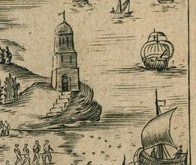
Where a thing is taken apart rather than destroyed. Note whether the figure is in the water, on it, or pouring it.
In plain words The citadel stands in a landscape with a sea at its upper right, ships on it. The text at the centre gives the Stone veins of living water leaping up into blessed life, which is the water the archive marks: the sea is scenery, the veins are the point.
Heinrich Khunrath, 1609 “Seminarium habens Ignis Naturae; venas habens Aquae vivae et vitae salientis in vitam beatam.”
Symbolica The Latin, put into English here: having the seed-bed of the Fire of Nature; having veins of living water leaping up into blessed life.
Also carrying the Heavens
61 works carry it. The 6 where it is the central motif are here. The symbol.
Where the detail is the subject
the Triangle and the Pyramid · the Water
Each of these is in the picture without being what it is about. Below, one work that is about each.
In the same series
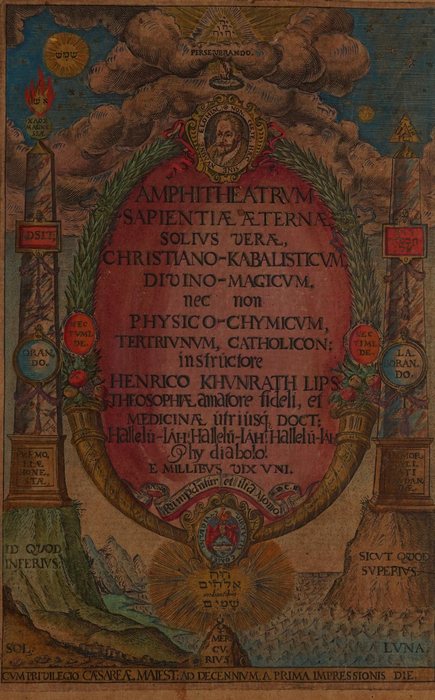 The engraved title of the Amphitheatrum Sapientiae Aeternae
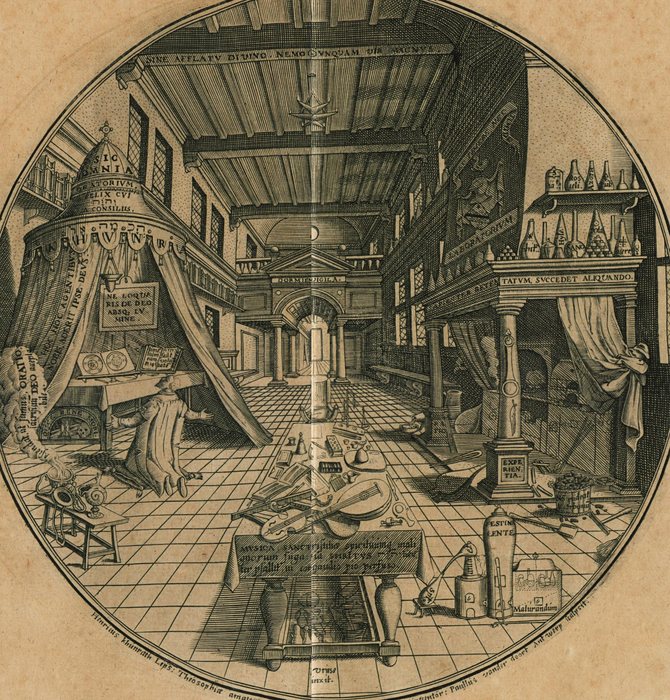 The Oratory and the Laboratory
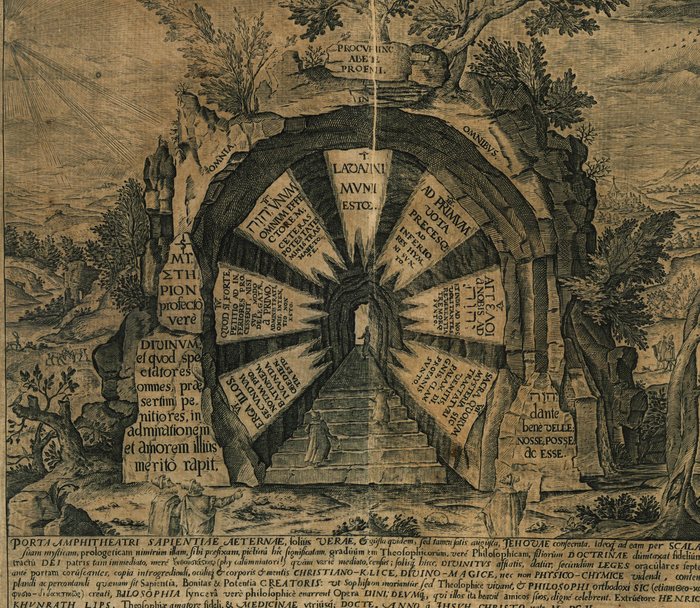 Porta Amphitheatri Sapientiae Aeternae
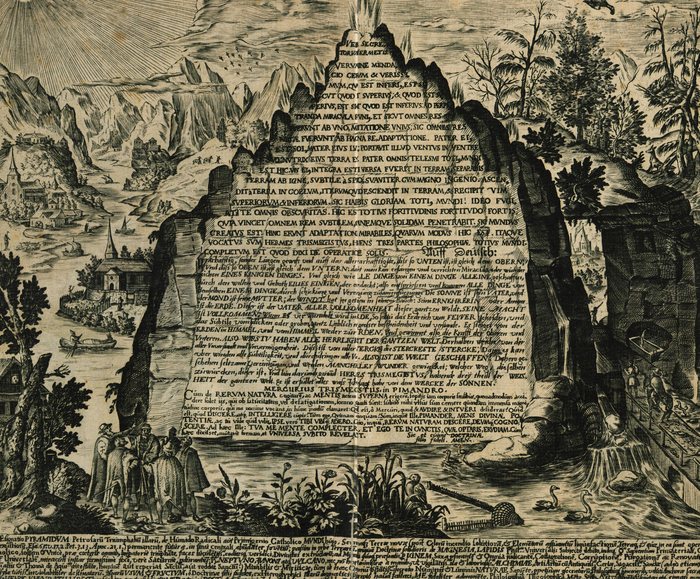 Designatio Pyramidum Petrosarum Triumphalium
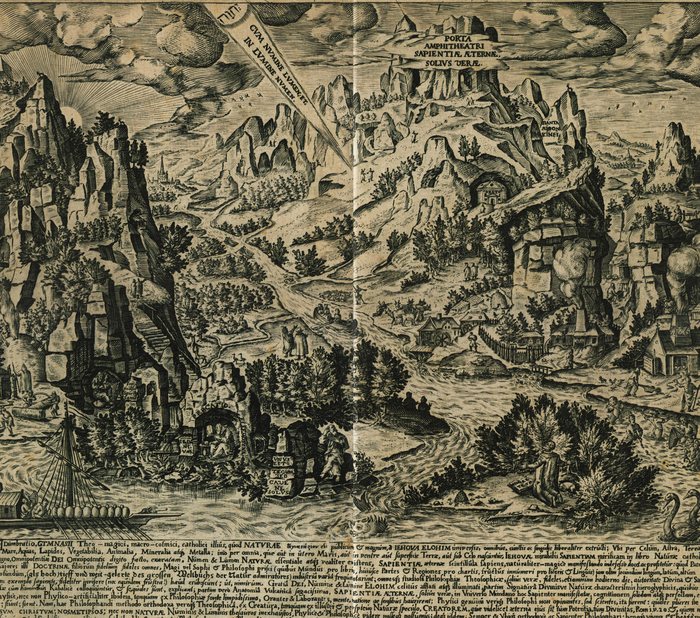 Adumbratio Gymnasii Theo-magici, macro-cosmici, catholici
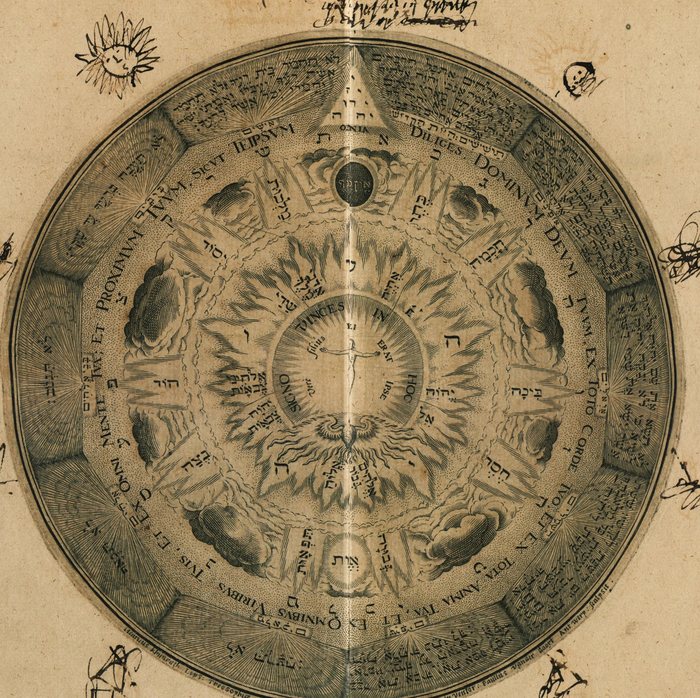 The Name in the pyramid, Christ in the sun, and the two commandments round the rim
Record
One symbol a week, decoded.
This picture is free at full size from its source, linked above. What an address gets is the Sunday letter: one picture, one symbol marked on it, what it meant and who said so, and the master files of the decoded plates as they are verified. Leave any time.
Free, one letter a week, unsubscribe in one click. How the address is used.
Scroll or pinch to zoom · drag to move · double-tap for 1:1 · 1400 by 1178 pixel web copy; the source file is linked under Record