Eyes Wide Shut: the ceremony is in a book anyone could buy in 1826. The masks are in none.
The star in Ziegler's hall, the password Nick Nightingale hands Bill Harford, the circle, the chequered floor, the censer, the eye. Every one of them is glossed in a Masonic handbook that sold over the counter in New Haven in 1826, with the meaning printed next to the picture. Search this archive for a mask and it returns nothing at all, across a hundred and seventy one works and five centuries, and the reason is stranger than the theories.
Bill Harford gets into the house at Somerton on a borrowed cloak, a hired mask and one word, and people have been decoding what happens next for twenty seven years. Almost none of that decoding cites anybody. There is nobody to cite. Nobody who made the film left a statement saying what any part of the ceremony is for, so the loudest readings in circulation are somebody's guess, repeated until it hardened.
So stop guessing and go looking. Take the props out of the room one at a time and find the versions somebody explained in print, over their own name, and something odd happens almost immediately. You do not need a library. Nearly the whole ceremony is glossed in one cheap book.
A book you could buy in a shop
Jeremy Cross published The True Masonic Chart in New Haven in 1819, and the 1826 printing has fifteen engraved plates by Amos Doolittle with the lecture set beside them. It was a manual for lodge officers. It was advertised, sold, reprinted for decades, and it explains the emblems in flat declarative sentences aimed at a man who had to memorise them. Four of the six things people ask about are in it.
Start with the floor Harford is standing on. A patterned floor in a scene like that is doing work rather than decorating, and Cross gives the chequered pavement two sentences, one after the other, and they do not agree in the way you expect.
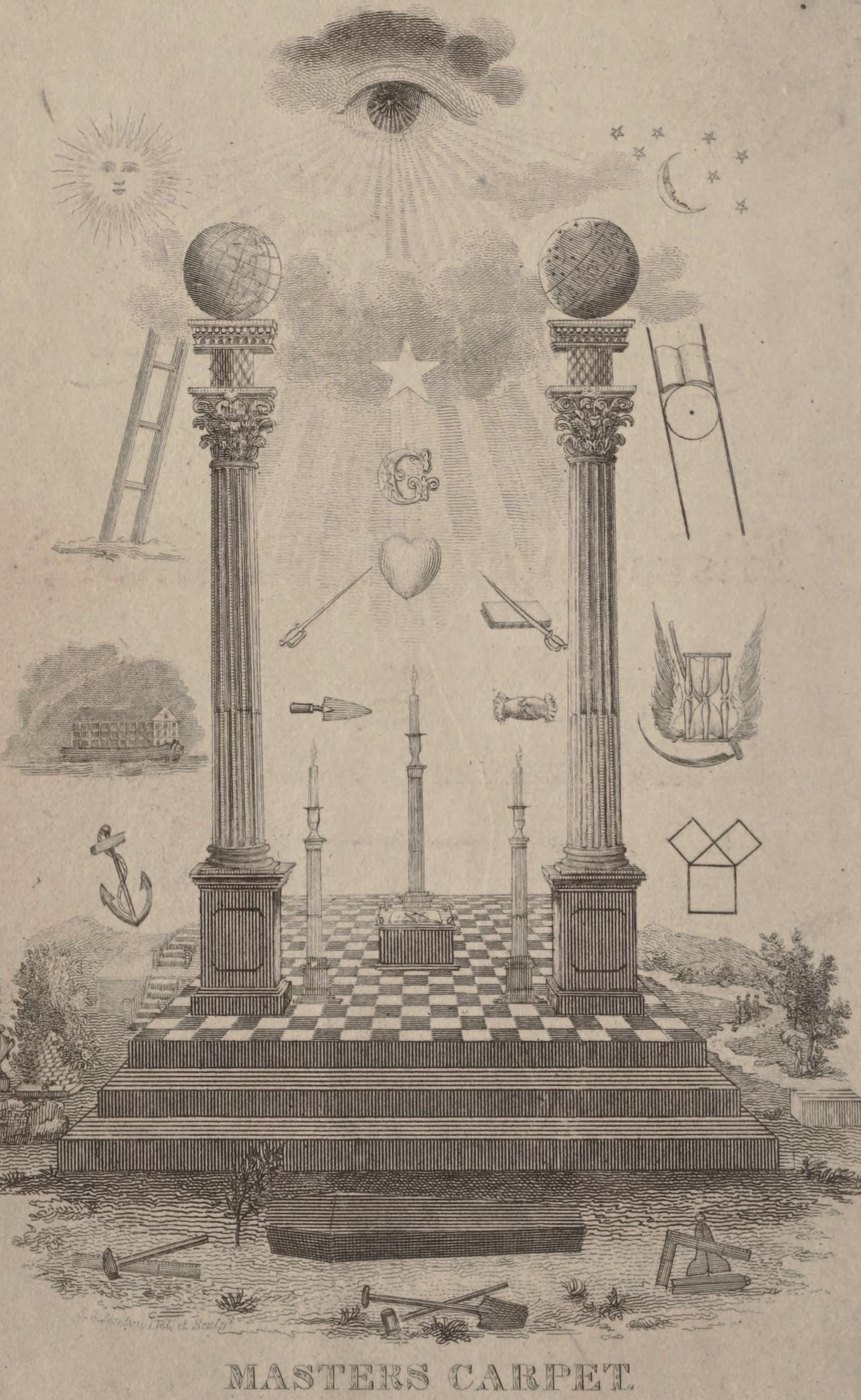
The Mosaic pavement is a representation of the ground floor of King Solomon's temple
Jeremy L. Cross, The True Masonic Chart, 1826 printing, on the ornaments of a lodge, page 16
The Mosaic pavement is emblematical of human life, chequered with good and evil; the beautiful border which surrounds it, those manifold blessings and comforts which surround us
Cross, 1826, the same page, the moral that follows
A building, then a life. Black squares and white squares because a life has both in it, and a border round the outside because something is holding the whole thing. Cross leaves nothing over to speculate about.
Then the ring of robed figures standing round a central one, which is the staging everybody remembers and which turns out not to be a ring of people at all.
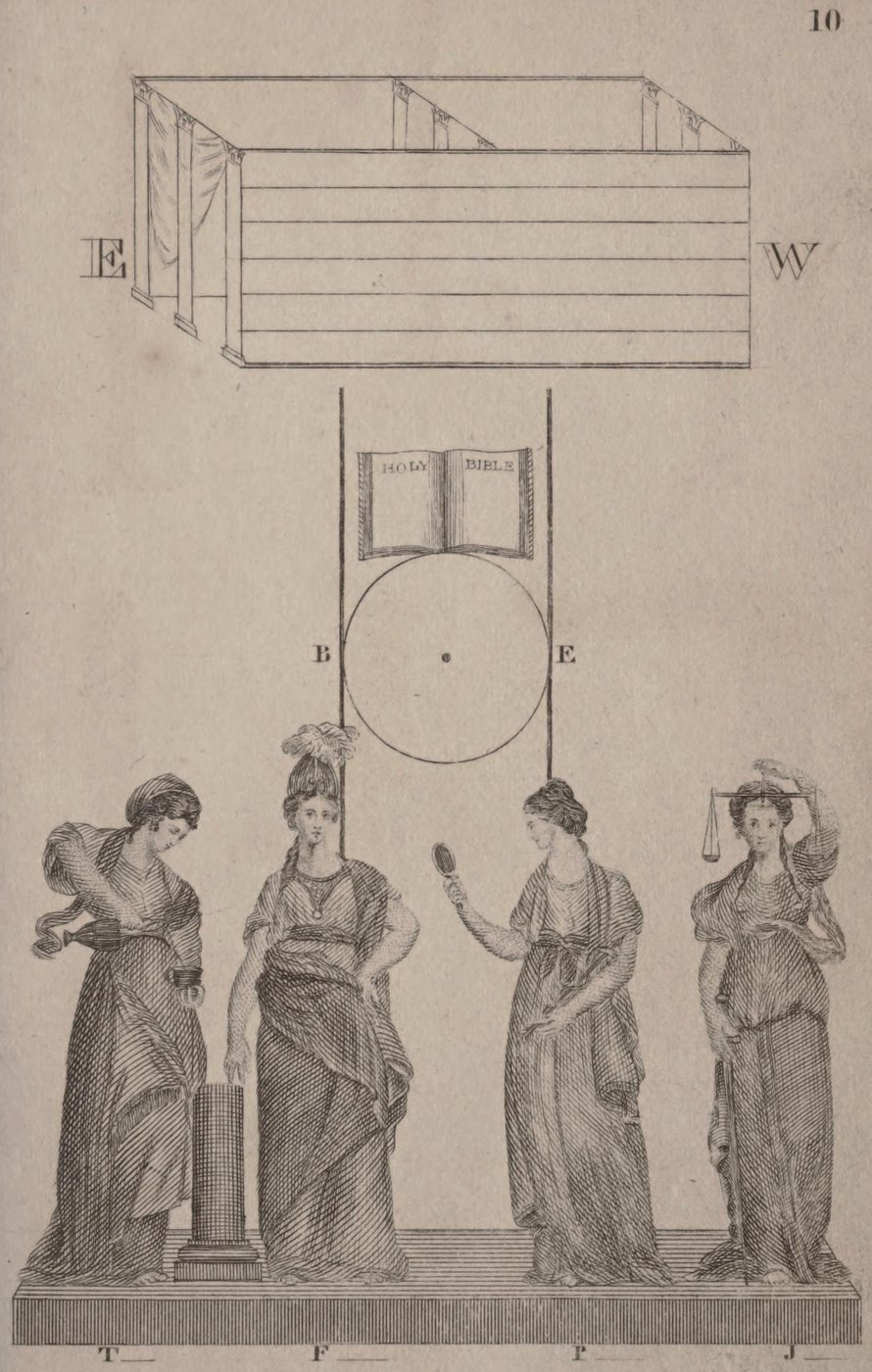
There is represented, in every regular and well-governed Lodge, a certain point within a circle, embordered by two perpendicular parallel lines, representing St. John the Baptist and St. John the Evangelist
Cross, 1826, the Entered Apprentice, page 17
A point, a circle, two upright lines and a book on top, every part of it named. The circle is a boundary a man is told to stay inside, and the two lines are two saints holding it there. That is what a circle means when somebody bothers to say.
The censer next, because smoke and a swinging vessel is the fastest way to make a scene feel like a rite, and because Cross's gloss for it is the one that most embarrasses the modern reading.
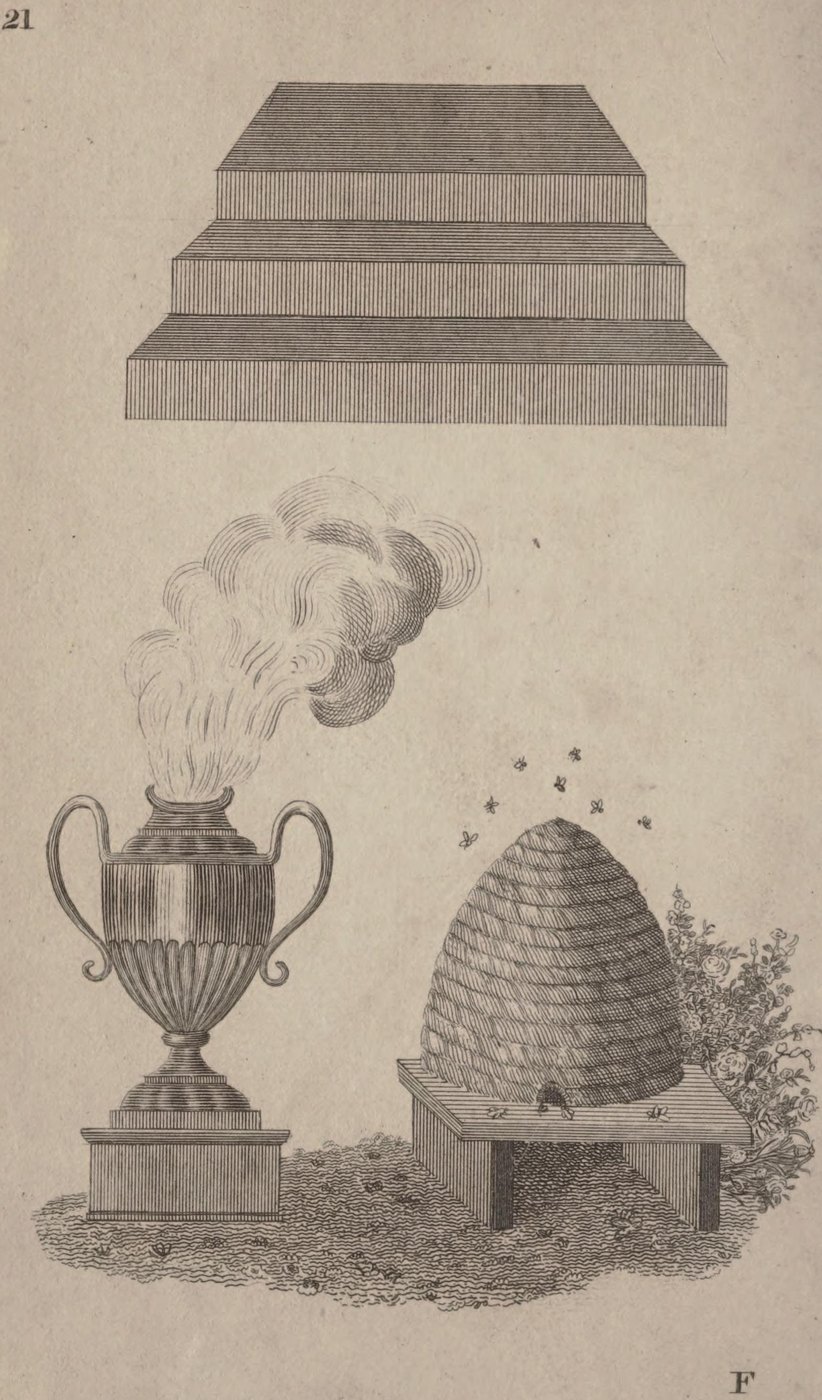
The Pot of Incense is an emblem of a pure heart, which is always an acceptable sacrifice to the Deity; and, as this glows with fervent heat, so should our hearts continually glow with gratitude
Cross, 1826, page 38
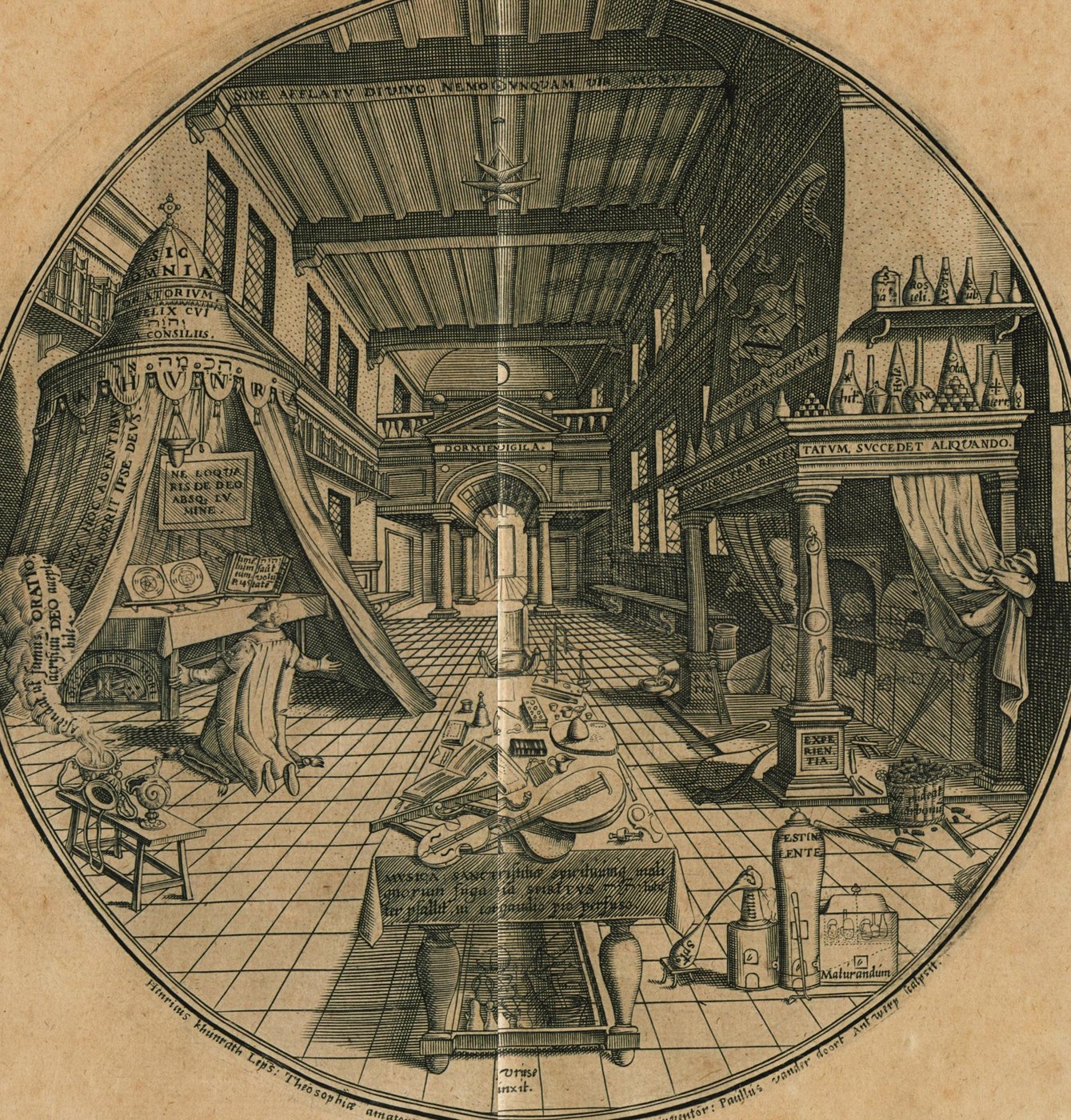
A heart, not a summoning. Heinrich Khunrath engraves the same object in his oratory in 1609 and means the same thing by it, smoke standing for a prayer going up. In this material the censer is almost never sinister. It is almost always gratitude.
And the eye, which is not in the ceremony at all. It is in the title, and in nearly every account of the film written since, and Cross sells the printed source for it over a counter for a sentence about conscience.
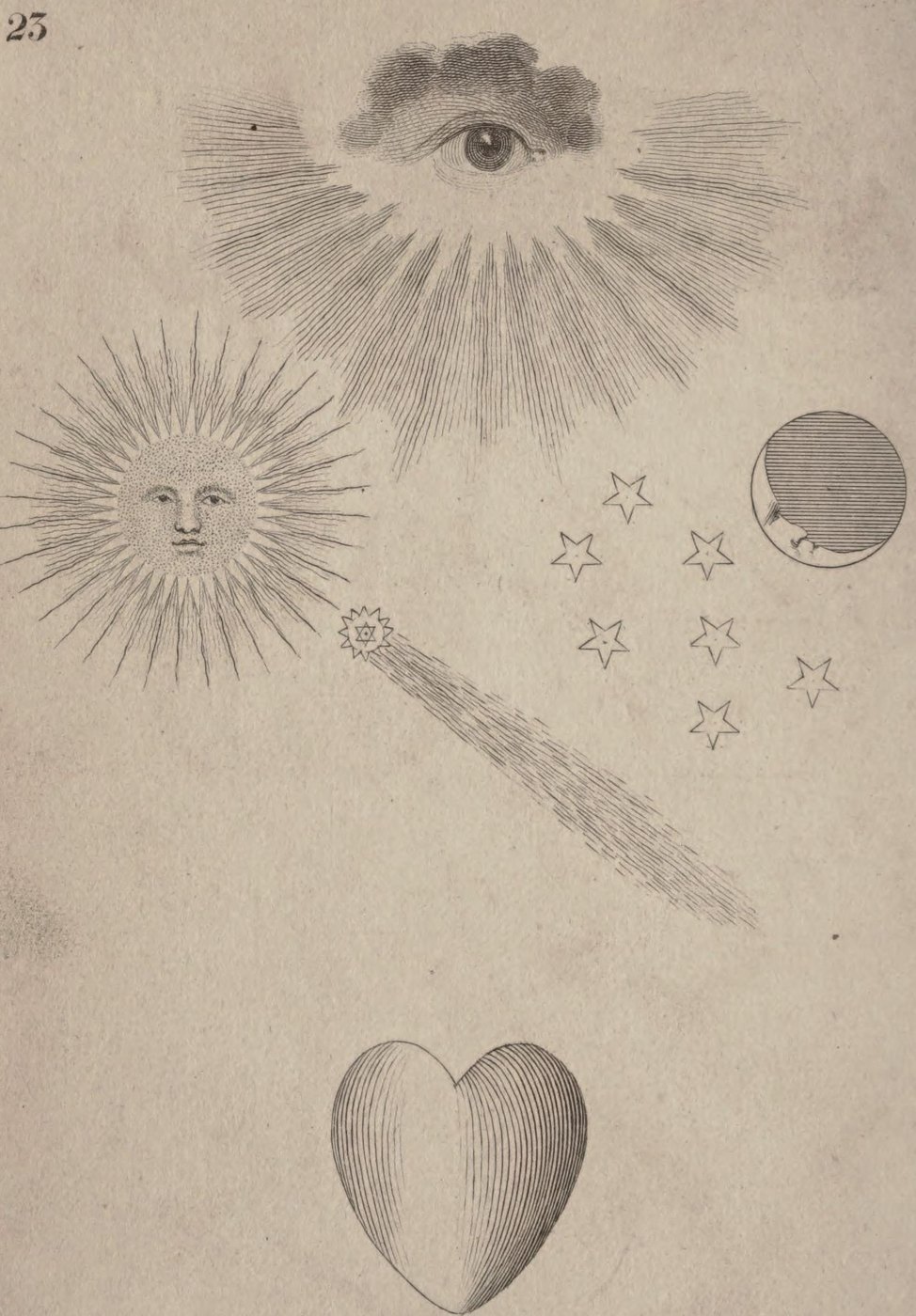
although our thoughts, words and actions, may be hidden from the eyes of men, yet that All-seeing Eye, whom the Sun, Moon and Stars obey, beholds them
Cross, 1826, page 39, on the sword pointing at a naked heart
Hidden from the eyes of men and not from this. Both stranger and duller than the version in circulation, and it cost about a dollar in 1826.
The word Nick Nightingale gives away
The one thing at Somerton that is not in Cross is the password, and secrecy as the price of getting through a door is genuinely old. Khunrath does not hint at it. He letters it onto the gate.
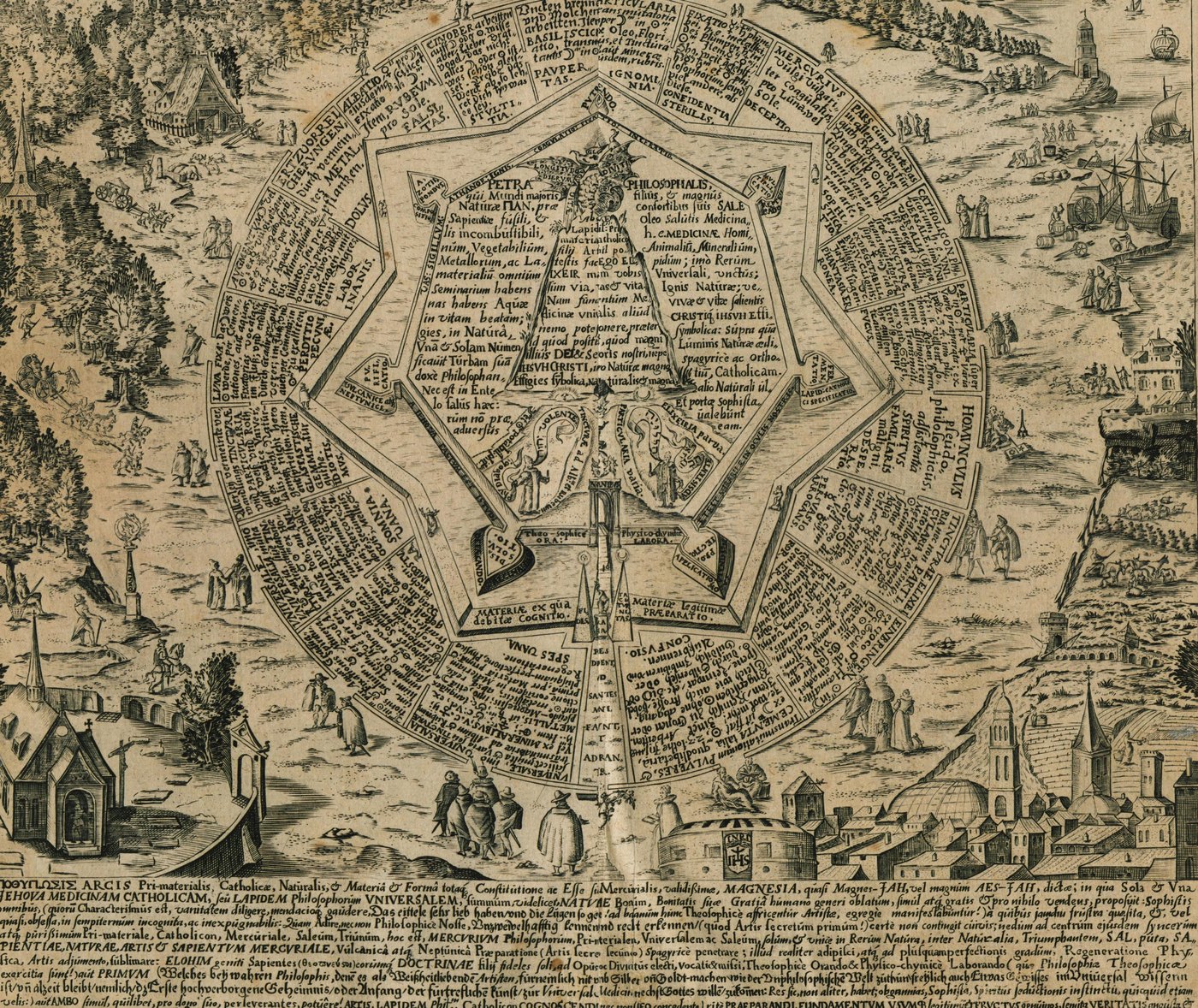
Fides. Taciturnitas.
Heinrich Khunrath, 1609, lettered on the two pyramids either side of the gate to the citadel
Faith and silence, one word on each pyramid, and the only road in runs between them. Nightingale's word for the door is Fidelio, faithful, which is a nice piece of writing in a film about a marriage, and nobody is going to claim that Kubrick had Khunrath open on the desk. It does not need to. Khunrath printed his reason underneath his gate, which is more than the film does.
Porta Amphitheatri Sapientiae Aeternae, solius verae, angusta quidem, sed tamen satis augusta, Jehovae consecrata.
Khunrath, 1602. The gate of the amphitheatre of eternal wisdom, the only true one, narrow indeed, but august enough, consecrated to Jehovah.
Narrow, and consecrated. The gate is meant to be hard to get through, and what the silence guards is a method rather than a guest list.
The star Ziegler hung in his hall
Back at the beginning of the film, Victor Ziegler's party opens under a large electric star, and that star is where most of the online decoding starts. The name that gets attached to it is Ishtar.
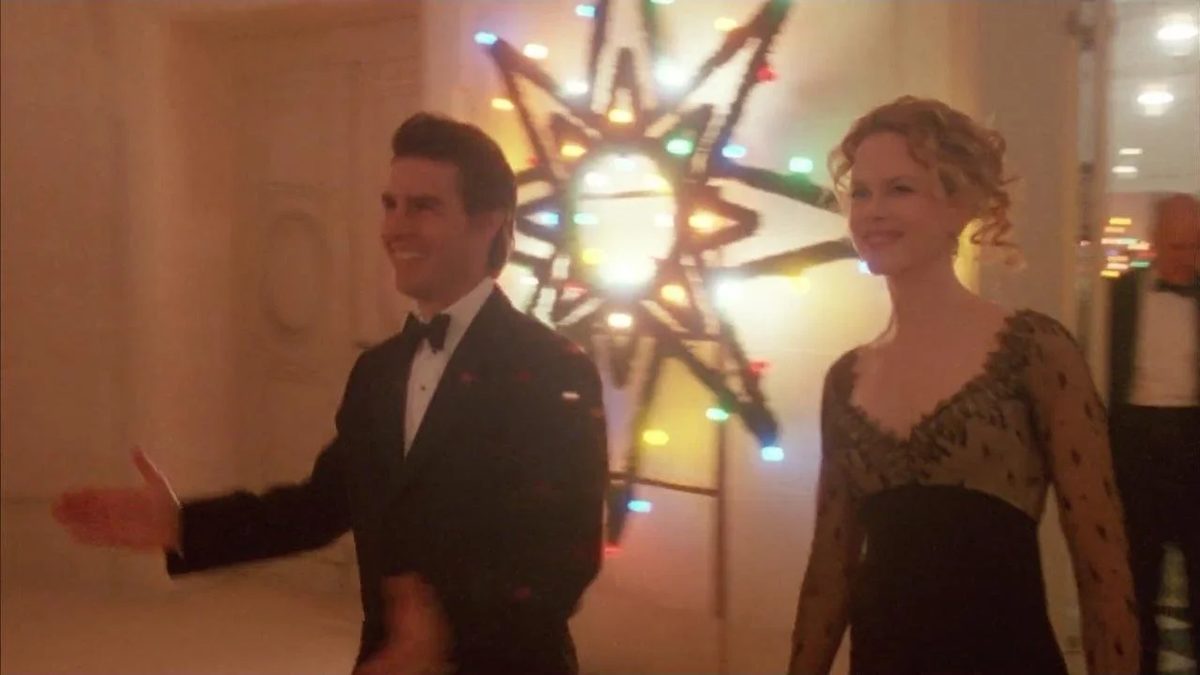
The claim has a solid half and an invented half. The solid half is Mesopotamian: an eight pointed star is the sign of Inanna and Ishtar and stands for the planet Venus, which is ordinary art history. The invented half is the step from there to a light fitting in a 1999 film, and that step rests on nothing anybody wrote down.
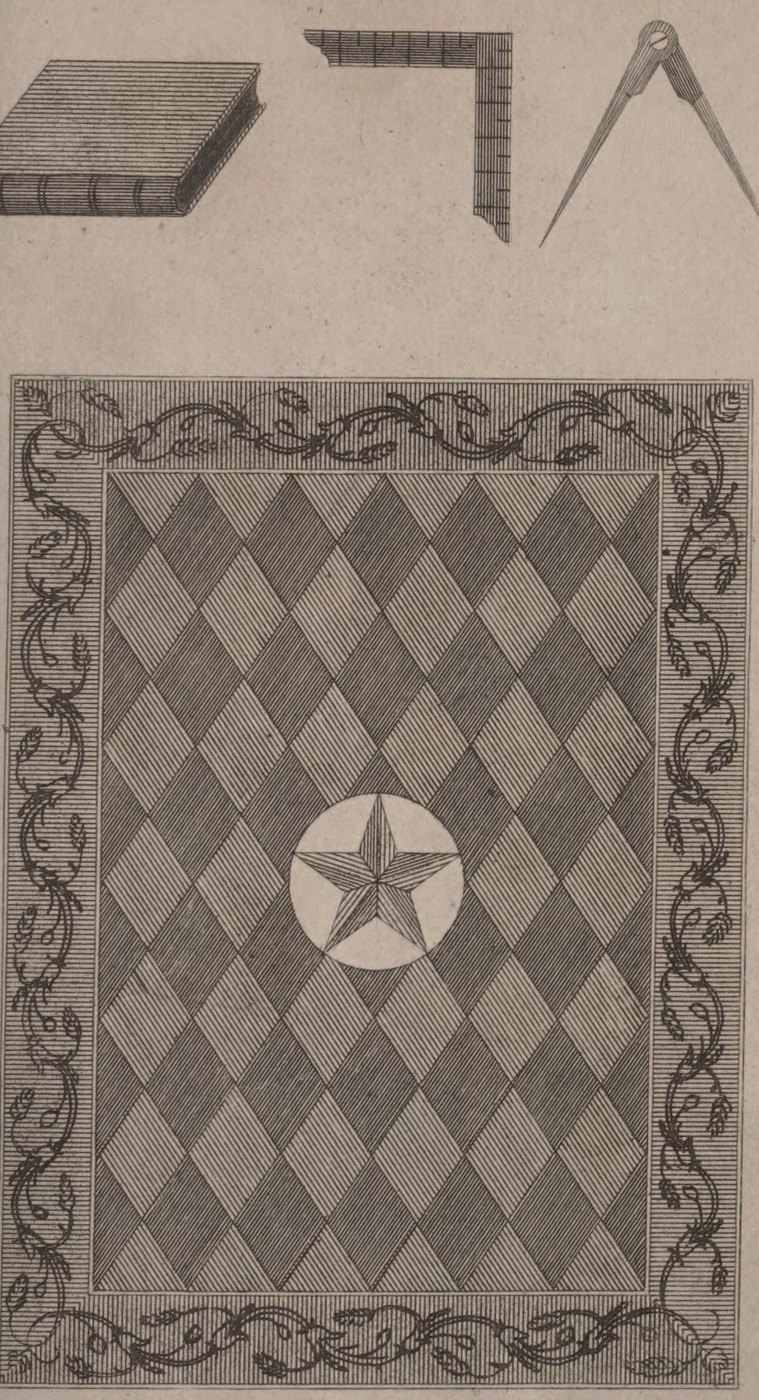
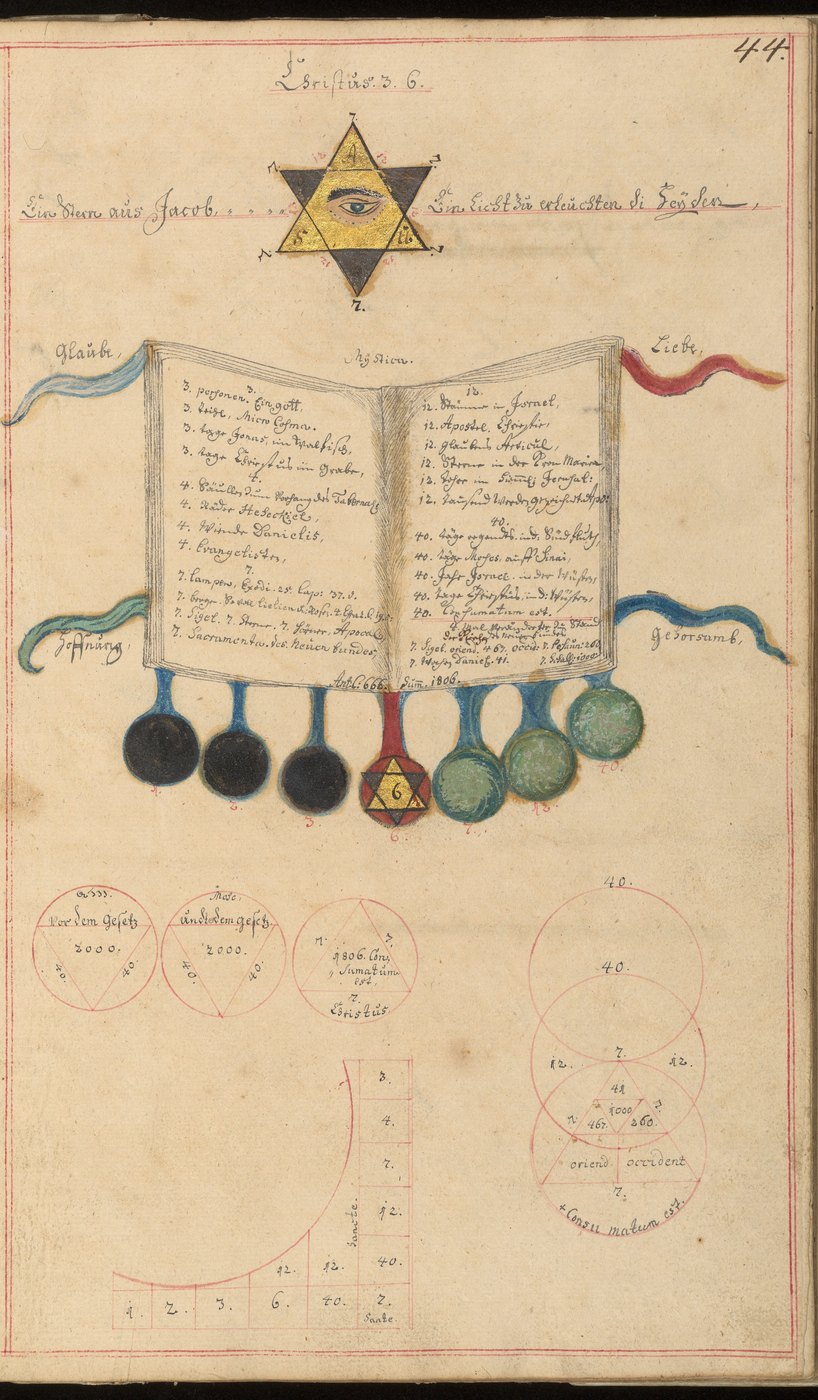
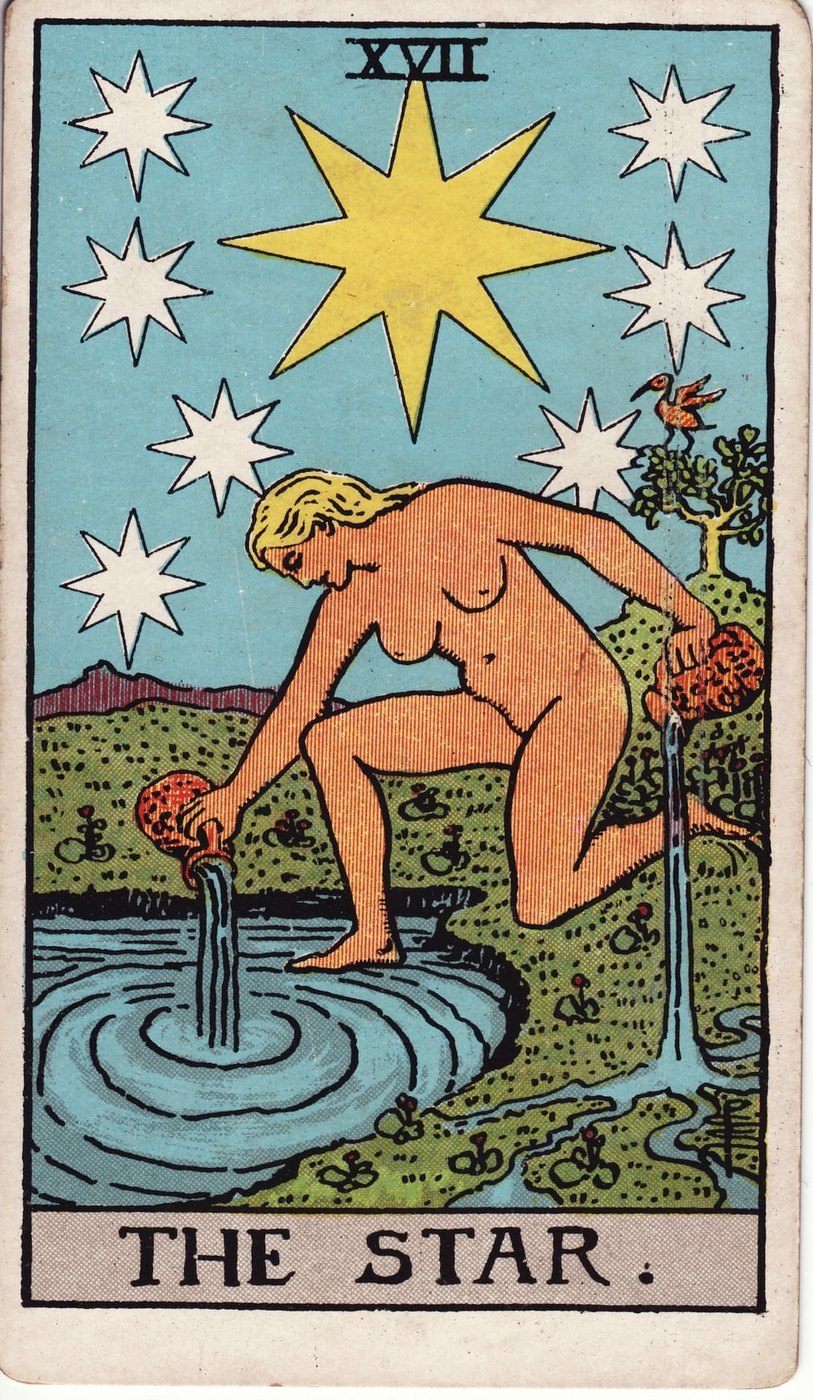
Three stars sit in these records, of five points, six and eight, and every one was explained by the man who put it on the page. Cross's five pointed one is the star of the Nativity. The German manuscript sets an eye in a six pointed star and letters Christus 3. 6. across the top, three for the Trinity and six for the points two triangles make. Arthur Edward Waite describes the eight rayed star Pamela Colman Smith drew for him, and then says the thing worth carrying into any argument about counting points.
The star is l'étoile flamboyante, which appears in Masonic symbolism, but has been confused therein.
Arthur Edward Waite, The Pictorial Key to the Tarot, 1911
Written in 1911, about people who had been using that star for two centuries. Counting the points of a star and naming a god is the oldest mistake in this material, and the men inside the tradition were already complaining about it a hundred years before anybody hung one in a film.
Search this archive for a mask
Now the thing that sent me back through the whole collection. Search these records for a mask and nothing comes back. Not one work in a hundred and seventy one, across five centuries of alchemical, Masonic, Kabbalistic and tarot imagery, uses a mask as a symbol. The only hits are the phrase unsharp mask, in the archive's own notes about correcting a photograph.
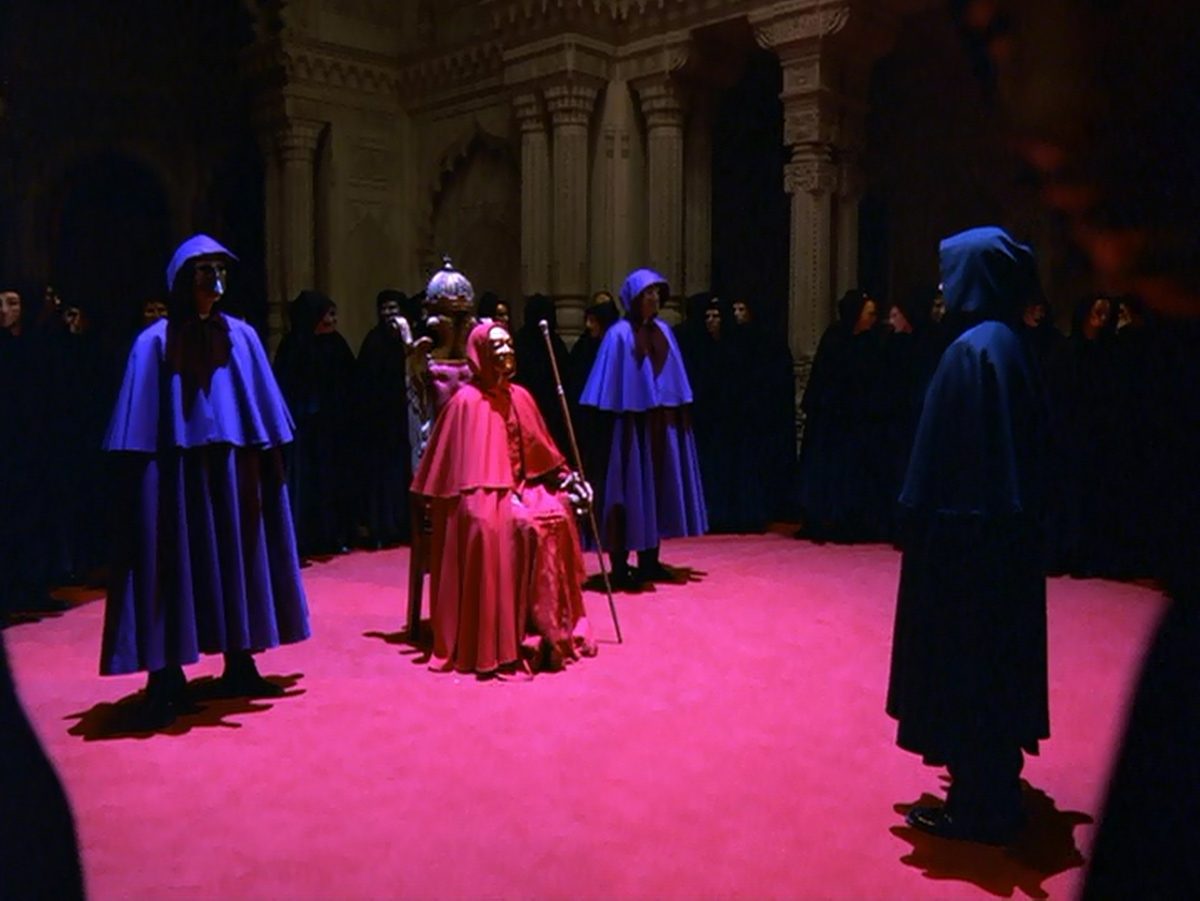
Sit with that, because the mask is the one thing anybody remembers about this film. Every other element in the room has an ancestor with a lecture attached to it, sold in a shop, signed by a man who wanted you to understand him. The element that carries the whole scene has none.
It does have a maker. The Venetian workshop Ca' Macana states on its own site that its masks were chosen for the film, and what a mask workshop has to say about a mask is about craft: a mould, papier mache, a finish. Nobody in that chain claims a meaning, and declining to invent one is a position rather than a hole in the research.
Because these books are about being seen
Lay the six of them out together and the absence stops being mysterious. Cross's circle is watched by two saints standing at its edge. Cross's eye sees the thoughts that men cannot. Khunrath's gate is narrow and consecrated to a God who is named on it. Every one of these traditions is built on being seen and being known, by a saint, by an eye the sun and moon obey, by a god at a door. Their secrecy governs what a man may say. It does not govern who he is.
A society that hides faces is a different idea entirely, and it is a modern one. It comes out of fiction, and the film is part of how it got there.
Which is a fair thing for a film to do, and it is also exactly why Eyes Wide Shut is not a record in this archive. A work gets in when its maker wrote down what it was for. Kubrick assembled real furniture, all of it documented, none of it hard to come by, and then added the one element nobody had ever explained. Bill Harford spends the night trying to find out what he walked into, and the film keeps that from him too.