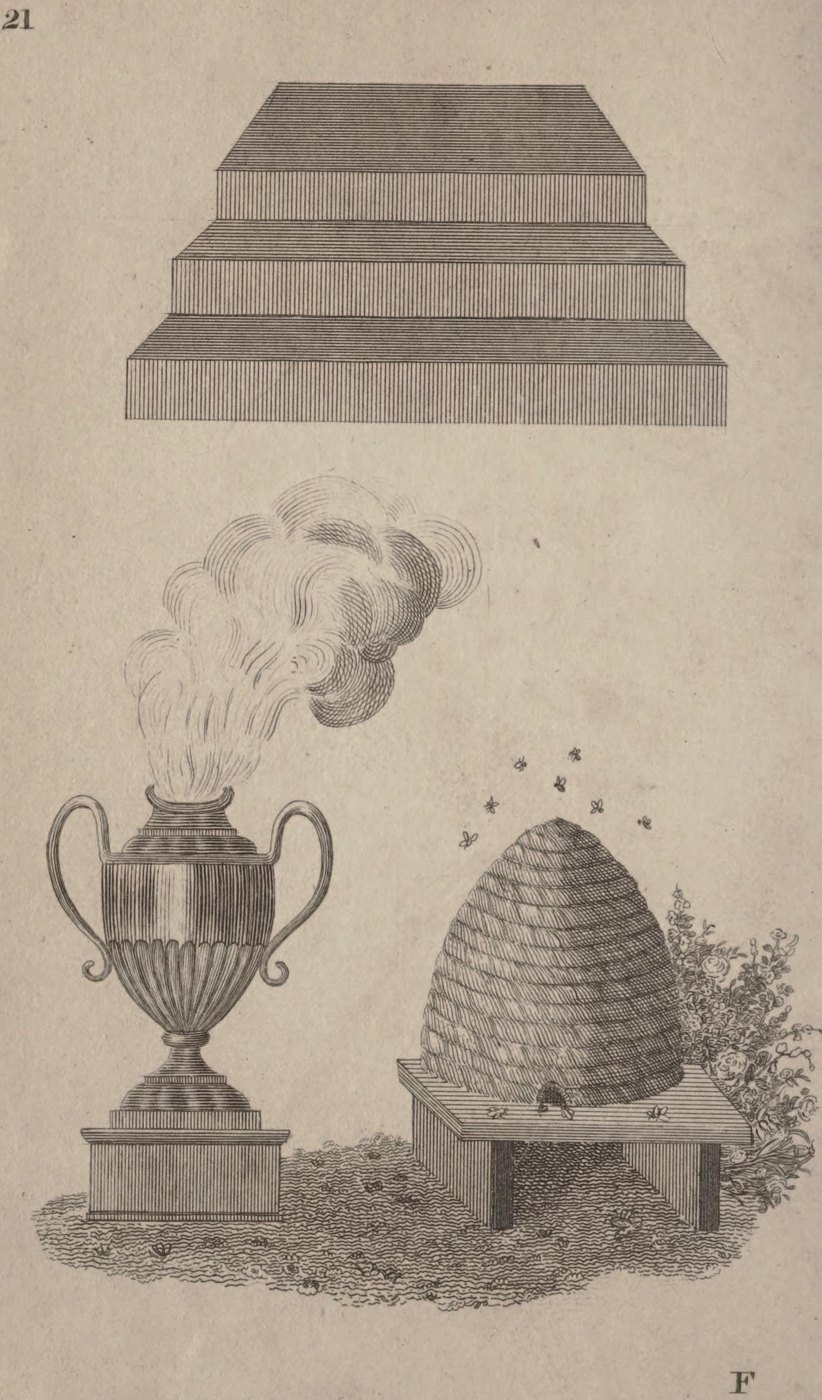
The Pot of Incense and the Beehive
The Vessel as the central motif, with Fire in a secondary part. From Masonic Chart.
What is happening
Jeremy L. Cross, 1826 “The Bee Hive is an emblem of industry, and recommends the practice of that virtue to all created beings, from the highest seraph in heaven, to the lowest reptile of the dust.”
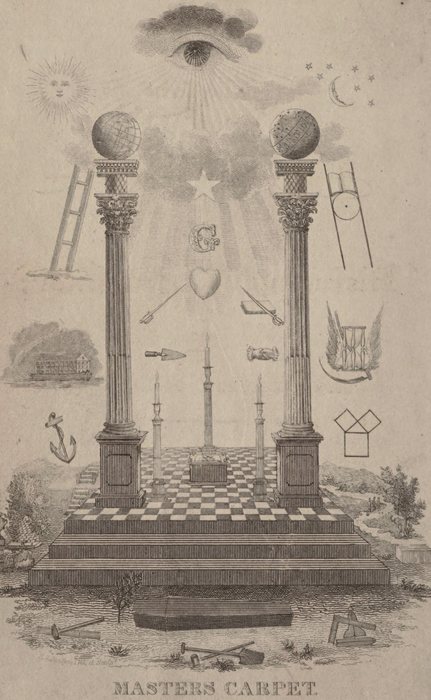
Jeremy L. Cross, 1826 “The Three Steps, usually delineated upon the master's carpet, are emblematical of the three principal stages of human life, viz. youth, manhood, and age.”
Key · 2 motifs
Tap a motif on the picture, or a line below. Its note opens under the line, with the reading its author gave it.
- Primary motif
- Secondary motifs · 1
The picture
Three steps above, a lidded urn smoking on its base, and a straw beehive with its bees on a stand. By eye
The reading
The picture read whole, in the archive's words, from the sources quoted on the marks. Read on, and the picture follows: the motif under discussion keeps its colour.
Plate 21 gathers three of the emblems of the third section of the Master Mason lecture, and the monitor prints a sentence for each. The three steps at the top ‘are emblematical of the three principal stages of human life, viz. youth, manhood, and age’. Below them the pot of incense smokes on its base, and the beehive stands on its bench with its bees in the air.
‘The Pot of Incense is an emblem of a pure heart, which is always an acceptable sacrifice to the Deity’. The urn is drawn as a piece of good silver, two handles and a fluted body, and it is the heart that matters, not the pot.
The lecture reads the burning, not the vessel: ‘as this glows with fervent heat, so should our hearts continually glow with gratitude to the great beneficent Author of our existence, for the manifold blessings and comforts we enjoy.’ The engraver has given the glow a cloud of smoke that rises higher than the steps.
‘The Bee Hive is an emblem of industry, and recommends the practice of that virtue to all created beings, from the highest seraph in heaven, to the lowest reptile of the dust.’ Steps, pot, hive: a life in three stages, a heart burning with gratitude, and work. The plate reads as a sentence because the lecture is one.
Decoded: every motif is marked, and each mark carries the reading its author gave it, quoted from the text, or says that it is observed on the picture and not read. The reading above is the archive's own, made from those sources and no others.
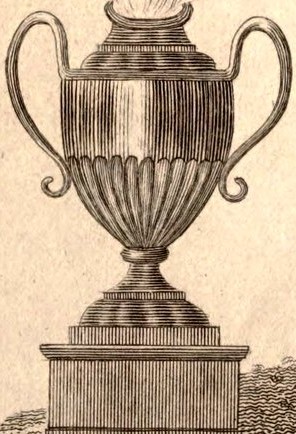
Never the subject. What is inside it is.
In plain words A silver urn with two handles, smoking. The lecture says it is a pure heart, the one sacrifice always acceptable to God. The pot is drawn handsomely and means nothing on its own; the heart is the point.
Jeremy L. Cross, 1826 “The Pot of Incense is an emblem of a pure heart, which is always an acceptable sacrifice to the Deity; and, as this glows with fervent heat, so should our hearts continually glow with gratitude to the great beneficent Author of our existence, for the manifold blessings and comforts we enjoy.”
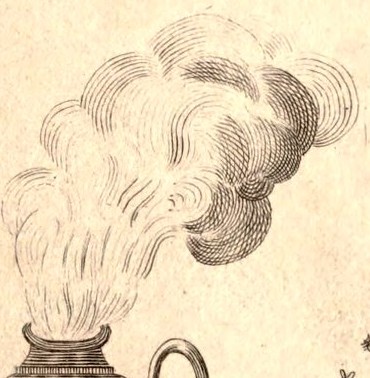
A count, a catastrophe, or the visible part of something that has no body. Note whether the flames are arranged in a number, breaking something, or standing where a figure would be.
In plain words The incense burns, and the smoke goes up past the steps. Cross reads the burning, not the vessel: as the incense glows with heat, so the heart should glow with gratitude to the Author of our existence for our blessings and comforts.
Jeremy L. Cross, 1826 “The Pot of Incense is an emblem of a pure heart, which is always an acceptable sacrifice to the Deity; and, as this glows with fervent heat, so should our hearts continually glow with gratitude to the great beneficent Author of our existence, for the manifold blessings and comforts we enjoy.”
Also carrying the Vessel
32 works carry it. The 6 where it is the central motif are here. The symbol.
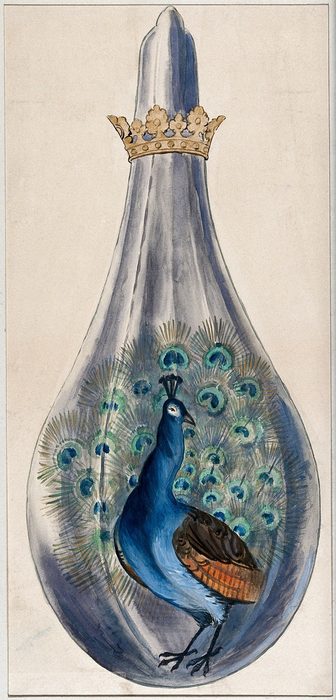
Where the detail is the subject
This is in the picture without being what it is about. Below, one work that is about it.
In the same series
Record
One symbol a week, decoded.
This picture is free at full size from its source, linked above. What an address gets is the Sunday letter: one picture, one symbol marked on it, what it meant and who said so, and the master files of the decoded plates as they are verified. Leave any time.
Free, one letter a week, unsubscribe in one click. How the address is used.
Scroll or pinch to zoom · drag to move · double-tap for 1:1 · 822 by 1400 pixel web copy; the source file is linked under Record