The Vessel
the flask, the alembic, the glass, the egg, the cup
Never the subject. What is inside it is.
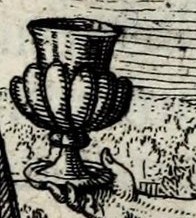
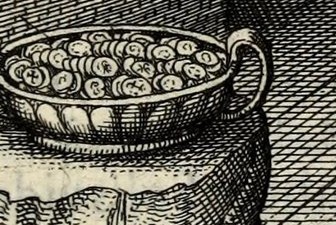
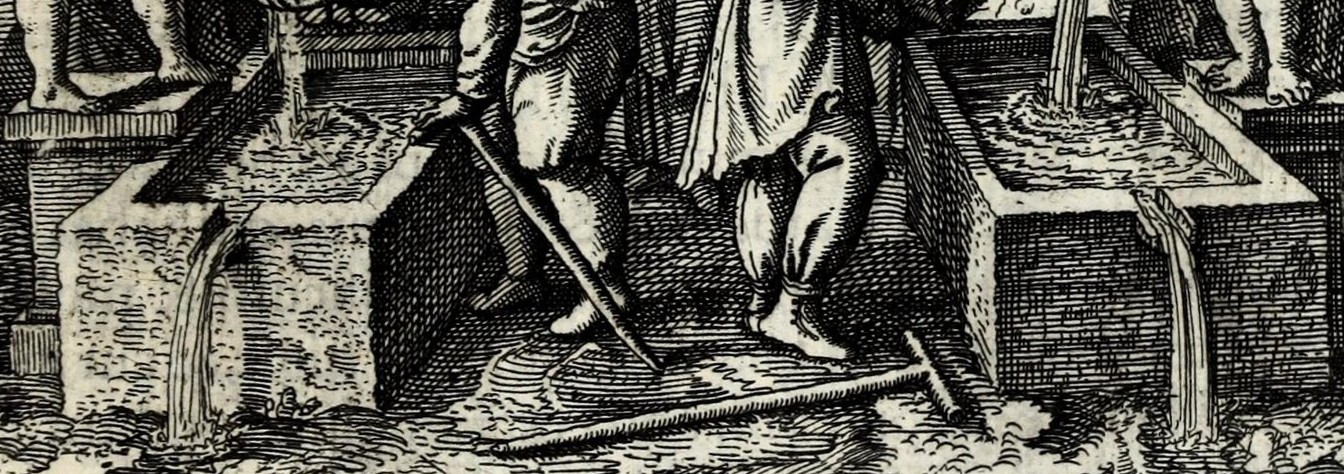
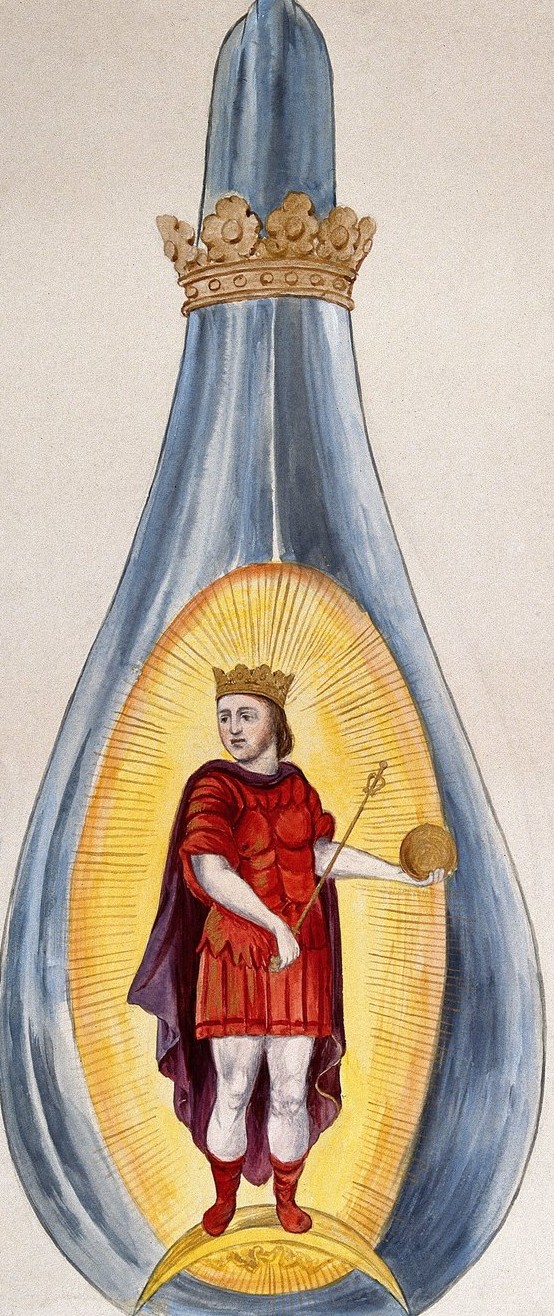
Thirty-three works carry a vessel of some kind, and what unites them is that something is happening inside it.
Maier's emblems are the clearest. The third shows a woman at a tub over a fire, and the motto sends the reader to the woman washing cloth and tells him to do the same, and the epigram gives the reason: “for the wave washes the dregs from the black body”. The ninth shuts a tree and an old man “in a house of glass full of dew” and leaves them there “many days”. The fifteenth is a potter at his wheel, and its instruction is proportion: “let the water not overcome the earth, nor be overcome by it.” The twenty-second names the vessel's work in two words that became a term of art, the work of women, and then gives the instruction: “Then COOK, as a woman does who sets her pots on the fire,” with the warning behind it, “but see that the TROUT dissolves in its own waters.”
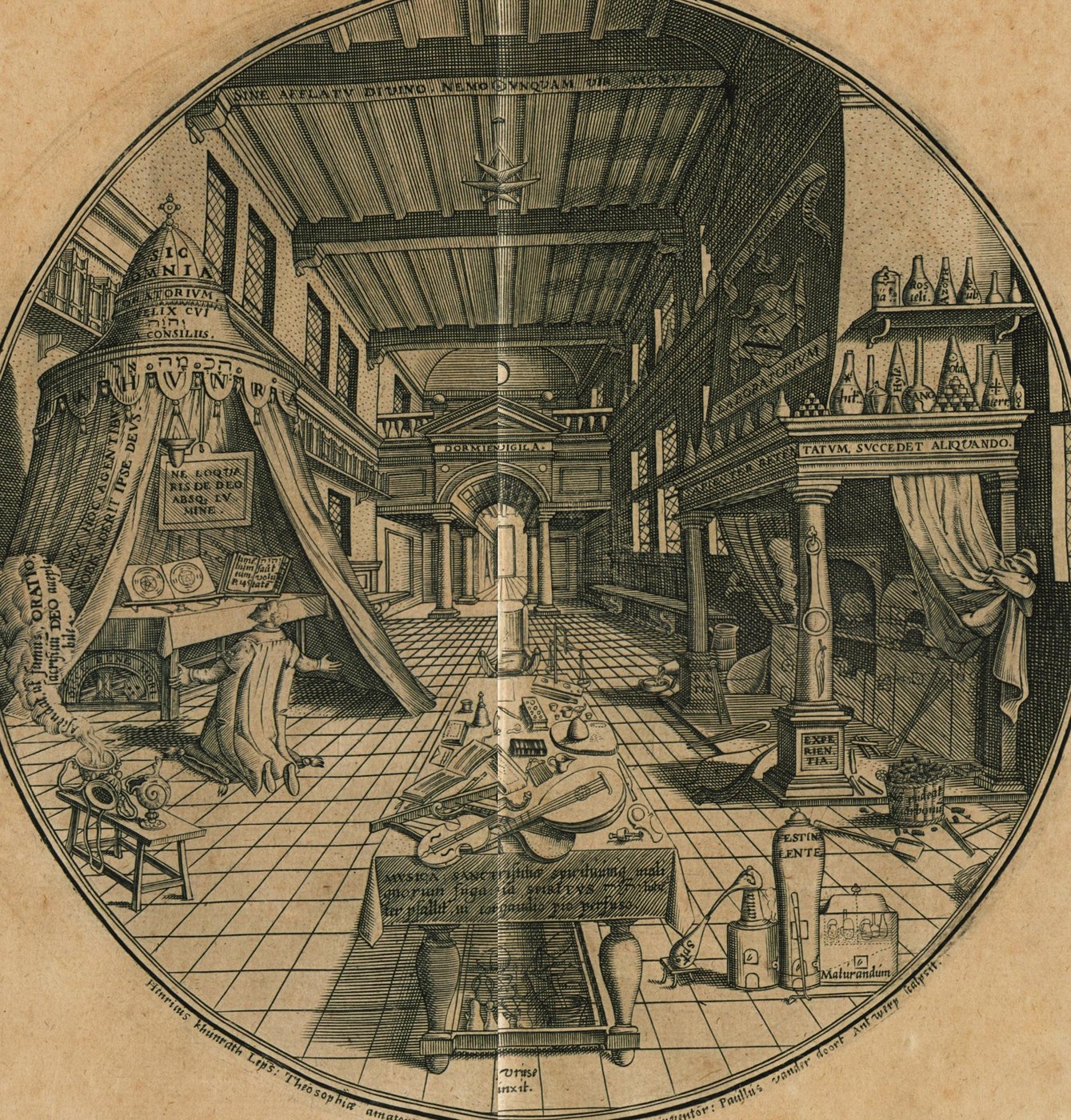
Khunrath's Oratory and Laboratory of 1595 is the vessel as a room. The furnace and its flasks fill the right half of the picture, and the flasks are lettered with what they hold as far as the engraver had room, “Ros coeli. Azoth. Hyle. Sang. Vital. Terr.”, the dew of heaven, Azoth, Hyle, and the shorthand for blood, vital spirit and earth; a tall flask on the furnace says “Festina lente.”, make haste slowly, and the two columns of the laboratory are lettered “Ratio.” and “Experientia.”, reason and experience. Every vessel is given a word, because the materials are to be understood and not only handled. Dee draws the vessel as an egg with the heavens inside it and reads his monad along its axis: “we shall see exactly such an Anatomy of our Monad, showing itself to us thus always in the light and life of Nature.” His eighteenth theorem opens by making celestial astronomy the parent and mistress of the inferior kind, so the sky is drawn inside the glass.
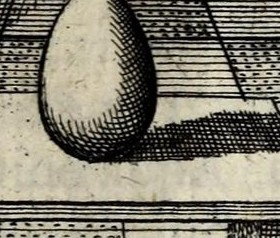
The vessel has one name of its own, and it is not a vessel's name. Maier's eighth emblem sends the reader after it: “Est avis in mundo sublimior omnibus, OVUM / Cujus ut inquiras, cura sit una tibi”, there is a bird in the world higher than all others, and to seek out its EGG should be your one care. The Encyclopédie's table of chemical characters of 1763 files the same thing as a sign with its name printed beside it, “Oeuf Philosophique”, and Dee had drawn one with the heavens inside it two centuries before. Glass, tub, cauldron, cup and pot are borrowed from a kitchen. The egg is the one word in the vocabulary that says the thing inside is alive.
The tarot uses the same object for pouring rather than cooking. Waite describes Temperance “pouring the essences of life from chalice to chalice”, and the Star “pours Water of Life from two great ewers, irrigating sea and land.”
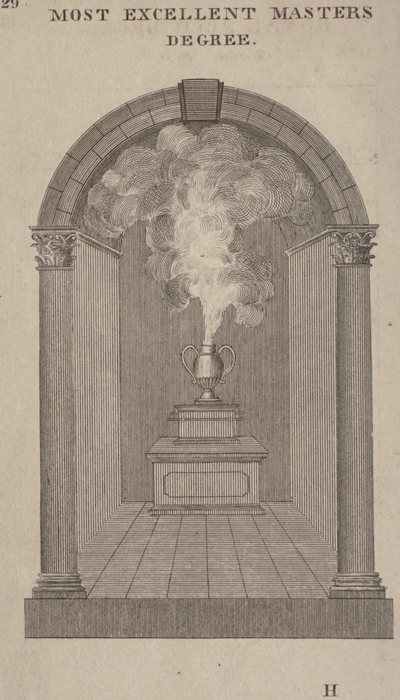
Cross's pot of incense of 1819 is the rule stated by a Freemason: “The Pot of Incense is an emblem of a pure heart, which is always an acceptable sacrifice to the Deity”. The urn is silver and handsome, and the lecture looks straight through it to the heart.
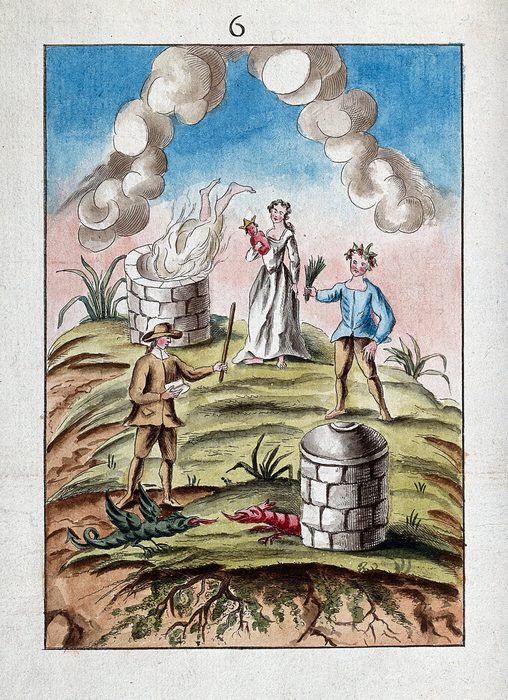
In the Splendor Solis flasks copied by Ibbs a peacock and a three-headed monster sit inside the glass. No text in the archive reads those two sheets, and they are recorded as seen. But they show the rule the rest of the entry states. The vessel is never the subject. What is in it is.
Contested
The English of Maier, Khunrath and Dee is the archive's own translation from the Latin on each record, marked as such there. The peacock and the three-headed monster in the Splendor Solis flasks are recorded as seen. Maier's vessels, the egg, the glass house, the cup and the cauldron, are marked and read on their records from his epigrams.
Sources
- Michael Maier, Atalanta Fugiens: The mottoes and the six-line epigrams, read off the 1618 page on each record. The Latin is Maier's; the English quoted here is the archive's own translation and is marked as such on the records.
- Heinrich Khunrath, Amphitheatrum Sapientiae Aeternae: The words engraved on the Oratory and Laboratory plate, read off the 1609 page.
- John Dee, Monas Hieroglyphica: Theorem XVIII, read off the 1591 page; the English is the archive's.
- Arthur Edward Waite, The Pictorial Key to the Tarot: Waite commissioned the 1909 designs and wrote the key to them, so his account is the closest thing the deck has to an author's statement.
- Jeremy L. Cross, The True Masonic Chart, or Hieroglyphic Monitor, 1826: The printed lectures of Cross's monitor, New Haven 1826, read against the page images of the Library of Congress copy; each emblem's sentence is quoted where the monitor carries it, and the plates whose lectures went unprinted say so.
On the same plate
Where it appears · 33
33 works in the archive carry the Vessel. First the 31 where it has been read, with the Vessel itself picked out.
The Oratory and the Laboratory
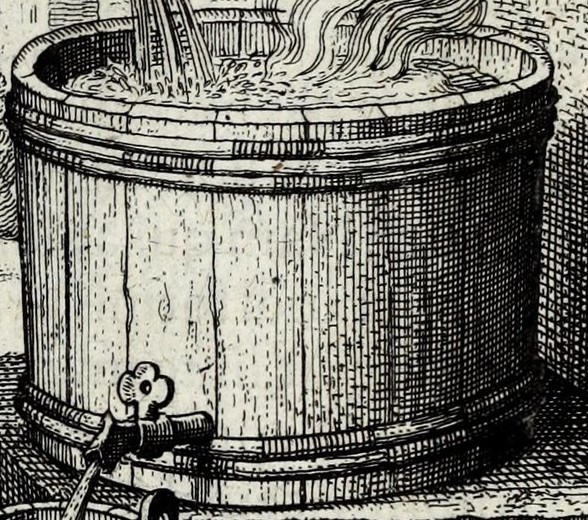
Vade ad mulierem lavantem pannos, tu fac similiter
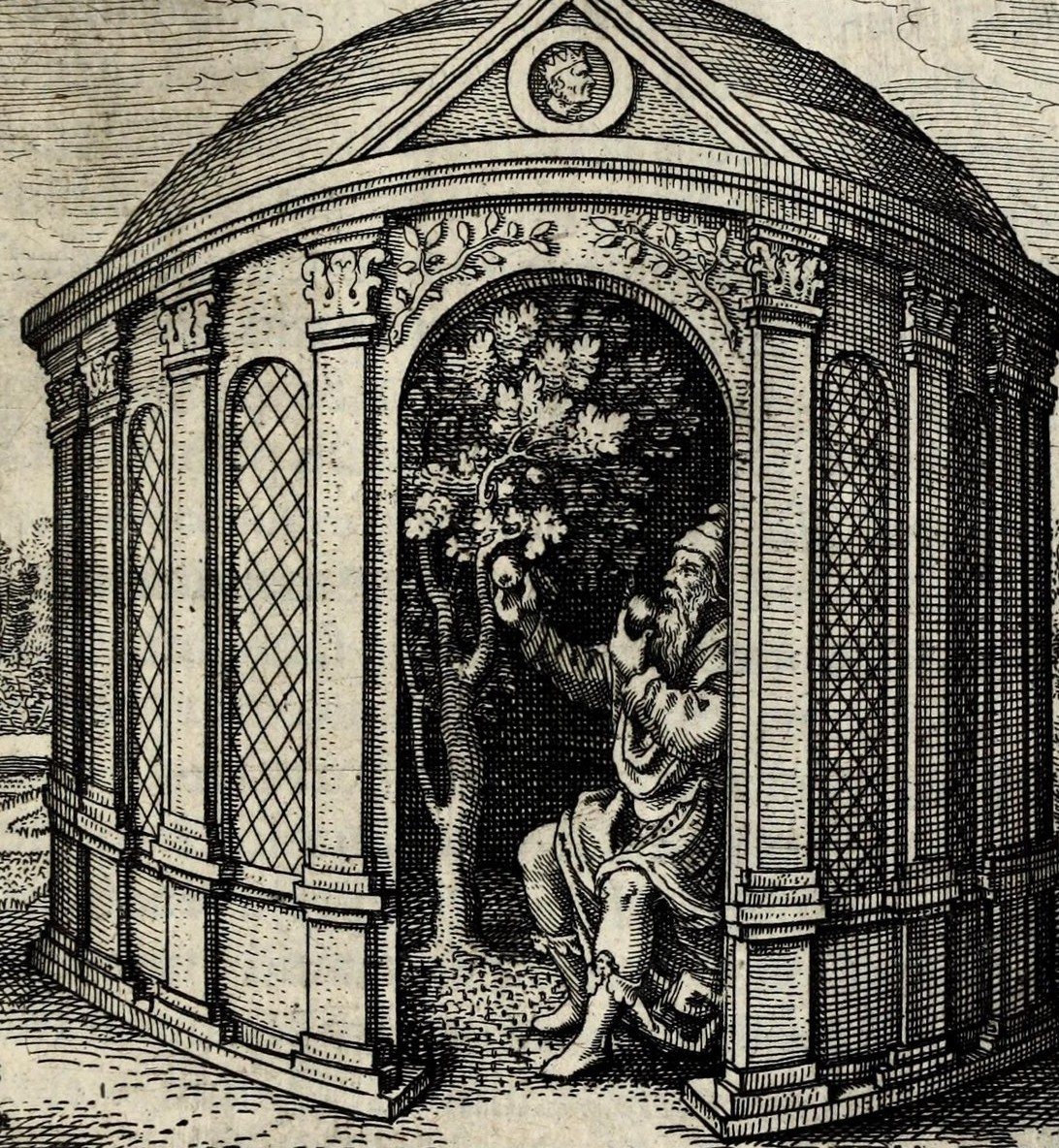
Arborem cum sene conclude in rorida domo, & comedens de fructu ejus fiet juvenis
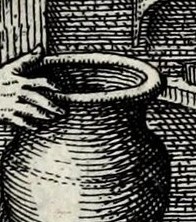
Opus figuli, consistens in sicco & humido, te doceat
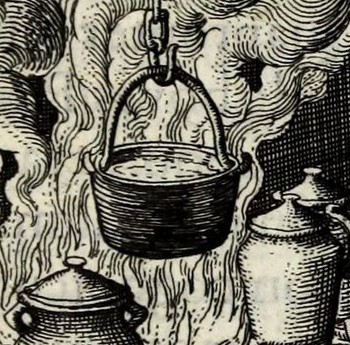
Plumbo habito candido fac opus mulierum, hoc est, COQUE
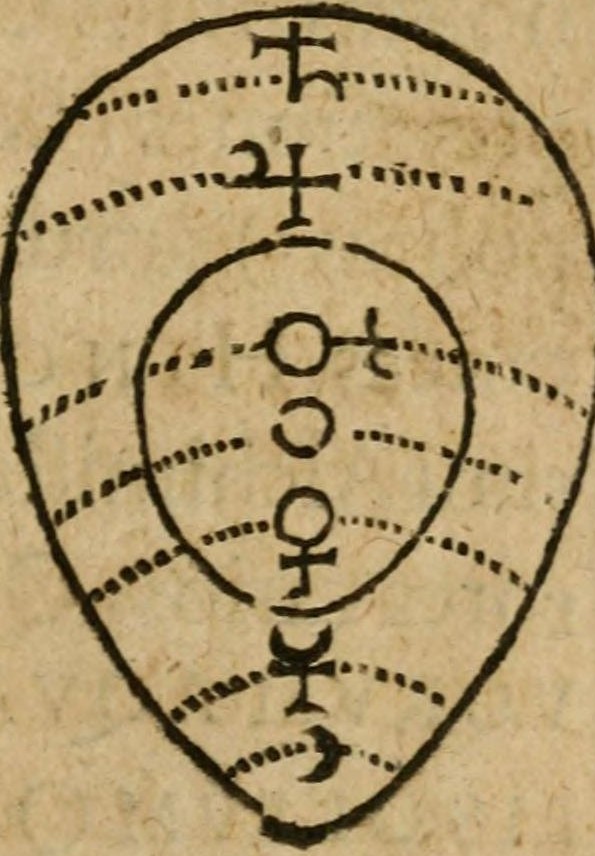
Theorem XVIII: the monad within the egg
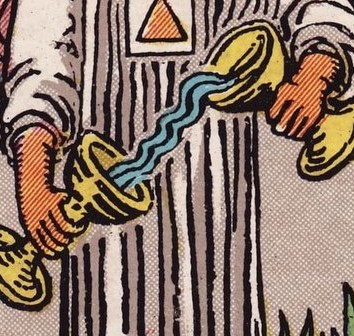
Temperance (XIV)
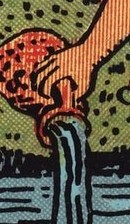
The Star (XVII)
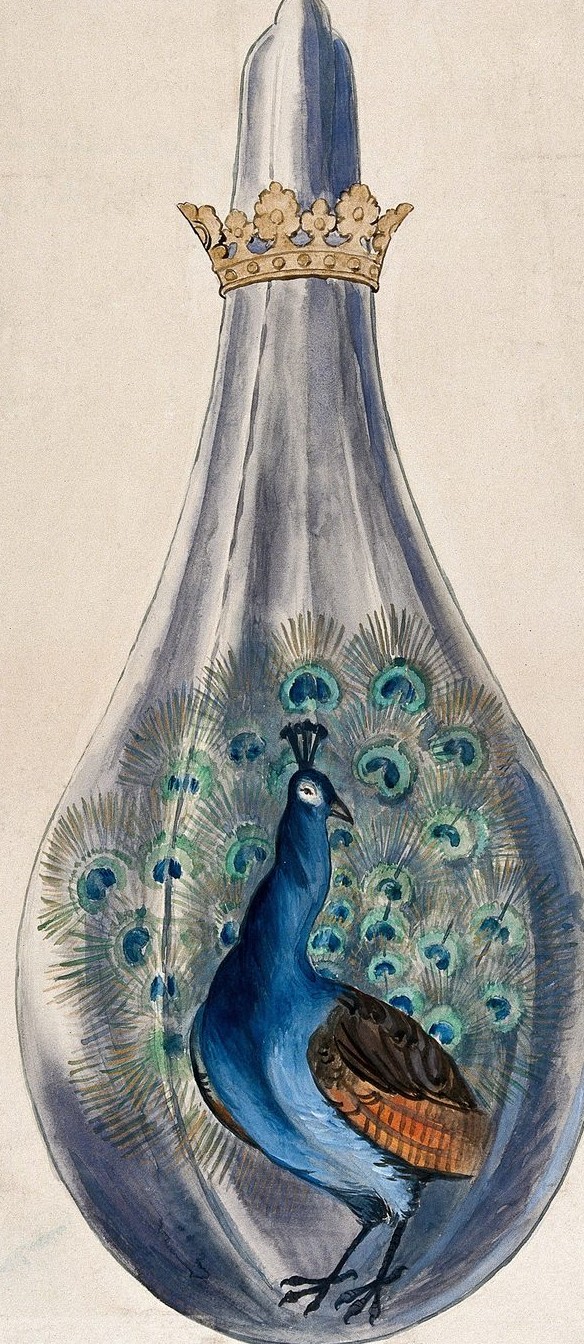
The Peacock in the Flask
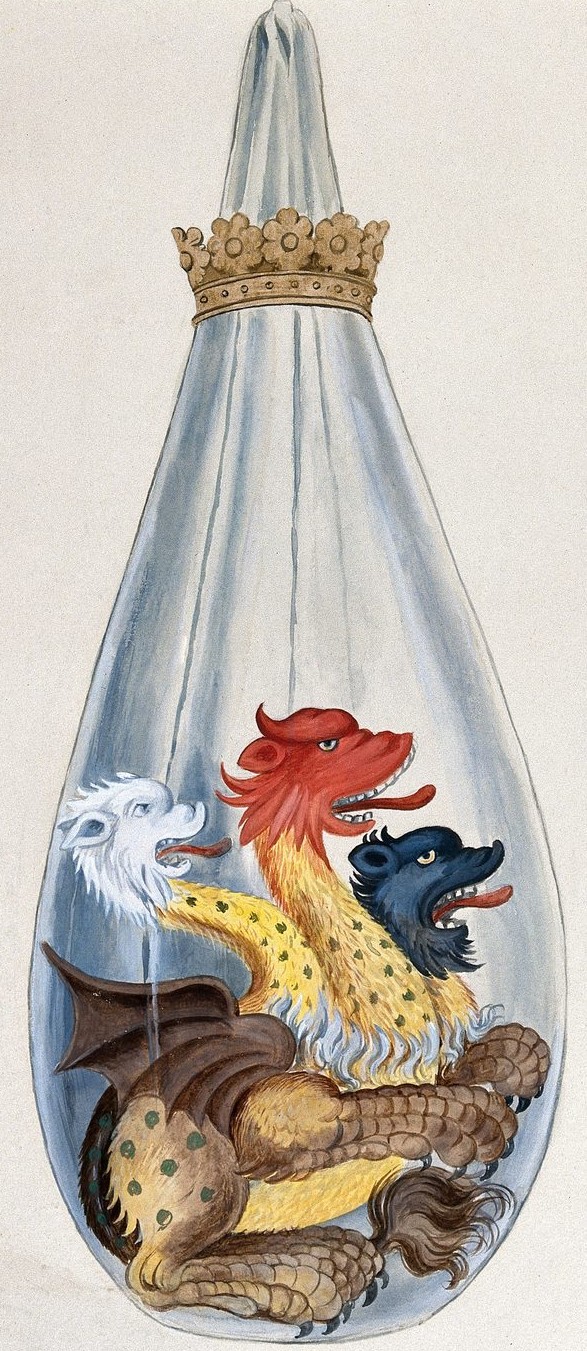
The Three-Headed Monster in the Flask
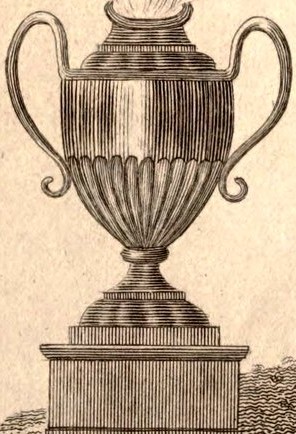
The Pot of Incense and the Beehive
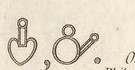
Caracteres de Chymie, plate II
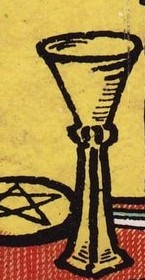
The Magician (I)
Conjunge fratrem cum sorore & propina illis poculum amoris
Accipe ovum & igneo percute gladio
Ignire ignis amat, non aurificare, sed aurum
Ex duabus aquis, fac unam, & erit aqua sanctitatis
Rex ab aquis potatis morbum, à medicis curatus sanitatem obtinet

Master's Carpet
Eagle-headed figure with the bucket and the cone
The Rose Tree on the Hollow Oak, and the Blind Diggers
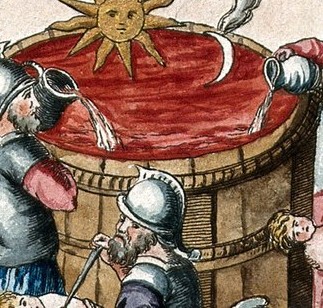
The King with the Falchion, and the Blood of the Infants
The idol Moloch with seven chambers
Tabula Smaragdina Hermetis Trismegisti
The tree of the sun and the tree of the moon
The adept with the flask of the four elements
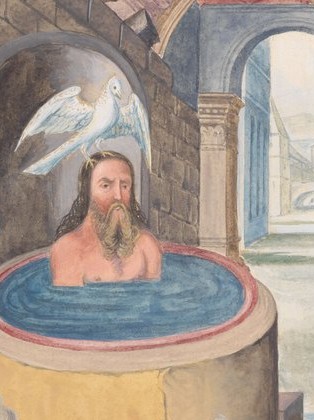
The man in the boiling bath with the dove on his head
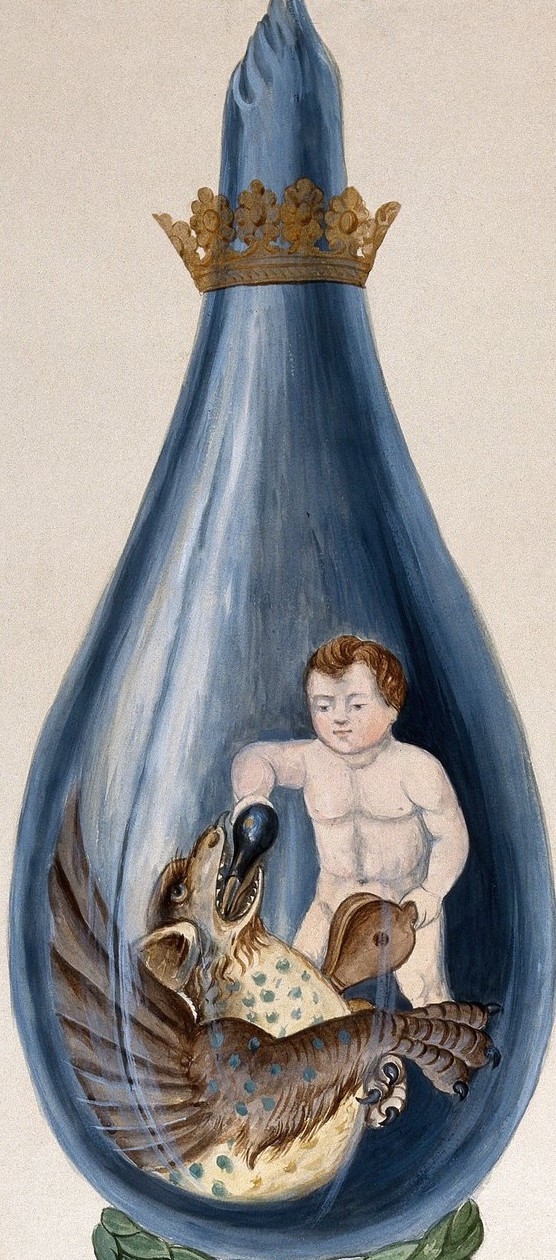
The child pouring the black flask down the dragon
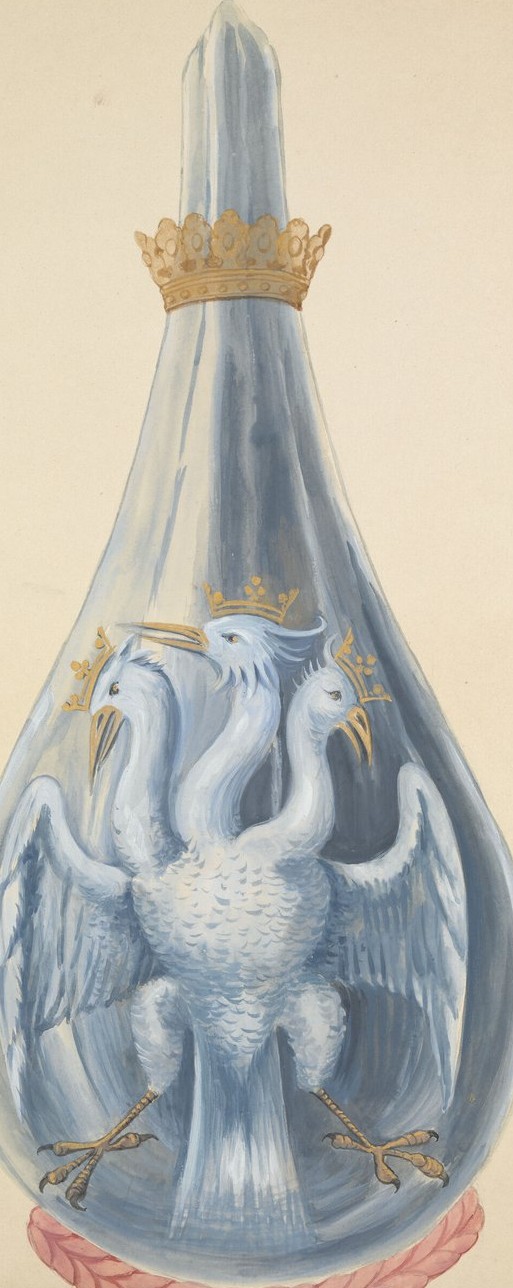
The three-headed bird in the crowned flask
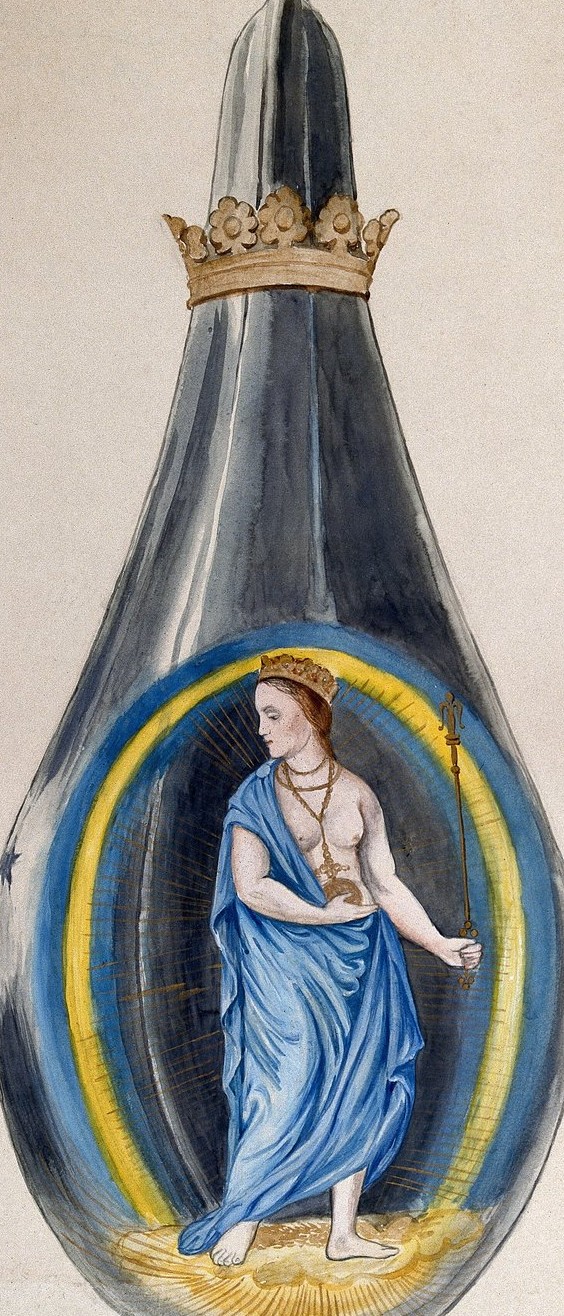
The queen in the crowned flask
The red king in the crowned flask
As a detail in 2 more
In these the Vessel is somewhere in the picture, tagged by eye, and nobody has read it yet. When one of them is read, it goes out on a Sunday.