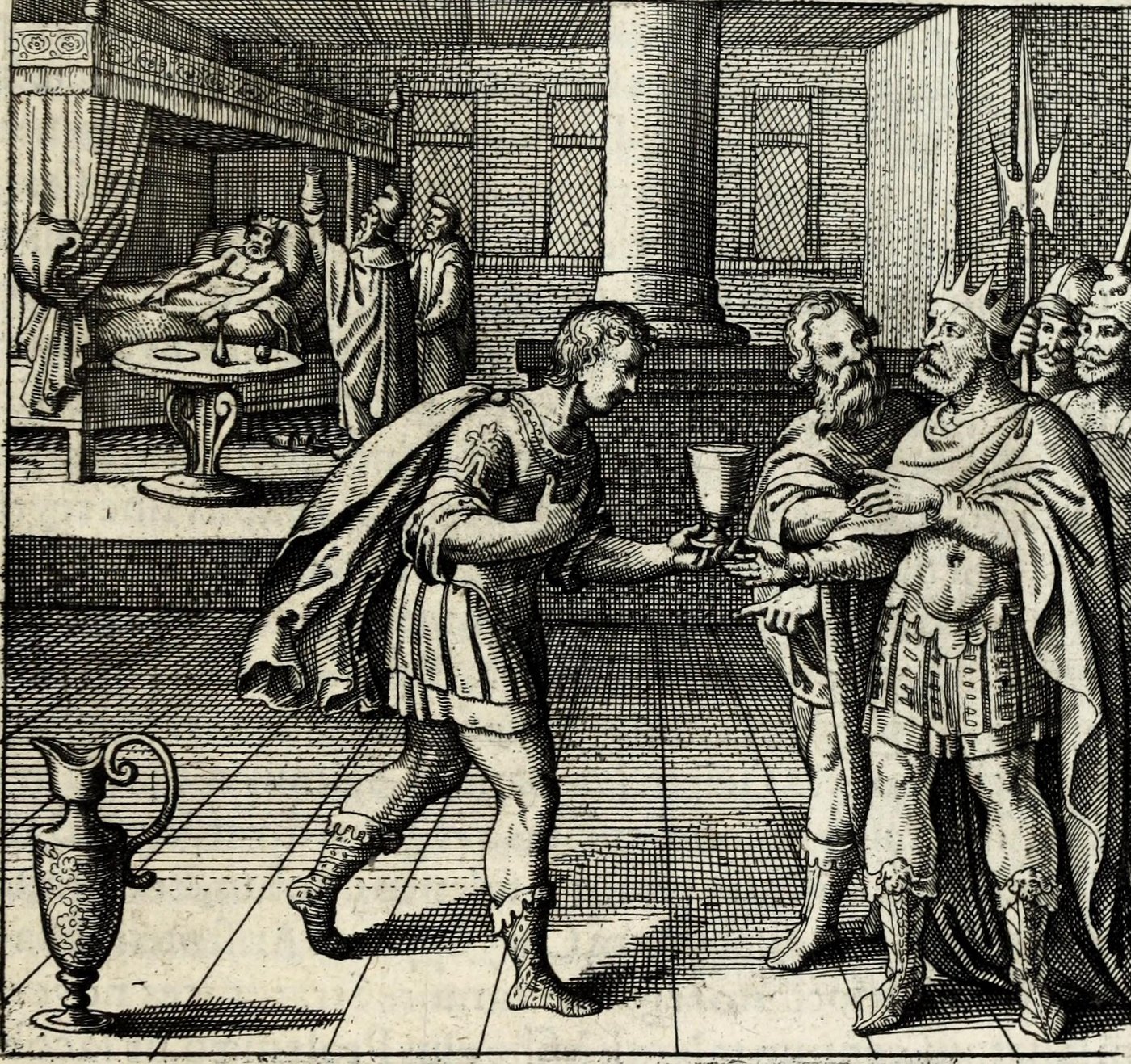
Rex ab aquis potatis morbum, à medicis curatus sanitatem obtinet
The King and the Queen as the central motif, with the Crown, the Water and the Vessel in a secondary part. From Atalanta Fugiens.
What is happening
Michael Maier, 1618 “Rex ab aquis potatis morbum, à medicis curatus sanitatem obtinet.”
Symbolica, 2026 Maier’s Latin, put into English here: The king made sick by the water he drank is cured by the physicians and made well.
Michael Maier, 1618 “Divitiis populisque potens Rex fontis amavit,
Portari a servis quas sibi poscit, aquas:
Has bibit & rebibit, venas mox inde repletus
Discolor a claris suscipitur medicis;
A quibus ut purgatus erat, sudoribus, alvo,
Oreque, mox tincta est utraque mala rosis.”
Symbolica, 2026 Maier’s epigram, put into English here: A King powerful in riches and in peoples loved the waters of a spring, and demanded that his servants carry them to him. He drank them and drank again, and soon, his veins filled from them, he is taken in hand, discoloured, by famous physicians. When he had been purged by them through sweat, through the belly and through the mouth, both his cheeks were soon tinged with roses.
Key · 4 motifs
Tap a motif on the picture, or a line below. Its note opens under the line, with the reading its author gave it.
- Primary motif
- Secondary motifs · 3
The picture
The crowned king taking the cup from the physician, the sick man in the bed behind. By eye
The reading
The picture read whole, in the archive's words, from the sources quoted on the marks. Read on, and the picture follows: the motif under discussion keeps its colour.
‘Rex ab aquis potatis morbum, à medicis curatus sanitatem obtinet’: the king, made sick by the water he drank, is cured by the physicians and made well. A palace interior: the king in bed at the back with his doctors, and in front the same king on his feet, crowned, taking a cup from a young man.
‘Divitiis populisque potens Rex fontis amavit’, a king powerful in riches and in peoples loved the waters of a spring, ‘Portari a servis quas sibi poscit, aquas’, and demanded that his servants carry them to him. He walked out of the sea thirsty in the thirty-first emblem, and he wears the same crown here.
‘Has bibit & rebibit’, he drank them and drank again, ‘venas mox inde repletus / Discolor a claris suscipitur medicis’, and soon, his veins filled from them, famous physicians take him in hand, discoloured. The ewer on the floor holds the water, and for once in this book the water sickens the patient.
‘A quibus ut purgatus erat, sudoribus, alvo, / Oreque’, when they had purged him through sweat, through the belly and through the mouth, ‘mox tincta est utraque mala rosis’, both his cheeks were soon tinged with roses. The cup carries the physic, and the roses in the cheeks bring up the colour the whole book has worked toward. The king dissolved in the sea comes back fixed, and red.
The crown never comes off, in the sea or in the sickbed. Nothing else in the story survives unchanged, which is Maier's way of saying that the cure runs through one metal from end to end.
Decoded: every motif is marked, and each mark carries the reading its author gave it, quoted from the text, or says that it is observed on the picture and not read. The reading above is the archive's own, made from those sources and no others.
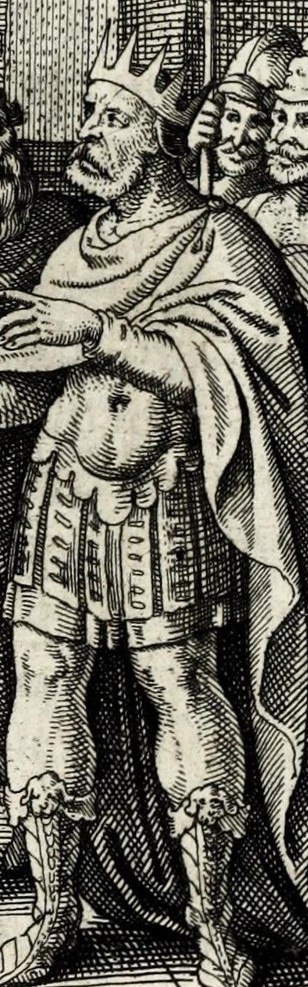
A rank rather than a person. Read the robe, the throne and what comes out of the mouth before you read the face.
In plain words A crowned king stands at the right with his attendants and takes a cup from a young man. He is the king who drank too much of a spring and sickened on it, and the physicians who cure him are the men round him. In the background he lies in bed, discoloured, being treated.
Michael Maier, 1618 “Divitiis populisque potens Rex fontis amavit, / Portari a servis quas sibi poscit, aquas:”
Symbolica Maier's Latin, put into English here: A King powerful in riches and in peoples loved the waters of a spring, and demanded that his servants carry them to him.
Completion, and in the Kabbalistic reading the first sephirah, the point at which the work is no longer yours.
In plain words The crown marks him as the king of the epigram, powerful in riches and peoples, who nearly drank himself to death. Power did not protect him from the water; the physicians did.
Michael Maier, 1618 “Divitiis populisque potens Rex”
Symbolica Maier's Latin, put into English here: A King powerful in riches and in peoples
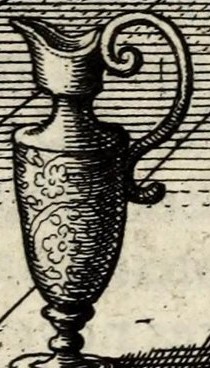
Where a thing is taken apart rather than destroyed. Note whether the figure is in the water, on it, or pouring it.
In plain words A ewer stands on the floor, the spring water the king could not stop drinking. He drank and drank again until his veins were full of it and his colour changed. The water is the cause of the sickness here, not the cure.
Michael Maier, 1618 “Has bibit & rebibit, venas mox inde repletus / Discolor a claris suscipitur medicis;”
Symbolica Maier's Latin, put into English here: He drank them and drank again, and soon, his veins filled from them, he is taken in hand, discoloured, by famous physicians.
Never the subject. What is inside it is.
In plain words The cup handed to the king is the physicians' medicine. Purged through sweat, belly and mouth, he gets his colour back: both cheeks tinged with roses. The vessel carries the cure, and the roses in his cheeks are the red the work is after.
Michael Maier, 1618 “A quibus ut purgatus erat, sudoribus, alvo, / Oreque, mox tincta est utraque mala rosis.”
Symbolica Maier's Latin, put into English here: When he had been purged by them through sweat, through the belly and through the mouth, both his cheeks were soon tinged with roses.
Also carrying the King and the Queen
35 works carry it. The 6 where it is the central motif are here. The symbol.
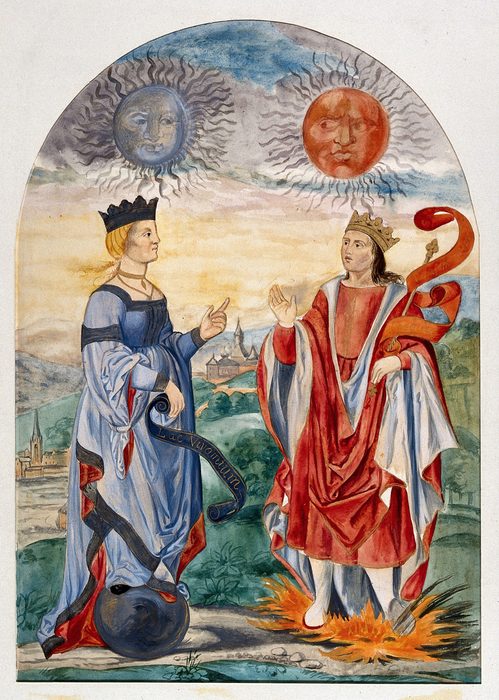
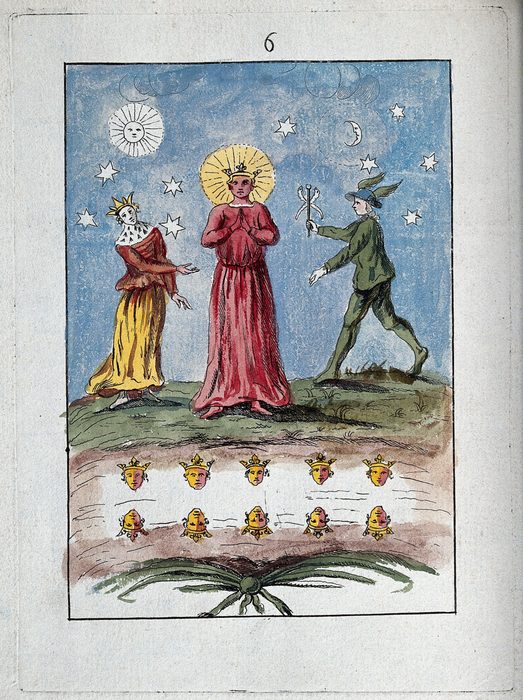
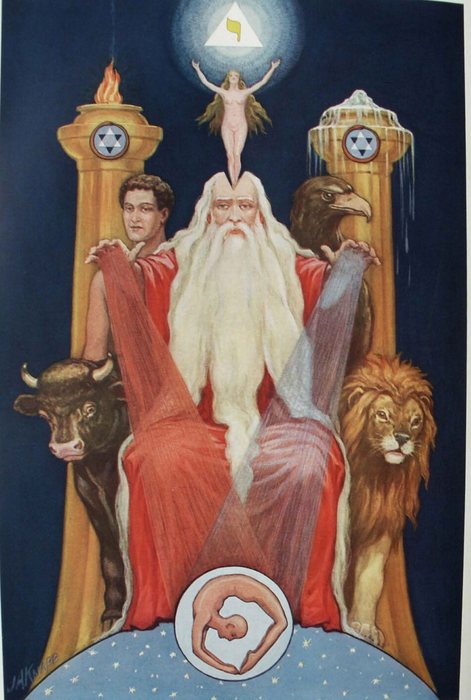
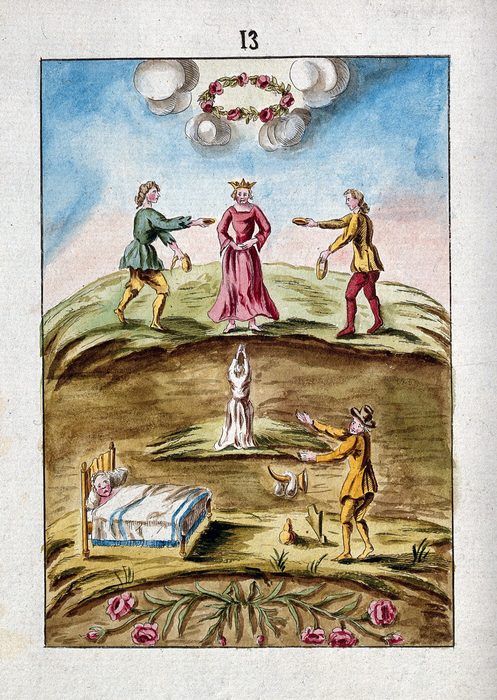
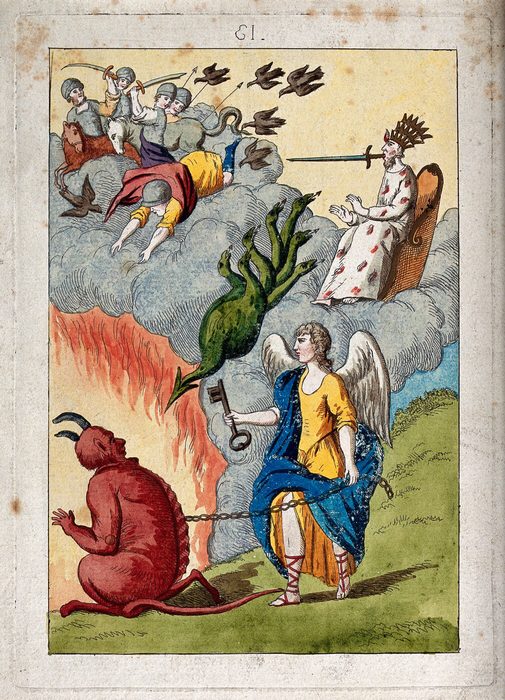
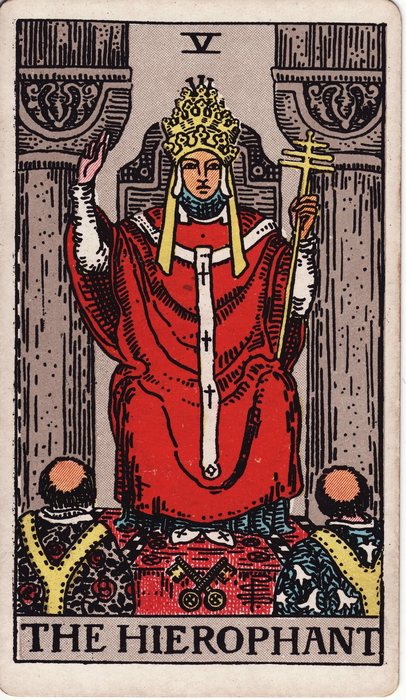
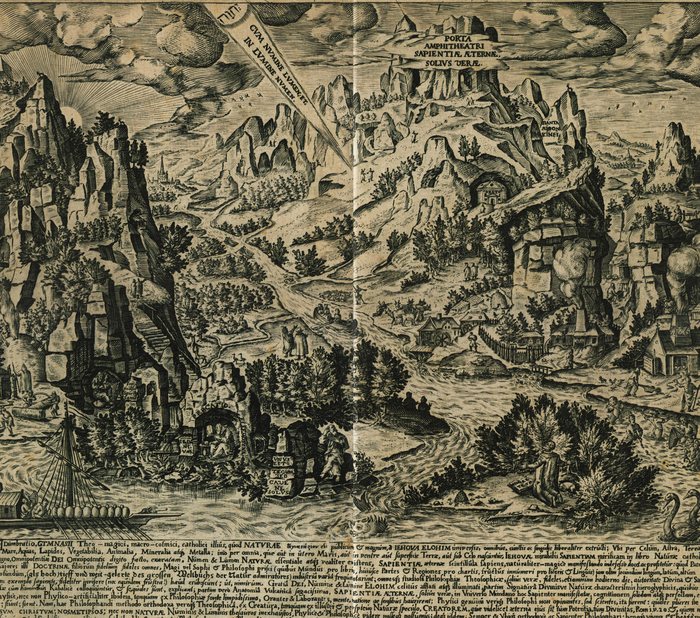
Where the detail is the subject
the Crown · the Water · the Vessel
Each of these is in the picture without being what it is about. Below, one work that is about each.
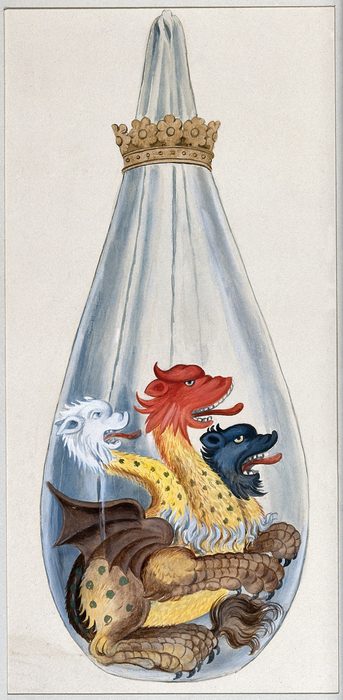
In the same series
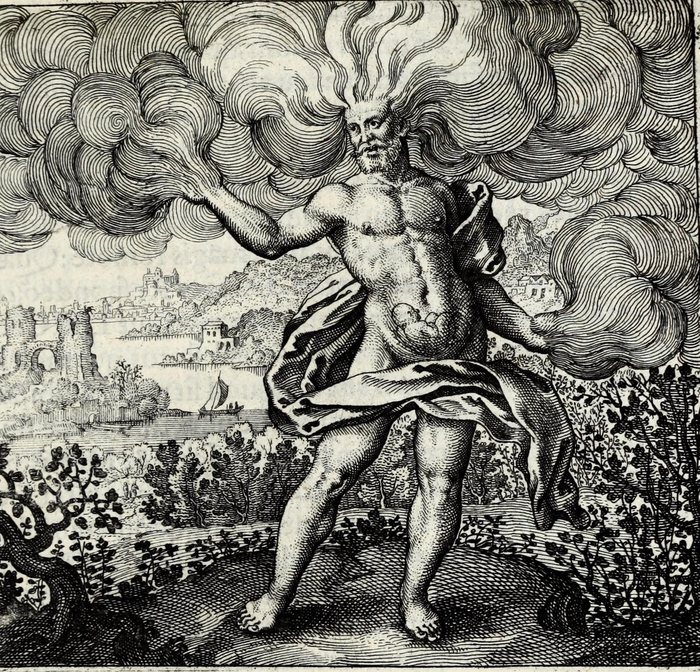 Portavit eum ventus in ventre suo
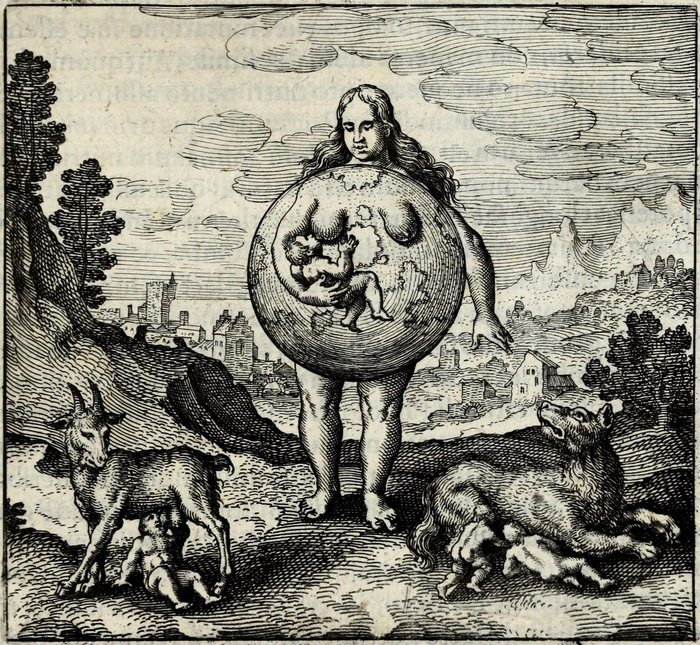 Nutrix ejus terra est
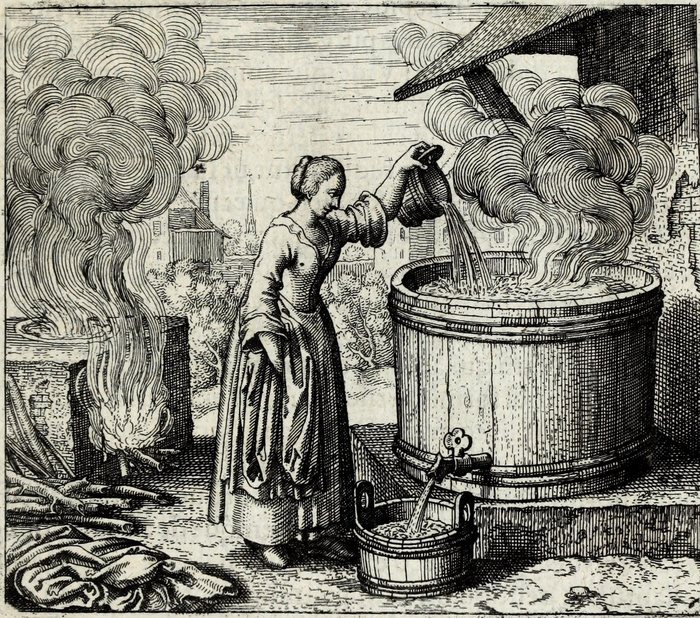 Vade ad mulierem lavantem pannos, tu fac similiter
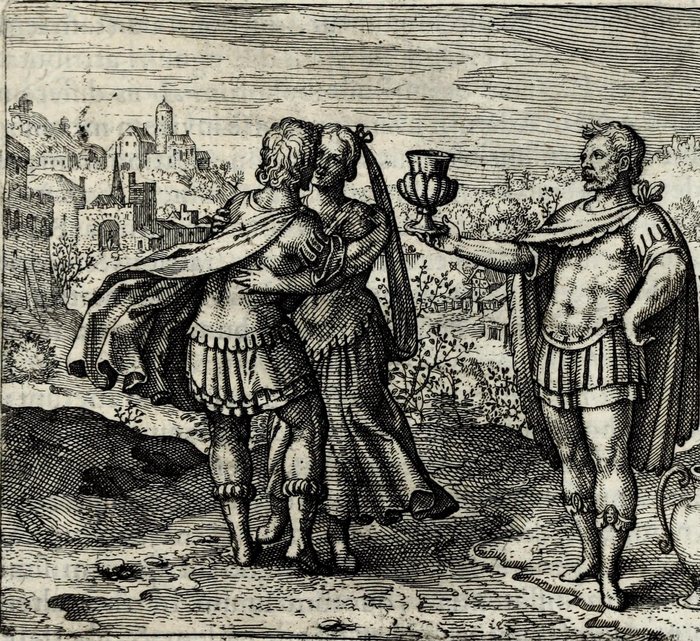 Conjunge fratrem cum sorore & propina illis poculum amoris
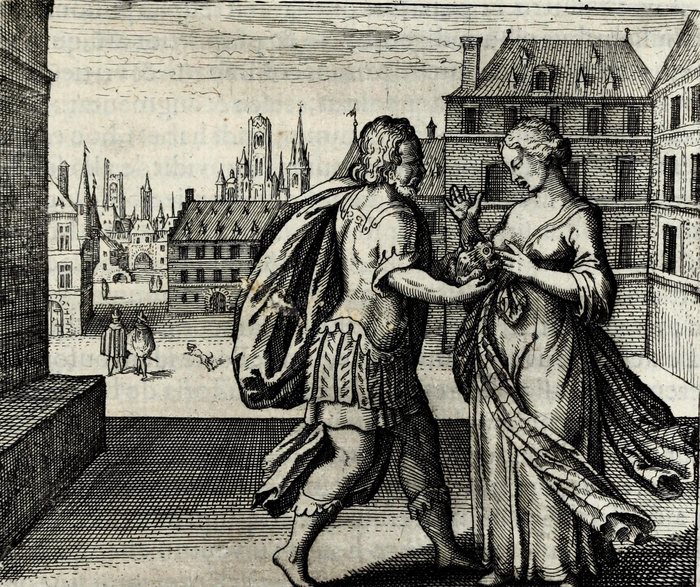 Appone mulieri super mammas bufonem, ut ablactet eum, & moriatur mulier, sitque bufo grossus de lacte
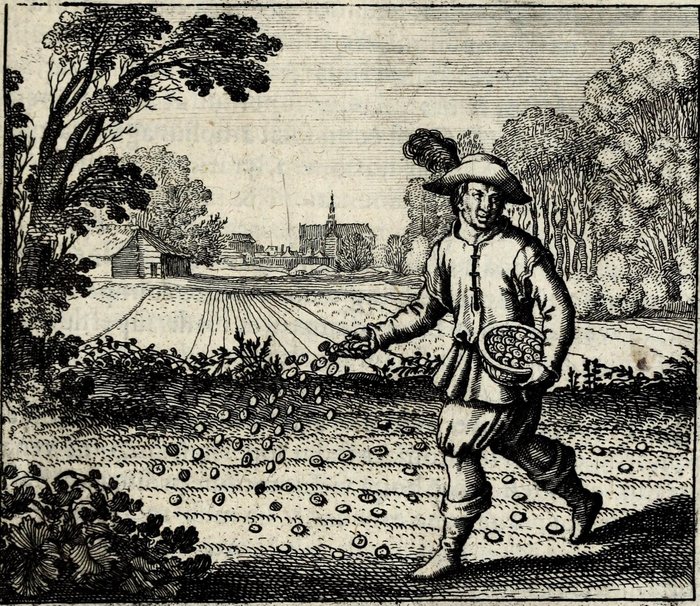 Seminate aurum vestrum in terram albam foliatam
Record
One symbol a week, decoded.
This picture is free at full size from its source, linked above. What an address gets is the Sunday letter: one picture, one symbol marked on it, what it meant and who said so, and the master files of the decoded plates as they are verified. Leave any time.
Free, one letter a week, unsubscribe in one click. How the address is used.
Scroll or pinch to zoom · drag to move · double-tap for 1:1 · 1400 by 1317 pixel web copy; the source file is linked under Record