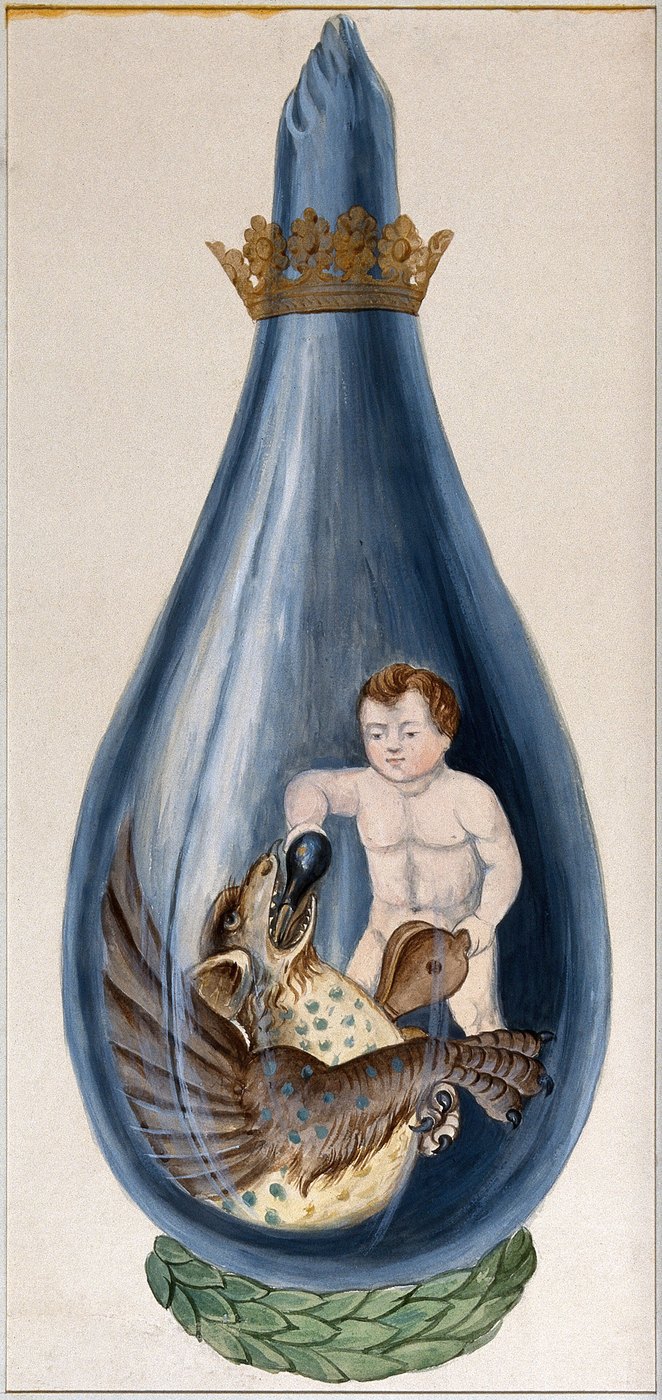
The child pouring the black flask down the dragon
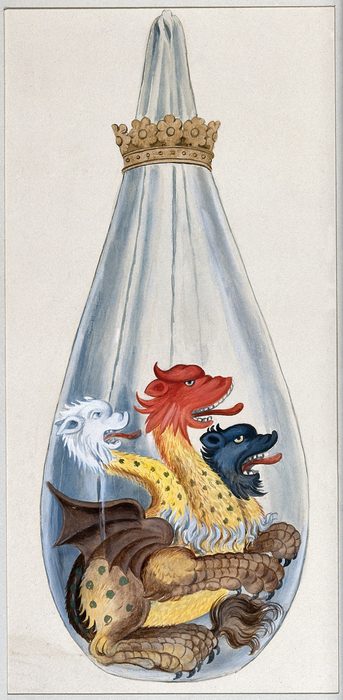
The Vessel as the central motif, with the Crown, and the Serpent and the Dragon in a secondary part. From Splendor Solis.
What is happening
J. K., who wrote the 1920 elucidation, 1920 “Represents in a highly ornamental niche as the leading feature of the picture, a large upright glass cucurbit, or retort hermetically sealed, standing upon a green wreath, and is circled at narrow part by a red and gold crown, which comes about one-fourth down from the top.”
J. K., who wrote the 1920 elucidation, 1920 “Inside this cucurbit is seen a naked child, holding a black flask or crucible in his right hand with which he is pouring its contents down the throat of a Dragon, or some horrid aquatic monster, having claws scales and finny wings. The legs and breast are covered with peacock feather spots. In the left hand the child holds a pair of small bellows, with which he points towards the heart of the monster.”
Symbolica The Wellcome catalogue calls this a putto and a dragon and never says it is a flask, which is why the sheet sat unheld while the archive was collecting flasks. It belongs to the third sequence and it is the first of the seven.
Key · 3 motifs
Tap a motif on the picture, or a line below. Its note opens under the line, with the reading its author gave it.
- Primary motif
- Secondary motifs · 2
The picture
A tall dark blue flask standing on a green wreath with a gold crown round its neck, and inside it a naked child tipping a black crucible into the mouth of a spotted dragon while holding a pair of bellows in the other hand. By eye
The reading
The picture read whole, in the archive's words, from the sources quoted on the marks. Read on, and the picture follows: the motif under discussion keeps its colour.
The first of the seven crowned flasks, and the Wellcome never calls it a flask. Its catalogue says a putto pours a phial into a dragon’s mouth, which is true and leaves out the glass it all happens inside.
“a large upright glass cucurbit, or retort hermetically sealed, standing upon a green wreath”. [sym:crown] “is circled at narrow part by a red and gold crown, which comes about one-fourth down from the top”. Sealed and crowned. Six more of these follow it through the book and the archive now holds six of the seven.
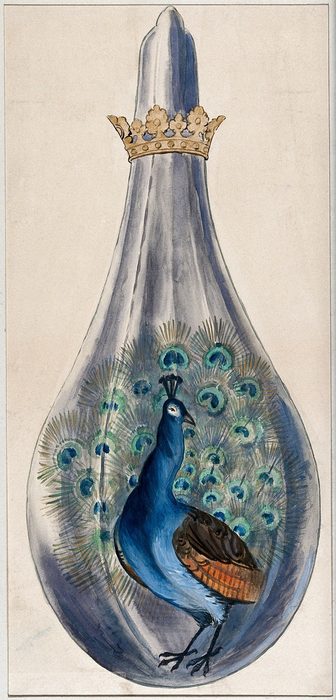
“Inside this cucurbit is seen a naked child, holding a black flask or crucible in his right hand with which he is pouring its contents down the throat of a Dragon, or some horrid aquatic monster, having claws scales and finny wings”. Then a detail worth stopping on. “The legs and breast are covered with peacock feather spots”. Four plates later a peacock will get a flask to itself and stand for every colour appearing at once. Here the same eyes are already on the animal being fed.
And the child has a second tool. “In the left hand the child holds a pair of small bellows, with which he points towards the heart of the monster”. One hand pours and the other aims air at the heart, which puts the whole of this book’s advice about fire into a single gesture. Ibbs cut the figure clear of its page. In the manuscript this niche carries a planet driving over it in a chariot and a scene of ordinary life underneath, and neither survives on the sheet.
Decoded: every motif is marked, and each mark carries the reading its author gave it, quoted from the text, or says that it is observed on the picture and not read. The reading above is the archive's own, made from those sources and no others.
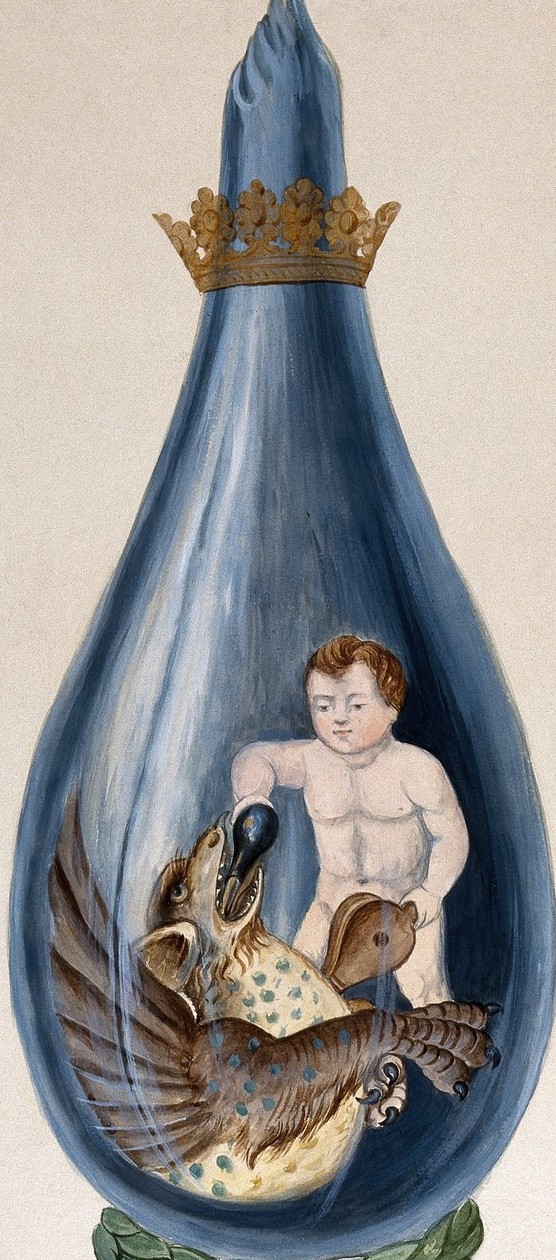
Never the subject. What is inside it is.
In plain words A tall glass vessel of dark blue, narrow at the top and swelling to a round base, shut at the crown of the neck and set down on a ring of green leaves.
J. K., who wrote the 1920 elucidation, 1920 “a large upright glass cucurbit, or retort hermetically sealed, standing upon a green wreath”
Symbolica Hermetically sealed is the point. Whatever happens to the dragon happens with no way out.
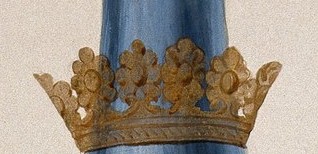
Completion, and in the Kabbalistic reading the first sephirah, the point at which the work is no longer yours.
In plain words A worked band of gold points fastened round the glass a quarter of the way down.
J. K., who wrote the 1920 elucidation, 1920 “is circled at narrow part by a red and gold crown, which comes about one-fourth down from the top”
Symbolica Seven flasks in this book wear one. The crown goes on the vessel and not on anything inside it.
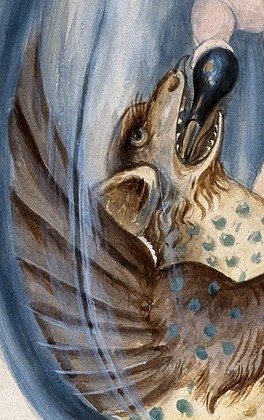
A single creature doing two opposite jobs. Note whether it is bound, killed, or eating itself.
In plain words A scaled animal with claws and stubby wings curled round the floor of the glass, its breast and legs marked with eyes like peacock feathers, head turned up and jaws open.
J. K., who wrote the 1920 elucidation, 1920 “pouring its contents down the throat of a Dragon, or some horrid aquatic monster, having claws scales and finny wings. The legs and breast are covered with peacock feather spots.”
Symbolica The peacock spots matter: the bird of many colours is already on the dragon’s body, two plates before the peacock gets a flask of its own.
Also carrying the Vessel
32 works carry it. The 6 where it is the central motif are here. The symbol.
Where the detail is the subject
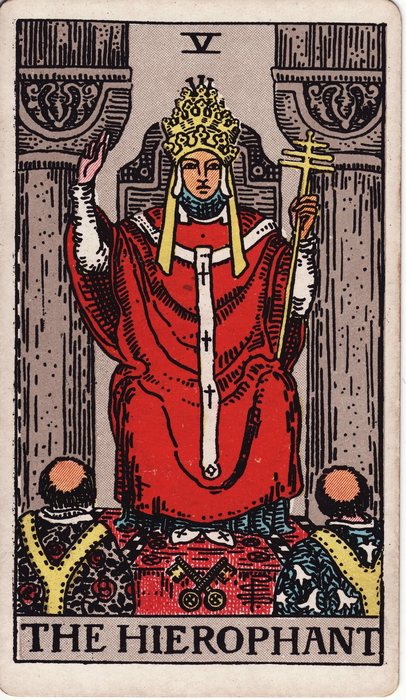
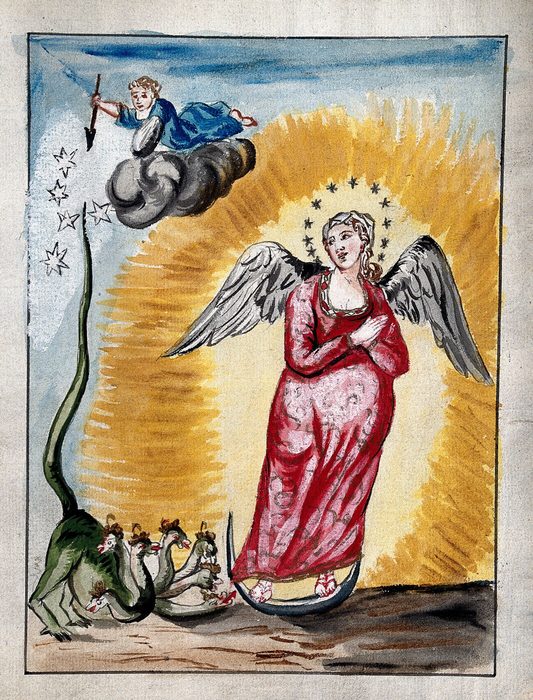
the Crown · the Serpent and the Dragon
Each of these is in the picture without being what it is about. Below, one work that is about each.
In the same series
After Splendor Solis, watercolours by Edith A. Ibbs, 1900 to 1909
Record
One symbol a week, decoded.
This picture is free at full size from its source, linked above. What an address gets is the Sunday letter: one picture, one symbol marked on it, what it meant and who said so, and the master files of the decoded plates as they are verified. Leave any time.
Free, one letter a week, unsubscribe in one click. How the address is used.
Scroll or pinch to zoom · drag to move · double-tap for 1:1 · 662 by 1400 pixel web copy; the source file is linked under Record