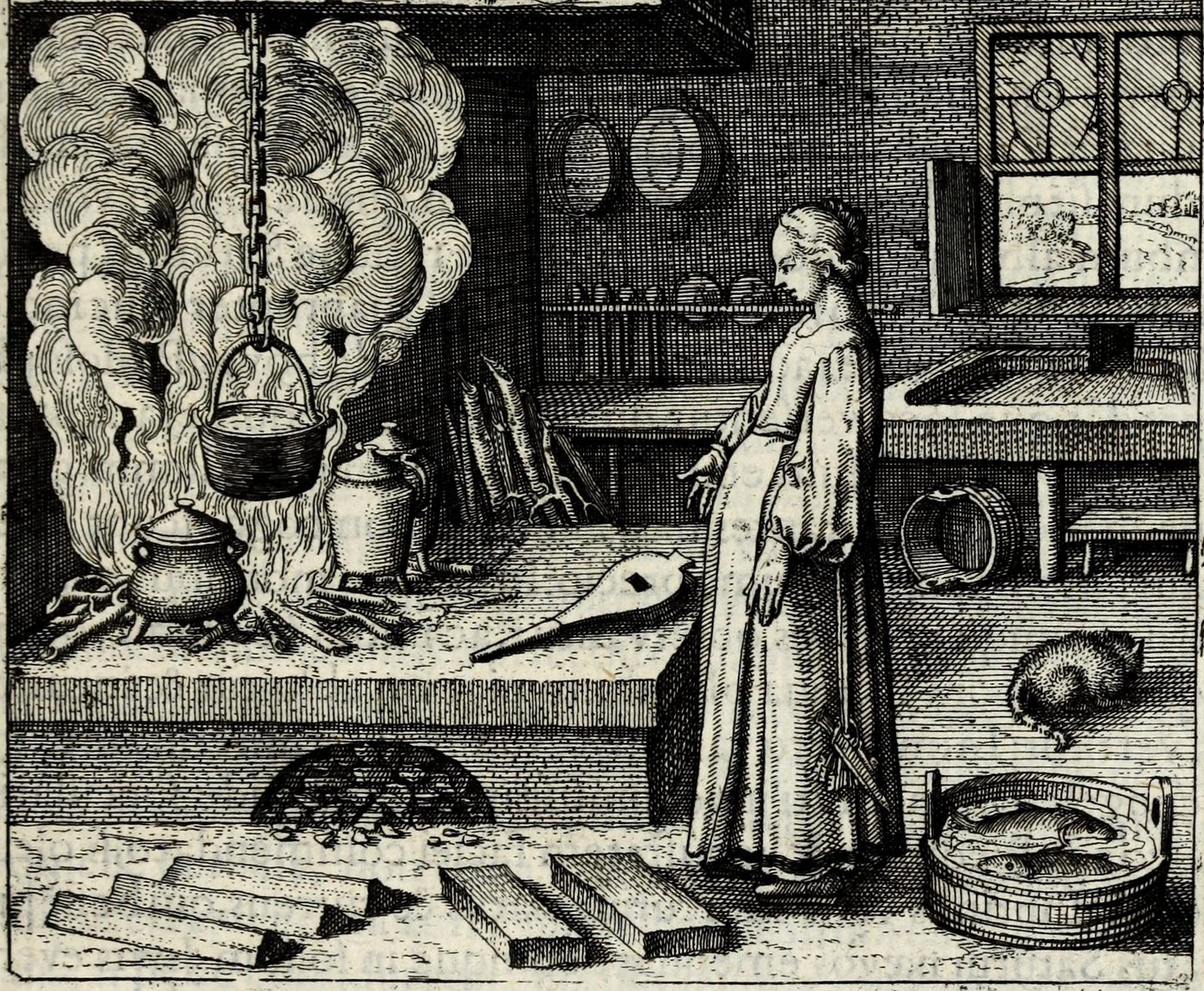
Plumbo habito candido fac opus mulierum, hoc est, COQUE
The Vessel as the central motif, with Fire and the Water in a secondary part. From Atalanta Fugiens.
What is happening
Michael Maier, 1618 “Plumbo habito candido fac opus mulierum, hoc est, COQUE:”
Symbolica, 2026 Maier’s Latin, put into English here: Having the white lead, do the work of women, that is, cook.
Michael Maier, 1618 “Quisquis amas facili multum praestare labore,
Saturni in faciem (quae nigra) sparge nives:
Et dabitur tibi materies albissima plumbi,
Post quod, foemineum nil nisi restat opus.
Tum COQUE, ceu mulier, quae collocat ignibus ollas,
Fac sed ut in propriis TRUTA liquescat aquis.”
Symbolica, 2026 Maier’s epigram, put into English here: Whoever you are who wish to accomplish much with easy labour, scatter snows on the face of Saturn, which is black. A whitest matter of lead will be given you, after which nothing remains but woman's work. Then COOK, as a woman does who sets her pots on the fire, but see that the TROUT dissolves in its own waters.
Key · 3 motifs
Tap a motif on the picture, or a line below. Its note opens under the line, with the reading its author gave it.
- Primary motif
- Secondary motifs · 2
The picture
The kitchen, the cauldron on its chain over the fire, the woman at the bench. By eye
The reading
The picture read whole, in the archive's words, from the sources quoted on the marks. Read on, and the picture follows: the motif under discussion keeps its colour.
‘Plumbo habito candido fac opus mulierum, hoc est, COQUE’: when you have the white lead, do the work of women, that is, cook. A kitchen, with a cauldron on its chain over the fire, pots on the hearth, a woman at the bench, and a fish in a tub by the wall.
Maier gets to the kitchen by way of Saturn. ‘Saturni in faciem (quae nigra) sparge nives’, scatter snows on the face of Saturn, which is black, ‘Et dabitur tibi materies albissima plumbi’, and a whitest matter of lead will be given you, ‘Post quod, foemineum nil nisi restat opus’, after which nothing remains but woman's work.
‘Tum COQUE, ceu mulier, quae collocat ignibus ollas’: then cook, as a woman does who sets her pots on the fire. The cauldron is the vessel, and cooking, in capitals, is the operation.
The fire is a hearth fire, low and steady, the kind a pot hangs over for hours. The emblem's joke and its instruction are the same thing: after all the dragons, the last stage is a woman's patience at a stove.
One condition: ‘Fac sed ut in propriis TRUTA liquescat aquis’, but see that the trout dissolves in its own waters. The fish in the tub is that condition drawn. The matter is cooked in its own liquid, and nothing is added from outside.
Decoded: every motif is marked, and each mark carries the reading its author gave it, quoted from the text, or says that it is observed on the picture and not read. The reading above is the archive's own, made from those sources and no others.
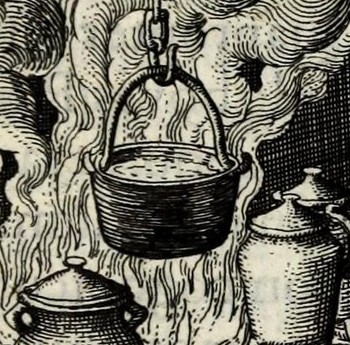
Never the subject. What is inside it is.
In plain words A cauldron hangs on a chain over the fire in a kitchen, with a woman standing by. Once the matter has been whitened, Maier says, nothing is left but women's work: cook, as a woman sets her pots on the fire. The vessel is a cooking pot and the work is a kitchen.
Michael Maier, 1618 “Tum COQUE, ceu mulier, quae collocat ignibus ollas,”
Symbolica Maier's Latin, put into English here: Then COOK, as a woman does who sets her pots on the fire,
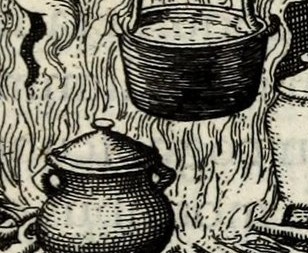
A count, a catastrophe, or the visible part of something that has no body. Note whether the flames are arranged in a number, breaking something, or standing where a figure would be.
In plain words The fire under the pots is a kitchen fire, and that is the point of the emblem: the last stage of the work is ordinary cooking, done with the patience of a woman at her hearth.
Michael Maier, 1618 “quae collocat ignibus ollas”
Symbolica Maier's Latin, put into English here: who sets her pots on the fire
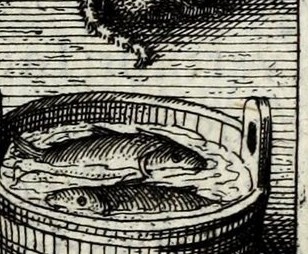
Where a thing is taken apart rather than destroyed. Note whether the figure is in the water, on it, or pouring it.
In plain words A fish lies in a tub of water in the corner. It is the trout of the last line, which must dissolve in its own waters: the matter cooked in its own liquid and in nothing brought from outside.
Michael Maier, 1618 “Fac sed ut in propriis TRUTA liquescat aquis.”
Symbolica Maier's Latin, put into English here: but see that the TROUT dissolves in its own waters.
Also carrying the Vessel
32 works carry it. The 6 where it is the central motif are here. The symbol.
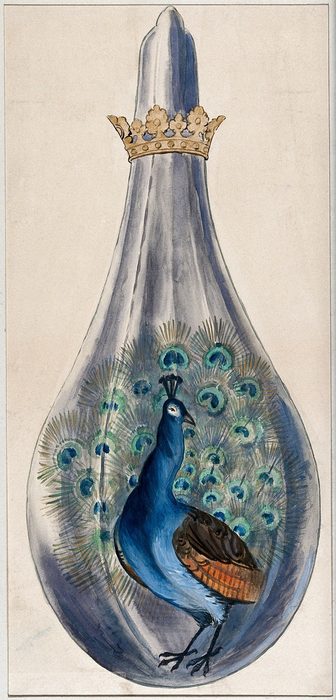
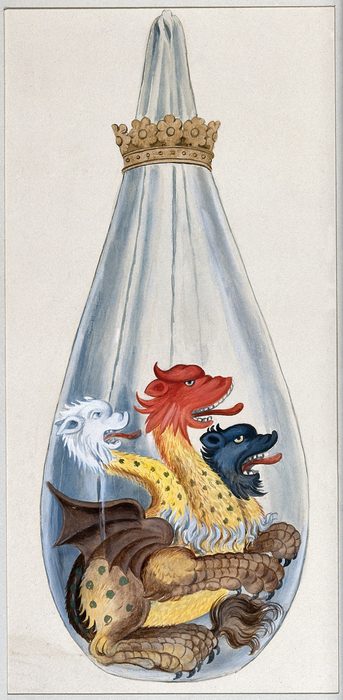
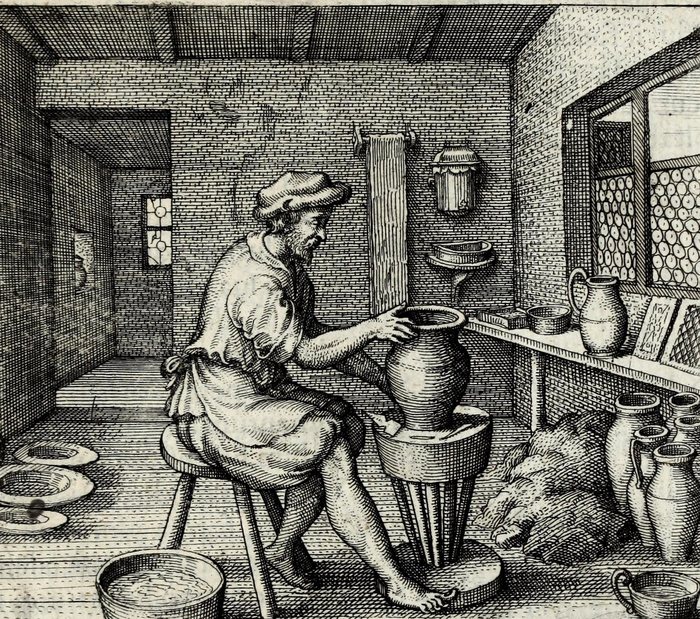
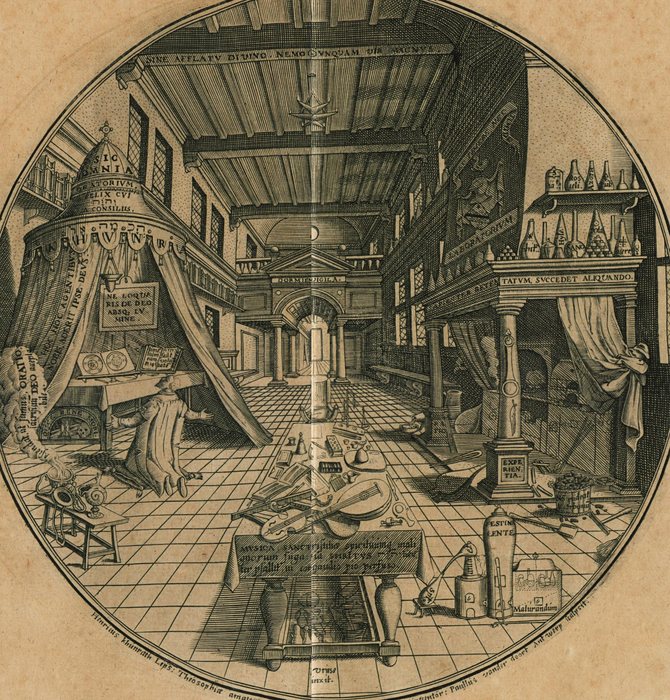
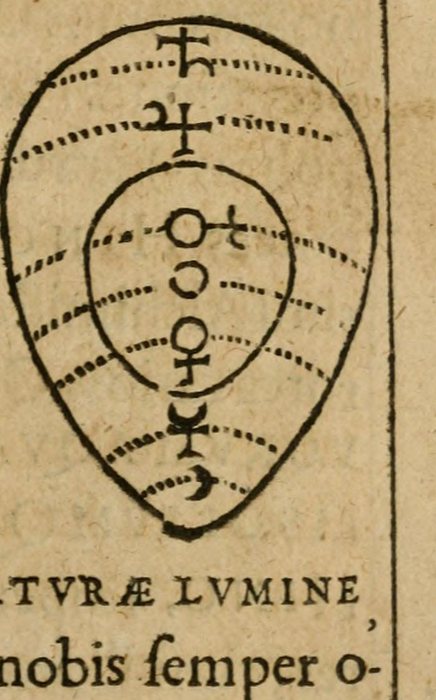
Where the detail is the subject
Each of these is in the picture without being what it is about. Below, one work that is about each.
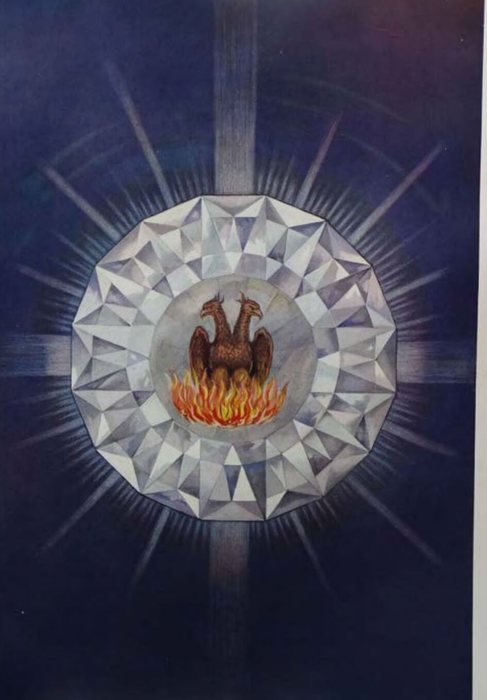
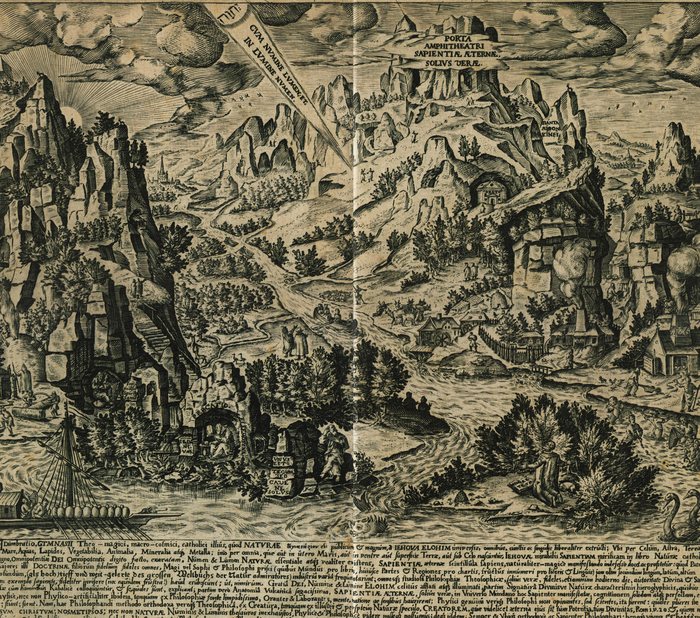
In the same series
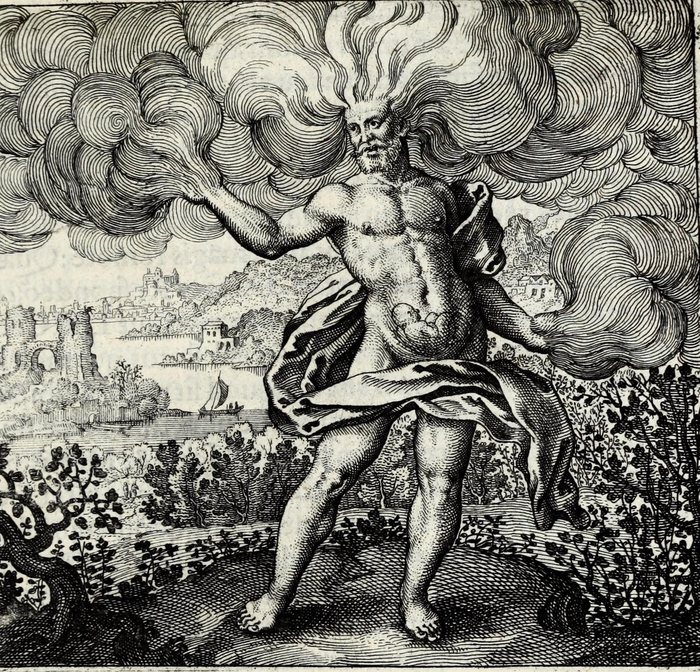 Portavit eum ventus in ventre suo
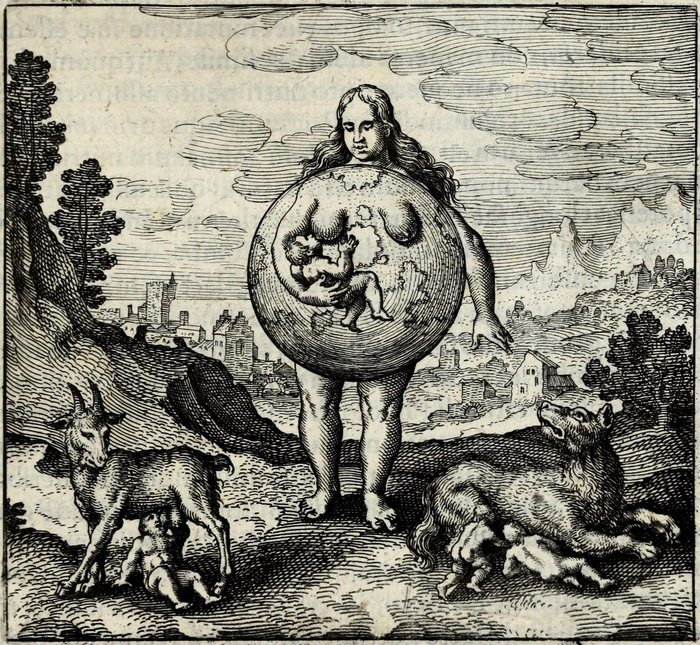 Nutrix ejus terra est
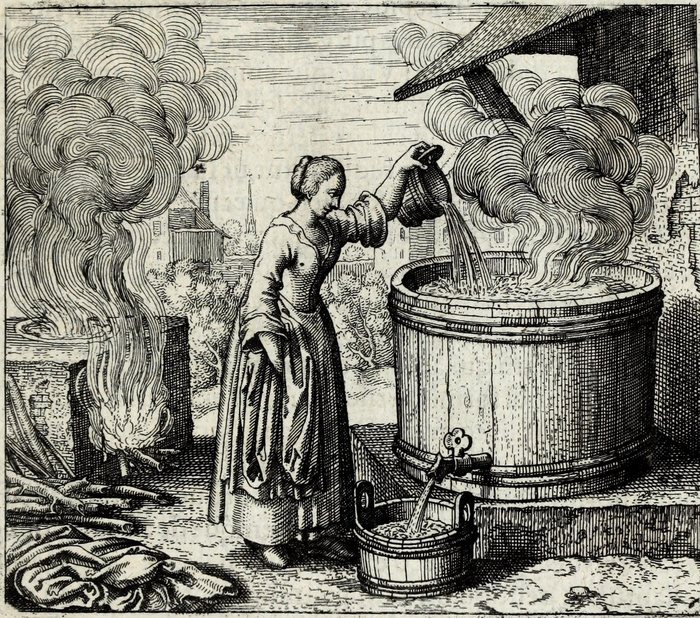 Vade ad mulierem lavantem pannos, tu fac similiter
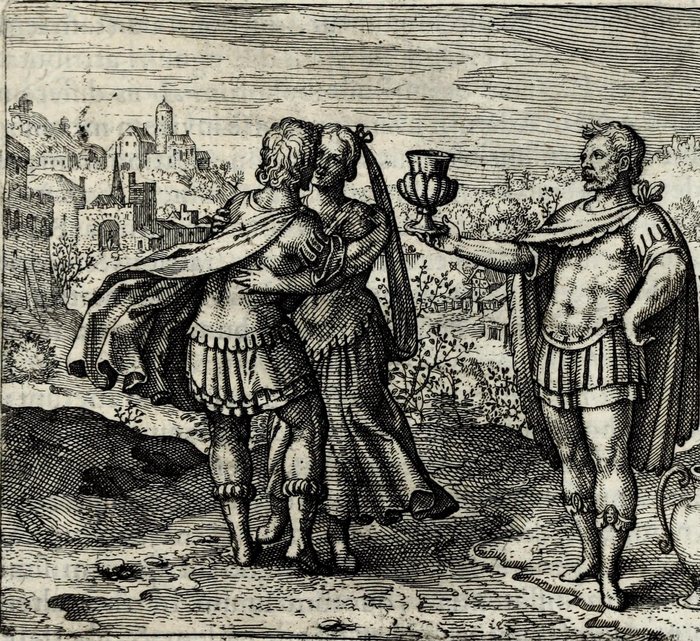 Conjunge fratrem cum sorore & propina illis poculum amoris
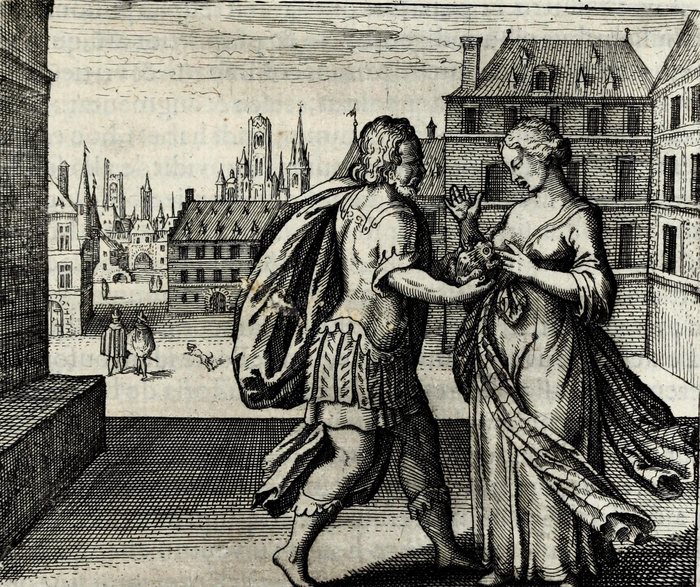 Appone mulieri super mammas bufonem, ut ablactet eum, & moriatur mulier, sitque bufo grossus de lacte
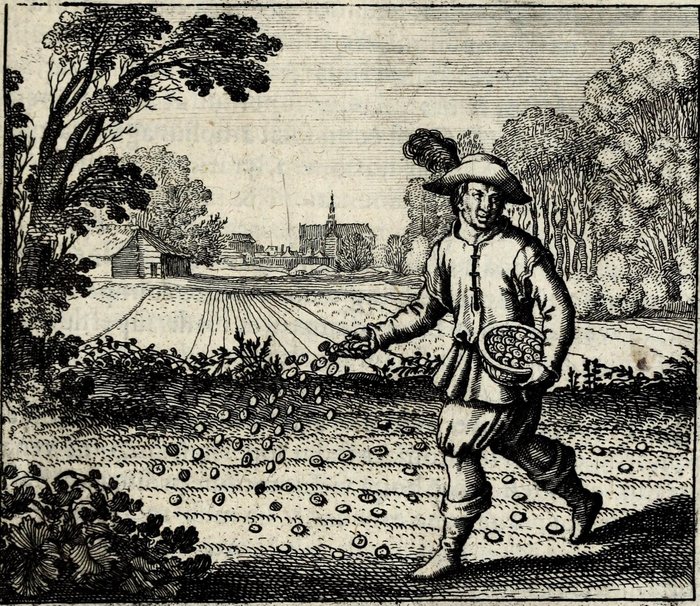 Seminate aurum vestrum in terram albam foliatam
Record
One symbol a week, decoded.
This picture is free at full size from its source, linked above. What an address gets is the Sunday letter: one picture, one symbol marked on it, what it meant and who said so, and the master files of the decoded plates as they are verified. Leave any time.
Free, one letter a week, unsubscribe in one click. How the address is used.
Scroll or pinch to zoom · drag to move · double-tap for 1:1 · 1400 by 1152 pixel web copy; the source file is linked under Record