The Oratory and the Laboratory
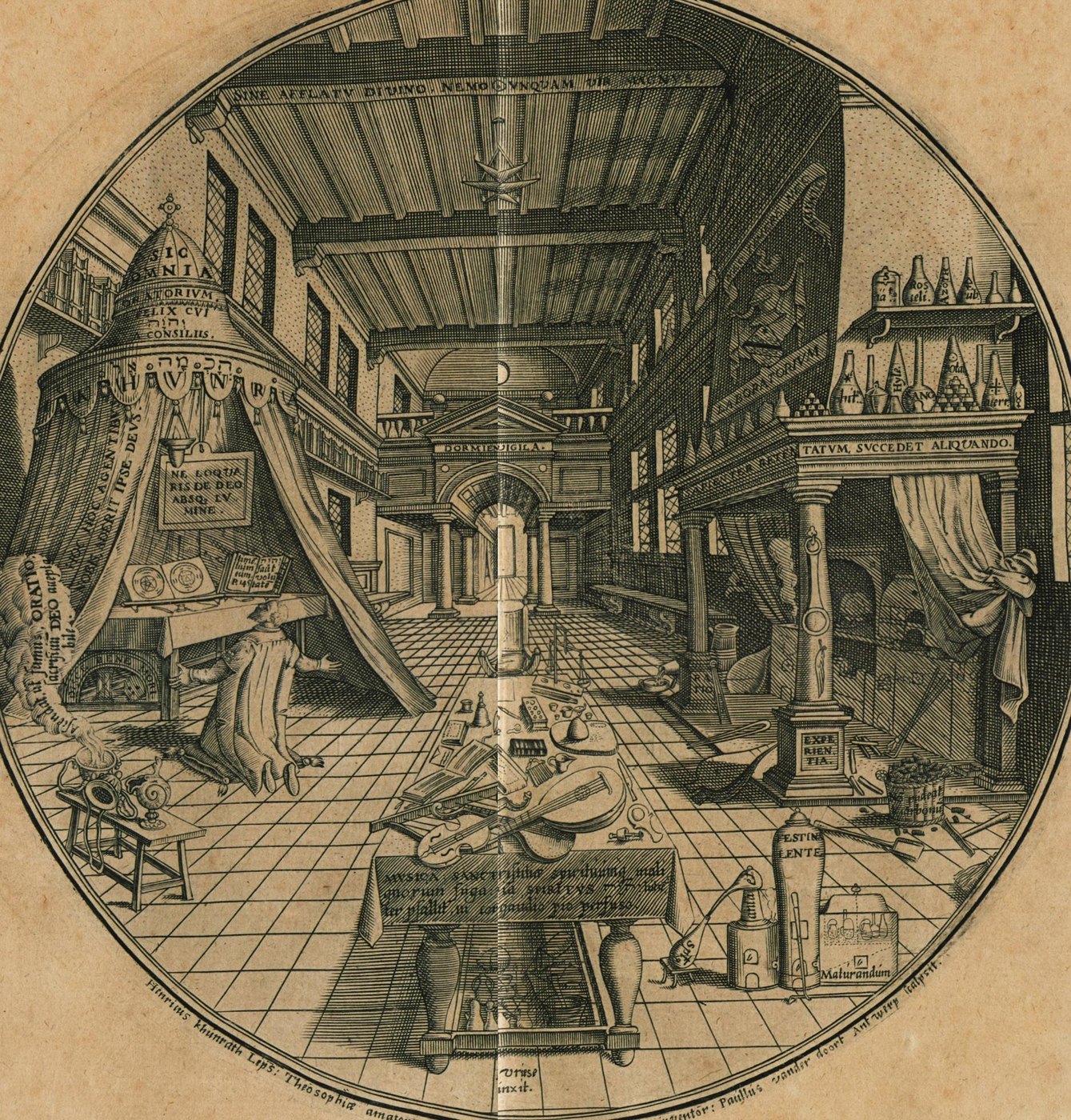
The Vessel as the central motif, with Fire, the Divine, the Pillar, Death and the Skull, and the Pentagram in a secondary part. From Amphitheatrum.
What is happening
Heinrich Khunrath, 1595 “Musica sanctissima spirituumque malignorum fuga. Libenter psallit in corde gaudio pio perfuso.”
Hans Vredeman de Vries and Paullus van der Doort, 1595 “Vriese inxit. Paullus vander Doort Antwerp: sc.”
Heinrich Khunrath, 1595 “Dormiens vigila.”
Symbolica, 2026 Khunrath's Latin, put into English here. Along the roof beam: Without divine inspiration no man was ever great. On the tablet in the oratory: Do not speak of God without light. Along the tent: To those who do this, God himself will be present. On the table cloth, where the plate's fold hides a few words: Most holy music is the rout of evil spirits; it sings gladly in a heart filled with pious joy. Over the furnace: Laboratory. On its lintel: What is wisely attempted again will one day succeed. On the placard: Let it be matured. On the pillar: Experience. The left half of the room is the oratory and the right half the laboratory, and the mottoes divide the same way: prayer on the left, patience on the right, and the beam across the whole room saying neither works without inspiration. The signatures name Hans Vredeman de Vries as the designer, his name cut by the fold, and Paullus van der Doort of Antwerp as the engraver, with the date 1595. Read again at the size of the archive's image: on the tent, Oratory, and Happy is he whose counsellor is Jehovah; on the smoke of the censer, Let prayer rise like smoke, a sacrifice acceptable to God; over the arch under the table, Learn to die well, with an hourglass and a skull inside it; over the far door, Sleeping, keep watch; on the flasks, dew of heaven, Azoth, Hyle, and the shorthand for blood, vital spirit and earth; on the tall flask, Make haste slowly; and Ratio, reason, on the left column of the laboratory, answering Experientia, experience, on the right. The open book on the oratory table shows a pentagram in a circle on one page and a triangle in a circle on the other.
Key · 6 motifs
Tap a motif on the picture, or a line below. Its note opens under the line, with the reading its author gave it.
- Primary motif
- Secondary motifs · 5
The picture
A hall in perspective, the alchemist kneeling before a tent-like oratory at the left with a tablet and open books, one of them showing a pentagram, an hourglass and a skull under his table, the furnace and its lettered flasks under a hood at the right between two columns, a table of musical instruments in the middle, and mottoes lettered on the beam, the tent, the cloth, the lintel, the smoke and the pillars. By eye
The reading
The picture read whole, in the archive's words, from the sources quoted on the marks. Read on, and the picture follows: the motif under discussion keeps its colour.
‘Sine afflatu divino, nemo unquam vir magnus.’ Without divine inspiration no man was ever great. The sentence runs along the beam of the roof, over a hall drawn in strict perspective, and the hall has two halves: a tent at the left where a man kneels, a furnace at the right where nobody is. Khunrath's names for the two are on the plate, Oratorium on the tent and ‘Laboratorium’ on the beam over the furnace, and the picture is the claim that they are one room.
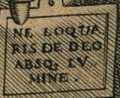
The oratory is a tent with a dome, and its band reads ‘Oratorium. Felix cui Jehovah a consiliis.’, happy is he whose counsellor is Jehovah, with the Name in Hebrew. Inside it hangs the tablet ‘Ne loquaris de Deo absque lumine’, do not speak of God without light; along its edge, ‘Hoc agentibus aderit ipse Deus’, to those who do this God himself will be present. The man kneels with his arms out before a table of open books and a censer, whose smoke goes up in a lettered coil: ‘Ascendat ut fumus oratio, sacrificium Deo acceptabile’, let prayer rise like smoke, a sacrifice acceptable to God.
Of the two books on the table, one is words and the other is figures: a pentagram in a circle and a triangle in a circle, the five and the three, drawn without a caption.
Under the table, in a vault the man's knees almost touch, are an hourglass and a skull, and over them ‘Disce bene mori’, learn to die well.
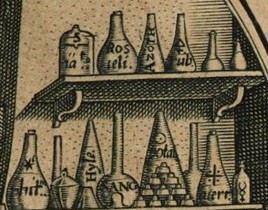
The laboratory is the mirror of the tent. Its shelves are lined with flasks, each lettered with its contents as far as the engraver had room: ‘Ros coeli’, the dew of heaven, ‘Azoth’, ‘Hyle’, and shorthand for blood, vital spirit and earth. On the furnace stands a tall flask lettered ‘Festina lente’, make haste slowly, beside a small furnace lettered ‘Maturandum’, let it ripen. Every vessel has been given a word, which is what makes this a laboratory of the kind Khunrath means: the materials are named because they are to be understood, not only handled.
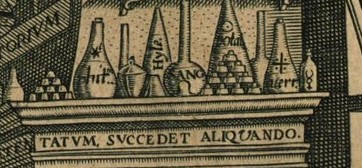
The fire itself is under the hood, whose lintel reads ‘Sapienter retentatum, succedet aliquando’, what is wisely tried again will one day succeed, the laboratory's answer to the tent's happy is he whose counsellor is Jehovah. The other fire is the censer's, in the oratory, and its smoke is the prayer.
The laboratory stands on two columns, and their bases are lettered ‘Ratio’ and ‘Experientia’, reason and experience: the working side of the hall has its own two pillars, as the title of the book has its obelisks of praying and working.
Between the halves a table is heaped with instruments of music, and its cloth says why: ‘Musica sanctissima spirituumque malignorum fuga’, most holy music is the rout of evil spirits. Over the far door, ‘Dormiens vigila’, sleeping, keep watch. Vredeman de Vries drew the hall and van der Doort cut it, and their signatures are on the plate; the words are Khunrath's, and there is not a surface in the room he left without one.
Decoded: every motif is marked, and each mark carries the reading its author gave it, quoted from the text, or says that it is observed on the picture and not read. The reading above is the archive's own, made from those sources and no others.
Never the subject. What is inside it is.
In plain words The laboratory's flasks are labelled like an apothecary's. On the shelves the archive can read Ros coeli, the dew of heaven, Azoth, Hyle, and the shorthand for blood, vital spirit and earth; on the furnace a tall flask says Festina lente, make haste slowly. Every vessel is given a word, and the words are the materials and the tempo of the work.
Heinrich Khunrath, 1595 “Laboratorium.”
Heinrich Khunrath, 1595 “Ros coeli. Azoth. Hyle. Sang. Vital. Terr.”
Heinrich Khunrath, 1595 “Festina lente.”
Symbolica Ros coeli is the dew of heaven; Azoth the alchemists' name for the universal solvent, first and last letters of three alphabets; Hyle the Greek for first matter; Sang., Vital. and Terr. the shorthand for blood, vital spirit and earth; Festina lente, make haste slowly.
A count, a catastrophe, or the visible part of something that has no body. Note whether the flames are arranged in a number, breaking something, or standing where a figure would be.
In plain words The fire is in two places. In the laboratory it is under the hood and in the furnaces on the floor, one of them lettered Maturandum, let it ripen, and the lintel over them promises that what is wisely tried again will one day succeed. In the oratory it is the coals of a censer, and the smoke rising from them is lettered as prayer going up.
Heinrich Khunrath, 1595 “Sapienter retentatum, succedet aliquando.”
Heinrich Khunrath, 1595 “Maturandum.”
Heinrich Khunrath, 1595 “Ascendat ut fumus oratio, sacrificium Deo acceptabile.”
Symbolica The Latin, put into English here: what is wisely tried again will one day succeed; let it ripen; let prayer rise like smoke, a sacrifice acceptable to God.
God shown, or pointed at. Look for what stands where a face would be: a name in a cloud, a circle above the top of a diagram, a ring of verses, a sign over a head.
In plain words God is not drawn; he is written three times. On the beam over the whole hall, no man was ever great without divine inspiration. On the band of the tent, happy is he whose counsellor is Jehovah, with the Name in Hebrew. On the tablet inside it, do not speak of God without light. The kneeling man is doing what the sentences say.
Heinrich Khunrath, 1595 “Sine afflatu divino, nemo unquam vir magnus.”
Heinrich Khunrath, 1595 “Oratorium. Felix cui Jehovah a consiliis.”
Heinrich Khunrath, 1595 “Ne loquaris de Deo absque lumine.”
Heinrich Khunrath, 1595 “Hoc agentibus aderit ipse Deus.”
Symbolica The Latin, put into English here: without divine inspiration no man was ever great; Oratory, happy is he whose counsellor is Jehovah; do not speak of God without light; to those who do this God himself will be present.
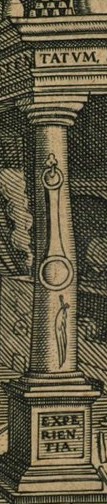
Two columns, and the thing that matters is between them. Note what stands there, and whether the pillars are told apart.
In plain words The laboratory is a portico on two columns, and their bases are lettered Ratio and Experientia, reason and experience. They are the two supports of the working side of the hall, as prayer and its books are of the other, and as Orando and Laborando are the two obelisks of the book's title.
Heinrich Khunrath, 1595 “Ratio.”
Heinrich Khunrath, 1595 “Experientia.”
Symbolica Ratio is reason; Experientia is experience.
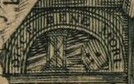
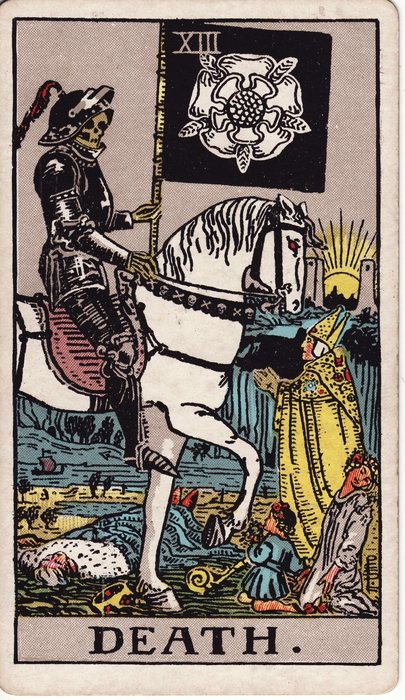
An office, not an ending. Note what Death is holding and who is being made to look at it.
In plain words Under the table where the man prays there is a small vaulted space with a skull and an hourglass in it, and the arch over them says learn to die well. It is placed under the books and out of the way, which is where Khunrath keeps death: present, and not the subject.
Heinrich Khunrath, 1595 “Disce bene mori.”
Symbolica Disce bene mori: learn to die well.
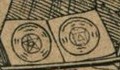
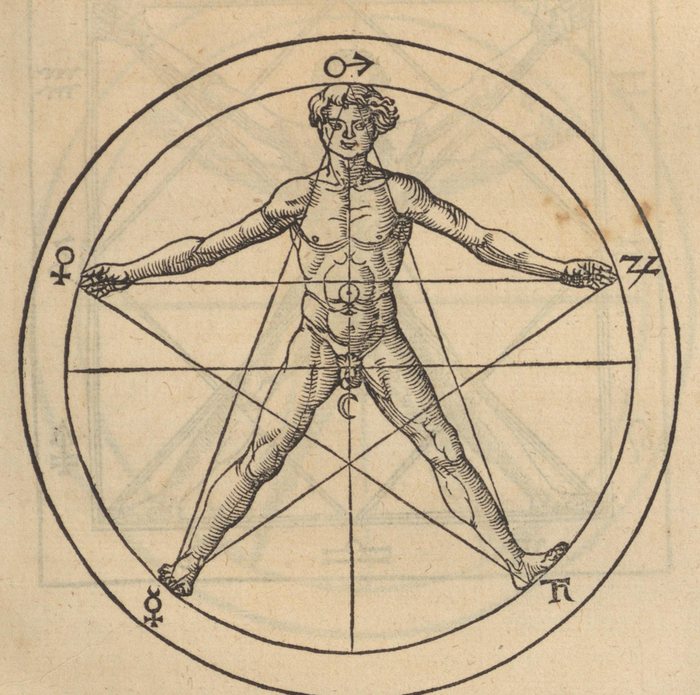
A five-pointed star drawn in one line. Count which way it points before reading it: one point up and two down is one sign, two up and one down is another.
In plain words One of the two books open on the oratory table shows figures, not words: a five-pointed star in a circle and a triangle in a circle, the five and the three. They are drawn, not lettered, and the archive marks them as seen; what the Christian Kabbalists of Khunrath's day read into the five and the three is a matter for the entry.
Symbolica The pentagram and the triangle are drawn in the book without a word beside them; the mark is by eye.
Also carrying the Vessel
32 works carry it. The 6 where it is the central motif are here. The symbol.
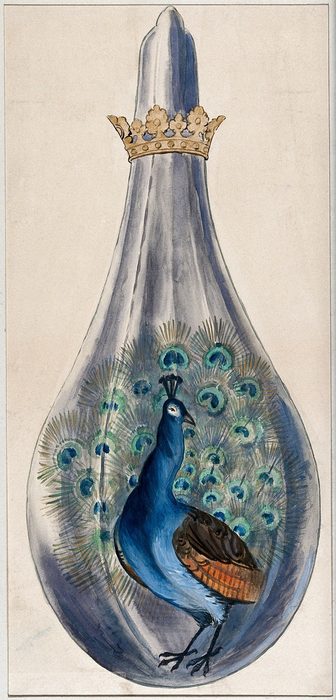
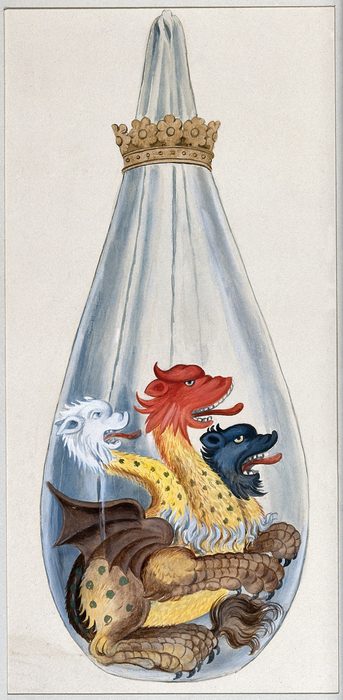
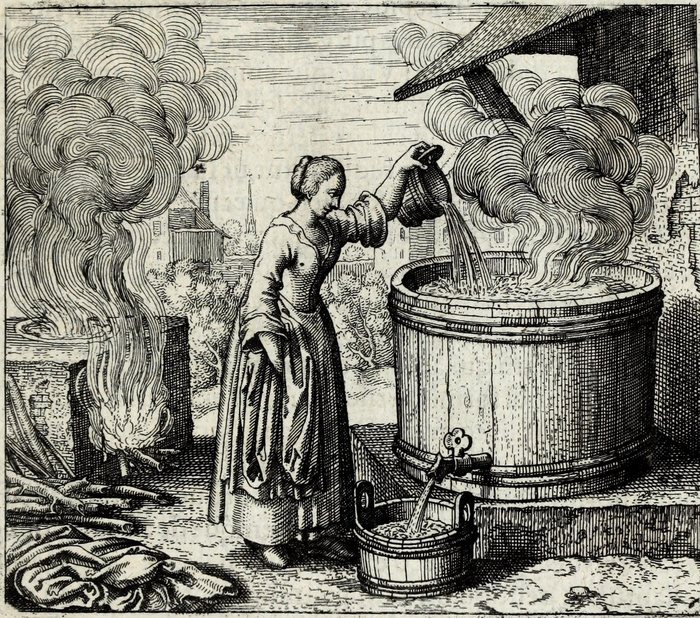
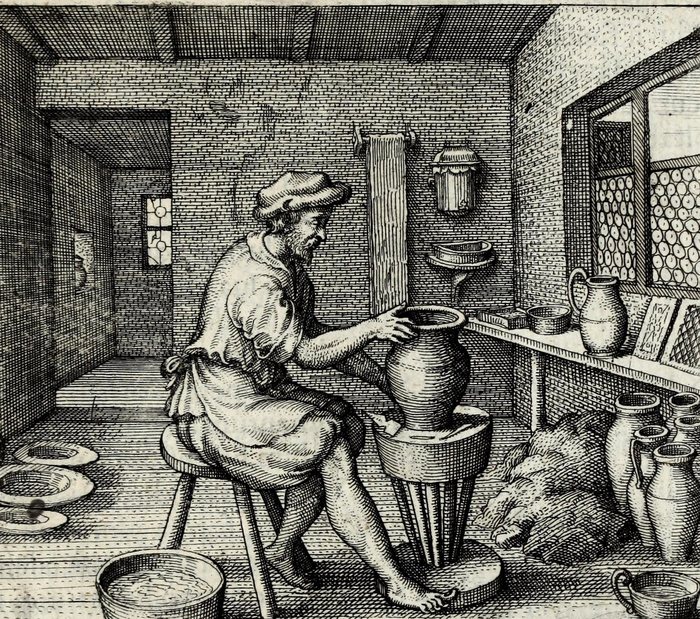
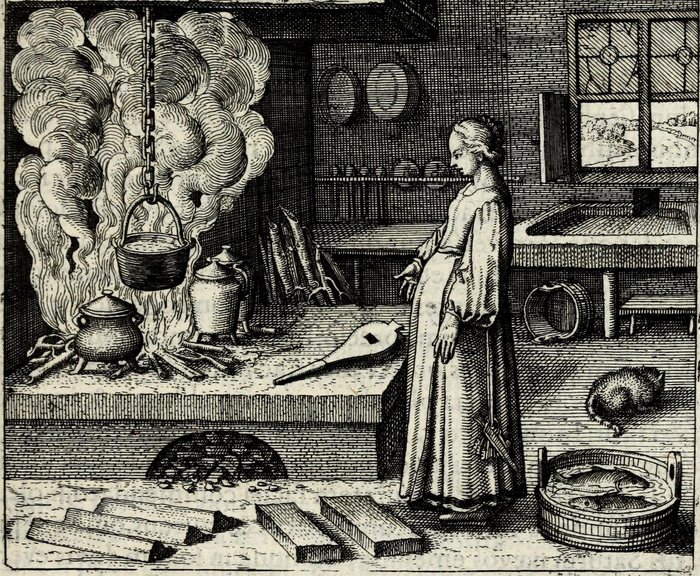
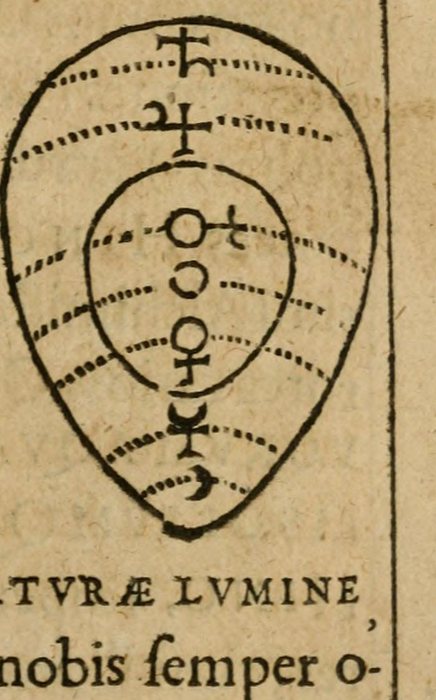
Where the detail is the subject
Fire · the Divine · the Pillar · Death and the Skull · the Pentagram
Each of these is in the picture without being what it is about. Below, one work that is about each.
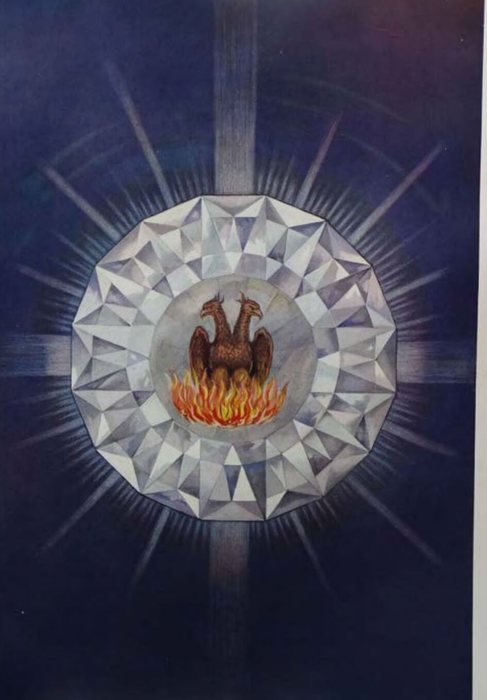
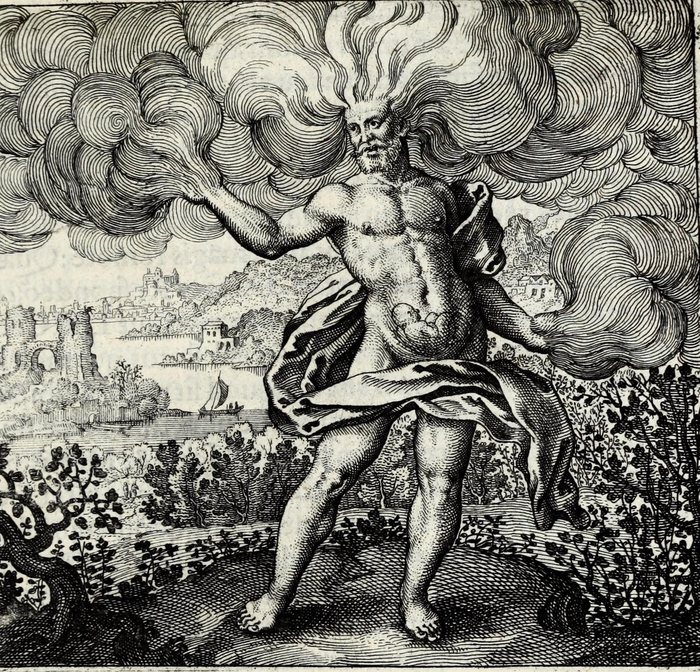
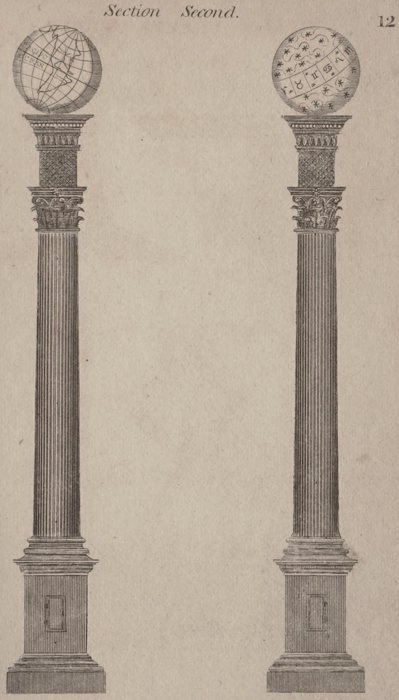
In the same series
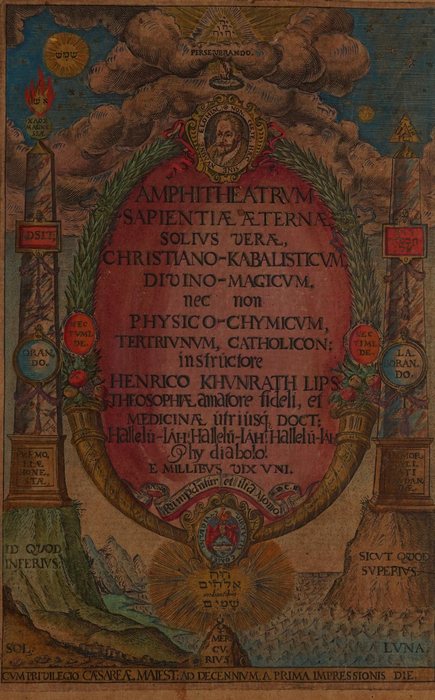 The engraved title of the Amphitheatrum Sapientiae Aeternae
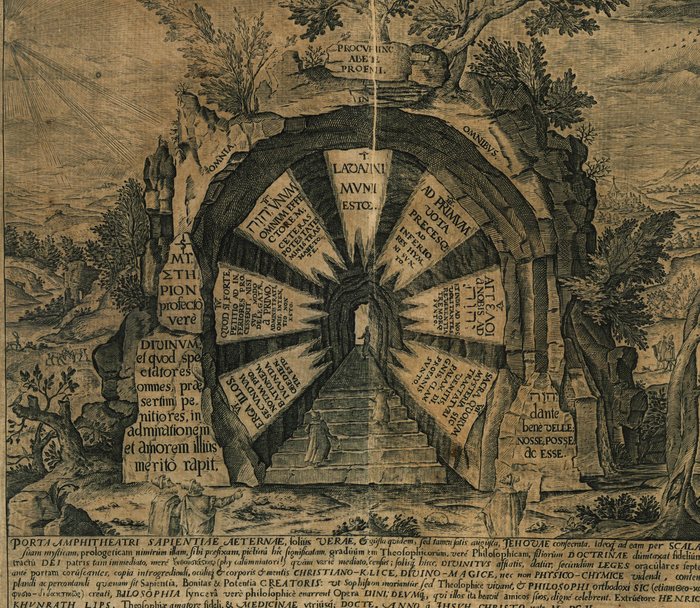 Porta Amphitheatri Sapientiae Aeternae
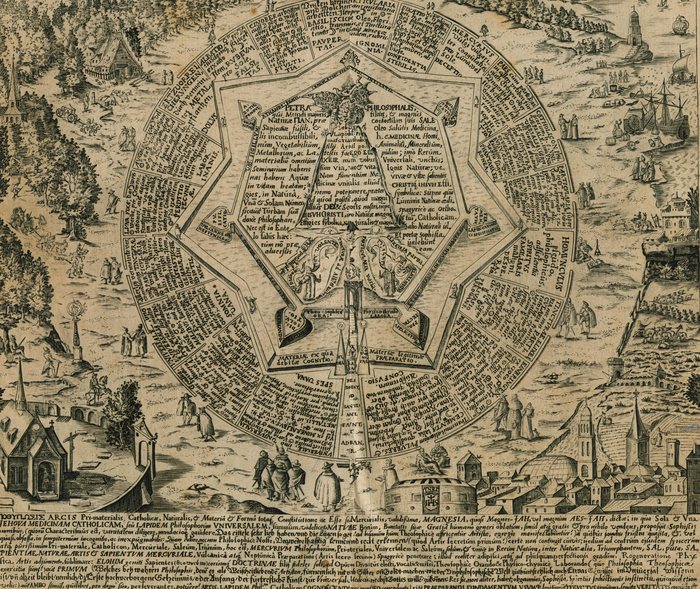 Typosis Arcis Pri-materialis
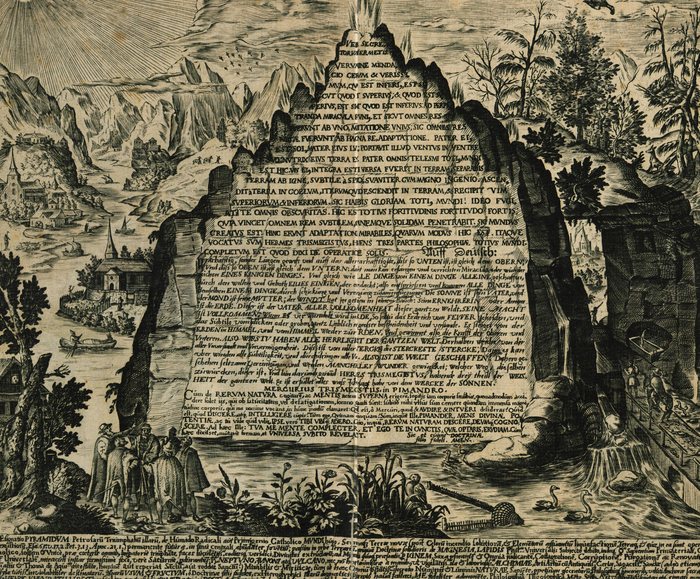 Designatio Pyramidum Petrosarum Triumphalium
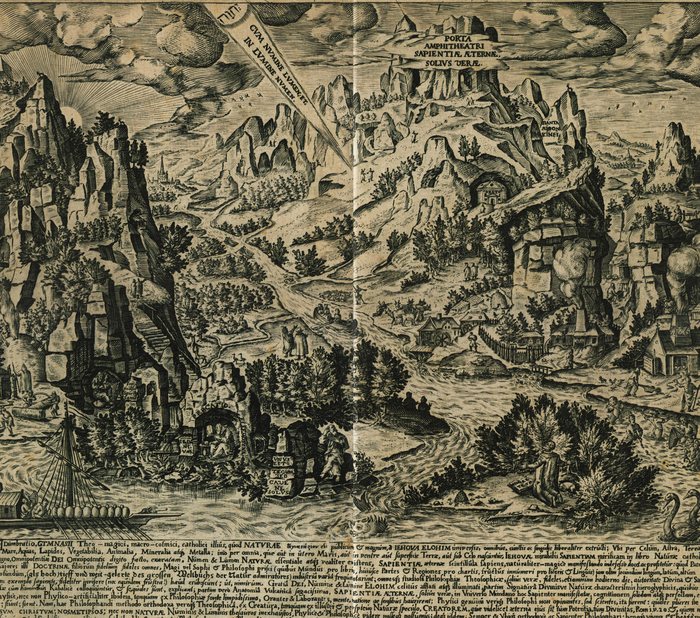 Adumbratio Gymnasii Theo-magici, macro-cosmici, catholici
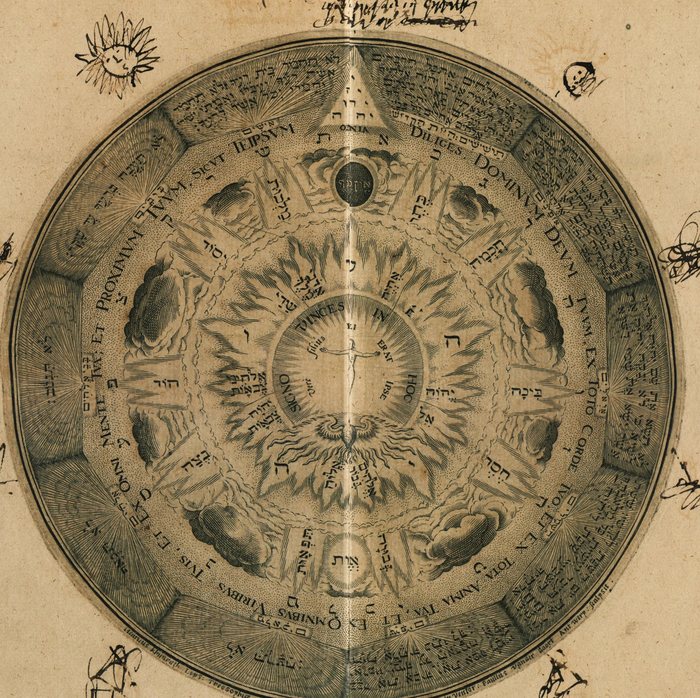 The Name in the pyramid, Christ in the sun, and the two commandments round the rim
Record
One symbol a week, decoded.
This picture is free at full size from its source, linked above. What an address gets is the Sunday letter: one picture, one symbol marked on it, what it meant and who said so, and the master files of the decoded plates as they are verified. Leave any time.
Free, one letter a week, unsubscribe in one click. How the address is used.
Scroll or pinch to zoom · drag to move · double-tap for 1:1 · 1339 by 1400 pixel web copy; the source file is linked under Record