The Pentagram
the five-pointed star, the blazing star, the pentacle, the sign of the microcosm
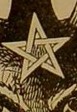
A five-pointed star drawn in one line. Count which way it points before reading it: one point up and two down is one sign, two up and one down is another.
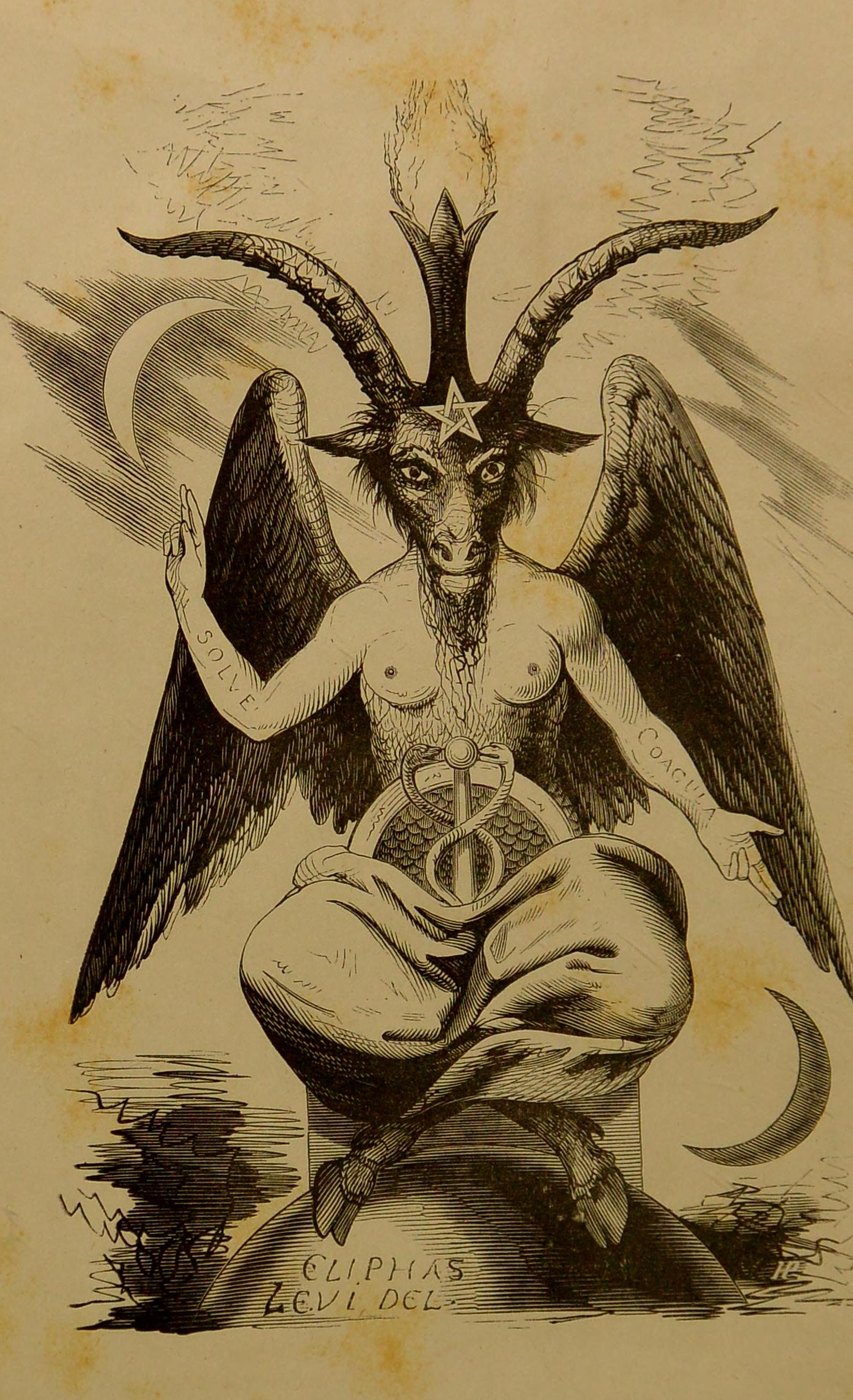
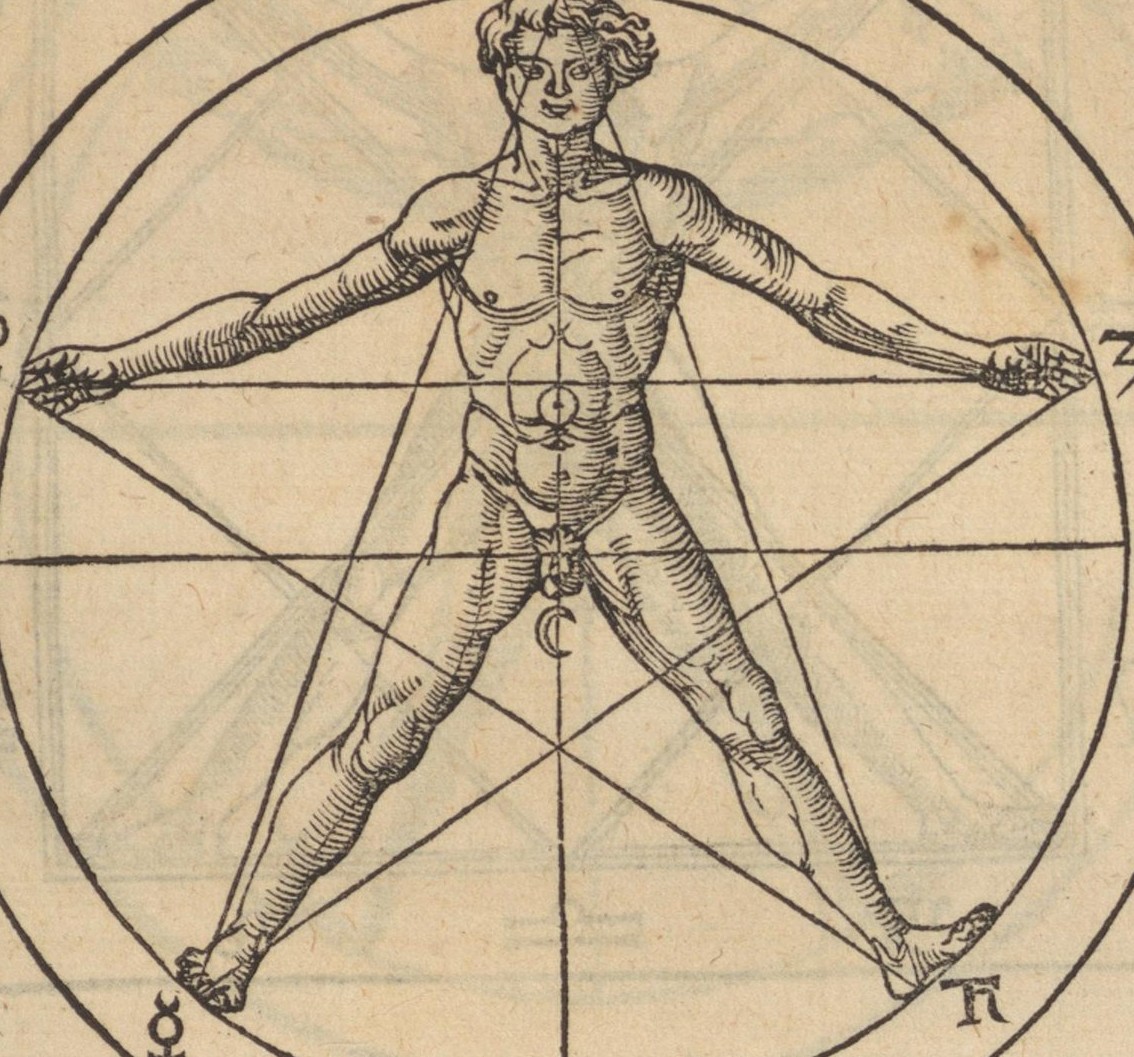
Six works here carry the star. Two of them are one star, and the second is the first turned over. Éliphas Lévi, writing in 1856, made the direction of the points a rule: “The pentagram with two points in the ascendant represents Satan as the goat of the Sabbath; when one point is in the ascendant, it is the sign of the Saviour.” His reason is the shape itself. “The pentagram is the figure of the human body, having the four limbs, and a single point representing the head. A human figure, head downwards, naturally represents a demon; that is, intellectual subversion, disorder, or madness.” The star is a person standing up, or a person upside down.
His Baphomet wears it point up, “which is sufficient to distinguish him as a symbol of the light”, and that is the whole argument of the picture: whatever else the goat is, the star on its brow says it stands the right way up. Pamela Colman Smith's Devil of 1909 borrows the goat and reverses the star, and Waite records the reversal in four words, “A reversed pentagram is on the forehead”, without needing to explain it. By 1909 Lévi's rule was known in the circles the deck was made for.
Lévi also calls the star “the blazing star” of the Gnostic schools, “the star of the magi”, and “the sign of the microcosm”, the small world that is a human being; he says it “is the sign of intellectual omnipotence and autocracy”, and that to understand it fully “is the key of the two worlds”. Most of that is his own. What he did not invent is the figure of a body in the star, which Agrippa had drawn three centuries earlier with a planet at each point. Agrippa’s own chapter, though, concerns the proportions of the human body and says nothing whatever about what the star means. He fits a man to the star; Lévi says the star is the man, and the rule about the points needs that reversal to work.
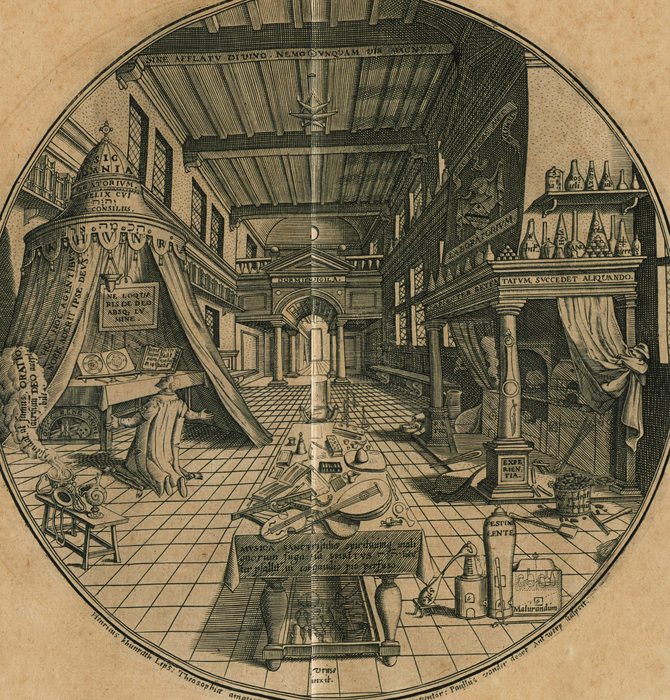
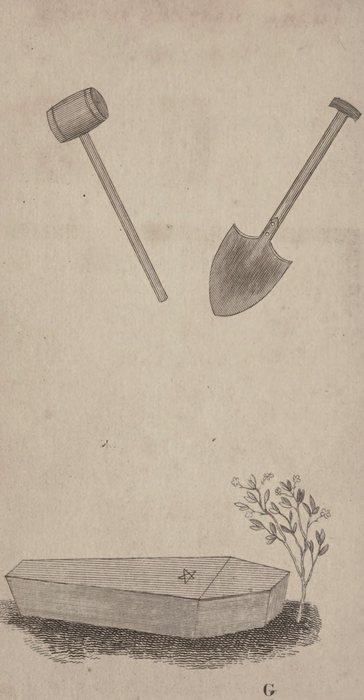
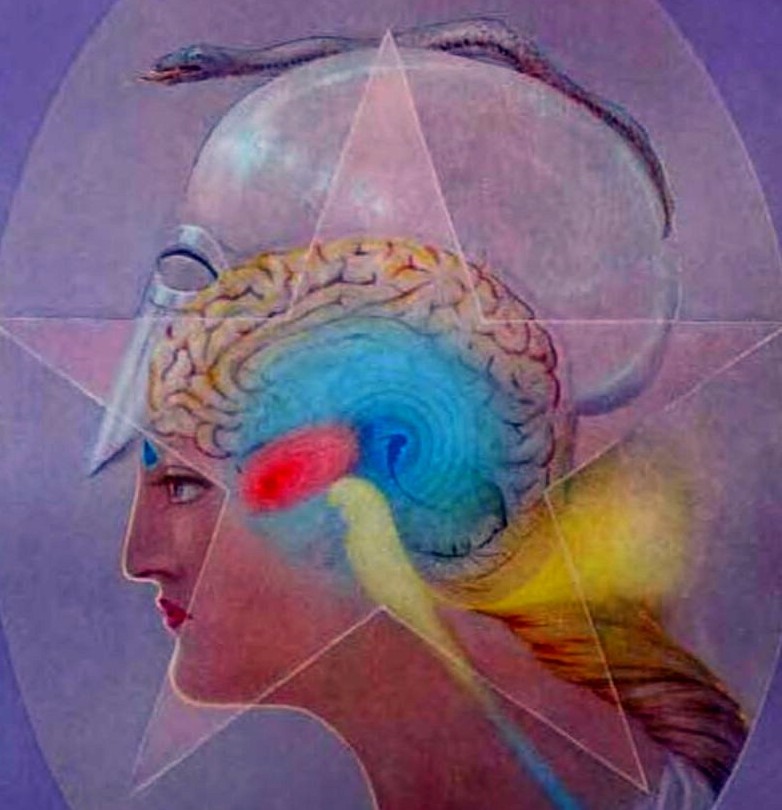
The plainest thing to say is the truest: a pentagram is a star, and in this archive it means light everywhere it appears point up. The reversal appears first in Lévi's rule of 1856 and nowhere before it, and it needed the older meaning to work: a sign has to stand for something before turning it over can stand for the opposite. Hall's plate of the third eye has a five-pointed star drawn over the whole head, with a serpent rising above it, and his caption, which reads the glands, mentions neither; the archive records them as seen. Cross's chart of 1819 has a five-pointed star twice: blazing at the centre of the Mosaic pavement, where the monitor calls it a star and reads it as the star of the Magi and as Providence, so the archive files it with the stars rather than here; and cut into the lid of the coffin on the last plate of the Master Mason's emblems, where the monitor says nothing and the archive records it as seen. Khunrath's Oratory of 1595 has one drawn in a circle on the page of a book lying open on the alchemist's prayer table, with a triangle in a circle on the facing page and no word beside either; the archive records the pair as seen, the five and the three open beside a psalm.
Contested
Lévi is quoted from the Rituel in Waite's translation of 1896, checked against the French of the second edition, Paris 1861. The rule about the points is his, and no earlier authority for it is in the archive; the archive's statement that the reversal appears first with him describes what the archive holds, not the whole record. Waite's account of the Devil card is his own. That the star is the figure of a human body is Agrippa's before it is Lévi's. The pentagram in Khunrath's open book is tagged by eye and unread; nothing on the plate names it.
Sources
- Éliphas Lévi, Dogme et Rituel de la Haute Magie: The fifth chapter of the Rituel, on the pentagram, and the description of the frontispiece in the fifteenth, quoted in Waite's translation of 1896 and checked against the 1861 French printing in the Wellcome Library copy.
- Arthur Edward Waite, The Pictorial Key to the Tarot: Waite's account of the Devil card, whose reversed star is the counter-example, and his note that Lévi changed the face of that card.
- Heinrich Cornelius Agrippa, De occulta philosophia libri tres: The chapter on the proportions of the body in the second book, Cologne 1533, whose first figure is the man in the pentagram; quoted in the Latin of that printing and in the English of 1651.
On the same plate
Where it appears · 6
6 works in the archive carry the Pentagram. First the 4 where it has been read, with the Pentagram itself picked out.
As a detail in 2 more
In these the Pentagram is somewhere in the picture, tagged by eye, and nobody has read it yet. When one of them is read, it goes out on a Sunday.